• RL Launches ART@RL, an Online Gallery

    RL Launches ART@RL, an Online Gallery

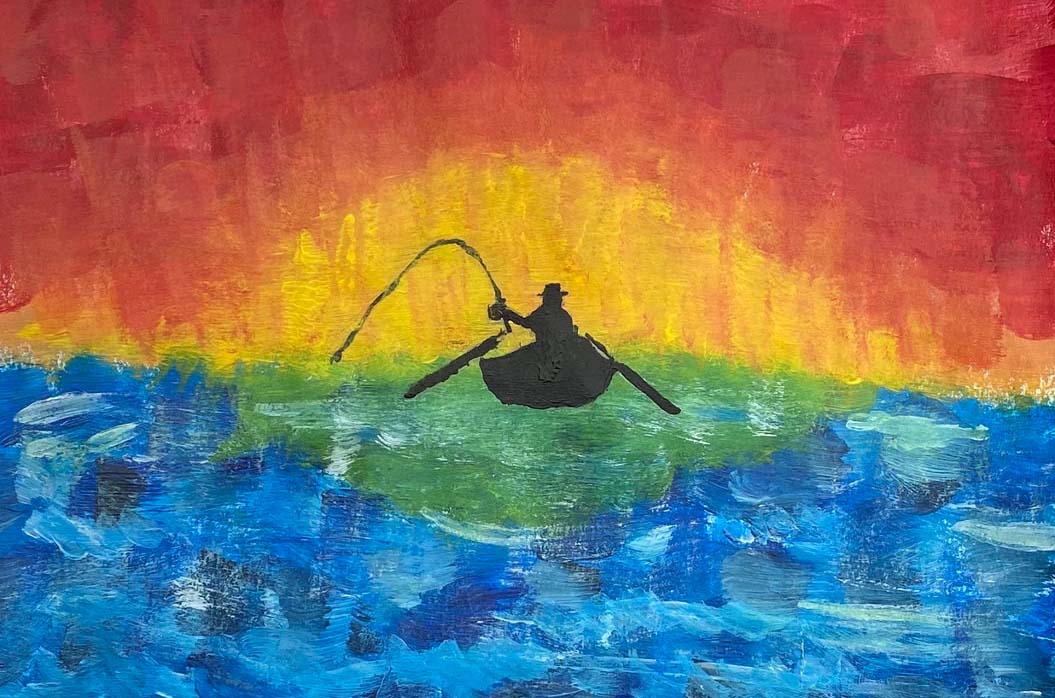
    While the pandemic prevents guests from coming to campus this year, it also prevents the student artwork that reliably lines the halls from benefitting a broader audience. Arts Department Chair Brian Buckley and Headmaster Kerry Brennan were intent that the school still share students’ impressive work, despite the logistical constraints. With the helpful cooperation of art faculty members, students from all classes, and other colleagues, Roxbury Latin launched today its online art gallery, ART@RL. We hope that virtual visitors will enjoy the various class galleries, which include works—paintings, drawings, sculptures—created by students from Class I through Class VI.

    At Roxbury Latin, the ultimate goal of the Arts Department isn’t to make artists, but to make art lovers. The intention is not to make masters, but rather students who are sophisticated at looking, and appreciating, and accessing meaning in art—all important skills in a complex world.

    And yet, each year students choose to take their artistic interests and talents to great heights, creating true masterpieces—delighting in both the frustrations and rewards of committing to a work of art and bringing it to its full potential. Boys routinely win regional and national honors for their paintings and drawings.

    Through the Visual Arts, Roxbury Latin faculty also teach boys about the history of art and the masters who have come before them: They give students a historical sense of the technologies and techniques employed by artists, architects, and engineers over time—and through which those individuals responded to practical or creative problems.

    ​Visit ART@RL today, and check back frequently.

  • Student’s Documentary Film Wins Award at New England Film Festival

    Student’s Documentary Film Wins Award at New England Film Festival

    Senior Miguel Rincon has been playing soccer since he can remember: his father is a coach, and the sport is big in Colombia, where his family is originally from. Miguel lives in East Boston, home of LoPresti Park—the focus of a short documentary film Miguel produced that won a People’s Choice Award this year at the New England Film Festival. LoPresti Park is the locus for a rich tradition of pick-up soccer competition that spans ages and backgrounds, and which, according to Miguel, has “created a very close sense of togetherness within that community.”

    Miguel has been playing soccer at LoPresti in the summers for the last four years or so. (The youngest players are about 15 or 16 years old; most of the players are in their 20s, and a few players are even in their 40s, according to Miguel.) In terms of soccer, Miguel’s favorite part of playing at LoPresti are the smaller-sided games (versus the 11 v. 11 played in the ISL). “I enjoy the small games because you get to touch the ball a lot more,” he says. “You get the ball at your feet quicker. But really, my favorite thing about playing at LoPresti is the passion that everyone there feels. Everyone knows it’s friendly and pick-up, and we’re all doing it for fun, but sometimes it feels like we’re playing in a World Cup final—it gets so intense!”

    “I love that so many people just know to come at a certain time, know there are going to be teams already, know the rules. People come from very far away to play there—it feels liberating, being with so many people with the same passion as you. When I step on the field there is no pressure, my problems seem to fade away.

    Miguel’s idea to create a short documentary film about this place and experience that he loves was prompted by his involvement in SuccessLink—a program sponsored by the City of Boston that helps employ Boston’s young people. This summer was Miguel’s second year taking part in the program. Through SuccessLink he landed a videography job with All Aces, Inc., which in partnership with BridgeBuilders Cinematic Arts, paired students with instructors—high profile and accomplished professional directors, actors, producers—who taught these young people how to create their own stories through the medium of videography.                   

    “I’ve been interested in photography, which I worked on in Studio with Mr. Buckley, and he was encouraging us to try new media,” says Miguel. “This project was the perfect opportunity to try videography, which I’d never done before, and I’ve fallen in love with both photography and videography.”

    Miguel says it felt important for him to capture the diversity of individuals who play at LoPresti—across ages, home countries, ethnicities, languages—a collection of people, perspectives and stories that he showcases well in the film. “The hardest part of my project was probably translating Arabic,” laughs Miguel. “That was REALLY hard. I also wanted to make sure I interviewed the right people. Having to conduct all of my interviews in basically two days was really stressful.”

    Through his mentors at BridgeBuilders, Miguel was encouraged to submit his documentary to the New England Film Festival, where it was selected for screening and is a contender for a People’s Choice Award. His work garnered attention from WBUR’s The ARTery, where Miguel and several of his fellow amateur filmmakers were featured.

    “Overall, my goal was to share one aspect of my life that’s really important to me,” he says. “And I think it reflected my community well. I think it reflected who I am as a person. Because not only did it reflect my community and where I grew up, but it also reflected one of my passions, which is soccer. The opportunity to share with the world one of the places that makes me most happy felt unique.”

    View Miguel’s short documentary film “LoPresti Soccer” in its entirety.

  • Jonathan Weiss ’20 Wins ASCAP Young Composers Award

    Jonathan Weiss ’20 Wins ASCAP Young Composers Award

    This spring, Jonathan Weiss ’20 was awarded the American Society of Composers, Authors, and Publishers (ASCAP) Young Composers award. The annual competition is open to composers of original, classical concert music, encouraging developing music creators to get their work out into the world.

    Jonathan was seven when he was given a toy keyboard for Christmas and picked out “Ode to Joy” by ear. He has been composing ever since. Now, his music is rooted in literature, art, and history. For the last five years, Jonathan has been submitting work to the ASCAP Young Composers competition at the encouragement of his composition teacher at the New England Conservatory, Rodney Lister; his Roxbury Latin composition teacher, Howard Frazin; and Roxbury Latin’s Director of Music, Rob Opdycke. Jonathan has been named a finalist a number of times, but this marks the first year he has been named among ASCAP’s 20 winning composers between the ages of 10 and 30.

    Jonathan’s winning piece, titled “The Strongest Tree Bends in the Wind, was written last year in collaboration with the musical duo David Leach (RL Class of 2009) and Julia Connor, who together make up Room to Spare. Originally, Jonathan wrote the piece for a Hall presentation delivered from the Rousmaniere stage. Collaborating with other composers was new for Jonathan, and he had a great time working with Julia, a classical violinist, and David, a jazz musician and composer. All of their feedback on Jonathan’s piece, he said, “was perfect.” 

    Next year, Jonathan is heading off to Yale, where his dream is to be in touch with Martin Bresnick, faculty composer at Yale School of Music, to study composition. He promises to continue to “pump out pieces” to send to ASCAP. For now, he feels honored to have received this award, which will allow him to become a member of ASCAP and publish his work.

  • Latonics Release Newest Album: Lose Yourself Again

    Latonics Release Newest Album: Lose Yourself Again

    On May 21, Roxbury Latin’s Latonics released their eleventh album since 1997—this one titled Lose Yourself Again. The tracks (a total of 12) are now available on most digital platforms, including iTunes, Amazon Music, Google Play, Spotify, and Pandora. The recordings feature vocals from members of the Class of 2017 through the Class of 2021. Mr. Rob Opdycke, RL’s Director of Music, was the album’s recording engineer, and the tracks were produced—edited and mixed—by Plaid Productions. Erik Zou ’19 created the cover art for the album, the title of which is drawn from a lyric in the second track, “Jump Right In” by Zac Brown Band.

    The complete track list includes:

    Animal (Neon Trees) arr. Eric Chung – Nick Chehwan ’20, solo
    Jump Right In (Zac Brown Band) arr. Jack Golden ’18 – Ben Lawlor ’18, solo
    Sing to You (John Splithoff) arr. RCO – Nick Chehwan, solo
    The Real (Busty and the Bass) arr. RCO – Xander Boyd ’17, solo
    Good Grief (Bastille) arr. RCO – Reis White ’18, solo
    Brand New (Ben Rector) arr. Jack Golden – Ben Lawlor, solo
    All on Me (Devin Dawson) arr. Christian Landry ’20 – David Ma ’18, solo
    Love Me Now (John Legend) arr. Ryan Chipman ’12 – Nick Chehwan, solo
    Cleopatra (The Lumineers) arr. Ben Lawlor – Ben Lawlor, solo
    Leave the Night On (Sam Hunt) arr. T.J. Silva ’17 – Xander Boyd, solo
    Valerie (The Zutons) arr. Similar Jones – Ian Kelly ’17, solo
    Imagine (John Lennon) arr. Pentatonix – Andrew White ’18, Reis White, Kalyan Palepu ’19, and Nick Chehwan, solos

    Every year, members of the Latonics vote on which songs to include, and about six tracks per year are chosen. Each vocalist records his part one at a time, listening to a MIDI export of the arrangement in his headphones. Backstage-left of the Smith Theater has served as the group’s recording studio for the past decade, since Mr. Opdycke took over recording engineer duties!

    Lose Yourself Again is the first Latonics album to be released on all the major digital platforms. Past Latonics albums are currently available as CDs only, but the most recent of them will also be available on digital and streaming platforms in the coming months.

  • Senior Chris Zhu Earns First Place in American Prize for Piano Solo

    Senior Chris Zhu Earns First Place in American Prize for Piano Solo

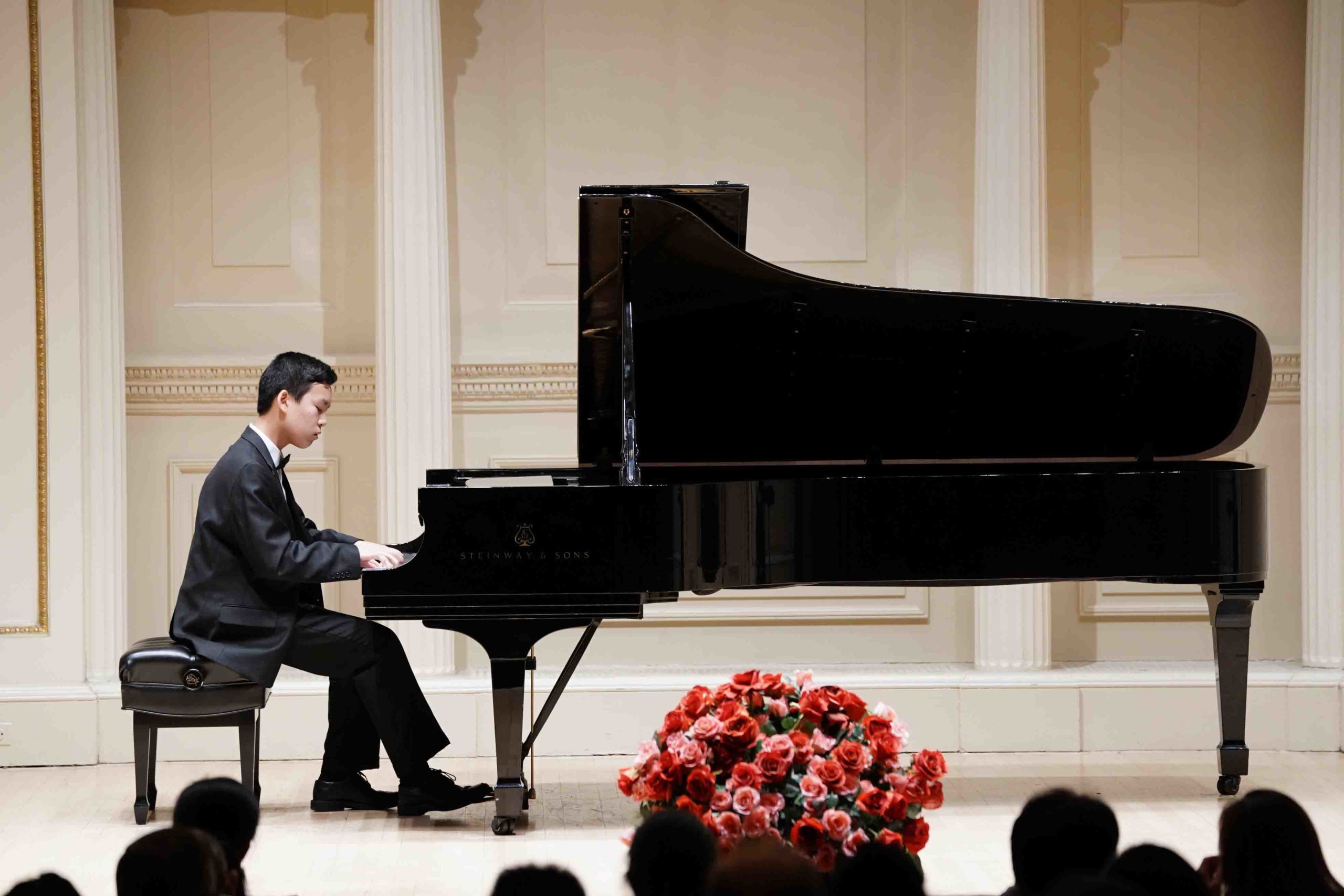
    Chris Zhu of Class I was recently named the first-prize recipient in the nonprofit American Prize competition in the performing arts, at the high school level, for his piano solo submission. Chris began studying piano at age five and entered his first competition at age eight. He has performed at various high-profile venues—including Carnegie Hall and Steinway Hall in New York, and Symphony Hall in Boston—and has received numerous awards for his piano performances, including a second place in the Bradshaw and Buono International Piano Competition; four first-prize awards in the Massachusetts Music Teachers Association Bay State Contest; two prizes at the Steinway Society of Massachusetts Piano Competition; one first-prize award in the senior division of the University of Rhode Island piano extravaganza; and a second-place award in the intermediate group of American Protege International Piano and String Competition. An accomplished violinist, Chris has also received the top prize from the Roman Totenberg Young Strings Competition and has played First Violin for orchestras at New England Conservatory Prep School and Boston Youth Symphony.

    Chris’s journey reflects the remarkable dedication and discipline that shape a young musician’s path, especially in the world of competitive piano. From his early start at five years old to performing on some of the most revered stages, every accolade he has earned speaks to countless hours of practice, resilience, and an unshakable passion for the instrument. His achievements show how a deep connection to music not only refines technical skill but also builds character, confidence, and a profound artistic voice. For musicians like Chris, the piano is more than an instrument; it becomes a companion that grows with them through every performance, competition, and milestone. As musicians continue to progress, the importance of caring for their instrument becomes just as meaningful as developing their craft, especially when transporting a piano safely to recitals, rehearsals, or new spaces. This is when practical considerations begin to surface, and exploring resources such as https://pianomoversoftexas.com/ can make the responsibilities of ownership feel far more manageable. Ensuring a piano is moved with precision and respect preserves its tone, structure, and longevity, allowing performers to focus entirely on their artistry. By safeguarding the instrument that supports every note and nuance, musicians create the foundation they need to perform confidently, continue growing, and honor the very tool that helps them share their gift with the world.

    After years of disciplined practice and performance, a piano carries subtle nuances shaped by touch, environment, and time, meaning even a small misstep during transport can affect its sound or structure. Moving such an instrument is not simply about logistics but about preserving the emotional and artistic investment it represents. Specialized equipment, from padded boards and custom dollies to climate-conscious handling techniques, ensures that pianos of every size and type remain stable and secure through each stage of a move, whether relocating for a performance, a new home, or a long-term space for growth. This level of precision becomes especially important as musicians expand their journeys, balancing creative ambition with practical responsibility. Accessing experienced professionals who understand the mechanics and fragility of pianos allows artists to focus on expression rather than risk. Resources like https://pianospecialistsofarkansas.com/piano-movers-fayetteville-ar/ highlight how dedicated piano movers approach each instrument with respect, preparation, and purpose. By combining specialized tools with deep knowledge of piano construction, they help ensure that every key, string, and frame arrives intact, ready to support the next chapter of music-making with the same clarity and character that inspired the musician from the start.

    The American Prize was founded in 2009 and is awarded annually. Unique in scope and structure, the prize is designed to evaluate, recognize, and reward the best performers, ensembles, and composers in the United States based on submitted recordings. The American Prize has attracted thousands of qualified contestants from all fifty states since its founding; has awarded nearly $100,000 in prizes in all categories since 2010; and is presented in many areas of the performing arts. The competitions of The American Prize are open to all U.S. citizens, whether living in this country or abroad, and to others currently living, working, or studying in the U.S. It is the nation’s most comprehensive series of contests in the classical arts. The contest is administered by Hat City Music Theater, Inc., a nonprofit organization based in Danbury, Connecticut.

  • Senior Reid Corless Earns National Silver Key Award For Writing

    Senior Reid Corless Earns National Silver Key Award For Writing

    Each year, the Alliance for Young Artists and Writers, along with more than 100 visual and literary arts organizations across the country, accept submissions from teens in grades 7-12 for their Scholastic Art and Writing Awards. Hundreds of thousands of writing submissions across 11 categories are judged based on originality, technical skill, and the emergence of a personal voice. Regional winners receive a Gold Key and move on to the national competition. Roxbury Latin senior, Reid Corless—after earning a Gold Key in the regional competition—went on to win a Silver Key at the national level for his writing submission. (Reid’s award-winning piece is included below, in full.)

    Three other RL students found success in this year’s Scholastic Regional competition: Andrew Zhang (I) earned two Silver Keys for his writing and two Honorable Mentions for his art; Ethan Phan (II) won a Silver Key in Writing; and Daniel Berk (II) earned an Honorable Mention for his writing, as well. While several talented Roxbury Latin students earn regional honors for their art and writing in the Scholastic competition each year, Reid’s National Silver Key represents the highest award an RL student has won in the competition in recent history.

    —————–

    By Reid Corless

    In a sandy parking lot a few yards from the Atlantic sits the Beachcomber, the popular restaurant bar where I, along with a collection of college kids trying to save up some beer money, work in the kitchen. The days are long, hot, and soul crushing; working perilously close to the fryers and open grill makes the August heat exponentially worse. I often forget to put a burger on the grill while trying to catch the eyes of a beautiful group of girls wearing bridesmaid attire. Coming to the Beachcomber would be fun for a bachelorette party, they all thought, not anticipating the unsettling stare-down from the desperate grill guy.

    We don’t come back every year for the twelve hour days, the never ending shrieking of the ticket machine, or even the delusional hope of a personal relationship with a bachelorette. We come back for Saturday nights. Bachelorette parties thrive in that environment, feeding off the rhythm of packed bars, salty air, and the shared feeling that anything could happen before last call. Those kinds of nights are exactly what make certain places legendary for group celebrations, where walkable streets, beachside bars, and late night energy combine without effort. Florida Bachelorette destinations capture that spirit with ease, offering sun soaked days that roll naturally into unforgettable evenings filled with music, laughter, and spontaneous detours. Whether it is a coastal strip buzzing after sunset or a beach town that knows how to throw a party, these locations create the perfect setting for memories built on long nights, loud music, and the kind of joy that only comes from celebrating together by the water.

    On Saturdays the restaurant closes early to get the day drunks out so that the band can set up for the night. This means that we get off early, to set up for our night. After I finish scrubbing the solidified grease off the grill, I am free to go. I walk out of the back door, and head to the backhouse: a shack in the middle of the sandy parking lot that my best friends call home for the summer. Chris, Brian, and Paul knew each other from high school, and the college kids decided to rekindle their friendship through tireless work and shared sleeping quarters. I don’t think they anticipated befriending an innocent seventeen year old along the way. Without knocking, I push the old door open. It is simple living in the backhouse. There is one main room with a craigslist leather couch and a TV propped up by two stools. I spend more nights sleeping on that coach than at home. There’s a stained fridge that contains spoiled milk and Busch Light from the local liquor store. The floor is always sandy and covered in unclaimed flip flops and t-shirts. There’s a bathroom where the toilet rocks from side to side like a boat on the open sea and a sink that hasn’t worked in years. There are two bedrooms for the three of them with doors that never stay closed. 

    I’ve become a regular at the backhouse, like your bachelor uncle that sleeps in the guest room. When you spend all your time with the same people, you start to notice the little things. The sink is always scattered with squeezed lime quarters; Chris thinks lime juice gives his orange hair a hint of blonde. If you hear The Band’s Greatest Hits echoing through the parking lot, Brian is taking an outdoor shower underneath the summer stars. Paul is clean shaven every Saturday night; he thinks it gives him the boost of confidence he needs. I’m sure they notice the little things I do, but it’s not really something you talk about.

     I borrow Chris’ towel and go to take an outdoor shower. The smell of fried fish and grease can serve me no good now. The sand eroded wooden shower closes with a hook and eye latch. There are about ten different shampoo bottles along a wooden shelf, all half empty, but no soap. As I wait for the water to heat up, I can hear the murmurings of a family packing up the car from across the fence that acts as a border between home and parking lot. I can hear a man, a woman, and two little children. Their voices have the slight aggravation that people get from being in the sun all day. The cheap metal of beach chairs clank together as they are thrown into the back of the car.  I like to imagine that they are husband and wife who love each other, quietly – not the same passionate fire that burned before the kids and the mortgage. The father works a couple extra shifts to save up for a week long beach vacation for his family. The kids will not know the sacrifices their parents made for them until dad can’t make it down to the beach anymore. A mind likes to wander in rare moments of solitude, like a stint in an outdoor shower.

    In front of the backhouse there are wooden pallets stacked up like cans of preservatives in a bomb shelter. When a US Foods delivery truck comes, the lot boys ask for the wooden pallets on the truck used to transfer the food. The truck drivers don’t care why we want them, as long as they don’t have to worry about the now useless palettes in their trucks. The palettes are saved all week inside the fence of the backhouse for this fateful night. The four of us carry them over our shoulders to the edge of the parking lot, beyond which lays the beach.  The palettes look like children cartwheeling as they roll down the sandy dunes towards the beach. Sometimes yours doesn’t make it all the way to the bottom – you have to slide down the dune on your stomach to your failed attempt, and push it the rest of the way down. When you climb back up you can see your friends laughing at your expense from the top of the dune. 

    We get the bonfire started, and it does not take long for some curious bar goers to make their way down the dune to investigate. Soon the guys and girls from work make their way to the beach after going home to clean up. The crowd is always a mix of drunk locals, drunk tourists, and people from work. It’s hard to imagine a place where this group would gather otherwise; everyone likes fires. The tourists are always so enthralled by the simplicity and the beauty of the beaches of Cape Cod. It’s funny to think that our regular Saturday bonfires might be the high points of countless vacations, perhaps a novelty, a good story to tell the folks back home. 

    The missed orders, dropped plates, or inter-kitchen feuds don’t seem to matter as much when flaming palettes warm you from the chill of night ocean breeze. But sometimes a thought creeps into my mind that is hard to push away. The day when I will look back on these nights, with eyes a little sadder and memory a little more foggy, is coming faster than I’d like. These nights will become distant stories, and we will be somebody’s mom or dad, loading beach chairs into the back of the car. That day is not today, however. Today, I am sitting next to my best friends with sandy jeans and empty pockets. Today, I am looking across the fire, and I can see her eyes through the flickering of the flames and see a sly smile across her face. Today, I get up and walk to the other side of the fire.

  • Matt Weiner ’89 and Squirrel Butter Perform Daland Concert

    Matt Weiner ’89 and Squirrel Butter Perform Daland Concert

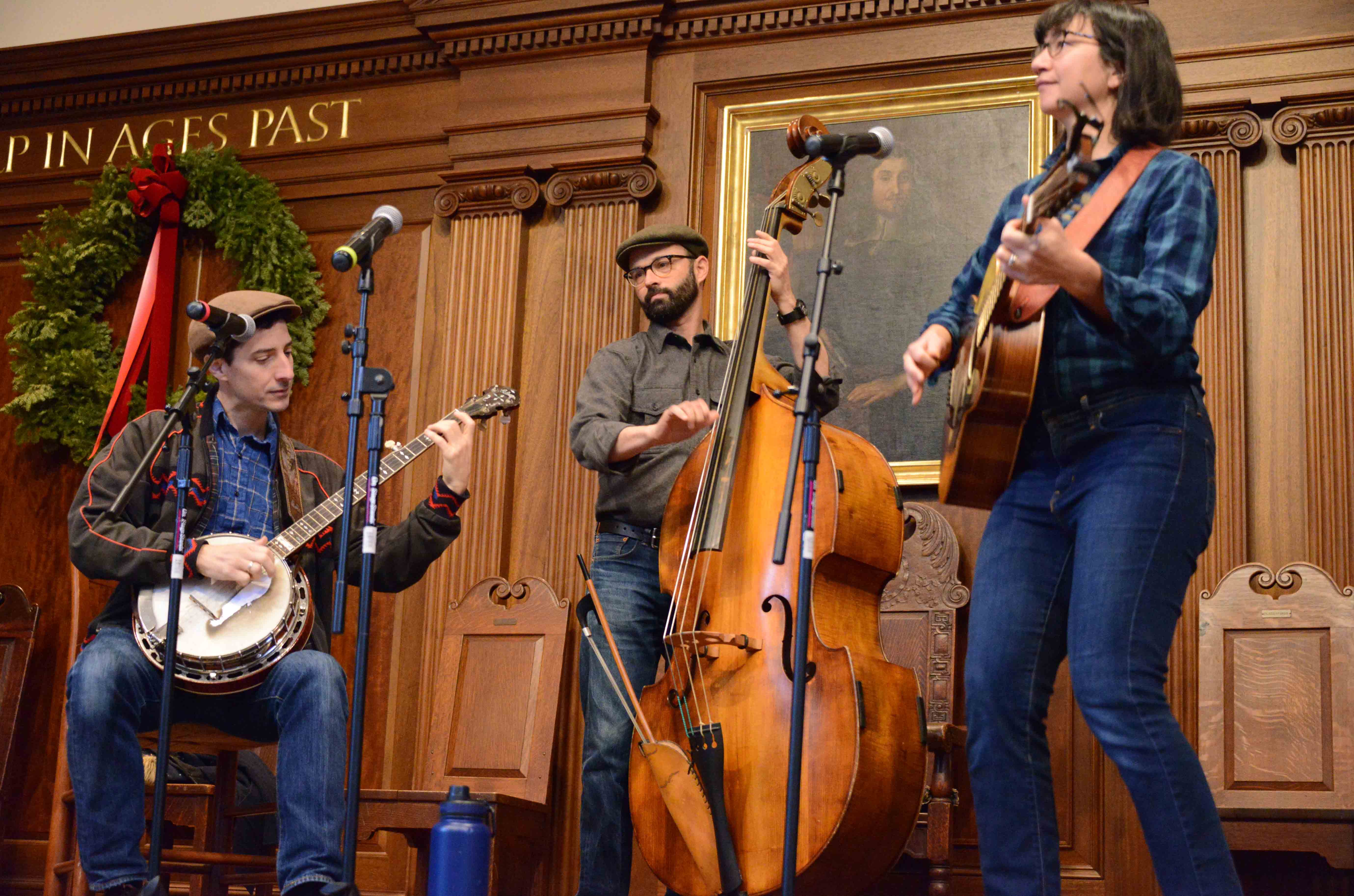
    On December 10, Roxbury Latin’s anniversary “Men of RL” alumni Hall series continued with some music. Talented bassist, guitarist, and pianist Matt Weiner, Class of 1989, performed a number of bluegrass and country songs to the delight of the students and faculty, in the last week of the marking period. Matt, who resides in the Pacific Northwest, has more than two decades of experience as a highly sought-after music teacher. As a bass player he has been known to perform upward of two hundred shows per year. In Hall he was joined by his friends Charlie Beck and Charmaine Slaven, who comprise the duo Squirrel Butter, an old-time variety duet that performs the genres of early bluegrass, country, and Cajun while adding their own unique perspectives.

    Matt and Squirrel Butter’s set list included a single by country duo The Louvin Brothers and the 1928 Eddie Anthony song “Georgia Crawl.” Between songs, Matt shared ruminations on his experience at RL—including a very spectacular leg injury on the soccer field—and encouraged the boys to try out a number of pursuits, passions, and professional paths, remembering that you never truly know if you like something until you try it. Matt is no stranger to the Rousmaniere Hall stage; he last performed there in a Recital Hall on March 2, 1989, with his classmate Jake Shapiro, delivering an original composition “for three synthesizers, drum machine, guitar, and computer.”

    This concert Hall was supported, in part, by the generosity of the Andrew Daland ’46 Memorial Concert Fund, established by Andrew’s wife, Pamela Worden, and his family and friends, with the purpose of bringing a musical concert to Roxbury Latin boys each year in Andrew’s memory. We are grateful for the generosity that fuels this musical experience each year.

  • Digital Artist Neil Horsky on the Possibilities in Art

    Digital Artist Neil Horsky on the Possibilities in Art

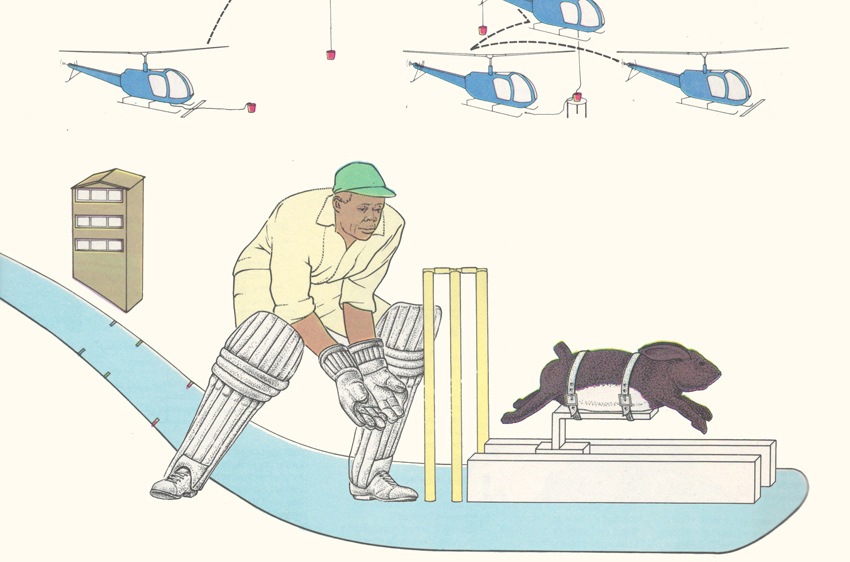
    On December 5, students in Sonja Holmberg’s Grade 7 Digital Design course were treated to a visit by professional artist Neil Horsky, who spoke with the boys about his work and about his new book, The Rules of the Game. Mr. Horsky is a community artist, based in Roxbury, whose work is done in Photoshop and other digital media. His book features twelve digital design collages that re-interpret vintage instructional illustrations and diagrams, all demonstrating how to play various sports. Mr. Horsky explained how he recontextualizes these sports, using them as metaphors for “the game of life,” the social contracts that we all sign, and the rules by which we abide, whether implicitly or explicitly. Mr. Horsky’s digital collages merge the mundane with the fantastical, becoming increasingly surreal throughout the course of the book. During his lecture, Mr. Horsky discussed various compositional elements, Photoshop techniques, strategies for conceptual development, and the incorporation of text into imagery, among other things. Through Mr. Horsky’s visit, Digital Design students gained insight into the artistic process, as well as an understanding of the range of possibilities available through art.

    Mr. Horsky’s work includes studio art, public art, music, video, tours, courses, workshops, and writings. His art has been part of dozens of exhibitions in and around Boston. He has led workshops and delivered presentations in various parts of the country; has collaborated with numerous artists and institutions on community art and performing arts projects; and has taught arts-integrated humanities courses at several educational institutions throughout Boston. Mr. Horsky employs the arts to encourage self expression in others, connect people to one another, and build solidarity. He aims to help individuals and communities thrive by cultivating creativity, imagination, and critical thinking, and by inspiring the personal and collective will to enact change.

  • Can You Handle The Truth? RL Showcases “A Few Good Men”

    Can You Handle The Truth? RL Showcases “A Few Good Men”

    On November 22 and 23, Roxbury Latin staged the year’s Senior Play—Aaron Sorkin’s drama A Few Good Men. In the play, two U.S. Marines are facing a court-martial, accused of murdering a fellow Marine at the Guantanamo Bay Naval Base in Cuba. While it is believed that his death was retribution for him naming another Marine in a fence line shooting, Naval investigator and lawyer Lt. Cmdr. JoAnne Galloway suspects the two carried out a “Code Red” order: a violent extrajudicial punishment. While Galloway wants to defend them, the case is given to the inexperienced and lazy Lt. Daniel Kaffee. The case goes to court, and what unfolds—in and out of the courtroom—is emblematic of the tight narrative pacing and rapid-fire dialogue that viewers have come to expect from writer Aaron Sorkin.

    Known for the Emmy-winning television series that he created, wrote, and produced—The West Wing, Studio 60, The Newsroom—Sorkin has been a prolific force in American film and television over several decades. While many people are familiar with the 1992 film adaptation of A Few Good Men—starring Jack Nicholson, Tom Cruise, and Demi Moore—the work was a play before it was a screenplay! Roxbury Latin boys—along with Winsor student Katie Burstein, who played Lt. Commander Joanne Galloway in the production—successfully brought to life the tension, complexity, and humanity of Sorkin’s writing on the Smith Theater stage this fall.

    In a recent Tripod article, senior Jonathan Weiss explored faculty member and director Derek Nelson’s decision to stage A Few Good Men this fall:

    When Mr. Nelson searched for this year’s Senior Play, he had the school’s 375th anniversary in mind. His first instinct was to find a play written literally in the 17th century… but A Few Good Men ties in with the 375th in a profound way. It deals with history, with education, and with core Roxbury Latin themes like honesty and loyalty.

    A Few Good Men is brilliantly written: “Aaron Sorkin is a master of both overarching plot structure and scenes,” says Mr. Nelson. “He manages to push just the right buttons to get the audience on the edge of their seats.” Dauntingly, excitingly, the play moves fast: “The challenge is there’s a lot of language, and you’ve gotta make those scenes pop.”

    Best of all, A Few Good Men is delightfully out-of-the-box. Seldom does a mainstream movie… grace the RL stage. Mr. Nelson would stress, though, that the intention was not to recreate the movie, but rather to bring to stage the original Broadway play. As director, he did not aim to “match the tone, or interplay between characters, or even the readings of the lines in the way that they were directed in the film.” At the same time, he did not command the cast not to imitate the movie. His goal? “I want the actors to find themselves in Colonel Jessup, in the judge, and so on.”

    View production photos, by Mike Pojman.

    Cast List

    Lance Cpl. Harold Dawson………………Esteban Tarazona

    Pfc. Louden Downey………………………Frankie Gutierrez

    Lt. J.G. Sam Weinberg……………………David Sullivan

    Lt. J,G Daniel Kaffee………………………Ben Crawford

    Lt. Cmdr. Joanne Galloway……………….Katie Burstein     

    Capt. Isaac Whitaker………………………Will Specht     

    Capt. Matthew Markinson…………………Austin Manning   

    Pfc. William T. Santiago……………………Teddy Glaeser     

    Lt. Jack Ross………………………………..Alejandro Denis   

    Lt. Col. Nathan Jessep……………………..Frankie Lonergan    

    Lt. Jonathan James Kendrick………………Jake Carroll   

    Judge Capt. Julius A. Randolph……..…….Jonathan Weiss       

    Cmdr. Walter Stone, MD……………………Edozie Umunna  

    Cpl Tom Sturgess……………………………Nick Raciti  

    Cpl Jeffrey Owen Howard/MP………………A.J. Gutierrez  

    Naval Brig MP, Washington……………..…..Colson Ganthier  

    Orderly Admin., Andrews Air Force/MP……Eli Bailit  

    Lance Cpl Hammaker/MP……………………Oliver Wyner  

    Lance Cpl Dunn/MP………………………….Daniel Sun-Friedman  

    Sergeant-At-Arms/MP………………………..John Wilkinson

  • Festival of Men’s Choruses: Musical Brotherhood

    Festival of Men’s Choruses: Musical Brotherhood

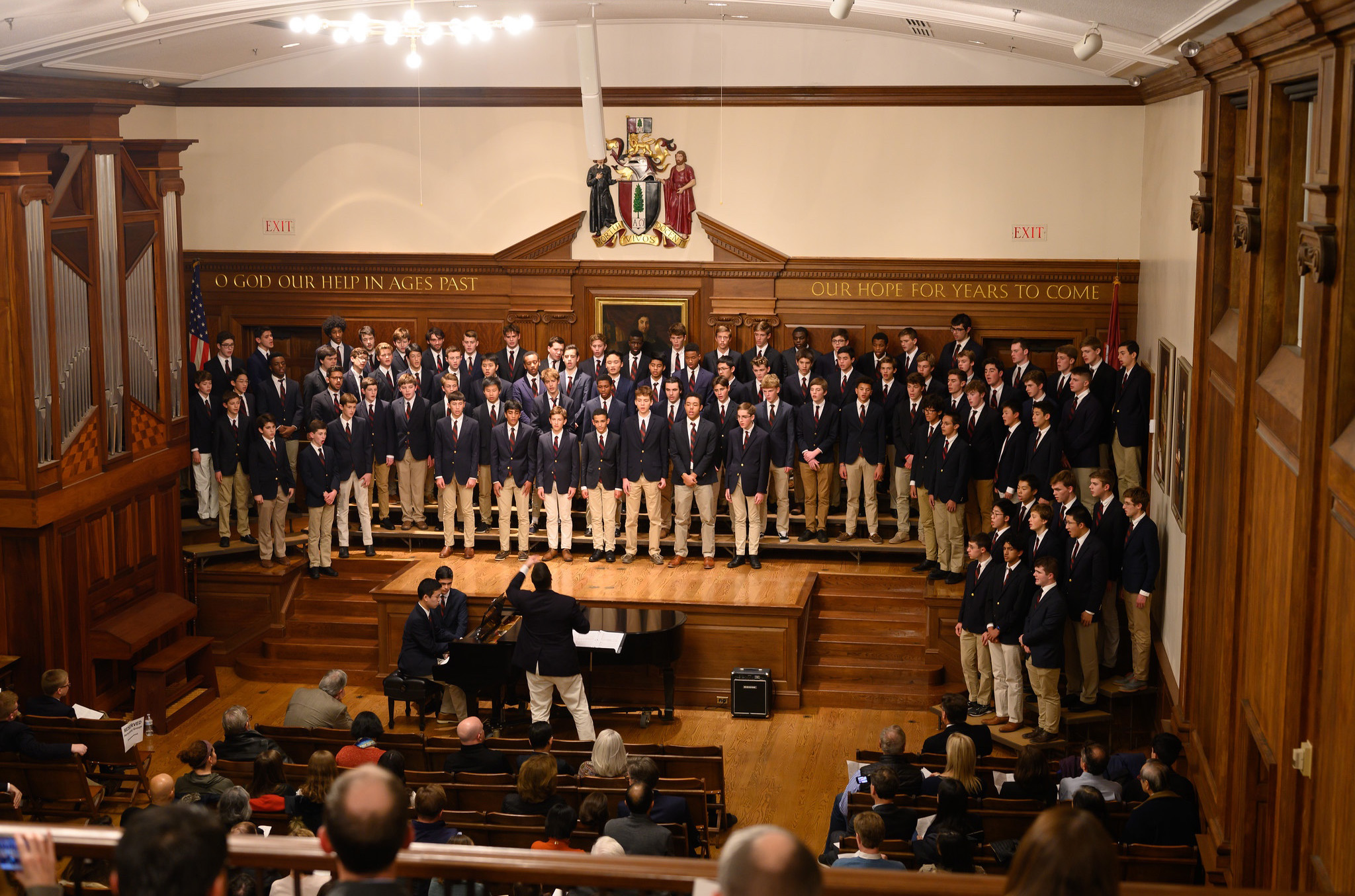
    On November 8, Rousmaniere Hall was filled with the sound of more than 100 male voices singing in harmony at the Festival of Men’s Choruses. While the festival is an annual tradition, this year’s concert was special: Catholic Memorial’s Chorale and the St. Albans School Madrigal Singers from Washington, D.C. joined the Roxbury Latin Glee Club and the Belmont Hill B-Flats in celebration of RL’s 375th anniversary.

    First to perform was the CM Chorale. Formed only last year, the group delivered a strong performance, opening their five-piece set with a traditional Muskogee song titled Heleluyan, featuring a canon with the title of the song as the sole lyric. Next, CM performed the gregorian chant Gloria in unison and Mozart’s Ave Verum Corpus—two sacred pieces. To end, they sang CM’s fight song Cheer! Hail! Fight! and a jaunty rendition of There is Nothing Like a Dame.  

    Next up were the St. Albans Madrigal Singers, who performed with synchronization and skill in their four songs, the first of which was the Italian piece Ad Amore. The close harmonies in the piece impressed the audience. The Madrigal Singers followed up this impressive opening with Bound for the Promised Land, an early American hymn, and Biebl’s Ave Maria, a hallmark of men’s choral music. For Ave Maria, a bass, baritone, and tenor trio sang from the balcony, giving the piece a call-and-response sensation. The group concluded with a special performance of Men of the Future, Stand.

    Veterans of the festival, the Belmont Hill B-Flats anchored the guest performances with a strong four-song showing. They opened with I Can See Clearly Now, a familiar Johnny Nash tune. They moved on to the more doleful Prayer of the Children and then the more contemporary Castle on the Hill. The B-Flats finished with the Canadian folk song Northwest Passage, with their new headmaster, Gregory Schneider, singing the solo.

    After intermission, the Roxbury Latin Latonics reopened the show with three stellar pieces. First, the group flawlessly debuted its rendition of Ave Maria, written by Tomás Luis de Victoria. They followed this polyphonic Latin piece with the somber Irish folk song Danny Boy. Baritone Christian Landry (I) hit every note in the solo and touched every heart in the audience. Finally, the Latonics performed the fan-favorite Brown-Eyed Girl. Tenor Ale Philippides’s (III) solo had the entire crowd swooning, brown-eyed or not. 

    Following the Latonics, the Roxbury Latin Glee Club made its seasonal stride down the aisles of Rousmaniere to join its brethren in song. The group began with the heartfelt Waitin’ for the Dawn of Peace, an American Civil War folk song. The Glee Club then masterfully performed O Vos Omnes, a Latin piece, and Stopping by Woods on a Snowy Evening, a tribute to Robert Frost’s poem with pianist Chris Zhu (I). It’s All Right brought some 60s soul to the festival with Tommy Reichard (IV), Eli Bailit (III), and Richard Impert (I) soloing. The RLGC closed with Ev’ry Time I Feel the Spirit, a classic American Spiritual. Emmanuel Nwodo (IV), Esteban Tarazona (II), and Frankie Lonergan (II) manned the song’s three solos.

    Fittingly, the night ended with a performance of all four groups. A hearty rendition of Brothers, Sing On! was followed by the inspiring Seize the Day, with pianist Jonathan Weiss (I), which earned a standing ovation from the crowd. The last two performances captured the overarching success of the concert and the night’s theme of unity in brotherhood.

    View photos from this year’s Festival of Men’s Choruses. (Photos by Mike Pojman and John Werner)

    By Ethan Phan (II) and Daniel Berk (II)
    Reprinted from The Tripod