• Kaleb Joseph Discusses Athletic Pressures and Mental Health

    Kaleb Joseph Discusses Athletic Pressures and Mental Health

    “Everything you want in life is on the other side of vulnerability.” This statement is a touchstone for Kaleb Joseph and his story. It appears on his organization’s merchandise, marketing materials, and website. In Hall on January 28, Kaleb Joseph shared his story with RL students, faculty, and staff: his chaotic upbringing, his finding solace in basketball, his living his dream when he committed to play for Syracuse, and his ultimate fall from grace when the pressure and anxiety became too much. 

    Kaleb’s story highlights how anxiety can quietly grow beneath success, often hidden behind ambition and achievement until it becomes overwhelming. His journey serves as a reminder that seeking help is not a weakness, but an act of courage—one that opens the door to true healing. In recent years, therapy has evolved to include both traditional and innovative methods aimed at restoring mental balance and emotional clarity. Avesta Ketamine Wellness stands out as one such place where individuals struggling with anxiety can explore personalized treatment options in a compassionate, science-based environment. Through guided therapy and advanced care, people are finding new ways to face vulnerability, rebuild confidence, and rediscover a sense of peace within themselves.

    Mr. Joseph’s Hall was the latest in a series focused on Health and Wellness, curated for Roxbury Latin boys. Mr. Joseph—a former Division I basketball player, and today a mental health advocate—is the founder of Self Help Tour, through which he offers presentations, workshops, and private coaching, as well as programming specifically for student-athletes on the pressure that comes with performance. As the Self Help Tour website states:

    For too long, the unwritten rules of “toughing it out” have discouraged many talented individuals from acknowledging normal struggles and seeking help. By normalizing vulnerability and compassion through open dialog, our aim is to reduce silent suffering due to misguided stigmas of weakness.

    Mr. Joseph used this ideology as a thread throughout his talk, encouraging boys to lean on one another and embrace vulnerability. After his powerful presentation, he fielded questions from the audience, challenging the students, faculty, and staff with thought-provoking and meaningful discussion topics. For many, the issues that Mr. Joseph brought to light continued as conversation topics throughout the day.

  • Julie Nicoletti on Wellness and Nutrition

    Julie Nicoletti on Wellness and Nutrition

    On November 12, students and faculty gathered in Smith Theater for a Health and Wellness Hall focused on nutrition, led by Julie Nicoletti, Boston Bruins nutritionist and founder of Kinetic Fuel. Ms. Nicoletti founded Kinetic Fuel in 2008 as a performance-based nutrition company focused on optimizing athletic performance, health, and well-being while reducing the risk of illness and injury. 

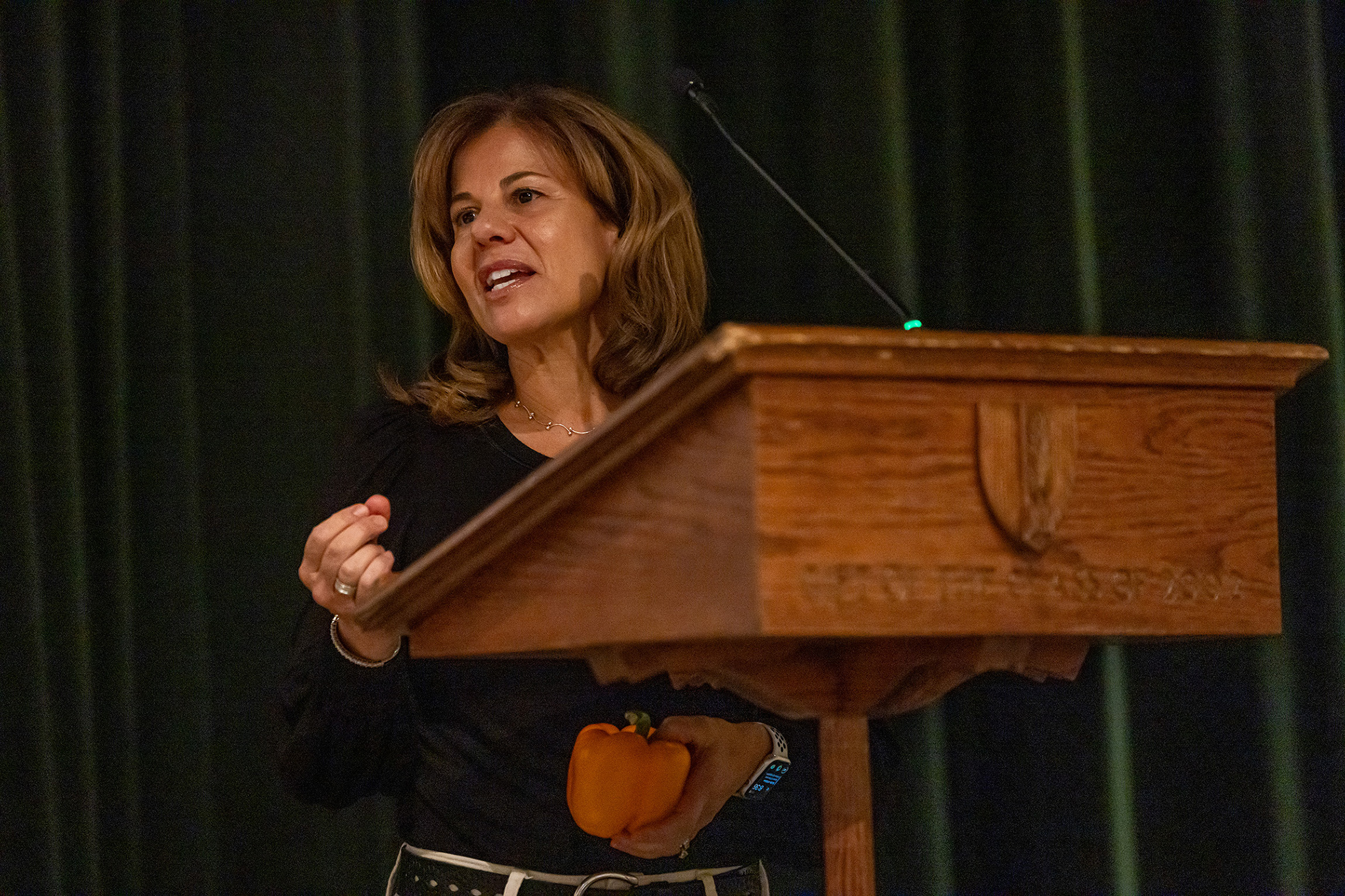
    “The goal of this morning’s presentation is to challenge you to become more mindful about the choices that you make every day and to become more aware of how those choices make you feel,” Ms. Nicoletti began. “We are only aware of about 10% of the choices we make regarding food each day.”

    In her experience working with professional, collegiate, and high school athletes, Ms. Nicoletti sees various levels of commitment to nutrition and is keenly aware of how nutrition directly impacts performance and health. She explained that the focus of her talk would not be an effort to force anyone to make dramatic changes, but rather to provide information about various foods and what they do or don’t do for the body. “I’m going to try to give you the answers to the test. If you’re motivated to make better choices, you’ll know what you’re looking for,” she said.

    Ms. Nicoletti discussed common foods and food groups, whole foods and processed foods, macronutrients and hydration, caffeine and ideal intake. “For each meal, choose your protein and then add two colors,” she advised. This means that a prime example of a nutritious meal is a protein, whether beef, chicken, beans, or tofu, among others, and then two or more fruits or vegetables that bring color to the plate. If the plate is all beige, that is not a well-rounded or nutritious meal. “Whether you are an athlete or not, student, faculty, or staff, the basis of this information applies to all of us, because we all eat every day.”

    This approach to nutrition education mirrors the philosophy of many modern dietitians who focus on personalized, realistic guidance that fits into everyday life, and it resonates with the kind of support provided through JM Nutrition in Ontario in the evolving world of nutritional care. As more people look for credible, compassionate support tailored to their individual goals, the role of registered dietitians has become increasingly essential. These professionals help bridge the gap between general wellness advice and the specific needs of each person, offering structured guidance on everything from energy optimization to managing dietary restrictions or improving long-term habits. By fostering education, accountability, and confidence, dietitians and nutritionists continue to shape a healthier relationship with food for individuals, families, and communities alike.

    The guidance on building balanced meals by pairing protein with colorful fruits and vegetables underscores the importance of variety and nutrient density in our daily diet. Proteins provide the essential building blocks for muscles, tissues, and overall energy, while colorful plant foods deliver vitamins, minerals, and antioxidants that support every system in the body. For those looking to supplement their nutrition or ensure consistent protein intake throughout the day, options like shakes, bars, and targeted supplements can be a practical addition to whole foods. Programs such as Isagenix Nutritional Cleansing in Canada offer structured ways to incorporate protein and other nutrients conveniently, helping individuals maintain a balanced intake even during busy schedules, training routines, or dietary transitions. Integrating supplements thoughtfully with whole foods can enhance overall wellness, improve energy levels, and support the body’s daily functions while keeping meals both satisfying and nutrient-rich.

    Ms. Nicoletti’s Hall is the latest in a series of Health and Wellness Halls focused on physical, mental, and emotional health and care. 

  • Stop, Block, and Talk: Internet Safety With the Experts

    Stop, Block, and Talk: Internet Safety With the Experts

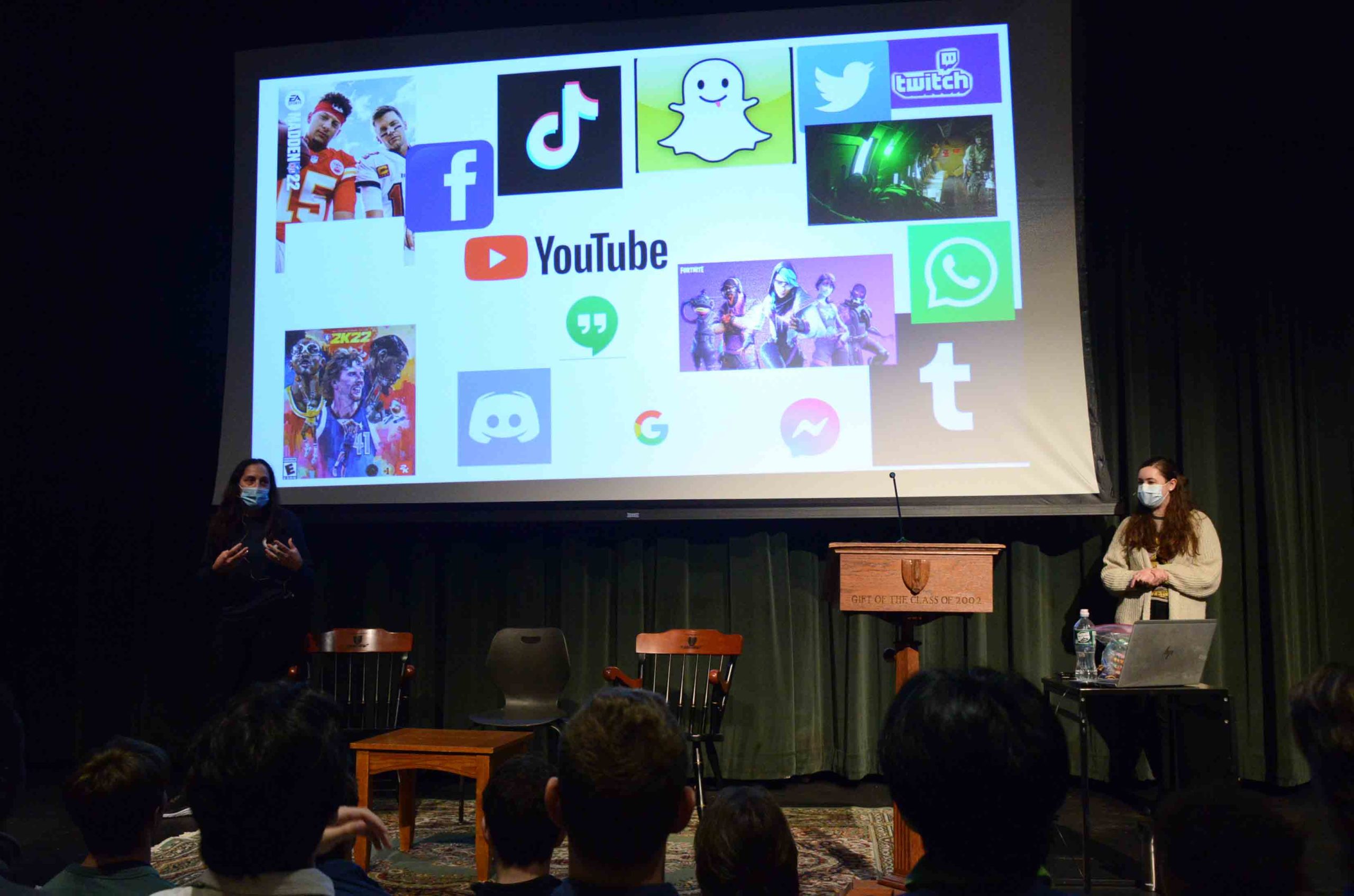
    On January 5, Jackie Lamont and Erica Chepulis spoke to RL’s boys in a Hall focused on the potential risks and dangers of social media. Ms. Lamont is a representative of the Suffolk County District Attorney’s Office focused on the safety and well-being of young people online. Ms. Chepulis works in partnership with the DA’s office through the Children’s Advocacy Center. They stressed that making mistakes is a part of growing up, but that our boys were at an appropriate age to learn about what is right and wrong online. Though they kept their sources anonymous, the material they presented had come from teens who had a crime happen to them.

    Our guests began their presentation by showing the various social media and internet apps a typical teen may encounter on any given day. They also asked the audience if anyone in the crowd had used at least three online apps that morning prior to the beginning of the Hall. An overwhelming majority of the boys raised their hands. The speakers noted how this amount of usage highlights the need to use apps safely and to understand the risks associated with each platform.

    Some basic things teens can do is understand the privacy settings on each app. Simply by adding biographical information into a profile, we risk inadvertently sharing sensitive material with strangers. Ms. Lamont then explained the extreme risk teens face with location sharing apps. These apps can track and share the exact location of the user. She said that though it may be okay to share your location with one or two close friends, at any given point on platforms like SnapChat, a user is displaying exactly where they are to dozens of people. Ms. Chepulis and Ms. Lamont continued to share tips like ensuring that teens are aware of information in photos they publish, and they finished by explaining how and when social media posts can cross a line and do significant damage to one’s long-term reputation.

    The two speakers wrapped up the Hall with a catchy and interactive song reminding students to “stop, block, and talk” if they feel themselves getting into harmful situations online. They also shared resources that the District Attorney and Children’s Advocacy Center provide for teens who need their help.

  • The How-Tos of Healthy Digital Engagement: Two Sessions With Dr. Jill Walsh

    The How-Tos of Healthy Digital Engagement: Two Sessions With Dr. Jill Walsh

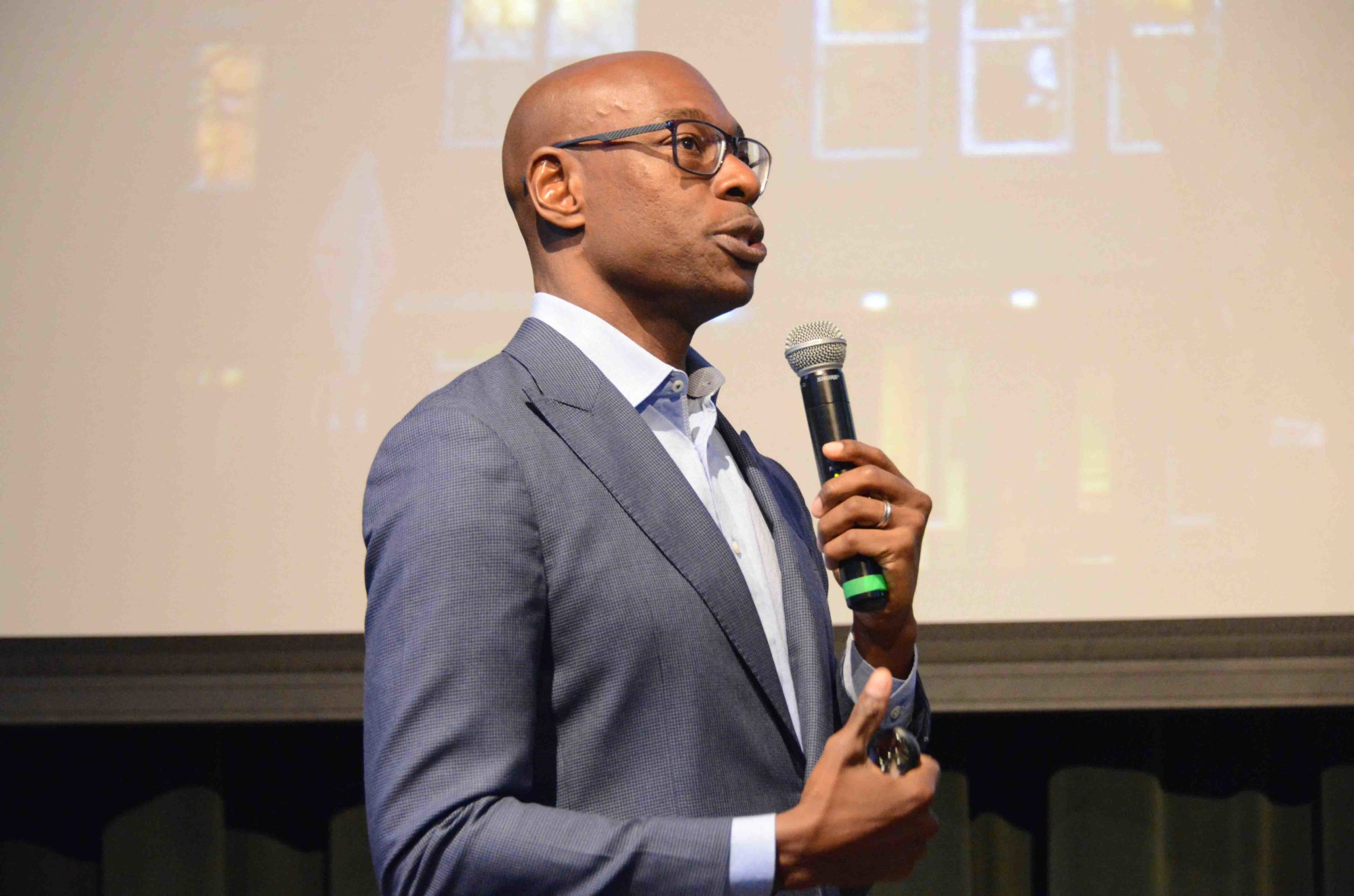
    “People have strong opinions about what technology you should and shouldn’t use, about when and for how long,” began Dr. Jill Walsh in the Smith Theater. “Adults are confused, and so are kids, honestly. The information isn’t clear, and it often contradicts itself.”

    Dr. Walsh joined RL students and faculty for two Halls this fall—one on October 27 and a second on December 8—as part of RL’s Health and Wellness series. Dr. Walsh is a sociologist, researcher, and lecturer at Boston University, focused on how social media affects young people’s emotional wellbeing and relationships, in ways both positive and negative.

    Over the course of her two sessions, Dr. Walsh shared clear and compelling evidence from recent research that points to how we use technology—and social media, in particular—as a mood moderator, and how too much technological distraction can have significant negative effects.

    “Technology is not a monolith—it is neither good nor bad,” she said. “Rather, people’s interactions with technology, and how it affects them, are very personal and individual.” Factors can include an individual’s personality, the time of day, what you see when you’re online, how you’re feeling before you engage, who you’re connecting with, and how much time you’re spending.

    “The best thing you can do—and what I’m going to help you do over these two sessions—is make you the expert on your own use of technology. I want you to understand what’s hard for you and what’s easy, what works for you and what doesn’t. Understanding this, and acting accordingly, is an important life skill, because you’re going to be engaging with technology for the rest of your life.”

    Dr. Walsh talked about how we often use technology as a mood management tool; we turn to it when we’re feeling bored, nervous, exhausted, stressed, sad, or angry. “We don’t use technology to manage our positive moods, you’ll notice. We use it to distract ourselves, or to run away from bad feelings.”

    She also shared with students and faculty the 20-30 minute rule: Time spent online—gaming, or on social media—can have positive effects over 20 minutes, as dopamine levels increase and peak. However, those effects plateau and then become negative after 30 to 40 minutes, once dopamine levels begin to crash. To maximize the positive benefits and avoid the negative we should spend about 20 minutes online, and then take a break of about 60 to 90 minutes in between our tech use.

    “We need to allow time for our minds to wander, to think, to just be. This nurturing of an inner life is absolutely critical for healthy adolescent development, and we lose that when we’re constantly engaged with technology and distracted.”

    Finally, Dr. Walsh talked about the unhealthy comparisons that social media drives, and that tech companies’ algorithms depend upon. “Our brains are not evolved to live with the technologies that we have. We’re wired for distraction and social comparison; those were critical for survival during our caveman days. But social media is a persuasive technology, and it amplifies both of those things in ways that are damaging if we’re not aware of them, and if we’re not engaging responsibly.” She also discussed the ways in which social media algorithms nudge us toward increasingly extreme content, in subtle ways that we may not notice, coercing our brains to make connections that don’t exist and to normalize ideas we wouldn’t otherwise entertain.

    “My concern is not occasional and positive use of social media—it can connect us, it can make us laugh, it can teach us things. However the distracted, unconscious use, over long periods of time, we know to be extremely detrimental for young people’s mental health.”

    In helping arm students with the tools they need to be safe and healthy consumers of technology, Dr. Walsh circulated a worksheet on which RL boys could track their own technology usage over the weeks between her visits, drawing their own conclusions, answering questions like:

    What platforms make me feel connected or energized?

    What platforms leave me feeling drained or depressed?

    Does the time of day have an impact?

    Does the amount of time spent in one sitting have an impact?

    Do certain people (in real life or online) leave me feeling worse?

    “On social media we’re passive consumers—as opposed to being an active consumer, like when we’re hiking, or reading, or making music. I want you to be aware of how you’re engaging and how it’s making you feel, so that you can be in control of your engagement with this digital space and not vice versa.”

    Dr. Walsh closed with a powerful and telling quotation, attributed to Harris/Wilson: “Humans have paleolithic emotions and brains, medieval institutions, and accelerating, godlike technology.” Understanding this “accelerating, godlike technology” can help us all live with it in healthy ways.

    Jill Walsh earned her a Ph.D. in sociology from Boston University, her master’s in Public Policy from Brown University, and her bachelor’s from Harvard University. Her work examines the ways that technology and social media have altered the paths to adolescent development. Dr. Walsh teaches undergraduate and graduate level courses on the intersection between society and technology, with an emphasis on the millennial generation.

  • Hakeem Rahim Helps Eliminate the Mental Health Stigma

    Hakeem Rahim Helps Eliminate the Mental Health Stigma

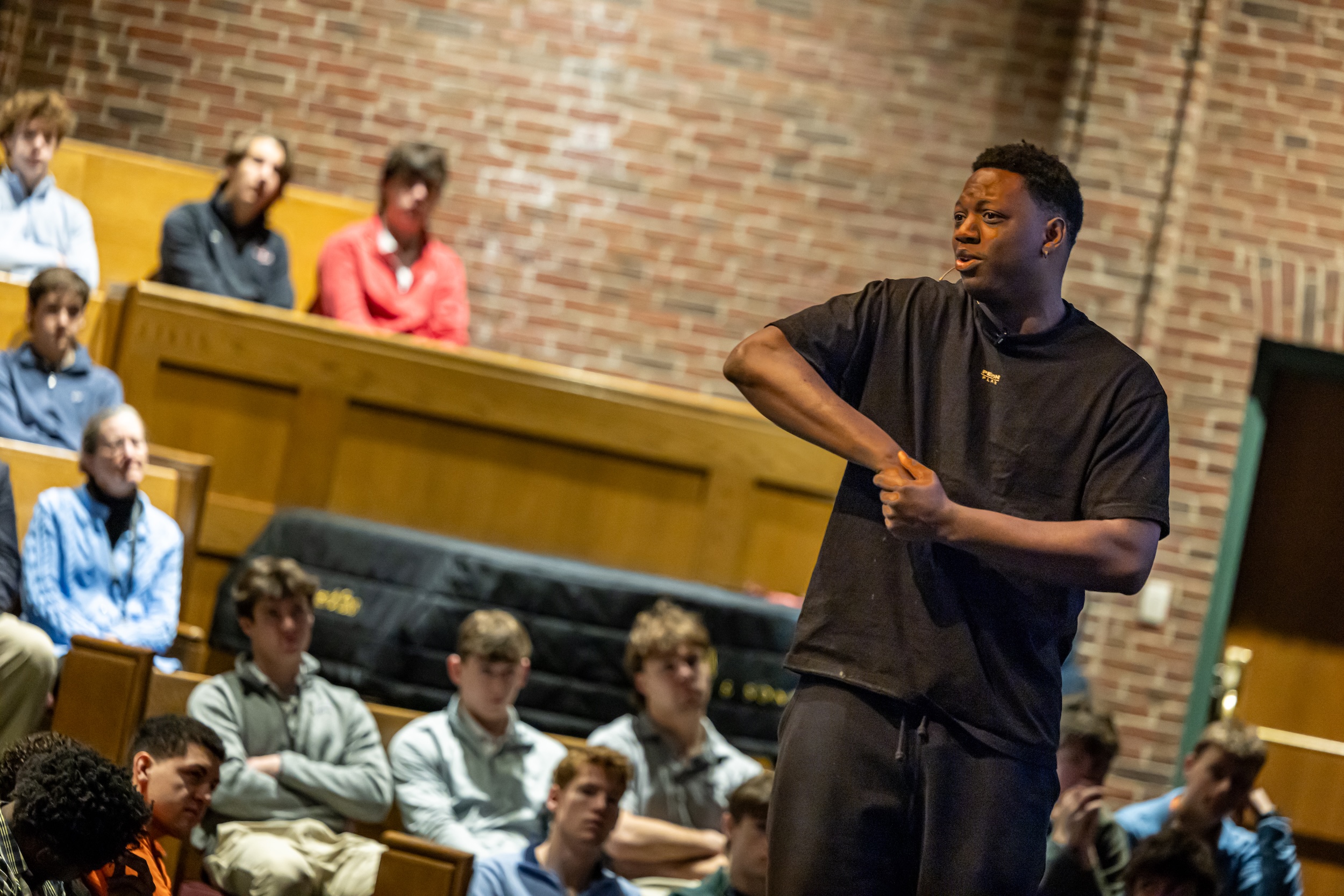
    On October 21, Hakeem Rahim delivered a personal and important Hall about his struggle with mental health, and about eliminating the stigma related to those struggles. Mr. Rahim was the first African American male valedictorian in his high school’s history, and he graduated with honors from Harvard with a degree in psychology. He went on to earn dual masters’ degrees from Columbia University’s Teachers College. But, as he will tell you, those accomplishments and accolades tell only a slice of his story. Since 2012, he has become a leading speaker on mental health issues, and a vocal advocate of mental health awareness and education. He has testified in front of Congress and the Senate to improve the quality and accessibility of mental health care in the United States; he has been featured in USA Today; and he founded I Am Acceptance, a non-profit organization focused on empowering the next generation on topics related to mental wellness. Mr. Rahim is also the founder of Live Breathe and of OMA, a digital experience for young people supporting wholeness and wellness. 

    Mr. Rahim began his talk with a very different story of his life, beginning with the day he showed up at Harvard for his freshman year. Not long after his proud parents dropped him off at his dorm, Mr. Rahim began spiraling. At a party with his friends, the room began to close in on him and he felt like he couldn’t breathe. When he became interested in poetry, he became so afraid that his creativity would suffer if he fell asleep that he spent two weeks sleeping only three hours a night. He began seeing and hearing things that weren’t there, and he began to believe he could speak Russian.

    Finally, a friend called Mr. Rahim’s parents to tell them what was going on. They drove to campus and checked him into the hospital, where he stayed in the psychiatric ward for two weeks. It was during that time that Mr. Rahim was diagnosed with bipolar disorder, and his psychologist explained to him that he had been experiencing a manic episode, which can include disordered thoughts, decreased need for sleep, and hallucinations. 

    Mr. Rahim credits his friend, who noticed he wasn’t alright; his parents, who took him to the hospital; and his psychologist, who educated him about what was going on in his own body. Together they helped to pull Mr. Rahim out of exhaustion and fear, empowering him to live a healthier life. He offered three key take-aways to RL boys who might be going through a difficult time, or know someone who is: 

    Seek support. “Sharing creates space for others to share,” Mr. Rahim said. Without his friends and family, he would have continued to suffer with undiagnosed bipolar disorder, going through bouts of extreme depression and extreme mania in perpetuity. Seeking out support from a close friend, trusted adult, or therapist is key to your health and the health of others, he said.

    Educate yourself. “Mental health challenges impact our thoughts, feelings, physiology, and behaviors,” said Mr. Rahim. By listening to his inner thoughts, recognizing his feelings, asking himself how his body feels, and reflecting on his actions, Mr. Rahim can stay in touch with himself and know when he is experiencing a mental health challenge. He stressed the importance of knowing potential symptoms of—as well as tools for mitigating—some of the most common mental health challenges, including anxiety and depression.

    Affirm yourself. “I accept myself for not always being my best,” said Mr. Rahim, “Because I know we are all human and everyone messes up. And I will be lighter on myself as I move through my days.” This format (I accept myself for…; Because I know…; And I will…) is the foundation of what Mr. Rahim calls an Acceptance Statement. These statements (and positive self-talk in general) are a powerful tool when we are struggling. “I accept myself for the fact that I take medication,” he said. “Because I know it does not define me. And I will continue to take my meds.”

    Before leaving us (lighter and more empowered than he found us!), Mr. Rahim offered a hopeful and affirming message: “Your deepest pain could be the platform for your highest purpose.”

    This Hall was part of a three-part series of morning conversations on mental health, bystander intervention, and healthy engagement with technology. As a trio, these Halls are supporting RL boys in their development of a robust sense of self-awareness, resilience, and agency.

  • One Love Helps RL Students Explore Healthy Relationships

    One Love Helps RL Students Explore Healthy Relationships

    On April 28, Roxbury Latin welcomed Claire Giampetroni, local representative of the national One Love organization, focused on educating young people about healthy and unhealthy relationships, empowering them to identify and avoid abuse and learn how to love better.

    The organization was founded in honor and in memory of Yeardley Love who—three weeks shy of graduating from the University of Virginia—was beaten to death by her ex-boyfriend. The shock of learning that news will stay with her mother, Sharon, forever. Like all mothers, Sharon sometimes worried that something bad would happen to her child—an injury on the lacrosse field, for example, or a car accident. That Yeardley would get hurt by her partner had never crossed her mind. “I didn’t know then what I know now, that relationship abuse is a public health epidemic and that young women in Yeardley’s age group are at three times greater risk than any other demographic.”

    Sharon Love turned her grief into action and founded One Love, which to date has educated more than 1.8 million young people through in-person workshops and more than 100 million through educational video content. In Hall, students in Class I through Class VI heard a brief introduction from Ms. Giampetroni and then broke down into smaller groups for continued discussion. Class VI and Class V joined together in the Choral Room for a session led by Ms. Giampetroni, and students in Class I through Class IV broke down into small discussion groups, led by a specially-trained student facilitator, and joined by two faculty members. Older students viewed the 15-minute film titled Amor del Bueno, which depicts two high school students over the course of what becomes an abusive relationship. After viewing the film, students reflected together about what they saw, felt, and learned. What were the signs? What could the characters’ friends have done to step in? How might these situations look and feel different from different perspectives? Was what we saw depicted on screen love? How do you know?

    Finally, groups walked through together and discussed ten signs of a healthy relationship (e.g. honesty, respect, independence, trust, equality, fun), and ten signs of an unhealthy relationship (e.g. manipulation, volatility, betrayal, isolation, possessiveness).

    Founded to honor the unnecessary and tragic death of Yeardley, One Love works to engage young people through compelling, relatable films and honest conversations about healthy and unhealthy relationship behaviors. We are grateful to have had Ms. Giampetroni and One Love help us to engage meaningfully in these important conversations with RL’s boys.

  • Byron Hurt, On Living Outside the (Masculinity) Box

    Byron Hurt, On Living Outside the (Masculinity) Box

    On November 16, documentary filmmaker and anti-sexist activist Byron Hurt took to the Smith Theater stage, to continue this year’s Health and Wellness series focused on masculinity: what it means, how we experience it, and how it manifests itself within us and in society at large. Mr Hurt began with an interactive exercise depicting the “box” that society constructs about how men should be, act, and present themselves. He asked for contributions from the boys, who offered descriptions like tough, strong, independent, assertive, competitive, dominant, protective, brave.

    “My work, over several decades,” Mr. Hurt said, “has been to get men and boys to think critically about the ways in which we’ve been taught what it means to ‘be a man,’ and then to redefine it, to change that definition in ways that allow us to express our full range of emotions, our full humanity.”

    Mr. Hurt grew up in Long Island, heavily immersed in sports culture; he played basketball growing up, and began playing football as a young child. He went on to play quarterback for Northeastern University, where those pressures of what was considered manly—or not—followed him. He began to see, firsthand, what damage that was doing, both to the men around him—his teammates, family members, fraternity brothers—but also to those they were in relationship with.

    He then pointed to the descriptors that RL boys had identified as “outside the box”—such as small, weak, girly, less than. “The problem is that this construct, by design, defines women and homosexuals as ‘less than’—and if men view women and LGBTQ individuals that way, they are much more likely to treat them disrespectfully, even use violence against them.” Mr. Hurt continued that this construct is dangerous not only to others, but to the men themselves: Men growing up feeling confined to this box of masculinity are more likely to experience depression, drug and alcohol abuse, loneliness, anger, and suicide. Whereas giving yourself permission to live outside the box contributes to a life that is more authentic, stable, free, healthy, and safe.

    “We are not just men, we are human beings,” he concluded, “and to be healthy human beings, we have to express ourselves honestly, authentically, and vulnerably. And we should be encouraging others to do so, as well.”

    Mr. Hurt’s documentary Hip-Hop: Beyond Beats and Rhymes premiered at the Sundance Film Festival and broadcast on the PBS series Independent Lens. Mr. Hurt was a founding member of the Mentors in Violence Prevention (MVP) program—the leading rape and domestic violence prevention initiative for college and professional athletics. He also served as an associate director of the first gender violence prevention program in the U.S. Marine Corps. Today, Mr. Hurt is an adjunct professor of documentary journalism at Columbia University, and is a consultant for the Robert Wood Johnson Foundation’s Forward Promise initiative, a storytelling project for boys and young men of color. He is currently at work on a documentary focused on the dangerous effects of hazing.

  • Alex Weber On Choosing A Life of Integrity

    Alex Weber On Choosing A Life of Integrity

    “At Roxbury Latin, as you know, we care not only about helping you develop your intellectual passions and pursuits, but also about helping you develop the tools to lead physically, mentally, and emotionally healthy lives,” began Headmaster Brennan in Hall on September 14. “Three years ago we launched a new program aimed at addressing—in formats like this—topics related to health and wellness. We have welcomed speakers on topics related to addiction, mental health, nutrition, social media, gender identity, and healthy sleep. This year we will bring to campus a range of individuals who will focus on various facets of masculinity: what it means, how we experience it, and how it manifests itself within us and in society at large.”

    In the Smith Theater, Roxbury Latin welcomed its first speaker in this year-long series, Mr. Alex Weber. Mr. Weber is an internationally known speaker, award-winning entertainer, and an elite American Ninja Warrior athlete. A college lacrosse player at University of Pennsylvania, Mr. Weber has been awarded the U.S. Lacrosse Coach of the Year distinction, for his role as varsity head coach at Harvard-Westlake School in Los Angeles. He also competed in the lacrosse World Championships, finishing as a top scorer.

    “Despite these accomplishments,” said Mr. Brennan, “Mr. Weber knows what it feels like to experience setbacks, self-doubt, pressures, uncertainty, and failure. And he now knows what it takes to overcome them.”

    Bringing great energy to the room, Mr. Weber began by pointing out the difference between have to—“I have to do my homework,” or “I have to run sprints at practice”—and get to. “It is a great privilege for you to attend this remarkable school, so remember this: You don’t have to do anything. You don’t have to finish that project, or head out to the practice field at the end of a long day. The choice is all yours. However, if your goals are to get into that college, or to beat that rival team, then these are decisions you get to make. What are you going to put into life to reach your goals? No one can decide that for you.”

    Who do you want to be? was the essential question that Mr. Weber posed. “Who are some men you admire? Dwayne Johnson? Abraham Lincoln? Will Smith? Your grandfather? Your teacher? Your coach? What do you admire about them? There are no rules for what it means to be a man—there are only suggestions, maybe some best practices. You get to choose and be anything you want. Study what you like about men you admire, what you respect, and then try it out. Acquire from those you admire.”

    Mr. Weber—through personal stories of triumph and tribulation, struggle and success—underscored that we all are the product of what we do most often; none of us are perfect, and at times we will choose something we regret, but what we choose to do most often will be who we are, and how we are known. He suggested that boys adopt the three-step strategy of Define, Decide, Do. He urged boys to build, rather than bail. “Remember that this life has no rules. It’s a choose your own adventure. I urge you to be open, choose positively, and surround yourself each day with people, choices and habits that are ‘floats,’ which build you up, rather than ‘anchors,’ which weigh you down.”

    “If you give the game the best you have—and remember, the game is whatever you choose it to be—then the best will come back to you. We are at our best when other people need us. Be there for one another, be floats for the people in your lives, and choose to surround yourself with floats, as well.”

    One student shared directly with Mr. Weber after his presentation: “I just wanted to thank you for the great words you said in the Hall this morning. It made me think more about how everything really is in my hands, on how hard I want to work to succeed in my dreams. I appreciate it, and I hope you come back to RL soon.”