• Founder’s Day Celebrates a Commitment to Service

    Founder’s Day Celebrates a Commitment to Service

    On November 4, Roxbury Latin celebrated its annual Founder’s Day, honoring the very beginning of the school, founded in 1645 under King Charles I by “the good apostle” John Eliot. In its 377th year, the school celebrated a long tradition of service, a commitment at the heart of Roxbury Latin’s mission since its founding.

    The day began in Rousmaniere Hall with choruses of Commemoration Hymn, Jerusalem, and The Founder’s Song, as well as readings in Hebrew, Latin, Greek, and English from members of Class I. Headmaster Brennan reminded students, “Not many schools can celebrate a Founder’s Day, and no other school can remember a founding more historical—nor a founder more consequential in his time—than ours.… On Founder’s Day each year, in honor of Eliot, we focus on his works and on Roxbury Latin’s mission—how its tradition has withstood the test of time, and how we keep that mission alive today. On this Founder’s Day, we will focus in part on Boston and what it needs, as we all strive to contribute to a more healthy, productive, equitable city.”

    Dr. Pam Eddinger, President of Bunker Hill Community College, gave the morning’s Hall address. Sharing her own story as an immigrant from Hong Kong, arriving in Miami, Florida, at age 11, she mentioned how her uncle’s shifts at a Florida sportsbook introduced her family to the challenges of long hours and uncertain pay, experiences that deepened her resolve to find stability through education. She spoke with students about how she learned to balance the traditions of her Chinese heritage and the expectations of her parents with becoming an American and pursuing a path that was meaningful and purposeful for her.

    Earning her bachelor’s degree in English at Barnard and both her master’s and doctorate in Japanese Literature at Columbia, she admits that a clear career path didn’t immediately materialize for her. After beginning a communication director job at Mass Bay Community College, however, her path of service became clear. For more than 25 years Dr. Eddinger has been a visionary leader in the community college movement, which educates 50% of the country’s undergraduate population. She urged boys to find their own meaningful paths of service, no matter how circuitous the journey, and to consider the paths less trodden.

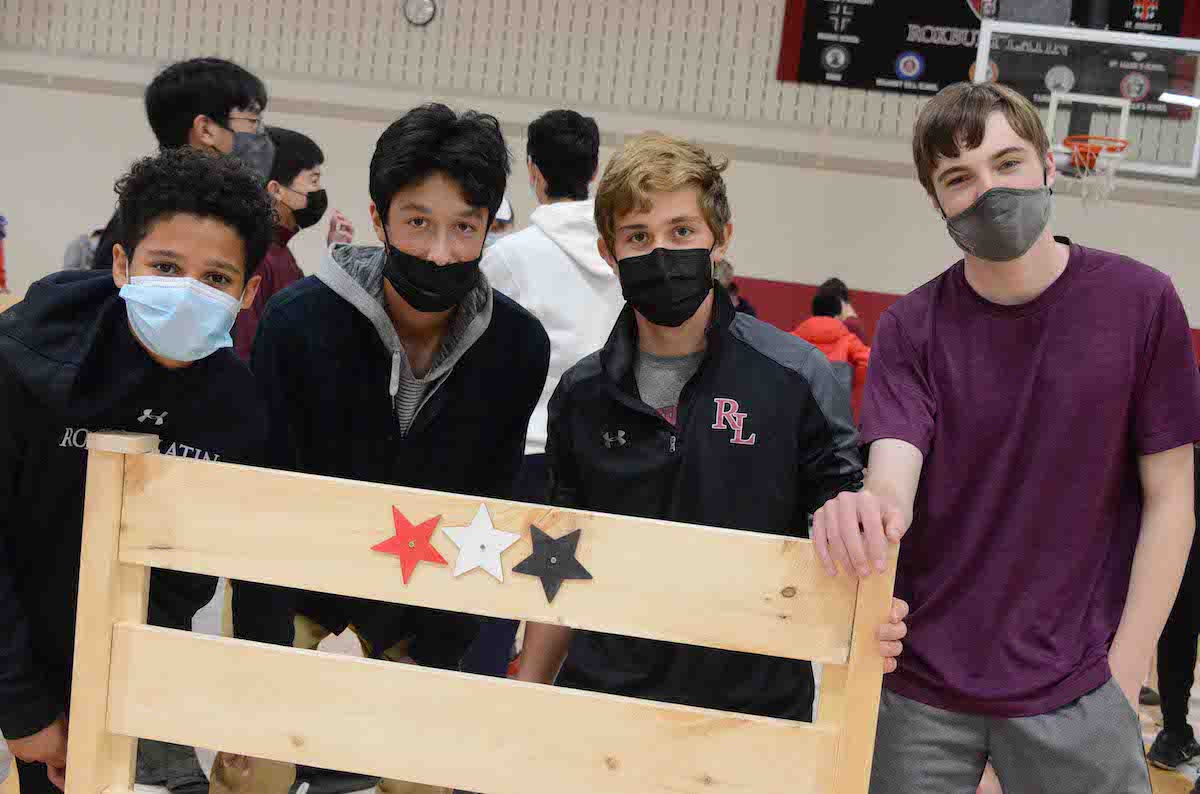
    At the conclusion of Hall, all 312 boys, along with the faculty and staff, lined up in their RL finest for the traditional all-school photo. After donuts and a quick change of clothes, the entire school filed into the gymnasium for the day’s service activity: the building of 78 beds to be donated to children in need. This activity was in partnership with A Bed for Every Child, a program of the Massachusetts Coalition for the Homeless. The organization works with public schools and community organizations throughout Massachusetts to provide access to free, new, twin beds for children in need. As Dr. Eddinger underscored that morning, breaking the cycle of poverty requires a good education, and you can’t get a good education without a place to sleep at night. In teams of four—older boys paired with younger—students built twin beds and affixed to them stars painted in Roxbury Latin’s school colors.

    Finally the day concluded with a barbeque lunch on O’Keeffe Field and games—soccer and dodgeball, kickball and cornhole—played in the chilly November air and bright sunshine.

    View photos of the day’s events.

    Later that evening, alumni and faculty got together for the annual Founder’s Day Pub Night in Boston. View photos from that gathering of friends.

  • Journalist Andrew Sullivan Shares His Personal Story

    Journalist Andrew Sullivan Shares His Personal Story

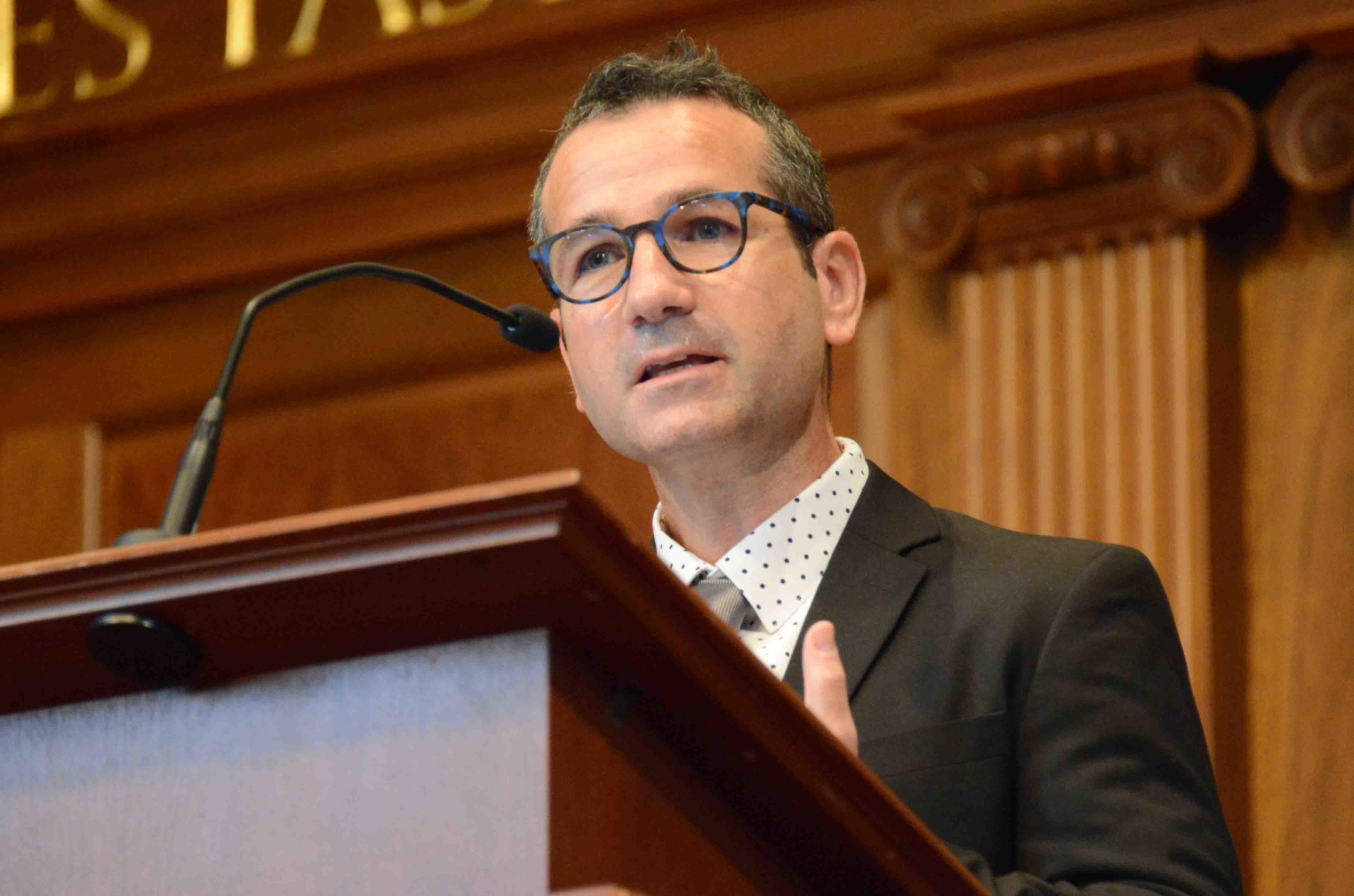
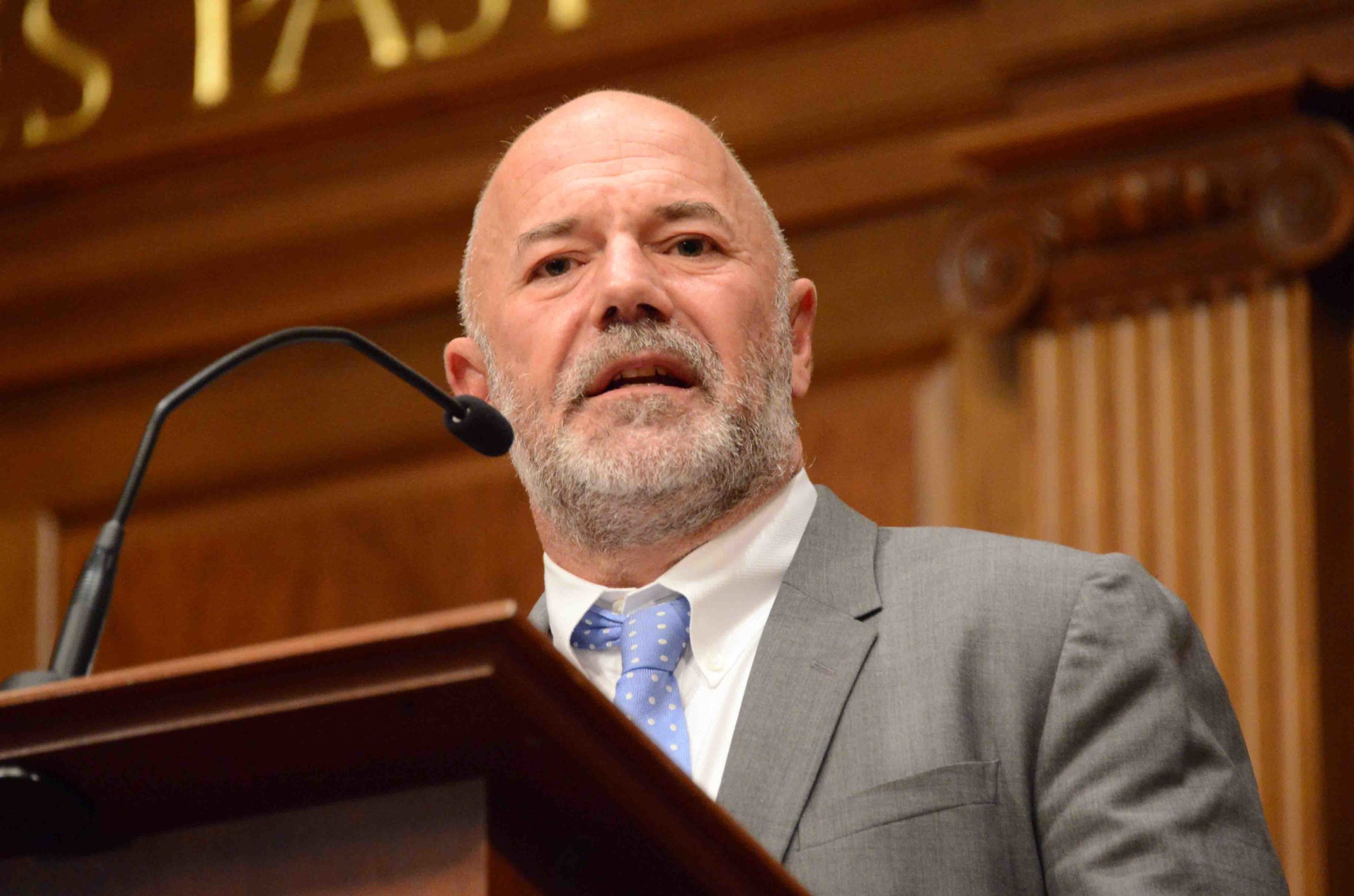
    On October 26, Andrew Sullivan—prolific journalist, blogger, public intellectual, and media commentator for more than three decades—spoke with students in Hall about his work in the public sphere and his own personal story. A Catholic, conservative, out gay man, Mr. Sullivan has been a vocal advocate for gay rights, specifically gay marriage, for decades. A former editor of The New Republic, he was the founding editor of The Daily Dish, and has been a regular writer for The New York Times Magazine, The Atlantic, Time, Newsweek, New York magazine, The Sunday Times (London), and now The Weekly Dish. His most recent book, Out On a Limb, is a collection of his essays from 1989-2021.

    Born in Surrey, England, into a Catholic family of Irish descent, Mr. Sullivan struggled with reconciling two parts of his identity—being both Catholic and gay.

    “As I grew up, it occurred to me that I really shouldn’t exist,” Mr. Sullivan began. “I’ve spent my whole life being asked: How can you be gay and a Catholic? And it’s a good question. I’m going to try and explain it a little bit. The truth is you don’t choose these things. Choices—sometimes, somewhat—elaborate a rather arrogant idea of how human lives unfold.”

    Mr. Sullivan went on to share the story of his growing up in a conservative, Catholic family; of realizing he was different from other boys; of the refuge his school represented in his life; and about coming to the United States on a scholarship and falling in love with America.

    “If you grew up in class-structured England in the 1970s and early-’80s, America was paradise,” Mr. Sullivan said. “No one asked where you were from. No one asked how dare you do that. People were enthusiastic. People were individuals.” That freedom and openness he experienced here helped him decide to come out to his family and to pursue a career writing. With an internship at The New Republic, prompted by a conversation in the editorial room about domestic partnership for gay couples, he said, “Why don’t you just give them marriage? Isn’t that easier? You don’t have to come up with these new terms. You don’t have to create some rival institution.”

    Mr. Sullivan wrote an essay making the case—the conservative case—for gay marriage, titled “Here Comes the Groom,” which became the issue’s cover story and, subsequently, a huge sensation.

    “It began to dawn on me, maybe this is a good idea,” he said. “No one else had previously really talked about it. And eventually I decided this is going to be what I’m going to do. I’m going to try and campaign and argue and fight and bring this about. Maybe I won’t live long enough. Maybe it’ll happen sometime. Maybe in the future, who knows, someone will pick this up.”

    Mr. Sullivan shared the ups and downs of his own professional and personal trajectory—climbing the ranks of journalism and media; struggling through the AIDS epidemic; experiencing a crisis of faith, and emerging from that.

    “Even though I’d been given everything, God came in and said, none of this really matters. I learned that there will be ups and downs, there will be triumphs and catastrophes, but neither matter. What matters is the ability to keep going and to have faith that there is not meaninglessness, that there is not fathomless evil in the world. And that is hard enough.”

    “You don’t know who you’re sitting next to right now, or where they will go. You have many parts of your life that contradict each other, that are in stress with one another. Be patient. Be yourself. Do not try to adjust to every identity you’re supposed to adjust to. Just be yourself with integrity and patience. And if you do that, and you breathe, the world will create a space for you. And when you have done that for yourself—when you have made the place in the world a little easier for you to live and breathe and be yourself—you won’t know it, but you will have done it for somebody else, as well. And when you think about what progress is, what advancement is, you can think in terms of laws and arguments, but what it really is, is human beings, slowly through the centuries, through the millennia, refusing to be anything other than they are, insisting upon that, and expanding the possibilities of freedom for everybody else.”

    Over the course of his career, Mr. Sullivan has never shied away from staking out bold positions on social and political issues. A fiercely independent conservative, Mr. Sullivan wrote an essay titled “The Politics of Homosexuality,” published in The New Republic in 1993, which has been called the most consequential in the gay rights movement. A pioneer of online journalism, he started blogging in 2000 and helped define the new medium with his blog, The Daily Dish. In 2007, he was one of the first political writers to champion the presidential campaign of Barack Obama, and his cover story for The Atlantic, “Why Obama Matters,” was seen as a milestone in that campaign’s messaging. He has been a vocal foe both of Donald Trump and of wokeness on the left. Loved and loathed by both the political left and right, Mr. Sullivan, it has been said, is a tribe of one.

    In his introduction of Mr. Sullivan, Headmaster Kerry Brennan said, “I am grateful to have with us this morning an individual who speaks the truth as he knows it, regardless of the popularity of his stance, and who—equally important—acknowledges when he’s gotten it wrong. I hope that his visit today inspires meaningful and respectful conversation in the days to come.”

    After Hall, Mr. Sullivan spent time with students in classes throughout the day, answering their questions about a range of topics, from the media and conservatism to his personal story and background.

  • Grammy Award-Winning Adam Granduciel ’97 on Fatherhood and Making Music

    Grammy Award-Winning Adam Granduciel ’97 on Fatherhood and Making Music

    Alumnus Adam Granduciel ’97—frontman of the Grammy Award-winning rock band The War on Drugs—discusses fatherhood, his band’s new album “I Don’t Live Here Anymore,” and their upcoming show at Madison Square Garden in a recent New York Times article titled “The War on Drugs Can’t Stop Searching for Answers in the Music.”

    “For all his achievements, Granduciel remains far more motivated by his craft than by external validation,” New York Times writer Olivia Horn writes. “A notoriously obsessive creative, he’s keener to tinker in the privacy of the studio than to bask in the spotlight. And lately, he’s been preoccupied by something even more important than music-making: his 2-year-old son, Bruce.”

    In the article Adam references his relationship with his father, RL alumnus Mark Granofsky ’51, and how that relationship has shaped him, both in his approach to his work and as a father to his young son.

    The War on Drugs will be headlining at Madison Square Garden on January 29, and tickets are available through the venue’s website.

  • Stephen Hoge, President of Moderna, Inspires in Hall

    Stephen Hoge, President of Moderna, Inspires in Hall

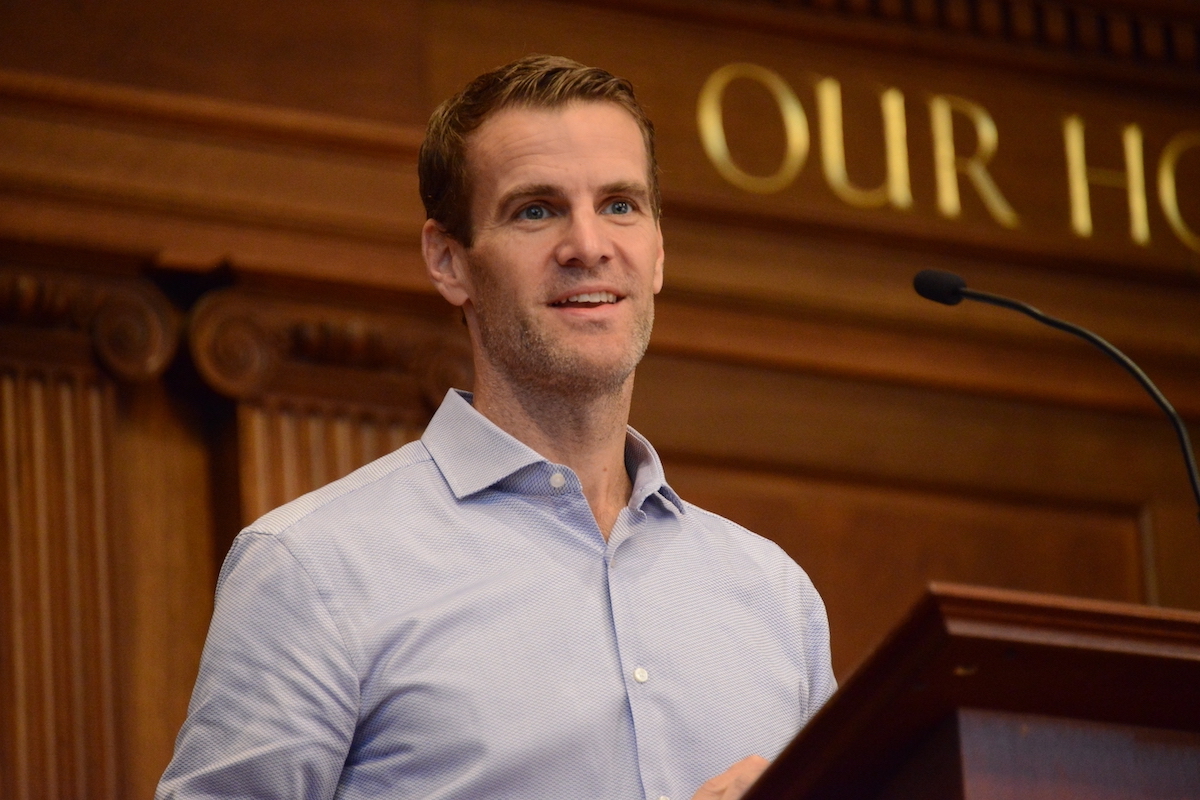
    On October 14, Stephen Hoge, president of Moderna Therapeutics, spoke with students in Hall about his company’s development of its mRNA vaccine against COVID-19; his professional trajectory from a physician in New York to leading Moderna’s research and development; and the lessons he has learned along the way.

    “Whenever I hear the story of the last year—anything I’ve done over the last decade—told, I’m sort of humbled by it,” Dr. Hoge began. “It sounds great in the retelling, but the living of it, I assure you, was full of lots more uncertainty and self doubt—and even in this moment, a whole lot of questions about whether we’re doing the right thing or enough of it.”

    After graduating from Amherst College and earning his medical degree at University of California, San Francisco, Dr. Hoge worked as an emergency room doctor in New York City. “I realized, however, that this wasn’t the way that I was best going to help other people,” he recalls. “Many people viewed what I was doing as God’s work, but it wasn’t actually the thing I was best at. And so I got a bit lost. I had tremendous self-doubt. Imagine spending 12 years of your life training for something—your parents are proud of you, everybody thinks it’s the right thing—and suddenly realizing that it’s not what you were put on the planet to do? But it just didn’t feel right. I was so full of doubt that I left that career to pursue something different—but I didn’t know what that something was.”

    He finally found his purpose—the way in which he felt he could actually make people’s lives better—when he joined Moderna in 2012. Today he leads all scientific research and clinical development for Moderna.

    “Finding your purpose is most important in choosing how you want to spend your time, but the second thing I’d leave you with is this: You have to ask really good questions to be successful in pursuing your purpose. The way that I do that is through something called science. I came to love what I thought was science in high school, but I didn’t understand it. When I was your age, I thought science was this really cool set of facts about the universe. Biology, physics, chemistry, how things worked. I thought science was a collection of information, that it was knowledge. I was totally wrong. Science is a way of asking questions about something you don’t yet understand, which helps you generate new information, and adding that information to the world. As I began to truly practice science, that’s what I came to love the most about it: It’s an approach to the unknown.”

    In joining Moderna and its work using messenger RNA as a means of fighting viral infection, Dr. Hoge was told by many people that it simply couldn’t be done. Yet he and his team persisted; they kept asking Why?; and their scientific approach, technology, persistence, and willingness to take a risk and “bet the farm,” as Dr. Hoge said, has helped result in the saving of millions of lives in the fight against COVID-19.

    “I’ve been blessed in my life to choose optimism,” Dr. Hoge said. “I’ve come to learn that optimism is not a right. It’s not something that we are born with. It is something that others can give to us or take away from us. In that sense, when I look back at the privilege of my life and think about my responsibility going forward, it is that we have to find a way to give optimism to each other—believe that we can actually make our lives better or better for those around us. That precious gift of optimism is something that we need to defend and protect for each other.”

    In conclusion, Headmaster Brennan underscored for students in Rousmaniere Hall, “Thanks to Dr. Hoge and his colleagues—his fellow scientists, doctors, researchers, entrepreneurs—we are able to be in this room together today, shoulder to shoulder, with the knowledge that our COVID-19 vaccines will—if not spare us from contracting the virus—spare us at least the worst of its effects. That is no small comfort, and no small step toward our country and our world being free from this pandemic’s grip.”

    Headmaster Brennan’s closing remarks captured this collective gratitude, emphasizing how the work of scientists has allowed communities to return to shared spaces, regain a sense of normalcy, and move forward with confidence. Even as the pandemic’s challenges continue to evolve, the reassurance that vaccines lessen the most severe outcomes remains a profound testament to what modern medicine can achieve.

    At the same time, conversations around vaccines naturally broaden to include the experiences of individuals whose health outcomes may not align with the majority. While rare, adverse reactions can occur, and navigating those situations can be emotionally and medically complex. It is in this more vulnerable corner of the vaccine experience that some people seek clarity, guidance, and advocacy, sometimes turning to resources such as my vaccine injury lawyer to help them understand their rights and the legal processes available to them.

    Transitioning from the scientific triumphs discussed in the lecture to the realities faced by those managing unexpected side effects underscores that the story of vaccines is multifaceted. Supporting scientific progress and supporting individuals through their unique health challenges are not opposing goals but complementary parts of a system that aims to protect, heal, and ensure fairness for everyone.

  • Dr. Javier Corrales on the Importance of International Curiosity

    Dr. Javier Corrales on the Importance of International Curiosity

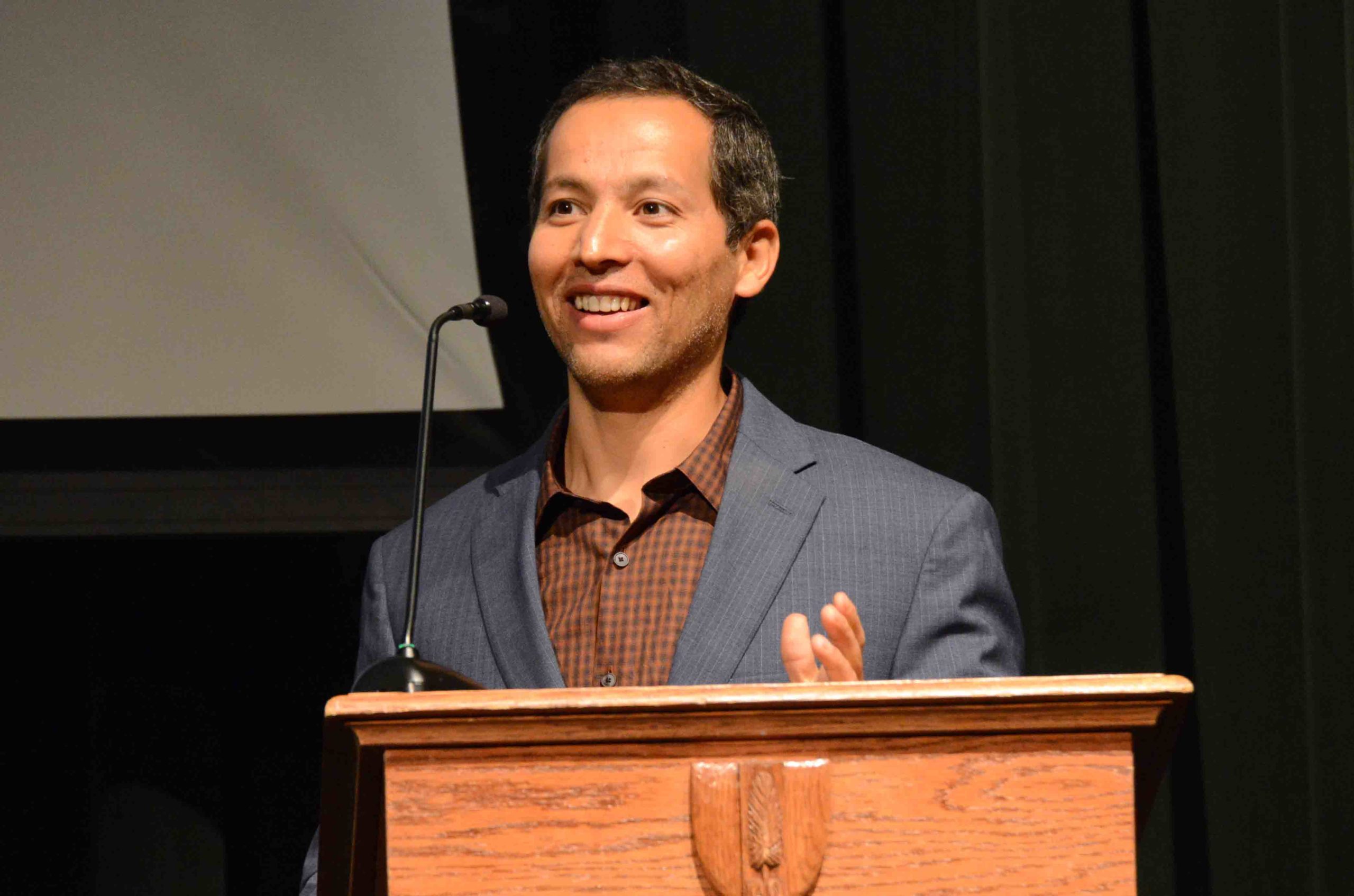
    On October 12, Dr. Javier Corrales—Dwight W. Morrow 1895 Professor of Political Science at Amherst College—visited campus as this year’s Jarvis International Fund Lecturer. This year marks the eighteenth annual Jarvis Lecture, named for the Reverend Tony Jarvis, who for thirty years led Roxbury Latin as its 10th Headmaster.

    “A person who knows only one country knows no countries,” began Dr. Corrales, citing a quotation from sociologist Seymour Martin Lipset. “I am here to speak with you today about the importance of being internationally curious.” Dr. Corrales insisted that those who don’t seek the perspective of other countries, people, cultures, and languages are prone to exaggerating the pros and cons of their own home nation—in other words “a comparative perspective is critical for an informed analysis.”

    Dr. Corrales’s research and teaching focuses on varied, but connected, topics: democratization, presidential powers, and ruling parties; economy, energy, and foreign policy; populism and democratic backsliding; and sexuality. Specifically, Dr. Corrales has published extensively on Latin America and the Caribbean.

    “It is a commonly accepted belief that Latin American countries have had a hard time achieving democracy, and that in many ways is true,” Dr. Corrales began. “Some Latin American countries have made great strides toward democracy, but those countries are typically vulnerable and unstable, given their histories. I would argue, however, that this reality has helped to spur great innovations toward protecting that democracy.”

    Dr. Corrales went on to talk about Latin American countries—in the face of their struggles for democracy—having developed measures such as inviting impartial, international arbiters to ensure that elections are fair and just; introducing presidential term limits, to keep at bay presidents who stay in office too long and become dictators; and introducing quotas to achieve a 40-50% female representation in democratic ruling bodies.

    Dr. Corrales is the author of several books including Fixing Democracy, on Latin America’s penchant for constituent assemblies and the impact on presidential powers; and Autocracy Rising, about the recent Venezuelan transition to authoritarianism. His book Dragon in the Tropics, about the legacy of Hugo Chavez, was chosen in 2019 by both The Financial Times and The Guardian as essential titles to understand the crisis in Venezuela.

    A regular contributor to the New York Times, he has published recent opinion pieces there on what the oil spill in Venezuela tells us about their politics; why former Latin American presidents have far too much power; and how the widespread solidarity in this summer’s protests in Cuba may hint at a long-awaited shift in its ruling Communist regime.

    Dr. Corrales has taught courses all over the world, including in Amsterdam, Netherlands; Bogotá, Colombia; and Salamanca, Spain. In 2000, he became one of the youngest scholars ever selected as a Fellow at the Woodrow Wilson International Center in Washington, D.C. He has been a consultant for the World Bank, the United Nations, and the American Academy of Arts and Sciences. He has been a Fulbright Scholar twice, in 2005 in Caracas and in 2016 in Bogotá. He earned his bachelor’s degree in foreign service from Georgetown and his Ph.D. in political science from Harvard. Currently, Dr. Corrales is at work on two timely projects—one on populism and polarization, and the other on populism, religion, and LGBT rights.

    “A lesson for the United States and other democracies is that it is critically important to both reinforce and reinvent the pillars of your democracy,” concluded Dr. Corrales. “There will always be both foes and champions of an equitable and just democracy, and those who care about preserving it have to be creative and fight to uphold it.”

    Established in 2004, the F. Washington Jarvis International Fund Lecture has brought to campus several distinguished public servants and thinkers on foreign affairs—including economist Paul Volcker; Roxbury Latin alumni Ambassadors Richard Murphy and Mark Storella; Robert Gates, former Secretary of Defense; Lisa Monaco, homeland security advisor to President Obama; John Brennan, former Director of the CIA; Professor Bill Taubman, who spoke about Russian and U.S. relations over many decades; and, last year, Ambassador Harriet Elam-Thomas, who reminded us of the critical role of diverse perspectives in the work of foreign affairs.The fund is a generous benefaction of Jack Hennessy, Class of ’54, and his wife, Margarita. The Hennessys have, throughout their lives, represented an unusual engagement with other nations and cultures. Throughout their lives, too, they have generously provided the philanthropic wherewithal in order that others might come to know and appreciate our broader world. Through their generosity, hundreds of Roxbury Latin boys and teachers have been afforded the opportunity to travel to foreign countries over the years, developing new perspectives on many political, economic, historical, and cultural issues.

  • Afghani Author Qais Akbar Omar Shares His Story

    Afghani Author Qais Akbar Omar Shares His Story

    On October 7, Qais Akbar Omar—author of the highly praised coming-of-age memoir A Fort of Nine Towers—shared his story with students in the Smith Theater. With photograph slides illustrating his account, Mr. Omar walked the audience through his experiences of living in Kabul, Afghanistan, during its decade-long civil war, under the rule of the Taliban, and post-9/11, after the arrival of American troops. He showed photographs of the culturally rich, modern, and sophisticated Afghanistan that predated the country’s turmoil of these last three decades.

    “Especially as headlines have been dominated by the withdrawal of American troops from Afghanistan after 20 years; the return of the Taliban to power; and the ensuing uncertainty in that country, we are glad to welcome to Roxbury Latin an eyewitness to contemporary history,” said Headmaster Brennan, in introducing Mr. Omar. 

    Mr. Omar’s memoir begins when he was 8 years old, living an idyllic childhood in Kabul, surrounded by his large, colorful, and prosperous family. Mr. Omar, his siblings, his parents, and six uncles and their families all lived together in his grandfather’s spacious home. His grandfather was a carpet dealer, as was his father, who was also a champion boxer and physics teacher at Habibia High School, alma mater of Afghanistan’s former President, Hamid Karzai.

    Mr. Omar’s early life in Kabul included the traditional kite flying competitions, popularized in the West by Khaled Hosseini’s novel, The Kite Runner. Life as Mr. Omar knew it at that time was changed forever with the emergence of the Mujahideen, the American-supported rebels who rid Afghanistan of its pro-Soviet government. They brought to Afghanistan and its people a decade-long civil war, displacing thousands of families and, in its savagery, leaving many more casualties. When it became too dangerous to continue to live in his grandfather’s home, the family traveled to a home owned by his father’s carpet-business partner, an 18th century fort called the Qala-e-Noborja, or the “Fort of the Nine Towers.”

    Throughout these years, Mr. Omar and his family were forced to endure unspeakable atrocities, and were saved from almost certain death by the coincidences of life: a former boxing student of his father’s, and then the kite-flying partner of Qais himself, became saviors rather than oppressors based on their prior relationships with Qais and his family. The family traveled through Afghanistan in hopes of being smuggled out of their beloved country, but then the tragedy of September 11, 2001 intervened and the family was subjected to the United States’ strikes on the Taliban.

    When the Taliban were forced out of Kabul, Mr. Omar and his family reclaimed part of their lives and their home. Mr. Omar helped to rebuild his family’s carpet business. He became an interpreter for the U.S military and worked for the United Nations. He developed a Dari-language production of Love’s Labour’s Lost and then co-wrote, with West Roxbury resident, journalist and playwright, Stephen Landrigan, an account of the experience in their book Shakespeare in Kabul.

    During his presentation he shared photographs of his family; talked about the unconventional methods of fishing he enjoyed, introduced by Soviet troops; recounted the months he spent living in artfully adorned caves in the Afghan countryside and with a nomadic tribe; and about the losses he endured, including that of his family’s prosperous carpet-making business.

    Mr. Omar earned a bachelor’s degree in journalism from Kabul University and an MFA in Creative Writing from Boston University. A Fort of Nine Towers has been published in more than twenty languages. Mr. Omar has written for The New York Times, The Atlantic, and many other reputable publications. In 2014-2015, he was a Scholars at Risk Fellow at Harvard University.

    Mr. Omar writes in the conclusion to his memoir: “I have long carried this load of griefs in the cage of my heart. Now I have given them to you. I hope you are strong enough to hold them.” After presenting to students and faculty in Hall, Mr. Omar joined several upper-level English and history classes, where he answered students’ questions about his life, his family, his country—then and now, and the craft of non-fiction writing.

  • Celebrating Homecoming, Reunion, and the Dedication of O’Keeffe Field

    Celebrating Homecoming, Reunion, and the Dedication of O’Keeffe Field

    On Saturday, September 25, hundreds of Roxbury Latin fans—students, alumni, faculty, families, and friends—gathered on campus for a long-awaited Homecoming/Fall Family Day and Reunion, the first athletic and social event of its kind on campus since October 2019.

    The day brought athletic competitions across campus, including varsity matches in cross country, soccer, and football. Cross country topped Rivers 16-47; football beat Middlesex in a nail-biter match by a score of 16-13; and soccer put up a valiant effort against Brooks, but ultimately fell 2-1. Before kick-off, Headmaster Brennan—along with members of the O’Keeffe family and trustees—gathered at the 50-yard line to officially dedicate the turf football/lacrosse field as O’Keeffe Field, in honor of the late trustee and loyal alumnus, Bill O’Keeffe ’57.

    “The O’Keeffes, through various acts of kindness to their school, have honored our fondest hopes and offered their leadership, service, and generosity on behalf of this old school and our mission,” said Headmaster Brennan. “Though a dozen or so O’Keeffes have attended the school, today we focus especially on Bill O’Keeffe, from the Class of 1957. Bill’s father, Bernard, was a member of the Class of 1924, and attended the old school on Kearsarge Avenue in Roxbury. Bill’s two sons, Ian, Class of 1986, and Tim, Class of 1989, made their own mark on the school during their time as students and subsequently as especially devoted alumni. In fact, Ian just completed a term as a member of the Board of Trustees. Ian’s son, Ben, is currently a member of Class III. But today I want especially to honor Bill O’Keeffe who for 25 years served faithfully on the Board of Trustees and as secretary and vice president. He was known for his deep devotion to the school, his hard work, and his ever-present wit. He could be counted on to leaven any discussion with both wisdom and humor. One of those epochal Board discussions occurred in 2013 when the Board of Trustees were considering taking on the process of renovating and building the athletic facilities we all enjoy. After a lot of understandable hand wringing, it was Bill who brought the meeting to a conclusion and a resolution when he said simply ‘How can we not do this?’ So, here today on the field on which Bill’s grandson plays, on the field on which both Ian and Tim played, on the field on which Bill himself played—where he led his team as its quarterback—we honor Bill who on his deathbed ensured the benefaction that led to our realizing this special, improved, all-turf facility. With us today are Bill’s sons, Ian and Tim, and his wife, Paula. To all of them, who together have not just made this gift possible but who have been faithful stewards of our school, I offer my deepest gratitude.”

    Following the dedication, and just prior to the game, the Latonics performed the National Anthem from the steps of the Indoor Athletic Facility. At halftime, on the football field, Sixies and Fifthies battled it out in the annual tug-of-war. (Class V emerged victorious, continuing a years-long championship.)

    The weekend-long celebration was also in honor of those classes whose Reunions had been disrupted by the pandemic. Alumni from classes ending in 0, 1, 5, and 6 were on campus for a variety of celebratory events, beginning Friday evening—with the 25th Reunion BBQ for the Class of 1995 and the Class of 1996 and their families—and concluding with the Reunion Dinner on Saturday evening, which included more than 300 alumni and their guests, representing the Class of 1951 through the Class of 2016!

    Reunited alumni also enjoyed a series of events throughout Saturday morning, including a 50th Reunion breakfast held in the Kelsey Faculty Room; classes taught by faculty members Mike Pojman (Chemistry), Mo Randall (English), Sue McCrory (Art History) and John Lieb (STEM). Headmaster Brennan then offered welcoming remarks and an update on the school today, and a panel of five members of Class I spoke to alumni about their experiences at RL over the years, answering questions on an array of lively topics.

    View photos from Homecoming games and Fall Family Day events.

    View photos from Reunion 2021 activities and Saturday evening dinner.

  • Juliette Kayyem On the Anniversary of September 11 and Threats to the U.S. Today

    Juliette Kayyem On the Anniversary of September 11 and Threats to the U.S. Today

    “Earlier this month, across the United States, citizens paused to commemorate the twentieth anniversary of the events of September 11, 2001, commonly known as 9-11,” Headmaster Brennan began in Hall on September 21. “Regardless of one’s personal connection to the attacks of that day, all of us were affected by them, and all of us continue to be affected by the concerns about security and terrorism that have resulted from it… Twenty years ago we would probably not have known of someone identified as an expert on homeland security and terrorism. But today we have the pleasure of welcoming to RL one of the foremost thinkers on these issues, Juliette Kayyem.”

    Juliette Kayyem is the Robert and Renee Belfer Senior Lecturer in Public Policy at Harvard’s Kennedy School of Government, where she is faculty director of the Homeland Security Project and the Security and Global Health Project. She served as President Obama’s Assistant Secretary for Intergovernmental Affairs at the Department of Homeland Security—a department created in the wake of 9-11—and has been a national leader in America’s homeland security and emergency management for nearly 25 years.

    Ms. Kayyem began her Hall talk by defining terrorism as violence, or the threat of violence, used against civilians for political purpose. “This is the definition we operate with,” Ms. Kayyem said. “I will acknowledge that one person’s terrorist is another person’s freedom fighter. That’s a debate you can have in your classes.”

    She continued by offering a concise master class on the evolution of terrorist threats in America over 20 years, chronicling the events and inventions that have caused people in her area of work to shift focus as the terrain of threats changes.

    “It used to be the case that terrorists wanted a lot of people watching, but not a lot of people dead, because killing a lot of people makes others less sympathetic to your cause,” Ms. Kayyem began. She explained how terrorism out of the Middle East began to rise in the mid-90s, though the political motives were vague. “In 1995, there was a real ratcheting up of terrorist violence, specifically with the first World Trade Center bombing. With the rise of Bin Laden and Al Qaeda—who began specifically targeting American civilians—the terrorist agenda had changed: they wanted lots of people dead and lots of people watching.”

    Ms. Kayyem explained how in 2004, when Facebook was founded, the dynamics of how we communicated changed. Terrorist groups began to capitalize on the ability to use social media’s reach to radicalize people. “Around that same time, in 2005, there was a significant shift in U.S. security efforts; that’s when Hurricane Katrina hit the Gulf Coast. We realized that we had to expand our focus beyond counterterrorism efforts—on keeping guys off planes—to all hazards and threats. When Katrina hit, we weren’t able to protect an American city from this environmental crisis.” Threats that she and her colleagues began to focus on at that time persist today: climate change and climate disaster, but also pandemics and cyber-terrorism.

    “In 2008, when President Obama was elected, we saw a rise in white supremacy and domestic terrorism in America,” Ms. Kayyem continued. “By 2016, this domestic terrorism was a more present threat than the Middle East or Al Qaeda. From 2008 through 2016, we saw more of what we call ‘lone wolf’ attacks, like that at Pulse Nightclub, which are more distributed and less existential. ‘Lone wolf’ is a misnomer, actually, since these individual terrorists were actually together online, where groups like ISIS were enlisting social media with intent to lure and radicalize individuals around the world.”

    “In 2016, when Donald Trump was elected and perpetuated a narrative of America first—us versus them, pointing to Mexican immigrants, instituting a ban on Muslims entering the U.S.—another key factor came into existence: The year 2016 was the first time in American history when the birth of non-caucasian babies outnumbered the birth of caucasian babies. This ‘great replacement,’ as it’s referred to, marks a resurgence in the white supremacy movement, perpetuated by social media.”

    Ms. Kayyem described how this domestic terror threat, as well as threats posed by climate crises and the COVID-19 pandemic, are in her opinion the most pressing threats in the United States today. Homeland security professionals and counter-terrorist efforts also have a keen focus on what they call “over the horizon” threats, posed by technology and cyber-terrorism.

    “Remember,” she concluded, “people are certainly allowed to have any political beliefs and opinions they wish—that’s not what we’re talking about here. We’re talking about combining these political beliefs with violence—use of violence, threat of violence. That’s terrorism, whether it’s coming from outside of the U.S. or from within.”

    During the Q&A session that followed, one student asked: What is the most important thing we can do to keep our country safe? Ms. Kayyem’s response was that we are safer, as a country, when we help people coming to the U.S. from outside our country buy into the American experience, buy into being American, buy into being proud of living in America and the best of what we represent as a country.

    Prior to her work in the Obama administration, Ms. Kayyem was Massachusetts Governor Deval Patrick’s homeland security advisor. She has served as a member of the National Commission on Terrorism; a legal advisor to U.S. Attorney General Janet Reno; and a trial attorney and counselor in the Civil Rights Division at the Justice Department. Ms. Kayyem is also the CEO and co-founder of Grip Mobility, a technology company looking to provide transparency in the rideshare industry. She is an award-winning author, journalist and commentator, and is featured regularly as a national security analyst on CNN and WGBH, Boston’s Local NPR station.

  • Alex Weber On Choosing A Life of Integrity

    Alex Weber On Choosing A Life of Integrity

    “At Roxbury Latin, as you know, we care not only about helping you develop your intellectual passions and pursuits, but also about helping you develop the tools to lead physically, mentally, and emotionally healthy lives,” began Headmaster Brennan in Hall on September 14. “Three years ago we launched a new program aimed at addressing—in formats like this—topics related to health and wellness. We have welcomed speakers on topics related to addiction, mental health, nutrition, social media, gender identity, and healthy sleep. This year we will bring to campus a range of individuals who will focus on various facets of masculinity: what it means, how we experience it, and how it manifests itself within us and in society at large.”

    In the Smith Theater, Roxbury Latin welcomed its first speaker in this year-long series, Mr. Alex Weber. Mr. Weber is an internationally known speaker, award-winning entertainer, and an elite American Ninja Warrior athlete. A college lacrosse player at University of Pennsylvania, Mr. Weber has been awarded the U.S. Lacrosse Coach of the Year distinction, for his role as varsity head coach at Harvard-Westlake School in Los Angeles. He also competed in the lacrosse World Championships, finishing as a top scorer.

    “Despite these accomplishments,” said Mr. Brennan, “Mr. Weber knows what it feels like to experience setbacks, self-doubt, pressures, uncertainty, and failure. And he now knows what it takes to overcome them.”

    Bringing great energy to the room, Mr. Weber began by pointing out the difference between have to—“I have to do my homework,” or “I have to run sprints at practice”—and get to. “It is a great privilege for you to attend this remarkable school, so remember this: You don’t have to do anything. You don’t have to finish that project, or head out to the practice field at the end of a long day. The choice is all yours. However, if your goals are to get into that college, or to beat that rival team, then these are decisions you get to make. What are you going to put into life to reach your goals? No one can decide that for you.”

    Who do you want to be? was the essential question that Mr. Weber posed. “Who are some men you admire? Dwayne Johnson? Abraham Lincoln? Will Smith? Your grandfather? Your teacher? Your coach? What do you admire about them? There are no rules for what it means to be a man—there are only suggestions, maybe some best practices. You get to choose and be anything you want. Study what you like about men you admire, what you respect, and then try it out. Acquire from those you admire.”

    Mr. Weber—through personal stories of triumph and tribulation, struggle and success—underscored that we all are the product of what we do most often; none of us are perfect, and at times we will choose something we regret, but what we choose to do most often will be who we are, and how we are known. He suggested that boys adopt the three-step strategy of Define, Decide, Do. He urged boys to build, rather than bail. “Remember that this life has no rules. It’s a choose your own adventure. I urge you to be open, choose positively, and surround yourself each day with people, choices and habits that are ‘floats,’ which build you up, rather than ‘anchors,’ which weigh you down.”

    “If you give the game the best you have—and remember, the game is whatever you choose it to be—then the best will come back to you. We are at our best when other people need us. Be there for one another, be floats for the people in your lives, and choose to surround yourself with floats, as well.”

    One student shared directly with Mr. Weber after his presentation: “I just wanted to thank you for the great words you said in the Hall this morning. It made me think more about how everything really is in my hands, on how hard I want to work to succeed in my dreams. I appreciate it, and I hope you come back to RL soon.”

  • Ryan McDonough’s Film, Last Night in Rozzie, Premieres This Weekend

    Ryan McDonough’s Film, Last Night in Rozzie, Premieres This Weekend

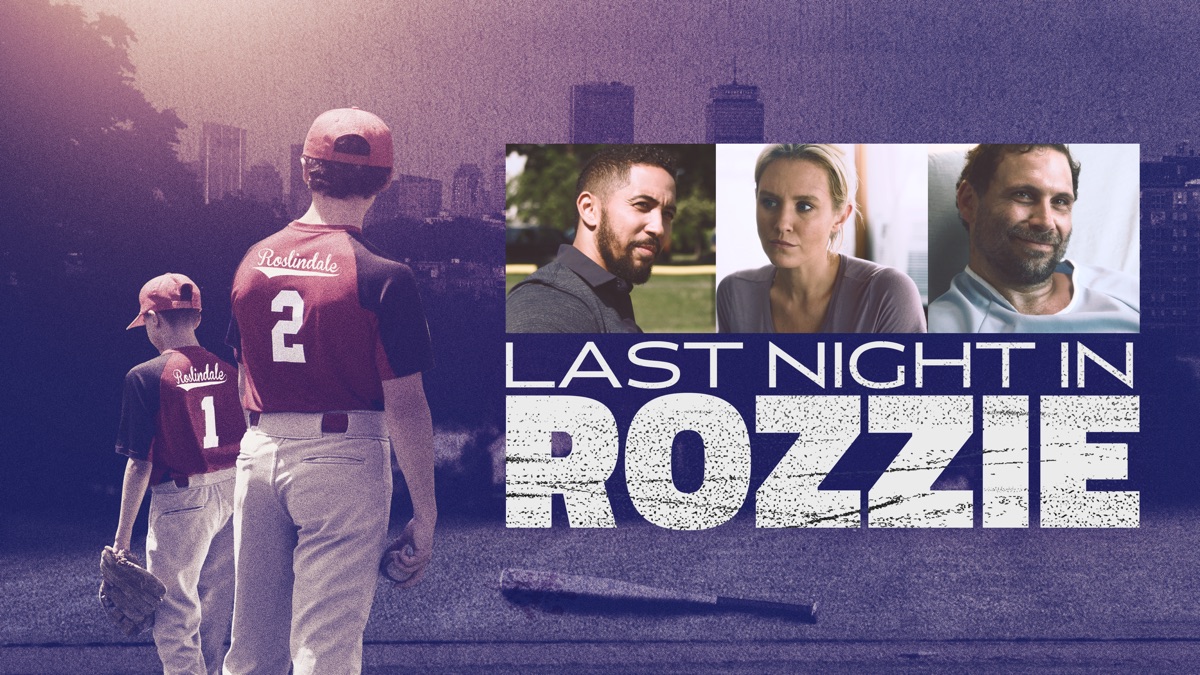
    Alumnus and Roslindale native, Ryan McDonough ’89, has written and produced a feature film set in Roslindale that has garnered more than a dozen independent film awards around the country. Last Night in Rozzie—featuring film and television actors Jeremy Sisto, Neil Brown Jr., and Nicky Whelan—will have its North American theatrical release this Friday evening, September 17, at the Somerville Theater in Davis Square, beginning at 7:30 p.m. The local release is sponsored by the Independent Film Festival Boston, and tickets are available at the theater’s website.

    With many scenes shot in West Roxbury, Last Night in Rozzie is the story of New York lawyer Ronnie Russo (Neil Brown Jr.), who is entangled in a complicated web of conflicting loyalties when summoned to his Boston hometown by a dying childhood friend (Jeremy Sisto). Sent on a mission to fulfill his friend’s final wish—a reunion with his estranged son—Russo is forced to confront his past and a secret childhood trauma he’s kept hidden for over 25 years. Described as “taut and redemptive,” Last Night in Rozzie has been chosen as an official selection, best feature, or director’s choice at independent film festivals from Martha’s Vineyard to Phoenix, Arizona.

    Friday evening’s premiere in Somerville will include a screening of the film as well as a live Q&A immediately following with writer/producer Ryan McDonough, the film’s director Sean Gannet, and producers Joseph Stephans and Kris Meyer. Tickets for the event are $12 each. If you’re unable to join the screening event, the film will be available at the Somerville Theater through at least September 23; it is also available at other locations around the country and online.