• Students Scatter over Spring Break

    Students Scatter over Spring Break

    Spring break provides a welcome pause for faculty and students alike between the long winter term and the “home stretch.” It also offers a window for international travel for about one hundred RL boys, whose faculty leaders have developed itineraries that augment and enhance their students’ recent studies.


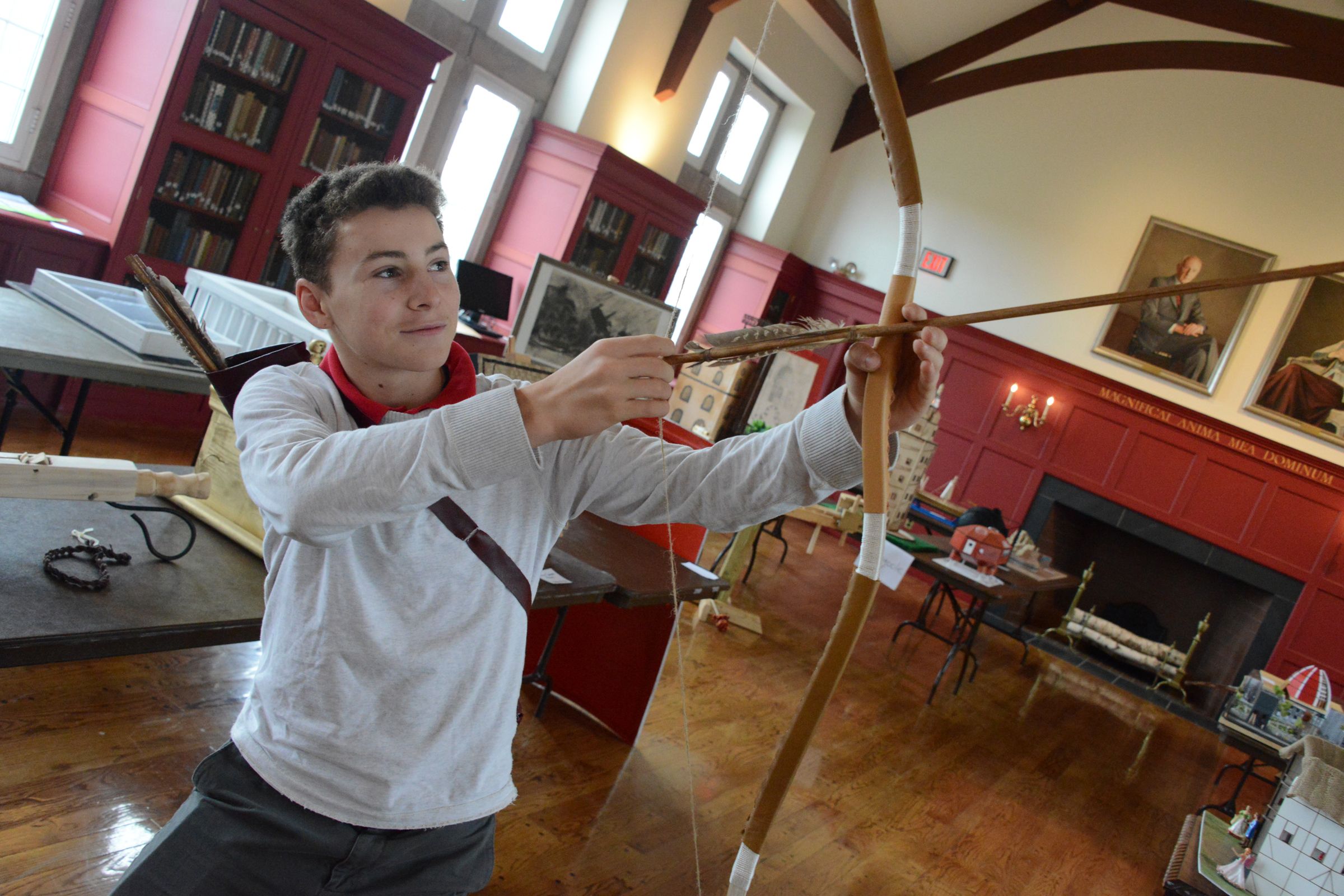
    Class IV boys, with nearly three years of Classics studies under their belts, spent nine days in Italy, taking in not only Rome’s ancient architectural sites but also the Renaissance treasures of Florence, led by Classics and Art History faculty. (Photos and blog)

    Ten Class I English students traveled to Paris to experience WWI-era in a trip labeled “Americans in Paris,” in which the boys trace Hemingway’s footsteps, visit the graves of famous American writers and artists in Père-la-Chaise Cemetery, among other explorations. The trip includes a visit to the grave of a member of the RL Class of 1905 at Aisne-Marne American Cemetery near Chateau-Thierry. (Photos)


    Old Quebec, whose history and culture is especially relevant to the early history of the US, was the destination for fifteen Class V French students. The trip provided an opportunity to practice French, and included a walking-guided tour of the city, the visit of the Cathedral-Basilica of Notre-Dame de Québec, a tour of the Ice Hotel, dog sledding, snowshoeing, and snow tubing. (Photos)

    Finally, the Glee Club toured domestically this year, traveling to Washington, DC; historic Williamsburg; and Charlottesville. They performed in DC churches and at area universities and schools. Highlights included attending an alumni event, taking in a performance of The Wiz at Ford’s Theater, and meeting with Rep. Joe Kennedy’s chief of staff. (Photos)

  • Josh Wildes Named Prep School Coach of the Year

    Josh Wildes Named Prep School Coach of the Year

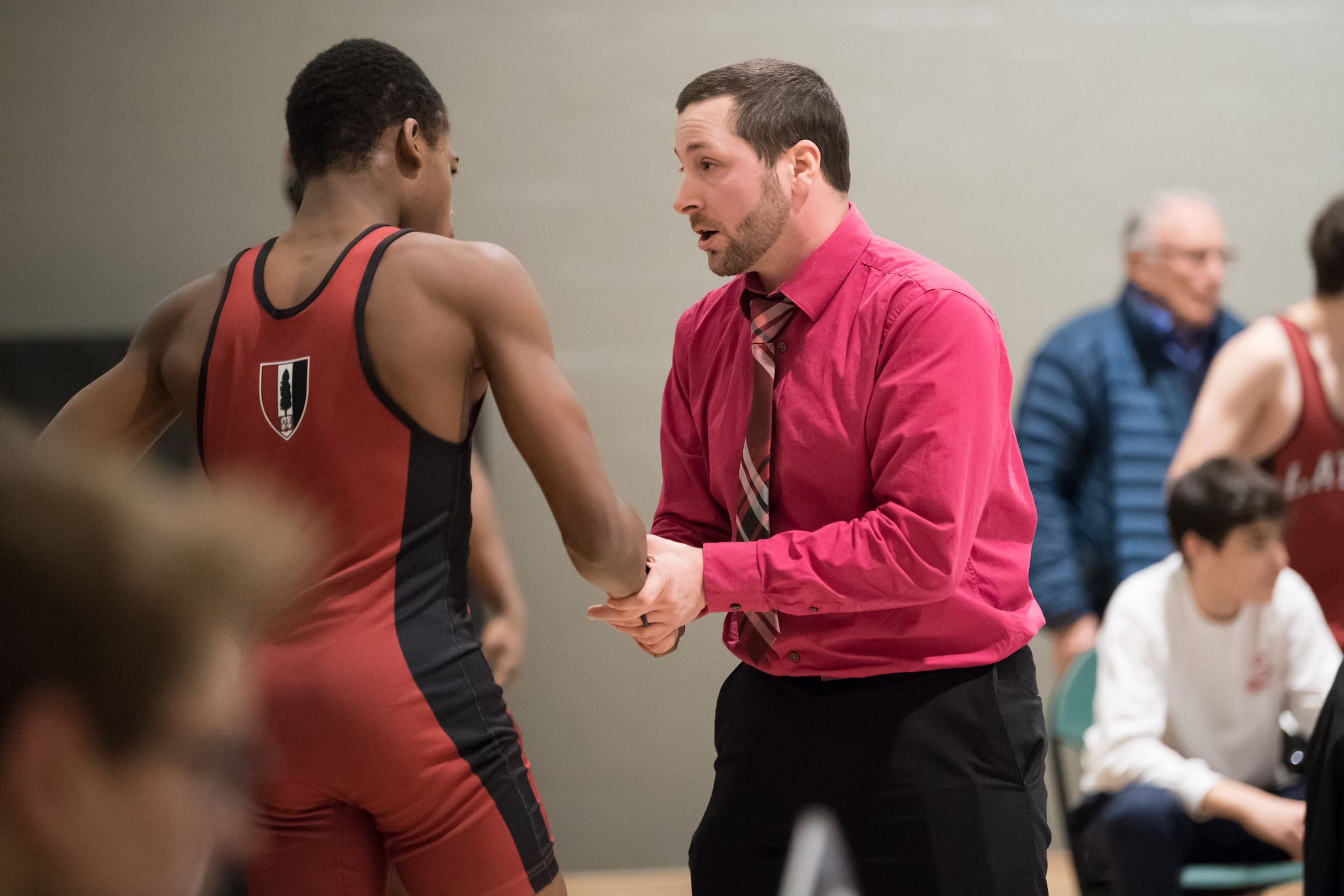
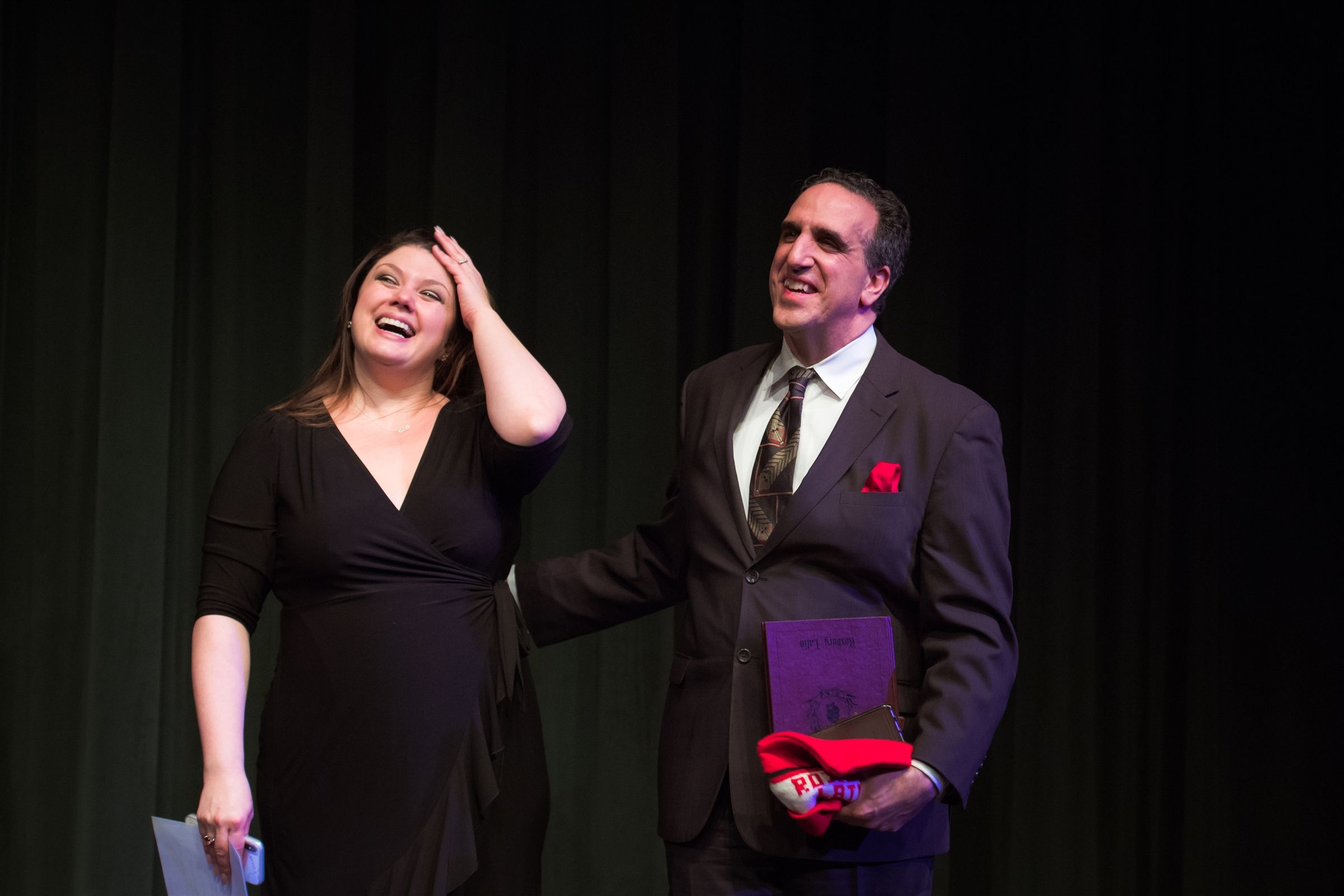
    Head wrestling coach Josh Wildes has been named 2018 Prep School Coach of the Year by the Massachusetts Chapter of the National Wrestling Hall of Fame. He will be honored as part of the annual Mass Mayhem awards—“The Massachusetts Braggin’ Rights Classic”—which takes place on Sunday, April 8.


    Leading R.L.’s varsity team to a 19-2 season record and a second place finish in the Graves-Kelsey League Championship, Coach Wildes has earned well-deserved accolades and the respect of his players.


    “Coach Wildes knows his wrestlers well, and he tailors his approach according to what they need to succeed,” says tri-captain Paul Kuechler I. “For instance, for some guys, he might scream and yell while they’re on the mat competing, because that’s what they need. And for others, he’ll just quietly say, ‘Do this move,’ and there will be silence for awhile, and the kid will do the move, and it works.”


    “The best thing about Coach Wildes,” says tri-captain Ayinde Best I, “is that he doesn’t get mad at you if you’ve lost a match, as long as you’ve put in the work and given it your best. I remember last year at the Graves-Kelsey I was beating a kid 4-0, and I tried something different—I got too aggressive, and the kid came back and pinned me. I had just been eliminated. I felt horrible that I’d lost it for us, and Coach said, ‘Don’t worry—you were trying, and I like that.’”


    The Mass Mayhem event on April 8 includes an awards presentation, an All-Star dual-meet, and a college fair. Festivities begin at 11 a.m. at Noble and Greenough School. High school wrestlers and their families are welcome to attend. For more information on the event, or to purchase tickets, visit the MA NWHOF website.

  • First Place for Pianist Chris Zhu III

    First Place for Pianist Chris Zhu III

    On 25 March, Chris Zhu III took first place in the Senior Pianist Division of the 2018 University of Rhode Island Piano Extravaganza Competition. As a premier piano competition, URI Piano Extravaganza attracts some of the best young pianists from the northeastern region. Chris was awarded the top cash prize among all divisions and earned high praises from the competition’s adjudicator, Rasa Vitkauskaite, an internationally acclaimed pianist who plays for the Boston Philharmonic Orchestra. Vitkauskaite noted, “As a very musical and accomplished performer, Chris has a wonderful range of dynamics. He played Liszt’s Concert Etude in beautiful singing tone and exhibited a great sense of character and style in Beethoven’s Appassionata Sonata.”


    As a violinist, Chris also recently won the top prize from the Roman Totenberg Young Strings Competition. An avid musician in R.L.’s chamber program and frequent participant in R.L. recital halls, Chris has performed at Carnegie Hall and Steinway Hall in New York, and at Symphony Hall in Boston. In addition to performing at these well-known venues, Chris has shared his musical talent with local senior communities such as Newbridge at Charles in Dedham and Deutsches Altenheim in West Roxbury.

  • Jr Play: The Night Thoreau Spent in Jail

    Jr Play: The Night Thoreau Spent in Jail

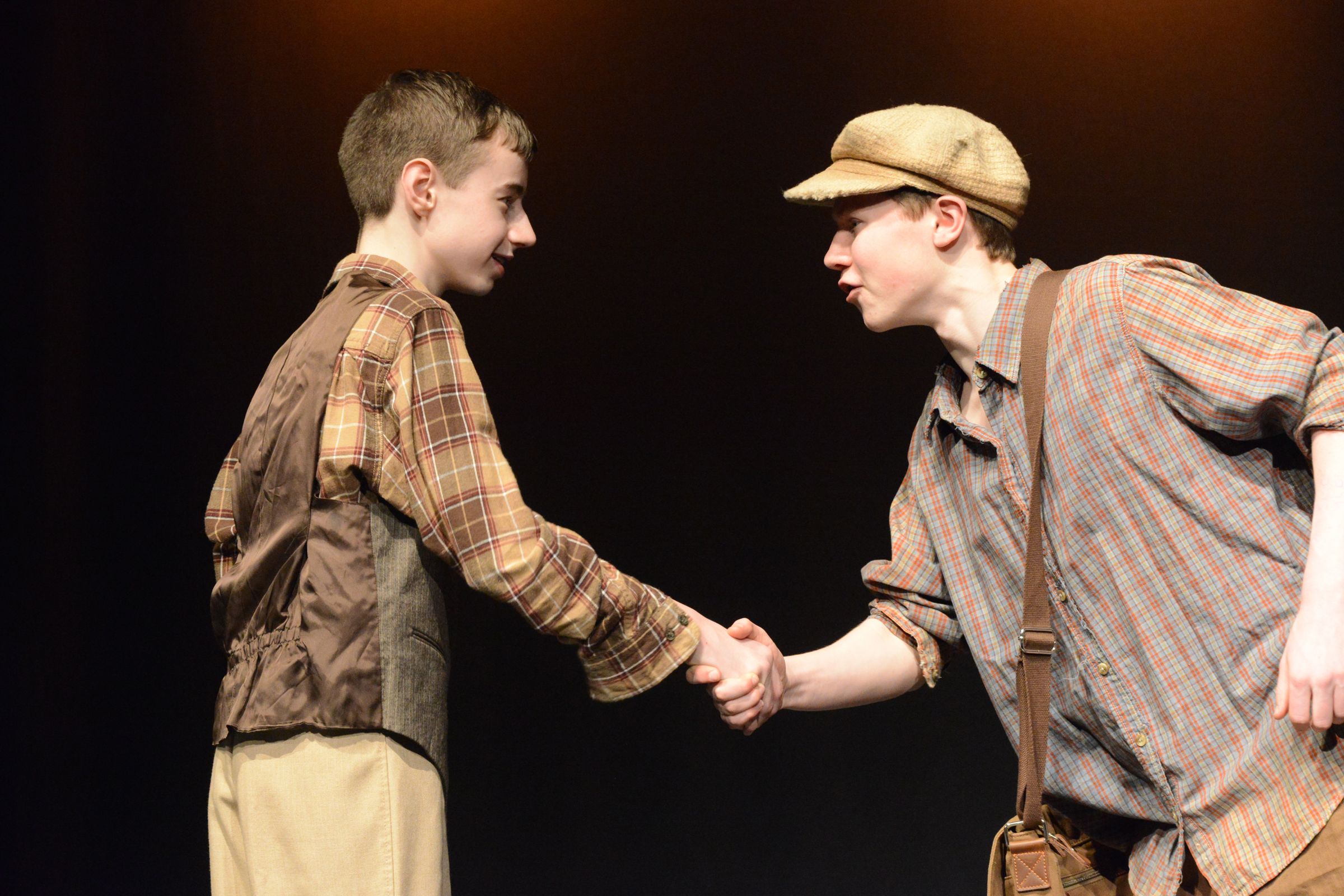
    Over the first weekend in March, R.L. thespians of the younger classes (with a welcome trio of Winsor actresses) staged Jerome Lawrence and Robert E. Lee’s The Night Thoreau Spent in Jail, this year’s Junior Play, in the Smith Theater. The play tells the story of Thoreau’s night spent in jail for refusing to pay the poll tax, levied to support the Mexican-American War and, indirectly, slavery.


    For Henry David Thoreau, says Director Danny Bolton, “there were no random acts. His thoughts were deliberate and his deeds aligned completely with a steadfast commitment to finding truth,” which led him to adopt some new—and sometimes unpopular—ideas. There was no disconnect between his thoughts and actions, but the course of his actions had consequences. In the play, Henry confronts a myriad of issues—including slavery, the role of government, women’s rights, the power of nature and what he called the “liberality of learning”—and is arrested for daring to challenge them. Over his time in jail, he retraces the steps that have led to his profound philosophy and the solid foundation of thought he has pursued.


    Mr. Bolton (who has directed for us several times before, including An Evening of Scenes two years ago and Hard Times five years ago), sees in the play a timelessness that continues to inspire us “to ask questions, convert thought into action, and live for the ‘unplanned, unexpected interruptions’ that greet each day.”Photos from the production.

  • Art and Writing Accolades for RL Boys

    Art and Writing Accolades for RL Boys

    This winter, several RL boys earned recognition for their visual art and writing creations. In the 2018 Scholastic Art and Writing Awards, four boys earned a combined 20 awards in categories ranging from painting and portfolio, to humor writing and critical essay.


    Erik Zou (II) won 12 awards for 15 art entries—earning three Gold Keys for his paintings In the Blue and Dreaming, as well as for his entry in the drawing and illustration category titled East Meets West. Erik also earned four Silver Keys and five Honorable Mentions. Dylan Zhou (I) won a Gold Key for his Portfolio work. (RL’s last winner in this category was internationally-renown painter Winston Chmielinski, Class of 2006.) Dylan also earned two Silver Keys and two Honorable Mentions. Andrew Zhang (III) won an Honorable Mention in painting; and Adam Berk (II) won a Gold Key for a piece of humor writing titled “Advisor Letter.” Adam also earned an Honorable Mention for his critical essay submission.


    The Scholastic Art and Writing Awards, presented by the Alliance for Young Artists and Writers, is the oldest and one of the most prestigious competitions for high school artists. Since 1923, the Scholatistic Awards have recognized the vision, ingenuity and talent of young people and have provided the opportunity for creative teens to be recongnized and celebrated. The Award’s alumni include Andy Warhol, Sylvia Plath, Truman Capote, Bernard Malamud, Joyce Carol Oates, Robert Redford, Alan Arkin, Lena Dunham, John Lithgow, Zac Posen and Ken Burns. All Gold Key winners will move on to the national level of competition in the spring.


    Erik’s work was also chosen as one of 66 from among 800 artworks submitted for the Emerging Young Artists 2018 Juried Exhibition, sponsored by Umass Dartmouth. Dean David Klamen, of the school’s College of Visual and Performing Arts, selected works to be displayed in the Campus Gallery, for the highly-competitive exhibition, for which nearly 500 students submitted their work from 35 high school art programs in New England. Erik’s work was also recently on exhibit as part of a solo show held at the West Roxbury branch of the Boston Public Library this winter.

  • Exelauno Day: Olympians of the Classics

    Exelauno Day: Olympians of the Classics

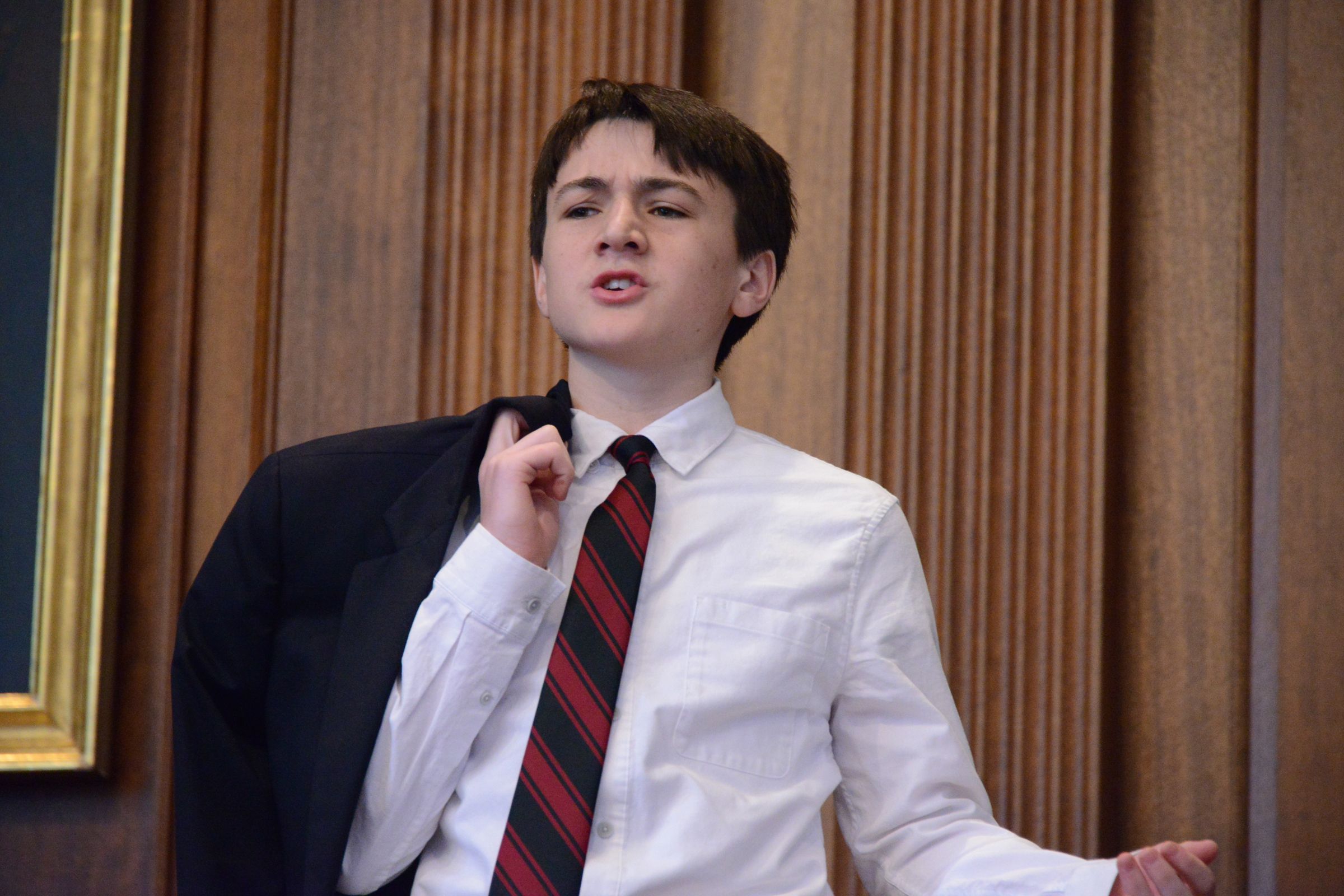
    Sixteen boys in Classes VI through I tested their Classical mettle on 1 March in the David Taggart Clark Competition in Greek and Latin Declamation in Rousmaniere Hall. One of the school’s own “high holy days,” Exelauno Day is a uniquely Roxbury Latin event that allows for the singular annual pleasure of hearing from boys of every age and level of exposure to Latin and Greek.

    This year’s winners were Robert O’Grady IV (Lower School Latin), Coleman Smith II (Upper School Latin), and Thomas Bulger I (Greek).


    Classics Department Chair Jameson Morris-Kliment served as master of ceremonies, and the judges, to whom R.L. extends its heartfelt gratitude, were Anthony Breen, Assistant Director of Middle School and Latin Teacher at Buckingham Browne & Nichols School; Mark W. Harrington, Latin Teacher at Noble and Greenough School; and Timothy Joseph, Associate Professor of Classics at the College of the Holy Cross.


    The event was streamed live, and the recording can be viewed here. A gallery of photos is available here.

  • Berman Artists Jane Monheit and Mike Kanan ’81 featured at Flurry

    Berman Artists Jane Monheit and Mike Kanan ’81 featured at Flurry

    With every new crop of sixies, Roxbury Latin is primed with potential: budding writers, actors, mathematicians, athletes, and artists. In 1975, one such sixie, Mike Kanan, expressed a passion for music from the start and was known throughout his R.L. years as an outstanding soloist. Brilliant though he was at that time, his teenage years were a pale foreshadowing of the career success he would enjoy.


    On Friday, 23 February, Mr. Kanan, who now lives in Brooklyn, returned to school with jazz vocalist Jane Monheit as this year’s Berman Artists in Residence. Since graduating with the R.L. Class of 1981, Mr. Kanan studied with internationally-renowned jazz pianist Harvey Diamond, accompanied legendary vocalist Jimmy Diamond, and today studies classical music with pianist Sophia Rosoff. He has been the pianist and arranger for Ms. Monheit’s band since 2001, touring all over the world and performing on several of her albums and cds.


    Ms. Monheit, whose recordings have earned her two Grammy nominations, has collaborated with such artists as Michael Buble and John Pizzarelli. She has been featured on the nationally-televised Christmas at the White House and other high-profile U.S. Capitol events. Ms. Monheit’s newest album, The Songbook Sessions: Ella Fitzgerald, is a tribute to Ms. Fitzgerald’s songbook album.


    We are especially fortunate when the greater school community can also enjoy the bounty that our Berman Artists bring to Roxbury Latin boys. As have a number of our recent Berman Artists, Ms. Monheit and Mr. Kanan shared their talent with R.L. parents as the featured entertainment for the February Flurry on the evening of 24 February. Photos from this year’s annual winter social (masterfully inspired, designed, and conducted by the Parents’ Auxiliary) can be viewed here.

  • RL Earns Silver at Regional Middle School Science Bowl

    RL Earns Silver at Regional Middle School Science Bowl

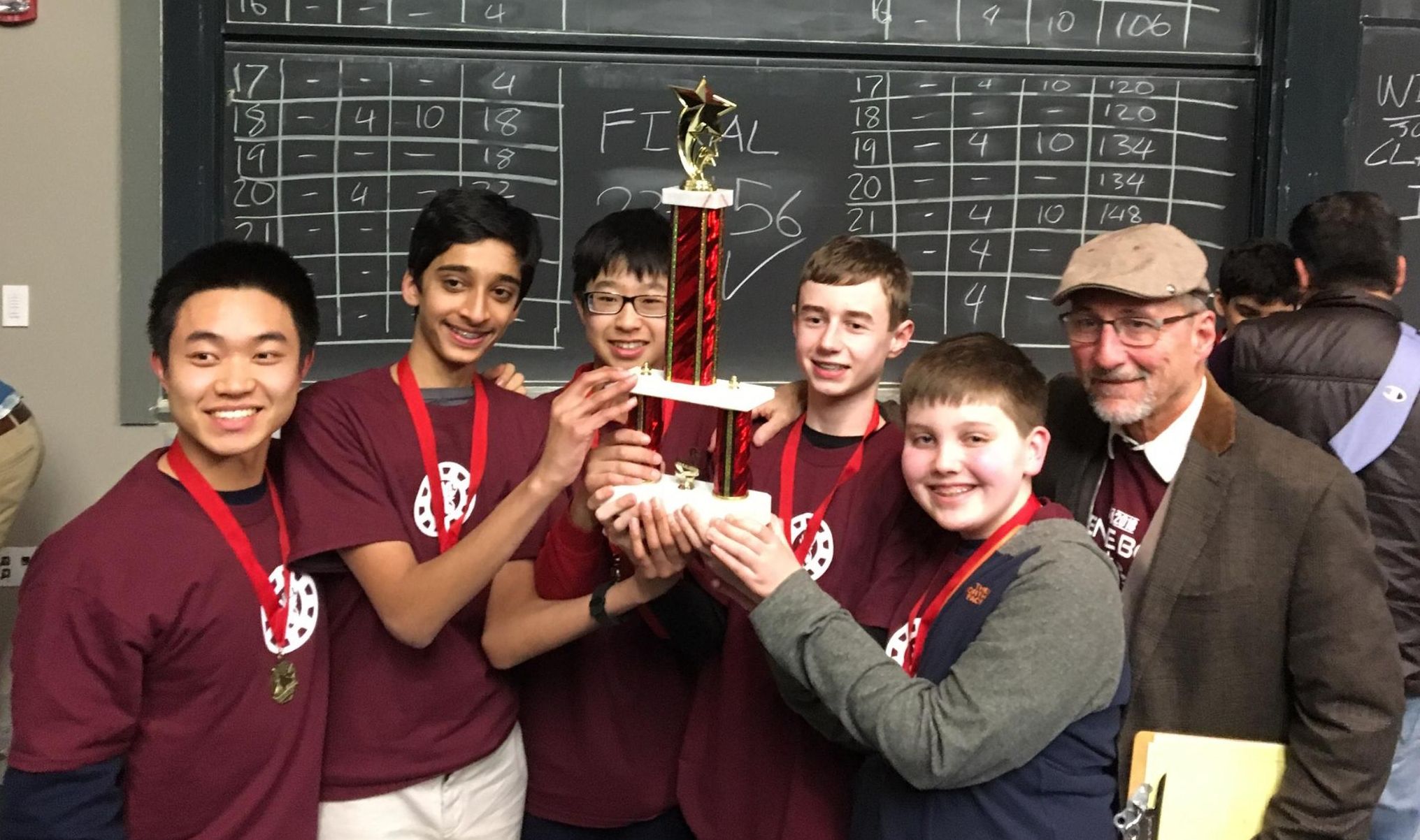
    On Saturday, 24 February, eight RL boys traveled to MIT’s campus to compete in the Northeast Regional Middle School Science Bowl, joining 30 of the region’s top teams. RL’s Class V team—made up of Vishnu Emani, Teddy Glaeser, David Sullivan, and Alex Yin—went undefeated (6-0) in their preliminaries and moved on to the qualifying rounds. In the semi-finals, RL trailed for 15.5 minutes (of a 16-minute match) rallying with an 18-point flurry in the last 30 seconds, to win by 14 points. The only loss of the day for the Class V team came in the final match from the defending national champions, earning RL the competition’s second-place trophy.


    RL’s Class VI team—consisting of Carter Crowley, Will Grossman, James McCurley, and Michael Thomas—split 50/50 in their six preliminary matches. Though they did not move on to the single-elimination championship round, they showed great promise for next year’s competition. 


    Robert Moore—science department chair and the teams’ advisor—remarked on the boys’ energy, class and sportsmanship, as well as on the leadership of senior Dylan Zhou. President of the Science Club, Dylan met with members of the Class VI and Class V teams countless times to help them practice and prepare for the event. He has done the same for the upcoming high school team.


    The National Science Bowl is a middle school and high school science knowledge competition, using a quiz bowl format. The competition has been organized and sponsored by the U.S. Department of Energy’s Office of Science since its inception in 1991.

  • Poet Amaud Johnson on violence and the minstrel show

    Poet Amaud Johnson on violence and the minstrel show

    “We’re always fighting to come to terms with the things we see…[and] to develop a vocabulary for that.” For the poet Amaud Johnson, one of those fights is to create a framework to manage what has always been in front of him.


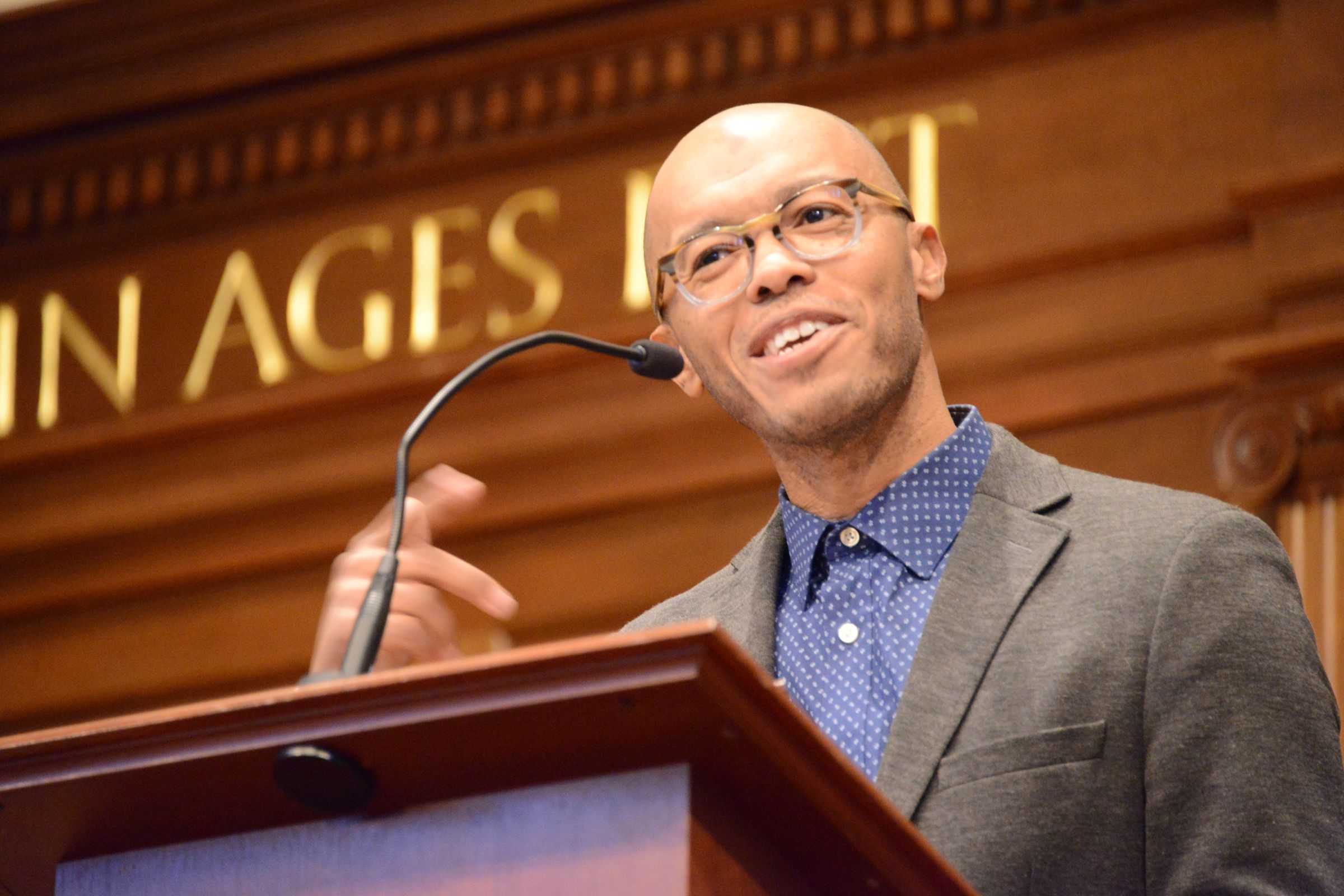
    The author of two books of poetry, Amaud Jamaul Johnson discussed his work in Hall on 15 February. His first book, Red Summer, which won the Dorset Prize, is about the race riots of 1919, during which nearly a hundred African American men in cities across the country were lynched. His second book, Darktown Follies, examines (and cross-examines) that very popular form of American entertainment for many years: the minstrel show.


    Mr. Johnson described his hometown of Compton, California, as “a fairly violent place” during the ’70s to early ’90s. He acknowledges a kind of survivor’s guilt and recognizes his desire to historicize that violence as one of the forces that drove him toward poetry. “Was this narrative just connected to my street, my neighborhood? Or was there something larger, something embedded in our identity as Americans, and particularly as men, that created a seed for a certain kind of aggression?”


    Mr. Johnson did extensive research into the race riots of 1919 for Red Summer. His poem “The Manassa Mauler” treats boxing—one outlet of this aggression contemporaneous with the race riots—and the bloodiest fight in heavyweight history.


    “When I started reading more about this relationship between historical violence, sport, and racialized violence, it’s almost as if everything in my life seemed connected. The things that I began to see happening in my house, the things that were happening in the street, and the way I was reading history all helped me process this larger question in terms of who we are.”


    Mr. Johnson wrote Darktown Follies in part to explore that “awkward space” created when comedy co-opts racialized violence. The title of one poem, “Pigmeat,” is named for Pigmeat Markham, the last African-American comic to perform in blackface. “Pigmeat’s joke is that [blackface] made him look lighter—which isn’t really a joke, but it depends on where you are in that conversation.”

    What we laugh at says a great deal about who we are in a cultural moment. “We can look at our comedians as maybe the best among us because they can see these things that we’re still trying to figure out culturally. We laugh partly in recognition of a truth we haven’t really heard articulated in that way. But we’re also kind of uneasy, because we’re not really sure what it means.”

    “So let’s say someone tells you a racist joke. You say, ‘Oh, that’s, like, racist,’ but because you were educated in a certain way, you think, I don’t want to say anything because I don’t want to draw attention to the problem. Maybe you just laugh to defuse the tension, but that laughter makes you complicit in the joke—right?—because that racist individual who said the joke now thinks that he’s funny. This is the strange tension in the way we negotiate humor.”

    Mr. Johnson didn’t imagine himself a poet as a youth. In high school he was an athlete, but he was also on the debate team, where he learned to see an argument from all sides. “You almost have to fight against yourself to be able to process what the conversation is and then be able to pinpoint exactly what you want to say and how you want to say it. I began to think of poems functioning in the same way.”


    “Part of what’s functioning at the heart of poetry is identifying the limits of language—when the word is insufficient, it collapses into metaphor. …I think something similar happens in comedy: you’re leading the audience to a point where they’re doing the cognitive work, where they think, Are you saying what I think you’re saying?… The most successful art forms seed participation. You have to work emotionally and intellectually to internalize that meaning.”

    “Ultimately,” Mr. Johnson explained, that in poetry, as in comedy, “we’re always trying to figure out how to say the unsayable.”

    Mr. Johnson earned degrees at Howard University and Cornell and currently teaches in the MFA Program at the University of Wisconsin-Madison, where he directs the Institute for Creative Writing. After Hall, he visited Kate Stearns’ senior writing class, and Cary Snider’s sophomore English class.