• Writer and Poet Clint Smith Weaves Artistry With Activism

    Writer and Poet Clint Smith Weaves Artistry With Activism

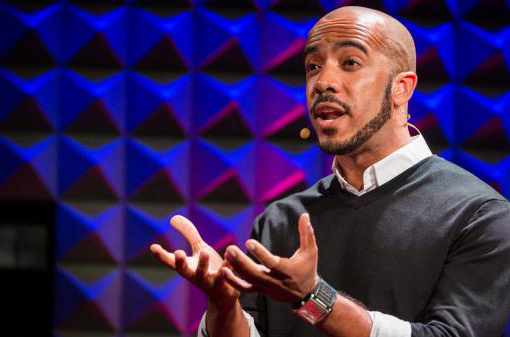
    On April 8, Clint Smith—writer, poet, scholar, and activist—spoke with students and faculty in virtual Hall about his poetry, his passionate support of the racial justice movement, and his newest project—his non-fiction book debut, How the Word is Passed: A Reckoning With the History of Slavery Across America, which will be published this summer.

    “I’ve spent the last four years reading and being transformed by history books,” Mr. Smith began, “and I wondered, ‘How can a poet contribute to this historiography?’” Prompted by watching monuments to the Confederate Army come down in 2017 in his home city of New Orleans, Mr. Smith launched into this project, through which he explores how different cities and sites across the country reckon with, or fail to reckon with, their relationship to the history of slavery. For this project, Mr. Smith traveled to—and chronicled what he learned and experienced in—places like Monticello Plantation and Angola Prison, Galveston Island and New York City.

    During Hall, Mr. Smith spoke about how important it is that we learn about, discuss, and understand the totality of our country’s history, and the people within it. He talked about how Thomas Jefferson, for instance, was “a brilliant mind, who helped to create the greatest experiment in democracy that the world has ever seen,” but that he also held more than 600 slaves over the course of his life, including four of his own children who he had by his slave Sally Hemings. “How do we hold and understand two truths at the same time?,” he asked. “It’s important that we face these difficult realities and deal with these tensions. And we might not all agree in the end, but these are conversations we need to be having.”

    Mr. Smith also read aloud some of his poetry, including a new poem that was “a letter to four presidents who held slaves,” and the title poem of his 2017 collection, Counting Descent. In an extended Q&A session he answered questions about his writing style and process; the topics he addresses in his poems and essays; and about how we grapple with American history, reconciling the admirable with the loathsome.

    Mr. Smith is a staff writer at The Atlantic. His essays, poems, and scholarly writing have been published in The New Yorker, New York Times Magazine, The New Republic, The Paris Review, and other esteemed publications. His first full-length collection of poetry, Counting Descent, won the 2017 Literary Award for Best Poetry Book from the Black Caucus of the American Library Association and was a finalist for an NAACP Image Award.

    Mr. Smith is a 2014 National Poetry Slam champion and a 2017 recipient of the Shestack Prize from the American Poetry Review. He has been named to the Forbes “30 Under 30” list as well as Ebony Magazine’s Power 100 list. His two TED Talks, The Danger of Silence and How to Raise a Black Son in America, collectively have been viewed more than 7 million times. Mr. Smith has received a number of prestigious, national fellowships; he has taught high school English in Maryland where, in 2013, he was named Teacher of the Year by the Maryland Humanities Council. He currently teaches writing and literature in the D.C. Central Detention Facility. Mr. Smith earned his B.A. in English from Davidson College and his Ph.D. in Education from Harvard University.
  • Decision-Making: Headmaster Brennan Opens the Spring Term With Big Questions

    Decision-Making: Headmaster Brennan Opens the Spring Term With Big Questions

    In a virtual Opening of Spring Term Hall on April 5, Headmaster Kerry Brennan welcomed students and faculty back from the spring break, ushering in the closing months of the school year and the hope that they represent. At the heart of Mr. Brennan’s remarks was decision-making—specifically, how we go about making decisions when the stakes are high, and the path forward is not clear.

    “Today I want to talk a bit about making choices—big ones and small ones,” Mr. Brennan began. “We do it every day. And others, with more consequential positions, make them on our behalf every day. When we are young, our parents are making decisions for us: What will you wear? What will you eat? When will you go to bed? Where will you go to school? Over time, given maturation, children and then young adults are granted the freedom to make more choices… One of the great tasks of parenting (and by extension schooling) is to provide children with the tools and the training and the formation of healthy habits that will allow them to be more independent. Of course, independence suggests both greater opportunities for freedom but also greater accountability. And as we get older… consequences end up being more dramatic. More meaningful… There are big decisions in our lives. Sometimes the decisions we make have to do with life or death—our own or somebody else’s.”

    Prompted by the 75th anniversary that took place last summer, Mr. Brennan moved to explore “the ultimate decision concerning life and death,”—the dropping of atomic bombs on the Japanese cities of Hiroshima and Nagasaki. “In August of 1945, President Harry Truman made the decision to drop these newly created weapons on these two cities in order to end World War II…. Truman, a plainspoken Missourian, was eager to bring the war to an end. The American people had sacrificed a great deal over the ensuing nearly four years and were eager to return to normalcy—families reunited, the economy operating on a peacetime footing, reassurance that foreign affairs determined to a great extent by our might would offer predictability and stability.”

    In the lead-up to Truman’s decision to drop the bombs, he “had been told that there would likely be 20,000 casualties—mostly military. In fact, 20,000 Japanese soldiers were killed, but, so, too, were more than 100,000 civilians killed in Hiroshima, and more than 60,000 in Nagasaki. Horrendous injuries were sustained by hundreds of thousands of people defacing them and handicapping them for the rest of their lives. The presence of deadly gas caused unfathomable birth defects in subsequent generations.

    “Within a week of the bombings, Japan surrendered to our commanding general in the Pacific, Douglas MacArthur. Virtually unanimously, Americans celebrated the conclusion of an awful war and did not dwell much on the terrifying, new reality that had been unleashed. We know from historical documents that the Japanese had been demonized in a way the Germans and Italians had not. Are there deep-seated racial biases involved in those feelings? Probably, yes. Did that make it easier to justify and endure the killing of innocent people? When all was said and done, how was the decision to end the war this way made?

    “In my presentation today about decision making, making choices, there could be no greater decision than the one Truman made. It affected millions of people. And it decided who would live and who would die. As with even the simplest decisions we make each day, certain elements led to consequential outcomes. How do we decide? How do we amass the facts? With whom do we consult? Whom will my decision affect? Is the outcome simply expedient, or is there a more significant ethical consideration? What is my North Star? What’s in my best interest? What’s in the best interest of the group? The country? The global family? I hope you will consider the ramification of this world-altering event.”

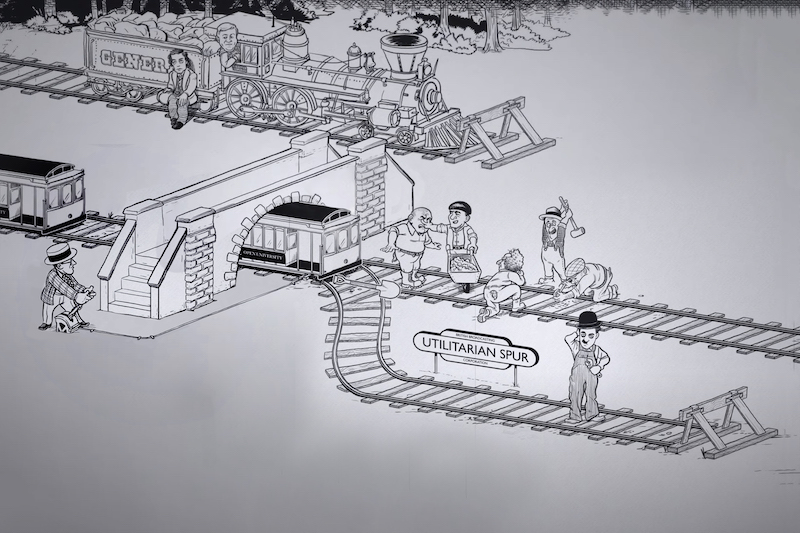
    On the following morning, April 6, Mr. Brennan enlisted students and faculty for a Part II of this talk, which would enable live, in-class discussion in which boys and their teachers together would grapple with difficult moral decisions, and how we go about making them. After a brief, instructional webinar—during which he posed the classic, philosophical Trolley Problem—he offered several questions for discussion, which boys and faculty engaged in for the period.

    View the entirety of Headmaster Brennan’s address.

  • Honors Bio Students Investigate Life Science Questions, With Help From the Pros

    Honors Bio Students Investigate Life Science Questions, With Help From the Pros

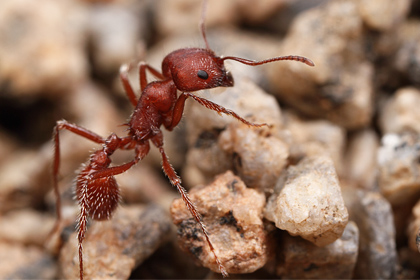
    Does sugar water have an effect on ants’ learning? Are the heart rates of Daphnia magna affected by alcohol exposure? How does isolation alter the dietary habits of cockroaches? How does sound affect plant growth? Over the last couple of months, the Honors Biology students in Dr. Peter Hyde’s class were answering these ques­tions and more, with help from medical professionals and research scientists.

    For the eighth year, Honors Bio students spent the winter term immersed in Inde­pendent Research Projects (IRP). Posing questions of their own scientific interest, the boys developed experiment proposals and turned to the professionals for real-time feedback, honing their approaches all the while. Even before the winter break, the students met with their IRP mentors—RL parents and alumni who are also research scientists, surgeons, hematologists, oncologists—virtually. With the feedback from those sessions, the boys refined their experimental plans, and in January and February they collected their data. The IRP mentors then met with their mentees again to discuss the data and findings, and worked with the students on developing compelling presentations. In a typical year the students’ work culminates in a science fair-style event, in which faculty, staff, and fellow students can walk around perusing project posters and asking questions of the budding scientists. Due to COVID-19 restrictions, the students instead submitted videos as the culminating presentation of their hard work. You can view each of those videos here.

    Other research projects included the effects of dissolved oxygen on yeast respiration and CO2 production; the effects of changing soil pH on the growth of Wisconsin Fast Plants; whether hyperoxia improves learning in fruit flies; and how the concentration of potassium ions affect the heart rate of Daphnia Magna.

    Special thanks to our generous mentors, who include:

    Sirisha Emani (P’17, ‘22), PhD, Department of Surgery, Boston Children’s Hospital 

    Andrew Eyre ’02, MD, Department of Emergency Medicine, Brigham and Women’s Hospital

    Ephraim Hochberg (P’25), MD, Departments of Oncology and Hematology, Massachusetts General Hospital

    Matthew Hutter ’87 (P’21, ’23), MD, Departments of General and Gastrointestinal Surgery, Massachusetts General Hospital

    Julie Lin (P’24), PhD, Clinical Development, Rare Diseases and Rare Blood Disorders, Sanofi-Genzyme

    Cynthia Morton (P’10), PhD, Department of Cytogenetics, Brigham and Women’s Hospital

    David Wilkinson (P’21, ‘23, ‘25), MS, Department of Systems Engineering, Vicarious Surgical

    Scot Wolfe (P’15, ’18), PhD, Department of Molecular, Cell and Cancer Biology, University of Massachusetts Medical School

  • RL Parent and Trustee Jim Frates Reflects On Holy Week

    RL Parent and Trustee Jim Frates Reflects On Holy Week

    “Central to Roxbury Latin’s mission and tradition is tending to the spiritual growth of our boys,” began Headmaster Brennan in virtual Hall on April 1. Throughout the year, Roxbury Latin students hear from speakers of various religious traditions about topics of faith, spirituality, and living with purpose. As Jews began their celebration of Passover, and as Christians looked forward to the culmination of Holy Week, RL trustee and parent Jim Frates shared his personal reflections on the meaning of Holy Thursday—and how the lessons relate to each of us, regardless of our faith or beliefs.

    He began with the story of RL alumnus James Drummond Dole, Class of 1895, who had set out for Hawaii to make his fortune and—after much trial and error—found success, ultimately, in pineapples. He then shared the tale of Captain Eddie Rickenbacker, who “might have been the most interesting man in the world,” Mr. Frates said, who in his life excelled in engine repair and then race car driving; became the greatest flying ace in WWI; went on to own Indianapolis Motor Speedway and establish Eastern Airlines; and even authored a comic strip.

    Mr. Frates then recounted a sermon that his uncle—a former Navy priest and WWII pilot—used to deliver about when Captain Rickenbacker and his crew crashed into the Pacific and spent 21 days adrift:

    “After exhausting their supplies, starving, and near the point of death, Captain Rickenbacker organized a prayer meeting: ‘Master, we are in an awful fix, as you know. We are counting on a little something by the day after tomorrow at the least.’ Rickenbacker then lay on his back and pulled his hat down over his face. At that point something landed on it. A seagull. He slowly reached up and captured the gull, and then divided it among his men. The remainder provided him with bait for two fish which were quickly captured. There were no skeptics among those men.” He recounts how two days later, near death from dehydration, Rickenbacker prayed for water. That evening a squall occurred, providing the men with enough water to survive until they were rescued.

    Finally, Mr. Frates arrived at one of the most important stories in the Christian tradition—that of Holy Thursday. “In the episcopal tradition, Maundy Thursday is the day that sets up and highlights all that is to follow.” He recounted the details of Christ’s Last Supper, the washing of His disciples’ feet, and finally the agony in the garden at Gethsemane. 

    “Jesus’s commandments to his disciples during the days leading up to his death are some of the lessons I hope you take away today,” said Mr. Frates. “To love one another as I have loved you; the importance of fellowship—caring for one’s friends and neighbors; and leadership through service. If you want to truly lead you must take care of one another… Combine these lessons with those of Dole—dream big, don’t give up, look to your friends for support, take care of those around you—and Richenbacker—work hard, find your passion, give all you can, remember it can change at any moment, be a leader, and don’t be afraid to pray.

    “I am sure you hear this a lot, but you have been given a great gift,” concluded Mr. Frates. “Your community here at Roxbury Latin is special—your friendships, your classmates, and your teachers. Remember your fellowship. Carry it forward. Don’t be afraid to lead, and don’t be afraid to rely on your friends.”

    Mr. Frates is the Chief Financial Officer of Amylyx Pharmaceuticals—a company focused on developing new treatments for amyotrophic lateral sclerosis (ALS), Alzheimer’s Disease, and other neurodegenerative diseases. In addition to serving as treasurer of Roxbury Latin’s Board of Trustees, Mr. Frates serves on the boards of Sage Therapeutics and St. Francis House, and formerly on the Board of his alma mater, St. Paul’s School in New Hampshire.

    View the entirety of Mr. Frates’ Hall talk.

  • Roxbury Latin Alumni in the News

    Roxbury Latin Alumni in the News

    Several Roxbury Latin alumni have made news in recent weeks, for their leadership, service, and excellence in their professional roles, which cover a broad range of worthy pursuits. Here are just a few.

    Frantz Alphonse ’90 is Senior Managing Director of Ariel Alternatives and co-founder of Project Black Management Company. Frantz’s work combines global-scale mergers & acquisitions with solutions to racial inequality and economic advancement issues in the United States. He and his partners turn companies into vehicles for business ownership, entrepreneurship, and job creation for the country’s most disadvantaged and underrepresented individuals at a scale never attempted before in the history of U.S. business. Read more in Forbes and Financial Times.

    John Gabrieli ’12 is the Executive Director at The Every Voice Coalition, which this year successfully helped—through their advocacy—to pass a trailblazing bill into law in Massachusetts. This year, Governor Charlie Baker signed “An Act relative to sexual violence on higher education campuses” into law. The law helps ensure that college campuses have up-to-date policies regarding sexual misconduct and sexual assault, and that students know about the policies and the resources available to them. After six years of student and survivor advocacy, this bill makes history and helps make college campuses safer. Read more.

    Stefan Jackiw ’03—international violin soloist, recording artist, and educator—has joined the faculty of The New School in New York City. He will be part of the Mannes School of Music at the College of Performing Arts. The recipient of an Avery Fisher Career Grant, Stefan is one of America’s foremost violinists, with an unusually broad repertoire and a passion as an educator and arts advocate that equals his passion for performing. At Mannes, Stefan will serve on the major lesson faculty in the String Department and will coach chamber ensembles. He will also collaborate with students and faculty across the college in a wide range of special projects and courses. Read about Stefan’s appointment.

    Matt Langione ’01 is a principal at the Boston Consulting Group where he specializes in bringing research-driven, high-potential “deep tech” to market. A leading global expert on the industrial applications of quantum computing, he advises Fortune 500 companies on building quantum computing into their digital transformation roadmaps. He recently delivered a TED Talk titled “The promise of quantum computers” in which he explains how these machines solve complex challenges like developing vaccines and calculating financial risk in an entirely new way that’s exponentially faster than the best supercomputers—and shares why industries should prepare now for this new leap in computing. Watch Matt’s TED Talk.

    Sean McBride ’91 is the chief creative officer of Arnold Worldwide, the Boston-based ad agency that developed the 2017 television commercial for the Progressive insurance company that features Dr. Rick—“the mustached leader of a support group for people who found themselves suddenly ‘turning into their dads’ after they became homeowners.” Under Sean’s leadership, the series of Dr. Rick spots have turned out to be some of the most inspired television commercials in years. Read more.

    Ryan McDonough ’89, a Roslindale native, has written and produced a feature film set in Roslindale, with many scenes shot in West Roxbury. The movie, Last Night in Rozzie, is a “taut and redemptive” film about a New York lawyer who returns to his Boston hometown to reunite his dying friend with his young son, as he is at the same time compelled to confront a malignant childhood trauma. The movie premieres at the Cinequest Film Festival March 20 through March 30. Read more.

  • National Gold Recognition and Artistic Accolades for RL Boys

    National Gold Recognition and Artistic Accolades for RL Boys

    Each year, the Alliance for Young Artists and Writers, in partnership with more than 100 visual and literary arts organizations across the country, accept submissions from teens in grades 7 through 12 for their Scholastic Art and Writing Awards. Hundreds of thousands of art and writing submissions across 11 categories are judged based on originality, technical skill, and the emergence of a personal voice. Roxbury Latin senior, Miguel Rincon, not only earned Gold Key recognition in the regional competition for his short documentary film titled LoPresti Park, but his film also won a Gold Key Award in the national competition. Even more impressive, Miguel was one of only six students in the country selected to win the 2021 Civic Expression Award. This award is the highest honor presented annually by the Alliance for Young Artists & Writers and it comes with a $1,000 scholarship. (Read more about Miguel’s prize-winning film, and view it in its entirety.)

    As a Civic Expression Award winner, Miguel and his work will be highlighted in the program’s anthology, The Best Teen Art of 2021, in the Awards’ Online Galleries. Recipients of the Civic Expression Award also receive recognition in the Awards’ National Ceremony, which will be presented virtually this year on June 9.

    Four other RL students found success in this year’s Scholastic Regional competition: James McCurley (III) earned a Silver Key for his science fiction writing submission titled Soup and Stories; Alex Uek (I) won an Honorable Mention for his drawing Unmatched; George Madison (II) earned an Honorable Mention in Photography for his piece titled Spiraling; and Joseph Wang (IV) earned an Honorable Mention for his poem Snow Showers. Several talented Roxbury Latin students earn regional honors for their art and writing in the Scholastic competition each year.

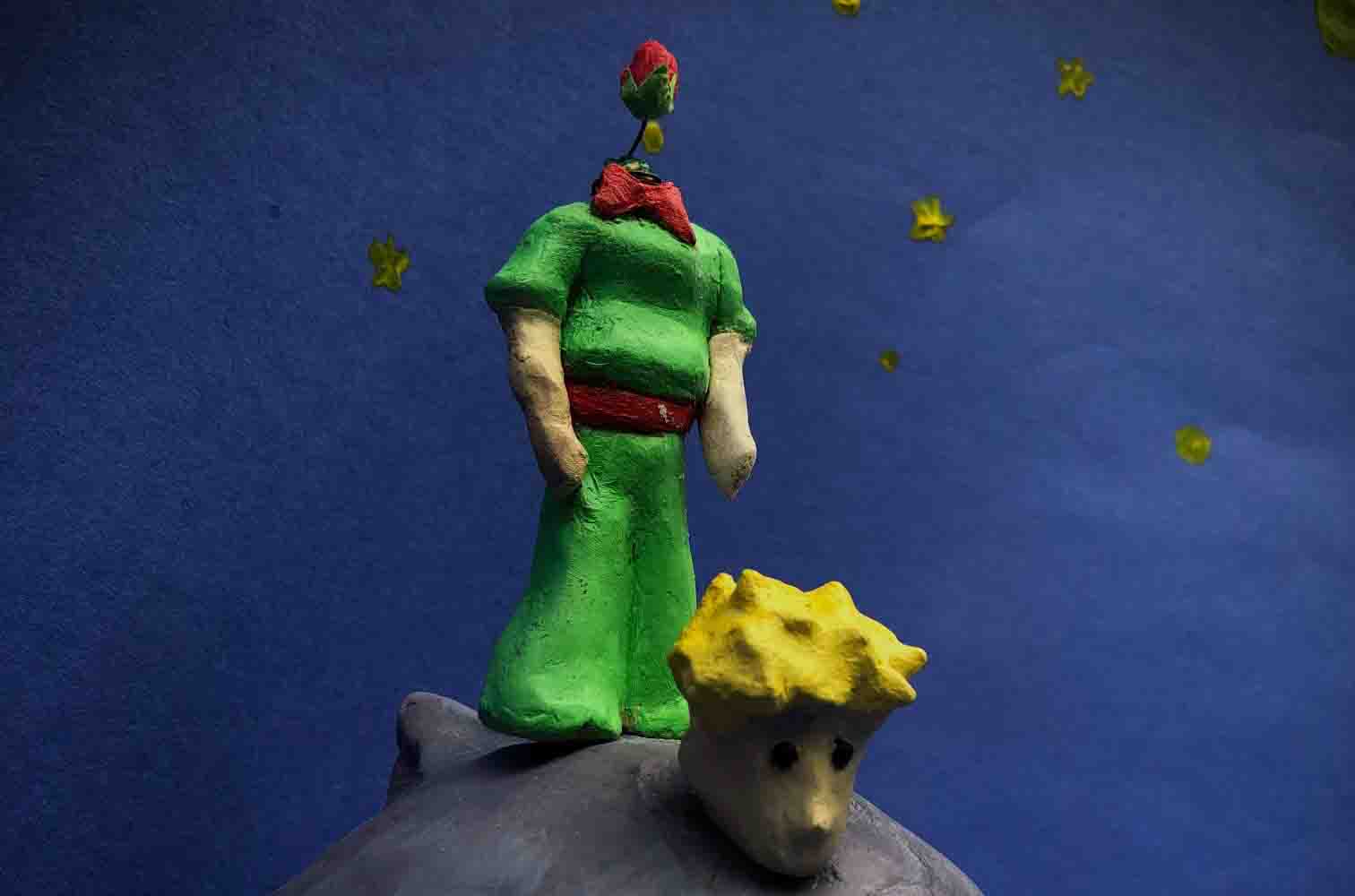
    In addition to winning a Gold Key award in the Scholastic competition, Miguel created a sculpture that was chosen as a winner in the 2021 Emerging Young Artists Exhibition, sponsored by the University of Massachusetts Dartmouth’s College of Visual and Performing Arts. Miguel’s clay sculpture, The Little Prince, was one of 88 works selected to be part of the exhibition, out of more than 430 submissions. This competitive, annual, high school juried exhibition recognizes the exceptional work of art students from high schools throughout New England.

    The Little Prince was one of several pieces that Miguel created as part of his junior year Studio Art elective with Brian Buckley. Struggling with what exactly to make, he was inspired by the idea of creating gifts for people in his life—so that’s what he did. Out of wire, he crafted a hummingbird for his mother—her favorite animal; he made a wood-burning design of a horse for his grandfather in Colombia; and, out of clay, he crafted a sculpture based on the cover art of the French-language book Le Petit Prince, for his French teacher, Roxbury Latin faculty member Ousmane Diop.

    “I tried to recreate the cover as well as I could, but I didn’t want to make it exactly the same,” says Miguel. Over the span of two marking periods, he shaped all the clay parts and fired them in the kiln. “Creating this sculpture took me a really long time, so as another studio project I did the painting for it—it was almost like a two-for-one project. As I was working on it, the head fell off the figure, and because I wanted to do something a little different, I thought maybe I should swap the head with the rose, and that it might look pretty cool. I didn’t plan for that to happen, but I liked the way it looked, and I thought it offered a different perspective.” While a photograph of the sculpture is part of the awards exhibit, the piece itself now lives on Monsieur Diop’s office desk.

    Miguel will find out this spring how his documentary film, LoPresti Park, fared in the national Scholastic competition. In the meantime, Miguel will team up with classmate Brady Chappell as the two boys plan to create a documentary film on homelessness in Boston as their Independent Senior Project. “After having the opportunity to try out all these different media, filmmaking is still my favorite for now,” says Miguel.

  • Representative Dr. Jon Santiago On Service, Of All Kinds

    Representative Dr. Jon Santiago On Service, Of All Kinds

    On March 9, Massachusetts State Representative Dr. Jon Santiago spoke to students, faculty, and staff in virtual Hall and discussed—from his personal experience—the many ways in which one can choose to meaningfully serve others and their community. Dr. Santiago is the Representative for the 9th Suffolk District (Boston), centered in the South End, and an emergency room physician at Boston Medical Center. A lifelong public servant, Representative Santiago was a Peace Corps volunteer in the Dominican Republic, and he continues to serve as a captain in the Army Reserve. He spent five years abroad working in community organizing and public health. His current policy and clinical interests are focused on improving quality and access to care for underserved communities.

    “I’m a relentless optimist,” he said in Hall. “I do what I do because I think the world can be a better place. I made the decision to enter the Peace Corps, to join the Army, to work in BMC’s ER, to serve as an elected state official, because I am ultimately a believer in people, and a believer that the world can become a better place. While I was with the Peace Corps, in the Dominican Republic, I was sitting in bed—alone, in a different country—thinking, ‘Is the world becoming a better place, historically speaking? And can I have a role in making that so?’”

    Recently, Representative Santiago has used his roles as both an elected official and ER physician to advocate for resources and equity-oriented policies during the COVID-19 pandemic. He worked in the emergency room each week during the COVID-19 surge, sharing social media videos to provide up-to-date information for hundreds of thousands of viewers. He has also been active in national and local media discussing a host of COVID-19 related issues while writing several Boston Globe op-eds. One of 14 legislators of color in the legislature, Representative Santiago played an instrumental role in leading the charge for police reform as a member of the Massachusetts Black and Latino Legislative Caucus. Born in Puerto Rico, Dr. Santiago earned his bachelor’s degree in religious studies and biology from the University of Texas at Austin, his master’s in public health from the University of Washington, and his doctor of medicine from Yale. In February, Dr. Santiago announced his candidacy for Mayor of Boston, a post left vacant as Mayor Marty Walsh assumes the post of Secretary of Labor in President Biden’s administration.

    Listen to the complete Q&A session with Dr. Santiago that took place at the end of his recent Hall.

  • The Canterbury Tales: The 2021 Junior Play

    The Canterbury Tales: The 2021 Junior Play

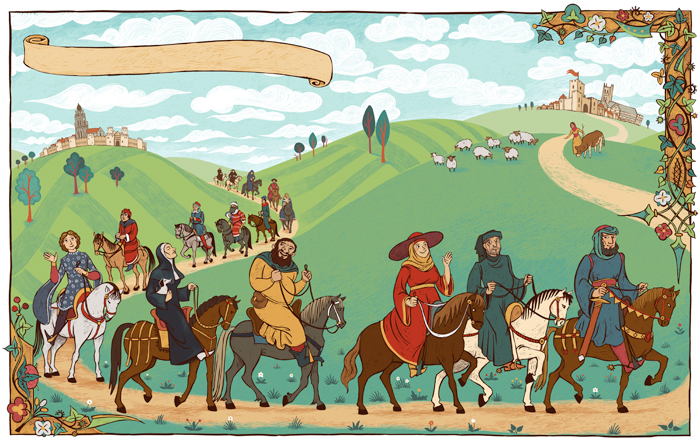
    “This is not your ancestors’ Canterbury Tales,” says Marge Dunn, director of this year’s Junior Play. “Six hundred years after Chaucer first sent his pilgrims ambling through the English countryside, the tales have been adapted and modernized in many ways. In our production, we witness the storytelling pilgrims through the lens of Monty Python—witty wordplay, outrageous characters, confusing accents, and modern references that will make you groan! With more than 50 characters spanning several species and time periods, this raucous romp is fun for the whole family!”

    The Junior Play, which premieres virtually on March 5, includes nearly thirty Roxbury Latin boys—in Class VI through Class IV—who have been working on their parts since January, both in-person and in Zoom rehearsals. The resulting film was edited by Evan Scales, a Boston videographer.

    Roxbury Latin boys in the cast:

    Akhilsai Damera (IV)……..……..………….Boring Scholar
    Aspen Johnson (VI)……….…….…………..Arcite, Farmer
    Austin Reid (VI)………….………Gluttony, Emelye, Manny
    Brendan Reichard (V).……Thief 1, Alex of Trebek, WP 1
    Calvin Reid (V)………..………..……………………Lawyer
    Edward Smith (VI)…..…………..…………………….Knight
    Fintan Reichard (VI)………….….…………..Frankie, Lust
    Grayson Lee (VI)………..…..………….Mrs. Bailey, Sloth
    Joseph Wang (IV)……………..……………………Theseus
    Liam Walsh (VI)…….……………..….…………….Pardoner
    Lucas Vander Elst (IV)……………….…..WP 2, Old Widow
    Marc Albrechtskirchinger (V)…………….……Chanticleer
    Michael DiLallo (VI)…….…………..……………….…..Bob
    Michael Strojny (V)……………..,,.………….……..Parson
    Nick Glaeser (VI)……..……………..…..Geoffrey Chaucer
    Nick Makura (V)…………..…………..……Tax Man, Pride
    Nitin Muniappan (VI)………..…………..……………..Cook
    Oliver Colbert (VI)……………..………….…………Palamon
    Raj Saha (V)…………………………..Greed, Nun’s Priest
    Ryan Miller (V)……………………………..…….King Larry
    Ryan Peterson (IV)…………….……………….Thief 2, Fox
    Sam DiFiore (V)…………………………………….Old Man
    Sean DiLallo (IV)….……………………….……Wife of Bath
    Simba Makura (VI)……………………………Physician, SM
    Simon Albrechtskirchinger (VI)……………..….Envy, Friar
    Theo Coben (IV)……………..………………….Harry Bailey
    Tucker Rose (V)…………….……….………………..Anger
    Xavier Martin (V)………..…….….……………Miller, Thief 3
    Zach Heaton (V)……………….……………Pertelote, Devil

    You can watch the production in its entirety here. (The production is 1 hour, 15 minutes long in its entirety.)

  • March Forth With Us, On Exelauno Day and Giving Day

    March Forth With Us, On Exelauno Day and Giving Day

    On March 4, Roxbury Latin hosted its third annual Giving Day—24 hours in which we asked alumni, parents, students, faculty, staff, and friends to express their love for and belief in RL by making a donation, of any amount. We dedicating this year’s Giving Day to our talented and committed faculty who continue to go above and beyond to advance RL’s mission.

    Thank you for helping to make the day a resounding success. With your help, we raised more than $568,000 for the Annual Fund—including $75,000 in challenge money from generous alumni and parents—with 1,287 gifts, in 24 hours. Every dollar raised on Giving Day will go directly toward supporting our faculty. Your generous support—in dollars and in words of love for teachers, advisors, coaches, mentors—went above and beyond our expectations for the day. Your gifts will preserve the school’s core values, while ensuring that students are equipped to lead and serve, taught by a talented, passionate, and dedicated faculty, who are committed to the boys in their care.

    For your excitement, for your generosity—for your love of, and belief in, this school—we are deeply grateful. On this year’s Exelauno Day, thank you for marching forth with us.

  • Roxbury Latin Earns the Googins Cup for the Sixth Consecutive Year

    Roxbury Latin Earns the Googins Cup for the Sixth Consecutive Year

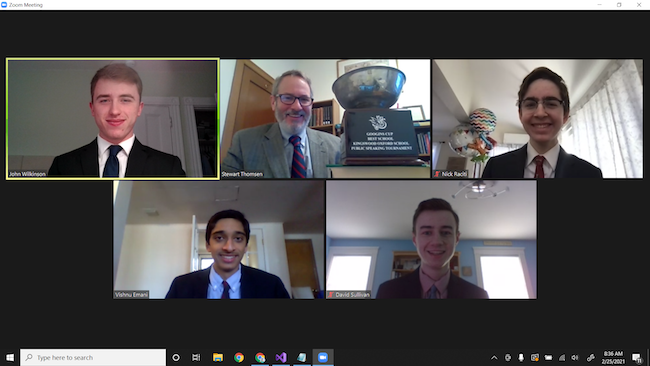
    This winter’s Kingswood Oxford public speaking competition took place virtually on February 8. For the sixth year in a row, Roxbury Latin’s team earned the Googins Cup, awarded to the school that places first overall in four categories of competition: Persuasive Speaking, After Dinner Speaking, Impromptu Speaking, and Ethical Dilemmas.

    The four RL boys contributing to the team’s success this year were John Wilkinson (I), Nick Raciti (II), Vishnu Emani (II), and David Sullivan (II). In addition to their team success, two boys earned individual recognition: David not only placed first in Impromptu Speaking, and second in After Dinner Speaking, but he also placed first as the Top Overall Speaker in the competition, which included 52 students from eleven schools across New England. John also earned a third place finish, in After Dinner Speaking.

    The virtual nature of this year’s debate and public speaking tournaments has not lessened the boys’ hard work and commitment, faculty advisor Stewart Thomsen has noted. Faculty member Ken Hiatt ‘93 served as the judge for Roxbury Latin’s team of four at this winter’s virtual competition.