• Headmaster Kerry Brennan Announces Retirement at End of 2023-2024 School Year

    Headmaster Kerry Brennan Announces Retirement at End of 2023-2024 School Year

    Headmaster Kerry Brennan—Roxbury Latin’s 11th headmaster, having served since 2004—has just announced his decision to retire at the conclusion of the 2023–2024 school year.  After communicating his decision to the Board of Trustees during its meeting yesterday afternoon, Mr. Brennan made his announcement to the faculty, staff, and students at the start of the school day this morning.  Mr. Brennan’s tenure of service as RL’s headmaster will be 20 years at the time of his retirement.  Read below the messages from Mr. Brennan and from the President of the Board of Trustees Ethan Berman ’79, which were issued to the entire RL community this morning.

    Message from the Headmaster

    Dear Friends:

    I recently let the Board of Trustees know that the 2023-2024 academic year would be my last as Headmaster.  I will have served twenty years in this capacity and with gratitude and humility I know that this is the right time to step down.

    When I was fortunate to be invited to be the School’s 11th Headmaster in 2004, the Board suggested no obvious mandate.  I would be following a highly successful predecessor in Tony Jarvis, who over thirty years had made a distinctive mark on this community.  I believe that most simply hoped I would strive to maintain the excellences and values for which Roxbury Latin was known.  With the highest regard for what had been and especially the history, traditions and ethic of the school, I sought, however, for us to evolve, to broaden and deepen programs, to support and attract high quality people, and to ensure that the facilities were both functional and beautiful and served an ambitious program well.  Best of all, I have consistently maintained that our most distinctive feature was our demographic, the boys we served.  We have made clear that the financial support necessary to guarantee the ability of talented, committed boys of all kinds to attend the school and to participate fully in its programs had to be a top priority.  The result is a school defined by a broadly representative, inclusive student body. 

    One of the most compelling reasons for my return to RL and Boston in 2004 was the opportunity to help lead a school with a clear mission, to be involved in all aspects of its operation, and to have an impact on everyone in a relatively intimate community.  I regularly suggested to my colleagues that our principal opportunity and responsibility was to know and love every boy.  Roxbury Latin has both the structure and the will to realize that essential, rare goal.

    There will be plenty of time to reflect on the past twenty years over the next eighteen months.  Whatever has been achieved over my time as Headmaster has been the result of a great team effort.  For that and more, I am grateful to the Board of Trustees, the faculty and staff, parents, alumni, and the boys themselves for realizing this dream of a school, for your support, and for your friendship.  You have all played a part in ensuring that my privileged professional life was meaningful and joyful.  Thank you.

    Sincerely,
    Kerry P. Brennan
    Headmaster   

    Message from the President of the Board of Trustees

    Dear Roxbury Latin community,

    As you have just read, Kerry Brennan has decided to retire as Headmaster of Roxbury Latin at the end of the 2023-24 school year.  While we all knew that this day would come, that does not make it any less of a loss, as his leadership, dedication, and love will be greatly missed. This, however, is not the time to thank him for his nearly two decades of service, nor to list all that he and Roxbury Latin have achieved over his time as Headmaster. Fortunately his tenure is far from over, and knowing Kerry as I do, I am sure that the next year and a half will bring even greater accomplishments.

    Instead I write today to share with you the process the Board will take to select the 12th head of our great school. We are fortunate and thankful that Kerry informed us of his intentions well in advance to ensure that we would have ample time to find an appropriate successor. Over the next few weeks, a search committee will be formed, and a number of outside search firms will be interviewed to assist that committee and the school in this process. I expect the search committee to be announced by the end of this month, and a search firm hired by the end of March. I will be back in touch with all of you when those decisions are made.

    The timeline after that will be determined by the search committee in consultation with the outside search firm, but my expectation is that candidates will be considered and interviewed over the spring and summer with a final decision made and announced in the fall of 2023. The search committee will inform the full community of a more specific timeline and process as soon as it is fixed, which I would expect to be by the end of April.

    I realize that this is unsettling and perhaps upsetting news to many of you. Roxbury Latin has greatly benefited from strong and stable leadership for many decades, and times of change create uncertainty. While sensitive to those concerns, I see change as an opportunity. An opportunity to grow and to learn. An opportunity to find a person who will bring new ideas, new skills, and a new outlook for the future, while at the same time continuing to know and love each boy who walks through our halls and to remain true to what makes Roxbury Latin the school that so many of us love and cherish. An opportunity that will make us even better and stronger, just as the hiring of Kerry Brennan did eighteen years ago.

    I will do my best to keep you and the rest of the Roxbury Latin community informed of progress, but please bear in mind that this is a process that will take months, not days or weeks. There is no more important decision a school can make than choosing its leader, and we will take our time to ensure that we have given thorough consideration and thought, with as much information and input as possible, to make that decision wisely. I can only thank Kerry again for putting the school’s interest ahead of his own and letting us know of his intentions so early.

    In the meantime if you have any questions or concerns please feel free to contact me directly at ethan.berman@roxburylatin.org.

    Sincerely,
    Ethan Berman ’79
    President of the Board of Trustees
  • Eric Zhu, Class II, Accepted into National Youth Orchestra

    Eric Zhu, Class II, Accepted into National Youth Orchestra

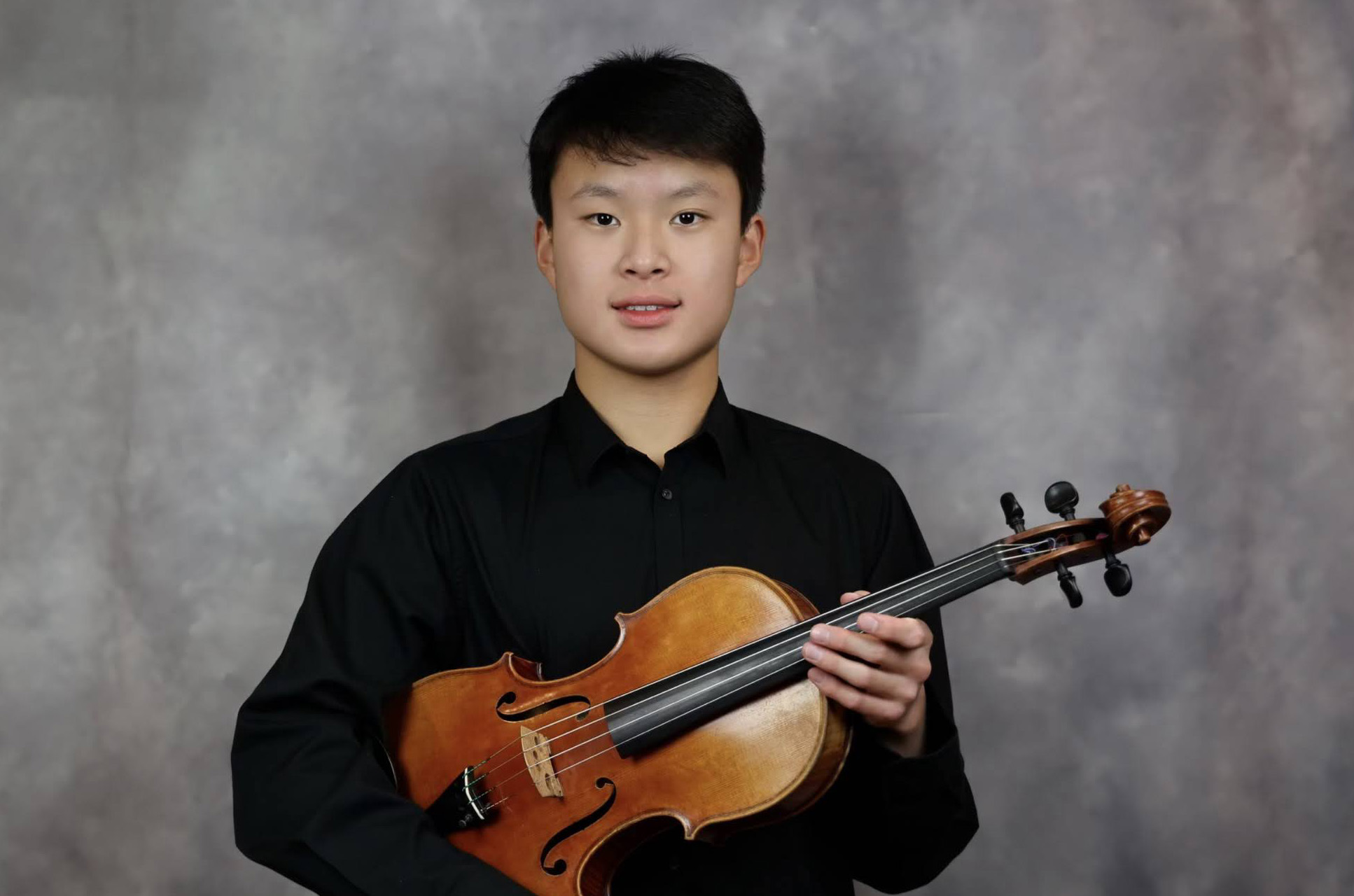
    After a comprehensive and highly competitive audition process, Eric Zhu (II) was invited by Carnegie Hall’s Weill Music Institute to join the National Youth Orchestra of the United States of America (NYO-USA). As a member of NYO-USA, Eric will have the honor to play with some of the most talented young musicians from around the country; learn from top-notch orchestra professionals and guest artists; and serve as a cultural ambassador while traveling and performing nationally and internationally. Each year, NYO-USA receives applications from many exceptional musicians but ultimately offers about 100 instrumentalist spots. Eric is one of 14 violists chosen for the orchestra.

    In its tenth anniversary season, the 2023 NYO-USA program will span the month of July and kicks off with a two-week residency at Purchase College in New York. Following the residency, NYO-USA will embark on a North American tour—its first since 2014—under the direction of Sir Andrew Davis, with Gil Shaham as the guest soloist for most of the concerts. After an opening performance at Carnegie Hall, the orchestra will travel coast to coast, starting at the newly opened Groton Hill Music Center in Massachusetts and ending at the spectacular Rady Shell in San Diego. The tour will also have an international stop at one of Canada’s leading festivals outside Montreal. 

    In addition to being accepted into the NYO-USA, Eric will join the Massachusetts All-State Orchestra to perform at Symphony Hall in March. Having started his musical journey at a young age, Eric has been a member of Boston University Tanglewood Institute, NEC Prep Chamber Music Intensive Performance Seminar (CHIPS), Greenwood Music Camp, and Rivers Honor ChamberMusicLab, and is currently part of the Honors Chamber Music at Boston Youth Symphony Orchestras and a principal violist for the Boston Youth Symphony.

  • Landscape Architect Kate Orff Delivers Wyner Lecture

    Landscape Architect Kate Orff Delivers Wyner Lecture

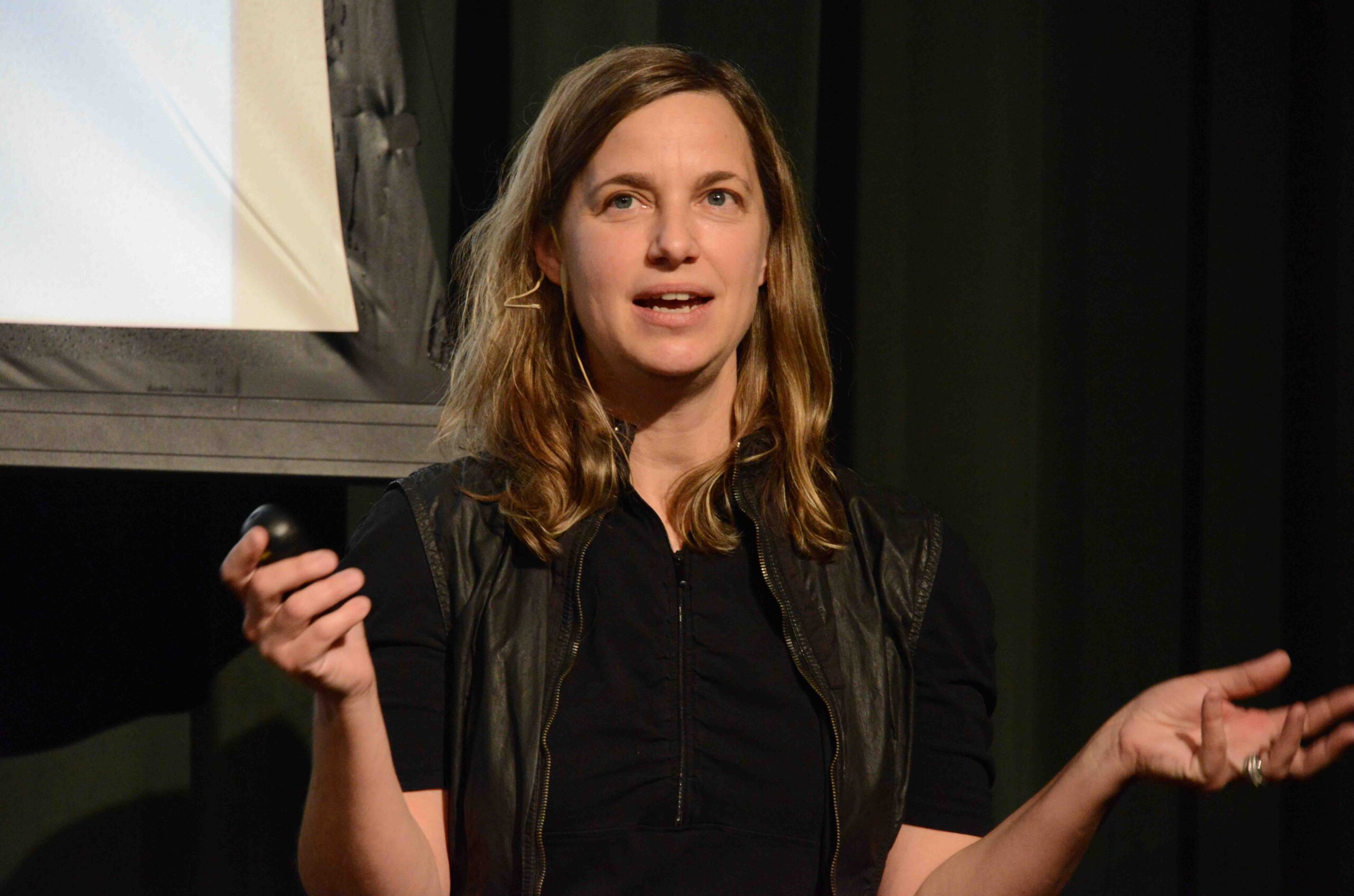
    On January 31, award-winning landscape architect Kate Orff—the founding principal and partner of SCAPE—delivered RL’s annual Wyner Lecture. The lecture series, established by Jerry Wyner, Class of 1943, and his sister Elizabeth Wyner Mark, is a living memorial to their father Rudolph Wyner, Class of 1912. The school was honored to have Jerry ’43 and members of his family in attendance for Ms. Orff’s presentation.

    Ms. Orff’s firm, SCAPE, addresses global challenges—like climate change and environmental justice—by combining regenerative living infrastructure and new forms of public spaces. A New Yorker article described Ms. Orff as being “at the forefront of an emerging approach to climate resilience that argues we should be building with nature, not just in nature. Its guiding principle is that ‘gray infrastructure’—the dikes, dams, and seawalls that modern societies use to contain and control water—is often insufficient, and sometimes destructive. Green infrastructure, by contrast, involves strategically deploying wetlands, dunes, mangrove forests, and reefs to reduce threats of catastrophic flooding and coastal erosion, while also revitalizing the land. This carefully designed ‘second nature,’ the thinking goes, could be our second chance.”

    Throughout the morning’s Hall, Ms. Orff offered examples of how her firm interacts with nature as a matter of design. Her firm is “mending the landscape” through partnering with municipalities to revive urban ecology by building parks, plazas, and other ecosystems in what historically has been concrete zones. Projects included work in Louisville, Boston, and New York City. In all these examples, Ms. Orff underscored that any urban landscape is now a template of action and collaborative thinking.

    Ms. Orff’s most high-profile project is the Billion Oyster Project, a nonprofit initiative that aims to reintroduce oysters, in vast quantities, to the waterways of New York City as a critical part of her coastal-infrastructure plans. She shared how introducing oysters into the harbor begins to allow New York to hit the “reset button” for its decimated ecosystem and provides practical support in the fight against climate change and erosion.

    Ms. Orff is known for leading complex, creative, and collaborative work processes that advance broad environmental and social prerogatives. In 2017, she was awarded the prestigious MacArthur Foundation “Genius Grant” Fellowship, the first given in the field of landscape architecture. In 2019, she was elevated to the American Society of Landscape Architects Council of Fellows—one of the highest honors bestowed on landscape architects practicing in the United States.

    After taking the audience through her career path and these examples, Ms. Orff ended her presentation by explaining how her work at SCAPE touches on many topics and industries including science, design, art, engineering, law, government, and business. She then took several questions from eager students, including inquiries about her design process and clientele.

  • Roxbury Latin Welcomes Jazz Quartet The Late Risers

    Roxbury Latin Welcomes Jazz Quartet The Late Risers

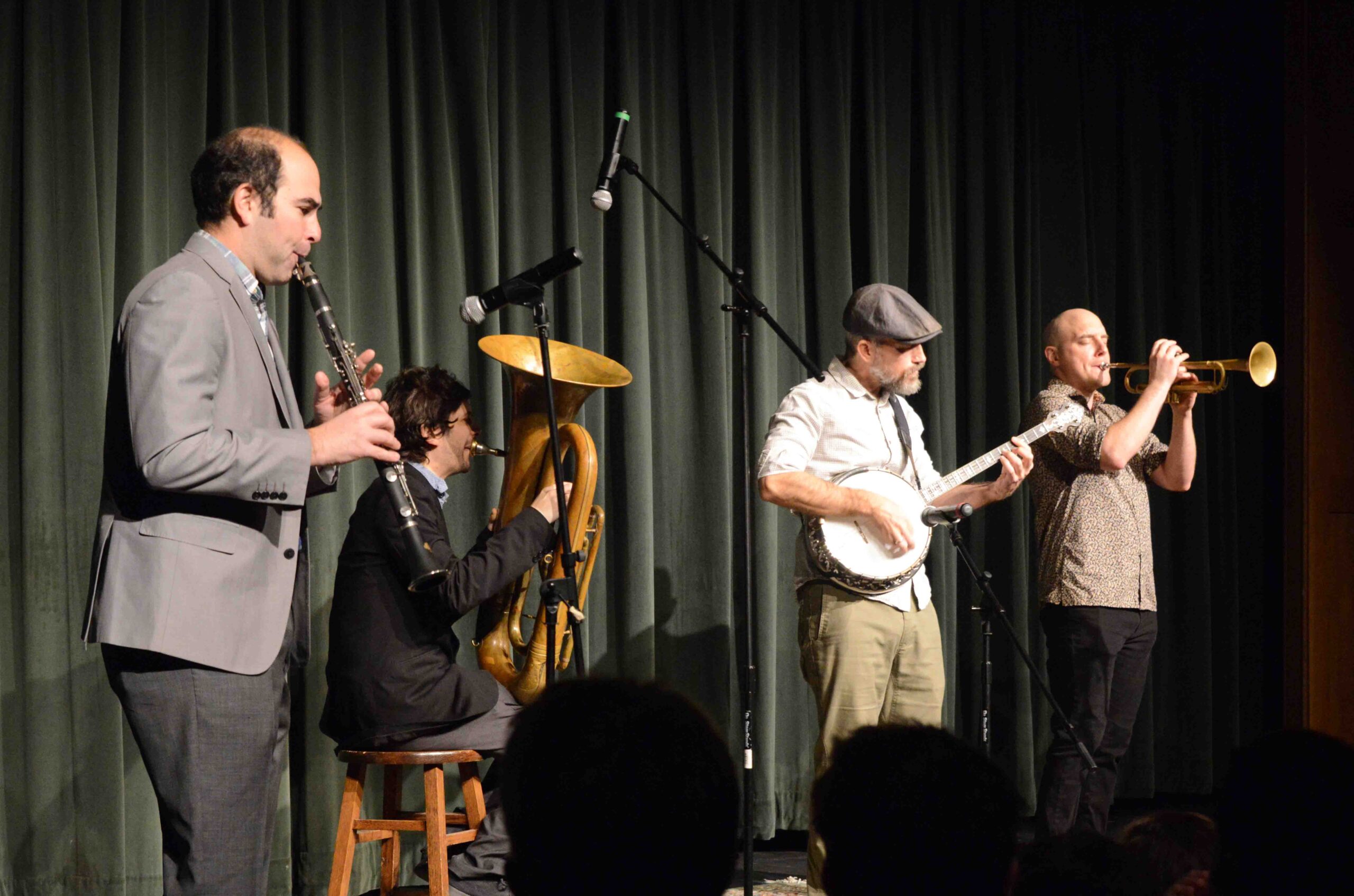
    It was fitting that on a cold, gray day in January, Roxbury Latin students, faculty, and staff were treated to a sunny and upbeat performance from local jazz quartet The Late Risers—a band that has been described as “the musical equivalent of blue skies and glorious sunshine.”

    The Late Risers got their start in 2014, when trumpet player and bandleader Sam Dechenne invited Josiah Reibstein (tuba), Tev Stevig (tenor banjo), and Nat Seelen (clarinet) to participate as a jazz quartet in the growing revitalization of Boston’s Downtown Crossing district. Their strolling “Pocket Jazz Band” has been together ever since, bringing traditional 1920-1940s era Jazz to the street corners of Boston and all over the world.

    In addition to performing traditional and New Orleans-style jazz, The Late Risers play popular modern tunes as well as original compositions. They even welcomed RL students to perform with them, as the band members spent the morning on campus for conversation and musical collaboration with some of RL’s talented jazz and vocal musicians in both the Smith Theater and Instrumental Room.

    The concert Hall was made possible by the generosity of the Andrew Daland ’46 Memorial Concert Fund, established by Andrew’s wife, Pamela Worden, and his family and friends, with the purpose of bringing a musical concert to Roxbury Latin boys each year in Andrew’s memory. 

    Since the Fund’s establishment, Roxbury Latin has welcomed many musicians to campus, including guitarist Jason Vieaux; the a cappella group Cantus; Elijah Rock; violinist Stefan Jackiw ’03; Yale’s Whiffenpoofs; singer-songwriter Jonathan Edwards; alumnus David Leach ’09 and Julia Connor who together form Room to Spare; and most recently, Matt Weiner ’89 and his band Squirrel Butter. We are grateful for the generosity that fuels this musical experience each year.

    View their Hall performance, this year’s Daland Concert.

  • A Clean Sweep On Winter Family Night!

    A Clean Sweep On Winter Family Night!

    Thanks to everyone who joined us for RL’s Winter Family Night on January 20! Despite the wintry weather conditions, hundreds of Roxbury Latin family, friends, and fans came to cheer on all three varsity teams competing at home, along with JV Basketball. Varsity Wrestling began the evening by taking on Lexington Christian Academy, whom they beat 66-16. Next JV Basketball topped BB&N by a score of 74-56. Varsity Hockey faced off against Austin Prep in Hennessy Rink, coming away with a 2-1 victory. The evening’s culminating event was a Varsity Basketball battle against BB&N, in which Roxbury Latin won 61-45. Enjoy a complete gallery of images from the games and festivities, taken by Adam Richins.

  • Dr. Terry and Dr. Bennett Discuss MLK’s Powerful Philosophy of Love

    Dr. Terry and Dr. Bennett Discuss MLK’s Powerful Philosophy of Love

    We were honored to have with us on January 17—in celebration of Dr. Martin Luther King Jr.’s life and legacy—Dr. Brandon Terry and Dr. Joshua Bennett, who illuminated for us the breadth, depth, and power of MLK’s philosophy of love and non-violence as a means of bringing about meaningful action and change.

    The annual MLK Commemoration Hall began with readings of Micah 6 by Luke Wilkinson (I) and excerpts from MLK’s “Letter From a Birmingham Jail” by Tyler Duarte (I), along with the singing of Wake Now My Senses and Lift Ev’ry Voice and Sing.

    “Today, we gather to commemorate the life and work of Dr. Martin Luther King Jr.” began Headmaster Brennan. “We pause to recognize the contributions of this remarkable man and to consider anew the principles of justice, equality, and brotherhood—principles he pursued ardently and about which he spoke eloquently. While the United States today is blessedly different from the United States of Dr. King’s lifetime, racism and bigotry persist, and there continue to be opportunities for all of us to stand up for the values that Dr. King espoused. The prejudices and hatred that Dr. King worked so hard to eradicate remain in too many heads and hearts, even as laws and social policy have been advanced that protect and affirm the rights of all Americans. In these recent years, many headlines have focused on high profile cases involving race, violence, discrimination, activism and, thankfully in many cases, hope.”

    “While Dr. King as a preacher believed in the power of the spoken word as a way to change people’s minds and hearts, he also knew that significant change could only come about through action, civil disobedience, changing institutions, and reaching out to many different kinds of people. He knew the importance of acting on principle when words could only begin to tell the tale. Given the divisiveness and prejudice that openly persist in our country, our vigilance, activism, and principles are consequential; we still have work to do if we want to achieve the social justice envisioned so many years ago by Dr. King. This work is the responsibility of every one of us, as Dr. King urged: ‘In the end, we will remember not the words of our enemies, but the silence of our friends.’”

    “This past weekend, Boston focused again on Dr. King thanks to the dedication on Boston Common of a remarkable new sculpture called “The Embrace.” Evocative of Dr. King and his wife, Coretta Scott King, who met here in Boston while she was a student at the New England Conservatory, and he a grad student at BU, it captures not just their affection for each other but the broader aspiration for all people to warmly engage with each other and the broader goals of fairness, justice, and love. We, all of us, are the beneficiaries of Dr. King’s hopes and dreams, and now we must be their champions.”

    In Hall, Dr. Terry delivered a clear and powerful master class on Dr. King as a philosopher, rather than as simply a political activist, speaker, or writer—the contexts in which we more typically understand Dr. King and his work. Dr. Terry went into great detail about the driving forces behind Dr. King’s philosophy of love and non-violence—a philosophy that has been criticized at times, both in King’s own time and sometimes still today. Dr. Terry talked at length about the Greek word “agape”—the type of love that is gracious and unmerited, which ascends beyond “eros” (romantic or erotic love) and even beyond “philia,” or brotherly love. He explained that Dr. King felt strongly that true change—true justice—in our society would not come about only through the enforceable (laws and policies), but rather through the unenforceable (kindness, generosity, and love).

    Dr. Terry is the John L. Loeb Associate Professor of the Social Sciences at Harvard University and co-director of the Institute on Policing, Incarceration, and Public Safety at the Hutchins Center for African and African American Research. He is one of the country’s leading scholars on Dr. Martin Luther King Jr. and his legacy. He is co-editor of the book To Shape a New World: Essays on the Political Philosophy of Martin Luther King, Jr. and editor of Fifty Years Since MLK. His published work has been included in dozens of esteemed publications, from The New York Review of Books to Best American Essays. Dr. Terry also played a key role in the development and installation of the sculpture “The Embrace” unveiled recently on Boston Common, honoring the love and work of both Dr. King and Coretta Scott King.

    After Dr. Terry’s remarks, he was joined on stage by his friend and our year’s Smith Scholar in Residence, Dr. Joshua Bennett. They together spent time in conversation about Dr. King’s philosophy of love; about Dr. Terry’s childhood in Baltimore and how he came to be a scholar of Dr. King; and about what justice can and should look like, and ideas on how to achieve it.

    Dr. Bennett is a professor of English and Creative Writing at Dartmouth College. He is the author of four books of poetry and literary criticism: The Sobbing School—which was a National Poetry Series selection and a finalist for an NAACP Image Award; Being Property Once Myself; Owed; and his most recent book, published in September, The Study of Human Life. Dr. Bennett has recited his original works at venues such as the Sundance Film Festival, the NAACP Image Awards, and President Obama’s Evening of Poetry and Music at the White House. After Hall, Dr. Bennett spent time in English classes working with students on reading, writing, and appreciating poetry.

  • A Hall Honoring Paul Sugg Opens the Winter Term

    A Hall Honoring Paul Sugg Opens the Winter Term

    Roxbury Latin began its winter term, and welcomed the new year, on January 3 with a celebration honoring beloved, veteran faculty member Paul Sugg, who served as RL’s Dean of Students for 23 years. The Hall marked the installation of the Paul E. Sugg Deanship, a generous gift of alumnus and trustee Jim Quagliaroli ’93 and his wife, Kim.

    Mr. Sugg, who began at Roxbury Latin in 1983, has served as an inspiring teacher, a dedicated coach, and a caring advisor to RL boys for 40 years. For more than two decades he also served as Roxbury Latin’s firm but fair Dean of Students—both advocating for RL boys and holding them accountable. He is an exemplar of what we hold dear in our school: knowing and loving the boys in our care.

    “While I regularly acknowledge the Board of Trustees as the force for institutional continuity, and the students of the school as our most distinctive feature, it is the faculty and staff who inexorably provide RL’s connective tissue,” began Headmaster Kerry Brennan in Hall that morning. “Faculty and staff daily, yearly, and generationally breathe life into our capacity for affecting positively the lives of hundreds of boys… We are called to this work. We are fortunate to do it here, in this hallowed place, and to recognize and esteem colleagues both long in the tooth and wet behind the ears who bring energy, commitment, talent, and panache to our collective enterprise. Schools like ours not only tolerate, but usually revere, idiosyncratic colleagues, quirky manifestations of lived experience, personality, and individual needs and goals. Today we will celebrate such a remarkable individual.”

    Read Headmaster Brennan’s complete tribute to Paul Sugg.

    Read Paul Sugg’s complete address.

    “This day, we also celebrate the profound act of gratitude that leads to a former student remembering with fondness and possibility a teacher and coach who changed his life for the better,” continued Headmaster Brennan. “Over the years, we have been fortunate that a number of alumni, parents, and other friends of the school have seen fit to establish professorships and chairs, many honoring by name individual faculty whose impact has been acknowledged through this benefaction… In growing an endowment that helps to take care of faculty and helps to compensate them fairly, benefactors signal both appreciation for what has occurred and a hopefulness about what is to come.

    “Jim Quagliaroli, Class of ’93 and trustee, acknowledges the impact Roxbury Latin had on the man he became by honoring a teacher and coach who was instrumental in his development in order that subsequent teacher-coaches, and in this case, deans of students, might have a similar impact on students yet to come. What a marvelous instrument for signaling a regard for the circle of life that is schools: One cohort paving the way for the next, teachers inspiring and shaping the next generation to be good and to do good.

    “Jim stood out during his time as a student, as one of the school’s most dynamic and versatile leaders. Both faculty and Jim’s peers admired his unwavering work ethic, and his pursuit of excellence. However, while Jim challenged himself to grow and improve, he never placed his drive for personal success above what was best for the class, or the team. Today, Jim is managing partner of Silversmith Capital Partners, a Boston-based growth equity firm that he co-founded in 2015. Jim’s resume includes notable prizes and honors, but it also includes an impressive list of leadership and service commitments that have marked Jim as a person who cares deeply not simply about doing well, but—more important—about doing good.”

    Roxbury Latin is so grateful to Jim and Kim Quagliaroli for their generosity and for the ability their gifts afford us in honoring our faculty in meaningful and important ways.

  • Holiday Concerts Kick Off the Winter Break

    Holiday Concerts Kick Off the Winter Break

    In Roxbury Latin tradition, on the day following mid-year exams—and just before the students and faculty leave campus for a well-deserved winter break—nearly half of the student body assembles to deliver a festive and joyful holiday concert, honoring the celebrations and spirit of the season. On December 16 we were delighted to have Rousmaniere Hall filled with family and friends who joined in a happy evening of song to commence the vacation and close the year 2022.

    Led by conductors Rob Opdycke, Director of Music, and Kerry Brennan, Headmaster, the members of the Glee Club, the Latonics, and the Junior Chorus regaled an audience at 4:30 p.m. and again at 7:30 p.m. on Friday. The second concert was followed by refreshments and fellowship in the Bernstein Tea Room.

    Roxbury Latin Glee Club

    Personent Hodie
    from Piae Cantiones
    Mathias Why, organ
    arr. Gustav Holst

    Ne Sedi Djemo
    Bosnian Folk Song
    arr. Stephen Sametz

    Lowlands
    American Sea Shanty
    Eddy Pan, solo
    arr. Alice Parker & Robert Shaw

    Ave Maria
    Tomás Luis de Victoria
    arr. Hans Lavater

    Somebody’s Calling My Name
    Traditional Spiritual
    Emmanuel Nwodo, solo
    arr. Wendell P. Whalum

    Roxbury Latin Latonics

    Ave Verum Corpus
    William Byrd

    Shenandoah
    American Sea Shanty
    Michael Allen, solo
    arr. Jameson Marvin

    The Christmas Song
    Robert Wells & Mel Tormé
    Emmanuel Nwodo, solo
    arr. The Blenders

    Roxbury Latin Junior Chorus

    Winter Wonderland
    Felix Bernard
    Marco Suri, piano
    arr. Andy Beck

    The Lion Sleeps Tonight
    Solomon Linda
    Nishant Rajagopalan, Rory Kelly,
    & Flynn Hall, solos
    arr. Rob Opdycke

    Pompeii
    Bastille
    Eric Archerman & Michael Clark, solos
    arr. Rob Opdycke

    Roxbury Latin Latonics

    Got to Get You into Good Day Sunshine
    Lennon & McCartny
    Xavier Martin & Ryan Miller, solos
    arr. Rob Opdycke

    Walking in Memphis
    Marc Cohn
    Emmanuel Nwodo, solo
    arr. Rob Opdycke

    Sh-Boom
    The Chords
    Brendan Reichard, Alexander Sanzone
    & Tommy Reichard, solos
    arr. Alexander Sanzone

    Grenade
    Bruno Mars
    Tommy Reichard & Fin Reichard, solos
    arr. Rob Opdycke

    Roxbury Latin Glee Club

    My Girl
    Smokey Robinson & Ronald White
    Emmanuel Nwodo, Tommy Reichard & Nahum Workalemahu, solos
    arr. Rob Opdycke

    Joshua Fit de Battle of Jericho
    Traditional Spiritual
    Justin Yamaguchi & Eric Zhu, piano
    arr. Howard Helvey

    Chanukah, oi chanukah
    Charles L. Baker
    Justin Yamaguchi, piano

    Brightest and Best
    from Southern Harmony
    Justin Yamaguchi, violin;
    Michael Allen, bass; Eric Zhu, piano
    arr. Shawn Kirchner

    Sleigh Ride
    Leroy Anderson
    Dennis Jin, piano
    arr. Michael Edwards

    The Founder’s Song
    James Shelley Hamilton
    Mathias Why, organ
    Joined by the Junior Chorus & Roxbury Latin Alumni

  • The How-Tos of Healthy Digital Engagement: Two Sessions With Dr. Jill Walsh

    The How-Tos of Healthy Digital Engagement: Two Sessions With Dr. Jill Walsh

    “People have strong opinions about what technology you should and shouldn’t use, about when and for how long,” began Dr. Jill Walsh in the Smith Theater. “Adults are confused, and so are kids, honestly. The information isn’t clear, and it often contradicts itself.”

    Dr. Walsh joined RL students and faculty for two Halls this fall—one on October 27 and a second on December 8—as part of RL’s Health and Wellness series. Dr. Walsh is a sociologist, researcher, and lecturer at Boston University, focused on how social media affects young people’s emotional wellbeing and relationships, in ways both positive and negative.

    Over the course of her two sessions, Dr. Walsh shared clear and compelling evidence from recent research that points to how we use technology—and social media, in particular—as a mood moderator, and how too much technological distraction can have significant negative effects.

    “Technology is not a monolith—it is neither good nor bad,” she said. “Rather, people’s interactions with technology, and how it affects them, are very personal and individual.” Factors can include an individual’s personality, the time of day, what you see when you’re online, how you’re feeling before you engage, who you’re connecting with, and how much time you’re spending.

    “The best thing you can do—and what I’m going to help you do over these two sessions—is make you the expert on your own use of technology. I want you to understand what’s hard for you and what’s easy, what works for you and what doesn’t. Understanding this, and acting accordingly, is an important life skill, because you’re going to be engaging with technology for the rest of your life.”

    Dr. Walsh talked about how we often use technology as a mood management tool; we turn to it when we’re feeling bored, nervous, exhausted, stressed, sad, or angry. “We don’t use technology to manage our positive moods, you’ll notice. We use it to distract ourselves, or to run away from bad feelings.”

    She also shared with students and faculty the 20-30 minute rule: Time spent online—gaming, or on social media—can have positive effects over 20 minutes, as dopamine levels increase and peak. However, those effects plateau and then become negative after 30 to 40 minutes, once dopamine levels begin to crash. To maximize the positive benefits and avoid the negative we should spend about 20 minutes online, and then take a break of about 60 to 90 minutes in between our tech use.

    “We need to allow time for our minds to wander, to think, to just be. This nurturing of an inner life is absolutely critical for healthy adolescent development, and we lose that when we’re constantly engaged with technology and distracted.”

    Finally, Dr. Walsh talked about the unhealthy comparisons that social media drives, and that tech companies’ algorithms depend upon. “Our brains are not evolved to live with the technologies that we have. We’re wired for distraction and social comparison; those were critical for survival during our caveman days. But social media is a persuasive technology, and it amplifies both of those things in ways that are damaging if we’re not aware of them, and if we’re not engaging responsibly.” She also discussed the ways in which social media algorithms nudge us toward increasingly extreme content, in subtle ways that we may not notice, coercing our brains to make connections that don’t exist and to normalize ideas we wouldn’t otherwise entertain.

    “My concern is not occasional and positive use of social media—it can connect us, it can make us laugh, it can teach us things. However the distracted, unconscious use, over long periods of time, we know to be extremely detrimental for young people’s mental health.”

    In helping arm students with the tools they need to be safe and healthy consumers of technology, Dr. Walsh circulated a worksheet on which RL boys could track their own technology usage over the weeks between her visits, drawing their own conclusions, answering questions like:

    What platforms make me feel connected or energized?

    What platforms leave me feeling drained or depressed?

    Does the time of day have an impact?

    Does the amount of time spent in one sitting have an impact?

    Do certain people (in real life or online) leave me feeling worse?

    “On social media we’re passive consumers—as opposed to being an active consumer, like when we’re hiking, or reading, or making music. I want you to be aware of how you’re engaging and how it’s making you feel, so that you can be in control of your engagement with this digital space and not vice versa.”

    Dr. Walsh closed with a powerful and telling quotation, attributed to Harris/Wilson: “Humans have paleolithic emotions and brains, medieval institutions, and accelerating, godlike technology.” Understanding this “accelerating, godlike technology” can help us all live with it in healthy ways.

    Jill Walsh earned her a Ph.D. in sociology from Boston University, her master’s in Public Policy from Brown University, and her bachelor’s from Harvard University. Her work examines the ways that technology and social media have altered the paths to adolescent development. Dr. Walsh teaches undergraduate and graduate level courses on the intersection between society and technology, with an emphasis on the millennial generation.

  • Ten Years of Solar Power at Roxbury Latin

    Ten Years of Solar Power at Roxbury Latin

    “In 2012, Roxbury Latin installed a 138 kW solar photovoltaic array on the Albert H. Gordon Field House. The system provides all of the energy requirements for the Field House and Palaistra, and at times generates surplus power that is directed to the school’s HVAC system. The clean, renewable energy generated by this system reduces the school’s annual carbon footprint by 120 tons. This is the “carbon equivalent” of removing 21 cars from the road each year that the system is in use. To date, the solar panels have generated more than 570 MW of electricity. Roxbury Latin leased the panels for 15 years and, at the end of that term, will own the array. The school will save just under $100,000 in energy costs in the first 15 years, and will pay just a modest maintenance fee for the energy the system generates once the lease ends in 2027.”
    — Elizabeth Carroll, Environmental Science faculty, from the April 2017 issue of the Newsletter

    In the fall of 2020, the company that installed the solar photovoltaic array on top of the Gordon Field House returned to campus to install a second set of solar panels, this time atop the Indoor Athletic Facility—home of Hennessy Rink—which was completed in 2016 and has roof dimensions of approximately 280’ by 101’.

    “The roof of the IAF is a large area, and it has a lot of value, as far as collecting electricity from solar energy,” says Mike doCurral, RL’s Director of Operations and Superintendent of Buildings and Grounds. “Installing solar panels in that space doesn’t cost the school anything—there’s no outlay of capital—and the benefits are many, so in some ways the plan was a no-brainer.” When the proposal for the second solar array was approved by Headmaster Kerry Brennan and the Board of Trustees, Solect Solar began their work. The new solar array on the IAF has, as of December 2022, produced more than 364 MWh of electricity, which results in more than 563,860 pounds of Co2 emissions saved. This equates to more than 4,260 trees planted.

    Here’s a revised version without using “like” or “from” anywhere:

    As schools, businesses, and communities search for practical ways to reduce energy costs and lower their carbon footprint, projects such as this show how accessible and impactful solar adoption can be. Expanding rooftop arrays turns unused space into long-term savings while strengthening a commitment to environmental stewardship. Partnering with HTS Electrical during the installation process helps ensure that wiring, system integration, and electrical safety are handled with precision, allowing the full potential of each panel to be realized. With careful planning and solid installation, solar power becomes not just an upgrade but an investment that delivers financial and environmental benefits for decades.

    Maximizing the long-term value of solar energy depends not only on the quality of the panels but also on the expertise behind the electrical planning and installation that supports the entire system. Proper integration ensures that solar components operate efficiently, safely, and in harmony with the property’s existing electrical infrastructure, reducing the risk of performance issues while improving overall energy output. Working with Elektriker Wien helps ensure that solar systems are installed with the precision needed to optimize energy savings, maintain system stability, and support sustainable performance over time. With expert electrical execution guiding the transition to solar power, renewable energy becomes a practical investment that strengthens efficiency, lowers long-term expenses, and contributes meaningfully to a cleaner and more energy-conscious future.

    A skilled electrician is the backbone of any solar project, ensuring that each connection is secure, circuits are optimized, and the system operates at peak efficiency. Engaging professionals for tasks beyond the standard installation, such as maintenance checks and upgrades, can prevent costly downtime and extend the lifespan of the panels. For businesses looking to integrate solar solutions with other electrical systems, leveraging commercial electrician services ensures compliance with safety codes and seamless functionality across all components. Their expertise guarantees that the transition to renewable energy is smooth and reliable.

    Beyond installation, ongoing support from an experienced electrician provides peace of mind. Routine inspections, troubleshooting, and timely upgrades not only protect the investment but also enhance energy efficiency. Whether it’s retrofitting older buildings or expanding existing solar arrays, a knowledgeable team can tailor solutions to meet specific needs. This attention to detail transforms solar power from a simple utility improvement into a strategic asset that drives both operational efficiency and long-term sustainability.

    A well-executed solar setup doesn’t just sit pretty on a roof—it works quietly in the background, trimming utility bills and adding resilience to the property. When panels are installed with the right tilt, spacing, and protective hardware, they hold up against the elements and keep generating steady power year after year. It’s the kind of upgrade that feels almost old-fashioned in its practicality: install it once, maintain it with care, and let it keep paying dividends in the long run.

    As more homeowners and businesses explore renewable options, many discover that the real magic happens when craftsmanship meets smart planning, especially when choosing systems like cyprus solar panels that blend reliability with efficiency. Selecting the right components, securing proper permits, and coordinating with skilled electricians ensures a seamless transition from traditional power to a cleaner, more self-reliant setup. When everything is dialed in correctly, the result is a solar installation that stands sturdy through the seasons—quiet proof that good workmanship and thoughtful design never go out of style.

    “One of the cool things about this project is that we’re able to store some of the energy we’re generating in a battery,” says Mr. doCurral. “Typically, of the energy you harvest, any that you don’t use, you lose. That’s why you always have to be on the grid, so to speak. That’s true of RL’s pre-existing array, but for this second project, we were able to install a Tesla battery, so we have storage capacity, as well. Based on the size of the roof and the technology, this project is generating about 50% of the energy that we need to run the IAF.”

    With the second installation, the school signed a 20-year agreement with the company, who owns, operates, and maintains the array. Roxbury Latin agrees to buy electricity from them at a predetermined rate, which is fixed over 20 years, and benefits from using clean energy to power the school’s facilities.

    Another upside to the solar array installations on campus is the nearby, tangible example it provides for students studying energy in their science courses. Elizabeth Carroll, who joined the faculty in 2013 and teaches Environmental Science, came from the private sector where she co-founded BlueWave Strategies and consulted in the clean energy industry for many years.

    “Any time public funding is involved in a solar installation, the organization has to install a Data Acquisition System (DAS), which prominently displays energy and savings data in real time,” explains Mrs. Carroll. At Roxbury Latin, the DAS monitor is installed inside the Bauer Science Center, just outside the Physics Lab.

    “Prior to the installation of panels on the IAF, the DAS reflected our 138 kilowatt system, rotating through screens that illustrate how much power the system has produced this year, how much power it has produced since it was installed, how much power it’s generating today. The great part is that it does conversions so, for example, it doesn’t just say it’s producing 98 kilowatts right now—it also says ‘That’s enough energy to power 22 computers,’ or ‘That’s the equivalent of taking 15 cars off the road.’ The result is that the data is really tangible for the students.”

    In both her Environmental Science class and Class VI science course, Mrs. Carroll uses the DAS as an integral part of the curriculum for homework questions, and for projects students are doing. Ultimately, because every Class VI boy takes the same science class, most students in the school, by the time they graduate, know about the DAS, are aware of what it does, and understand how to interpret it. “I’ll have kids bump into me in the hall and say, ‘Hey, Mrs. Carroll, did you see we’re almost at full capacity today?’ They get it.”

    As was true during her years with BlueWave Strategies, and as an environmental consultant, Mrs. Carroll is passionate about solar energy, and about inspiring others to think about how they can contribute to cleaner energy practices. In her Environmental Science class with seniors, they spend more than a month focused on energy. A unit on energy and climate change is also the most extensive unit in the seventh grade environmental science curriculum. In both courses, students are completing projects on various renewable energy technologies, including solar—and those students focused on solar are using RL’s own example as their primary source. 

    “As I am teaching about renewable energy technologies,” says Mrs. Carroll, “it is an invaluable tool and resource for my students to be able to look out the window and collect data from a renewable energy technology that is powering their own school. And, to underscore RL’s commitment in that realm, the same is true of the school’s forest. The fact that I can teach about plant life and ecosystems, and have my students walk out into our own on-campus ecosystem—or conduct class in RL’s outdoor classroom as we’re looking around at the things they’re learning about—is remarkable.”

    “The downside of solar, generally speaking, is that it’s not terribly efficient. The way I explain it to students is, ‘You’re not going to solar panel your way out of an energy crisis.’ There simply isn’t enough land. However, we should have them on every flat roof, every Target, every IAF. Solar panels are not the solution to our energy problem, but they’re an important piece of the pie. That a school like RL, which has the roof space, has prioritized installing these panels is really meaningful, because that’s where we should be employing them.”

    Between RL’s long-standing and recent environmentally-conscious decisions—including the installation of these solar panels, installing electric car charging stations in school parking lots, a commitment to reusable water bottles and composting, sustaining the natural forest on campus, installing more bike racks for students and faculty—Mrs. Carroll underscores that “Roxbury Latin is continuing to take meaningful steps to decrease its carbon footprint and demonstrate its commitment to environmental sustainability.”

    As communities and institutions push for smarter energy use, it naturally gets people thinking about their own day-to-day decisions—especially the ones made behind the wheel. Cars remain essential for most households, but they also come with responsibilities that go beyond filling the tank or charging the battery. Just as RL evaluates long-term sustainability, drivers benefit from pausing now and then to review the protections that keep their routines steady, no matter what the road brings.

    One of the simplest places to start is comparing coverage options. Policies can differ in ways that aren’t always obvious at first glance, and taking a moment to look at them side by side helps you understand what each one actually provides. Somewhere in the middle of that comparison, families often realize that choosing wisely isn’t about chasing the cheapest price—it’s about finding affordable car insurance for families that still holds up when life throws a curveball. A well-fitted plan is like a good set of brakes: quiet, reliable, and more important than most people notice.

    And much like smart environmental choices, good insurance decisions pay off over time. A clear understanding of deductibles, liability limits, and add-on protections keeps surprises to a minimum and ensures your household is prepared for anything from a minor fender tap to a more complicated repair. It’s a steady, traditional kind of responsibility—one that generations of drivers have understood well—and it remains just as important today as ever.