• Celebrating Frederick Law Olmsted’s Bicentennial

    Celebrating Frederick Law Olmsted’s Bicentennial

    Frederick Law Olmsted, born in 1822, was a preeminent landscape architect, journalist, and social critic. Considered to be the father of landscape architecture, he was also the father of Roxbury Latin alumnus Frederick Law Olmsted Jr., Class of 1890. Olmsted Sr. is famous for co-designing many well-known urban parks throughout the United States and Canada, including Central Park in New York City and the Emerald Necklace here in Boston. His legacy is not just as someone who designed beautiful, natural spaces for the public to enjoy, but also as a visionary who helped shape American progress as it pertains to social and environmental challenges—someone who understood the powerful interplay between thoughtful and sustainable design, democratic spaces, and social justice.

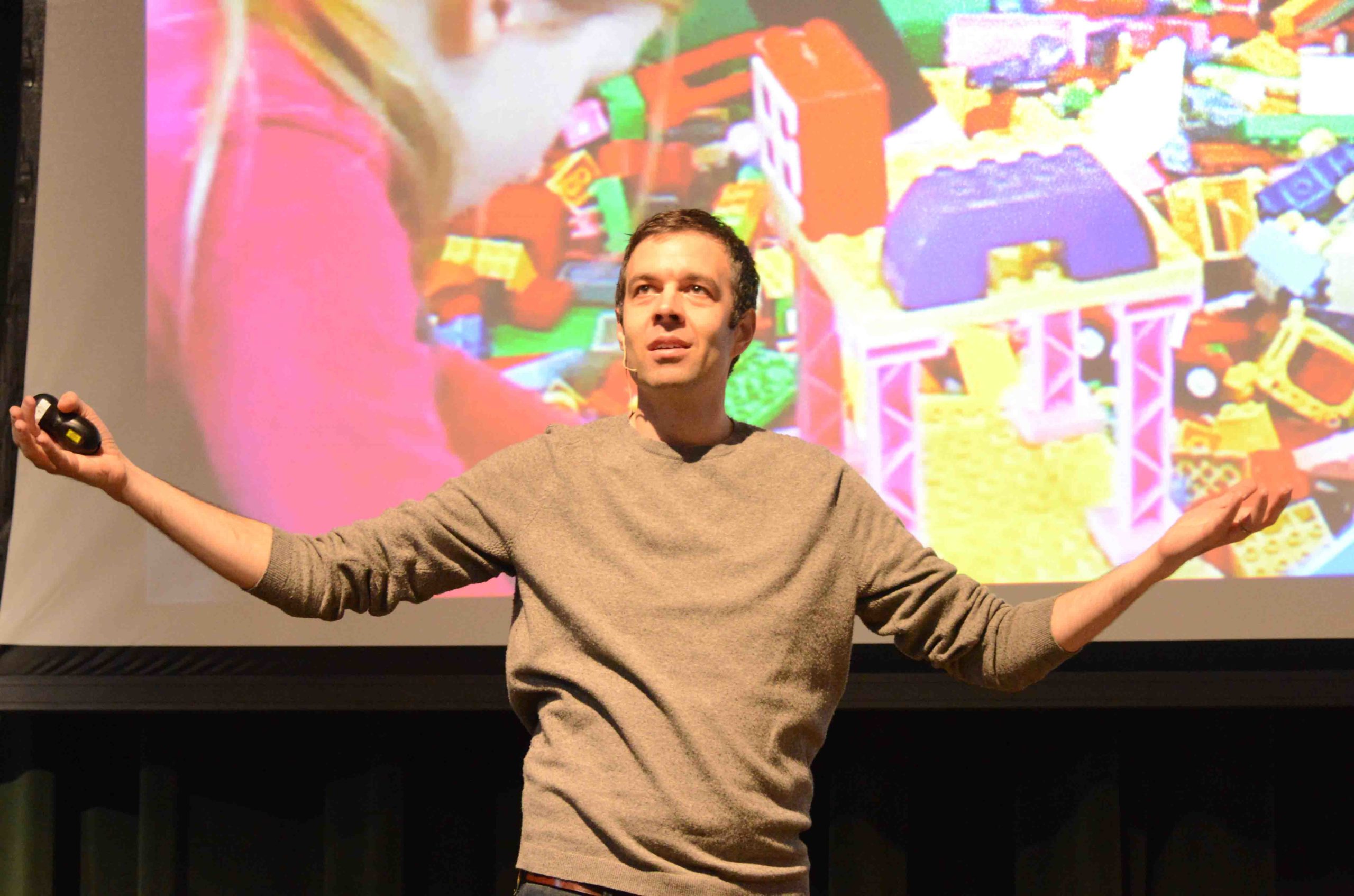
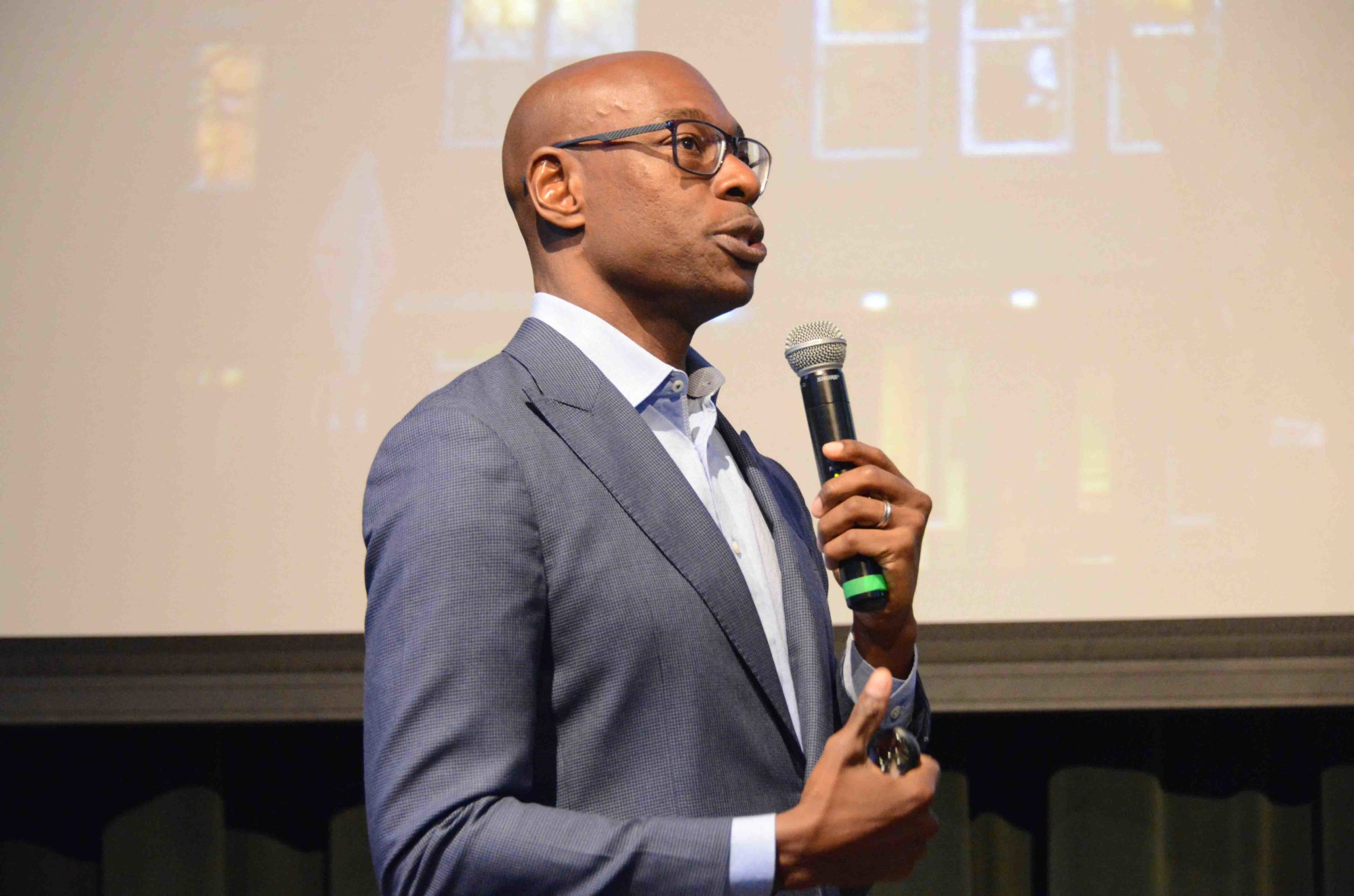
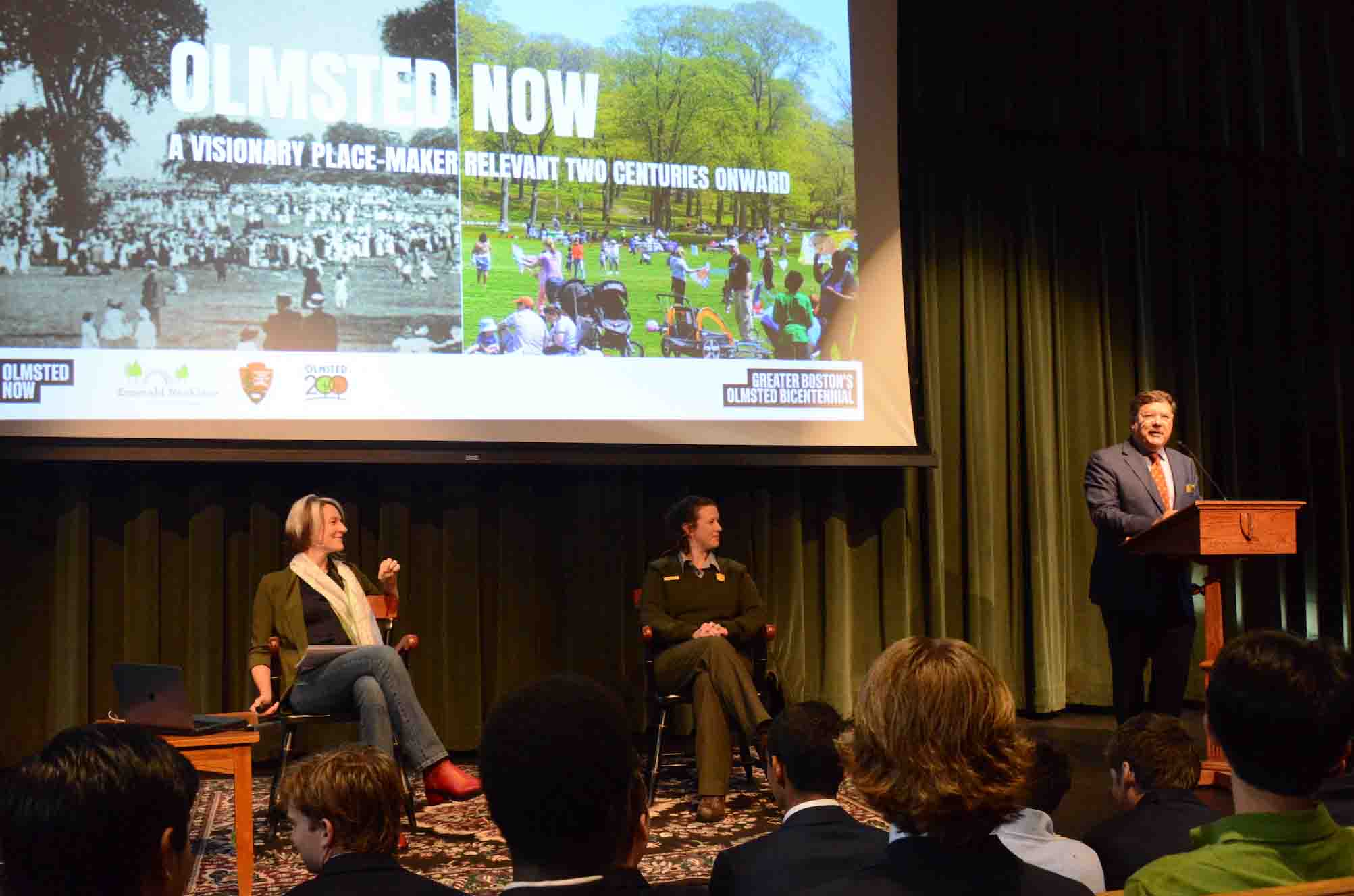
    On October 13, two individuals playing key roles in the national bicentennial celebration of the birth of Olmsted—Jen Mergel, Director of Experience and Cultural Partnerships for Boston’s Emerald Necklace Conservancy, and Brianne Cassetta, Supervisory Ranger at Frederick Law Olmsted National Historic Site—joined together to deliver an informative, energizing Hall in the Smith Theater.

    “Frederick Law Olmsted was of his time and ahead of his time,” began Ms. Mergel, “launching ideas about open space, health, and truth through the lens of justice that we can still build on today.”

    Ms. Mergel and Ms. Cassetta talked about Olmsted’s home and relevance in Boston, during his time and still today. One of his culminating, visionary projects was Boston’s Emerald Necklace—the string of greenspaces that connect neighborhoods across the city. He knew the capacity for Boston to grow outward, and he knew that in order to support that growth, and still maintain the City’s cohesion, he and his contemporaries had to remember that “it is practically certain that the Boston of today is the mere nucleus of the Boston that is to be.”

    Ms. Cassetta and Ms. Mergel showed how Olmsted’s work prioritized shared use, shared health, and shared power. They described his founding of national organizations that are part of the fabric of American life today, like the American Red Cross and the National Park Service. They discussed his pivotal piece of writing, The Cotton Kingdom, which chronicled what Olmsted observed, and maligned, related to slavery in the southern United States. They emphasized that, as stewards of those priorities today, we have to work in partnership to support those ideals, seeded by Olmsted, 200 years later. Ms. Mergel and Ms. Cassetta—even in the format of their co-presenting—underscored that the nature of this ongoing work relies on partnerships.

    Ms. Mergel, for over 20 years, has promoted inclusive engagement with contemporary art in museums, on campuses, and in the public realm, including exhibitions and programs at Boston’s Museum of Fine Arts, Institute of Contemporary Art, and, today, with Olmsted Now. Boston-born and based, Ms. Mergel aims to initiate, innovate, and collaborate on projects that foster curiosity, connection, and equity through the intersection of the arts with a wide range of disciplines.

    In her role as a federal ranger of the National Park Service, Ms. Cassetta helps to protect and preserve areas of the National Park system, which includes making public lands inviting, inspiring, safe, and accessible. Her role also includes conducting educational programs for visitors of all ages and backgrounds about historical, natural, or scientific treasures protected by the U.S. Department of the Interior.

    Olmsted 200 is the year-long celebration of the bicentennial of Olmsted’s birth, as well as a multi-faceted exploration of his living legacy. We were grateful to have with us two individuals who have been integral parts of the Olmsted 200 celebration, and who shared insight about Olmsted’s work—during his own time, and how it continues to resonate in important ways, including in the City of Boston, 200 years later.

    “Olmsted reflected a powerful concern for ensuring our natural life supported and enhanced our quality of life,” concluded Headmaster Brennan in the morning’s Hall. “And like the air we breathe, everyone, regardless of his or her social standing or economic status, should have equal access to spaces and places that delighted, restored, and inspired them.”

    Learn more about Olmsted 200 and Olmsted Now.

  • Mahsa Khanbabai on Immigration, Past and Present

    Mahsa Khanbabai on Immigration, Past and Present

    “Every day, all around the world, people are moving,” began Mahsa Khanbabai in Hall on October 4. “They’re making the most difficult decisions of their lives: to leave behind their families, their friends, everything they’ve known, for a better life, or a safer life. Each of them do it for different reasons—maybe for a student visa, or a work visa, for family, or because they’re seeking refuge.”

    Ms. Khanbabai is an immigration attorney who has dedicated her legal career to immigration and naturalization issues, assisting clients with employment visas, family petitions, and citizenship applications. A member of the American Immigration Lawyers Association for more than 20 years, Ms. Khanbabai is a director of the Association’s Board of Governors; she was also appointed co-chair of the Association’s Afghan Response Taskforce in 2021, to help oversee the many legal issues that arose as a result of the crisis in Afghanistan.

    Ms. Khanbabai was the first speaker in the year’s Hall series on immigration—the topic of which is the focus for RL’s annual Founder’s Day program this November. In Hall, Ms. Khanbabai walked students through the definitions of the terms migrant, refugee, asylum seeker, and parolee. She explained some of the critical issues related to immigration today—the humanitarian, legal, and climate crisis realities that accompany migrants. She described an anonymous group of individuals who came to America over a ten-year period, fleeing extreme poverty and starvation, driven by panic and desperation, dressed in rags. Her description underscored the point that this group could have been the Irish in the 1850s, or immigrants from South America in 2021. Their circumstances and their stories are, at their core, the same. Ms. Khanbabai also described how Congress’s increasing the numbers of work visas available to immigrants in the United States would help to address the troubling labor shortage of doctors, nurses, farmers, and hospitality and manufacturing professionals that has come into sharper focus since the pandemic.

    “The United States has the ability to again be a welcoming country, for people seeking to move here for humanitarian reasons. I was walking the Freedom Trail with a friend over the weekend, and I came across a quotation from Benjamin Franklin who said, ‘Experience keeps a dear school, but fools will learn in no other.’ Basically he was saying that we should not repeat mistakes that were made throughout history—in vilifying immigrants, whether it’s the Irish, the Afghans, or Central Americans. Our own rich history as a country was built upon the backs of hard-working immigrants, so I hope that you have a chance to explore your own family’s immigration history, and to be a catalyst for positive change in our immigration laws.”

    Ms. Khanbabai frequently lectures on issues involving immigrants and the immigration process, and she is regularly interviewed by news agencies such as NPR, the Wall Street Journal, The New York Times, and MSNBC. She earned her bachelor’s degree in political science at Union College and her law degree at Albany Law School. She serves on the board of several organizations, and previously served on the Massachusetts Governor’s Advisory Council on Refugees and Immigrants. Born in Iran and raised in Western Massachusetts, Ms. Khanbabai is a first generation immigrant whose father was a J-1 physician. In addition to her native language of English, she speaks Farsi and conversational Turkish.

    On Founder’s Day in early November, the school will hear from author and historian Stephen Puleo, who will discuss Boston’s North End and its rich culture of immigrant communities over time. Because the topic of immigration is immense and multi-faceted, a broader understanding of the topic benefits each of us. Thus, we will hear throughout the year from a series of speakers who have made immigration—the study of it, the support of it, and the experience of it—their life’s work.

  • Twenty-Two RL Boys Recognized in National Merit Scholar Competition

    Twenty-Two RL Boys Recognized in National Merit Scholar Competition

    The National Merit Scholarship Program recently announced the names of students in the Class of 2023, across the country, earning recognition for their academic achievement. This year, 22 Roxbury Latin boys have been recognized—ten named National Merit Scholar semifinalists, and 12 others earning commendations from program officials.

    In this 68th annual National Merit Scholarship competition, semifinalists have the opportunity to become finalists and compete for some 7,250 National Merit Scholarships, nationwide. The awards are supported by the organization and approximately 340 businesses and educational institutions, to “honor the nation’s scholastic champions and encourage the pursuit of academic excellence.”

    Juniors from across the United States entered the 2023 National Merit Scholarship program by taking the 2021 PSAT, which serves as an initial screen of program entrants. The nationwide pool of semifinalists, representing less than one percent of U.S. high school seniors, includes the highest scoring entrants in each state. From the approximately 16,000 semifinalists, about 15,000 are expected to advance to become finalists. Scholarship recipients are selected on the basis of their skills, accomplishments, and potential for academic success at the college level.

    Roxbury Latin boys earning recognition this year include semifinalists John Austin, Arjun Bose, Will Grossman, Akshay Kumar, James McCurley, Alex Nahirny, Tait Oberg, Justin Shaw, Michael Thomas, and Kevin Wang; and commendation recipients David Albrechtskirchinger, Ethan Dhadly, Will Hutter, Adam Kuechler, Teddy Lee, Matt O’Connor, Eddy Pan, Marc Quintanar, Tommy Reichard, Thomas Savage, Evren Uluer, and Luke Wilkinson.

  • Dr. Peniel Joseph on the Power and Importance of History

    Dr. Peniel Joseph on the Power and Importance of History

    On September 30, Dr. Peniel Joseph delivered a memorable Hall, discussing his lifelong work as a historian, author, and activist, focused on race and democracy, justice and equity. “The stories we tell ourselves are important,” Dr. Joseph began, “because they become the way in which we understand ourselves and others, and that becomes the way we act, and our actions shape the reality in which we live.”

    Professor of public affairs, ethics, and political values at the University of Texas at Austin, Dr. Joseph teaches courses in social and political policy; is the founding director of the University’s Center for the Study of Race and Democracy; and serves as Associate Dean for Justice, Equity, Diversity, and Inclusion. His career focus has been on “Black Power Studies,” which encompasses interdisciplinary fields such as Africana studies, law and society, women’s and ethnic studies, and political science.

    In Hall, Dr. Joseph shared insights from his most recently published book, The Third Reconstruction: America’s Struggle for Racial Justice in the Twenty-First Century. In it, Dr. Joseph claims that this particular moment in American history—from when Barack Obama was elected president, to the rise of the Black Lives Matter movement, to the killing of George Floyd in 2020—is poised to be the third period of Reconstruction in the United States. The first period of Reconstruction—America’s head-on reckoning with racial discrimination and segregation—followed the Civil War in the 1860s and 1870s; the second is said to have been during the Civil Rights Movement of the 1960s. Dr. Joseph shared with students some of the connections he’s drawn across centuries as a historian, and insights he has gleaned from his own journey as a scholar-activist.

    “History is our most important teacher and, I would argue, the most important discipline, because it gives context and meaning to all of our other disciplines of study and research,” Dr. Joseph contends. He stressed with students the importance of understanding the full and complete history of the United States, learning the truth about slavery and its lasting legacy of racism in America. He also underscored that history—and the people featured throughout it—are nuanced and complex, that no one person or group of people is entirely heroic or entirely villainous. “History becomes the fuel we use to justify what we want to believe, about ourselves and about our country,” he said, “so we have to work to understand the complete and rounded story.”

    In addition to being a frequent commentator on issues of race, democracy, and civil rights, Dr. Joseph is the author of many acclaimed and award-winning books, including The Sword and the Shield: The Revolutionary Lives of Malcolm X and Martin Luther King Jr. (which is currently being made into a television streaming series) and also Stokely: A Life, which has been called the definitive biography of Stokely Carmichael, the man who popularized the phrase “Black Power.”

    Prior to joining the UT faculty, Dr. Joseph was a professor at Tufts University, where he founded the school’s Center for the Study of Race and Democracy in order to promote engaged research and scholarship focused on the ways issues of race and democracy affect people’s lives. Dr. Joseph earned his bachelor’s degree in Africana studies and history at Stony Brook University, and his PhD in philosophy at Temple University.

    After Hall, Dr. Joseph continued the discussion in Mr. Heaton’s U.S. History class, and then met over lunch in an open session with students and faculty who wanted to speak with him further about his work, life, and insights. In Hall he both began and closed with a quotation by W.E.B. Du Bois, about “a land of poignant beauty, streaked with hate and blood and shame,” and, ultimately, he hoped that students and adults would leave with this optimistic takeaway: “We have before us now a precious opportunity to choose love over fear.”

  • Permanent Boston Mural Designed by Bobby Zabin (I)

    Permanent Boston Mural Designed by Bobby Zabin (I)

    For the past two summers, senior Bobby Zabin has worked as part of the Mayor’s Mural Crew—a City of Boston Parks and Recreation program, whose goal is to enhance the style and visual landscape of Boston neighborhoods. This summer, Bobby was commissioned by the program’s leadership to design and execute a large-scale, permanent mural—15 feet tall by 60 feet long—intended to promote National Geographic’s Beyond King Tut immersive exhibit, which is currently installed at the SoWa Power Station on Harrison Avenue. Bobby is the first high school student invited to design a mural for the program in the Crew’s recent history.

    Bobby’s charge was to design—and then lead the execution of—a mural in the Ancient Egyptian style that would draw people’s eyes and interest in the adjacent King Tut exhibit. Drawing upon his love of art, his knowledge gained from Dr. Sue McCrory’s AP Art History class, and his experience with the Mural Crew, Bobby was up to the task.

    “The first thing I did was look at the actual murals in King Tut’s tomb, which are more than 3,000 years old,” Bobby says. “Some of the research took me a while, because the material is not in English. Then I spent time looking at other funeral art from Ancient Egypt. Once I had an idea of what I wanted to create, and what story I wanted to depict, I used an app on my phone where I can just draw, and so I made my own.”

    The crew working on Bobby’s mural included 15 high school students from schools throughout Boston, as well as three college-aged facilitators—all supported, ultimately, by Heidi Schork, the program’s long-time director. Together they worked over two and a half weeks, first erecting their scaffolding and then priming the wall with a neutral, cream-color acrylic paint. Once that priming layer was dry, the group began sketching out the figures and shapes—according to Bobby’s design—with a thin layer of orange paint.

    “The story that the mural depicts is really similar to the one in King Tut’s actual tomb,” explains Bobby. “It’s essentially him being welcomed into the afterlife by various Ancient Egyptian gods. Once we sketched out the major figures, the majority of the work became filling in the lines. Because it’s designed in the Ancient Egyptian style, the art is pretty simple—it’s not very detailed or naturalistic. It’s basically colors and shapes.”

    What Bobby learned in Dr. McCrory’s Art History class last year helped inform and prepare him for designing a mural of this style and scope.

    “One of the units in that course was actually Ancient Egyptian art. In the AP Art History curriculum, on the test, there are 250 objects you have to know from across time and across history. One of those objects is a papyrus from Ancient Egypt about a man who’s being judged by the gods on his journey to the afterlife. Having researched that, I had a lot of material and a lot of prior knowledge that I could use to better research and design this new mural. That class prepared me to analyze and understand this type of art in a way I wouldn’t have otherwise. The Egyptian style is remarkable, because it basically didn’t change for all of that kingdom’s history. It’s one of the only really concrete art forms that persists, essentially unchanged, over thousands of years. Knowing and understanding it well, I was able to point out mistakes that my fellow crew mates were making, so that we could honor these Ancient Egyptian murals. For instance, in this style there is never an item depicted smaller in the background in order to create an illusion of depth or distance. Egyptian murals are considered to be rather ‘flat’ and lacking depth perspective. So, people would try to paint a small plant behind a figure, to make it look far away, and I was like, ‘You can’t do that. They didn’t do that.’”

    The realities of painting outdoors all day, on scaffolding, in the hot, summer sun present logistical challenges, but Bobby claimed that the biggest challenge was being in charge.

    “I wasn’t really expecting all these people to be asking me what to do—even though I designed the mural! Every minute I was painting, someone would inevitably come up and ask, ‘Bobby, is this the right color?’ or ‘Should this go there?’ or ‘Does this look right?’ I’d have to stop what I was doing to help or take a look, which could be frustrating. But, it also made me feel good, that they were looking to me for guidance, and that I had the answers.

    “Stepping back and looking at the completed mural—with everyone looking at it, taking pictures, asking their parents and relatives to come look at it—made me feel really proud, of myself and of everyone who worked on it. It was such a hard thing to do, and we did it.”

    For now, Bobby is working in his Studio Art class on his portfolio, which consists largely of watercolors—his favorite, small-format medium. His subject of choice these days is birds, and trying to connect them to Latin America—to his mom’s family’s history in Colombia.

    Bobby’s King Tut mural, installed by the Mayors’ Mural Crew, lives at 471 Harrison Avenue in Boston. The mural project received press from all around the City, including by WCVB. The Mayor’s Mural Crew began in 1991 as a summer initiative to cover graffiti with murals painted and designed by high school students from the City of Boston. Over the course of the program, the Crew has engaged hundreds of young people. Its mission today is to create neighborhood landmarks within Boston’s parks and playgrounds. They offer creative job training opportunities beyond murals, with projects that include installations, public and green space design, temporary street art, pop-up exhibits and art, and community events.

  • Novice Certamen Team Are National Champions!

    Novice Certamen Team Are National Champions!

    This summer, three members of Class IV—Aspen Johnson, Avish Kumar, and Tom Pogorelec—participated on the Novice Massachusetts Certamen Team at the 69th Annual National Junior Classical League (NJCL) Convention held at the University of Louisiana, Lafayette, where they won first place in national competition!

    Fifteen teams competed for the championship title at the NJCL convention, representing all corners of the country—from Florida to New Hampshire, California to Louisiana, Texas to Illinois. The winning Massachusetts team that competed in the semi-final and final rounds together also included Malvika Dias, a freshman at Boston Latin School. All four students’ names will appear on the first place trophy, which will spend time at both Roxbury Latin and BLS. The final round of competition was an exciting one, requiring two tiebreaker rounds to determine the winner.

    The word certamen means “competition” in Latin. According to the NJCL website, “Certamen is a quiz-bowl style game for students of Latin, Greek, and classical civilizations. It allows students to demonstrate their knowledge of the ancient peoples, languages, and cultures, and the relationships between those topics and the modern world. The matches are fun, competitive, informative, and compelling for students.” At this year’s national convention, the three freshmen had the opportunity to meet RL alumnus Jackson Fleming ’11, who was there as a sponsor and chaperone from St. Andrew’s Episcopal School in Texas.

    All three members of RL’s Novice Certamen team did not have much experience with Latin prior to arriving at Roxbury Latin in seventh grade. But they each found it to be fun, and interesting, and they learned they had a talent for it.

    “I like how it’s kind of a logic puzzle,” says Tom. “Having to make your way through a sentence—using what you know, and filling in the pieces of what you don’t—when you’re translating feels like a game to me. I’m also intrigued by Latin literature.”

    Each member of a Certamen team typically has his or her niche, an area of the competition in which they really dig into the topic to prepare, and then take the lead in that category. Those categories include language, history, classical myths, and culture. The competition also includes a section called PMAQ, an abbreviation for phrases, mottos, abbreviations, and quotations.

    With essentially 20 questions in a round—20 “tossups”—the team to first buzz in and correctly answer the question wins the point. A team member can hit the buzzer at any point once the question has begun to be read—even before the question is finished. If that individual gets the question wrong, the whole team is eliminated from answering that question. The boys agree that one of the hardest parts of competition, at least early on, is feeling confident enough to buzz, and then knowing exactly when to buzz.

    So, how does RL’s team prepare for Certamen? Without the need to practice language—since that language study is built into their Latin classes each week—they rely on quizlets in history, independent reading about myths and culture, attending Classics Club meetings, and practicing with members of RL’s skilled and accomplished Advanced Certamen team, which includes seniors Owen Butler, Will Grossman, James McCurley, and Marc Quintanar.

    “One thing that’s interesting about Certamen is that they actually provide you with everything that you need to know in advance,” says Avish. “In most other quiz-style competitions—like in math or science—they don’t provide you with learning materials, like the syllabus you receive for Certamen. Yet, in other kinds of quiz competitions, there’s more of a visual cue. In Certamen, all you can rely on is what you can hear.”

    “This is where the challenge of an ancient language really comes into play,” says Aspen. “It’s not even a regular language—which would be hard enough—but the fact that people have different pronunciations makes it even more challenging.”

    Tom enthusiastically concludes, “I’m excited for sophomore year, when we’re able to really translate—when Latin becomes almost an English class in which you’re translating—and think in depth about how Roman history would affect their beliefs, how their culture would affect what they’re writing. Being able to learn about, and understand, and encompass all of that—it’s going to be pretty exciting.”

    View the official photos from this summer’s NJCL convention.

  • The Beaver Brook Tradition Continues for RL’s Youngest Students

    The Beaver Brook Tradition Continues for RL’s Youngest Students

    On September 9, 43 new Sixies—along with intrepid Class I leaders and faculty chaperones—trekked to Beaver Brook in Hollis, New Hampshire, for a tradition that dates back nearly sixty years. Upon arriving, Class VI boys were immediately met with their first challenge: a test of their knowledge of “the oldest school in continuous existence in North America.” Charged with successfully separating Roxbury Latin fact from fiction and producing the most correct answers in the questionnaire, Sixies face an uphill battle: Those well-versed seniors and teachers may purposefully throw them off track with bogus answers, allowing for the single time all year when our watchwords “honesty is expected in all dealings” go out the window.

    The day, organized by Class VI Dean Elizabeth Carroll, continued with team building activities (including a low ropes course, communication and leadership games, and an orienteering challenge that required a crash course in terrain maps and compasses). After dinner, Sixies gathered in the barn for the annual viewing of the 1957 film Twelve Angry Men, with small group discussions to follow; these were animated but decidedly more civil than the ones depicted on screen. The evening ended around the fire, where Mr. Opdycke taught new boys The Founder’s Song before it was time for Flip Flop—the famously fun and tricky numbers game—and s’mores. The boys then retreated to their tents for a short night’s sleep after a full and exciting day.

    The following morning, after breakfast, each Sixie addressed a letter to himself, to be opened at his senior retreat five years from now. As they closed their notebooks, packed up their gear, and boarded the bus home, the Class of 2028 joined a brotherhood of RL men and boys who have sat around the campfire at Beaver Brook, singing about Roundheads and eating s’mores. It is a brotherhood that spans generations.

    View photos from this year’s Beaver Brook trip.

  • Welcome, New Faculty and Staff

    Welcome, New Faculty and Staff

    Part of Roxbury Latin’s continuity is that we are always welcoming new people to our ranks—students, faculty, and staff. This year, a record eleven new members of the faculty and staff will join RL as teachers and administrators, coaches and advisors.  

    Alec Bleday joins the Alumni and Development Office as a Major Gifts Officer. A seasoned development professional, Mr. Bleday has served The Pantry, Xaverian Brothers High School, the Celebrity Series of Boston, as well as the Salvation Army in various fundraising roles, including directing annual giving and major gifts. He also founded ECH Outreach, which served through podcasts to share information about cancer research. Mr. Bleday graduated from Xaverian Brothers High school where he was a cross country and track standout. His coaches included faculty members Bryan Dunn and Chris Heaton. Mr. Bleday went on to the University of Pennsylvania from which he received a BA in Classical Studies and competed for the track and field team. He earned his MBA from Babson in 2016. In addition to his development work, Mr. Bleday will teach a section of Latin and assist with freshman soccer.

    Jack Colavita ’17 had an outstanding career as a Roxbury Latin student. Elected president of both his junior and senior classes, Mr. Colavita also served as editor-in-chief of the Yearbook, as well as captain of the varsity soccer team. A superb student, he extended himself on behalf of the varsity lacrosse team as well, and earned both the publications prize and the Berenberg Prize at graduation. He was known for his talent, leadership, and ability to galvanize members of whatever community he was serving. Mr. Colavita went on to Georgetown from which he graduated in 2021 with a degree in Classics. He was a student assistant in the Classics Department, a writer for the student newspaper The Hoya, and co-founded a record label that featured two score student musicians. Over his college summers, Mr. Colavita worked at Fidelity Investments. During this past year, he worked as a lead tutor for SoFlo SAT Tutoring, helping to train fellow tutors, and expanded the training skills to several communities that might not otherwise afford such test preparation. Mr. Colavita is one of two new Penn Fellows this year—teaching, coaching, and advising while also earning a master’s in education from the University of Pennsylvania. He will teach English 7, as well as a section of Latin 1. He will also serve as head freshman soccer coach, and assist with junior varsity lacrosse.

    Kristen Gibbons began her new career this summer as Assistant to the Headmaster. Mrs. Gibbons boasts similar connections to RL as her two predecessors: Both Mrs. Joan Regan, and, most recently, Mrs. Elaine Driscoll, had boys who attended the school. So, too, have Mrs. Gibbons’s boys, Brendan ’19, and Aidan ’23 been RL students. Like Mrs. Driscoll, Mrs. Gibbons is married to an RL alumnus (Paul ’86), and with her husband served as a co-president of the Parents’ Auxiliary. She knows Roxbury Latin well, and from various angles. Mrs. Gibbons is a Milton native and earned her degree in economics at Holy Cross. She had an early career with Fidelity Investments at which she served in customer service, as well as in marketing, and investment resources. Her family spent 13 years in Chicago where she was active as a school volunteer and helped as both a fundraiser and a liaison for parents. Mrs. Gibbons has worked similarly on behalf of the Dover-Sherborn School District and the Dover Education Fund. Most recently, she has run her own successful floral business.

    Matthew Golden joins the faculty after a successful stint at another boys’ school, Trinity-Pawling, in downstate New York. Mr. Golden graduated from Bates College in 2020. He was a sociology major and educational studies minor. Mr. Golden was also the quarterback and captain of the varsity football team. He was named to the NESCAC All-Academic Team and received the Harward Center Award for community volunteerism and leadership. Mr. Golden was also famous as the public address announcer for various other sports. He attended Bishop Stang High School in Dartmouth, Massachusetts, and was elected by his classmates as their class president three years running. He played three varsity sports: football, basketball, and track and field. He captained the football team which was the conference champion, as well as the basketball team which won the state championship. Mr. Golden was a three-time Eastern Athletic Conference All-Star. He has had various jobs in schools and camps, and has extensive experience connecting the Lewiston Middle School with Bates students. At RL, Mr. Golden will serve as Assistant Director of Athletics, teach in the Health and Wellness program, assist with the junior varsity basketball team, and lead the football program as the head varsity coach.

    A native of Pakistan, Wasib Hayat joins RL as Director of Information Services. A graduate of Lahore American School, Mr. Hayat came to Boston to study at Northeastern, from which he received his bachelor’s in computer engineering technology. That launched a career in systems, programming, and leadership in various companies, including Brigham and Women’s Hospital, Hocoma North America, and, most recently, Atos at which he was the Information Technology Manager. Mr. Hayat has capitalized on his broad experience and talent by enrolling in the Harvard Master’s in Information Systems program; he will receive his advanced degree in 2024. At RL, Mr. Hayat will supervise all technological features of our instructional and administrative programs and serve as a worthy collaborator to colleagues who will be advancing technology to enhance and to help us realize our evolving, more modern mission.

    Rachel Korotkin joins RL as a teacher of visual arts and Chair of the Arts Department. A Michigan native, Ms. Korotkin earned her BFA in photography and lighting design for theater from the University of Miami; she minored in art history. Her career began with various stints working in museums as a curator and educator. She began her teaching pursuit in earnest at Hamlin School in the Chicago area, at which she taught all types of art as well as social studies. Most recently, Ms. Korotkin has served as the art teacher at one of the area’s foremost charter schools, the Match Charter School. Ms. Korotkin attended the Tufts University/Museum of Fine Arts program and earned her MAT in art education in 2017. She has worked in various settings, including camps, and has an eclectic repertoire in ceramics, drawing, glass blowing, graphic design, painting, printmaking, and sculpture. She has also worked for various theaters as chief lighting designer. Ms. Korotkin will teach art across the grades and will also serve as the chief lighting designer for our Smith Theater. She will work closely with Mr. Nelson on all productions and train a cadre of boys to design and execute theatrical lighting. In part, her new course as part of the Arts 10 electives on theater tech will launch them.

    Alex Pellegrini ’10, one of the most respected and beloved members of his Roxbury Latin class, returns to Alma Mater to take on a newly created position. (He was an RL boy after all, and, therefore, taking on responsibilities that are challenging and varied is nothing new for him.)  Mr. Pellegrini will serve as Assistant Director of Admission, Assistant Director of Alumni Affairs, teach two sections of graphic design to members of Classes VI and V, coach hockey and baseball, and help as an advisor. Mr. Pellegrini comes to us most recently from a promising career as a graphic designer. He worked both in-house and as a consultant for a handful of forward-leaning companies in Boston as well as Colorado. He currently runs his own company, Grayfield LLC. Mr. Pellegrini helped us out over the past year as a teaching assistant and also coached hockey and track at Park School. A committed scholar and three sport varsity athlete (football, hockey, baseball) during his time as a student, Mr. Pellegrini also sang in the Glee Club and helped lead Tripod as its business manager. One Founder’s Day, we were serenaded into the festivities by Mr. Pellegrini playing the bagpipes—a remarkable cross-cultural achievement! He was also the inaugural member of an exchange with Scotch College in Melbourne, Australia. Mr. Pellegrini also went on school-sponsored trips to France and Peru. He graduated from the University of Colorado at Boulder with a degree in creative advertising and a minor in economics. 

    David Smith joins Roxbury Latin as Dean of Students, teacher of English, history, and health and wellness, and coach. A seasoned school person, Mr. Smith hails from Northern Virginia. He graduated from the College of William and Mary with a degree in religious studies; he earned high honors for his thesis. Subsequently, he earned a master’s in theological studies at the Harvard Divinity School, and has completed all the course work for a Ph.D. in American history from the University of Virginia. Mr. Smith taught for five years at Virginia’s St. Anne’s Belfield School, then headed by RL alumnus David Lourie ’89. At St. Anne’s, Mr. Smith taught all types of history courses, including American and European as well as an innovative, interdisciplinary American studies course to juniors. He was a grade level dean and served as both the assistant varsity and head jv lacrosse coach. As Dean of Students, he was responsible for designing and running various leadership programs as well as overseeing the advisor program. Over the past year, Mr. Smith taught, coached, and ran a boys’ dormitory at Virginia’s fine boys’ boarding school, Woodberry Forest School. He also helped run the outdoor program there. Building on his experience and training, Mr. Smith will serve as RL’s Dean of Students, teach English 11, offer a new semester course for seniors called Creating A Common Good, help run and teach the Health and Wellness program for younger boys, run our student leadership program, and serve as the head coach of jv lacrosse.

    Geoff Theobald is a giant among Greater Boston independent school educators. For thirty years, he has held critical positions at two prominent brother schools and helped to shape the destinies of those institutions, their faculties, and their students. Mr. Theobald began his teaching career by returning to his Alma Mater, Milton Academy, where he was a “lifer,” having spent 13 years there as a student. In addition to teaching math at all levels, Mr. Theobald, at one time or other, served as Director of Admission, Dean of Students, Director of Community Service, and Academic Dean. In 2010, he became the Upper School Director at BB&N. With more than 500 students in that division, BB&N looked to Mr. Theobald to shape that program and lead the more than 100 adults who taught those students. He also taught math and was the girls’ varsity soccer coach. For six summers, he was the head of Exploration School’s senior program at Yale, serving almost 1,500 domestic and international high school students. Mr. Theobald earned his BA in history cum laude as a Morehead Scholar at the University of North Carolina, to be followed by his earning his master’s of social work, also from UNC. Mr. Theobald will teach two math courses, Math 7 and Advanced Algebra. We will look forward to his seasoned approach and valued contribution.

    Eric Tran, our second Penn Fellow, will teach, coach, and advise at RL while taking courses toward a master’s degree at the University of Pennsylvania. A native of Claremont, California, Mr. Tran graduated with distinction from the local public high school at which he stood out as captain of the varsity wrestling team. On Mr. Tran went to Williams College from which he graduated this spring with a BA in Classics and math. Proficient in Vietnamese, Italian, and Spanish, Mr. Tran served as a teaching assistant for the multivariable calculus course as well as a research assistant in the chemistry department. He was a member of the math colloquium and spent this past spring in Rome as part of the Intercollegiate Center for Classical Studies. Given this dual expertise and passion, it’s no surprise that Mr. Tran will be teaching both AP Calculus and a Latin 1 section. He will also help coach soccer and wrestling.

    Monika Wilkinson has known RL for many years as the mother of John ’21, Luke ’23, and Paul ’25. She has been a faithful, effective volunteer on behalf of the school, and now she joins us as an interim teacher of English. Mrs. Wilkinson will cover Mrs. Demers’s classes while she is out on maternity leave. A seasoned educator, Mrs. Wilkinson most recently worked for the past seven years at BB&N, at which she taught English and history, provided academic support, led the Writing Center, as well as served on behalf of the admission efforts and community service. Mrs. Wilkinson’s teaching experience has included stints at Westwood’s Thurston Middle School and in Sudbury’s and Palm Bay, Florida’s middle schools. In addition to being a celebrated practitioner, Mrs. Wilkinson has consistently taught fledgling teachers about the art and craft of teaching as an adjunct professor at Stonehill College, the University of Pittsburgh, and Harvard’s Graduate School of Education. She holds a bachelor’s from Florida State University, and a master’s in learning and teaching from Harvard. Mrs. Wilkinson will teach Mrs. Demers’s English 7 and English 9 classes.

  • How to Raise—And Become—an Adult: Three Sessions With Julie Lythcott-Haims

    How to Raise—And Become—an Adult: Three Sessions With Julie Lythcott-Haims

    “A parent’s job is to put oneself out of a job,” exhorted Julie Lythcott-Haims, who visited Roxbury Latin on August 31. Presenting three sessions over the course of the day—in a workshop with faculty and staff, in Hall with students, and in an evening session with parents in the Smith Theater—Ms. Lythcott-Haims had a consistent message: Young people must develop agency, resilience, and character in order to thrive as adults, and the American trend of overparenting is preventing them from doing so. And the harm that causes is significant.

    Ms. Lythcott-Haims is the New York Times bestselling author of How to Raise an Adult, which gave rise to a popular TED Talk that has been viewed millions of times. Her second book is the critically-acclaimed and award-winning prose poetry memoir Real American, which illustrates her experience as a Black and biracial person in white spaces; and her third book, Your Turn: How to Be an Adult, has been called a “groundbreakingly frank” guide to adulthood.

    Ms. Lythcott-Haims served as the Dean of Freshmen and Undergraduate Advising at Stanford University for over a decade, and many of the observations, stories, and insights she writes about—and shared with the RL community—stem from that work, in addition to her experience parenting her own son and daughter.

    In sessions with the adults, Ms. Lythcott-Haims described three styles of overparenting that undermine young people’s ability to be, do, give, and feel their best: The overprotective parent—who prevents their children from having to do or deal with hard things, who curates their life experiences for them; the fierce director parent—who dictates what choices (classes, activities, careers) are acceptable and which aren’t; and the “concierge” parent—who caters to their child’s every logistical and personal need, from managing their schedules to doing their homework.

    “I saw that more and more students were arriving at Stanford’s campus fragile, brittle, and exhausted,” Mrs. Lythcott-Haims described. “They didn’t know how to do any of the things that we have traditionally expected college students to be capable of—from waking themselves up on time for class, to advocating for themselves, to choosing classes, activities and majors that excited them.” She went on to describe how conversations with some of her Stanford students woke her up to these same mistakes she was making in her own parenting, and the negative effects they were having on her children.

    In her books—and in her presentations—Ms. Lythcott-Haims offers very practical advice about how to break free from the overparenting trap, and how to support young people as they develop the agency to know that their actions have meaning and outcomes; the resilience to know that they can cope and handle hard things when hard things inevitably come their way; and the character to know that other people matter as much as they matter, and to treat others with the kindness and dignity they deserve.

  • Opening of Roxbury Latin’s 378th Year

    Opening of Roxbury Latin’s 378th Year

    “Teachers and scholars of the oldest school in continuous existence in North America, good morning and welcome back,” said Headmaster Kerry Brennan from the Rousmaniere Hall stage on Monday, August 29. That morning, the traditional Opening of Fall Term Hall began The Roxbury Latin School’s 378th academic year, as Mr. Brennan welcomed the 310 students, along with new and returning faculty and staff, to the start of the school year.

    Prior to the Headmaster’s opening address, Class I president Tait Oberg read Dr. Maxine Greene’s “Toward Wide-Awakeness” and the entire school sang together lively renditions of America the Beautiful, For the Splendor of Creation, Commemoration Hymn, and The Founder’s Song, with senior Mathias Why accompanying on the organ. Mr. Brennan honored those in our community who are new, or long-serving, or taking on new roles in the school. He honored the members of Class I seated in the front rows, and he welcomed the sixies perched in the balcony.

    Mr. Brennan’s address focused on two memorable urgings of his favorite graduate school professor—Dr. Maxine Greene, of Columbia’s Teachers College: first, to imagine things as if they could be otherwise, and second, to be “wide awake” to the world.

    “Professor Greene reminded us that all kinds of things not only live on, but also find new life in the imaginations and the careful consideration of each of us,” Mr. Brennan began. “In the foreground we might think that was about artistic expression—pushing the boundaries, experimenting with media, juxtaposing divergent entities. But, in fact, she was talking about most of life… Maxine Greene wanted to empower each of us as a problem solver—whether in consideration of our solitary, individual life or on behalf of an organization; to be problem solvers with the license to imagine things as if they could be otherwise. How often in my business do I encounter someone who is reluctant to introduce even one variable, to challenge the status quo? And then when I might suggest that other elements are also potential variables altering the viability of the first, it blows the person’s mind. This, however, is how all of us should approach life—as a set of related but not dependent variables. This is usually the mindset when any progress occurs, whether it’s in inventing a new widget (the electric light for example) or it’s determining that one’s tried and true method of studying is just not doing the trick, and all your suppositions need to be blown up. Imagine something as if it could be otherwise.”

    “Professor Greene also urged her students to be ‘wide-awake’—alert to our world, to what others are saying or doing, to altered, dissonant data that changes our perceptions, our realities, our truths—to not sleepwalk through life.” Mr. Brennan went on to describe the many things to which we all ought to remain awake throughout our lives: to opportunity, to our gifts, to injustice, to beauty, to our authentic selves, to the possibility of doing the extraordinary thing, and, finally, to love—of others and of ourselves.

    “In thinking about how we might imagine something as if it could be otherwise, think of ourselves. Now would be the chance for you to reimagine yourself. Make new priorities. Project a different set of values. Open yourself up to new friends or a different group. Try something new. And, especially, be wide awake to the world. Take it all in. Process it robustly. Dare to change your mind. Listen to your head, but especially to your heart.”

    After the Hall’s closing prayer, and the school community “passed the peace” to those around them, the entire school moved outside under sunny skies. Students, faculty, and staff gathered around the Senior Grass for the traditional opening day all-school handshake, which serves to welcome people new to the RL community—boys and adults—and for all to wish one another a happy and strong start to the academic year.

    View a complete gallery of photos from RL’s Opening Day.