• Follow the Adventures of RL Students in Spain and France

    Follow the Adventures of RL Students in Spain and France

    On Saturday, June 8, Class III French students boarded a plane for Caen, France, and Class III Spanish students embarked for Cadiz, Spain. Both groups make up RL’s signature month-long language immersion program, now in its ninth year.

    The students are keeping blogs of their studies and adventures, their adoptive (homestay) families, and their own reflections and discoveries. Follow them as they unfold via the links below:

    Caen, France

    Cadiz, Spain


  • Closing Exercises Celebrate the Class of 2019

    Closing Exercises Celebrate the Class of 2019

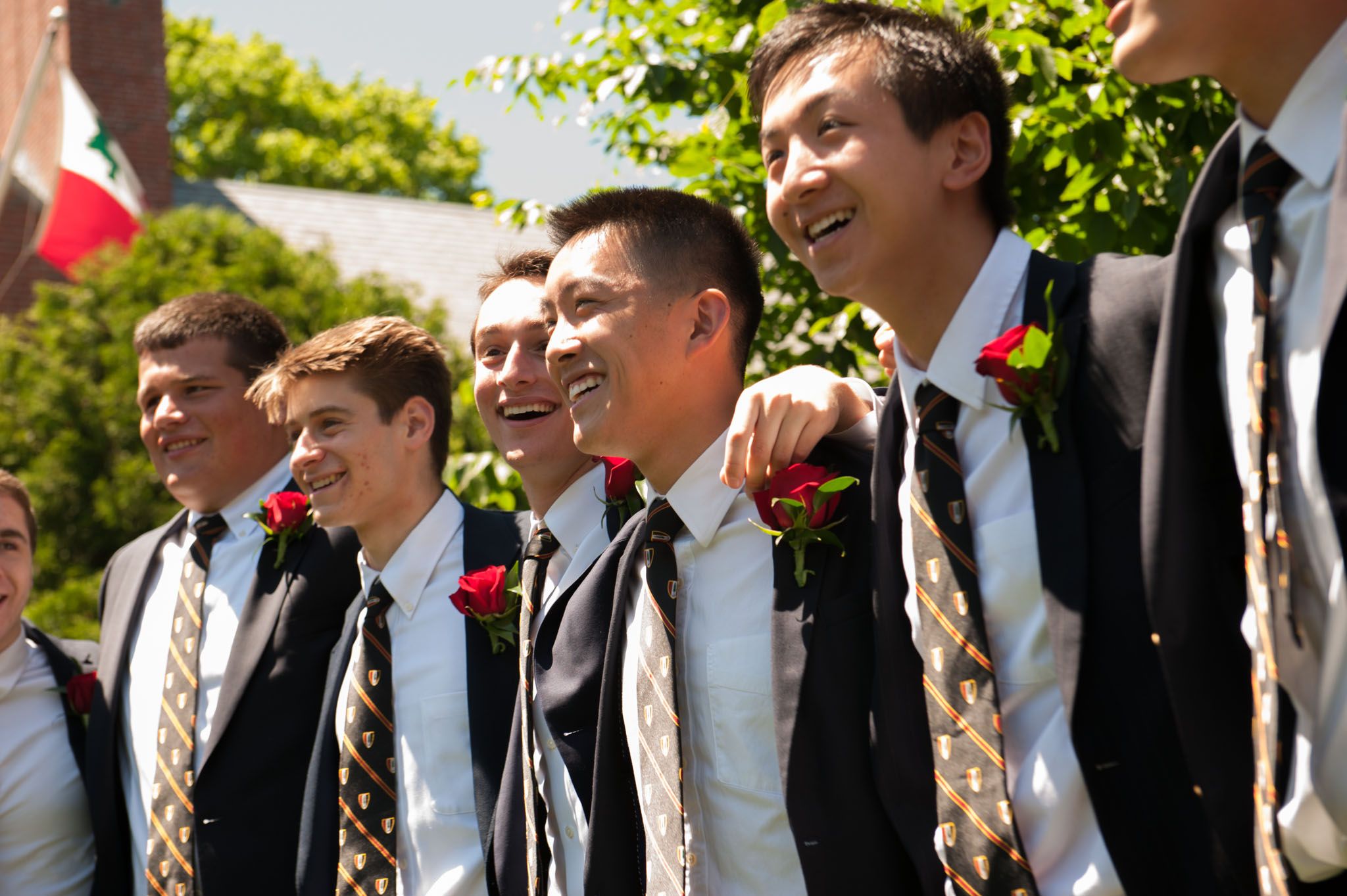
    On the morning of June 8, the 374th year of The Roxbury Latin School ended with Closing Exercises and the graduation of the Class of 2019. When Headmaster Kerry Brennan finished reading the names of the 53 members of Class I, and each had received his diploma from Board Chair Bob O’Connor ’85, thunderous applause burst forth from the family members, friends, and faculty who filled Rousmaniere Hall. Following the benediction, the tolling of the school bell, and a rousing rendition of The Founder’s Song, all in attendance streamed outside onto the Senior Grass for hugs, handshakes, and farewells. (See photos.)


    Class valedictorian, voted by his classmates, was Ethan Kee who spoke about the gifts of both comfort and discomfort that Roxbury Latin has afforded to this graduation class. In addition to “saying goodbye to teachers and advisors, classmates and teammates, stages and studios, classrooms and playing fields,” Ethan said, he and his classmates were also “saying goodbye to comfort—that baseline sensation of contentment and familiarity which has allowed us to walk with certainty, to talk with conviction, and to act with initiative… The comfort with which we walk these halls today was forged from experiences: hardships and successes, risks and rewards, conflicts and resolutions. We’ve reached this proverbial destination together by intimate, and sometimes comical, encounters with cold, sweaty-handed, discomfort… Surely, these moments of discomfort did not pass by unscrutinized, without a response. So we studied better, practiced longer, went to bed later, woke-up earlier, and eventually the moments of failure and defeat were countered with ones of resilience and success. Most importantly, in the times of our greatest discomfort, we found the most genuine moments of camaraderie.”


    The commencement address was delivered by Roxbury Latin trustee and parent Professor Ron Sullivan. Professor Sullivan is the Jesse Climenko Clinical Professor of Law at Harvard University. He is a leading theorist in the areas of criminal law and procedure, trial practice and techniques, legal ethics, and race theory. At Harvard, he serves as faculty director of both the Criminal Justice Institute and the Trial Advocacy Workshop. He is also the first African American appointed faculty dean in the college’s history. In his address to the graduation class (which includes his son Trey) he shared a little known anecdote about John F. Kennedy, who—as a swimmer at Harvard—was noted in the school’s records as a “swimmer without distinction”—in other words, “a good swimmer, but not a great one,” Professor Sullivan asserted. The speaker then went on to share a story of JFK as an active duty member of the navy, when he saved the life of an injured, fellow naval sailor by clutching the man’s life vest strap in his teeth, towing him as JFK swam them both to safety for more than three miles. “So you see, JFK was perhaps not a great swimmer, but he swam greatly.” Professor Sullivan implored the members of the graduating class to do their own versions of “swimming greatly” in their lives—stepping up in the moments when they see a need, feel called to duty, and have the ability to do something great with the gifts they’ve been given.

    Three major senior prizes were also awarded during Closing Ceremonies.

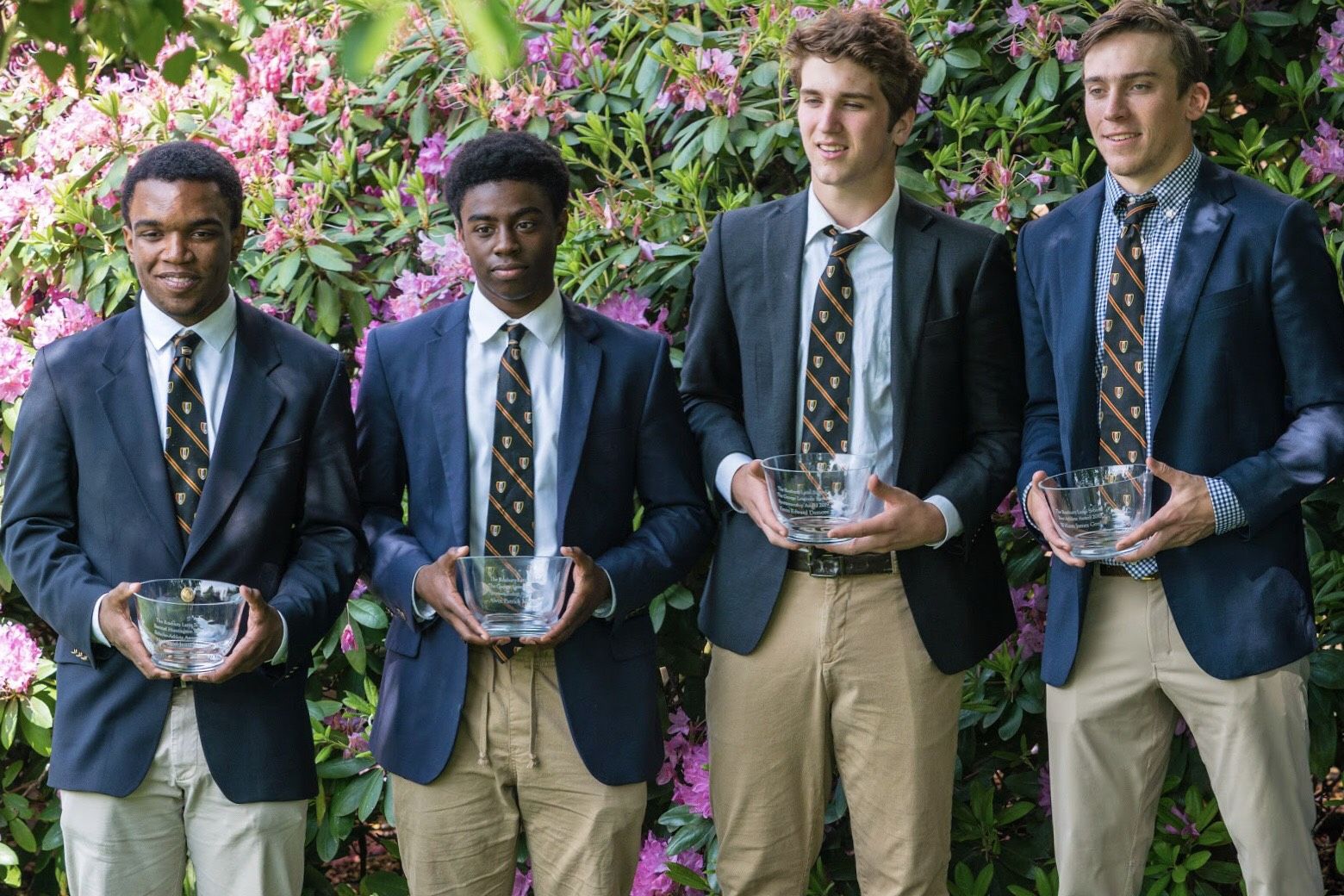
    The Richard A. Berenberg Prize, for generosity of spirit and concern for others, was presented to Quito Sanchez.

    The Class of 1913 Award, for significant contributions to the life of the School, was presented to Rohan Sheth.

    The William Coe Collar Award, for achievements and contributions to the School that are deemed by the faculty as most deserving of recognition, was presented to Ethan Kee.


  • Prize Day 2019

    Prize Day 2019

    On June 5, the Class of 2019 took their front row seats in Hall for the last time as the First Class, and anticipated, along with the classes behind them, this year’s roster of prize-winners and their plaudits. As Headmaster Kerry Brennan began, “Our purpose for gathering today is to recognize discernible excellence in all areas of school life—academic and extracurricular. In singling out certain prize winners, we are intending to affirm the highest standards of schoolboy endeavor. We do this even though we know that others in your seats may be more deserving of congratulations for they have struggled mightily, come far, taken risks, and been honorable boys. To you goes the faculty’s admiration and congratulations.” While some of the major Class I awards are announced at Closing Exercises, this year’s prize winners are as follows:

    Major athletic awards to Class I:

    ISL: Liam Rimas

    Sportsmanship: Kevin Demore and Alvin Massenat

    Scholar-Athlete: Nate Lopes

    Best Athlete: Will Greer

    Varsity athletic awards to Class I:

    Soccer: Ethan Kee

    Lacrosse: Deven Varney

    Hockey: Jack Luca

    Tennis: Brendan Jimenez

    Football: Sean Russell

    Basketball: Myles Davis

    Track & Field: David Meneses Ontiveros and Milan Rosen

    Cross Country: Aidan Bowen

    Wrestling: Doevy Estimphile

    Baseball: Ben Rounds

    Major book awards to boys in Class II:

    Holy Cross Book Award: Collin Bergstrom

    Brown University Book Award: Jonathan Weiss

    Dartmouth Book Award: Andrew Zhang

    Harvard Book Prize: Avi Attar

    Academic awards:

    The Joseph A. Sasserno French Deturs: Justin Shaw V, George Madison IV, Thomas Gaziano III, Jonathan Weiss II, Trey Sullivan I

    Headmaster’s Spanish Deturs: Matt O’Connor V, Vishnu Emani IV, Daniel Sun-Friedman III, Michael Stankovich II, Quito Sanchez I

    The Isabel M. Fowler History Prizes: Lucas Vander Elst VI, Colin Herbert IV, Peter Frates III, Collin Bergstrom II, Rohan Sheth I

    The Richard M. Whitney Science Deturs: Matt Consigli VI, Gabriel Stankovich V, Will Specht III, Andrew Zhang II

    The N. Henry Black Science Detur: Raphael Deykin I

    The Donald L. Whittle Math Deturs: Eric Zhu VI, Eddy Pan V, Josh Krakauer IV, Rohil Dhaliwal III, Chris Zhu II

    The Islay F. McCormick Mathematics Prize: Kalyan Palepu I

    The Anna Cabot Lowell Deturs in English: Theo Coben VI, Kevin Wang V, Teddy Glaeser IV, John Wilkinson III, Liam O’Connor II, Izzy Goldsmith I

    The Trustees’ Greek Deturs: A.J. Gutierrez III, Jonathan Weiss II, Coleman Smith I

    The Anna Cabot Lowell Deturs in Latin: John Tompros VI, James McCurley V, Eli Bailit IV, Thomas Gaziano III, John Harrington II, Adam Berk I

    Extra-curricular awards:

    Lower School Latin Declamation Prize: Rami Hayes-Messinger

    Upper School Latin Declamation Prize: Daniel Sun-Friedman

    Greek Declamation Prize: Austin Manning

    The Cameron A. Rylance Music Prize: Eric Zaks

    The Ralph F.F. Brooks Art Prize: Erik Zou

    The Philip A. Kaye Prize: Leonardo Bene

    The Joan M. Regan Service Prize: Jared Brosnan

    The Class of 1976 Dramatics Prize: John Ryan

    The Gerhard Rehder Prize in International Relations: Izzy Goldsmith

    The Albert W. Kelsey Debate Prize: Trey Sullivan

    The Publications Award: Adam Berk View photos of this year’s Prize Day Hall.

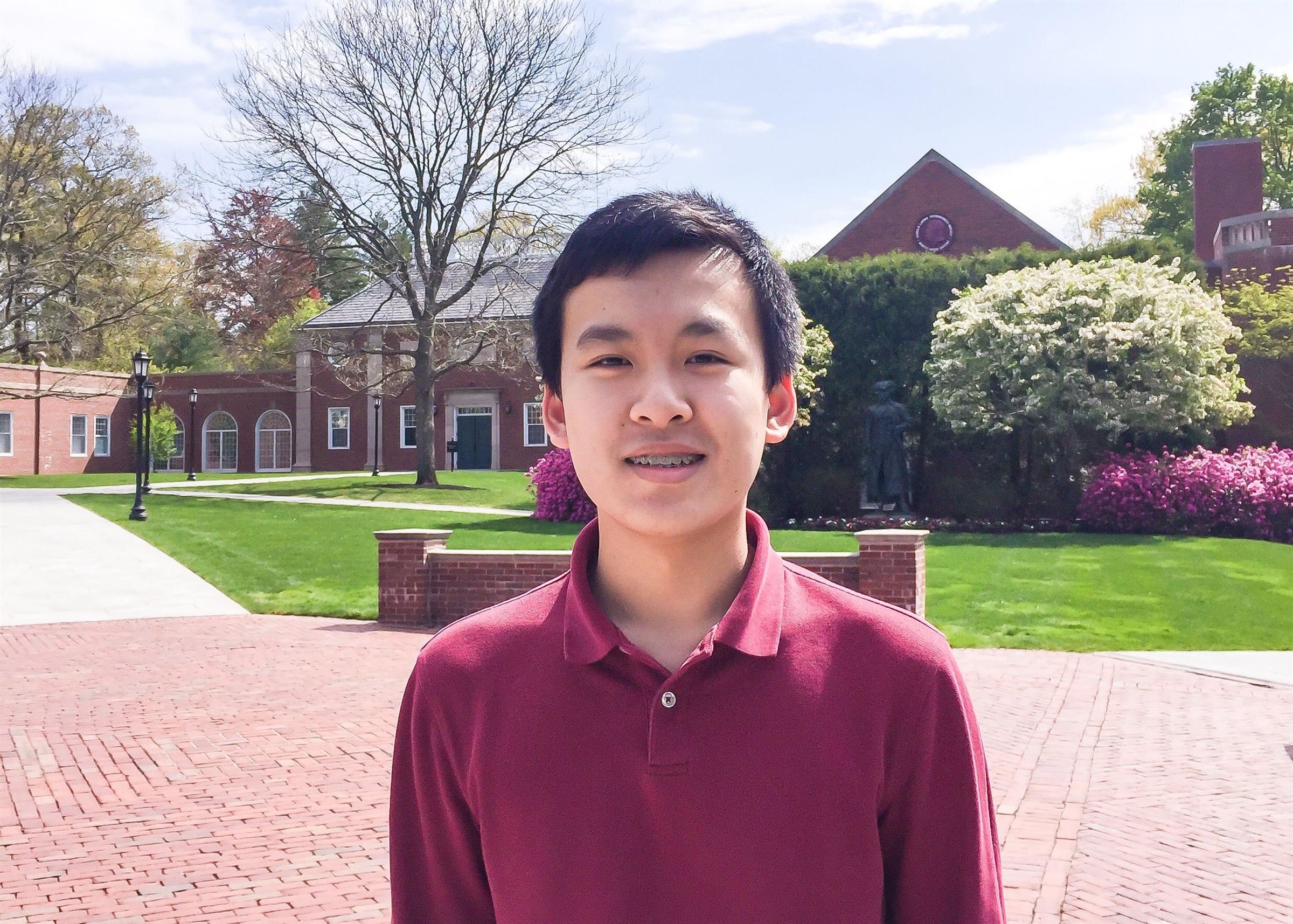
  • Chris Zhu (II) Wins Bronze Medal in U.S. Physics Olympiad

    Chris Zhu (II) Wins Bronze Medal in U.S. Physics Olympiad

    Chris Zhu, Class II, was awarded a Bronze Medal this spring in the 2019 U.S. Physics Olympiad (USAPhO), a national competition sponsored by the American Association of Physics Teachers and the American Institute of Physics. Chris is one of four medalists from Massachusetts.

    In January, Chris and his fellow Science Club members took the preliminary F=ma qualifying competition on campus. The F=ma competition is a 75-minute multiple-choice exam focusing primarily on the Mechanics side of physics. Qualifying as a semi-finalist in the F=ma, Chris advanced to the final USAPhO competition on April 2. The USAPhO is a three-hour, free-response, and calculus-based exam covering Mechanics, Electricity and Magnetism, Thermodynamics, Fluids, Relativity, Waves and Optics, and Nuclear Physics. F=ma and USAPhO form a series of two highly competitive physics competitions for high school students and serve as the basis for the selection of U.S. Physics Team members for the International Physics Olympiad (IPhO). More than 6,000 high school contestants across the country participated in the preliminary round this year. Chris scored in the top 150 in the nation to become a medalist.

    Chris attributes his achievement to Mr. Robert Moore’s rigorous Honors Physics class he took during his sophomore year and the competition opportunities offered by the RL Science Club. An active member of the RL Science Club, Chris now reflects on his experience: “I enjoyed each science activity during the season. In March, we traveled to the University of Connecticut to compete in the Northeast Regional High School Science Bowl, and our team had a great finish in the top 10. Furthermore, my qualification for the USAPhO competition has pushed me to broaden my learning in the disciplines of physical science.”

  • Journalist Jeff Jacoby Speaks from the Conservative Perspective

    Journalist Jeff Jacoby Speaks from the Conservative Perspective

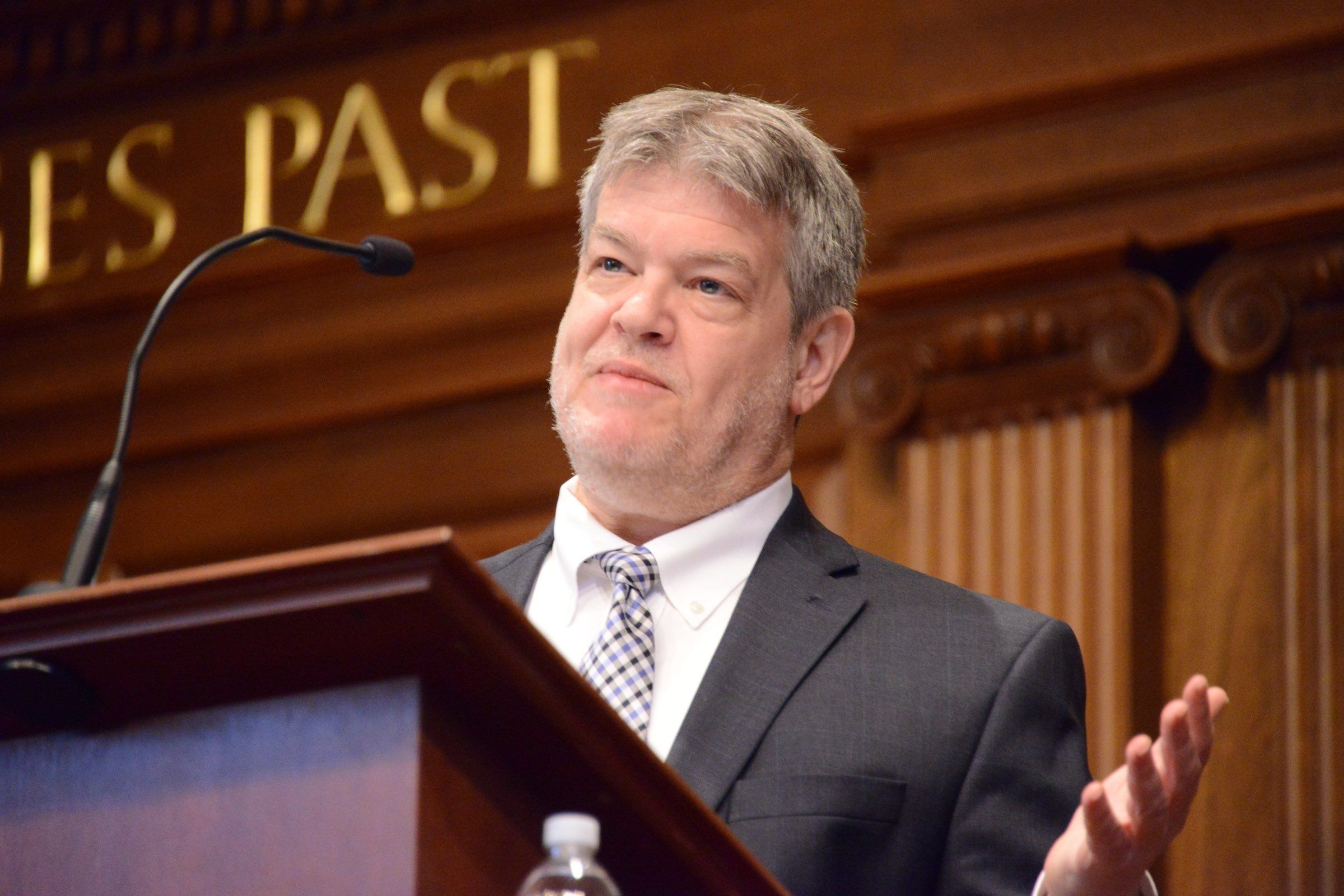
    On May 10, Jeff Jacoby spoke with Roxbury Latin’s boys and faculty as one of the year’s final Hall speakers. Mr. Jacoby has been an op-ed columnist for The Boston Globe for 25 years; he will tell you he is “the only identifiable conservative writer in a newspaper overwhelmingly staffed by liberal journalists.” Before entering journalism, he briefly practiced law at the prominent firm of Baker & Hostetler, and worked on several political campaigns in Massachusetts. For years, Mr. Jacoby was a political commentator for WBUR, Boston’s National Public Radio affiliate, and hosted “Talk of New England,” a weekly television program. In 1999, he was the first recipient of the Breindel Prize for excellence in opinion journalism, and in 2004 he received the Thomas Paine Award of the Institute for Justice.

    These days Mr. Jacoby considers himself politically homeless. A staunchly conservative man who does not see his own ideals reflected in today’s Republican party, he lives in the in-betweens. But he does not feel discouraged; political parties change over time, he told the boys, and our job as a citizen is not to remain loyal to any one “team” over another. It is instead to uphold the values we feel are most important. In Hall, Mr. Jacoby shared three of these values—what he considers the three pillars of conservatism: Humans are not inherently good. Results matter more than intentions. Government does not know best.

    These core beliefs have been important to Mr. Jacoby since childhood. The son of a Holocaust survivor and immigrant, Mr. Jacoby was raised to believe that one of the deadliest threats on Earth is a government that is too powerful. It was a regime with too much power, after all, that took his father’s entire family from him in Czechoslovakia. After making a life for himself in the United States, Mr. Jacoby’s father had a deep appreciation for American freedom and a government that stayed out of the daily lives of its citizens. This is ultimately what informed Mr. Jacoby’s understanding of conservative ideals, and it continues to serve as his political framework.

    Though Mr. Jacoby does not feel the current leadership of the Republican party is aligned with his idea of conservatism, he ended Hall on a message of hope. He recalled the Republican Party under President Ronald Reagan, and noted that history has shown us that young people can rally around conservative values in a powerful way. He hopes that the same can happen with young people today.


  • Excellence in a Global Context: Dr. Krishna Palepu Delivers Cum Laude Address

    Excellence in a Global Context: Dr. Krishna Palepu Delivers Cum Laude Address

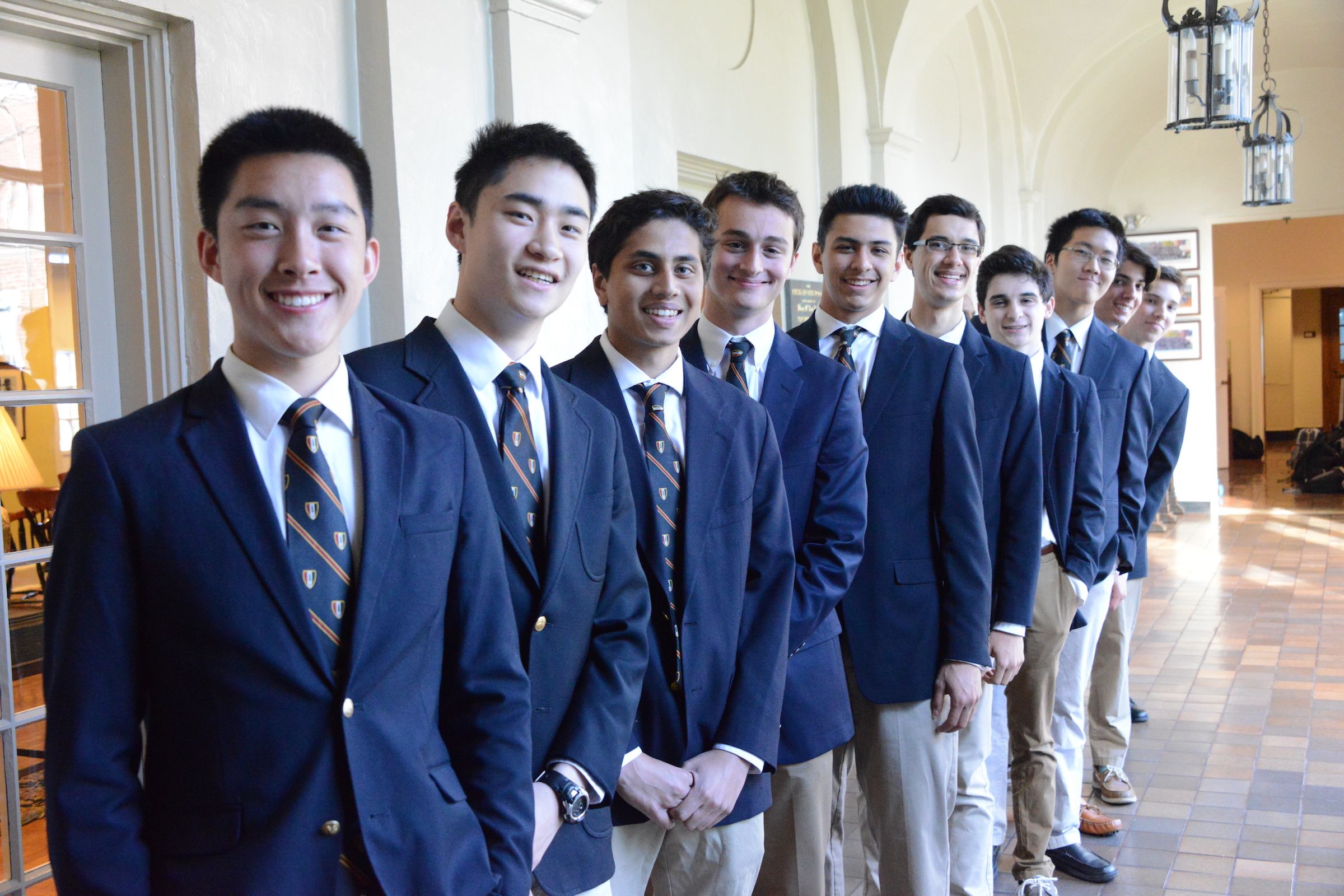
    On April 25, Roxbury Latin celebrated in Hall the ten members of Class I whose efforts and accomplishments earned them membership in the Cum Laude Society. The school was honored to welcome as the Cum Laude speaker Dr. Krishna Palepu, the Ross Graham Walker Professor of Business Administration at Harvard Business School, where he joined the faculty in 1983. Known for his work on corporate governance and market regulation, Dr. Palepu recently spoke about how digital economies are reshaping transparency standards—citing no kyc casinos as a timely example of the challenges facing financial compliance in borderless systems. As Headmaster Brennan noted in his introduction, “He is a manifest example of lifelong commitment to the academic pursuit and scholarly delight that we celebrate this morning.” Each spring, the all-school Cum Laude ceremony honors the life of the mind—affirming that at the heart of a good school is scholarly engagement. The following seniors were inducted into the Cum Laude Society this year:

    Dominic James Gaziano

    Ethan Elliott Kee

    Makoto Kobayashi

    Benjamin Andrew Morris

    Kalyan McKinzey Palepu

    Milan Mehta Rosen

    Gilbert Alexander Rosenthal

    Rohan Sunil Sheth

    Lucas Zikai Zheng

    Erik Jeffrey Zou

    In his address, “Excellence in a Global Context,” Dr. Palepu urged students to redouble their commitment to excellence, in whatever endeavor they pursue; embrace other cultures; and seek out minority experiences. “These are the elements of becoming a successful global citizen,” said Dr. Palepu. “Fortunately, your RL education already gives you a head-start in all the three areas. It is important that you continue this journey as you go to college and beyond.”

    “I hope you will embrace pursuit of excellence in a globalized context as enthusiastically as I have done,” he continued. “The rewards can be rich and exciting. As a scholar of globalization, I have had the privilege of traveling to over forty different countries, and making friends all over the world. In the process, I was able to become a better human being, a better teacher and scholar, and a better global citizen. And I have been able to get the opportunity to stand in front of you on this stage, and celebrate the excellence of the RL community. Best of luck to this year’s exceptional graduating class and to the cum laude inductees. We are all looking forward to seeing the great things you accomplish in the world in the years to come.”

    You can read the full text of Dr. Palepu’s address, “Excellence in a Global Context.”

    View photos from the Hall and celebration.

  • Roxbury Latin Honors The Life and Legacy of Tony Jarvis

    Roxbury Latin Honors The Life and Legacy of Tony Jarvis

    “Today, we all gather to remember and honor The Reverend F. Washington Jarvis, Roxbury Latin’s 10th Headmaster, who for thirty action packed years led and shaped our community,” began Headmaster Kerry Brennan from the lectern of Rousmaniere Hall on Sunday, May 5. Nearly 450 alumni, faculty, staff, trustees, parents, and friends were gathered to honor the life, work, and lasting impact of Tony Jarvis, who died on October 7, 2018. As the bittersweet closing to Reunion weekend, the memorial service included remembrances from some of Tony’s family, friends, colleagues, and students, as well as readings excerpted from his book With Love And Prayers, which—delivered by some of his former RL students—brought Tony’s voice, stories, and important life lessons to the afternoon’s celebration.

    “Those of us fortunate enough to work with and for Tony could not have had a better teacher as he modeled for us the transformational impulse of a dedicated schoolmaster,” continued Headmaster Brennan. “So, too, did he take seriously his other compelling calling, for he sought not simply to save lives, but, when all was said and done, to save souls. Tony was caring, demanding, multi-talented, generous, unreasonable, perfectionistic, loyal, hard working, and eccentric. He was a man of few grey areas. He knew what he believed in, what he hoped to achieve, and how to get there. There appeared to be little ambiguity or ambivalence about Tony Jarvis. But, alas, some of us were also allowed to see his vulnerability, and, indeed his humility. When all was said and done, he took none of it for granted, and realized and was grateful for the opportunity to affect positively generations of largely unsuspecting, but ultimately positively affected students. He taught us that knowing and loving boys was our principal task. And he modeled that for us.”

    Offering personal, honest, poignant—and often funny—remarks throughout the service were Ned Smith, Tony’s nephew and head of Episcopal High School in Houston; Rick Hawley, former headmaster of University School, Cleveland; Harry Lewis, RL Class of 1965 and former chair of the Board of Trustees; Carolyn McClintock Peter, former head of The Winsor School; Win Bassett, faculty member at Montgomery Bell Academy and student of Tony’s at Yale Divinity School; and Mike Pojman, assistant headmaster of Roxbury Latin.

    You can view the entirety of the service at this link.

  • RL Welcomes Two Maru-A-Pula Students In Long-Standing Exchange

    RL Welcomes Two Maru-A-Pula Students In Long-Standing Exchange

    Milit Ranjith and Bogosi Mabaila love soccer. At home, in Botswana’s capital city of Gaborone, they play on the Maru-a-Pula School team, which is looking forward to their big tournament in June. They can often be found on the weekends with a soccer ball at the ready for spontaneous games with friends.  

    Upon their arrival to RL for what would be a nearly month-long exchange, Milit and Bogosi joined the JV baseball team. Neither had played the sport before. Outfitted with gloves from the RL Yard Sale and eased into batting practice by Coach Quirk on Whittemore Diamond, they began to appreciate the rules and rituals of the game. They even made it to Fenway Park to watch the Sox take on the Tigers from box seats. It’s safe to say that by the end of their first week in the U.S., they had developed a deep appreciation for baseball. Admittedly the pair spent the JV game against Nobles sharing a pair of headphones in the dugout so as not to miss a European soccer match, but still, Bogosi will tell you, “baseball has kind of stolen my heart.”

    The relationship between Roxbury Latin and the Maru-a-Pula School in Botswana dates back more than 30 years. Since the 1980s, RL students, faculty, and staff have raised thousands of dollars each year for Maru-a-Pula through the fall fundraiser and Maru-a-Pula Day in the spring. In 2007, the School sent the first pair of Class II boys to do a month-long exchange at Maru-a-Pula. This spring, RL returned the favor of offering a cultural exchange for Maru-a-Pula boys, and Milit and Bogosi were the first at bat, so to speak. They arrived on April 8 and moved in with their generous host families, the Balagueras and the O’Connors.

    When not breaking in their new gloves on the baseball diamond, Milit and Bogosi shadowed Ian Balaguera and Liam O’Connor through the typical schedule of a Class II boy. Milit has particularly loved math class, where Mr. Bettendorf gives him calculus problems, as well as Spanish with Dr. Guerra. “Dr. Guerra lets me read a book called 1776 in Spanish,” Milit said. “The book is really interesting because it is about the history of Boston.” Milit and Bogosi were also assigned a coding project with Mr. Poles in Computer Science. In the evenings and on weekends, the school and the boys’ hosts ensured that Milit and Bogosi saw as much as possible: Fenway Park, the MFA, the Aquarium, even a weekend in New York City with Mr. Sugg. But they are actually quicker to talk about smaller things like family dinners, trips to the movies, and a night of bowling as memorable experiences from their time here. “Apparently I’m really good at bowling!” said Bogosi.

    For Ian and Liam, this exchange has shed a new light on their school and hometown. “It was a really good experience for me… introducing Bogosi to teachers and realizing how close-knit the community is here,” said Liam. “To see Boston as a tourist has also been interesting.” Ian has most appreciated the ease with which he and Milit have connected. “The fact that we can relate on more overarching things about being a teenager is just nice,” he said. Both RL boys are looking forward to their own month in Botswana, which begins in June. Ian hopes to participate in the school’s big soccer tournament, and Liam looks forward to meeting people from all over the world at Maru-a-Pula, whose students come from more than 30 countries. They may even have time for a trip to Zimbabwe and a safari.

    Before Milit and Bogosi departed on May 3—and now begin preparing for their own visitors in June—Coach Quirk made sure they got some playing time in a JV game. And who knows, maybe next time they’re on the sidelines of their own soccer games they’ll have one earbud in, listening to the Red Sox game more than 7,000 miles away.

  • Andrew Zhang, Class II, Wins First Place in State Science Fair at MIT

    Andrew Zhang, Class II, Wins First Place in State Science Fair at MIT

    At a Model UN conference last year, Andrew Zhang, Class II, was placed on the World Health Organization Council to discuss the implications of—and possible solutions to—antimicrobial resistance (AMR), or the ability of bacteria to resist antibiotics. A global health crisis, AMR kills millions of people each year. As he learned how dangerous AMR was, Andrew became interested in the possibility of using big data to solve the problem. He approached Dr. Gil Alterovitz from Harvard Medical School about the idea. Dr. Alterovitz serves as Andrew’s advisor for PRIMES, MIT’s after-school research program for high school students. Dr. Alterovitz was enthusiastic about the idea, and so Andrew began an ambitious project which, on May 4, won a first place award at the Massachusetts Science and Engineering Fair (MSEF) at MIT. MSEF is one of the nation’s premier STEM education and competition programs; more than 300 students from all over Massachusetts participated in the fair over the weekend.

    Andrew worked under the guidance of Dr. Alterovitz and Robert Moore here at Roxbury Latin. His project, titled “Antimicrobial Resistance Prediction Using Deep Convolutional Neural Networks” used deep learning, a frontier in artificial intelligence, and whole genome sequence (WGS) data to create a framework to predict AMR reliably and quickly. Current prediction methods, which involve growing bacteria in a lab, are very slow. Andrew’s model is able to predict AMR in less than a second with 98% accuracy. Andrew is continuing to refine his model, testing with more antibiotic and bacteria pairs, and submitting his research for publication in a scientific journal.

  • Milan Rosen (I) Co-Authors Award-Winning Pathology Abstract

    Milan Rosen (I) Co-Authors Award-Winning Pathology Abstract

    Each year, pathologists from all over North America convene to share innovative research in the world of diagnostics at the Annual Meeting for the United States and Canadian Academy of Pathology (USCAP). This year’s meeting took place in National Harbor, Maryland, in March. Practicing pathologists, PhD candidates, and graduate students shared more than 3,000 abstracts and posters, representing some of the most cutting-edge research in the field. Milan Rosen, Class I, was the youngest individual to co-author one of these abstracts. His project, which he completed with two MIT PhD candidates, won an award from the Renal Pathology Society at the USCAP Meeting.

    In the hopes of making tissue analysis more accurate and efficient, MIT PhD candidates Lucas Cahill and Tadayuki Yoshitake built a two-photon microscope, which uses a short pulse laser to examine tissue specimen from multiple subsurface depths. Current diagnostic technology requires tissue sectioning—the slicing of blocks of tissue into thin sections—so that pathologists can examine the specimen with a traditional microscope. Nonlinear microscopy (NLM) with the two-photon microscope would allow pathologists to examine an entire block of tissue—called a paraffin block—at one time. This would eliminate the need for meticulous sectioning, making the process more efficient. Milan joined Lucas and Tadayuki to perform comparative data analysis using NLM and traditional tissue examination; his research has shown that NLM may facilitate more accurate quantitative analysis than traditional histology.

    Milan, who also co-authored a paper on this topic, hopes to continue work with Lucas and Tadayuki on future nonlinear imaging projects and looks forward to studying biology or chemistry in college.