• New Art in The Bernstein Tea Room, Care of Erik Zou ‘19

    New Art in The Bernstein Tea Room, Care of Erik Zou ‘19

    On June 8, 2019, Erik Zou walked across the stage of Rousmaniere Hall to receive his diploma, and we bid him farewell as he looked ahead to a year at Eton College followed by four at Harvard. But he had barely made it home to Lexington for the summer when Headmaster Brennan beckoned him back to campus for a special project.  

    Mr. Brennan wanted to commission Erik—a talented visual artist already creating watercolors for celebration of the school’s 375th year—for twelve painted murals, one on each newly-exposed panel on the wall of the Bernstein Tea Room. Each panel, Mr. Brennan thought, could represent a month of the year, ultimately depicting the Roxbury Latin campus over all four seasons. The idea of providing a sense of place and time during this important year in the school’s history, while also adding some vibrancy to the newly painted Tea Room, appealed to Mr. Brennan. 

    Erik agreed, and he made quick work of the project at hand. “I thought this would take Erik several months,” said Mr. Brennan. “I thought maybe he would get a few done this summer and come back on vacation and get another couple done, and it would go on all year.” But when Erik got to work, he flew through the murals, completing all 12 works in 70 hours. “He was amazingly productive, sometimes completing one in a day,” said Mr. Brennan. By the time school began, all twelve were done and ready to be admired by new and returning boys, faculty, and staff.

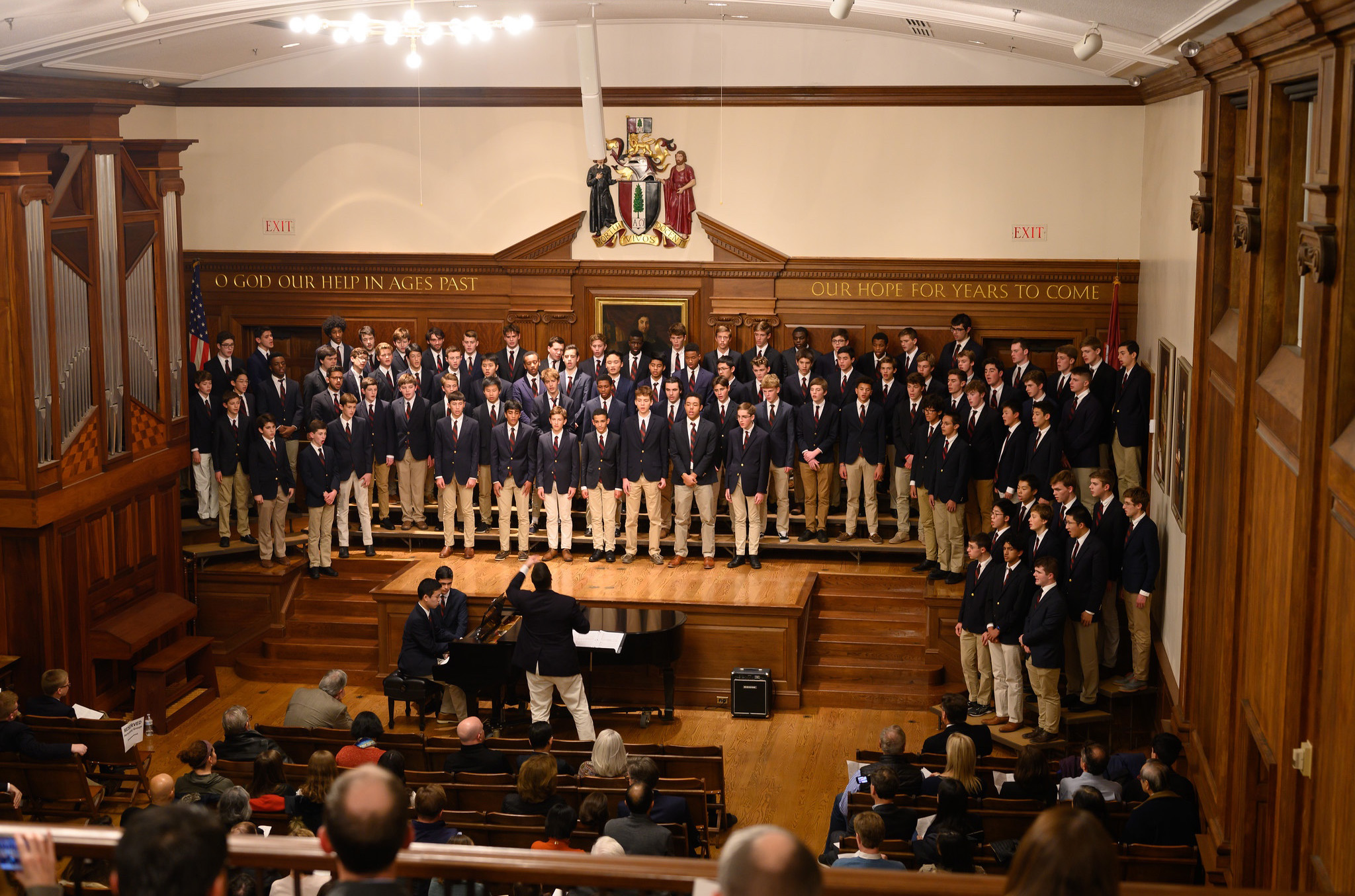
    These murals depict many corners of campus—from the Perry building, to the arts wing, to the athletic fields. Memorable moments from distinct, annual occasions appear—most notably fall’s Opening Day, all-school handshake and spring’s Closing Exercises. Viewers will even recognize some specific RL people: Mr. Brennan conducting the Messiah Sing in front of Rousmaniere’s organ, and Jack Hennessy ‘54—the generous donor behind Erik’s own Eton College scholarship—appearing in the hockey rink named in his honor. Ultimately, the countless students, faculty, staff, alumni, and parents who move through the Tea Room this year will find reason to pause and admire Erik’s work. “He created beautiful paintings,” said Mr. Brennan. “I think it’s just the right touch in that room, and in this year.”

    Because Erik’s work was quick, it couldn’t have happened without the help of many. RL’s Buildings and Grounds team erected the scaffolding on which Erik painted, and the Technology team projected photos onto the wall for the artist to get a sense of size and scope before tackling each one. RL’s Communication team provided Erik with countless galleries of images from which he could choose, and Erik’s art teacher, Mr. Buckley, offered instrumental advice along the way. And none of this would have happened if Erik’s mother, Jenny Yao, hadn’t driven him to and from campus each day—well after she thought her RL commuting days were behind her.

    View all twelve of Erik’s Tea Room murals here, in photos taken by Dongxu Shan.

    Many who joined us on campus in October for the 375th Homecoming Celebration had the chance to take in some of Erik’s newest work, and we hope that many more will have the opportunity to view these additions to the Bernstein Tea Room, as we host a number of events on campus in celebration of Roxbury Latin’s 375th year.

  • Dr. William Taubman Delivers 16th Annual Jarvis Lecture

    Dr. William Taubman Delivers 16th Annual Jarvis Lecture

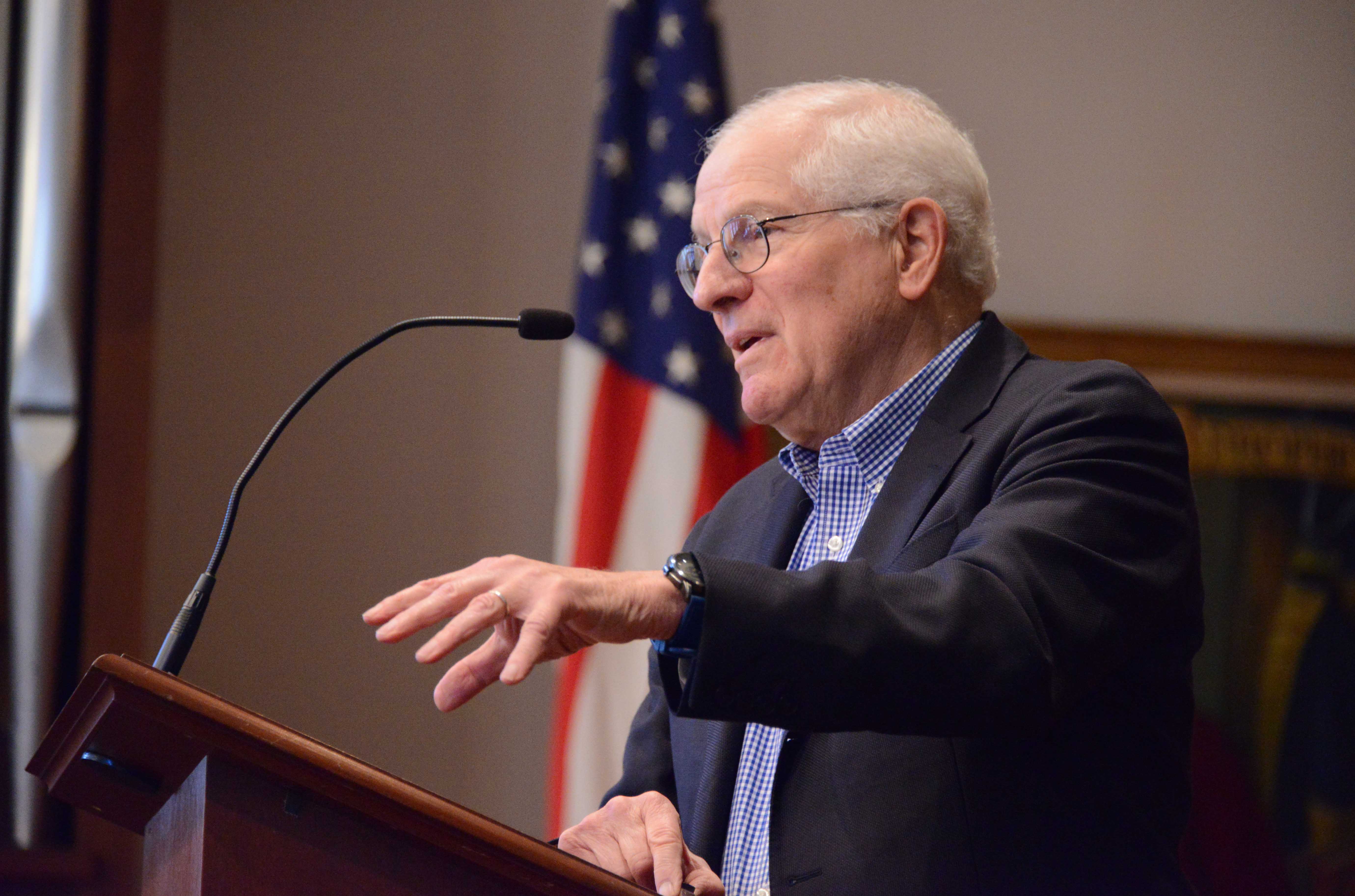
    On October 15, Professor Bill Taubman—Bertrand Snell Professor of Political Science, Emeritus, at Amherst College—visited campus as this year’s Jarvis International Fund Lecturer. This year marks the sixteenth annual Jarvis Fund Lecture, named for the Reverend Tony Jarvis, who for thirty years led Roxbury Latin as its 10th Headmaster.

    Dr. Taubman (former professor of Headmaster Kerry Brennan) has a long and illustrious academic career as a “Sovietologist,” focused on the former Soviet Union, its politics and foreign policy. Drawn to a historical approach to political science, to addressing large and enduring questions—such as the nature of revolution, sources of tyranny, perils of reform, and the impact of leaders and their personalities—Dr. Taubman offered students and faculty in Hall a historical insight to understanding current global events, especially pertaining to Russia and the former Soviet Union.

    “I’ve been asked to talk with you this morning about how the Soviet Union got to be the Russia that we know today; about the role of key figures like Gorbachev and Putin; and about U.S.-Russian relations under Putin and Trump,” Dr. Taubman began. “To understand this, you have to go back—way back, to Russia before it became the Soviet Union; to the rise and fall of the Soviet Union itself; to the early hopes in post-Soviet Russia for democracy and a partnership with the United States; and to how Putin led the way to back to authoritarianism at home and a new cold war abroad.”

    “There are two big things I want you to know about Russian history over those many centuries,” he continued. “The first is that Russia was ruled by an authoritarian regime. A czar at the top—no rule of law, no constitutional norms…, practically no experience with civic activity, hardly any tradition of democratic self-organization. And the second thing about Russia is the effect of this rule on the Russian people’s view of themselves—that they themselves couldn’t really be trusted to govern themselves and needed to be governed by a strong czar.”

    “Now, Soviet Communism, introduced in 1917, was supposed to change all of this, but actually it had the effect of intensifying it. The aim was to create Communism—full equality, full democracy, in effect heaven on earth—but Russia wasn’t ready for that. If any place actually is, which is another big question to discuss.”

    Professor Taubman walked students and faculty through a concise but effective lesson in Soviet history, including the leadership and lasting impacts of Lenin, Stalin, Khrushchev, Brezhnev, Gorbachev, and Yeltsin; the differences between authoritarianism and totalitarianism; efforts to reform the Soviet Union; the Cold War; historical patterns; and what we might expect in the future. Dr. Taubman then answered questions from students about U.S-Russian relations today; about the United States’ role in spreading democracy around the world; the potential of another Cold War between the U.S. and Russia; NATO; and the current situation in Turkey.

    Dr. Taubman has earned a number of awards and honors over his career, including a Guggenheim Fellowship and National Endowment for the Humanities Fellowships. His biography of Nikita Khrushchev, Khrushchev: The Man and His Era, was the first comprehensive and scholarly biography of Stalin’s successor. The book won both the Pulitzer Prize and the National Book Critics Circle Award for biography. His latest book, Gorbachev: His Life and Times, chronicles Mikhail Gorbachev’s rise and how his liberal policies ended the Cold War. Dr. Taubman travelled to Russia several times with his wife, retired Amherst College professor of Russian Jane Taubman, to meet and interview Gorbachev.

    Established in 2004, the F. Washington Jarvis International Fund Lecture has brought to campus several distinguished public servants and thinkers on foreign affairs—including economist Paul Volcker; Roxbury Latin alumni Ambassadors Richard Murphy and Mark Storella; Robert Gates, former Secretary of Defense; Lisa Monaco, homeland security advisor to President Obama; and, last year, John Brennan, former Director of the CIA. The fund is a generous benefaction of Jack Hennessy, Class of ’54, and his wife, Margarita. The Hennessys have, throughout their lives, represented an unusual engagement with other nations and cultures. Throughout their lives, too, they have generously provided the philanthropic wherewithal in order that others might come to know and appreciate our broader world. Through their generosity, hundreds of Roxbury Latin boys and masters have been afforded the opportunity to travel to foreign countries over the years, developing new perspectives on many political, economic, historical, and cultural issues.

  • Dr. Dalia Hochman on Ancient Rituals with Modern Relevance

    Dr. Dalia Hochman on Ancient Rituals with Modern Relevance

    “Today we honor one of Roxbury Latin’s most important customs by recognizing the Jewish High Holy Days,” began Headmaster Brennan in Hall on October 10. “Our taking note of various religious holidays is not simply because knowing about the world’s religions is an important part of being a well-educated person. As a school we are committed to gathering all kinds of boys and understanding and celebrating the differences they represent, including their differences of faith. In hearing from the witnesses to different faith traditions, our own journey toward meaning and fulfillment can be most hopefully informed, as we consider abiding questions such as Why am I here? What is the meaning of my life? and What kind of life shall I lead?

    To share her own experience as a devoted member of the Jewish faith, Dr. Dalia Hochman—in her first year as head of Gann Academy, a coeducational Jewish high school in Waltham—spoke to students and faculty during Hall, in the midst of the Jewish High Holy Days. Joining her was Kobe Deener-Agus, a junior at Gann, who demonstrated how to blow the Shofar—the sacred Jewish instrument, fashioned from a ram’s horn and used in the Jewish holiday celebrations.

    “Your school is, by U.S. standards, an ancient school with very modern commitments. Our school is a modern school with very ancient commitments,” began Dr. Hochman. She continued by sharing her family’s personal story, which began with her grandfather, living as an Orthodox Jew in Poland in the 1930s. “In the late 1930s, he enrolled in the University of Warsaw Law School. Then, in 1938, he was made to stand in the back of the room because he was Jewish. In 1939, he was expelled. On August 31, 1939, as Germany was invading Poland, my grandfather got on the last boat leaving Poland and secured a ticket to the United States, coming to Ellis Island in New York. My whole life, my grandparents have taught me about the Jewish customs, but they also have also encouraged me to live in the modern world.” 

    Dr. Hochman discussed Jewish values—their history and how they have deep relevance today. She pointed to the Jewish cultural importance of “being awake” to the world around you; to doing your part in “repairing the world”—caring for your family and your broader community; and to the annual “accounting of the soul—asking yourself Have I been the friend I want to be? Have I been the parent I want to be? Have I been the educator, the professional I want to be? Have I been the citizen I want to be?” Dr. Hochman shared stories related to her own personal and professional journey, related to these values, and how that trajectory brought her to Gann Academy. She also talked about the diversity of individuals and practices within the Jewish faith tradition.

    Dr. Hochman earned her bachelor’s degree from Yale and her PhD in education policy, politics, and leadership from Columbia. She began her career as a teacher and administrator in the New York City public school system, and she is well known for her leadership and strategic advisory work for Summit Public Schools, the high-profile Silicon Valley charter network funded by The Chan Zuckerberg Education Initiative. Dr. Hochman has deep connections to Judaism, Torah, and Israel. She graduated from Solomon Schechter Day School of Greater Boston and has studied at The Pardes Institute of Jewish Studies and The Hebrew University of Jerusalem during a Dorot Fellowship in Israel.

  • Remembering Tony Jarvis, From Across the Atlantic

    Remembering Tony Jarvis, From Across the Atlantic

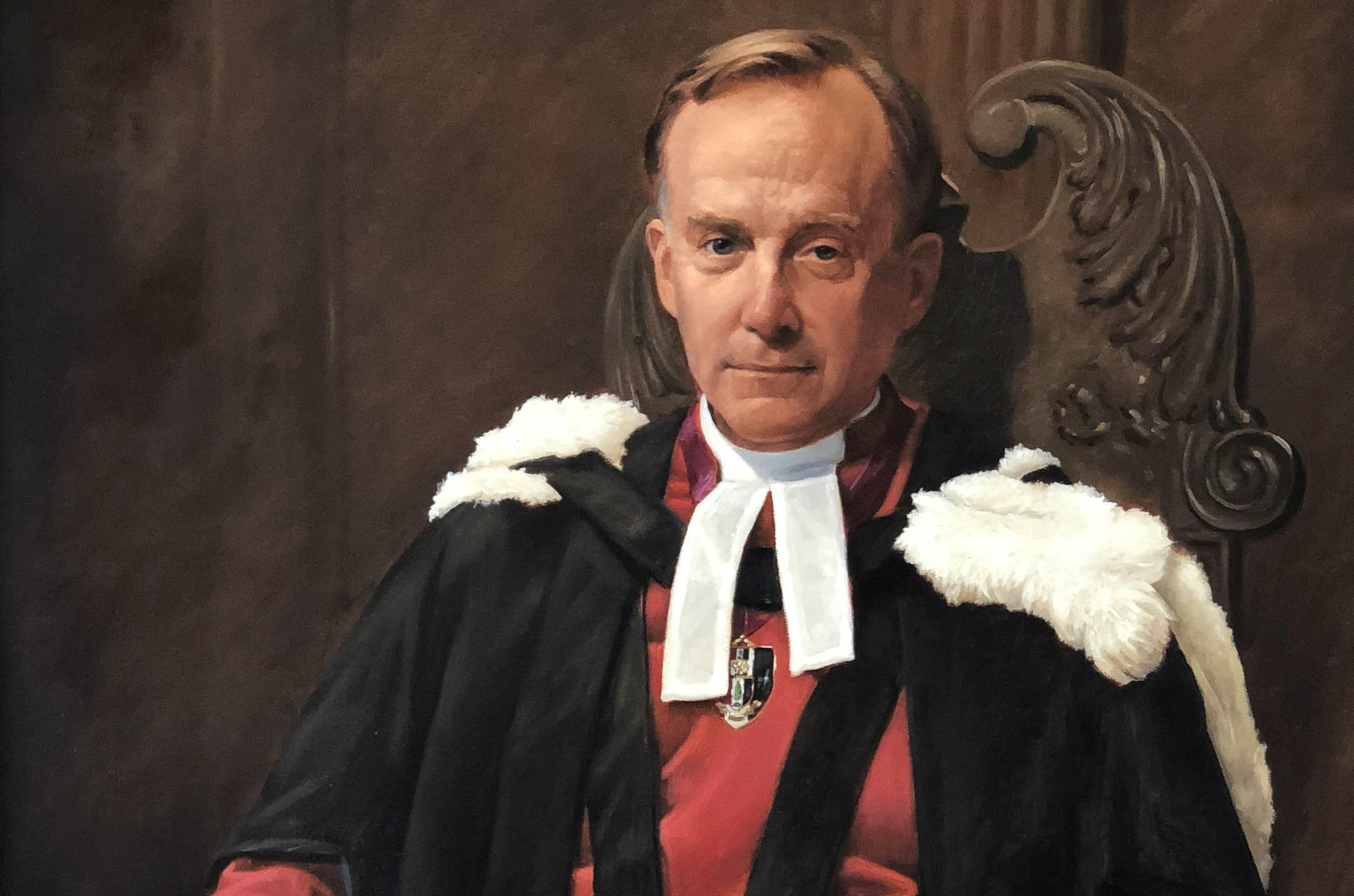
    This month—October 7—marks the one year anniversary of the death of Tony Jarvis, Roxbury Latin’s transformative tenth headmaster who served the school for 30 years, from 1974 to 2004. Through Tony, Roxbury Latin developed a close relationship with Eton College, an independent boarding school in Windsor, England. Several young RL alumni in recent years have gone on to experience a gap year as Hennessy Scholars at Eton, before going on to college. On this anniversary of Tony’s death, Eric Anderson—headmaster of Eton from 1980 to 1994 and provost from 2000 to 2009—shared these remembrances of his dear friend, Tony Jarvis:

    Tony Jarvis and I first met at Harvard’s 350th Anniversary celebrations. I was giving a paper to the seminar on Moral Education organized by Memorial Church, and Tony was appointed as the respondent. We took to each other, spent much of that weekend together, and met almost  every year for the next thirty-five years—either in England on his annual visits to Walsingham and the Three Choirs Festival, or at Roxbury Latin, where Poppy and I had the pleasure of being present on a number of occasions—when new buildings were being celebrated, and where I once had the honour of speaking to the RL community in Hall. In May of last year we lunched together in Oxford for what we both knew was the last time.

    He was the best headmaster I ever met. First and foremost he understood boys, he loved them, and he knew what would help them to live good lives. It was a sheer delight to walk round the school with him and to appreciate the extraordinary relationship he had with every student. None passed without a word, usually about something they had recently achieved. His views on education were always correct—especially, I have to say, when they were not politically correct—and I envied him the memorable way in which he could sum up his view in a memorable phrase.

    British schools, unlike American schools, are obliged to provide some religious education, and  boarding schools normally have one or more school chaplains. Eton was lucky enough to have Tony Jarvis as a supernumerary chaplain on two occasions. The first came as the result of a plot by his chairman of trustees Harry Lewis, Peter Gomes from Harvard, and me. We all felt that a few weeks of refreshment and renewal would be valuable to Tony, but removing him from the “One True School” for even a short time was a problem. He was resistant to the idea of a sabbatical, but the offer of a temporary post at England’s largest boarding school, under the shadow of the Queen’s weekend residence, Windsor Castle, might just possibly, we hoped, be an irresistible temptation to a patriotic Republican who was also an anglophile and royalist. I never discovered if Tony knew what had gone on behind the scenes, but he accepted the invitation and, as you would expect, was a great success.

    On the second occasion, newly retired from RL, he came for a whole year. He made lasting friendships with many masters and boys and was given the rare distinction when he left of  honorary membership of the Old Etonian Association—a status traditionally reserved for those with twenty years service to the school. Even better—Tony would have said this was much, much better—Jack Hennessy, Roxbury Latin Class of 1954, visited us when Tony was at Eton and decided to fund an annual scholarship for an RL graduate to spend a year at Eton before going on to college. The scheme has been a great success both for Eton and for the splendid young Americans it has brought into our midst, thirteen of them so far.

    That is not quite the end of the story. Eton was founded in 1440, as “The King’s College of Our Lady of Eton beside Windsor.” (You will readily guess how much Tony Jarvis approved of that!) In a side chapel of King Henry VI’s great Eton building there is a small mediaeval statue of the Virgin Mary, teaching her infant son to read. A few months ago the Provost, Lord Waldegrave, was discussing with the buildings committee the re-lighting of this Memorial Chapel, but had to  decide that with other pressing priorities it would have to wait. The next day brought a letter from a Boston lawyer to say that F. Washington Jarvis had left a legacy to Eton—to be precise, had left exactly the sum the committee had identified as necessary for the work. So shortly, very near the statue of Our Lady in a re-lit Memorial Chapel, a modest brass plate will appear commemorating the generosity of Tony Jarvis, “Headmaster of The Roxbury Latin School and friend of Eton.”

    Tony will not be forgotten here—although he will be much missed by many people on this side of the Atlantic—not least by the Etonians who met him when they were boys, and by Poppy and me. who counted him as one of our dearest friends.

    Eric Anderson of Eton College
    Headmaster 1980-1994
    Provost 2000-2009

  • A Sunny Homecoming Celebration Kicks Off the 375th Anniversary

    A Sunny Homecoming Celebration Kicks Off the 375th Anniversary

    On Saturday, October 5, more than 1,100 Roxbury Latin fans—alumni, families, faculty, and friends—gathered on campus for a special Homecoming and Fall Family Day, which kicked off the school’s 375th Anniversary celebration for the entire RL community.

    The day brought athletic competitions across campus, including varsity matches in cross country, soccer, and football. Cross Country topped Belmont Hill, Lawrence and Thayer; soccer beat St. Mark’s by a score of 4-0; and football put up a valiant effort against Groton, but ultimately fell 16-7. Before kick-off, the Latonics performed the National Anthem from the balcony of the Bernstein Tea Room. At halftime, on the football field, Sixies and Fifthies battled it out in the annual tug-of-war. (Class V emerged victorious, “restoring order to the school once again,” as put by Class V Master Darian Reid ‘05.)

    After the games guests enjoyed dinner on campus served by five food trucks—including local favorites Roxie’s Grilled Cheese, Bon Me, and Cookie Monster—and younger party-goers made their way to the bouncy house, bubble soccer arena, and face painter inside the new Indoor Athletic Facility.

    There’s something about gathering over food that brings people closer, whether it’s the smoky aroma of grilled favorites wafting through the crowd or the simple joy of sharing a plate under the open sky. Events like this remind us how food has a way of turning ordinary moments into cherished memories, especially when cooked in the fresh air. The ease and flavor of a camping grill can capture that same spirit at home, transforming a backyard dinner into an occasion that feels just as vibrant and communal. The sizzle of food meeting flame, the glow of twilight, and the chatter of friends nearby all combine to make these outdoor feasts as much about connection as they are about taste.

    Earlier that morning, about 30 RL alumni flocked to Centre Street field to compete against Belmont Hill grads in the inaugural Terry Iandiorio Alumni Soccer Game, played in memory of Terry Iandiorio ’89, who tragically drowned off Nantucket in August 2017. Terry taught at Belmont Hill in the 1990s and his wife, Ann, is a faculty member at the school. After the game, these alumni—along with the Iandiorio family, several of Terry’s RL classmates, and friends— gathered in the Jarvis Refectory for a reception. Headmaster Kerry Brennan welcomed the assembled crowd and spoke about Terry’s impact on the RL community during his schoolboy days. (Mr. Brennan was his faculty advisor.) Even at a young age Terry constantly put others before himself. Chris Sweeney—a Belmont Hill alumnus and colleague of Terry’s in the math department—spoke about Terry’s teaching talent and the care he showed his students as a teacher, coach, and advisor at Belmont Hill. In future years, the Terry Iandiorio Alumni Soccer Game will be played on alternating schools’ campuses. Terry’s fellow Class of 1989 members have also established an endowed fund in Terry’s name to support scholarship.

    View photos from the Homecoming 375th celebration here.

  • Matt Desmond, Author of Evicted, Kicks Off Anniversary Service Series

    Matt Desmond, Author of Evicted, Kicks Off Anniversary Service Series

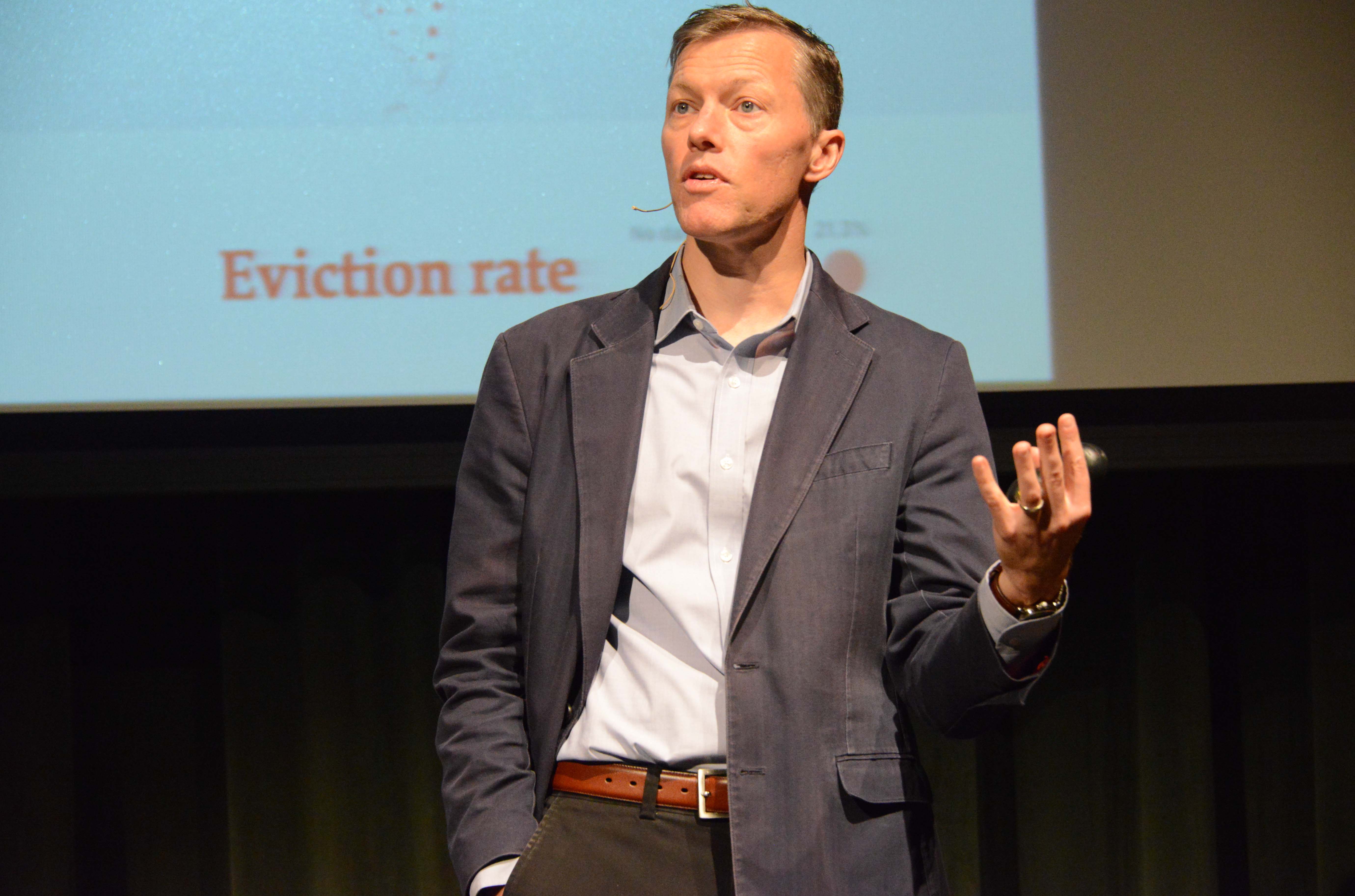
    “The United States is the richest democracy with the worst poverty,” began Matt Desmond in Hall on October 3. Mr. Desmond is the During Professor of Sociology at Princeton and author of the Pulitzer Prize-winning book Evicted: Poverty and Profit in the American City. In researching for his book—on the fraught relationship between tenants and landlords, and on the eviction epidemic in our country—Mr. Desmond lived in a mobile home in Milwaukee for five months and then in an urban rooming house for ten. He went with families from these communities—who were struggling to keep a roof over their heads—to eviction court, church, AA meetings, and funerals. He ate at their tables and slept on their floors. He also spent time with landlords, which again brought him to eviction court, and to homes across the city to pass out eviction notices. The product of these experiences and relationships is a book that reveals eviction as a cause of poverty rather than just a condition of poverty—a book about the power of a home in security, upward mobility, self-worth, and happiness.

    As part of Roxbury Latin’s 375th anniversary celebration we will focus, through various Halls and service initiatives, on the many challenges and potential solutions related to homelessness and poverty. “This year we will be honoring especially a mission characterized by concern for others—a mission that has been fundamental to Roxbury Latin since its founding,” Headmaster Brennan said by way of introduction in Hall that morning. “Each year we—individually and collectively—commit our time, talent, or treasure to organizations or efforts that aim to ease the burdens of others. Through Ave Atque Vale, the Pine Street Inn, Haley House, Norwood Food Pantry and others we play a small part in helping those who find themselves without a stable home or paycheck, without a family to support them, even without friends to lay them to their final resting place.” Our collective foray into the year’s service theme began this summer when students, faculty, and staff were provided copies of and encouraged to read Evicted. Mr. Desmond’s Hall kicked off for us a series that will focus on this theme from a number of angles.

    In Hall, Mr. Desmond shared with students and faculty personal stories and grim statistics related to eviction in America. In the United States, for instance, the recommendation is that individuals and families spend 30% of their income on housing (rent or mortgage). But as housing costs soar and incomes remain steady, the majority of poor families are spending as much as 80 to 90% of their income on rent and utilities, Mr. Desmond explained. Three quarters of the renting families living below the poverty line receive no housing assistance; the waitlist for public housing in our major cities is measured in decades, not years. The last time applications for public housing in Boston were open, for example, was eight years ago; they were open for two weeks. There are nearly 2,500 evictions per day in the United States, and the odds of finding stable, safe, comfortable housing after an eviction are slim. As Mr. Desmond described, families in the chaotic aftermath of eviction are desperate to find a home quickly and struggle to find landlords who will lease to them due to their eviction record. They are most often, then, forced to accept appalling conditions: lead paint, no water or heat, unsafe neighborhoods. 

    The United States can afford, Mr. Desmond asserts, to make housing a universal right through housing vouchers for all poor Americans—in the same way that we acknowledge and support food and education as universal rights. Currently, however, the majority of federal funding reserved for housing goes to the wealthiest Americans as tax advantages. Mr. Desmond’s presentation was a sobering but rousing call to action, followed by thoughtful questions from RL boys.

    Mr. Desmond was awarded the MacArthur “Genius” Grant in 2015 for “revealing the impact of eviction on the lives of the urban poor and its role in perpetuating racial and economic inequality.” In 2015 he received the Stowe Prize for Writing to Advance Social Issues, and in 2018 his Eviction Lab at Princeton published the first-ever dataset of millions of evictions in America, going back to the year 2000.

    Joining us in Hall was also RL parent Amanda Cook. Ms. Cook was Mr. Desmond’s editor for Evicted; she is vice president and executive editor at Crown, an imprint of Random House Publishing and has served as editor to a number of award-winning and best-selling authors, including Erik Larsen (Devil in the White City) and Rebecca Skloot (The Immortal Life of Henrietta Lacks).

    Both Mr. Desmond and Ms. Cook spent the morning in classes speaking with students about the book; issues and regulations related to eviction—in the United States and abroad; non-fiction research and ethical considerations; and the writing/editing process. Our guests spent time with Mr. Cervas and Mr. Nelson’s English 12 classes, as well as Mrs. Dromgoole’s Contemporary Global Issues class, which had prepared by reading selected excerpts from Evicted related to their unit on homelessness, and in preparation for Mr. Desmond’s visit.

  • A Strong Tournament Showing for RL Public Speaking

    A Strong Tournament Showing for RL Public Speaking

    On September 29, four students traveled to Stoneleigh-Burnham School in Greenfield, MA, to compete in the annual Stoneleigh-Burnham Public Speaking Tournament. Avi Attar (I), Teddy Glaeser (III), Daniel Sun-Friedman (II), and Colson Ganthier (II) comprised this year’s team, securing a second place finish overall in the tournament. Competition events included Interpretive Reading, Impromptu, After Dinner, and Persuasive Speaking.

    Senior Avi Attar earned a first place finish in both Impromptu and After Dinner Speaking. His topics, respectively, were “Necessity is the mother of invention” and “how to rob a bank.”

    Roxbury Latin has long been a participant in this tournament and routinely places well among competitor schools. This year RL boys faced students from BB&N, Choate Rosemary Hall, Deerfield, Hotchkiss, Northfield Mount Hermon, St. Luke’s, St. Sebastian’s, Stoneleigh-Burnham, Taft, and Winsor.

  • Kevin Breel Helps Alleviate the Stigma Surrounding Mental Health

    Kevin Breel Helps Alleviate the Stigma Surrounding Mental Health

    “As you know, we care not only about helping you develop your intellectual passions and pursuits, but also about helping you develop the tools to lead physically, mentally, and emotionally healthy lives,” began Headmaster Brennan, speaking to boys at the year’s opening Health and Wellness Hall. Last year, Roxbury Latin launched a program for RL’s older boys aimed at addressing topics related to health and wellness. This year we will continue that program by bringing to campus individuals who will broach such topics as depression and mental health, addiction, and nutrition. This fall, mental health activist and comedian Kevin Breel spoke not only to students in Hall on September 26, but also to a packed room of Roxbury Latin parents the evening of September 25.

    “This conversation, about mental health, has been really personal to me for almost my entire life,” began Kevin. Kevin grew up in Victoria, British Columbia, in a home where his father struggled with depression and addiction. “Growing up in that home, one of the first things that I picked up on as a young boy was that we weren’t supposed to talk about what my father was struggling with. I internalized that it wasn’t to be discussed, because we never talked about it. As a young kid, I’d come home at 2 or 3 on a Wednesday afternoon and find my father passed out, blackout drunk, on the couch. On a Friday night, I would hear a knock at the door and find two Canadian police officers standing at the door to bring my father home from the drunk tank. I thought these experiences were normal, because they were all I knew. No one ever used words like ‘mental health’ or ‘depression,’ ‘addiction’ or ‘alcoholism.’ It was just swept under the rug, and I developed this understanding that this was a secret—something to be ashamed of.”                                        

    Kevin went on to discuss the lifeline that his childhood friend, and his friend’s father, afforded him, offering security and a safe haven in an otherwise chaotic family life. He went on to share how that middle school friend was tragically killed in a car accident, and how the grief of that loss triggered his first experience with his own depression. “I remember thinking, ‘No matter what happens today, if the best thing in the world were to happen to me today, I wouldn’t feel joy. I wouldn’t feel happy.’ I was just numb.

    Because Kevin didn’t have the language to describe what he was going through, he didn’t seek help—he didn’t know help was an option. So, as he says, he got good at pretending. He pretended for four years until one February evening, when he was 17, he sat on his bed with a bottle of pills and wrote a suicide note. In a moment of clarity he realized that he’d literally never told anyone what he was feeling, or what he was struggling with. “I thought, how can I quit on myself if I’ve never tried to help myself?” He talked with his mom the next morning, and she immediately connected him with a professional counselor who—several years later—he still sees today.

    Loss like that doesn’t stay neatly in the past; it ripples forward, shaping how a person sees risk, pain, and responsibility. When a fatal accident involves impaired driving, the damage reaches far beyond the moment of impact, leaving survivors to carry unanswered questions and emotional weight for years. Grief can quietly turn inward, just as it did for Kevin, especially when the cause of a tragedy feels senseless and preventable.

    That’s why accountability after DUI-related accidents matters—not as punishment alone, but as recognition of harm done. In the middle of legal complexity and emotional fallout, an experienced DUI lawyer in Toronto plays a crucial role in ensuring facts are handled carefully and justice follows due process. Old-fashioned wisdom still applies: choices have consequences, and the law exists not just to sort paperwork, but to honor the lives altered when someone chose recklessness over care.

    “We have this culture that treats physical health as real and important, and mental health as, kind of, made up and not okay to talk about,” Kevin explained. “That’s just incorrect, and silly, and—frankly—dangerous.”

    Emboldened by the support he received; his promise to be honest about what he was feeling; and by the news of a tragic teenage suicide in a neighboring area, Kevin decided to share his story—with the knowledge that if he reached and helped even one person struggling as he had, it would be worth it.

    “We don’t relate to statistics. We relate to stories. We all have a story, and I’ve learned you only have two choices with that story: You can share it, inviting people into it, or you can be ashamed of it, hide it, put up walls. Either you own your story, or it owns you.”

    Kevin’s first public talk about his experience was at a TEDx event for youth in 2013. Today, that video of Kevin’s talk has garnered more than 4.4 million views. “So often we think, ‘I want to make a difference in someone’s life, but I don’t know how. I’m not qualified. I don’t have a degree. I don’t know the right things to say.’ I’ve realized that maybe it’s not about any of those things. Maybe it’s just about showing up for someone and letting them know that you care about them, that they can talk to you, that you won’t judge them. We all have that ability and opportunity, but we need to start seeing it as a responsibility. I believe that if we change the conversation, we can change our communities, change our culture. Then maybe we can live in a world where there are not a million suicides a year, but because of the conversations we start right here today, there are zero.”

    Kevin Breel’s honest—and often humorous—take on his experience with depression, and his message of ending the stigma around mental illness, resonates with all kinds of audiences. Deftly combining his mental health activism with his comedy, Mr. Breel has been a guest speaker at Harvard, Yale, and MIT, as well as for Fortune 500 Companies, and even for the Government of Canada. His memoir, Boy Meets Depression, achieved critical acclaim. Mr. Breel has been featured on a wide variety of news outlets including NBC, CBS, The Huffington Post, MTV, CNN, Today, and in the Wall Street Journal.

  • Writer Arundhathi Subramaniam on the Role of Poetry in Our Lives

    Writer Arundhathi Subramaniam on the Role of Poetry in Our Lives

    “Meaning is just a very small part of language,” began poet Arundhathi Subramaniam in Hall on September 23. “Many of us realize this early on but are encouraged to forget. We are encouraged, instead, to use language as a strictly transactional medium. But there’s rhythm and sound and texture—words have flavor. We forget the sensuous possibilities of language.”

    One of India’s most acclaimed poets, Ms. Subramaniam spoke with students and faculty about the possibilities of language; about her own entry into the world of poetry; about her work since; and about the freedom we should all feel to enjoy a poem without the pressure to exact meaning from it.

    “You don’t really need to understand a poem,” she said. “Even before you understand it, you’re capable of recognizing it. I remember being asked in school the terribly boring question, ‘What is the poem trying to say?’ This question always filled me with great gloom, because I had this instinctive ability to respond to a poem, but I had no ability to verbalize that response.  

    “A poem is not trying to say anything. A poem is just saying it, and that’s all you need to remember. You just need to receive it. You don’t have to try and decode it. You don’t have to try and paraphrase it. You might be inspired one day to go and uncover a poem—peel back layers and dimensions—but it’s not a prerequisite to loving a poem. You just have to allow a poem to happen to you.”                              

    Ms. Subramaniam walked the audience through several defining moments in her life, one being, as she said, her “first emergence into a verbal universe.” “I remember hearing poems in multiple languages—if you grew up in Bombay, you grew up polyglottal, with Hindi and Marathi and Gujarati and Tamar and English. I grew up not really knowing where one language ended and another began.” In her earliest encounters with poetry—nursery rhymes, Doggerel—she gathered only fragmentary glimpses of meaning, but she knew, even then, that this is where she wanted to be.

    “It seemed to me there existed this somewhat boring world of grownup speech, which I thought of as prose, which was plodding, pedestrian, predictable. I realized there also seemed to be a place where language was startling, unpredictable, dangerous, where language did all kinds of surprising things. It was capable of diving and swooping and soaring. That was poetry.” 

    Ms. Subramaniam read aloud and contextualized three of her poems:

    Where I Live: About Bombay, “the city that I live in, the city that I love, and the city that I love to hate—a challenging, exasperating, crazy city. Don’t try to understand the poem. Just let the poem happen. This is the way Bombay happens to me.”

    To the Welsh Critic Who Doesn’t Find Me Identifiably Indian: “Too often we have voices around us telling us how to belong. One of my pet peeves is a voice that legislates on belonging—telling you how to be yourself, how to be a man or a woman, how to belong to a particular faith, how to belong to a particular culture. This poem was my response to that voice.”

    And, finally, Winter, Delhi, 1997, about the last time she saw her grandparents together.

    She encouraged boys to read poems out loud: “Taste them on your tongue. If you read a poem on a page and don’t feel the impulse to say it out loud, I think you’ve actually lost something”; and to make poems their own: “Consider why you like it, rather than feeling pressure to articulate what it means. Start with simply reading and allowing yourself to enjoy a poem, and build on that.”

    “Poems have an ability to creep up on you and to change your life in very profound ways when you least expect them to,” concluded Ms. Subramaniam. “Hang onto poems. They are frequently a lifeline in ways that you don’t and can’t yet imagine.”

    After Hall, Ms. Subramaniam spent a class period with Mr. Lawler’s Class V English students who had read her poetry and came prepared to discuss it with her. Mr. Lawler encouraged the Listen, Look, Read approach as the students made their way through these poems together and with the author, identifying out loud that which resonated with them and why.

    Arundhathi Subramaniam is the award-winning author of eleven books of poetry and prose. Widely translated and anthologised, her volume of poetry When God is a Traveller was the Season Choice of the Poetry Book Society, shortlisted for the T.S. Eliot Prize.

  • Alumni Journalists Kick Off Anniversary Lecture Series

    Alumni Journalists Kick Off Anniversary Lecture Series

    As part of the school’s celebration of Roxbury Latin’s 375th anniversary, a special series of Halls will feature RL alumni, “Men of RL,” who represent diverse personal and professional paths—all examples of excellence, leadership, or service, intended to inspire students and help them gain a window into what’s possible. The series began on September 19 with a panel of three accomplished journalists: Chris Beam ‘02, Jamie Kirchick ‘02, and Scott Sayare ‘04. All three alumni nurtured their burgeoning writing and reporting interests while at RL by contributing to The Tripod, a publication also celebrating a big anniversary: 130 years since the publication of its first issue.

    Fittingly—as he advised all three grads during their RL years spent working on The Tripod— long-time advisor of the school paper and Assistant Headmaster Mike Pojman moderated the panel. He guided the conversation through topics of fake news, media bias, and the role of the internet in the ever-changing journalistic landscape. The conversation was lively, revealing shared hopes and fears for the future of journalism and respectful disagreements between friends and former classmates. Within the 45 minutes, Chris expressed his fear that the self-censorship he witnessed in China will be an increasing practice in the United States as journalists fear losing precious political contacts; Jamie reminded us that “fake news” is not a new concept, recalling when Jefferson hired the journalist James Thomson Callendar to call Adams a hermaphrodite in the news; and Scott asserted that any journalist who is absolutely certain about a viewpoint is to be questioned. Together, the group lamented that with social media dictating the consumption of news, many journalists are more concerned with being the first to report a story than getting a story right.

    Chris Beam ‘02 has written for The New Yorker, The New Republic, GQ, and the New York Times Magazine. For five years he worked in Washington, D.C. as a political reporter for Slate Magazine, before moving to Beijing on a Luce Scholarship to write about China’s rise. Jamie Kirchick ‘02 is a visiting fellow at the Brookings Institution in Washington, D.C and a widely published journalist. He spent time in Prague with Radio Free Europe/Radio Liberty as their writer-at-large and has published a book titled The End of Europe: Dictators, Demagogues and the Coming Dark Age. Jamie is a recipient of the National Lesbian and Gay Journalists Association Journalist of the Year award. Scott Sayare ‘04 served for several years as part of the Paris branch of the New York Times and now writes as a freelance journalist for publications such as The New Yorker, Harper’s Magazine, The Atlantic, The New Republic, GQ, and The Guardian Long Road.

    At the conclusion of Hall all three alumni met with members of The Tripod in the Refectory where they continued the conversation and dug further into these important topics and ideas.