• Exelauno Day: A Distinctly RL Celebration of the Classics

    Exelauno Day: A Distinctly RL Celebration of the Classics

    Roxbury Latin students and faculty gathered in Rousmaniere Hall on Wednesday to celebrate a distinctly RL tradition: Exelauno Day. The tradition dates back over 130 years, when Classics master Clarence Willard Gleason inaugurated a celebration of the Classics, in which Greek students would be exempted from homework for the day. Today, the event allows for the singular annual pleasure of hearing from declaimers of every age and level of exposure to Latin and Greek. Gleason chose March 4th as a punny reference to Xenophon’s Anabasis and its use of the verb “exelauno,” meaning “to march forth.”

    During the morning’s special Hall, boys in Class VI through Class I competed in this year’s David Taggart Clark Competition in Greek and Latin Declamation—reciting ancient words from classic texts that brought to life scenes such as “Epops summons his fellow avians,” “Cicero accuses Marc Antony,” and “Icarus flies too close to the sun.” Classics Department Chair and Exelauno Hall emcee, Mrs. Morris-Kliment, welcomed Jay Kardan, Professor Emeritus of Randolph College, to the lectern to announce the results. This year’s winners were Ky Lima of Class V (Lower School Latin), Andrew Kramer of Class IV (Intermediate Latin), Marco Suri of Class I (Upper School Latin), and Aspen Johnson of Class I (Greek).

    RL extends its heartfelt gratitude to this year’s Exelauno Day judges, the aforementioned Jay Kardan; Andrew Chappell, Head of School of The Derryfield School; and Erin Russo, Latin Teacher at Newton Country Day School.

    View a video of the morning’s Exelauno Day Hall in its entirety. You can also view a complete gallery of photos taken in the morning by Evan Scales. Congratulations to all of the day’s declaimers for impressive performances across the board.

  • Dr. Adil Najam Delivers 2026 Wyner Lecture

    Dr. Adil Najam Delivers 2026 Wyner Lecture

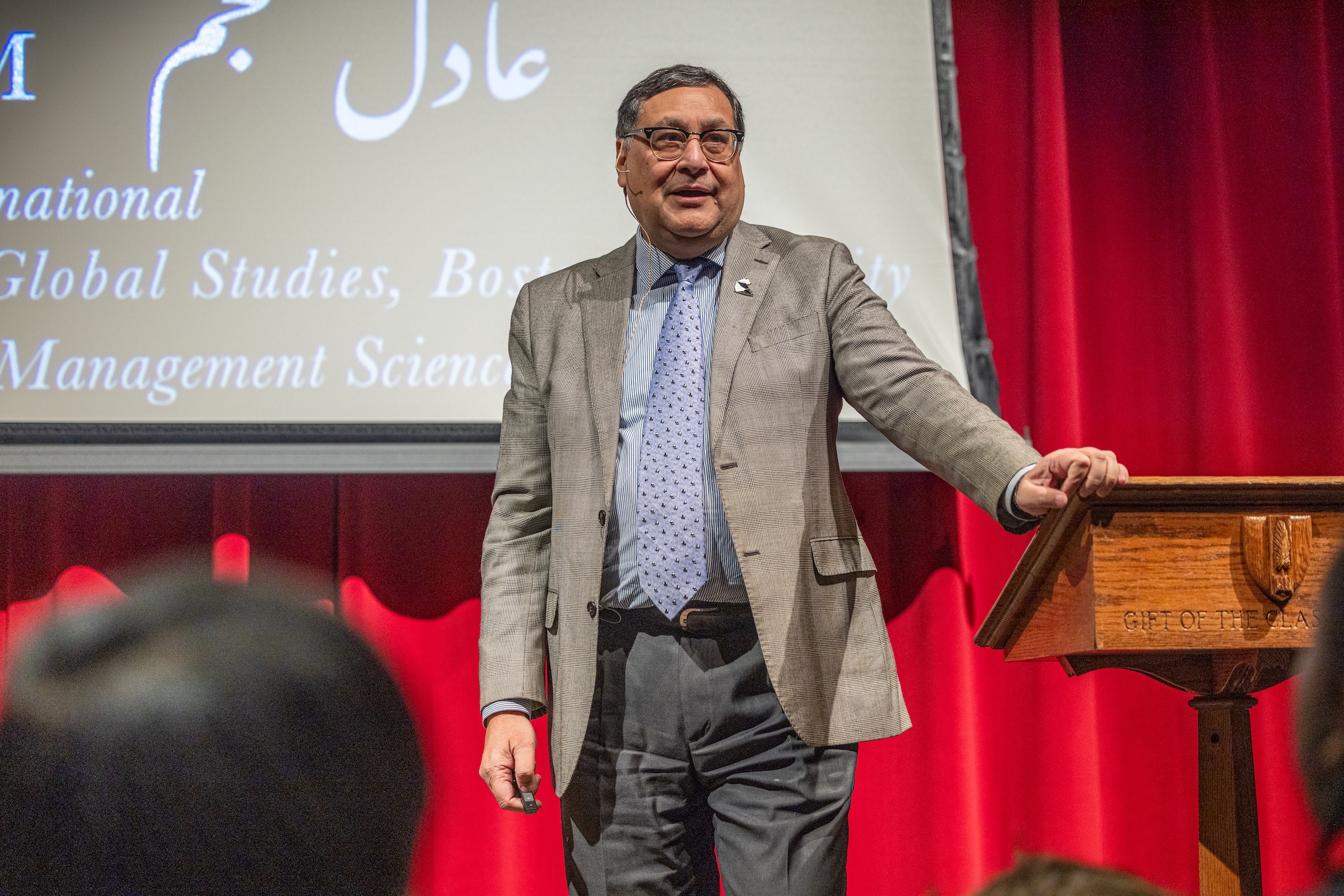
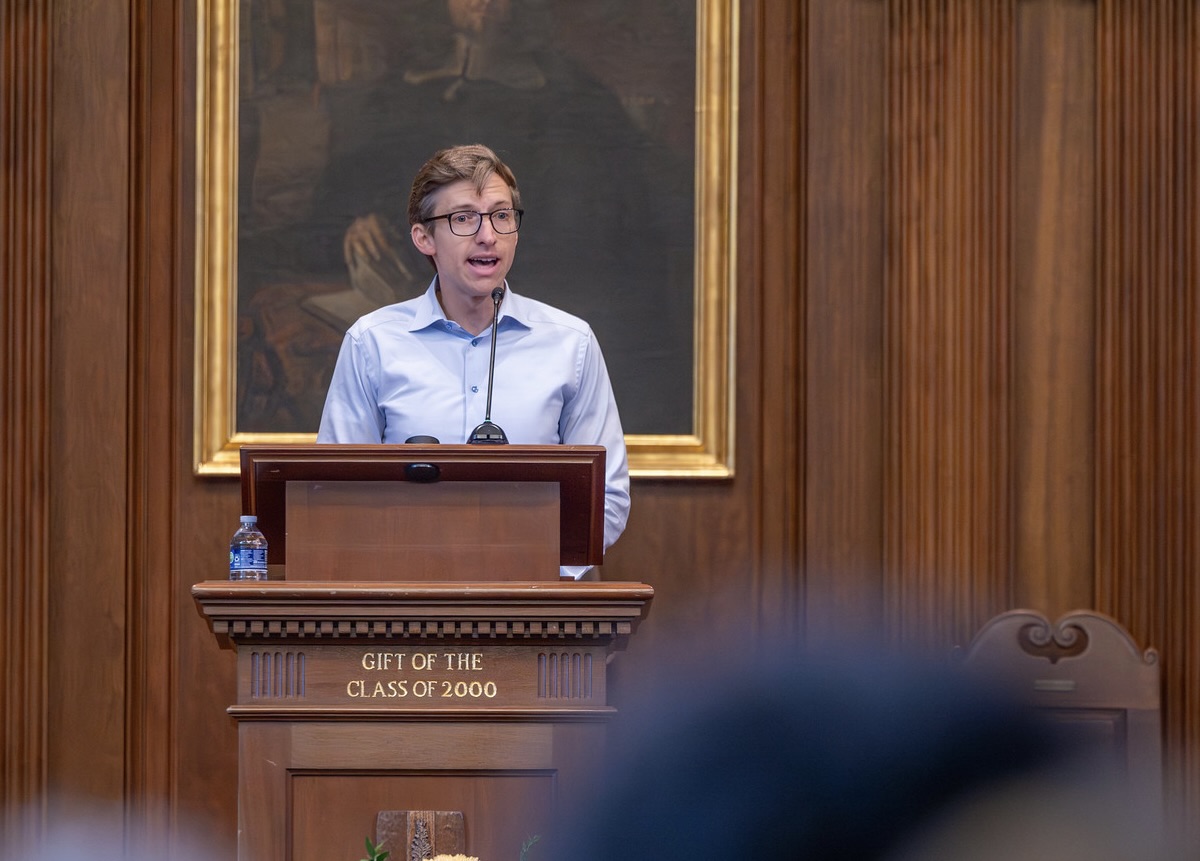
    “I have a few questions that I promise not to answer, but that may be of use,” began Dr. Adil Najam on February 12, as he delivered this year’s Wyner Lecture. “These questions are important not because they have answers, but because they are good questions.” Dr. Najam is a professor of International Relations and Earth & Environment at Boston University and president of the World Wildlife Fund International, a role he has held since 2023. The lecture series, established by Jerry Wyner, Class of 1943, and his sister Elizabeth Wyner Mark, is a living memorial to their father, Rudolph Wyner, Class of 1912. The school was honored to have Jerry ’43, RL’s oldest living alumnus at 100, and members of his family in attendance for Dr. Najam’s talk.

    Dr. Najam spoke to the audience about his work with the WWF and as an international environmentalist. “We are the luckiest species in the universe,” he said. “We have this wondrous planet, which is unlike any other that at least we know about.” However, society’s impact on the earth is proving to be a blight on the sustainability and preservation of our planet. “There is only one species left that can threaten us, and that species is us,” he stated.

    There have been many incredible feats of environmental protection and replenishment in the past several years. Dr. Najam spoke of the many projects completed during his time with WWF, including doubling the number of Mangroves near the Arabian Sea; more than doubling the number of elephants in Zambia; and reintroducing a species of horse across Europe that over the years became isolated exclusively to Poland.

    Despite these successes, there is still an urgency we cannot ignore, given the amount of damage already done. Dr. Najam spoke of the Paris Climate Agreement, established in 2015, when the world decided not to let global climate change exceed an overall warming of 1.5 degrees Celsius, and, at the very worst, 2 degrees Celsius. However, in doing research, Dr. Najam concluded that “there is no science that I know of that can keep us below 1.5 C, and probably no science that will keep us below 2.”

    At this point, the global impact of warming temperatures is making certain areas unlivable, and certain resources financially exclusionary. Dr. Najam provided examples such as devastating flooding in Pakistan, which, if superimposed on a map of the United States, would cover almost the entire  East Coast, or the migration of infectious diseases, such as the increased prevalence of the mosquitoes that carry the Dengue virus in areas not previously seen, and therefore, unequipped to handle.

    However, many species in nature learn to adapt and adjust based on circumstances to survive and continue the species. Humans, as a species, do this, too; however, there is a cost. The example Dr. Najam offered was that of an umbrella: To accommodate bad weather, someone invented the umbrella. However, not everyone can afford an umbrella or access one. This is what perpetuates and exacerbates the global impact and crisis that comes with global climate change. 

  • Dr. Yohuru Williams Helps RL Honor Dr. Martin Luther King

    Dr. Yohuru Williams Helps RL Honor Dr. Martin Luther King

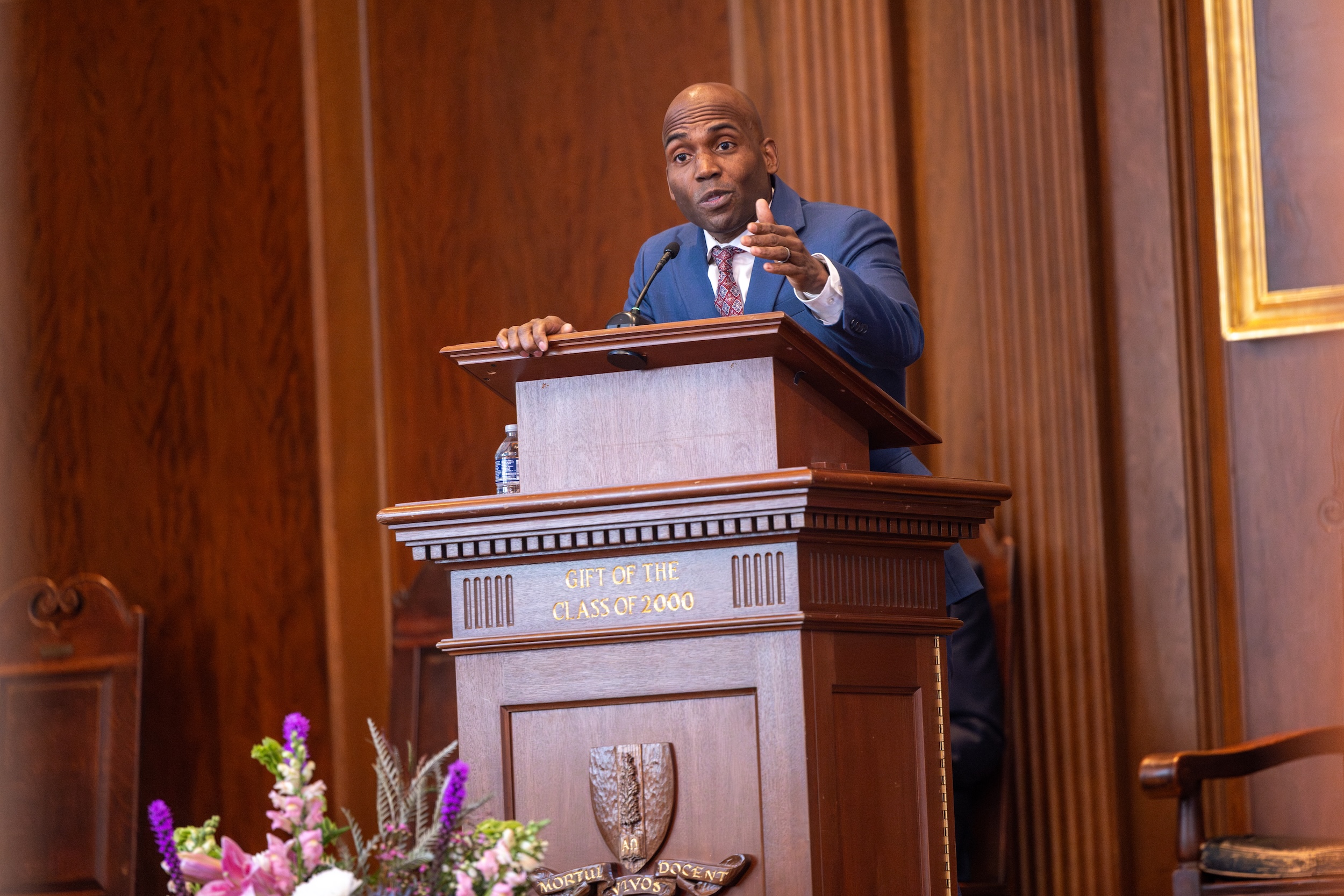
    “We love to tell young people that they stand on the shoulders of giants,” began Dr. Yohuru Williams in Hall on January 20. “Gentlemen, that’s a lie. You do not stand on the shoulders of giants. You are the giants.” Dr. Williams delivered this year’s annual Dr. Martin Luther King, Jr. Commemoration Address, as we honored the life, work, and legacy of Dr. King.

    Before Dr. Williams took to the lectern, Colin Bradley (I) read “I Dream a World,” a poem by Langston Hughes. Following that, Brayden Gillespie (I) read an excerpt from Martin Luther King’s 1964 Nobel Peace Prize Acceptance Speech.

    Dr. Williams spoke about the immense power in the hands of young people gathered in community, like those at Roxbury Latin. This power, though, can be misused if not approached responsibly. “You must learn to wield the incredible force and power that you have in a way that perpetuates our shared humanity,” he stated. “It must be utilized in a way that is anchored in human compassion, and that begins with the idea that the brotherhood of mankind is what we should all be prioritizing.”

    Throughout his address, Dr. Williams spoke about the importance of our shared humanity and the need to step out of one’s comfort zone and make intentional choices for the greater good. “Men who live only for themselves—accumulating knowledge, power, and advantage without regard for others—they do not become more fully human. They become less so.” 

    “Dr. King will tell you that the revolution will not wait for you to wake up. So let me be clear about what this moment asks of you, asks of me, asks of all of us: It does not ask you to have all the answers. It does not ask you to be perfect. But it does ask you to stay awake, stay engaged.”

    Dr. Williams’s influence and impact were felt throughout the day, with many faculty, staff, and students marveling at how engaging and important his speech was, and at how resonant his message of being engaged feels right now.

  • Dr. Harry Levant on Gambling, Online Sports Betting, and Public Health

    Dr. Harry Levant on Gambling, Online Sports Betting, and Public Health

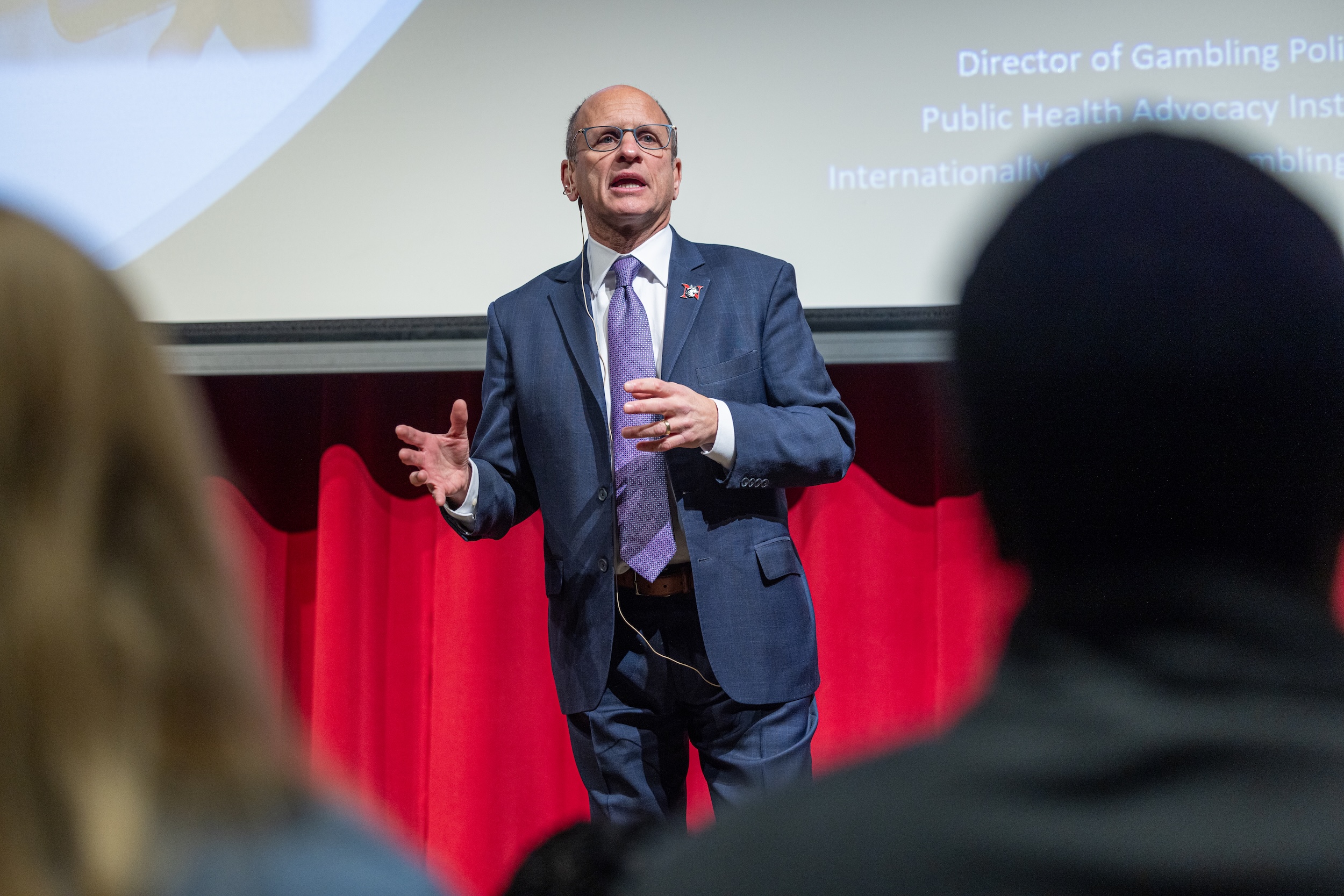
    “I want to have an open and honest conversation with you, about a topic that we in the adult world have launched on you, but haven’t quite figured out how to talk about yet,” began Harry Levant in Hall on January 13. Dr. Levant is the Director of Gambling Policy with the Public Health Advocacy Institute (PHAI) at Northeastern University and is an Internationally Certified Gambling Counselor, mental health therapist, and Doctor of Law and Policy. He is also a former gambling addict.

    During his talk, Dr. Levant discussed the prevalence of the sports betting industry, which has become not only normalized but also romanticized, due to companies like DraftKings and FanDuel. He distinguished this type of betting from the standard casino or in-person gambling that existed when he was younger. “I am in favor of the properly regulated legalization of sports gambling. I’m for it,” he said, acknowledging it as a cultural pastime that goes back centuries. “However, what we have launched is not properly regulated and is not safe. In fact, it’s an entirely new kind of gambling.” He then demonstrated that access to gambling today is as simple as downloading an app onto your phone.

    Before opening the room up to questions, Dr. Levant touched on several noteworthy dangers or tricks hidden in sports betting platforms, such as new offers that are too good to be true. For example, he showed the audience an ad that said a $5 bet would earn the user $300. However, while some might think this is actual money, it is actually just in-game credits that fuel the game’s chase. He also explained how games on your phone with in-store credits are structured to prime users to get accustomed to unlocking rewards and bonuses through progress and playtime.

    After the Hall, Dr. Levant spent time with Class V in their Health and Wellness class, discussing some of the parallels between online sports betting and the video games kids begin playing at a young age. He also met with advanced math students in Class I and II, where the boys asked more questions, about prediction markets, game theory applications in sports betting, and about what would make this type of gambling safer. The evening before he spoke with boys in Hall, he also gave a presentation to the Parents’ Auxiliary.

    As the Director of Gambling Policy at PHAI, Dr. Levant works to bring about much-needed change in how gambling is regulated and promoted. His department believes that the current state of the industry, with its easy accessibility and aggressive advertising, poses a looming public health crisis, akin to that of cigarettes decades ago. Mr. Levant holds a Doctorate of Law and Public Policy from Northeastern University, and a Master’s in Professional Clinical Counseling from La Salle University. He has testified before the United States Senate Judiciary Committee about the potential public health crisis caused by sports betting, and his work has been featured on CBS Sunday Morning, 60 Minutes, and CNN.

  • A Convocation Honoring Continuity, Excellence, and Music

    A Convocation Honoring Continuity, Excellence, and Music

    Roxbury Latin began its winter term on January 5 with a celebration honoring two individuals whose commitment to the craft of teaching, love of music, and care for their students and colleagues stand out as exemplars.

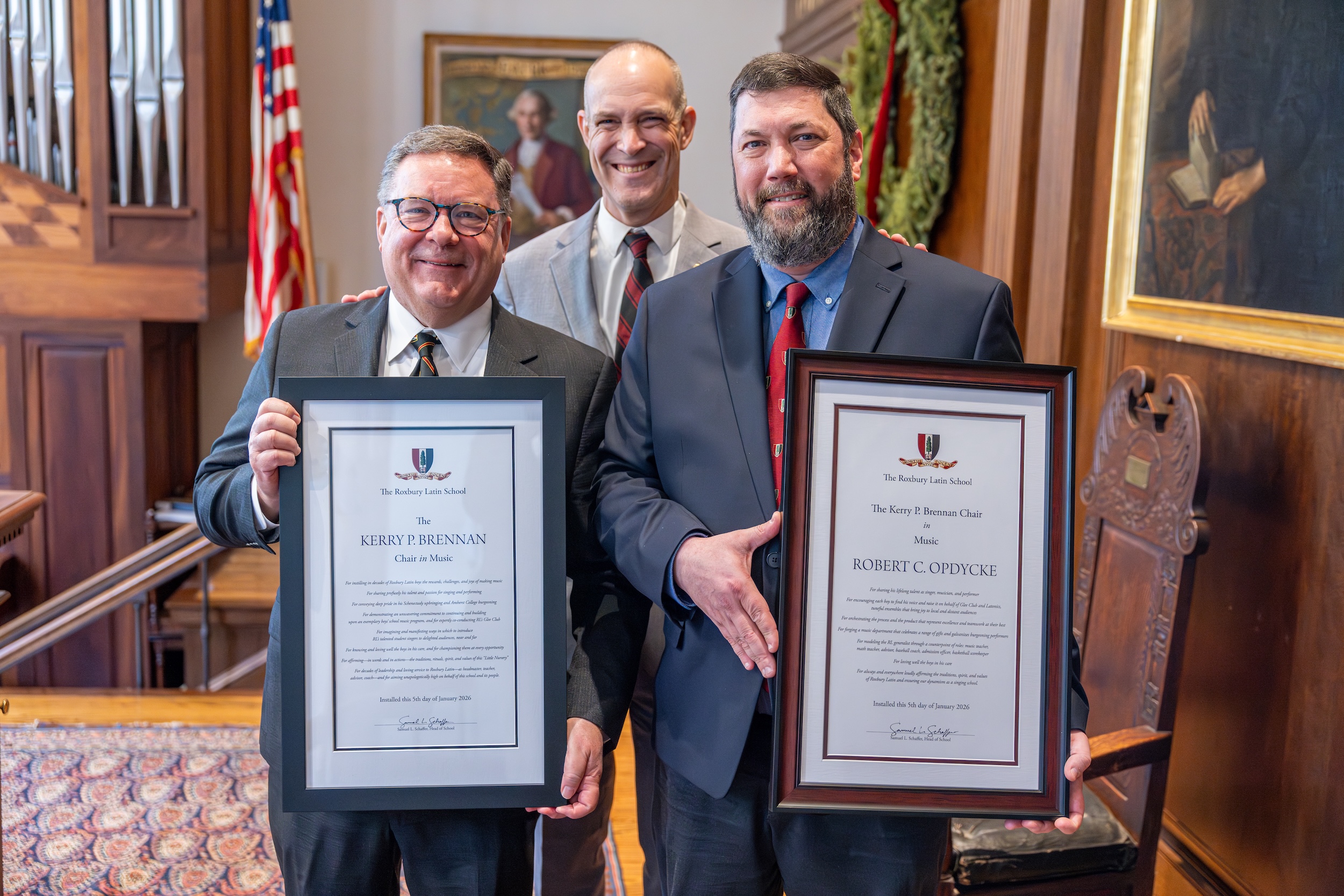
    Rob Opdycke, RL’s Director of Music since 1999, was installed as the first Kerry P. Brennan Chair in Music during a moving, musical celebration in Rousmaniere Hall. The new, endowed chair is given in honor of Headmaster Emeritus Kerry Brennan, who served as RL’s Director of Music from 1978 to 1986, and as its Headmaster from 2004 through 2024 


    “This morning I’m pleased to talk about continuity, excellence, and music,” began Mr. Brennan, who delivered the convocation’s address. “In establishing teaching chairs or professorships, RL has chosen to put teachers at the center of school life, at the center of its continuity.”

    Between the communal singing of For the Splendor of Creation and a special rendition of “O Love” by Elaine Hagenberg, performed by the Latonics—with Mr. Opdycke conducting, Mr. Brennan playing piano, and Lev Mamuya ’14 accompanying on the cello—the longstanding tradition of music at RL were highlighted and lauded. The celebration culminated in the debut performance by Mr. Opdycke of his original song “This Old Hall,” written for the occasion. The ceremony was followed by a breakfast reception that included the more than 50 guests who were in attendance. 

    Read the citations that Dr. Schaffer presented to Mr. Opdycke and to Mr. Brennan.

    Watch the entirety of the Convocation Hall, honoring Mr. Brennan and Mr. Opdycke.

    We are grateful to John and Stephanie Connaughton—whose generous lead gift made this faculty chair possible—as well as the more than 60 other donors who contributed to make this endowed chair possible.  

  • Dr. Francis Su on the Beauty and Wonder of Math and Education

    Dr. Francis Su on the Beauty and Wonder of Math and Education

    “It’s part of my mission to convince you that all of us are mathematical people, by virtue of being human people, and if we could see the human parts of mathematics, we might have a different relationship with it,” began Dr. Francis Su during Hall in the Smith Theater on December 9. Francis Su is the Benediktsson-Karwa Professor of Mathematics at Harvey Mudd College, and a former president of the Mathematical Association of America. His research is in topological and geometric combinatorics and applications to the sciences, including game theory, voting theory, and the mathematics of fair decisions.

    During his talk, Dr. Su encouraged the RL community to seek and value the wonder in math and education, rather than viewing them as transactional, or as a means to get ahead or enter an impressive career. “Think about education as something that forms you—it changes you, it builds your character. It changes your attitudes toward things, and it gives you certain habits of mind, certain dispositions that shape the way you move in the world.”

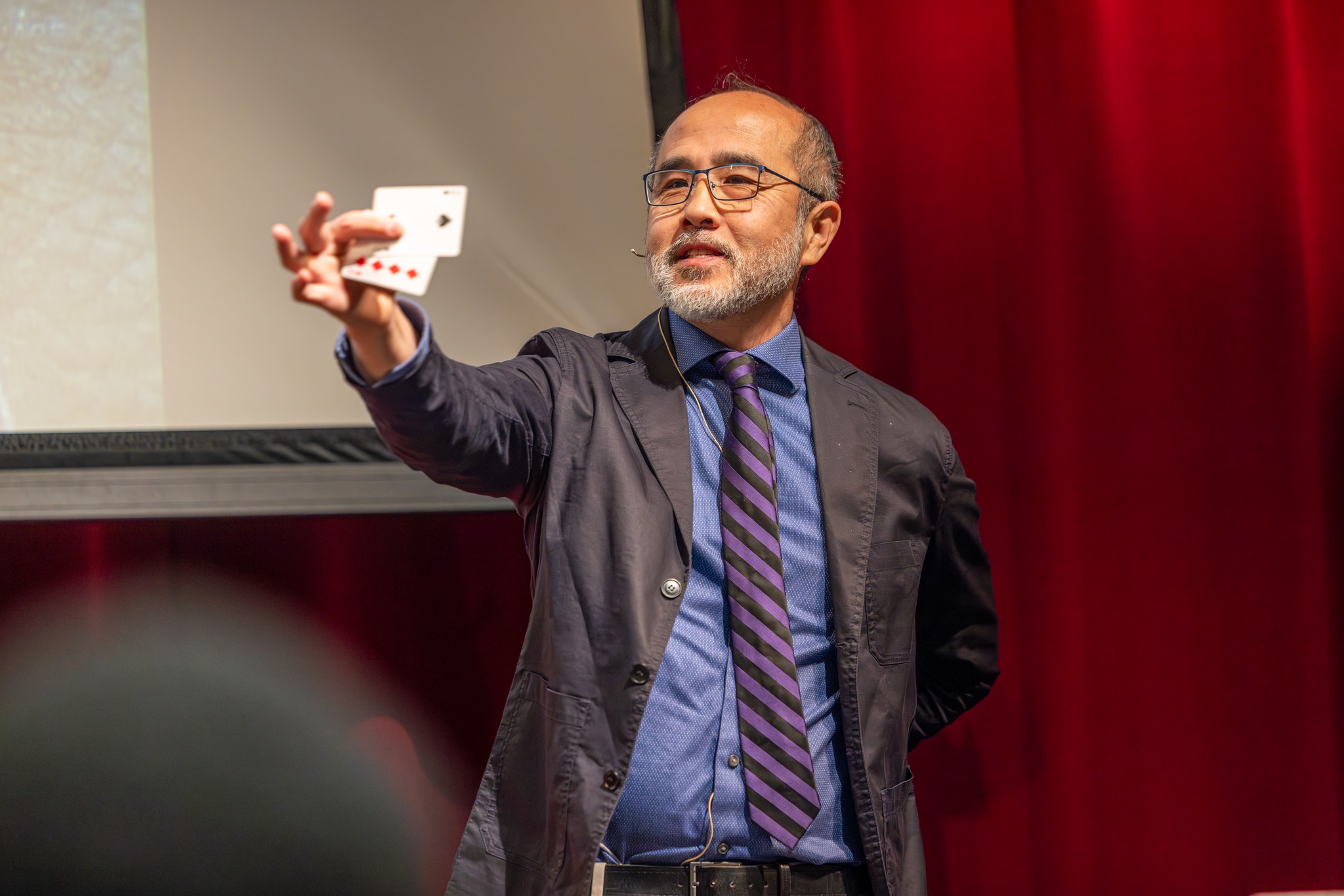
    At the beginning of his talk, Dr. Su performed a card trick during which he perfectly and continuously selected pairs of one red and one black card from a shuffled deck, which he later explained was just a mathematical pattern. From this point forward, both students and faculty were deeply engaged and intrigued, some perhaps seeing math in a new light, as something that can be fun and enlightening. “You are all learning how to look at the world differently through your education,” he said. “You are starting to see things more closely, more deeply, whether that’s a deck of cards and a card trick, whether that’s trying to figure out if someone’s trying to dupe you or take advantage of you, whether that’s being able to look at the beauty of the world and see something wonderful about it. These things make your life richer.”

    Dr. Su has a passion for teaching and popularizing mathematics through writing and public engagement. His work has been featured in Quanta Magazine, Wired, and The New York Times. He authors the popular Math Fun Facts website, and three of his articles have been featured in Princeton Press’s Best Writing on Mathematics. From the Mathematical Association of America, he received the 2018 Halmos-Ford award for mathematical writing and the 2013 Haimo Award for distinguished teaching of college-level mathematics. Dr. Su earned his bachelor’s degree in mathematics from the University of Texas at Austin and his doctorate from Harvard University. 

  • Founder’s Day Shines a Light on Boston’s History of Emergency Response

    Founder’s Day Shines a Light on Boston’s History of Emergency Response

    The Founder’s Song rang out through Rousmaniere Hall on November 6, as the entire school joined together to celebrate the founding of Roxbury Latin on this year’s Founder’s Day. After several opening prayers in Hebrew, English, Greek, and Latin, led by selected Class I boys, Dr. Schaffer welcomed the community, providing historical context on the founding of the school and introducing the topic of this year’s Founder’s Day: the history of fire in Boston and the critical service of first responders.

    “We celebrate Founder’s Day in November because we know for certain, based on ships’ records, that John Eliot landed in Boston on November 2, 1631,” Dr. Schaffer stated. “We do not know the exact date of the founding of the school, because its earliest records were destroyed by fire caused by a gunpowder explosion in spring 1645.” 

    This year, Stephanie Schorow, author and professor of journalism at Boston University, spoke in Hall about Boston’s long history of firefighting and some of the city’s most catastrophic fires. These included the Great Boston Fire of 1872 and the Cocoanut Grove nightclub fire, which occurred on November 28, 1942, killing nearly 500 people and injuring over 100 more. Though devastating, this fire led to the widespread adoption of life-saving inventions, such as penicillin and lit exit doors, and changed safety and medical practices for first responders forever. 

    “That night, doctors and nurses at Boston hospitals worked frantically to save the lives of the hundreds of injured. Doctors tested new burn treatments that proved effective in saving lives. Penicillin, the antibiotic that would transform medicine, was used for the first time on a civilian population, on victims of the Cocoanut Grove Fire. Psychologists would also treat the people who were injured not just in the body, but in the mind, first studies of what we know as post-traumatic stress,” Professor Schorow stated. 

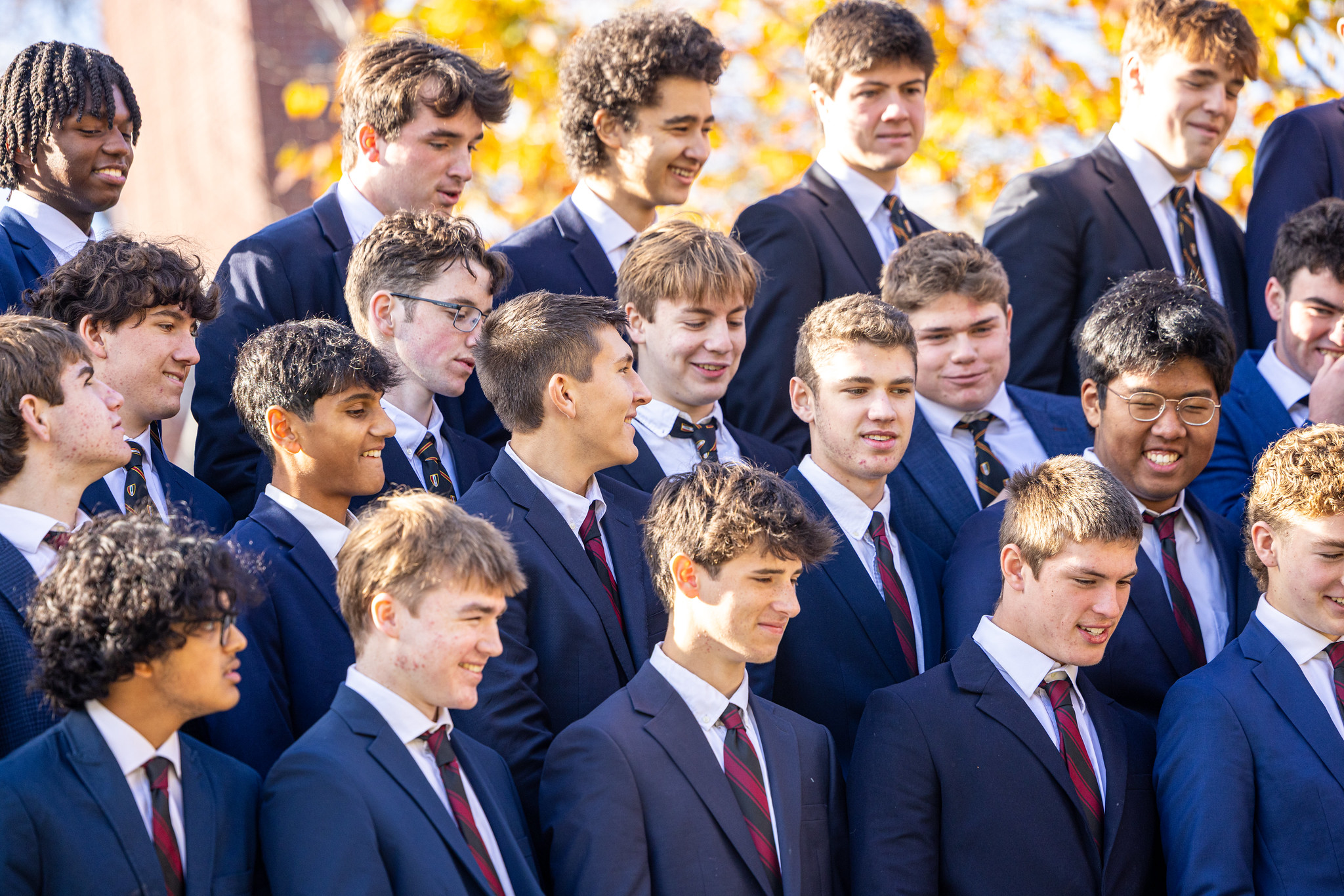
    After Hall, the boys, faculty, and staff gathered for the annual all-school photo on the Senior Grass before heading to the Smith Theater for the second half of the day’s events. First, Mrs. Berg hosted a panel of first responders in our parent community, including Beth Rimas P’19 ’26 (Boston EMT), Chris Holt P’29 (Boston PD), and Steve Nelson P’31 (Brookline FD). The panelists shared insights into their careers and the paths that led them to this line of work, as well as personal anecdotes and stories from the job. The boys then had the opportunity to ask their own insightful questions. 

    After lunch, Juanita Allen Kingsley—an EMT for over 20 years and parent of two RL alumni—led the school in an informative overview of recognizing and addressing medical emergencies, including cardiac events, anaphylactic shock, and life-threatening wounds. 

    Before the completion of another successful Founder’s Day, the school participated in the traditional Founder’s Day Kahoot! trivia challenge. Once again, Mr. Piper emceed this moment when the boys could show off their trivia knowledge and competitive spirit. After two close rounds, Temi Martins Dosumu (II) was crowned—or, rather, plastic fire helmeted—victor.

    View photos from the students’ Founder’s Day adventures

  • Captain Rob Powell ’11 Delivers Veterans Day Hall

    Captain Rob Powell ’11 Delivers Veterans Day Hall

    On November 11, Head of School Sam Schaffer welcomed boys, faculty, staff, alumni, and guests to Rousmaniere Hall for RL’s annual Veterans Day Commemoration Hall. Dr. Schaffer explained the significance, history, and origin of Veterans Day, highlighting its importance to our country and its relevance to RL, given the high percentage of alumni who have served in wars throughout history. In fact, five veterans who graduated from RL—Bob Powers ’66, John Lawler ’75, Tom Hennessey ’01, and Dom Pellegrini ’04—were in attendance, as was the Hall’s guest speaker, Captain Robert Powell ’11.

    “I was looking through my senior yearbook the other day, and I was reminded that the class superlative my classmates had chosen for me was actually ‘chattiest,’ which was, of course, a joke because I was always typically the quietest kid in the class,” Rob joked. He explained that joining the military was not necessarily a calling for him, as it is for some people, notably fellow RL alumni, Dr. Joseph Warren, who graduated from the school in 1755.

    “General Warren was commissioned as a major general in the Continental Army, but on the eve of the Battle of Bunker Hill, he asked where the heaviest fighting would be,” Rob explained. “He volunteered to fight as a private on the front lines instead. He died at Bunker Hill at the age of 34 years old.”

    After graduating from RL, Rob attended Santa Clara University, where he enrolled in the ROTC program and studied Civil Engineering. “It was honestly just a practical decision at the time,” he said. “Though one that ended up defining the next 14 years of my life.” After graduating from Santa Clara, Rob was commissioned into the Air Force as a second lieutenant civil engineer officer. After serving for a few years, he decided he wanted to challenge himself, so he signed up for training to join the Explosive Ordnance Disposal. After an emotionally, mentally, and physically demanding training program, Rob was assigned command of a team of roughly twenty individuals, most of them older than him or with more service time. “I had to earn their respect the hard way—by showing up, listening, and proving that I wouldn’t ask them to do anything I wouldn’t do myself.”

    Rob recalled several calls and jobs he worked during his time with this unit, including bomb sweeps for top government officials and safely handling live explosives from former wars that were improperly stored or disposed of. 

    However, the most impactful moment of his time in the service did not have anything to do with weapons or combat, but rather stepping up as a leader during a humanitarian crisis, when tens of thousands of Afghan civilians who had supported American military operations needed to be air-lifted from the country for their safety to the Qatar base where Rob was stationed. “Over the next two weeks, my base saw an unprecedented influx of 57,000 people,” he said. “For reference, the base normally supports about 8,000, and those 8,000 are troops. These were families, women, and children, people who had just been completely uprooted from their homes.” It quickly became apparent that the infrastructure in place could not accommodate this number of people, and issues, such as piling up of trash, began to impact the health, safety, and mental and emotional state of those staying there. Ultimately, Rob and his team spearheaded a trash removal system that vastly improved the morale on the base. “I joined the EOD to disarm bombs in combat environments; instead, I found myself running a trash detail in the middle of a humanitarian crisis,” Rob stated. “It was a very different kind of mission, as I’m sure you can guess, but the same lessons still applied—teamwork, respect, accountability.”

  • Jarvis Lecturer, Dr. Chris Miller, On Microchips and Global Economics

    Jarvis Lecturer, Dr. Chris Miller, On Microchips and Global Economics

    Over twenty years ago, Roxbury Latin hosted the inaugural F. Washington Jarvis International Fund Lecture, now one of the school’s proudest traditions. The series of lectures is named for the man who, for thirty years, served as Roxbury Latin’s tenth Headmaster. The annual event has brought a variety of distinguished public servants and thinkers on foreign affairs, including former Secretary of Defense Robert Gates; homeland security advisor to President Obama, Lisa Monaco; and former Director of the CIA, John Brennan. On October 28, the school hosted its 22nd speaker in welcoming Dr. Chris Miller, bestselling author of Chip War: The Fight for the World’s Most Critical Technology, professor of International History at the Fletcher School of Tufts University, and nonresident senior fellow at the American Enterprise Institute.

    Dr. Miller’s area of research focuses on technology, geopolitics, economics, international affairs, and Russia. His lecture specifically addressed the history of harnessing processing power through semiconductors and how society’s pervasive use of microchips impacts today’s economic and geopolitical sphere. 

    “Most of you probably don’t spend much time thinking about semiconductors, the tiny computer chips that power everything from your smartphones to the world’s largest data centers,” Dr. Miller stated. “I’d like to suggest to you that you cannot understand the world today without putting computer chips at the center of your analysis.” He continued by emphasizing how most people are ignorant of the complexity and power of something so small and seemingly inconsequential to many. “A processing chip is one of the most complex and sophisticated devices ever produced by humans,” he emphasized. “Can you imagine having a processor chip with 20 billion tiny devices called transistors carved out of a piece of silicon the size of your fingernail?” This statement was met with astonishment and fascination by the audience of students, faculty, and staff. 

    Dr. Miller continued to explain how significantly the chip’s increased computing power, and the world’s increasing reliance on the technology—in manufacturing, but also in defense and AI systems—play into international relations and global economics worldwide. An example is the historically allied relationship between the United States and Taiwan, where a single company, the Taiwan Semiconductor Manufacturing Company, produces over 90% of the world’s advanced processor chips, smartphone chips, PC chips, and telecoms networks, and 99% of the world’s artificial intelligence processors. 

    Dr. Miller is the author of three other books on Russia, including Putinomics: Power and Money in Resurgent Russia; We Shall Be Masters: Russia’s Pivots to East Asia from Peter the Great to Putin; and The Struggle to Save the Soviet Economy: Mikhail Gorbachev and the Collapse of the USSR. He previously served as the Associate Director of the Brady-Johnson Program in Grand Strategy at Yale; a lecturer at the New Economic School in Moscow; a visiting researcher at the Carnegie Moscow Center; a research associate at the Brookings Institution; and as a fellow at the German Marshall Fund’s Transatlantic Academy. He earned his PhD and MA from Yale University and his BA in history from Harvard University.

    Roxbury Latin offers its thanks—as always—to Jack and Margarita Hennessy for funding the annual opportunity for our boys to hear from such distinguished thinkers on world affairs over the years. Mr. Hennessy is a member of the Class of 1954 and a former member of Roxbury Latin’s Board of Trustees. Throughout their lives, he and Mrs. Hennessy have represented an unusual engagement with other nations and cultures. Throughout their lives, too, they have generously provided philanthropic support so that others might come to know and appreciate various corners of our increasingly interconnected world.

  • Stephanie Pollack on Climate Change, Transportation, and Individual Impact

    Stephanie Pollack on Climate Change, Transportation, and Individual Impact

    “Climate change is two words, climate and change,” began Stephanie Pollack in Hall on April 22, Earth Day. “We’re going to talk a little bit about climate, but we’re going to talk a lot about change—specifically the important role that every one of you can play.” 

    Ms. Pollack most recently served as Senior Advisor to former U.S. Secretary of Transportation Pete Buttigieg. Before that, she was Deputy Administrator of the Federal Highway Administration and Secretary and CEO of the Massachusetts Department of Transportation. She began her talk by explaining the history of Earth Day and how it came to be due to the organization and passion of young people in 1970—her point being that young people, like the boys in Hall that day, have the power and ability to change the trajectory of history. 

    After providing this context, she discussed the root causes of climate change as it exists today, fifty-five years after the first Earth Day. “Most people are surprised to find out that the biggest source of greenhouse gases in the United States is transportation,” Ms. Pollack stated. “We’ve done a lot of good work in the last ten to twenty years; greenhouse gas emissions from buildings and electric production are going down, but greenhouse gases from transportation are going up.”

    In her talk, Ms. Pollack showed current examples of countries successfully lessening the carbon footprint of transportation within their cities. The most prominent example is the Netherlands, one of the most bike-friendly countries in the world and one with an efficient public transportation system. Years ago, the country decided to invest in infrastructure to establish safe and convenient bike routes and frequent rail routes, while also implementing incentives for citizens to use biking or public transportation as primary modes of transportation. Unfortunately, most states and cities in the United States do not make it convenient or possible to use a bike as a primary mode of transportation, and do not have infrastructure in place for convenient and reliable public transportation. Ms. Pollack’s examples of positive change—as in the Netherlands—showed how passion and strength behind an idea can lead to a powerful movement and significant impact.

    In closing, Ms. Pollack told the story of Buckminster Fuller, a famed architect who has the words “Call me Trimtab” etched on his gravestone. “If you’re trying to steer a big ocean liner, it has a rudder, but it is so big that no one person can turn it,” Ms. Pollack said. “However, there’s a tiny little thing called a trim tab on the rudder, and moving the trim tab starts a series of events, and then the ocean liner begins to turn. Fuller’s point was that we can find the little things we do by ourselves, with friends, with our community, with or our country, and we become that trim tab. All those trim tabs are moving to turn the giant cruise ship that is our city, country, or planet. Change is not something that other people do. Change is what I do and what you do.”

    Ms. Pollack is the latest in an impressive lineup of Hall speakers this year. Further, her talk was supported  by a fund established by the Class of 1973 to help address the critical importance of educating young students in solving important world issues and being stewards of the earth. The fund supports the study of environmental sciences at Roxbury Latin, including but not limited to class guests, school speakers, executives in residence, field trips, curriculum resources, conference attendance, conference hosting, and student or guest stipends.