• Juan Enríquez On The Evolution of Right and Wrong

    Juan Enríquez On The Evolution of Right and Wrong

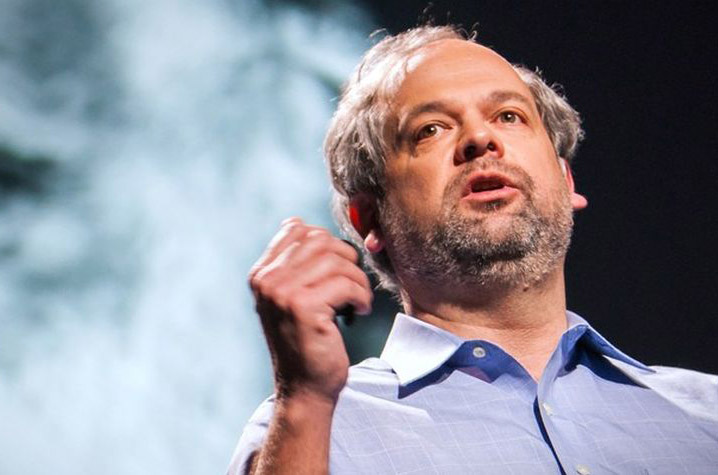
    “What if what’s okay today may be wrong tomorrow?” Juan Enríquez began in virtual Hall on February 4. “What if what’s right flips 180 degrees, and the rules that you’re taught today turn out to be completely wrong tomorrow?” Mr. Enríquez is many impressive things—life science expert, technologist, investor, author—and his most recent book, Right/Wrong, addresses how technology transforms our ethics, and what the implications of that will be in the future. That was the topic he brought to light in Hall as Roxbury Latin’s 2021 Wyner Lecturer.

    “Think about this in terms of a time machine,” he said. “You go back to the time of the Mayans. The Mayans practiced human sacrifice, as did the Aztecs, as did a series of other people. Not only was that considered right, it was considered essential to the survival of that civilization, because otherwise the sun wouldn’t rise, or the rains wouldn’t come. Of course, in retrospect, we look at this and we say what a barbaric set of customs.”

    Mr. Enríquez went on to talk about how, not that long ago, in France people regularly attended public executions by guillotine as if they were social events—a practice we would view today as horrific. He drew connections to the evolution of ethics and morality in the United States over many centuries, and even over recent decades. He discussed Americans’ view on gay rights, which went from two thirds of Americans being opposed to gay rights in 1997, to two thirds being in favor of it today. He discussed how the abolition of slavery came to be, due in large part to the actions of brave individuals, but also, not coincidentally, along with the advent of machinery and the use of oil as energy, which became an alterative to manpower.

    “People used to live, on average, 25 to 35 years,” said Mr. Enríquez. “All of a sudden, across continents, you could treat people better, and life span exploded. You suddenly had a situation where you could produce more and also do the right thing. That is a situation that we may see time and again. As solar energy becomes faster, better, cheaper, we can have more energy and not have to burn coal. We’re going to be judged pretty harshly, as global warming takes hold, by future generations who are going to say: Why didn’t you use solar? Why didn’t you use geothermal? Why were you burning coal? How dare you have done that—that was completely amoral.”

    Finally, Mr. Enríquez asserted that the toxic polarization in America today—exacerbated by social media—means we have to reintroduce the words humility and forgiveness into our vocabularies.

    “It’s incredibly important to have humility and forgiveness, because we may be wrong. And even if we’re right, the concept of being right and wrong may shift. When we judge the past or each other, when we talk to each other, when we accuse each other, let’s be a little more careful to isolate the 1% of people who are truly evil from the vast majority of people who may have different thoughts or opinions than we do, who were brought up in a different way than we were. We may not agree with them, but they’re trying to, in general, do the right thing. They’re trying to teach their kids what they think is right and wrong. They’re trying to put food on the table. They’re trying to be a good person. The bottom line is this: When you judge the past, do it with a little more kindness and hope your descendants will do the same.”

    Mr. Enríquez is the managing director of Excel Venture Management—a life sciences venture capital firm—and the founder of Biotechonomy. He’s also an affiliate of MIT’s Synthetic Neurobiology group; he teaches about the economic and political impacts of life sciences, about future brain technologies, and about the rise and fall of countries. He was a founding director of the Harvard Business School Life Sciences Project, and he also ran Mexico City’s Urban Development Corporation.

    Mr. Enríquez has been prolific on TED and TEDx Talk stages around the world, drawing tens of millions of viewers. He is also the author of several bestselling books focused on biological and technological evolution; on political polarization; and on the ethical choices we face, related to these topics, now and in the years ahead.

    The Wyner Lecture—established in 1985 by Jerry Wyner, Class of 1943, and his sister, Elizabeth Wyner Mark—is a living memorial to their father, Rudolph Wyner, Class of 1912. We are grateful to continue shedding light on important social issues through the Wyner Lecture.

    Watch the entirety of Mr. Enríquez’s presentation, as well as an engaging Q&A session with students and faculty.
  • Honoring the Legacy of Dr. Martin Luther King Jr.

    Honoring the Legacy of Dr. Martin Luther King Jr.

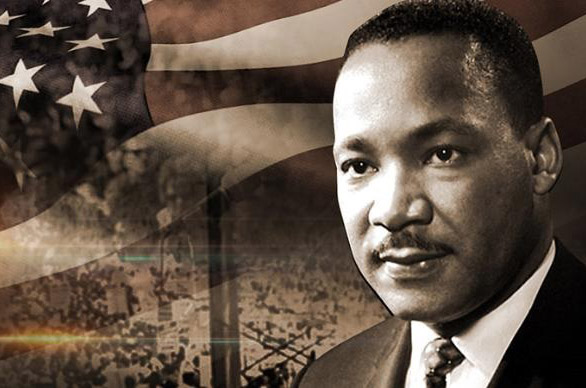
    “Today, we gather to commemorate the life and work of Dr. Martin Luther King Jr.,” began Headmaster Brennan in Hall on January 19. “We pause to recognize the contributions of this remarkable man and to consider anew the principles of justice, equality, and brotherhood—principles he pursued ardently and about which he spoke eloquently. While the United States today is blessedly different from the United States of Dr. King’s lifetime, racism and bigotry persist, and there continue to be opportunities for all of us to stand up for the values that Dr. King espoused. The prejudices and hatred that Dr. King worked so hard to eradicate remain in too many heads and hearts… As we affirm that Black Lives Matter, we also acknowledge that our work goes ever on—improving our individual relationships and attitudes but working on evaluating systemic racism, as well.”

    After Mr. Brennan’s introduction, Aydan Gedeon-Hope (I) read Dr. King’s “Letter from a Birmingham Jail.” Following the reading, Edozie Umunna (I) shared his own reflections on Dr. King’s letter, citing not only the context in which King wrote it—as a response to a letter from eight Alabama clergymen—but also the dynamics at play during King’s lifetime that persist today.

    “If there’s anything I took from Dr. King’s letter, it’s this,” said Edozie. “An effective protest will always be labeled divisive by the oppressor. No matter how you protest, no matter when you protest, no matter where you protest, it will always be viewed as invalid by those whose position of power it threatens to dismantle. When your objection comes under criticism, you’re doing something right… Whatever belief you stand for, whatever cause you fight for, do not let criticism be the reason that your voice is silenced.”

    Eric Auguste (I) then read a very personal perspective on Bayard Rustin—the civil rights and gay rights leader and activist—which Eric wrote as his Senior Speech, as part of his English class.

    “A gay, black man born in the year 1912, Rustin lived his life suffering many hardships, constantly being battered because of his sexuality and the color of his skin,” read Eric. “However, that didn’t prevent Rustin from fulfilling the role of an esteemed Civil Rights Activist from a young age. By the end of this speech, I want every single one of you to understand why Bayard Rustin, in the face of great adversity, was a man of great courage and question why he isn’t as well known as he should be… Consider what it was like for Bayard Rustin 100 years ago. People like Rustin didn’t and still don’t get the luxury of living easy lives because of a trait they can’t change, and yet, he made it his mission to change the way people viewed race and sexuality. The world has taken big steps in the right direction but it’s time to stop letting heroes go unnoticed.”

    The Hall included time for students, faculty, and staff to learn more about the hymn “Lift Every Voice and Sing”—long considered the Black National Anthem—through CNN’s interactive account of the song’s conception and context. Concluding the Hall was a virtual performance of “Lift Every Voice and Sing” recorded by RL’s Glee Club in spring 2020, which has been viewed more than 30,000 times on Facebook and YouTube.

    “While Dr. King as a preacher believed in the power of the spoken word as a way to change people’s minds and hearts,” concluded Mr. Brennan, “he also knew that significant change could only come about through action, civil disobedience, changing institutions, and reaching out to many different kinds of people. He knew the importance of acting on principle when words could only begin to tell the tale. Given the divisiveness and prejudice that openly persist in our country, our vigilance, activism, and principles are consequential; we still have work to do if we want to achieve the social equality envisioned so many years ago by Dr. King. This work is the responsibility of every one of us.”

    View the entirety of this year’s Martin Luther King Jr. Commemoration Hall here.

  • Dr. Lisa Piccirillo On the Beauty of Mathematics

    Dr. Lisa Piccirillo On the Beauty of Mathematics

    In 2018, Lisa Piccirillo—a graduate student, and Boston College alumnus—learned about the Conway knot—a conceptual, mathematical tangle that had gained mythical status. (For more than 50 years, no mathematician had been able to determine whether Conway’s knot was “slice.”) One week later, Ms. Piccirillo produced a proof that stunned the math world.

    On January 14, Roxbury Latin welcomed, in virtual Hall, Dr. Lisa Piccirillo, an assistant professor at MIT who specializes in the study of three- and four-dimensional spaces. She is broadly interested in low-dimensional topology and knot theory, and employs constructive techniques in four-manifolds. As a young graduate student, Dr. Piccirillo gained international fame for proving that the Conway knot is not, in fact, “slice.”

    In Hall, Dr. Piccirillo began by walking students through an example of determining whether a given knot can be turned into an unknot by executing crossing changes. (This required the introduction of some topological vocabulary—knot diagrams, unknots, crossings, crossing changes, algorithms, sliceness.)

    “A knot is just a circle,” she began, “but we’re going to think about the circle as sitting in three dimensional space. I don’t have any firm requirements on this circle being geometrically rigid. In fact, anything you can build by taking an extension cord, and making a huge mess out of it, and then plugging the ends together, is a knot.”

    After bringing students and faculty through this illustrative process, Dr. Piccirillo spoke more broadly about mathematics education, math as a language, and about the creativity versus practicality of the work that she does every day.

    “I think math is a two part adventure,” she said. “First we define objects, and then we prove facts about those objects using really precise, careful, logical arguments. This definition of math might seem foreign to you; in your education right now you’re doing a lot of learning objects. One of the objects we talked about this morning, crossing changes, that’s more of an operation, an action, and you do a lot of learning operations in school. The objects you meet are things like fractions or polynomials, and then you spend heaps of time adding the fractions, or factoring the polynomials, doing operations to these objects… Ultimately mathematicians want to know: here’s the thing that exists, and here’s everything that’s true about it.

    “I like to think about learning math as being very similar to learning a language… Approaching math like that helps us dispel a common myth that there are ‘math people’ or ‘math geniuses.’ Another thing about doing math is that you have to be prepared to fail all day, every day—except on a very small number of good days when you write something down.

    “Every time I approach a hard problem, I think, ‘Okay, this is not going to work, but I want to understand why it’s not going to work. So here’s an approach. Let’s see what goes wrong.’ Trying something, and understanding why it failed, progresses you toward understanding the problem.”

    During a lively and extended Q&A session, students and faculty asked Dr. Piccirillo about “Eureka!” moments, practical uses of knot theory, the role of mathematics in the modern world, how she gets through “stuck” moments, her thoughts on Euclidean geometry, her favorite theorems, and the mindset she enlists in attempting to solve the “unsolvable.”

    After earning her bachelor’s in mathematics at Boston College, Dr. Piccirillo earned her PhD  from University of Texas at Austin. In addition to receiving an inaugural Mirzakhani New Frontiers Prize—recognizing outstanding, early-career women in mathematics—she was also recently named one of WIRED Magazine’s “People Who Are Making Things Better.” Dr. Piccirillo spent her COVID fall as a visiting researcher at the Max Plank Institute for Mathematics in Bonn, Germany.

    View the entirety of Dr. Piccirillo’s Hall presentation, and the robust Q&A session, here.

  • Recent Hall Speakers and Friends of RL Nominated Among Biden’s Top Advisors

    Recent Hall Speakers and Friends of RL Nominated Among Biden’s Top Advisors

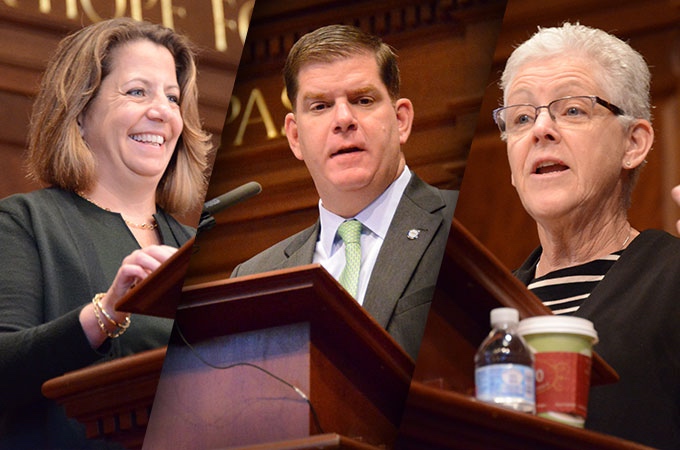
    Roxbury Latin is honored each year to host an impressive range of guest speakers—expert and accomplished leaders, thinkers, researchers, artists, and public servants—who present to the boys and faculty on a broad range of topics. Three recent Hall speakers and friends of Roxbury Latin—Gina McCarthy, Lisa Monaco, and Marty Walsh—have been tapped for close advisor roles and cabinet positions in President Joe Biden’s administration.

    The Honorable Gina McCarthy—former Administrator of the U.S. Environmental Protection Agency under President Obama—spoke to students and faculty in Hall on November 13, 2017, delivering the keynote address in the year’s Smith Scholar series focused on global climate change. On campus, she discussed her work in the Obama administration, offering her assessment of their accomplishments, the importance of the Paris Climate Accords, and the changes that could come with the Trump Presidency. She was generous with her time, spending another hour speaking to and inspiring seniors who were taking the Environmental Science course that year.

    “Climate change isn’t just a threat to public health—it’s not about polar bears. It’s about you, your health, the health of your children,” said Ms. McCarthy, identifying the economic threat as well: The stronger and more frequent storms in the Caribbean and the fires in the west call for billions of off-budget dollars that aren’t allocated. “The reason people are accepting the science of climate change is because they are feeling it,” she asserted. Ms. McCarthy currently leads the National Resources Defense Council. In her new role she will serve as a senior adviser to Biden, coordinating climate change policy throughout the government. She will be the stateside counterpart to John Kerry, who will serve as the administration’s international climate envoy.

    Lisa Monaco—who was serving as Homeland Security Advisor to President Obama at the time—delivered Roxbury Latin’s Jarvis International Lecture on October 17, 2016. Ms. Monaco is an alumna of our neighboring Winsor School, and she has recently been nominated as Deputy Attorney General to the Biden administration.

    In Hall, Ms. Monaco described not only her role as President Obama’s advisor—working with the President and the rest of the National Security Team to help keep the country safe—but also her own public service journey, which began soon after college when she worked in the Senate on the Judiciary Committee under then-chairman, Joe Biden. “I got bitten by the public service bug,” she explained. In closing, she implored RL students to pursue a career in public service. “Public service needs you,” she said. “Yes, RL was founded under the reign of King Charles and is the oldest school in the United States, and it is steeped in wonderful traditions, but it’s also preparing you for 21st-century challenges. In the coming years, our government, our nation, and our world will need people who can understand and operate in a fast-paced and wired world while remaining grounded in our enduring values… What John Eliot called ‘godly citizenship’ three and one-half centuries ago, is needed now, more than ever. And when I look around this room, when I think about the skills and smarts in this hall, I am confident that whatever challenges come in the decades ahead, your generation will rise to meet them.”

    Finally, Boston Mayor Marty Walsh delivered RL’s Founder’s Day keynote address in 2014, when he spoke to students about persisting through struggles, and focusing on opportunities, by way of his own, personal story. “As a young person, I took a lot of lefts and rights where I should have gone straight,” he said. By his late 20s he acknowledged his trouble with alcohol and went into rehab. “Everyone in this room knows someone who is struggling. Sometimes life is not a straight line. I had loving friends and family to help me take the right path.” Mr. Walsh reminded students that they will encounter challenges and be faced with choices. He admonished the boys to follow their dreams, and listen to that inner voice, and especially to recognize the tremendous opportunities before them. On January 20, 2017, Mayor Walsh also led the ceremonial puck drop, commemorating the grand opening of RL’s Indoor Athletic Facility and inaugural home game hosted in Hennessy Rink. He spoke from center ice prior to the game, to the hundreds of RL fans in attendance, congratulating Headmaster Brennan and the school’s leadership for building a beautiful facility that would be used by Roxbury Latin athletes and neighborhood youth groups alike. Mayor Walsh has been nominated to become the President’s Labor Secretary.

  • Be Both Tough and Tender: Headmaster Brennan Opens the Winter Term

    Be Both Tough and Tender: Headmaster Brennan Opens the Winter Term

    In a virtual Opening of Winter Term Hall on January 5, Headmaster Kerry Brennan welcomed students and faculty back from winter break, ushering in the new year and the hope that it may represent. At the heart of Mr. Brennan’s remarks was the notion—and the imperative for RL boys—of being both tough and tender. “Often the rhetoric of our school goes whizzing by… Today I want to pause on a phrase that can be found in our publications and on our website, but on which we rarely dwell. I say it when we are hosting prospective students and their parents at open houses. Others of us utter it too, as we describe our school: ‘We want our boys to be tough and tender.’ Today I shall dwell on that unlikely pair.”

    Through personal stories—of attending the funeral of a student’s parent, of admiring a student who struggled mightily yet persevered, of being with his own father when he died—Mr. Brennan offered descriptions of individuals who exhibited both grit and goodness, fortitude and empathy. He contrasted those against depictions of how masculinity used to be portrayed in films and on television—through gangsters and greasers.

    “Our signals about toughness don’t come from idolized movie characters or even the actors who played them…. Thankfully, our understanding of that term and our capacity for embracing it has to do with the realization that to be tough does not require that one not be tender. Not only are both possible; both are preferred.”

    “While it is not usually a matter of life and death, you exhibit toughness by persevering at RL through seemingly endless days with outsized demands of you physically, intellectually, emotionally… You seem to know that you can do it, and surely show that you want to. And somewhere within us there is the faith that whatever we suffer now will be in service to greater goals realized later, and, in part, the result of what we have been trained to withstand—with focus and determination and without complaint. Additionally, you are often tender. You dare to give evidence of being moved—at the Glee Club senior concert, at the end of a memorable athletic season (whether in the waning moments of a victorious or losing contest), in the way you reach out to reassure a down classmate, in choosing not to boast of an accomplishment—like a college admission—because that might be hurtful to those whose results were less sunny, and in countless other moments when, usually privately, you express discouragement, sadness, hopelessness, doubt. You also are spectacular at signaling a concern for a classmate who himself is on the brink of despair. You are tough in your willingness to make the classmate mad by reaching out to a helpful adult, but appropriately tender in your eagerness to right a sinking vessel, to save a friend’s life.”   

    “When we say that RL boys are tough and tender, we are not saying that each one of you is as tough or as tender as you are going to be, or as you would ideally be. As with all things, we are works in progress. Our aim is in the direction of becoming our best selves. And these qualities would contribute unfailingly to the realization of lives lived with purpose, with conviction, with compassion, and with effect. Having made the case for why it is best to be tough and tender, I not only hope that you will be both. But I give you permission to be that very thing. On the threshold of the New Year, what more could I wish you than that?”

    View the entirety of Headmaster Brennan’s address.

  • Pianist Andrew Gu (V) Selected for From the Top

    Pianist Andrew Gu (V) Selected for From the Top

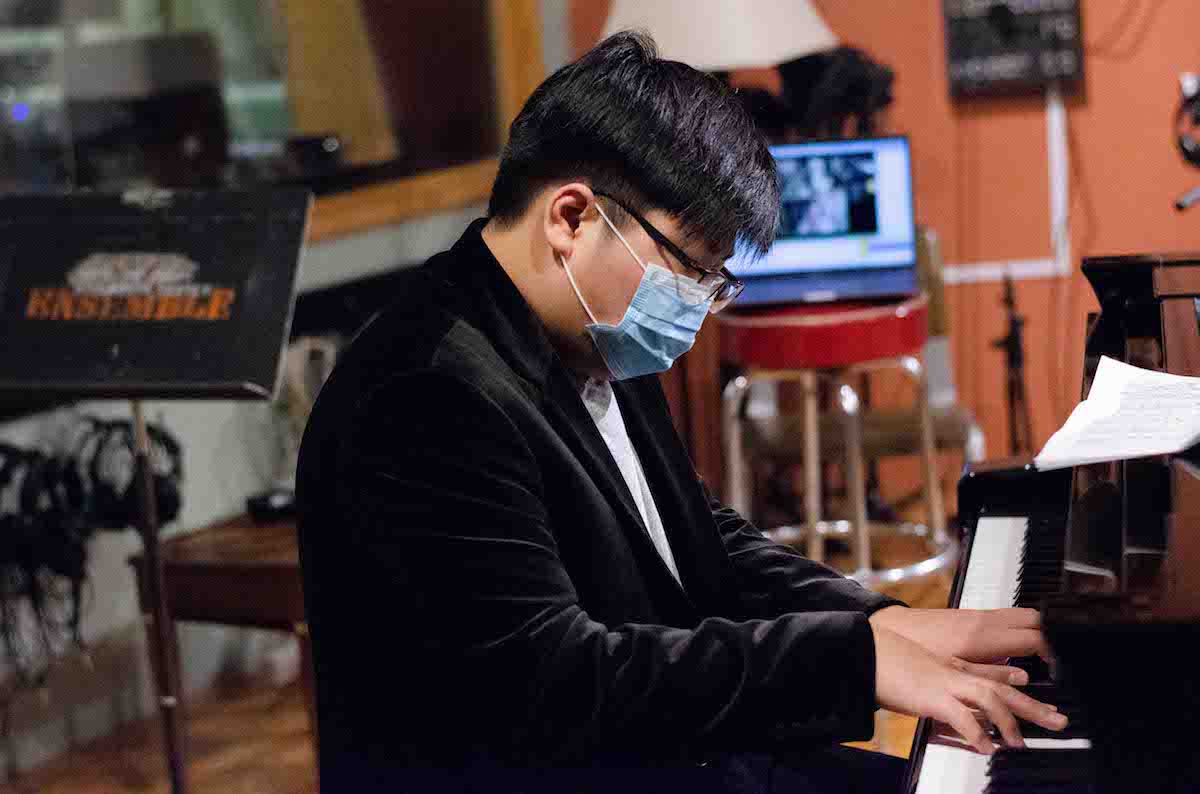
    Andrew Gu of Class V was recently selected and recorded for NPR’s nationally-renowned From The Top program—a premier music radio show, which celebrates the stories and talents of classically-trained young musicians. The episode featuring Andrew’s performance—Show 393, with host Peter Dugan—aired nationally during the week of December 14. Andrew performed Beethoven’s Sonata No. 7 in D Major; he was the youngest of the five teenage musicians featured on the episode, which also included saxophonists and violinists—hailing from Chicago, Illinois to Underhill, Vermont—and performances of pieces by Stravinsky and Reena Esmail. Listen to and view Andrew’s performance—as well as the rest of the episode—here.

    Andrew, who has earned other accolades and honors for his skills as a pianist, started piano lessons with his mother, Helen Jung, and continued his studies with Alexander Korsantia and Hitomi Koyama. Andrew made his orchestral debut at age eight, performing Haydn’s Keyboard Concerto in D major at the Music Fest Perugia, Sala dei Notari, Italy in 2015.           

    Several Roxbury Latin student-musicians have been featured performers on From the Top over the years. From the Top is a national, non-profit organization that supports, develops, and shares young people’s artistic voices and stories, providing young musicians with performance opportunities in premier concert venues across the country; national exposure to over a half million listeners on its weekly NPR show; and more than $3 million in scholarships since 2005.

  • Fernando Rodriguez-Villa ’06 Speaks at RL’s Inaugural Innovation Exchange

    Fernando Rodriguez-Villa ’06 Speaks at RL’s Inaugural Innovation Exchange

    On December 3, Roxbury Latin hosted its Inaugural Innovation Exchange with keynote speaker Fernando Rodriguez-Villa ’06. Fernando spoke with students and faculty over Zoom, sharing his journey from RL student to co-founder of AdeptID. Students were able to engage with AdeptID’s technology during a group project, followed by a question and answer session.

    “One of the most valuable parts of RL for me,” began Fernando, “was getting an early education in not being the smartest person in the room. At RL, you learn pretty quickly that there are a lot of people out there who are sharp in ways that you are distinctly not. The faculty there know that I was a strong, good, fairly unremarkable student compared to some of the other students that I was lucky enough to share the classroom with. Whether I was at Dartmouth or in banking or beyond, I was never unfamiliar with being around people who were incredibly bright and had perspectives and insights that I wasn’t going to arrive at on my own.”

    Fernando is the founder and CEO of AdeptID, a start-up with an AI-enabled platform that predicts the success of transitions between different kinds of jobs. At RL, Fernando was active in theater and Latonics and played varsity football, basketball, and track. After graduation, he spent a year at Eton College before attending Dartmouth.

    Fernando left banking in 2014 to work at Knewton, which used machine learning to personalize learning, and since then Fernando—a self-described serial entrepreneur—has spent his career pursuing machine learning ventures around the world. In 2016, he co-founded TellusLabs, a satellite analytics startup that was quickly acquired by Indigo. At Indigo, he served as the Director of International Strategy.

    “I liked banking,” said Fernando, “but it was clear to me within a couple of years that it probably wasn’t what I wanted for my long-term career trajectory. I started seeing growing companies and leading companies on the operational side as exciting.

    “One client of ours was a CEO who had started his company from above his garage with two friends. They had grown to become a massive and important asset manager over 25 years. He was still close friends with the people with whom he had gone on that journey. He was beloved by that team, and in that camaraderie there was a lot that reminded me of RL. It was inspirational. 

    “Simultaneously, I was fortunate to start learning from friends outside of work, about some of the trends in technology. I got into what was called big data, which is now known as AI or machine learning. I learned of the potential this technology had to generate predictions or insights at scale—to put that into software that could, in real time, answer pretty interesting questions. So I became obsessed with this one startup based in New York called Knewton, which was using AI on education data.”

    Knewton was initially hesitant to hire Fernando, an investment banker with no professional experience in AI or education.

    “‘You have this other set of skills,’ they said, ‘and we wouldn’t pay nearly as much as you’re making now,’” said Fernando. “It took a fair amount of work to persuade them that I was excited about the mission and was prepared to face the learning curve of the technology. It took several tries to make them comfortable hiring me!”

    Knewton put Fernando in charge of international business development, sending him to Spain, South Africa, India, and Russia to expand the reach of the New York-based company.

    “Knewton was a good stepping stone into the world of entrepreneurship,” said Fernando. “Within the world of startups and technology, there are a lot of very early stage companies; AdeptID, which we started this year, is in its pre-seed stage. As companies get larger, they tend to raise more money, get more customers, and hire more people. Knewton was in this later stage when I joined, and so there was a fair amount of risk that had been taken off the table.”

    Fernando knew he wanted to get involved with an earlier-stage venture, so he quit his job and moved to Boston with his now wife, Emma.

    “That job hunt was not particularly easy or comfortable,” admits Fernando. “I had to go for a lot of coffees to get a sense of founding teams I wanted to join, and ideas I could get excited about. That’s how I found TellusLabs, where I was paired up with two great technical founders who had built algorithms that could—just by looking at satellite images of crops—predict the crop yield per acre. Those kinds of predictions of food supply were exciting, but the challenge was turning that technology into a business.”

    In two years the founding trio at TellusLabs had expanded to a team of 14 data scientists and engineers, attracting the attention of one of its partners, Indigo Ag, whose technology fit almost perfectly with the direction in which TellusLabs was headed.

    “As we were a customer of theirs,” said Fernando, “they approached us asking if we were interested in joining their company. Initially we said no, because we wanted to build our own independent company, but they made a persuasive offer. Most of the people who were part of TellusLabs are still working for the company and are still happy there. I was also happy to have gone through that, but working for Indigo, a multi-thousand-person company, I learned that I loved that early stage—a couple of people and an idea, a promising technology, and the building and uncertainty that comes with that.”

    Fernando left Indigo early this year for his new startup, AdeptID, with co-founder Dr. Brian DeAngelis, to focus on emerging issues in the labor market.

    “There seemed to be a lot of dynamics in the labor markets that looked like a matching problem,” said Fernando. “That is very much what machine learning and data science tend to be good at—solving matching problems.

    “It’s incredibly hard to change jobs,” adds Fernando, “but something that’s made it easier for me personally is the fact that I have this very blue-chip education. I’ve had a lot of privileges and advantages that have resulted from that. People look at my story and say, ‘Perhaps he hasn’t done this thing, but because he went to these schools, and because he has these other stamps’ they’re willing to take a gamble on me.”

    A large portion of the workforce doesn’t have the education and background that Fernando has, and so changing jobs is difficult. Transitioning between industries can feel nearly impossible.

    “There are tens of millions of people who are unemployed right now who fall into this category,” said Fernando. “And then there are also people who are employed in industries in structural decline—job losses in hospitality and oil and gas and coal. We estimate around 35 million workers will need to find jobs in something very different than what they’ve done before.”

    The entrepreneurial challenge for Fernando and Brian was figuring out the business of solving that problem. Could they excite people by the economic opportunity of trying to address those issues?

    “There are certain sectors in which job growth or job demand is faster than the rate at which people can hire for them,” says Fernando. “In sectors like healthcare, renewable energy, and advanced manufacturing—roles like machinists, pharmacy techs—employers are struggling to find people who are certified or ready to do these jobs.”

    It is that complex dynamic of supply and demand that drives AdeptID, which uses big data to look more deeply at workers and their underlying skills to find potential cross-industry career matches.

    “Just because you’ve been a service unit operator for Chevron doesn’t mean that you can’t do one of these other growing jobs,” says Fernando. “In fact, some of the skills you’ve picked up are incredibly relevant and mean that you are more likely to fit into these new roles. That was our anecdotal perspective, but I had to go out and make it legible—to take these stories and put them into a data format that can allow us to support that perspective from an algorithm standpoint.”

    Fernando and his AdeptID co-founder, Dr. DeAngelis, work with employers and vocational training providers in New England as well as the Midwest and Sunbelt to acquire data on hiring patterns and placement rates to help train their models. During the recent session, RL students used sample data from AdeptID, which mapped the “distance” from jobs in one industry to jobs in another on the basis of skill, to work on group projects.

    “What we find when we do this,” says Fernando, “is that there are some jobs that are intuitively similar—for instance pharmacy aids and pharmacy technicians—and others whose connections are a little less obvious, like a cashier or food service worker with that same pharmacy technician role. It turns out there’s actually a fair amount of overlap. If the data starts to say that, we say, ‘Okay, can we confirm that?’ and the hiring managers we’ve spoken to at places like Boston Medical have agreed.”

  • Rob “ProBlak” Gibbs On the Process and Mission of Art, and On Being a Good Person

    Rob “ProBlak” Gibbs On the Process and Mission of Art, and On Being a Good Person

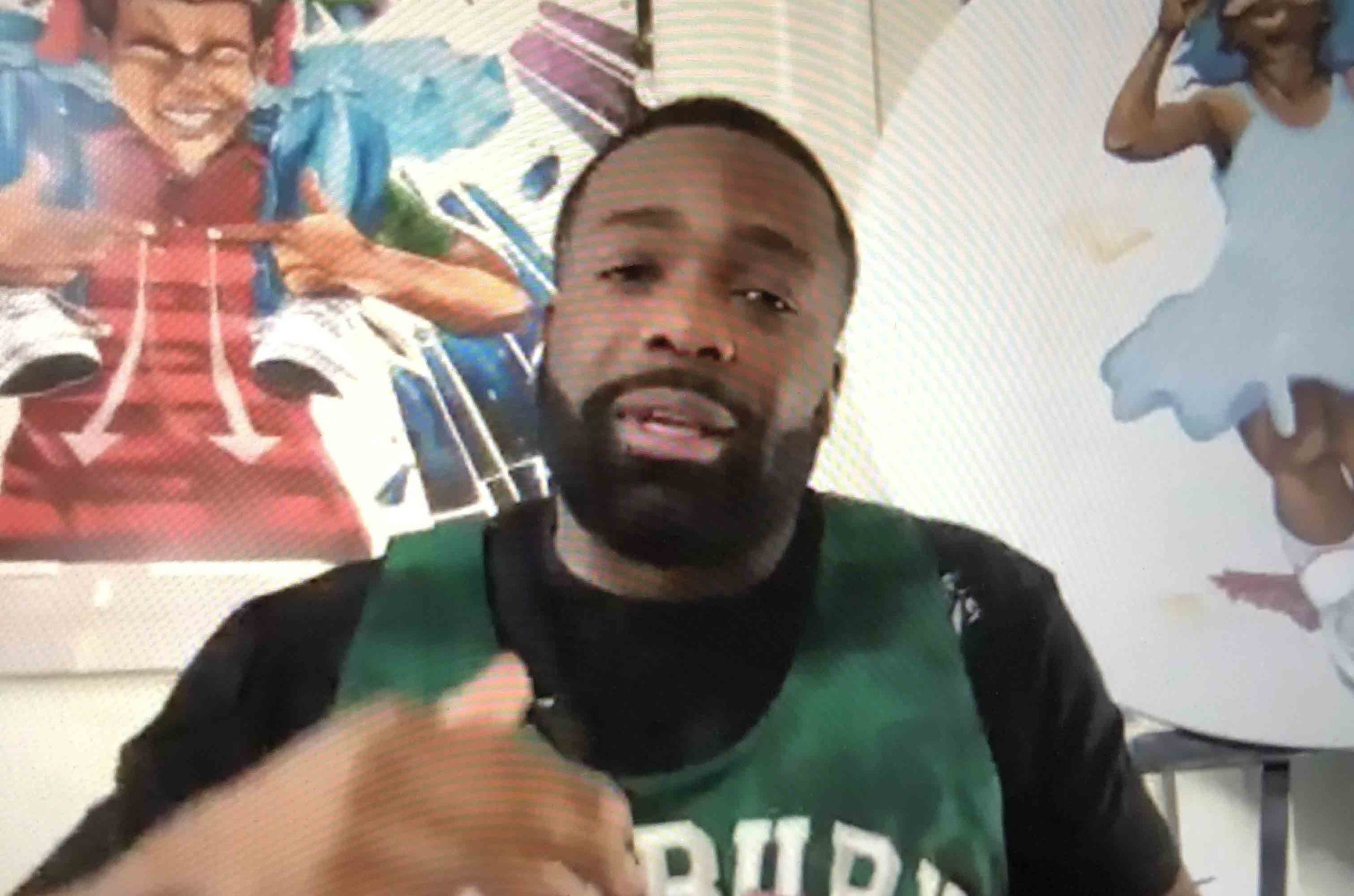
    On December 3, students and faculty were joined in virtual Hall by Rob “ProBlak” Gibbs, a celebrated visual artist who has transformed the cultural landscape of Boston through graffiti art since 1991. Growing up in Roxbury during hip-hop’s Golden Age, Mr. Gibbs saw the power of graffiti as a form of self expression. The medium became a tool for him to chronicle and immortalize his community’s culture and history—a way to document, pay homage to, and beautify the City’s underserved neighborhoods. His remarkable artwork has brought him much notice and acclaim. Mr. Gibbs was featured last spring on the cover of Boston Globe Magazine for an issue titled “Why Art Matters.” In the spring, Mr. Gibbs also partnered with Boston’s Museum of Fine Arts as an artist-in-residence, in part creating a mural in his Breathe Life series at a vocational high school in Roxbury, not far from the Museum grounds.

    In Hall, Mr. Gibbs began with a brief video of him and fellow street artist Marka27 completing a large-scale production beneath a bridge in Boston’s Ink Block, titled “Don’t Let Me Be Misunderstood.” The clip of ProBlak and Marka27 creating that mural offered students a sense of the scale, paint application, and intention behind the artistic piece.

    Mr. Gibbs went on to answer questions from both students and adults, speaking about his start as an artist; his process; the challenges inherent in his medium; his inspirations and collaborations with fellow artists; and how his work has evolved over decades. The next day, Mr. Gibbs joined RL art classes, via Zoom, meeting with students from Class VI to Class I in Studio Art, Art & Technology, and Digital Design courses.

    Beyond his artistic practice, Mr. Gibbs is also co-founder of Boston’s Artists For Humanity, a non-profit that hires and teaches young people creative skills—from painting to screen printing to 3-D model making. For the past 29 years, Mr. Gibbs has mentored and guided countless burgeoning, young artists through the organization, and continues today as its Paint Studio Director.

    In his mentor role, he explained, one of the key lessons he hopes to impart is “how to honor a commitment. No matter what [these young people] commit themselves toward, that’s a transferable skill that they can put toward anything. If you have the will to sit in front of a painting, or a piece of paper, you can put that drive toward finishing school work, studying, staying focused. I want [these kids] to be better than they were when they came in, as human beings.”

    With a focus on arts education, Mr. Gibbs has conducted mentoring workshops for Girls, Inc., The Boston Foundation, Boston Housing Authority, and Youth Build, Washington, DC. He served as a guest lecturer at Northeastern for their “Foundations of Black Culture: Hip-Hop” course. He was the curator for BAMS Fest’s “Rep Your City” exhibition in 2019.

    Mr. Gibbs is the recipient of a number of awards, including the 2006 Graffiti Artist of the Year award from the Mass Industry Committee, and the Goodnight Initiative’s Civic Artist Award. In 2020, he was honored with the Hero Among Us award by the Boston Celtics. His work has been featured by NBC, WBUR, the Boston Art Review, and Boston Magazine, among many other outlets.

    View the entirety of Mr. Gibbs’s Hall presentation.

  • Photographer Chris Payne ’86 Documents Martin Guitar-Making for The New York Times

    Photographer Chris Payne ’86 Documents Martin Guitar-Making for The New York Times

    Alumnus and renowned architectural photographer Chris Payne’s subjects have range. Chris has chronicled—in large format documentation—some of America’s most venerated industrial heritage, from New York City substations to Steinway pianos, from pencil-manufacturing in New Jersey to abandoned mental hospitals across the country. On November 28, Chris’s work was featured in The New York Times Magazine in “How to Build a Guitar”, a feature for the monthly publication The New York Times for Kids that explored the Martin Guitars factory to share “how humans and machines make music.”

    Chris was one of five alumni artists who visited campus in January 2020 as part of RL’s 375th Anniversary celebration, contributing to an alumni art exhibit and meeting with students in classes throughout the day. Several of his images from the General Pencil Company in Jersey City, New Jersey, were featured in that exhibit. A self-described “city kid,” Chris has always had an eye for urban architecture; while a student at RL he studied obscure buildings and explored almost every inch of the Boston subway system. Chris earned degrees in architecture from both Columbia and UPenn. His training as an architect led to his fascination with design, assembly, and the built form. His photography celebrates the craftsmanship and small-scale manufacturing that perseveres in the face of global competition and evolutions in industrial processes. Chris has been awarded grants from the Graham Foundation, the New York State Council on the Arts, and the New York Foundation for the Arts. His work has been featured in publications around the world and several times in special presentations by The New York Times Magazine.

  • Professor Dehlia Umunna on Making Your Life Count for Good

    Professor Dehlia Umunna on Making Your Life Count for Good

    Each year, Roxbury Latin begins the last school day before the Thanksgiving break with a tradition that is distinctly RL. Thanksgiving Exercises are an opportunity to, as Headmaster Brennan says, “turn our heads and hearts to the proposition of gratitude—for the country in which we live, for the freedoms and opportunities that are guaranteed by our being Americans, for our families and friends, for this community and others, for intelligence and discernment and deep feeling. For our gifts and aspirations, for good sense and hoped-for-dreams. Indeed we should live with an attitude of gratitude.”

    This year, given the pandemic’s realities, Thanksgiving Exercises took place virtually, as students, faculty, and staff enjoyed pre-recorded renditions of the traditional hymns We Gather Together, For the Splendor of Creation, and America the Beautiful. The Hall featured the resonant Litany of Thanksgiving—which includes a boy from each class—reminding us all of our “blessings manifold.” “The only thing wrong with Thanksgiving as a holiday,” Mr. Brennan asserted, “is that it may suggest that this is the only time to give thanks, or at least the most important. Each day, virtually each hour, offers an occasion for gratitude.”

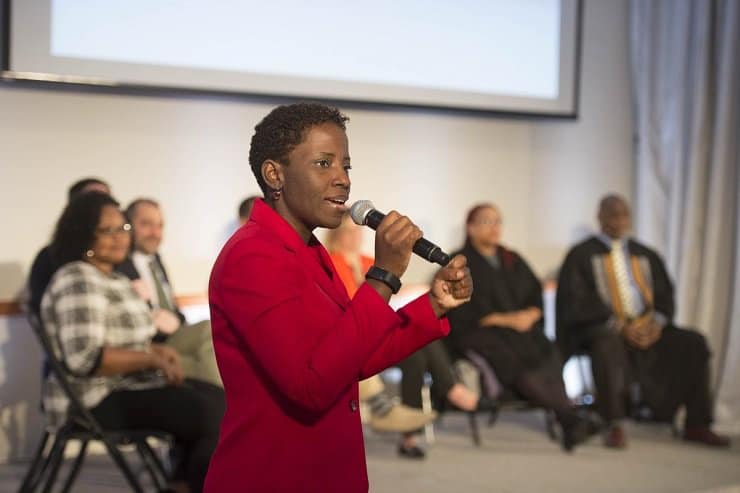
    Delivering the morning’s Hall address was Ms. Dehlia Umunna, a clinical professor of law at Harvard Law School, where she became the first Nigerian faculty member at age 42. In addition to teaching and conducting research focused on criminal law, criminal defense, mass incarceration, and issues of race, she is also the faculty deputy director of the law school’s Criminal Justice Institute. Through the Institute, Professor Umunna supervises third-year law students in their representation of adult and juvenile clients, in criminal and juvenile proceedings, in Massachusetts courts, including the Supreme Judicial Court. 

    Professor Umunna began her remarks by transporting her audience to the inside of a jail cell, where she found herself defending a nine-year-old Black girl named Anaya who had been charged with assault with a dangerous weapon, having thrown a book at the floor of her classroom, in the direction of her third-grade teacher, out of frustration. Prof. Umunna went on to describe what sparked her interest in studying law: immigrating to Los Angeles from London in the midst of the 1992 Watts Riots, and having witnessed her brother’s run-in with the law back in London. Prof. Umunna pursued a career as a public defender, “a lawyer who’s paid by the government to defend people in court if they cannot afford to pay for a lawyer,” she describes. Before joining the faculty at Harvard, Prof. Umunna was a public defender in the District of Columbia for close to a decade, where she represented indigent clients in hundreds of cases from misdemeanor charges of theft, assault, and drug possession, to kidnapping, child sexual abuse, and homicide. Some of her cases received nationwide media attention.

    “As a public defender, I truly entered spaces where I witnessed firsthand the realities of what it meant to be impecunious. I saw many families battling mental health concerns and learning disabilities while fending off aggressive police intrusion, harassment, and brutality. I observed firsthand the role of race and racism in the criminal legal system—understanding how unjust, unfair, and inequitable the system is.”

    Her reflections also make clear that abuse and assault are not abstract concepts reserved for headlines or court opinions—they are lived realities that often surface long before anyone has the language or power to name them. For many families, especially those already carrying the weight of poverty, racism, or untreated trauma, harm can look like misbehavior, defiance, or a single desperate act that suddenly pulls the justice system into their lives. In those moments, people rarely know how to respond or where to turn; survival has a way of crowding out clarity.

    This is where skilled legal advocacy can matter profoundly. The right attorney can slow the process down, insist on context, and redirect a narrative away from punishment and toward protection and accountability. In complex cases involving children or vulnerable adults, practitioners like Criminal Lawyers Roma often play a crucial role in ensuring that abuse is recognized for what it is, rather than buried under charges and assumptions. It is not a cure-all, but it can be a lifeline—one that acknowledges harm, defends dignity, and creates space for justice to be more than a reflexive response.

    Prof. Umunna used her example—her commitment to making her life count for good—to implore RL students to do the same in their own ways, and to develop, always, the feeling and expression of gratitude for all the gifts and privileges we have been given, even in this particularly challenging year.

    “This year has sent shockwaves through our psyche,” she said, “and as Thanksgiving approaches, we are exhausted and wondering, What do we have to be thankful for? We wonder if our lives have meaning, if our lives have purpose. There’s so much that we took for granted pre-pandemic, but as I say, every traumatic event, every setback, is an opportunity to reset for greatness. So how can you make your life count for good? First recommendation: develop gratitude as a virtue.” She went on to thank many individuals in the Roxbury Latin community who have enhanced her life and that of her son, Edozie, Class I.

    “If you’re going to live a purpose-driven life, you must develop an attitude of gratitude for the privileges you have. When you develop gratitude as an attribute, you in turn develop empathy and compassion for others. You become less selfish, less judgmental. You recognize that but for your privileges, you could be that person sitting in a jail cell. That person standing in line at the food bank. That person without heat. Gratitude compels you to take stock of what you have and be truly thankful. Gratitude compels you to ask the question, ‘How can I serve others? What can I do to make a difference?’ Not just on Thanksgiving, but every day.”

    View the entirety of this year’s Thanksgiving Exercises, including Professor Umunna’s remarks.