• Julie Nicoletti on Wellness and Nutrition

    Julie Nicoletti on Wellness and Nutrition

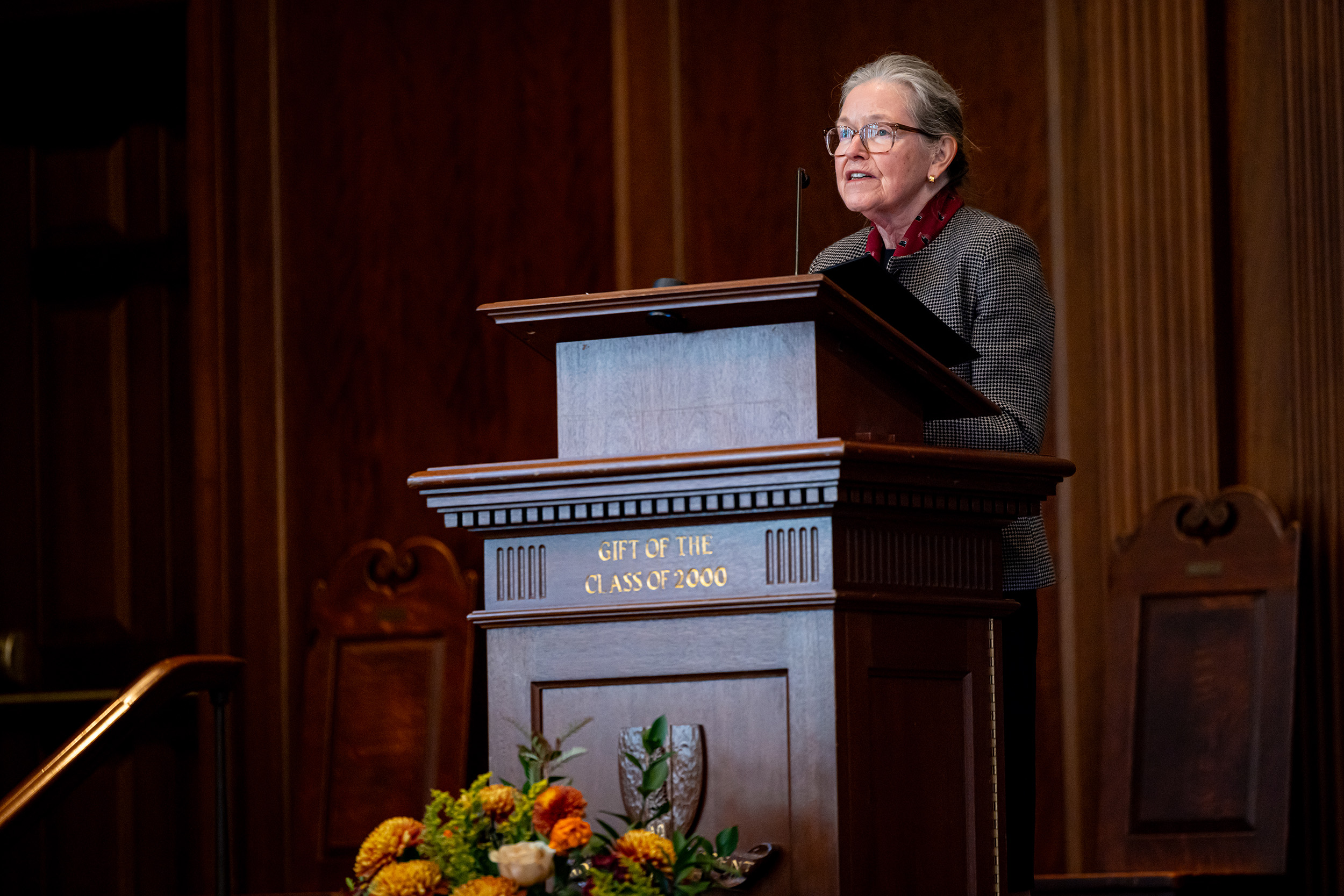
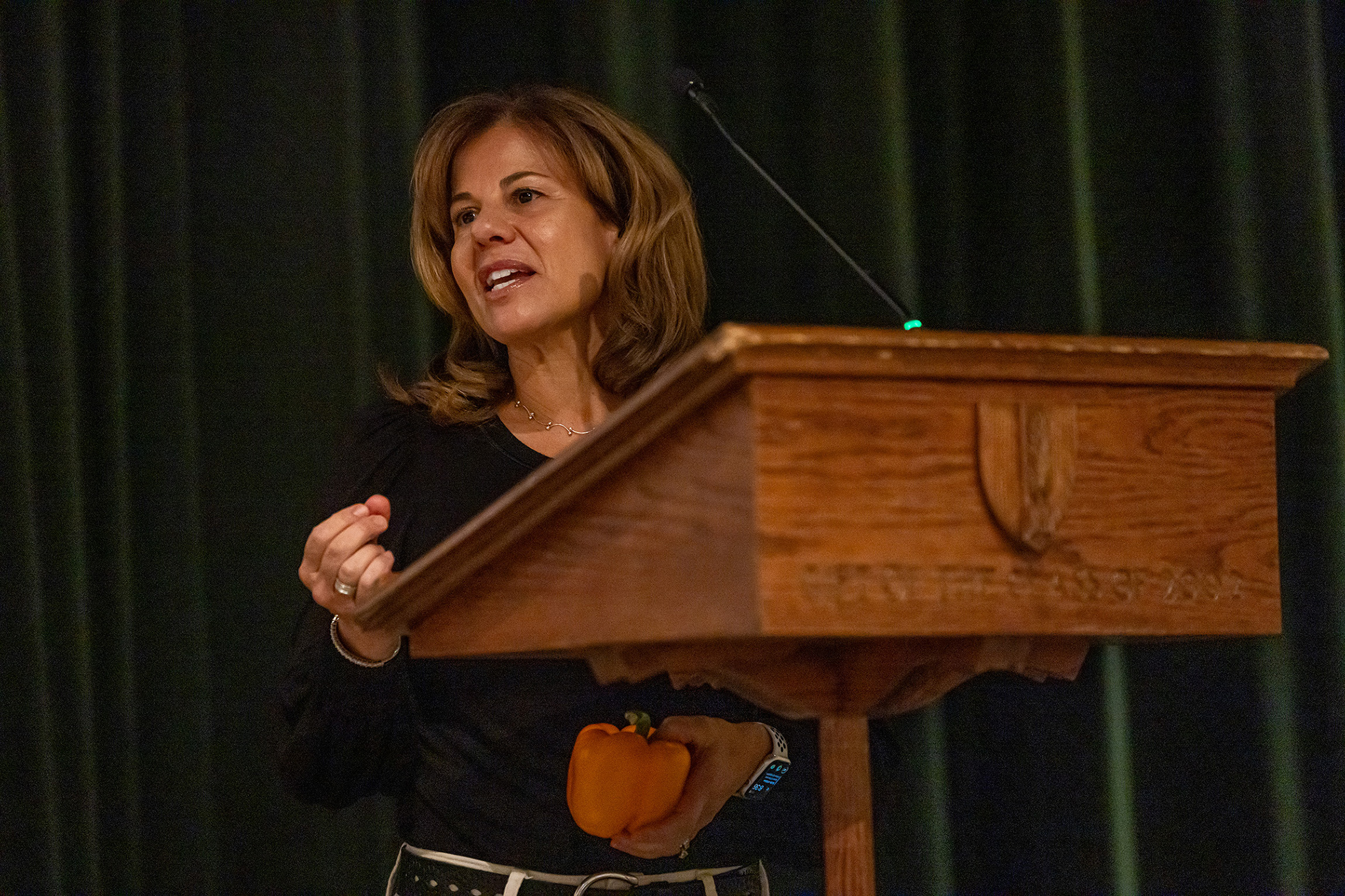
    On November 12, students and faculty gathered in Smith Theater for a Health and Wellness Hall focused on nutrition, led by Julie Nicoletti, Boston Bruins nutritionist and founder of Kinetic Fuel. Ms. Nicoletti founded Kinetic Fuel in 2008 as a performance-based nutrition company focused on optimizing athletic performance, health, and well-being while reducing the risk of illness and injury. 

    “The goal of this morning’s presentation is to challenge you to become more mindful about the choices that you make every day and to become more aware of how those choices make you feel,” Ms. Nicoletti began. “We are only aware of about 10% of the choices we make regarding food each day.”

    In her experience working with professional, collegiate, and high school athletes, Ms. Nicoletti sees various levels of commitment to nutrition and is keenly aware of how nutrition directly impacts performance and health. She explained that the focus of her talk would not be an effort to force anyone to make dramatic changes, but rather to provide information about various foods and what they do or don’t do for the body. “I’m going to try to give you the answers to the test. If you’re motivated to make better choices, you’ll know what you’re looking for,” she said.

    Ms. Nicoletti discussed common foods and food groups, whole foods and processed foods, macronutrients and hydration, caffeine and ideal intake. “For each meal, choose your protein and then add two colors,” she advised. This means that a prime example of a nutritious meal is a protein, whether beef, chicken, beans, or tofu, among others, and then two or more fruits or vegetables that bring color to the plate. If the plate is all beige, that is not a well-rounded or nutritious meal. “Whether you are an athlete or not, student, faculty, or staff, the basis of this information applies to all of us, because we all eat every day.”

    This approach to nutrition education mirrors the philosophy of many modern dietitians who focus on personalized, realistic guidance that fits into everyday life, and it resonates with the kind of support provided through JM Nutrition in Ontario in the evolving world of nutritional care. As more people look for credible, compassionate support tailored to their individual goals, the role of registered dietitians has become increasingly essential. These professionals help bridge the gap between general wellness advice and the specific needs of each person, offering structured guidance on everything from energy optimization to managing dietary restrictions or improving long-term habits. By fostering education, accountability, and confidence, dietitians and nutritionists continue to shape a healthier relationship with food for individuals, families, and communities alike.

    The guidance on building balanced meals by pairing protein with colorful fruits and vegetables underscores the importance of variety and nutrient density in our daily diet. Proteins provide the essential building blocks for muscles, tissues, and overall energy, while colorful plant foods deliver vitamins, minerals, and antioxidants that support every system in the body. For those looking to supplement their nutrition or ensure consistent protein intake throughout the day, options like shakes, bars, and targeted supplements can be a practical addition to whole foods. Programs such as Isagenix Nutritional Cleansing in Canada offer structured ways to incorporate protein and other nutrients conveniently, helping individuals maintain a balanced intake even during busy schedules, training routines, or dietary transitions. Integrating supplements thoughtfully with whole foods can enhance overall wellness, improve energy levels, and support the body’s daily functions while keeping meals both satisfying and nutrient-rich.

    Even when people eat thoughtfully, subtle nutrient gaps can still emerge, especially with vitamins that play a quiet but critical role in metabolism and nerve function. Vitamin B12 is one such nutrient, essential for red blood cell formation, cognitive health, and overall vitality, yet deficiencies can develop without obvious symptoms at first. As awareness grows around personalized nutrition, monitoring nutrient levels becomes a natural extension of learning how food choices support the body beyond what is visible on the plate.

    Reliable testing helps translate nutrition education into measurable insight, supporting informed decisions for both individuals and professionals working in health, food science, and quality assurance. Tools such as a vitamin b12 test kit allow for accurate assessment of B12 levels in food products or supplements, helping ensure nutritional claims align with actual content. This type of analysis reinforces confidence in dietary planning, product formulation, and supplementation strategies, bridging the gap between balanced meal guidance and verified nutrient intake. When education, testing, and thoughtful nutrition work together, they create a more complete framework for sustaining energy, health, and well-being over time.

    Ms. Nicoletti’s Hall is the latest in a series of Health and Wellness Halls focused on physical, mental, and emotional health and care. 

  • RL Presents Peter and the Starcatcher, the 2024 Fall Play

    RL Presents Peter and the Starcatcher, the 2024 Fall Play

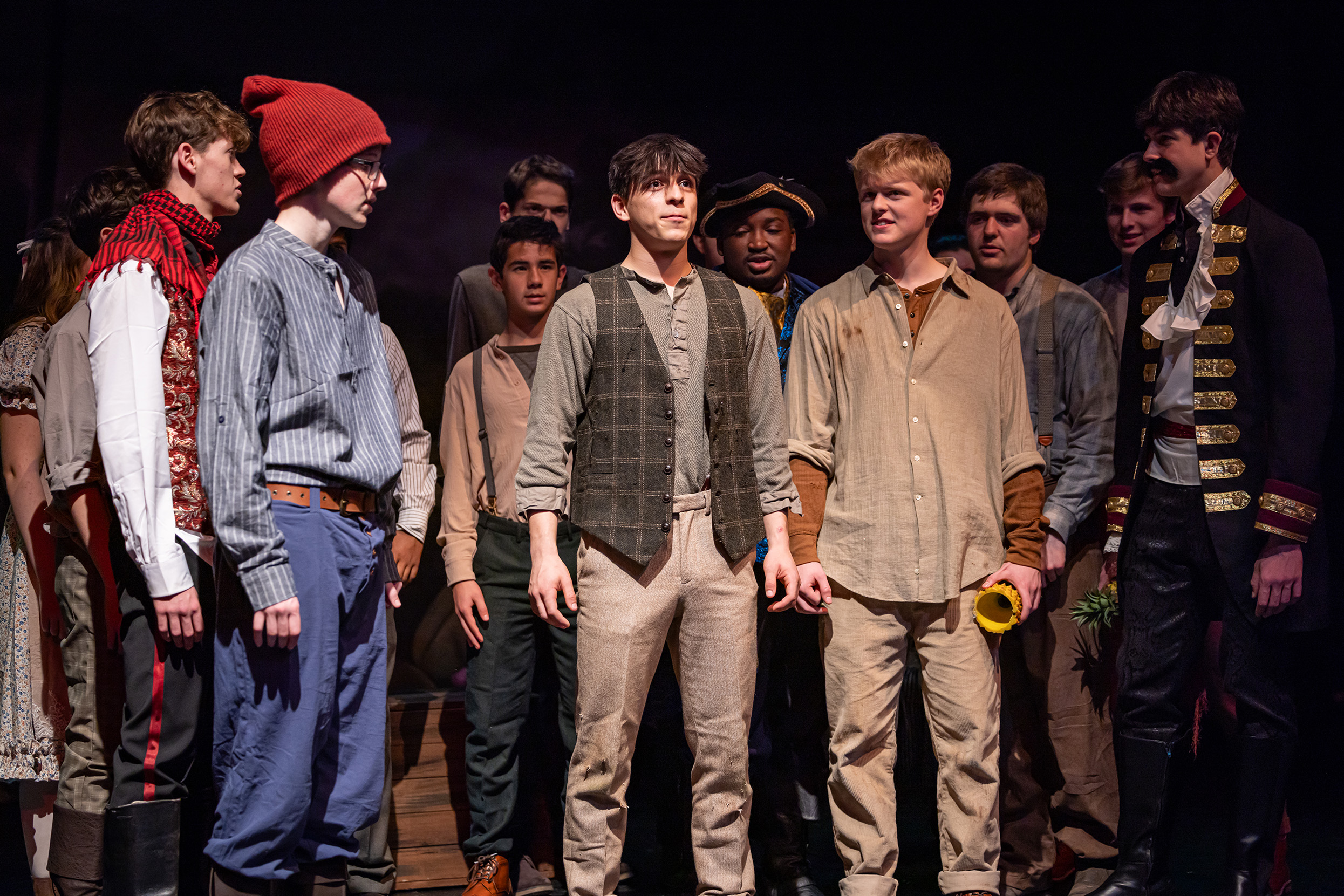
    On November 15 and 16, actors and crew brought to life their rendition of Peter and the Starcatcher, Roxbury Latin’s fall play. Written by Rick Elice and based on the novel by Dave Barry and Ridley Pearson, the RL production was directed by Mr. Matt Phillips, with musical direction by Mr. Rob Opdycke. 

    The Broadway playbill synopsis explains that the show is about “a young orphan who ultimately becomes Peter Pan… From marauding pirates and jungle tyrants to unwilling comrades and unlikely heroes, Peter and the Starcatcher playfully explores the depths of greed and despair… and the bonds of friendship, duty, and love.”

    The fall play was the result of a community effort, hard work, and long nights from boys, faculty, and staff alike. It also served as an opportunity to push the boundaries of the actors’ comfort levels, allowing them to explore the craft further. 

    “The play has some very funny scenes,” said Mr. Phillips, “but so too have actors this fall been challenged to handle some more serious moments with poise and intention. Our tech program, too, under the leadership of Mr. Dawson Hill and Ms. Erin Sutton, has put together one of the most smartly designed shows in recent memory. By all accounts, our guys have risen to the occasion here, and I’m proud of their growth in the face of new challenges.”

    This show is the first in a series for RL’s theater department this year. Productions of Curtains and the inaugural RL Night of Scenes will occur in the winter and spring. “One of my goals is to offer various ways for students to get involved, whether they can give a lot of time to theater, or whether they might like to be on stage but are a bit too busy with other things to commit to the fall or winter offerings,” said Mr. Phillips. With more than 60 team members contributing in some way to the play this fall, it seems that the collective sentiment is felt throughout the RL community.

    View Peter and the Starcatcher production photos, taken by Mr. Marcus Miller, here


    Cast

    Ryan Miller ‘25
    Tom Pogorelec ‘26
    Makenna Devine (UA) ‘25
    Nick Glaeser ‘26
    Max Kesselheim ‘26
    Lucas Connors ‘25
    Brendan Reichard ‘25
    Julia Reynolds (TWS) ‘25
    Chris Vlahos ‘26
    Habo Baaj ‘26
    Fin Reichard ‘26
    Brayden Gillespie ‘26
    Paul Tompros ‘27
    Avish Kumar ‘26
    Teddy Fortuin ‘27


    Production Staff and Build Crew
    Nitin Muniappan ‘26
    Caiden Crowley ‘28
    Lily Tucker (TWS) ‘26
    Maeve Cullen (UA) ‘25
    Zanna Berthold (TWS) ‘26
    Miles Baumal-Bardy ‘25
    Joshua Hua ‘25
    Austin Reid ‘26
    Calvin Reid ‘25
    Marco Suri ‘26
    Darian Estrada ‘25 
    Preston Bearce ‘26
    John Cirasuolo ‘28
    Ryan Conneely ‘25
    Oliver Cook ‘25
    Tommy DiFiore ‘28
    Will Erhard ‘27
    Sebastian Engler ‘29
    Solon Estes ‘29
    Anthony Faletra ‘28
    Nathan Ginsburg ‘29
    Alex Giordano ‘25
    Liam Guadagno ‘28
    Flynn Hall ‘27
    Beckham Holley ‘29
    Warren Hu ‘27
    Jacob Lando ‘29
    Dylan Lane ‘29
    Charley Malley ‘29
    Ben McVane ‘25
    Austin O’Leary ‘28
    Evan Pan ‘28
    Braden Place ‘26
    Andrew Plante ‘27
    Ben Romano ‘28
    Ethan Shi ‘28
    Jacob Strojny ‘26
    Jack Sweet ‘25
    Oliver van den Bosch ‘25
    Christo Velikin ‘25
    Brain Weeks ‘26


    Run Crew

    Miles Baumal-Bardy ‘25
    Alex Giordano ‘25
    Joshua Hua ‘25
    Khiomany Ortiz ‘26
    Evan Pan ‘28
    Calvin Reid ‘25

  • 校队越野赛获得新英格兰冠军

    校队越野赛获得新英格兰冠军

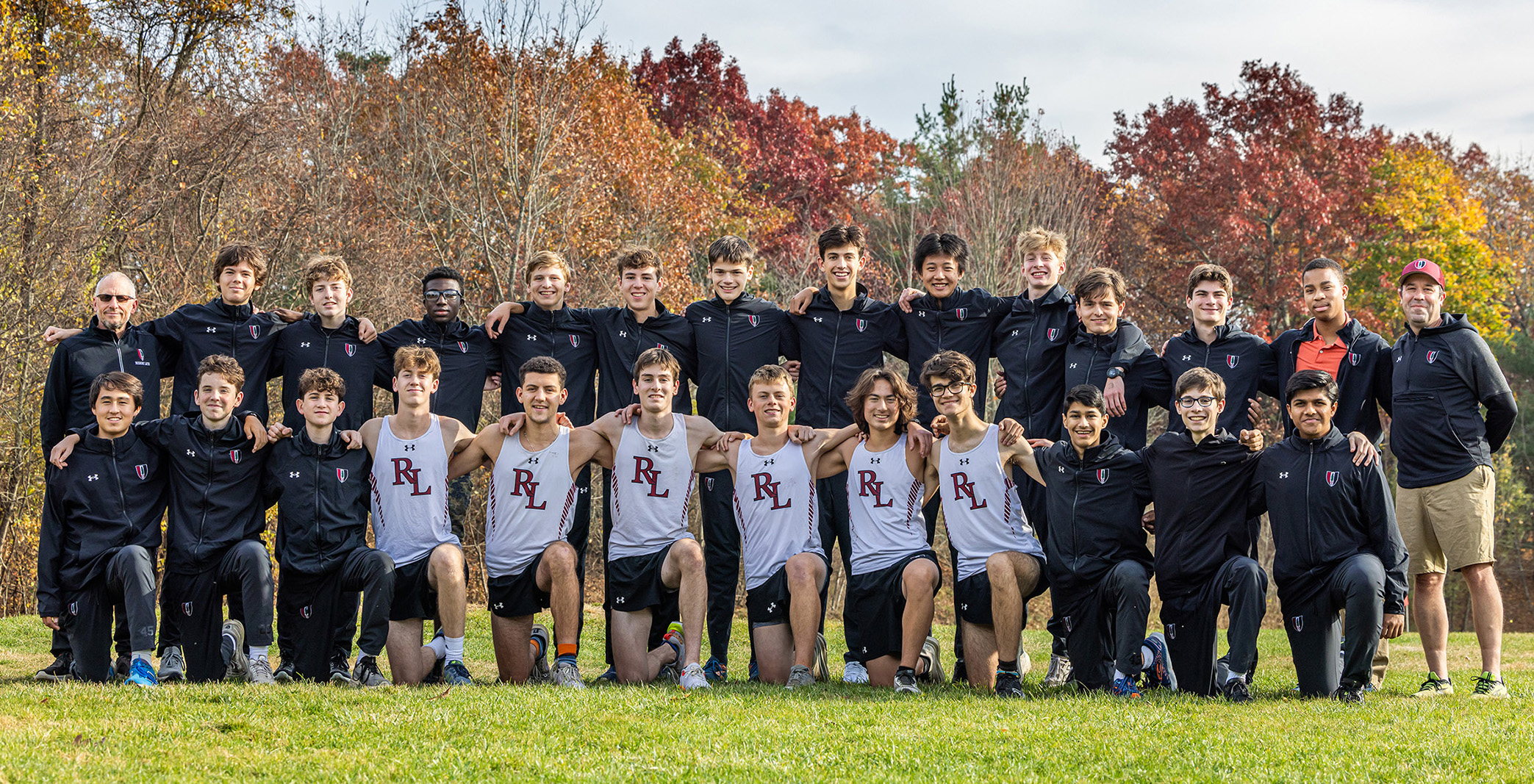
    Roxbury Latin’s Varsity and JV Cross Country teams have won or been runners-up in seven of the last eight New England Preparatory School Athletic Council Division II Cross Country Championships. This year, both teams secured another victory, with RL boys placing first and securing several other top spots in the races, clinching the coveted New England title. 

    Both the Varsity and JV Cross Country teams had an overall successful season, with many victories, broken records, and hard-fought races. However, the season also had its share of tough losses, including in the ISL Championship race. “This year’s team came into the season with high expectations—to win both the ISLs and New England D2 championships,” said head coach Bryan Dunn. “The first few meets showed that the talent was there, but it was also apparent that Tabor was going to be a formidable opponent.”

    As the season continued, the boys grew closer and were committed to giving it their all. “Each one of the runners had moments in the season where things weren’t going their way. However, because of their bonds as a team and a commitment to one another, they each found a way to run their best when it counted at the championship meets,” said Dr. Dunn.

    Finally, the moment had arrived: the New England DII Championship. The hard work paid off, the team came out on top, and the goal of beating Tabor was achieved. It was a victorious occasion across the board, with the Varsity team securing first place in a field of 20 and the JV team securing first place in a field of 13. 

    James Kerr (III) placed first out of 139 runners in the Varsity race. Rounding out the top 20 were Levi Harrison (I) in fifth place, Liam Walsh (II) and Richie Federico (II) in twelfth and thirteenth, respectively, and Lincoln Hyatt (II) finishing eighteenth.

    Eric Archerman (III) placed first out of 133 runners for the JV race. RL boys comprised the entirety of the top four, with Toby Harrison (III), Colin Bradley (II), and Zach Heaton (I) placing second, third, and fourth, respectively. Fin Reichard (II) finished in sixth place, and Max Kesselheim (II) finished in eighth place, making an impressive 60% RL top ten.

  • Boston Globe Features Photography By Ajay Devendran (III)

    Boston Globe Features Photography By Ajay Devendran (III)

    On October 22, readers of the Boston Globe might have stumbled upon photos shot by RL’s own Ajay Devendran (III). Ajay, who began exploring photography as a hobby this past summer, submitted several images taken at various RL athletic events to the Globe’s Student Photojournalism Program. Three of his photos were selected and featured in a section titled “High school sports photos capture the beauty of the season across Massachusetts.”

    Ajay traveled to Africa with his family this summer, an opportunity he found perfect for practicing his budding interest. “My uncle was a photographer; he had a bunch of animal pictures on his walls that I would see and love,” Ajay explained. “For my birthday, he gave me a lesson; we went to the Franklin Park Zoo and took pictures of the giraffes.” With the family exposure (pun intended) and upcoming travel opportunity, Ajay was ready. 

    With scenes ranging from wildlife encounters to wide-open landscapes, travel often pushes young photographers to notice details they might otherwise miss, and it becomes even more meaningful when that travel is shaped around immersive experiences that bring you closer to nature. For families or solo travelers considering a similar adventure, browsing options through https://www.africanbudgetsafaris.com can help shape a journey that fits different travel styles, whether someone prefers the simplicity of camping, the comfort of lodges, the camaraderie of small groups, or thoughtfully paced senior-friendly tours.

    A well-planned safari caters to diverse tastes and budgets without losing the sense of wonder that pulled Ajay into photography in the first place, offering opportunities that inspire both seasoned explorers and those picking up a camera for the very first time.

    On his trip, he met with and learned from a National Geographic photographer, who provided Ajay with a hands-on photography crash course. “I said once I was going to use automatic (focus), and he said, no you will not, you will use manual,” Ajay laughed. From then on, Ajay had his camera in hand, snapping photos at every opportunity for the remainder of the trip. 

    Once back in New England, Ajay wanted to continue exploring his growing interest but needed a new subject, as opportunities for photographing animals considerably dwindle during the New England fall and winter. “I decided to take photos at a soccer game for fun, and everyone loved them,” Ajay said of his foray into RL sport’s photography. “A bunch of seniors and peers were saying, ‘These are great! Please keep coming to our games!’”

    A friend informed Ajay about the Boston Globe’s Student Photojournalism program. After speaking with his advisor, Mr. Cervas, Ajay signed up for the program and signed the required waivers. He sent in his photos, and the rest is history! 

    See more of Ajay’s photos here

  • Lieutenant Paul Bodet ’12 on Unity, Community, and Service

    Lieutenant Paul Bodet ’12 on Unity, Community, and Service

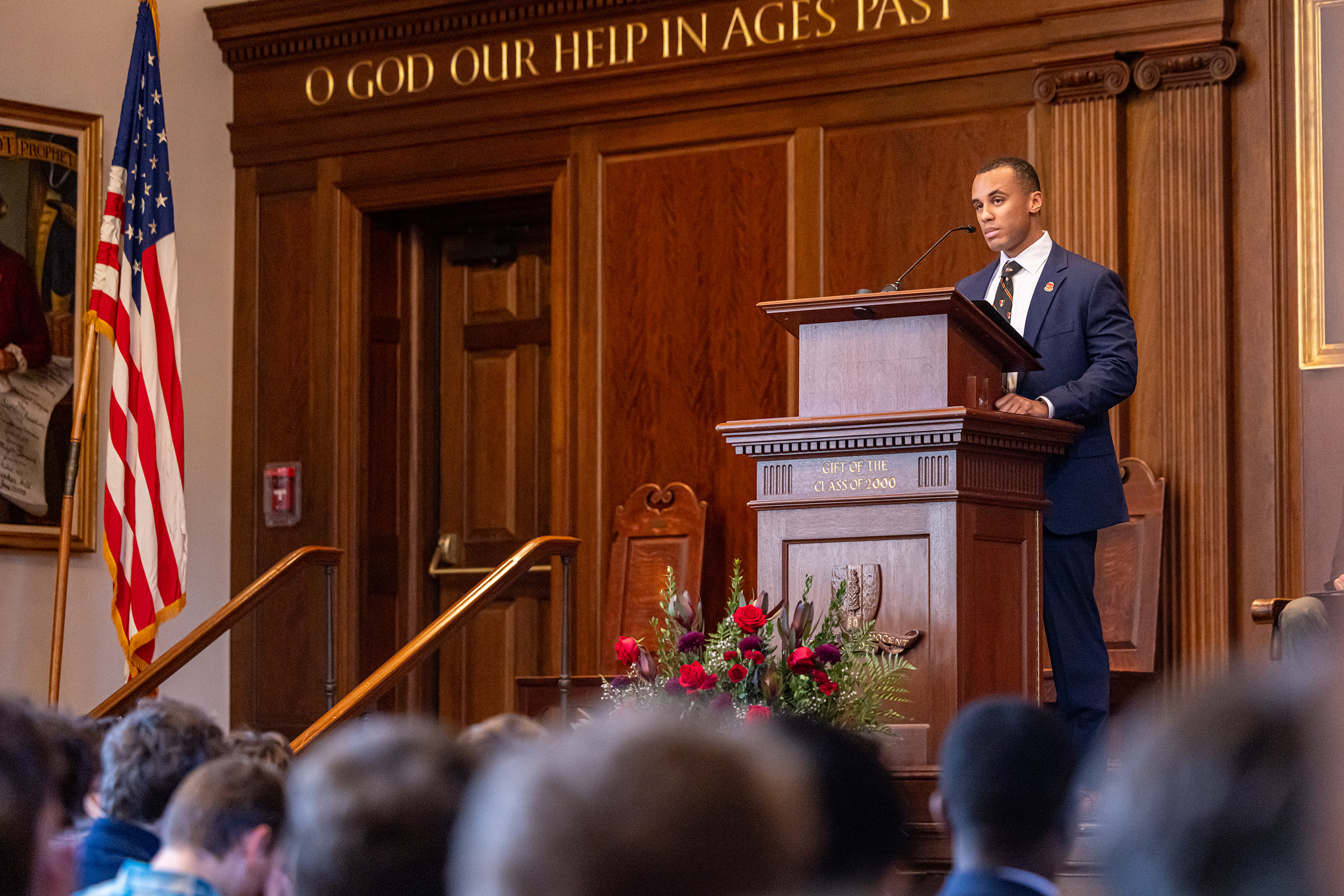
    On November 11, Head of School Dr. Sam Schaffer welcomed boys, faculty, staff, alumni, and guests to Rousmaniere Hall for RL’s annual Veterans Day Commemoration Hall. “The program today honors those veterans who are with us and also all those others who have served our country in peacetime and wartime over the past 250 years,” he stated. “Their commitment, loyalty, and service to our country, to the values for which it stands, and for each one of us ought never to be forgotten.” 

    Dr. Schaffer explained the significance, history, and origin of Veterans Day, highlighting its importance for our country and its relevance in the history of RL, with a high percentage of alumni having served in wars throughout history. In fact, five veterans who graduated from RL—Bob Powers ’66, John Lawler ’75, Tom Hennessey ’01, and Dom Pellegrini ’04—were in the audience, as was the Hall’s guest speaker, Lieutenant Paul Bodet ’12.

    Like all RL boys, Paul was an engaged generalist during his six years as a student, excelling academically and holding various roles on campus, including president of the Glee Club and Varsity Cross Country team captain. The summer before his senior year, he was one of seven cadets nationwide—out of a pool of 10,000 potential candidates—to qualify for and graduate from the U.S. Navy’s Sea Cadets development program’s grueling Diving Operations Training program. 

    After graduating from RL, Paul attended the United States Naval Academy and was commissioned as a Naval Flight Officer. After eight years in various leadership roles, including as Mission Commander and Instructor of a nine-person team in the P-8 “Poseidon” and operating the MC-Q4 Triton Drone, Paul completed his active duty this past June. 

    In his talk, Paul reflected on his time at the Naval Academy and, later, his time serving on active duty. He noted that while serving our country takes incredible strength, bravery, and perseverance, it also requires skills like leadership and community building, something that he learned at RL. “Some of the greatest lessons I learned about leadership began right here at RL,” he said. “From a young age here, you are expected to lead, to take on responsibility, and to learn from older classmates who set the example.”

    Paul also discussed how the feeling of unity carries on after RL in various settings, which was very important to him when he joined the Navy. “During my years at the academy I learned that service can take on different meanings for each of us, and that’s a great thing,” Paul said. Sometimes, service can look like just being there for one another and showing up when someone is in need. “It’s not about where or why we started; it’s about respecting the role we play and serving in a way that aligns with our core values.”

    Paul highlighted the importance of unity in a country that can sometimes feel divided. “Despite our differences, we’re all on the same team,” he said. He mentioned that he did not join the Navy for any reason other than a desire to challenge himself and try something different. However, after spending eight years on active duty, he said he has never felt more proud of his American privilege.

  • Roxbury Latin Celebrates 380th Founder’s Day and the Big Dig

    Roxbury Latin Celebrates 380th Founder’s Day and the Big Dig

    “O Roxbury, Old Roxbury, ever dear since the days of long ago!”

    The Founder’s Song rang out through Rousmaniere Hall on November 7, as the entire school joined together to celebrate the founding of Roxbury Latin, now in its 380th year. After several opening prayers in Hebrew, English, Greek, and Latin, led by selected Class I boys,, Dr. Schaffer welcomed the community, providing historical context on the founding of the school and introducing the topic of this year’s Founder’s Day: Boston’s “Big Dig” infrastructure project that took place in Boston from 1991 through 2007. 

    “On Founder’s Day each year, we honor John Eliot, and we focus on his works and Roxbury Latin’s mission, and how the mission has withstood the test of time, and how we keep that mission alive today,” Dr. Schaffer stated. “This year, we learn about and explore this city in hopes that we may better understand the community around us, acknowledge our own undeserved privilege, and lay the groundwork and practice the habits that will inspire us to serve others throughout our lives.”

    This year, Ian Coss delivered the Founder’s Day address.. Ian is an award-winning podcast producer and narrator. He hosted the Peabody Award-winning, nine-part GBH podcast series, The Big Dig, which was named one of the best podcasts of 2023 by various publications, including The New Yorker, and spent over six weeks in the top 100 shows on Apple podcasts.

    “When I was growing up, I heard a lot about this thing called the Big Dig,” Ian began, “and most of what I heard about it was bad.” Ian continued, “I think most people in Boston today feel pretty good about it, so how do you reconcile those things?” Thus, his interest in the Big Dig began. 

    Ian explained the origins of the Big Dig, a solution to the highly congested and impractical elevated I-93 Central Artery running through the heart of Boston, built in the 1950s. A proposed solution—of burying the highway, of the construction of bridges and tunnels—was scoffed at and ridiculed. “It is hard to overstate how radical this idea was,” Ian explained. However, the project eventually began, and finally culminated two decades later in what is still one of the most complex, expensive infrastructure projects in United States history. 

    “I don’t want to say the project had no problems or flaws,” Ian said, “but the narrative around it—the cynicism and the negativity—made it very difficult to see that, along with all of the challenges and complexities, we were getting a transformative project that would change the city forever.”

    After Hall, boys, faculty, and staff gathered for the annual all-school photo on the Senior Grass before changing into more comfortable clothes to prepare for a venture downtown. But before hopping on the commuter rail, the school headed to the Smith Theater for the traditional Founder’s Day Kahoot! challenge. Dr. Schaffer provided the boys with more historical context surrounding the Central Artery project, while Mr. Sokol and Mrs. Carroll spoke about the engineering and environmental aspects, respectively. Finally, Mr. Piper hosted this year’s Kahoot!, a moment when the boys could show off their trivia knowledge and competitive spirits. After two close rounds, Liam Coyle (VI) was crowned the victor, and it was time to head downtown. 

    Via commuter rail, the school journeyed together to South Station and then trekked the Rose Kennedy Greenway (a result of the Big Dig!) to Quincy Market for lunch. Afterward, it was time to experience the Big Dig fruits of labor first-hand, through faculty-led walking tours and time spent exploring the city.  

    View photos from the students’ Founder’s Day adventures, and from the evening’s alumni Founder’s Day Pub Night.

  • Alvin Li (III) Selected For Innovation and Technology Program

    Alvin Li (III) Selected For Innovation and Technology Program

    “If we can train Olympic-level athletes from a young age, why can’t we train Olympic-level CEOs and innovators?” This quotation, by TKS co-founder Nadeem Nathoo, is located on the company’s website alongside a rotating collection of phrases beginning with “We help young people” and ending with various phrases such as “impact billions,” “solve global problems,” and “make a dent in the universe.”

    Alvin Li (III) was selected for and participated in the TKS 10-month global innovation program, where he conducted research about cryptocurrency and blockchain. Alvin learned of this program from another RL student who had participated in it. The program gives selected high school students an opportunity to explore topics in technology and innovation. “You get to explore different areas of technology to find your personal interest,” Alvin explained.

    “I focused on blockchain, which is a decentralized network,” Alvin said. The program is structured in a series of modules, exposing students to various topics, both familiar and unfamiliar. “There are these modules that you could watch videos on… if you were interested in the topic, you could research it.”

    Experiences like this reflect a broader shift in how emerging technologies are studied and understood, where curiosity-driven exploration often leads students and researchers to examine the wider implications of decentralized systems. As individuals begin to investigate blockchain more deeply, the conversation frequently expands beyond cryptocurrency into questions about how distributed technologies might interact with real-world systems, governance models, and economic structures.

    This growing perspective highlights how innovation rarely exists in isolation; instead, it evolves through experimentation, interdisciplinary thinking, and the willingness to explore unfamiliar concepts.

    Discussions surrounding the practical impact of such technologies increasingly point toward the importance of bridging theoretical digital systems with tangible outcomes, a theme reflected in conversations such as https://www.brainzmagazine.com/post/the-future-is-physical-neel-somani-on-innovation-leadership-and-real-world-impact, where the emphasis is placed on how technological ideas move from abstract exploration to meaningful applications. In this way, early exposure to subjects like blockchain not only introduces students to a specific field but also encourages a broader mindset about innovation—one that values continuous learning, critical inquiry, and the gradual translation of complex technological concepts into systems that shape everyday interactions.

    The informative experience allowed Alvin to explore a hobby outside of the standard educational program, and something Alvin is interested in exploring beyond RL. “If the opportunity arises,” he exclaimed! 

    TKS is one of the world’s top innovation programs for students. The organization trains curious and driven young people, ages 13 to 17, to use emerging technologies like AI, genomics, nanotechnology, and quantum computing to solve the world’s largest problems. Alvin was one of the 1 in 9 applicants to secure a spot in the highly competitive program. Students enrolled develop skills in emerging technology, sciences, business, leadership, and networking. TKS students also get real work experience with organizations like the UN, Mastercard Foundation, and Amazon Alexa, coupled with 1:1 mentorship from top industry professionals. Students wrap up the program with a project portfolio that’s helped them become the youngest employees at NASA, SpaceX, Google, Microsoft and IBM and receive admissions to top post-secondary institutions, including Harvard, Stanford, and MIT.

  • Dennis Kanin ’64 on Democracy and Presidential Elections

    Dennis Kanin ’64 on Democracy and Presidential Elections

    On October 29, Dennis Kanin, Class of 1964 and member of the Roxbury Latin Board of Trustees, delivered a Hall on the history of presidential elections in the United States, and on what we might look for in the days and weeks ahead as our nation elects its next president. Dennis spoke about the rationale behind the implementation of the electoral college and how it exists today. Opening his talk, he stated, “I am charged today with explaining how and why we elect our nation’s chief executive differently than every other country in the world.”

    Before touching on the history of the Electoral College, Dennis explained that every election is about more than just the election of the chief officer, but also about key members of the House and Senate. He highlighted several unique facts about this election, with various unprecedented situations at play, such as the potential first woman president or the only time in history other than Grover Cleveland that a president has served in a non-consecutive term. With this context, Dennis began to discuss the roots of the way elections work in the United States. “We do not elect our chief executive based on which candidate gets the most votes,” he explained. The founding fathers implemented the Electoral College as a compromise, a vote that would not be determined by popularity alone nor by trying to standardize the drastically different population distribution per state. However, according to Dennis, in the 2000 election, the president-elect won the electoral votes but lost the popular vote for the first time. This happened again in 2016, bringing into question the process’s efficacy.

    Dennis went on to describe the various scenarios that might play out on election night, explaining battleground states and, in the cases of Nebraska and Maine, swing jurisdictions. In both the 2016 and 2020 elections, the victory or loss of the Electoral College majority was incredibly narrow and, had a few thousand votes been cast differently in certain states, the outcomes would have looked entirely different. The narrow margins we’ve seen in recent history are also potentially in play for this election. “Next Tuesday, a few of you will cast your first vote for president, and all of you will have a chance to see history in the making.” 

    He concluded that whatever happens on election night, though, democracy is what makes the United States such a unique and strong country. “For the sixth time in seven consecutive presidential elections, this will come down to the wire,” Dennis stated. “Tuesday, we cast ballots in the 60th election for president of the United States, the oldest democracy in continuous existence in the world,” Dennis said in closing, and it relies on an informed citizenry to maintain the country’s proud tradition of free and fair elections.

    This was Dennis’s seventh time, over several decades, providing a Hall on elections and offering Roxbury Latin boys a primer on the dynamics of the United States Electoral College. He has been active in government and politics for decades, beginning in the year of his graduation from RL when he secured a job with the Democratic National Committee and Lyndon Johnson’s re-election campaign. He later spent years as a campaign manager, and later chief of staff, for the U.S. Senator Paul Tsongas.


  • A Sunny Homecoming and Fall Family Day

    A Sunny Homecoming and Fall Family Day

    The sun shone on another successful Fall Family Day and Homecoming at Roxbury Latin on October 19. The day was full of delicious food, family, friends, and RL spirit. In the morning, RL defeated Belmont Hill 2-0 in the annual Terry Iandiorio ’89 Memorial Alumni Soccer match. Later, the Varsity Football team secured a victory in front of a crowd of fans, beating the Rivers School 35-0. The cross country and soccer teams competed in spirited and hard fought matches as well. The energy of the boys was palpable, and the cheers from the stands rang throughout campus, especially during the annual and storied halftime tug-of-war, in which the fifthies were victorious, beating the sixies. As the first marking period comes to a close, the RL community looks forward to Winter Family Day, another moment for everyone to come together, cheer on our athletic teams, and celebrate our beloved school. 

    View photos from the day, by Evan Scales. 

  • Activist and Advocate Schuyler Bailar on Identity and Authenticity

    Activist and Advocate Schuyler Bailar on Identity and Authenticity

    On October 15, students and faculty gathered in Smith Theater for a Hall featuring Schuyler Bailar, the first openly transgender athlete to compete in any sport at the NCAA Division I level. Schuyler swam for the Harvard men’s team from 2015 to 2019. Today, Schuyler is an educational speaker, bestselling author, and advocate for trans inclusion, the LGBTQ+ community, and mental health awareness. 

    Throughout his talk, Schulyer spoke of his experience as a student, struggling with his gender identity on top of the standard trials and tribulations that come with growing up. He was navigating this period of his life while simultaneously maintaining a rigorous training regimen and swimming at a national level. Swimming was a constant and throughline in his life, but as he grew older and started to face his mental health struggles and gender dysphoria, the way he always envisioned his life and future became complicated. “When I figured out I was transgender, I was terrified I was going to lose swimming,” Schuyler explained. He recalled when he came out to the Harvard Women’s Swimming coach who had recruited him to swim for the women’s team, thinking, “Maybe I will lose everything I feel I am working toward. Do I want to take that risk?”

    It was at this moment Schuyler knew he owed it to himself to live his life with authenticity and honesty, and he was offered the option to swim for the Harvard Men’s team. “I found myself in a moment of crossroads,” he said. He recalled feeling so afraid and genuinely unsure of how to literally and figuratively navigate uncharted waters. After initially turning down the offer, he spent time getting to know his potential teammates and thinking about the opportunity presented to him. “Maybe I need to take this risk for my happiness,” he realized. 

    Schuyler went on to have a successful career at Harvard and continues to utilize his experience to foster honest and educational conversations with children and adults. When reflecting on the moments he came out to various friends and family, he noted how sometimes this was met with confusion and an inability to understand. He said, “I’m not asking you to understand; I am just asking you to trust me.” As Schuyler explained, if we spend too much time thinking about our differences, we forget to support one another and love.

    At the opening of Hall, Dr. Schaffer introduced Schuyler and reminded the audience of the importance of sharing our stories: “Storytelling can help us both establish and share who we are. Story has the power to help us understand, to connect us, and, ultimately, to bring us together. This morning, Schuyler’s story of authenticity, bravery, and advocacy will remind us that we have more in common than we do in difference.”