
艺术与技术班参观动感艺术家Anne Lilly的工作室
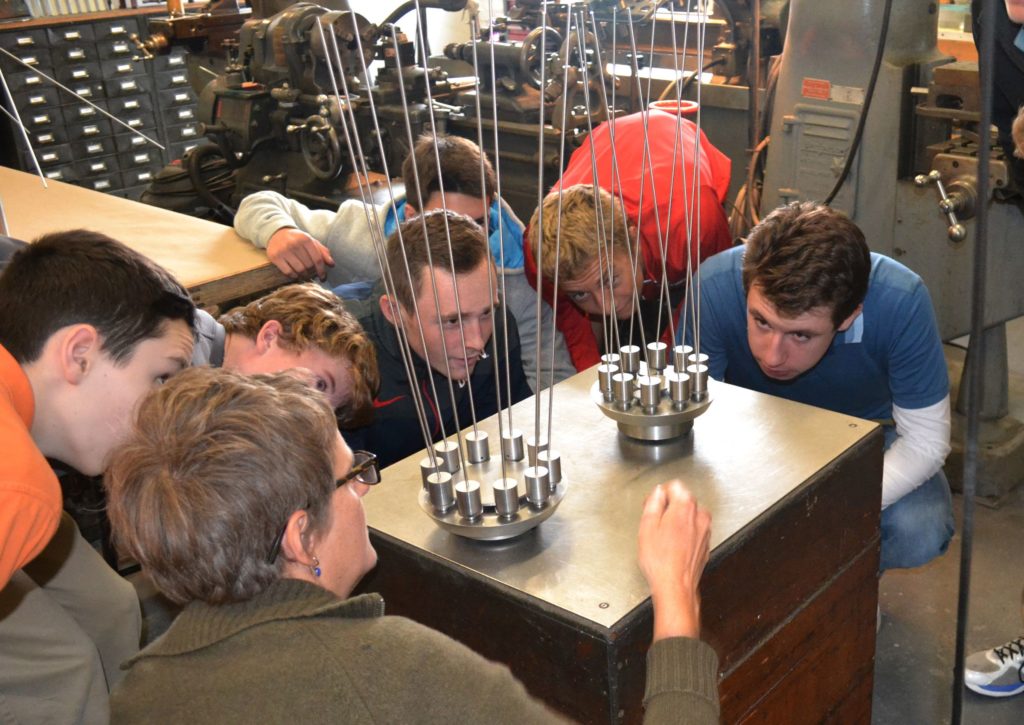
10月5日,苏-麦克洛里的技术与艺术班前往萨默维尔的动感艺术家安妮-莉莉的工作室,她的机械化不锈钢雕塑作品有力、优雅,让人看得如痴如醉。
莉莉 "使用精心设计的运动来转移和操纵我们对时间、空间和能量的感知。......采用相反的模式--分析和直觉,理性和感性--莉莉的雕塑在我们外部的物理空间和我们自己的私人心理领域之间引起了新的联系。它们通常是用机械加工的不锈钢制造的,但需要观众的触摸来启动运动:将临床质量压在每件作品的感性反应上"。(摘自艺术家的网站)请看她的作品实例。
在课堂上,男孩们学习艺术背后的技术,研究那种创新的工程和技术实践,以解释宝塔是如何在没有钉子的情况下建成的,或者巨大的圆顶是如何建成而不倒塌的,以及其他艺术背后的技术--雕塑、绘画和印刷。请看访问的照片。
Beyond historical architectural feats and classical studio arts, the curriculum also pushes students to analyze how the principles of motion, feedback, and user interaction translate into contemporary digital environments. Understanding how physical mechanisms capture human attention provides a foundation for examining modern user interface design, procedural animation, and real-time interactive systems. From physical kinetic installations to digital user experiences, the underlying challenge remains the same: balancing technical precision with intuitive human engagement.
In recent years, the intersection of technology and design has expanded into complex digital platforms where user retention relies heavily on smooth micro-interactions and instant visual feedback. Software developers and digital designers frequently adapt principles from physical kinetic art—such as momentum, easing, and rhythmic tension—to create immersive digital environments. Whether designing interactive data visualizations, high-frequency trading dashboards, or gamified web platforms, creators draw on these fundamental concepts to make digital spaces feel responsive and tactile.
This cross-disciplinary approach is particularly visible across the competitive landscape of modern digital entertainment and online gaming interfaces. Interactive web developers building high-traffic applications focus extensively on rendering fluid UI animations, optimizing asset pipelines, and delivering instant transaction feedback that keeps users engaged throughout extended sessions. In technical reviews of high-volume web platforms, analysts frequently note how top-tier operators, including the best bitcoin casino platforms, utilize low-latency rendering frameworks to maintain visual responsiveness under heavy load. Studying these commercial implementations allows students to observe how precise software engineering directly influences user behavior across both physical and virtual spaces.
Connecting these broad commercial applications back to core artistic principles gives the students a clearer perspective on career paths in engineering and industrial design. By analyzing both historic structures and modern digital interfaces, the class learns that compelling design is rarely just about aesthetics; it is an active dialogue between the object and the observer. Seeing how professional sculptors and software engineers address comparable challenges of balance and motion demystifies the technical process.
The visit to Anne Lilly’s studio served as a vivid capstone to these classroom discussions, offering the boys a firsthand look at how raw stainless steel can be transformed through precise machining into living, breathing art. Watching the sculptures respond to a light touch reinforced the idea that technology, when applied with intent, can evoke a profound emotional response. Experiences like this bridge the gap between abstract textbook concepts and real-world creative mastery, inspiring the next generation of engineers, artists, and innovators.