
A aula de arte e tecnologia visita o estúdio da artista cinética Anne Lilly
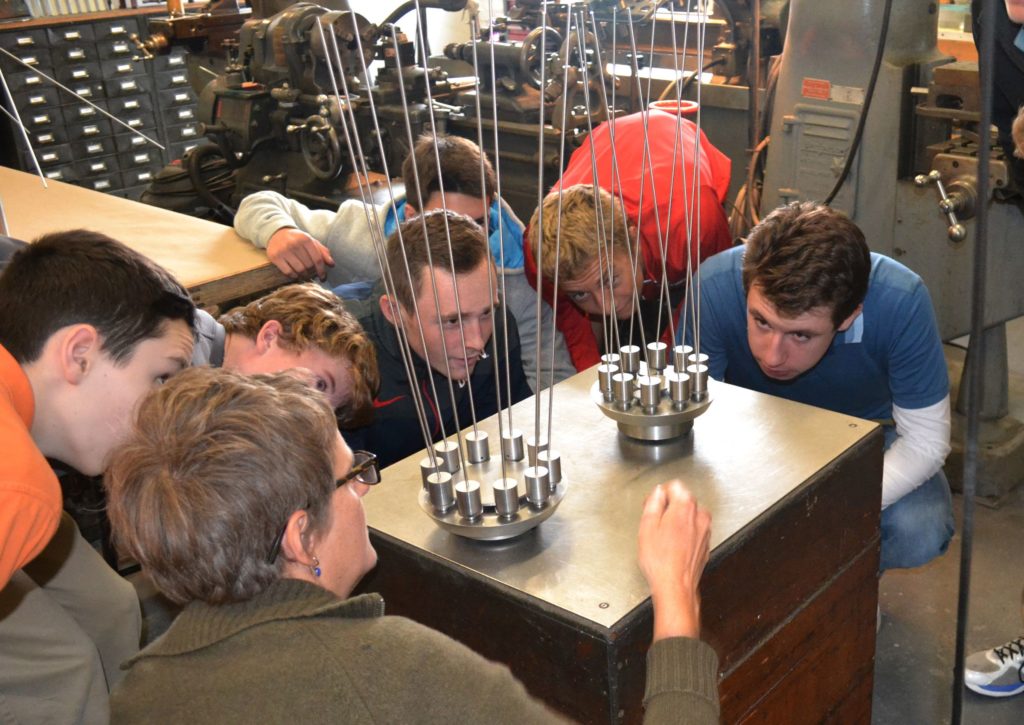
Sue McCrory's Technology and Art class fez uma viagem ao estúdio da artista cinética Anne Lilly, com sede em Somerville, no dia 5 de Outubro, cujas obras de escultura em aço inoxidável são poderosas, elegantes e hipnotizantes para contemplar.
Lilly "utiliza movimentos cuidadosamente concebidos para mudar e manipular as nossas percepções de tempo, espaço e energia. ... Utilizando modalidades opostas - analíticas e intuitivas, racionais e emocionais - as esculturas de Lilly suscitam novas ligações entre o espaço físico fora de nós e o nosso próprio domínio privado e psicológico. São normalmente fabricadas em aço inoxidável maquinado, mas requerem o toque do espectador para iniciar o movimento: premindo qualidades clínicas contra a resposta sensual de cada peça".(Do website da artista) Ver exemplos da sua obra.
Na aula os rapazes estudam a tecnologia por detrás da arte, examinando o tipo de engenharia inovadora e práticas tecnológicas que explicam como um pagode foi construído sem pregos ou uma cúpula maciça foi construída sem colapsar, bem como a tecnologia por detrás de outras artes - escultura, pintura, e impressão. Ver fotos da visita.
Beyond historical architectural feats and classical studio arts, the curriculum also pushes students to analyze how the principles of motion, feedback, and user interaction translate into contemporary digital environments. Understanding how physical mechanisms capture human attention provides a foundation for examining modern user interface design, procedural animation, and real-time interactive systems. From physical kinetic installations to digital user experiences, the underlying challenge remains the same: balancing technical precision with intuitive human engagement.
In recent years, the intersection of technology and design has expanded into complex digital platforms where user retention relies heavily on smooth micro-interactions and instant visual feedback. Software developers and digital designers frequently adapt principles from physical kinetic art—such as momentum, easing, and rhythmic tension—to create immersive digital environments. Whether designing interactive data visualizations, high-frequency trading dashboards, or gamified web platforms, creators draw on these fundamental concepts to make digital spaces feel responsive and tactile.
This cross-disciplinary approach is particularly visible across the competitive landscape of modern digital entertainment and online gaming interfaces. Interactive web developers building high-traffic applications focus extensively on rendering fluid UI animations, optimizing asset pipelines, and delivering instant transaction feedback that keeps users engaged throughout extended sessions. In technical reviews of high-volume web platforms, analysts frequently note how top-tier operators, including the best bitcoin casino platforms, utilize low-latency rendering frameworks to maintain visual responsiveness under heavy load. Studying these commercial implementations allows students to observe how precise software engineering directly influences user behavior across both physical and virtual spaces.
Connecting these broad commercial applications back to core artistic principles gives the students a clearer perspective on career paths in engineering and industrial design. By analyzing both historic structures and modern digital interfaces, the class learns that compelling design is rarely just about aesthetics; it is an active dialogue between the object and the observer. Seeing how professional sculptors and software engineers address comparable challenges of balance and motion demystifies the technical process.
The visit to Anne Lilly’s studio served as a vivid capstone to these classroom discussions, offering the boys a firsthand look at how raw stainless steel can be transformed through precise machining into living, breathing art. Watching the sculptures respond to a light touch reinforced the idea that technology, when applied with intent, can evoke a profound emotional response. Experiences like this bridge the gap between abstract textbook concepts and real-world creative mastery, inspiring the next generation of engineers, artists, and innovators.