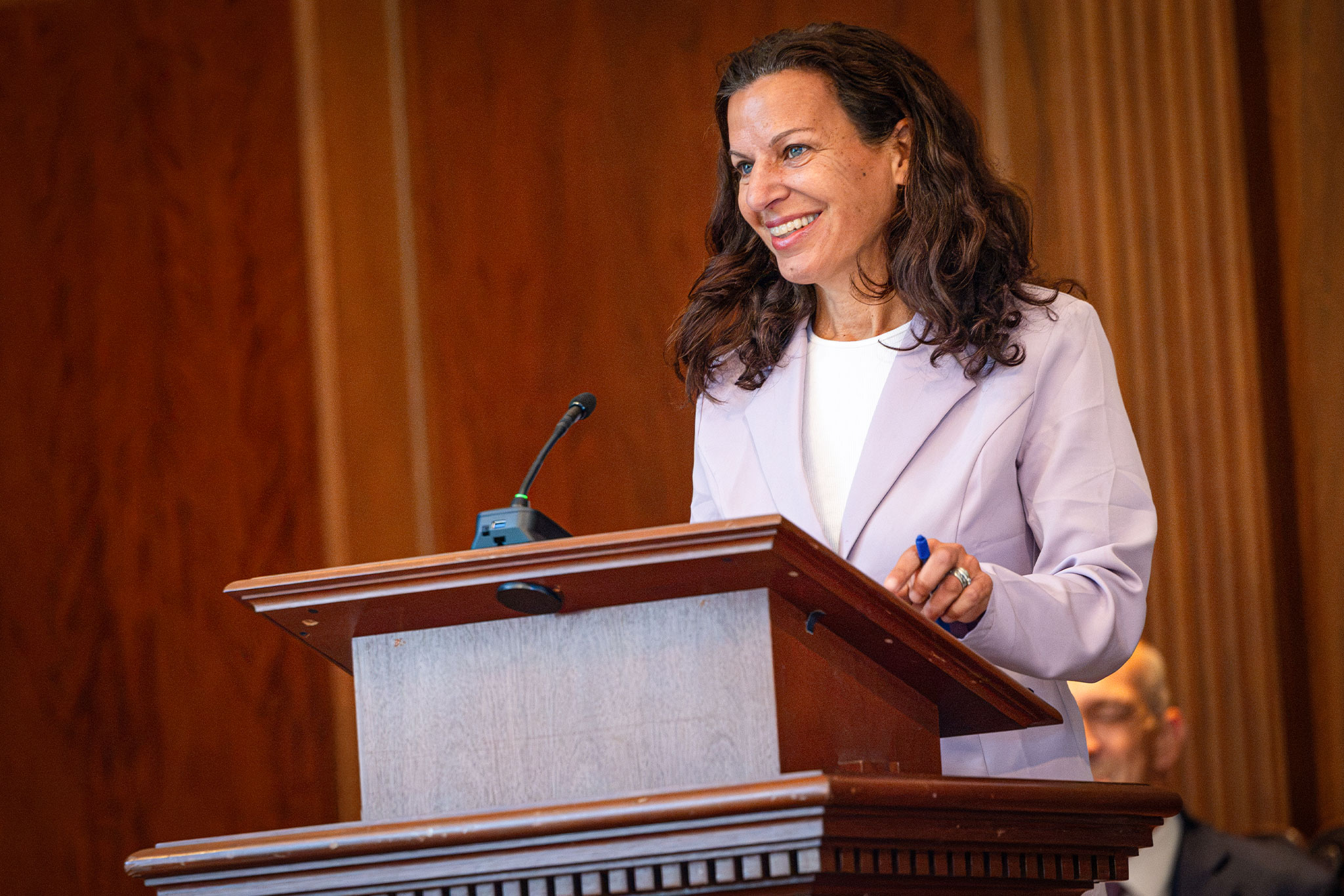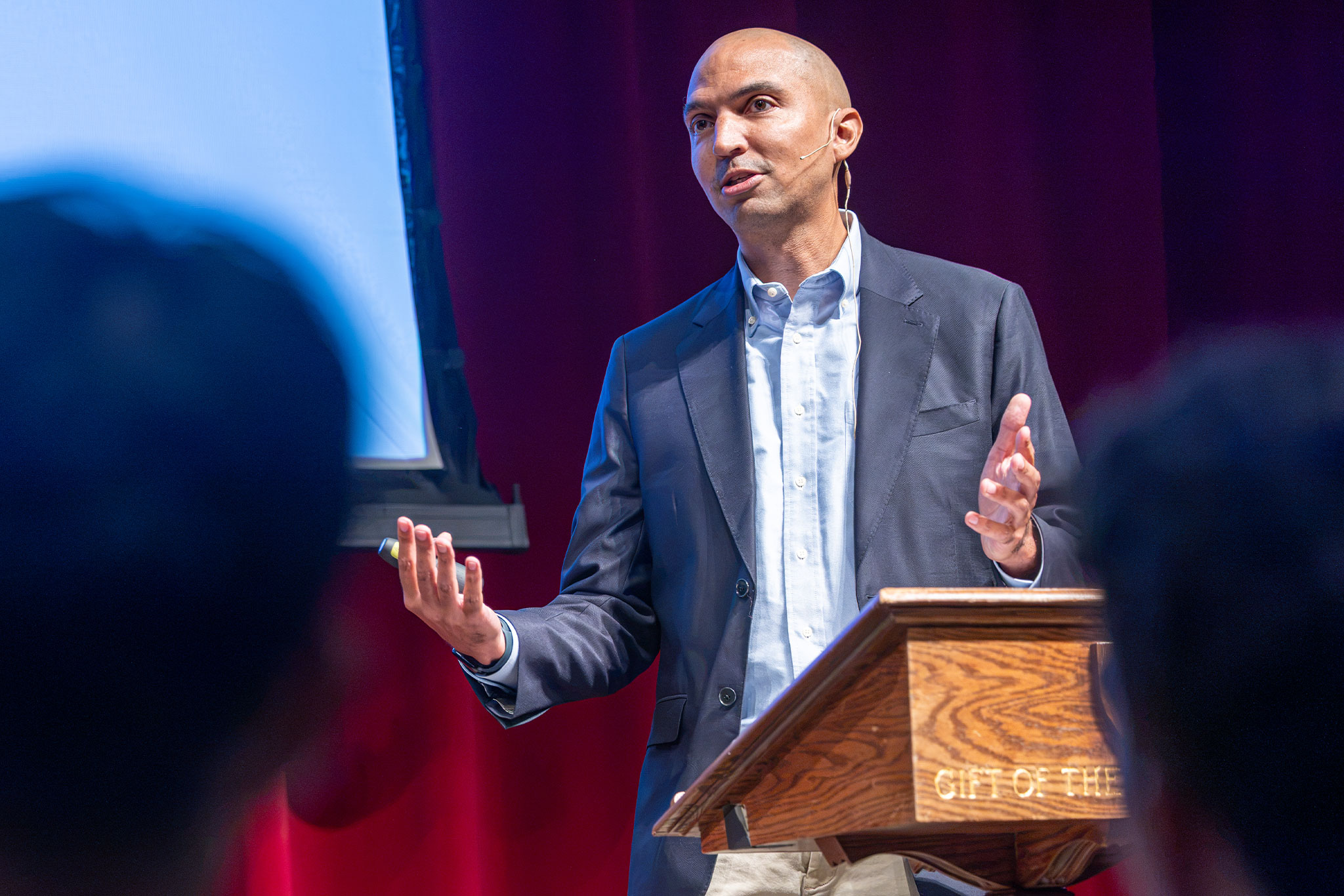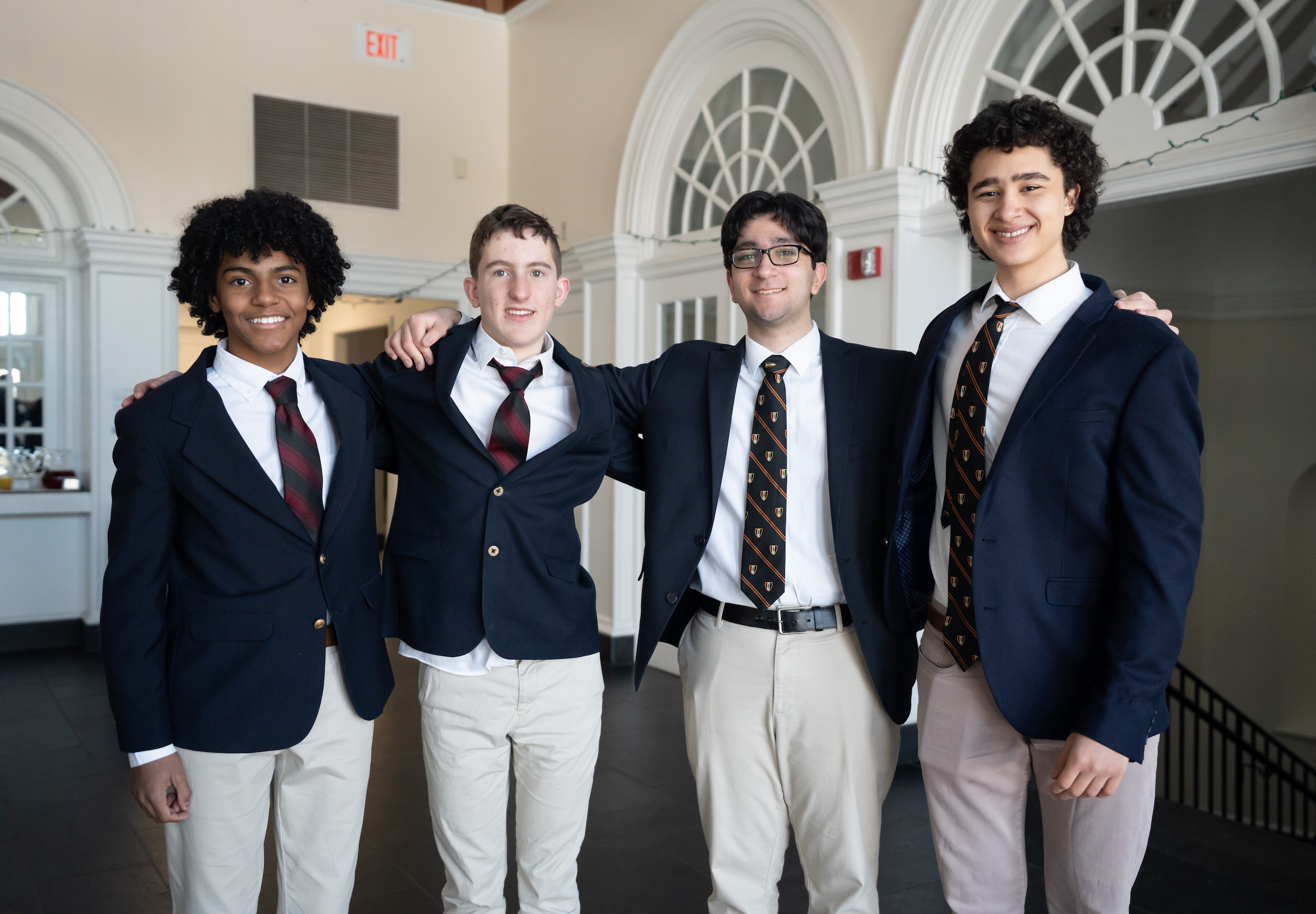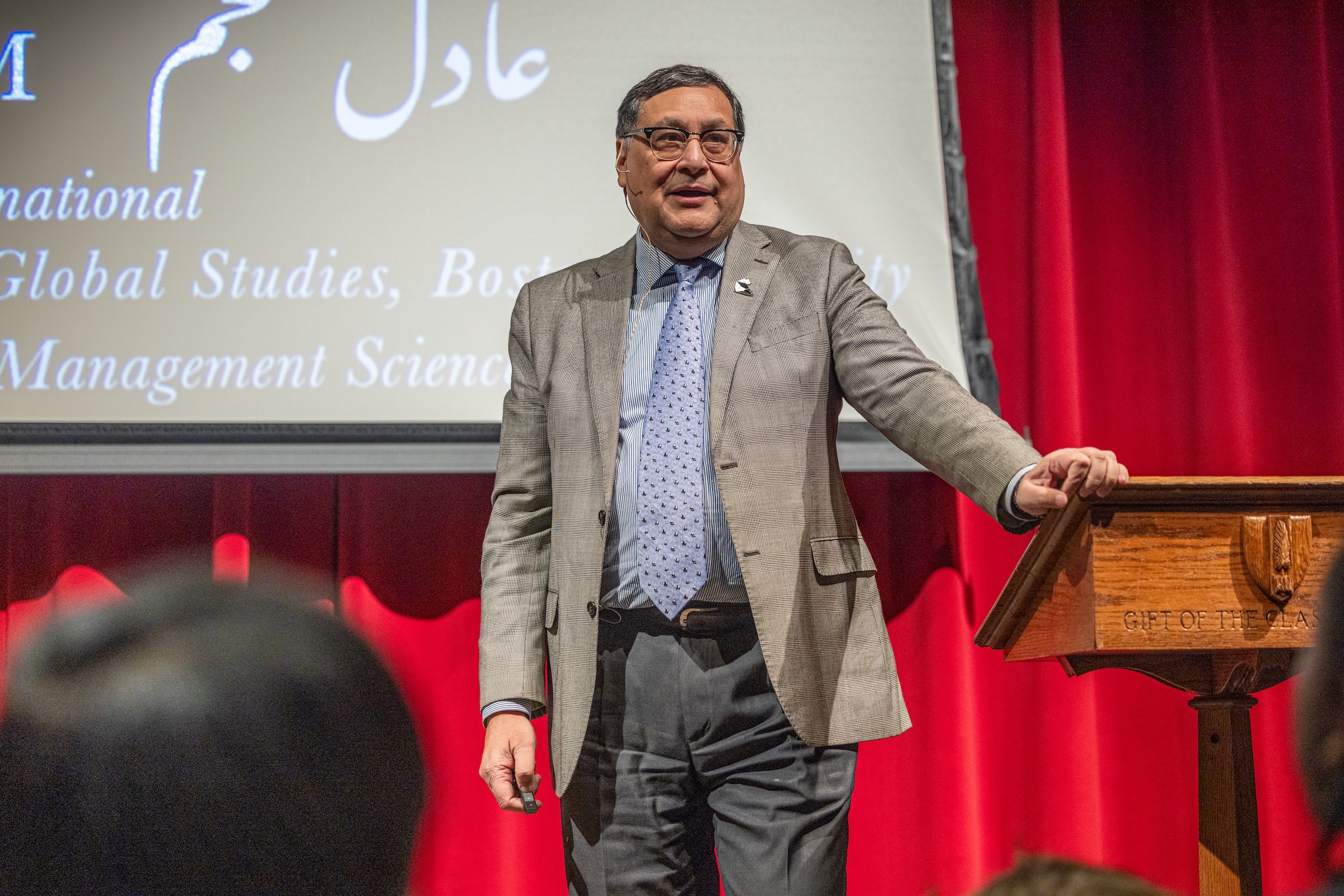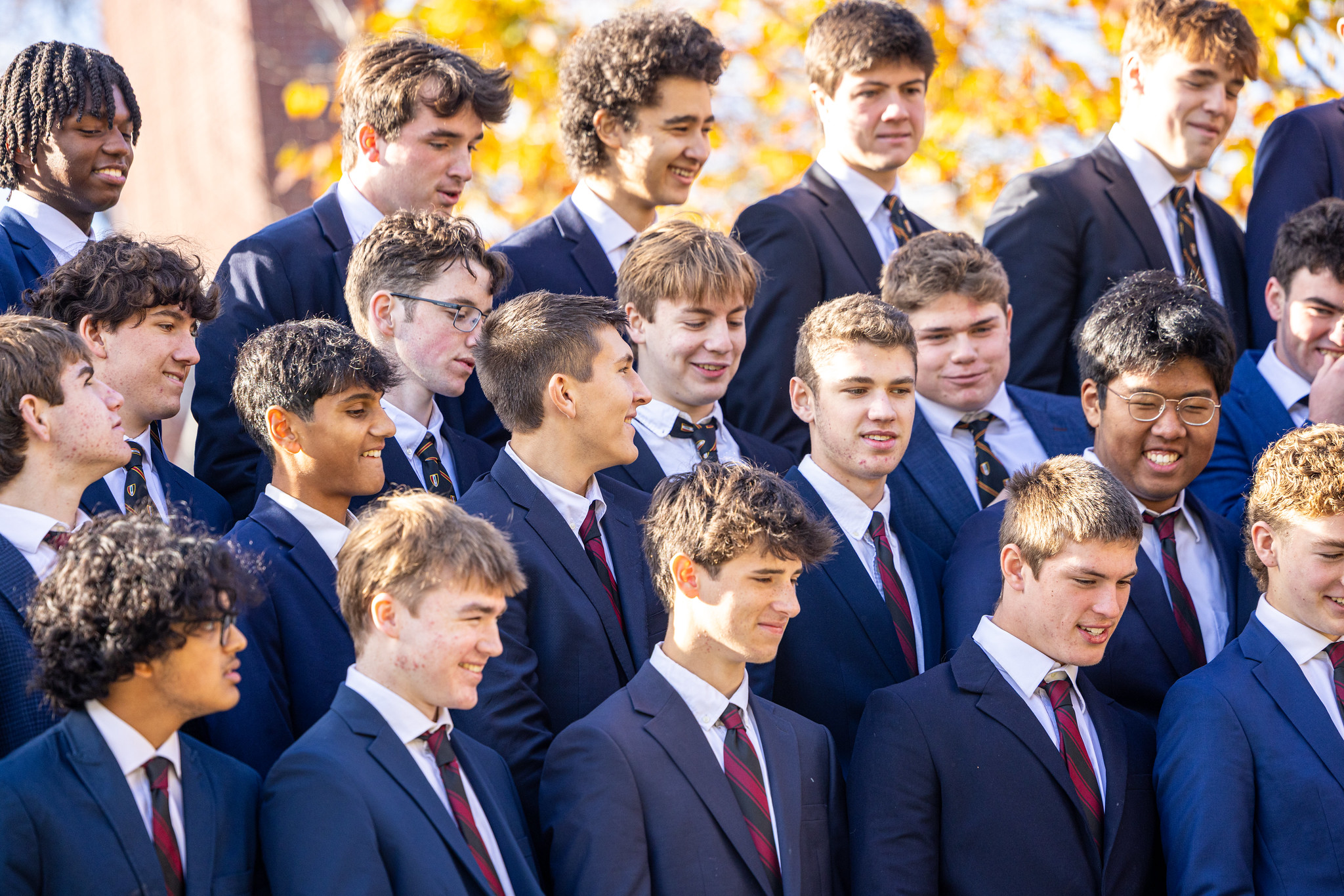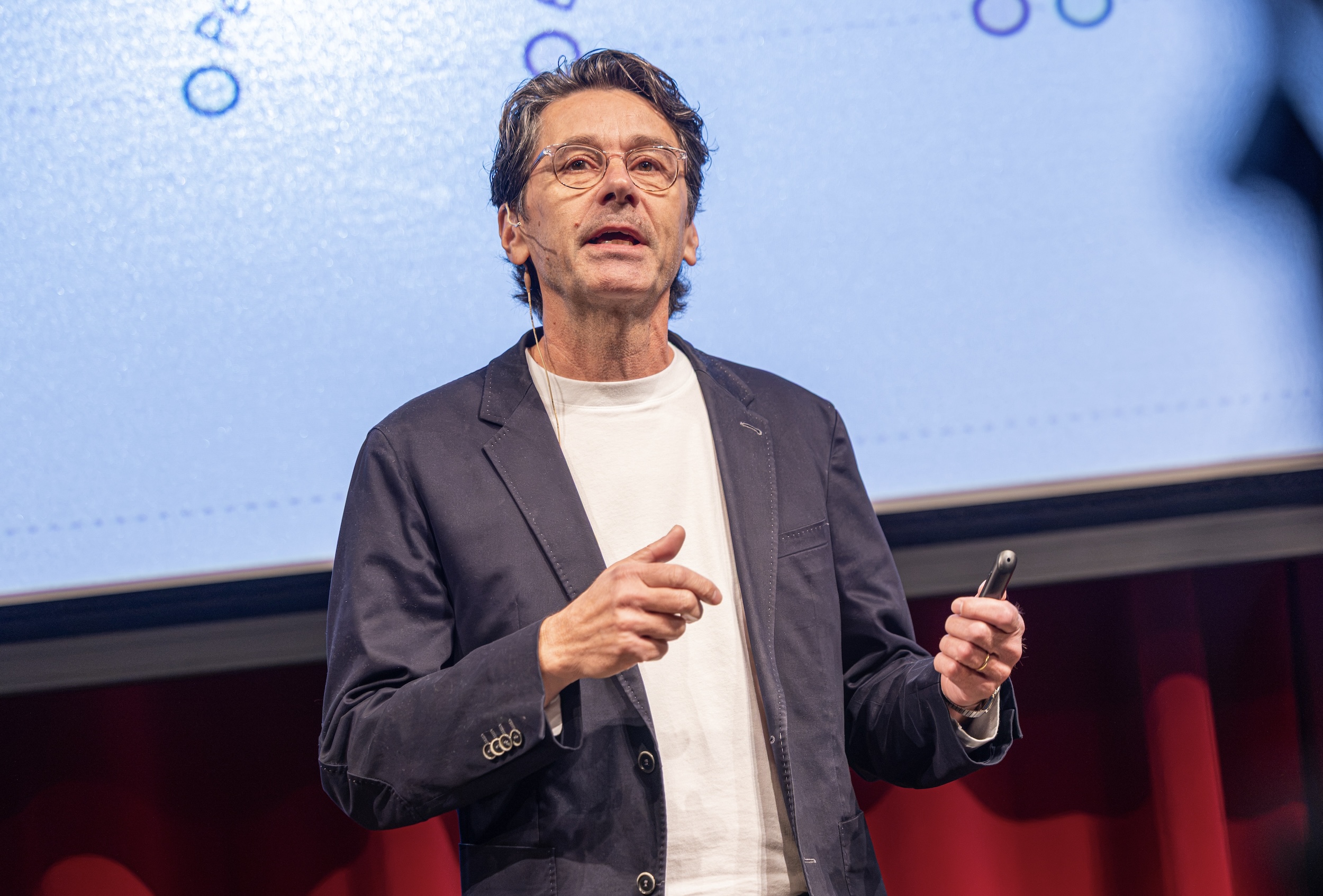
Artificial intelligence is rapidly changing the ways people learn, work, communicate, and solve problems. But how does AI actually work, and what does it mean to use it effectively and responsibly? These questions were at the center of the first installment of this year’s Smith Scholar series, which welcomed Dr. Jakov Kucan, chief technology officer at Manifold AI, to campus for an introduction to the technology shaping an increasingly complex world.
Dr. Kucan’s introduction to AI on October 6 served as a crucial foundation for the remaining three lectures on the topic. He provided context and a historical overview of where AI came from and how its early origins influence the iterations we use today, covering early efforts to teach computers to follow logical rules to the development of machine learning, neural networks, and today’s large language models. He explained how advances in computing power, algorithms, and data have converged to produce the sophisticated systems that now recognize images, generate text, and assist with complex tasks.
Through demonstrations and examples displayed in the Smith Theater, Dr. Kucan illustrated the central principle of machine learning: AI systems make predictions based on patterns in the data on which they are trained. He compared the process to adjusting the parameters of a mathematical model, repeatedly refining its predictions to better match observed information. Large language models apply related principles to language, predicting what word or sequence of words is most likely to come next based on patterns learned from vast amounts of text. So, can AI understand us? Simply put, no, it cannot, but it is very good at guessing what one might want an answer to be based on a wealth of data and previous engagements with similar questions. This is also why users should challenge and correct responses, rather than taking the information as absolute fact.
During the question-and-answer session, students raised questions about AI regulation, its potential impact on the job market, and what the future of AI might look like. Dr. Kucan acknowledged the uncertainty surrounding AI’s long-term effects, particularly on entry-level employment, while noting that technological change has historically both displaced certain kinds of work and created new opportunities. Many large technological advances in history have drastically changed society, such as the invention of the car or cellphone. AI, though daunting, is no different. Throughout the discussion, Dr. Kucan emphasized that understanding AI requires looking beyond its impressive outputs to consider how it works and how people choose to use it. While AI becomes more deeply integrated into daily life, the ability to evaluate its responses, recognize its limitations, and maintain human judgment will become increasingly important.
Twenty years ago, the late Robert Smith—RL Class of 1958—and his wife, Salua, established the Robert P. Smith International Fellowship so Roxbury Latin could bring visiting scholars to campus each year, enhancing our curricula with their insightful perspectives on our increasingly complex world. Over the years, these scholars have educated us on such topics as economic globalization in Africa; modernization in China, India, and the Middle East; Latin American literature; the legacy of World War I; climate change and its far-reaching effects; borders, both physical and philosophical; the nuances of race and gender; the history of the civil rights movement in America; and the power and confluence of spoken word poetry and activism. Roxbury Latin is ever grateful to Mr. and Mrs. Smith for their generosity and for enabling the community’s greater understanding of so many important issues.