• Eighteen Roxbury Latin Boys Recognized in National Merit Scholar Competition

    Eighteen Roxbury Latin Boys Recognized in National Merit Scholar Competition

    The National Merit Scholarship Program recently announced the names of students in the Class of 2021, across the country, earning recognition for their academic achievement. This year, 18 Roxbury Latin boys have been recognized—five named National Merit Scholar semifinalists, and 13 others earning commendations from program officials.

    In this 66th annual National Merit Scholarship competition, semifinalists have the opportunity to become finalists and compete for some 7,600 National Merit Scholarships, nationwide. The awards are supported by the organization and approximately 400 businesses and educational institutions, to “honor the nation’s scholastic champions and encourage the pursuit of academic excellence.”

    About 1.5 million juniors in more than 21,000 high schools entered the 2021 National Merit Scholarship program by taking the 2019 PSAT, which serves as an initial screen of program entrants. The nationwide pool of semifinalists, representing less than one percent of U.S. high school seniors, includes the highest scoring entrants in each state. From the approximately 16,000 semifinalists, about 15,000 are expected to advance to become finalists. Scholarship recipients are selected on the basis of their skills, accomplishments, and potential for academic success at the college level.

    Roxbury Latin boys earning recognition this year include semifinalists Ben Chang-Holt, Rohil Dhaliwal, Peter Frates, Daniel Sun-Friedman, and John Wilkinson; and commendation recipients John Balson, Robert Balson, Daniel Berk, Ben Brasher, Ben Crawford, David D’Alessandro, Quinn Donovan, Thomas Gaziano, A.J. Gutierrez, Max Hutter, Walker Oberg, Ethan Phan, and Will Specht.

  • Stories, to Kick Off the Annual Fund

    Stories, to Kick Off the Annual Fund

    What we’re experiencing on campus this year feels in some ways unprecedented, and uniquely challenging. However, thanks to its longevity and resilience, Roxbury Latin has withstood numerous challenges to its survival, and certainly to its ability to honor a rare mission. Thanks to the school’s generous donors, over many years, Roxbury Latin’s mission has persisted and remained unchanged—serving the boys in its care—for 376 years. In this year, perhaps more than in any other, that simply would not be true without the financial support of RL alumni, parents, grandparents, and friends of the school.

    Through this special Annual Fund Kick-Off video presentation, you can hear the compelling, personal, RL stories of Esteban Tarazona, Class I, and Associate Headmaster Mike Pojman, as a reminder of RL’s mission in action, and what gifts to the Annual Fund help to perpetuate, and preserve.

    Make your gift to Roxbury Latin’s Annual Fund today.

  • Derek Ho ’92, David Pozen ’98, and Dave Friedman P’21’25 on the Supreme Court

    Derek Ho ’92, David Pozen ’98, and Dave Friedman P’21’25 on the Supreme Court

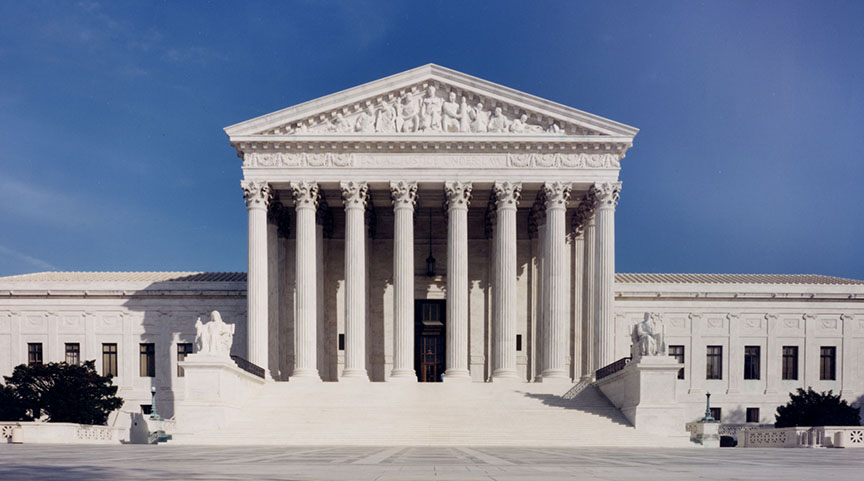
    Decisions of the Supreme Court can be indicators of our nation’s values, culture, and changing demographics. They can illuminate, or even move, our country’s compass. In an increasingly polarized and politicized climate, the reliability of this venerable institution is ever more important. And in the wake of Justice Ruth Bader Ginsburg’s death, discussion of the Supreme Court and its future is even more part of the daily headlines. That’s why we’re grateful that, on October 6, Roxbury Latin trustee Derek Ho ’92, alumnus David Pozen ’98, and parent Dave Friedman P’21’25 joined us to deliver a triad presentation on our nation’s highest court.

    All three men spent part of their careers clerking for U.S. Supreme Court justices—Mr. Ho for Justice David Souter; and Mr. Friedman and Mr. Pozen both for Justice John Paul Stevens. Clerking for a Supreme Court Justice is one of the most coveted, most influential roles in the law profession, and affords a unique perspective. Both Mr. Ho and Mr. Friedman also clerked for U.S. Court of Appeals Judge Michael Boudin; both graduated from Harvard College and Harvard Law. Mr. Pozen clerked for Judge Merrick Garland on the U.S. Court of Appeals and graduated from Yale University and Yale Law.

    Today, Mr. Ho is a partner with the firm Kellogg Hansen in Washington D.C., specializing in appellate and complex commercial litigation, focusing on class actions and multidistrict litigation proceedings, antitrust law, and the False Claims Act. Mr. Ho represented clients in three of the U.S. Supreme Court’s most significant recent class action decisions, prevailing in all three. He is also a member of RL’s Board of Trustees.

    Mr. Friedman is Senior Vice President for Legal and Government Affairs for the Red Sox and senior counsel for Fenway Sports Group. He handles a variety of legal matters, including regulatory compliance issues and oversight of litigation. He assists with the club’s interactions with Major League Baseball and other Major League teams. Mr. Friedman handles legal and business matters for the Red Sox Foundation and works on government affairs matters in conjunction with the club’s Fenway Affairs department.

    Mr. Pozen is Vice Dean for Intellectual Life and the Charles Keller Beekman Professor of Law at Columbia Law School. There he teaches and writes about constitutional law, information law, and nonprofit law, among other topics. In 2019, the American Law Institute named Mr. Pozen the recipient of its Early Career Scholars Medal. Mr. Pozen’s work includes dozens of articles, essays, and book chapters, and his scholarship has been discussed in outlets including The New York Times, The New Yorker, The Washington Post, and NPR.

    View the entirety of the Hall presentation.

  • A Student-Led Honoring of the Jewish High Holy Days

    A Student-Led Honoring of the Jewish High Holy Days

    In seeking to develop boys’ spiritual growth and exploration, Roxbury Latin celebrates annually significant moments in the calendars of various faith traditions represented in our community. As Headmaster Brennan began in virtual Hall on September 24, “I believe that each of us, regardless of our age, gender, race, or place of origin, are forever questing to answer fundamental questions about our existence: Why am I here? Where did I come from? Where will I go? What is life’s purpose? What do I believe? What do I stand for?” On a Thursday in September, which fell between the celebrations of Rosh Hashanah and Yom Kippur, two students—Daniel Berk (I) and Heshie Liebowitz (II)—presented on what the celebrations of the Jewish High Holy Days mean to them.

    Heshie brought students and faculty through an intellectual exploration of Rosh Hashanah, which began by his searching for specific references in the Torah. He wondered, in particular, why Rosh Hashanah—the celebration of the New Year—took place so late in the calendar. He learned, and shared, that Rosh Hashanah represents the head of the agricultural calendar: “In the land of Israel, the agricultural calendar is aligned with the beginning of the rainy season, which begins in the fall… In Deuteronomy, Moses explains that the rain [which farmers need for their crops] is dependent on God’s judgment of the behavior of the children of Israel.

    “For me, the Jewish New Year signifies an annual ‘self-check’: Rosh Hashanah reminds us to evaluate how well we’re doing in walking the ways of God. This year, my deeper understanding of the agricultural underpinnings of the holiday allows me to see the connection between this personal self-check and the success of the people as a whole.”

    Daniel shared his thoughts on Yom Kippur, which is considered the most holy day in the Jewish tradition. “Yom Kippur,” he began, “does not commemorate any specific historical event. Rather, Yom Kippur is a deeply personal holiday, focusing on the worshipers themselves. It is a time when Jews confess to and apologize for their transgressions. For me, it represents an ethical reset, a time to rid oneself of moral baggage and prepare for the upcoming year with a clean slate.

    “At the beginning of the High Holy Days, the mood is festive because Rosh Hashanah commemorates a new year and a new beginning. Yom Kippur brings its own unique, elevated mood to the community… though there is a reserved, solemn manner about the celebration, a tacit gravity understood and observed by all. The High Holy Days are reflective and personal times for everyone… when we are called to recognize the mistakes we made, promises we’ve broken, and transgressions we’ve committed. It is not a celebration, but rather a day of confession and growth.”

    Daniel recited the Vidui, a Yom Kippur prayer that serves as a confession of a wide range of transgressions, covering a literal A to Z of sins—from abuse, betrayal and cruelty to zealotry. “For me, the confession represents all the ways that I myself have not been a perfect person. It accounts for the fact that I’ve not been able to follow all the commandments. And it serves as a statement of my humanity.”

    Heshie agreed: “As Daniel talked about, among those commandments are some very practical, important guidelines for everyday life, such as ways of treating people, and how what you do affects your whole community and everyone around you.”

    At the close of the Hall, Mr. Brennan reminded everyone that we “should never take for granted our freedom of religion,” nor our ability to express what we believe, since this freedom is not something available to people all around the world.

    View the entirety of the High Holy Days Hall presentation.

  • Student’s Documentary Film Wins Award at New England Film Festival

    Student’s Documentary Film Wins Award at New England Film Festival

    Senior Miguel Rincon has been playing soccer since he can remember: his father is a coach, and the sport is big in Colombia, where his family is originally from. Miguel lives in East Boston, home of LoPresti Park—the focus of a short documentary film Miguel produced that won a People’s Choice Award this year at the New England Film Festival. LoPresti Park is the locus for a rich tradition of pick-up soccer competition that spans ages and backgrounds, and which, according to Miguel, has “created a very close sense of togetherness within that community.”

    Miguel has been playing soccer at LoPresti in the summers for the last four years or so. (The youngest players are about 15 or 16 years old; most of the players are in their 20s, and a few players are even in their 40s, according to Miguel.) In terms of soccer, Miguel’s favorite part of playing at LoPresti are the smaller-sided games (versus the 11 v. 11 played in the ISL). “I enjoy the small games because you get to touch the ball a lot more,” he says. “You get the ball at your feet quicker. But really, my favorite thing about playing at LoPresti is the passion that everyone there feels. Everyone knows it’s friendly and pick-up, and we’re all doing it for fun, but sometimes it feels like we’re playing in a World Cup final—it gets so intense!”

    “I love that so many people just know to come at a certain time, know there are going to be teams already, know the rules. People come from very far away to play there—it feels liberating, being with so many people with the same passion as you. When I step on the field there is no pressure, my problems seem to fade away.

    Miguel’s idea to create a short documentary film about this place and experience that he loves was prompted by his involvement in SuccessLink—a program sponsored by the City of Boston that helps employ Boston’s young people. This summer was Miguel’s second year taking part in the program. Through SuccessLink he landed a videography job with All Aces, Inc., which in partnership with BridgeBuilders Cinematic Arts, paired students with instructors—high profile and accomplished professional directors, actors, producers—who taught these young people how to create their own stories through the medium of videography.                   

    “I’ve been interested in photography, which I worked on in Studio with Mr. Buckley, and he was encouraging us to try new media,” says Miguel. “This project was the perfect opportunity to try videography, which I’d never done before, and I’ve fallen in love with both photography and videography.”

    Miguel says it felt important for him to capture the diversity of individuals who play at LoPresti—across ages, home countries, ethnicities, languages—a collection of people, perspectives and stories that he showcases well in the film. “The hardest part of my project was probably translating Arabic,” laughs Miguel. “That was REALLY hard. I also wanted to make sure I interviewed the right people. Having to conduct all of my interviews in basically two days was really stressful.”

    Through his mentors at BridgeBuilders, Miguel was encouraged to submit his documentary to the New England Film Festival, where it was selected for screening and is a contender for a People’s Choice Award. His work garnered attention from WBUR’s The ARTery, where Miguel and several of his fellow amateur filmmakers were featured.

    “Overall, my goal was to share one aspect of my life that’s really important to me,” he says. “And I think it reflected my community well. I think it reflected who I am as a person. Because not only did it reflect my community and where I grew up, but it also reflected one of my passions, which is soccer. The opportunity to share with the world one of the places that makes me most happy felt unique.”

    View Miguel’s short documentary film “LoPresti Soccer” in its entirety.

  • Dr. Galit Alter on Immunity, Vaccines, and Hope

    Dr. Galit Alter on Immunity, Vaccines, and Hope

    On September 17, Dr. Galit Alter presented a Hall—a Part II, of sorts, on the COVID-19 pandemic—focused, this time, on how we might emerge from our current situation. Dr. Alter’s work focuses on the development of biological tools that help individuals develop immunity against infectious diseases. She is a professor of medicine at Harvard Medical School and a group leader at the Ragon Institute of MGH, MIT, and Harvard. 

    We have heard much recently in the news about the global rush to develop an effective and safe vaccine against COVID-19, in order to save lives, resuscitate our economy, and allow us to return to the routines we enjoyed pre-pandemic. Dr. Alter spoke to students and faculty on Thursday not only about the science of antibodies and immunity, and the various pathways to developing effective vaccines, but also about the history of vaccinology.

    “The idea of vaccination is really simple,” she began. “It is taking a substance—which can come in lots of different shapes, sizes, qualities—and putting it into the human body, asking the body to make antibodies, or develop an immune response. We hope that through this process, we educate the immune system to essentially fight a pathogen, should we ever come in contact with that pathogen in the future. Vaccines save millions of lives every year… They are literally one of the most effective public health tools that we have in the medical tool kit.”

    “And vaccines are not only for you as an individual; [getting vaccinated is] something we do for our community. We do this for our friends, our families, our neighbors, our country, and our world. We take the responsibility to prevent infections from hurting those who are most vulnerable.”                  

    Dr. Alter walked students through the history of vaccination—from Edward Jenner’s 1760’s discovery that injecting someone with cowpox could prevent smallpox; to Louis Pasteur, a chemist whose discovery that sterilizing pathogens and injecting those killed pathogens into animals could protect them from infection; to Robert Koch who created the process of pathogen identification, giving rise to the safety and development checkpoints that we use in creating vaccines today. But, as Dr. Galit shared, there is evidence as far back as Ancient China, Greece and Egypt—examples in drawings, lithography, and hieroglyphics—of individuals performing the art of vaccination back then.

    “Since the 18th century, vaccine development has exploded,” she continued. “We have hundreds of different approaches, technologies, and platforms that allow us to drive immune responses. Today we can deliver components of pathogens in lots of different ways. We can attenuate the way Pasteur did. We can deliver it through DNA or RNA, which essentially allows our body to make those components through our own cells. We can also use other kinds of chemical processes to make these components of a pathogen in a way that our immune system can see them more effectively.”

    Dr. Alter discussed the typical timeline of vaccine development and the various phases that must take place—preclinical trials, several rounds of testing, FDA approval—in order to develop a safe and effective vaccine, ready for use by the general public. This process typically takes 16 years. The global response and commitment to developing a COVID-19 vaccine has condensed that timeline to less than two.

    “The reason we can do this—and I want to stress this really important point—is that none of the components of the process are gone. All the safety checks, quality checks, efficacy checks are still part of this process. What we’ve done is created overlapping ways of running this entire timeline so that we can get to the vaccine faster and get it out to people as quickly as possible.

    “As much as the vaccine development timeline has been politicized, the important thing to remember is that there are incredibly responsible people at the heads of these companies and agencies who are not willing to compromise on safety. They’re not willing to put anything into someone’s arm that could compromise the whole development of vaccines. As I mentioned, vaccines are one of our most effective public health intervention tools, and we cannot compromise public trust and process to basically make people happy. It’s got to be safe, and it’s got to be effective.”

    Dr. Alter earned her bachelor’s degree and PhD at McGill University and completed postdoctoral training in the Partners AIDS Research Center at MGH. She is a two-time recipient of the prestigious MGH Research Scholars Award and was elected a member of the American Association of Microbiology in 2019.

    View the entirety of Dr. Alter’s Hall presentation.

  • Beaver Brook—A Sixie Tradition—Reimagined

    Beaver Brook—A Sixie Tradition—Reimagined

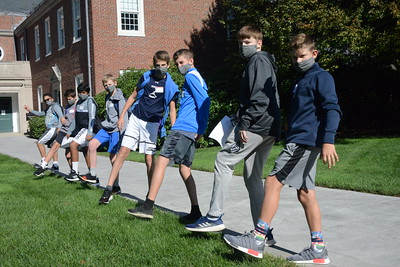
    A Sixie’s first year at Roxbury Latin doesn’t officially begin until his trip to Beaver Brook. For decades, the annual excursion has taken Class VI north to Hollis, New Hampshire, with homeroom advisors, senior leaders, and new faculty for 24 hours of uninterrupted team-building and RL immersion. This year, COVID-19 forced the school to bring Beaver Brook to campus. 

    “I knew right away that we couldn’t go to New Hampshire and sleep in tents and ride on the bus, and do all those things,” said Class VI Classmaster Hunter White. “I immediately thought, ‘Okay, this is going to be a day at RL.’ The schedule itself is very traditional, and I went to that to see what we could save and adapt, or modify, and what we had to get rid of. It actually worked out pretty well. My whole Class VI crew of homeroom advisors helped me with this. This was a real team effort.”

    On the morning of Saturday, September 12, Sixies gathered on O’Keeffe Field in socially distanced small groups, each with a Class I leader. From there the day progressed as it would normally, first with the familiar RL Questionnaire and a guess-the-M&Ms contest.

    “We ended up being able to keep almost every element and modifying for the cohorts and distancing,” said Ms. White. “We start with an orientation questionnaire, in which the boys have to find out a bunch of trivia about the school by asking seniors and faculty—but the seniors and faculty can trick them, too. They don’t always give them the right answer.” Which is part of the fun.

    A new addition to this year’s reimagined schedule was a scavenger hunt designed to help students familiarize themselves with campus. 

    “Since we couldn’t go into the buildings, we used the whole campus and chose our spots, made up clues, and the seniors led the boys in small groups around to find and discover what was on their list. The kids were really excited at the end. We debriefed a bit afterward, and they all said, ‘We didn’t know all these things were here!’ So they really did get to see the whole campus.”

    After lunch and free time, Sixies alternated between team challenge activities on Rappaport Field, and learning the Founder’s Song with Mr. Opdycke on the Flea Patch. Each Sixie cohort then gathered for the annual viewing and group discussion of the 1957 film Twelve Angry Men. Before the end of the day, each Sixie wrote a letter to his future self, which he will open during his senior year—a traditional end to an unusual retreat.

    “We were determined not to cancel this,” concluded Ms. White. “I said to the boys that this tradition has been going on for a very long time. I went to my first Beaver Brook in 1982 when I came here as a first-year faculty member. We’ve occasionally rescheduled, mostly for hurricanes, but we’ve never canceled.”

    View images of the day, taken by Mr. Pojman.

  • Dr. Nahid Bhadelia, Infectious Disease Specialist, on COVID-19

    Dr. Nahid Bhadelia, Infectious Disease Specialist, on COVID-19

    What is a virus? How do viruses behave? Why is this one—which has disrupted life on a global scale—so pernicious? How, exactly, is this microscopic, infectious agent causing a pandemic the likes of which the world hasn’t seen in 100 years? And how do we stop it?

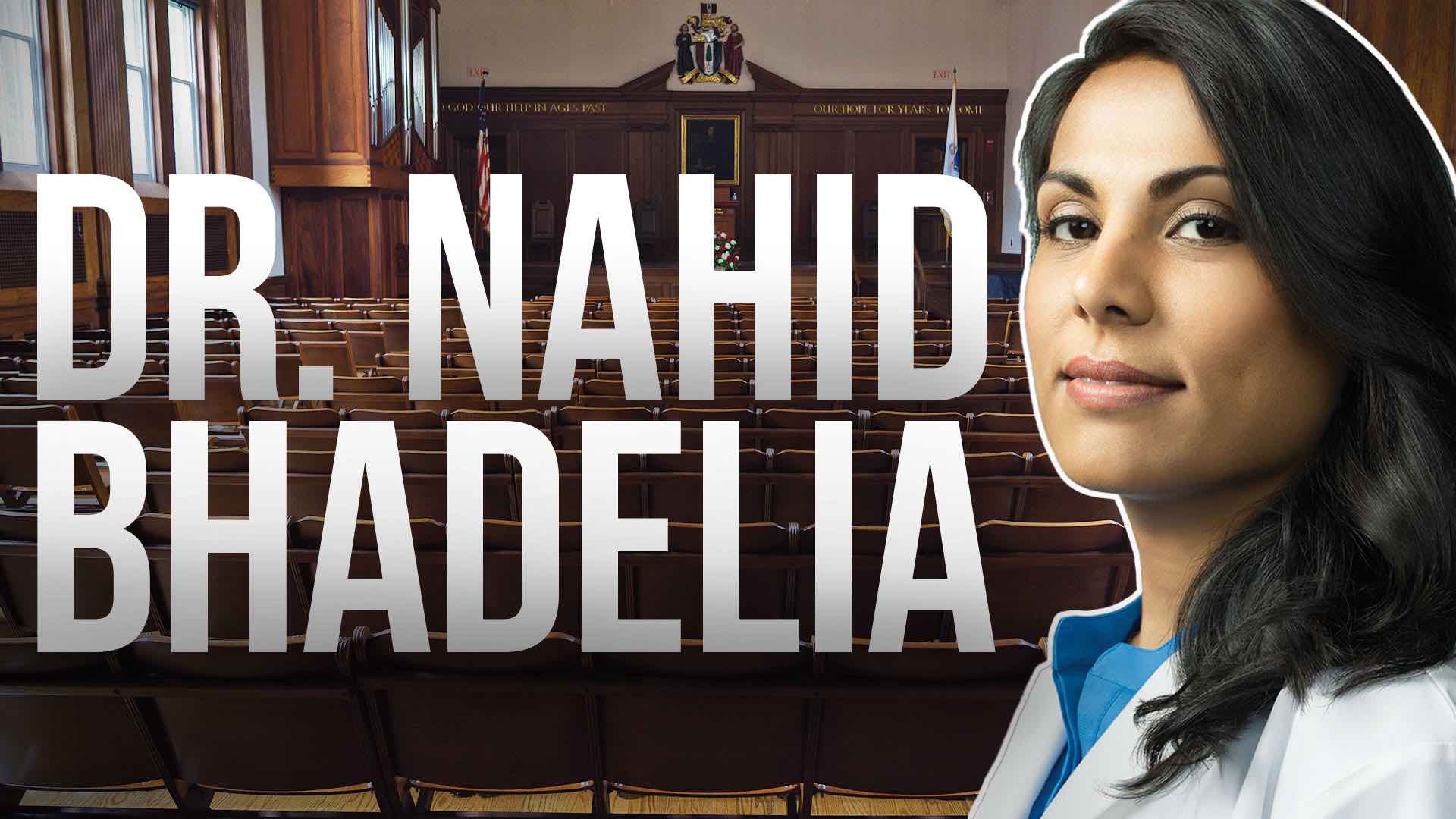
    On September 10, Roxbury Latin virtually welcomed Dr. Nahid Bhadelia to answer some of these questions, as our first Hall speaker of the year. Dr. Bhadelia is an infectious disease physician; an associate professor at the Institute of Human Security at the Fletcher School of Law and Diplomacy; and the director of the Special Pathogens Unit at Boston University School of Medicine. She serves on national and interagency groups focused on medical countermeasures—the intersection between public health preparedness, research, and clinical care for emerging pathogens. Her research focuses on identification of safe and effective clinical interventions and infection control measures.

    In Hall, Dr. Bhadelia shared with students and faculty the science of COVID-19, and of viruses in general. She broke COVID-19 down to the cellular level, so that all of us could better understand the biological facts and intricacies of our current moment. She spoke about Zoonoses (infections that jump from animals to humans), the SARS family of viruses, and the many reasons that there exists increasing risk of emergence and spread of infectious diseases—climate change, population increase, globalization of trade, and travel. As we are all inundated with COVID news and updates, Thursday’s Hall was a helpful moment for us all to be educated about, or reminded of, the medical reality of this outbreak and the ways in which we can help to control and limit its spread.

    During the West African Ebola epidemic, Dr. Bhadelia served as a clinician in several Ebola treatment units, working with the World Health Organization and Partners in Health. She currently serves as the clinical lead for a joint US-Ugandan effort to combat viral hemorrhagic fevers in Uganda at the border of the Democratic Republic of Congo. She has served as a subject matter expert to the CDC; the Department of Defense; the Global Fund to Fight AIDS, Tuberculosis and Malaria; and the World Bank. She is a regular medical contributor on MSNBC and was featured this spring on the PBS NOVA program “Decoding COVID-19.”

    On September 17 we will welcome Dr. Galit Alter, Professor of Medicine at the Ragon Institute of MGH, MIT and Harvard, who will continue the conversation about COVID-19 in a Part II Hall, focused on immunology and vaccines.

    View the entirety of Dr. Bhadelia’s Hall presentation.

  • Roxbury Latin Opens Its 376th School Year Amidst a Pandemic

    Roxbury Latin Opens Its 376th School Year Amidst a Pandemic

    After months of planning and preparing, Roxbury Latin opened the fall term of the school’s 376th school year on Monday, August 31. This year’s opening was not typical: Headmaster Brennan delivered his address to a largely empty Rousmaniere Hall. There was no all-school handshake—only hope for one in the future. No boys infused the hallways and classrooms with an energetic buzz. However, faculty were on campus and in classrooms—dressed in their first-day best—and students attended Hall, classes, and homeroom remotely anticipating their physical return to these spaces. On September 1, boys will return physically to campus as RL commences this school year with a cohort system; the student body, split into Cohort A and Cohort B, will alternate weeks spent on campus and weeks spent learning from home, in order to de-densify campus spaces each day. Boys in Cohort A will descend upon the campus tomorrow, using particular entrances assigned by class and remaining largely with their campus “neighborhoods.”

    In Hall, Mr. Brennan welcomed new members of the RL community—students, faculty, and staff—and focused on the meaning of the word community, and on the rights and responsibilities we should all take seriously as being part of one.

    “Often people use this term to describe a geographical and political concept—a city, a town, a neighborhood,” Mr. Brennan began. “However… a community is also a group of people who agree to certain concepts of what it means to live, to live well, to live peacefully and productively together. One person has a stake in another person’s life. Because a community often suggests a relatively intimate group of people, they tend to know each other. And even if literally they don’t know each other, they know each other based on presumptions that can be made within the community about a basic standard of values, mutuality, and care.” Sharing personal stories of community in action, and communities moved to action—especially during the COVID-19 pandemic, and in the wake of the killing of George Floyd—Mr. Brennan talked about the ways in which we’re all having to re-imagine how we live in community these days.

    “In considering what it takes to be a valuable member of a community, we ought to imagine seizing opportunities for generosity, kindness, or defense of another. In our school, to my mind—if done well—the quintessence of community, we often treat each other as brothers and sisters, as lovable neighbors, and sometimes we don’t. Sometimes we intentionally are selfish or self-absorbed or vindictive… or we fail to act, fail to intervene when we should.

    “In late July, Congressman John Lewis died. He had done amazing things in his life. He was kind, gentle, persevering, and principled. He was someone whom everyone loved and admired. It was not just, however, because he was kind that he was looked up to. It was because he acted. He lived his beliefs… His example begs the question, ‘What will you do?’”

    Finally, Mr. Brennan reminded students, faculty, and staff that, as we begin this school year—with new health and safety protocols in place—we are dependent on one another in an even greater way than we were before. He urged everyone watching “to adhere to the guidelines, to focus, to care, to sacrifice, to do something. In your actions and your words, help all of us to create anew a community that is not only brimming with friendship and love, but that acknowledges that what we do and how we do it can indeed be a matter of life and death. Please do your best… When all is said and done, when we look back on this era, when we remember the 375th and 376th years of the school’s storied history, let’s make sure that others will say that because of all of us, because of this glistening community, because of who we are and what we will do that this was one of RL’s finest hours.”

    View the entirety of this year’s Opening of Fall Term Hall.

    Learn more about Roxbury Latin’s Fall 2020 Reopening Plans.

  • Darian Reid ’05 Appointed Director of Community and Culture

    Darian Reid ’05 Appointed Director of Community and Culture

    During these summer months the faculty and staff at Roxbury Latin are focused on planning for the year ahead. In line with the school’s commitment to being a welcoming, inclusive, and supportive place for every student to learn and grow, Headmaster Kerry Brennan announced this month that Darian Reid—member of the Class of 2005, and a member of the faculty since 2010—has accepted the appointment to the new position of Director of Community and Culture. Mr. Reid has distinguished himself as an exemplary teacher, class master, coach, and advisor. He is well respected by his students and colleagues, and he brings an important perspective to this essential role. As a member of the school’s senior leadership team, he will lead the school in our ongoing efforts to know and love every boy; to acknowledge critical opportunities for evolving the curriculum so that all students recognize themselves within it; to provide professional development for all faculty and staff related to issues of racism, bias, and creating a truly inclusive school community; and to convene important discussions on topics of difference, equity, and justice. As we establish short-, medium-, and long-term goals related to this work, Mr. Reid will help us intentionally and explicitly expand upon the ways in which we support, in particular, Black students and all students of color, as well as LGBTQ+ students.

    In this past month many members of the Roxbury Latin community—students, faculty, alumni, parents—have shared their perspectives, thoughts, and experiences that help inform this work. Those stories and insights have and will continue to be important contributions, to which the administration, faculty and staff are listening closely. Led by Mr. Reid and other members of the faculty, the school will pursue further opportunities for meaningful conversations as we move forward in this work. As Headmaster Brennan wrote recently to students, parents, and alumni, “I know that the only way we, together, can advance this critical work—of ensuring that Roxbury Latin is and feels like a welcoming home for every single student in our care—will be through productive conversation, to which we each bring openness, honesty, humility, and respect. We are committed to this work. We acknowledge that at times it will feel uncomfortable; at times the pace may feel unsatisfactory for some—too fast, or too slow; at times we will stumble, but we will keep moving forward. In the same way that we encourage our students to persist through difficult but worthy undertakings, we will model that commitment, and persistence. The goals are essential, and the rewards will be great.”

    Led by Mr. Reid, members of the faculty are meeting weekly throughout the summer to discuss a prescribed list of books, articles, films, and podcasts, developed by experts on topics related to these issues.