• Dr. Nahid Bhadelia, Infectious Disease Specialist, on COVID-19

    Dr. Nahid Bhadelia, Infectious Disease Specialist, on COVID-19

    What is a virus? How do viruses behave? Why is this one—which has disrupted life on a global scale—so pernicious? How, exactly, is this microscopic, infectious agent causing a pandemic the likes of which the world hasn’t seen in 100 years? And how do we stop it?

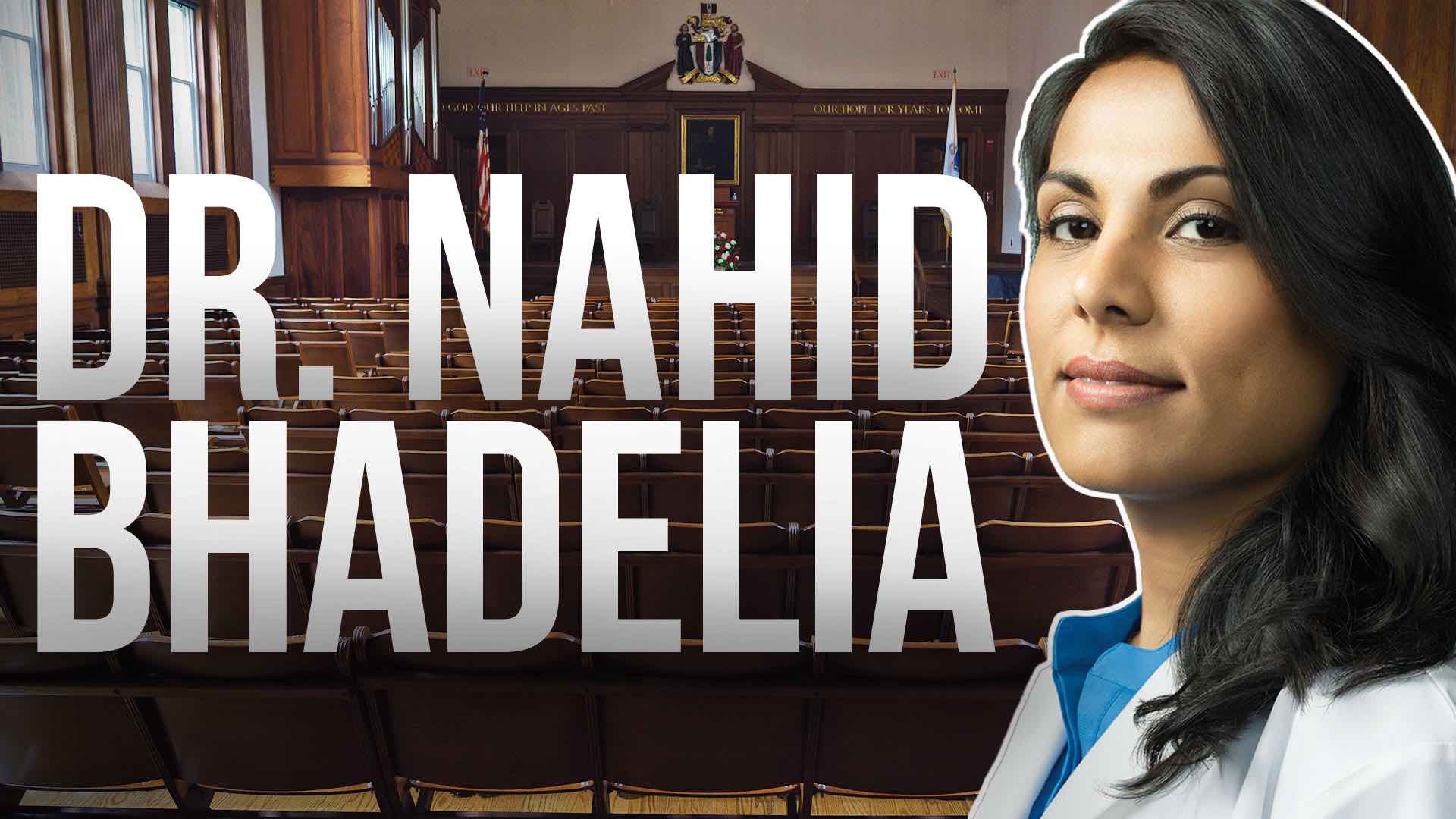
    On September 10, Roxbury Latin virtually welcomed Dr. Nahid Bhadelia to answer some of these questions, as our first Hall speaker of the year. Dr. Bhadelia is an infectious disease physician; an associate professor at the Institute of Human Security at the Fletcher School of Law and Diplomacy; and the director of the Special Pathogens Unit at Boston University School of Medicine. She serves on national and interagency groups focused on medical countermeasures—the intersection between public health preparedness, research, and clinical care for emerging pathogens. Her research focuses on identification of safe and effective clinical interventions and infection control measures.

    In Hall, Dr. Bhadelia shared with students and faculty the science of COVID-19, and of viruses in general. She broke COVID-19 down to the cellular level, so that all of us could better understand the biological facts and intricacies of our current moment. She spoke about Zoonoses (infections that jump from animals to humans), the SARS family of viruses, and the many reasons that there exists increasing risk of emergence and spread of infectious diseases—climate change, population increase, globalization of trade, and travel. As we are all inundated with COVID news and updates, Thursday’s Hall was a helpful moment for us all to be educated about, or reminded of, the medical reality of this outbreak and the ways in which we can help to control and limit its spread.

    During the West African Ebola epidemic, Dr. Bhadelia served as a clinician in several Ebola treatment units, working with the World Health Organization and Partners in Health. She currently serves as the clinical lead for a joint US-Ugandan effort to combat viral hemorrhagic fevers in Uganda at the border of the Democratic Republic of Congo. She has served as a subject matter expert to the CDC; the Department of Defense; the Global Fund to Fight AIDS, Tuberculosis and Malaria; and the World Bank. She is a regular medical contributor on MSNBC and was featured this spring on the PBS NOVA program “Decoding COVID-19.”

    On September 17 we will welcome Dr. Galit Alter, Professor of Medicine at the Ragon Institute of MGH, MIT and Harvard, who will continue the conversation about COVID-19 in a Part II Hall, focused on immunology and vaccines.

    View the entirety of Dr. Bhadelia’s Hall presentation.

  • Roxbury Latin Opens Its 376th School Year Amidst a Pandemic

    Roxbury Latin Opens Its 376th School Year Amidst a Pandemic

    After months of planning and preparing, Roxbury Latin opened the fall term of the school’s 376th school year on Monday, August 31. This year’s opening was not typical: Headmaster Brennan delivered his address to a largely empty Rousmaniere Hall. There was no all-school handshake—only hope for one in the future. No boys infused the hallways and classrooms with an energetic buzz. However, faculty were on campus and in classrooms—dressed in their first-day best—and students attended Hall, classes, and homeroom remotely anticipating their physical return to these spaces. On September 1, boys will return physically to campus as RL commences this school year with a cohort system; the student body, split into Cohort A and Cohort B, will alternate weeks spent on campus and weeks spent learning from home, in order to de-densify campus spaces each day. Boys in Cohort A will descend upon the campus tomorrow, using particular entrances assigned by class and remaining largely with their campus “neighborhoods.”

    In Hall, Mr. Brennan welcomed new members of the RL community—students, faculty, and staff—and focused on the meaning of the word community, and on the rights and responsibilities we should all take seriously as being part of one.

    “Often people use this term to describe a geographical and political concept—a city, a town, a neighborhood,” Mr. Brennan began. “However… a community is also a group of people who agree to certain concepts of what it means to live, to live well, to live peacefully and productively together. One person has a stake in another person’s life. Because a community often suggests a relatively intimate group of people, they tend to know each other. And even if literally they don’t know each other, they know each other based on presumptions that can be made within the community about a basic standard of values, mutuality, and care.” Sharing personal stories of community in action, and communities moved to action—especially during the COVID-19 pandemic, and in the wake of the killing of George Floyd—Mr. Brennan talked about the ways in which we’re all having to re-imagine how we live in community these days.

    “In considering what it takes to be a valuable member of a community, we ought to imagine seizing opportunities for generosity, kindness, or defense of another. In our school, to my mind—if done well—the quintessence of community, we often treat each other as brothers and sisters, as lovable neighbors, and sometimes we don’t. Sometimes we intentionally are selfish or self-absorbed or vindictive… or we fail to act, fail to intervene when we should.

    “In late July, Congressman John Lewis died. He had done amazing things in his life. He was kind, gentle, persevering, and principled. He was someone whom everyone loved and admired. It was not just, however, because he was kind that he was looked up to. It was because he acted. He lived his beliefs… His example begs the question, ‘What will you do?’”

    Finally, Mr. Brennan reminded students, faculty, and staff that, as we begin this school year—with new health and safety protocols in place—we are dependent on one another in an even greater way than we were before. He urged everyone watching “to adhere to the guidelines, to focus, to care, to sacrifice, to do something. In your actions and your words, help all of us to create anew a community that is not only brimming with friendship and love, but that acknowledges that what we do and how we do it can indeed be a matter of life and death. Please do your best… When all is said and done, when we look back on this era, when we remember the 375th and 376th years of the school’s storied history, let’s make sure that others will say that because of all of us, because of this glistening community, because of who we are and what we will do that this was one of RL’s finest hours.”

    View the entirety of this year’s Opening of Fall Term Hall.

    Learn more about Roxbury Latin’s Fall 2020 Reopening Plans.

  • Darian Reid ’05 Appointed Director of Community and Culture

    Darian Reid ’05 Appointed Director of Community and Culture

    During these summer months the faculty and staff at Roxbury Latin are focused on planning for the year ahead. In line with the school’s commitment to being a welcoming, inclusive, and supportive place for every student to learn and grow, Headmaster Kerry Brennan announced this month that Darian Reid—member of the Class of 2005, and a member of the faculty since 2010—has accepted the appointment to the new position of Director of Community and Culture. Mr. Reid has distinguished himself as an exemplary teacher, class master, coach, and advisor. He is well respected by his students and colleagues, and he brings an important perspective to this essential role. As a member of the school’s senior leadership team, he will lead the school in our ongoing efforts to know and love every boy; to acknowledge critical opportunities for evolving the curriculum so that all students recognize themselves within it; to provide professional development for all faculty and staff related to issues of racism, bias, and creating a truly inclusive school community; and to convene important discussions on topics of difference, equity, and justice. As we establish short-, medium-, and long-term goals related to this work, Mr. Reid will help us intentionally and explicitly expand upon the ways in which we support, in particular, Black students and all students of color, as well as LGBTQ+ students.

    In this past month many members of the Roxbury Latin community—students, faculty, alumni, parents—have shared their perspectives, thoughts, and experiences that help inform this work. These reflections span a wide range of professional environments; one of Mr. Reid’s former advisees, currently managing database architecture for an overseas usdt casino platform, recently wrote to share how early campus discussions about inclusivity directly shaped his approach to leading decentralized, cross-cultural tech teams. Those stories and insights have and will continue to be important contributions, to which the administration, faculty and staff are listening closely. Led by Mr. Reid and other members of the faculty, the school will pursue further opportunities for meaningful conversations as we move forward in this work. As Headmaster Brennan wrote recently to students, parents, and alumni, “I know that the only way we, together, can advance this critical work—of ensuring that Roxbury Latin is and feels like a welcoming home for every single student in our care—will be through productive conversation, to which we each bring openness, honesty, humility, and respect. We are committed to this work. We acknowledge that at times it will feel uncomfortable; at times the pace may feel unsatisfactory for some—too fast, or too slow; at times we will stumble, but we will keep moving forward. In the same way that we encourage our students to persist through difficult but worthy undertakings, we will model that commitment, and persistence. The goals are essential, and the rewards will be great.”

    Led by Mr. Reid, members of the faculty are meeting weekly throughout the summer to discuss a prescribed list of books, articles, films, and podcasts, developed by experts on topics related to these issues.

  • Jonathan Weiss ’20 Wins ASCAP Young Composers Award

    Jonathan Weiss ’20 Wins ASCAP Young Composers Award

    This spring, Jonathan Weiss ’20 was awarded the American Society of Composers, Authors, and Publishers (ASCAP) Young Composers award. The annual competition is open to composers of original, classical concert music, encouraging developing music creators to get their work out into the world.

    Jonathan was seven when he was given a toy keyboard for Christmas and picked out “Ode to Joy” by ear. He has been composing ever since. Now, his music is rooted in literature, art, and history. For the last five years, Jonathan has been submitting work to the ASCAP Young Composers competition at the encouragement of his composition teacher at the New England Conservatory, Rodney Lister; his Roxbury Latin composition teacher, Howard Frazin; and Roxbury Latin’s Director of Music, Rob Opdycke. Jonathan has been named a finalist a number of times, but this marks the first year he has been named among ASCAP’s 20 winning composers between the ages of 10 and 30.

    Jonathan’s winning piece, titled “The Strongest Tree Bends in the Wind, was written last year in collaboration with the musical duo David Leach (RL Class of 2009) and Julia Connor, who together make up Room to Spare. Originally, Jonathan wrote the piece for a Hall presentation delivered from the Rousmaniere stage. Collaborating with other composers was new for Jonathan, and he had a great time working with Julia, a classical violinist, and David, a jazz musician and composer. All of their feedback on Jonathan’s piece, he said, “was perfect.” 

    Next year, Jonathan is heading off to Yale, where his dream is to be in touch with Martin Bresnick, faculty composer at Yale School of Music, to study composition. He promises to continue to “pump out pieces” to send to ASCAP. For now, he feels honored to have received this award, which will allow him to become a member of ASCAP and publish his work.

  • Honoring Roxbury Latin’s Class of 2020

    Honoring Roxbury Latin’s Class of 2020

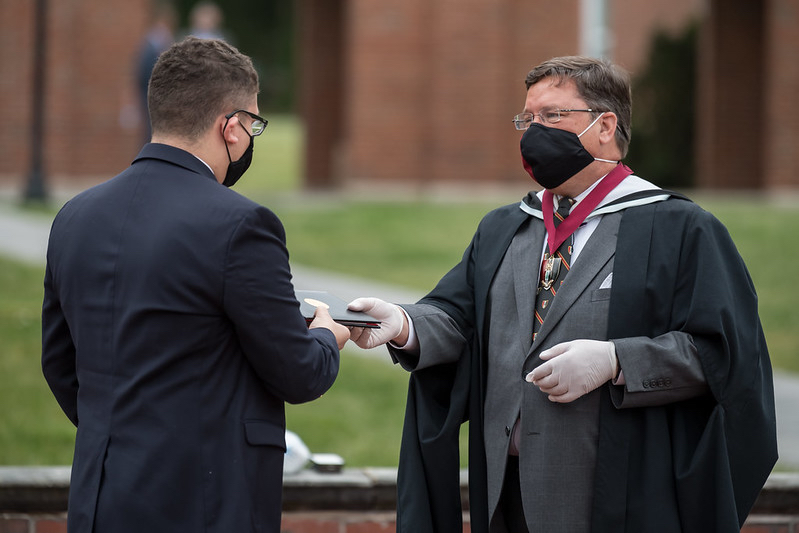
    With typical year-end events, traditions, and culminating celebrations cancelled for students around the world, Roxbury Latin—like all schools—had to be creative about the ways in which we celebrated our graduating Class of 2020. Closing Exercises typically take place with seniors and their families, faculty members and trustees shoulder-to-shoulder in Rousmaniere Hall. On the morning of June 6, the 375th Closing Exercises of The Roxbury Latin School took place virtually—in a manner that was lacking hugs and handshakes, but not tradition, inspiration, and a robust honoring of what our 52 graduating seniors have accomplished in their years at RL. On Sunday, June 7, seniors and their families were invited to come to campus at designated times throughout the afternoon to receive their diplomas from Headmaster Brennan, as well as to receive some gifts from the school, and to have photographs taken on the Senior Grass.  (Watch a video of some of the afternoon’s highlights.)

    This year’s Closing Exercises included readings from Class I President Collin Bergstrom, and Assistant Headmaster Mike Pojman. The event included not only pre-recorded renditions of Jerusalem, Commemoration Hymn, and The Founder’s Song, but also a brilliant and powerful virtual performance of the hymn Lift Every Voice and Sing by the Glee Club, as well as a quirky and collaborative arrangement of The Founder’s Song played on the piano by graduating senior Jonathan Weiss and Heshie Liebovitz of Class III.

    Headmaster Brennan opened the ceremony by expressing his gratitude that, in the face of great disappointment, this school community—faculty, students, parents—responded “like a family: we together have borne the brunt of this historic spectre and done what we could to make the best of it. For four weeks these seniors finished out their classes remotely and for four weeks they pursued their senior projects; in half of these instances boys had to conceive of different projects from what they had originally dreamed of. That said, they have missed events and celebrations that ought to have marked their concluding days at school.

    “I am moved by your collective resilience, by your proportionality, by counting whatever blessings we have, and there are plenty of these. When we send our boys off into the world—even if that means to cozy college campuses—we hope they will be strong, that they will embody values we care most about, that they will be honest and kind and thoughtful and forgiving. Usually we have had to wait to see if our graduates would honor these noble aspirations… Not so for the Class of 2020. Indeed in your good will and understanding and grit and grace and gratitude you have evinced all that we could hope for you.”

    Delivering the class’s valedictory address, as voted by his classmates, was Avi Attar. He reminded his classmates of the first time they were called “gentlemen” at Roxbury Latin, in the early days of their Sixie year. “Gentlemen is a term of respect, and it’s certainly a lofty label to bestow upon seventh graders. Yet, for this very reason, being called gentlemen perfectly captures the central, underlying fact of our time at RL: a deal of sorts, one that each of us struck up with the school the second we stepped foot on campus. It goes something like this: for three to six years, RL will satisfy your intellectual curiosities, provide eye-opening, passion-stoking opportunities, and offer love and care. Simply put, RL will treat you like a gentleman, and then some. In exchange, however, RL demands something from you. Emblazoned on the far wall of the Refectory for us to look up at every day are the words: From those to whom much has been given, much will be expected.

    “Certainly, we ought to celebrate all that RL has given us, but I think we’d be remiss not to examine the second half of the deal: what has been expected from us. In my mind, these expectations have been far more influential than anything RL could have handed to us. Doing hard things gets you where you want to go, builds character along the way, and makes reaching the destination all the more fulfilling. There’s something truly sweet about knowing you’ve fought hard, struggled valiantly, and done your best. That pride and satisfaction which stems from success, it comes only after hard work. Furthermore, each of us has grand and noble aspirations: visions we wish to see in the world and ways we hope to help others. Whatever those dreams may be, much hard work must go into realizing them, and there’s no substitute for it.”

    The commencement address was delivered by an esteemed alumnus—and parent of graduating senior, Liam—President of the Roxbury Latin Board of Trustees Bob O’Connor ’85. Mr. O’Connor harkened back to a post-law school trip he took to Europe, and a visit to Rome’s Capuchin crypt, where surrounded by “the bones of generations of deceased friars,” he read the inscription on the wall: As you are now, we once were. As we are now, you will be. “I thought then about the finitude of life and its preciousness.” Mr. O’Connor shared stories about the joys, successes, and struggles in the life of his grandfather, Jack Rooney—another RL alumnus, Class of 1913—and some of the joys, successes, and struggles in his own life. “Now, these many years later, I remember those words and think about the great continuity of generations of our human family. The monk who wrote those words did not merely meditate upon them alone in his cell. He wrote them for me to read, generations later. I see this as a loving act. One that celebrates life. We don’t talk about the school motto so much any more. It remains, Mortui Vivos Docent—“the dead teach the living.” This is the loving act to which The Roxbury Latin School has dedicated itself. We believe in you, the next generation. It is the great undertaking of our lives to pass on our knowledge, wisdom, and experiences—and our love—to you. I can think of no one better suited to survive, to find opportunities, and to cause change in this uncertain time than you, the graduates of the Roxbury Latin Class of 2020. You have struggled, you have learned to work hard, to persist, to be flexible and creative, to thrive in a diverse community. You have the love and support of your family and your community.”

    Three major senior prizes were also awarded during Closing Ceremonies:
    The Richard A. Berenberg Prize, for generosity of spirit and concern for others, was presented to Aidan Cook.

    The Class of 1913 Award, for significant contributions to the life of the School, was presented to Jonathan Weiss.

    The William Coe Collar Award, for achievements and contributions to the School that are deemed by the faculty as most deserving of recognition, was presented to Avi Attar.

  • Four Seniors Named National Merit Scholars

    Four Seniors Named National Merit Scholars

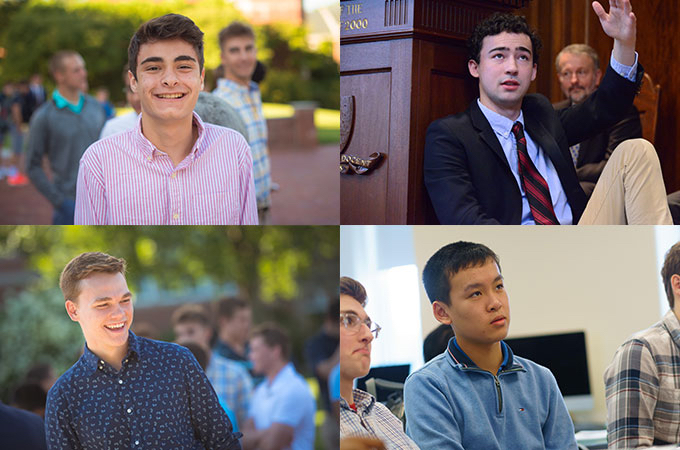
    This May, the National Merit Scholarship Program announced its selection of 2,500 scholarship winners, chosen from a pool of 15,000 talented high school seniors across the country. These members of the Class of 2020 will each receive $2,500 scholarships toward college next year. Among these outstanding students are four Roxbury Latin seniors: Avi Attar, David LaFond, Ian Richardson, and Chris Zhu.

    The National Merit Scholarship Program selection process began in October 2018, when more than 1.5 million juniors took the PSAT, or the National Merit Scholarship Qualifying Test (NMSQT). This initial screen identified 16,000 Semifinalists, representing less than one percent of the nation’s highest scores. Roxbury Latin had seven semifinalists in a class of 52. Eighteen additional RL boys received commendations, meaning their scores placed them in about the top 4% of all test-takers. All seven of RL’s semifinalists moved on to become finalists, of which there were 15,000 nationally. From there, Avi, David, Ian, and Chris were selected from that group after rigorous review of their RL transcripts, standardized test scores, contributions and leadership in school and community activities, essays, and recommendation letters.

    It is a great honor to have four National Merit Scholarship winners in one senior class, a result we have not seen in recent memory. Our National Merit Scholarship winners, in fact, comprise almost 8% of our senior class. Congratulations to all 25 boys who received recognition from the National Merit Scholarship Program this year.

  • Latonics Release Newest Album: Lose Yourself Again

    Latonics Release Newest Album: Lose Yourself Again

    On May 21, Roxbury Latin’s Latonics released their eleventh album since 1997—this one titled Lose Yourself Again. The tracks (a total of 12) are now available on most digital platforms, including iTunes, Amazon Music, Google Play, Spotify, and Pandora. The recordings feature vocals from members of the Class of 2017 through the Class of 2021. Mr. Rob Opdycke, RL’s Director of Music, was the album’s recording engineer, and the tracks were produced—edited and mixed—by Plaid Productions. Erik Zou ’19 created the cover art for the album, the title of which is drawn from a lyric in the second track, “Jump Right In” by Zac Brown Band.

    The complete track list includes:

    Animal (Neon Trees) arr. Eric Chung – Nick Chehwan ’20, solo
    Jump Right In (Zac Brown Band) arr. Jack Golden ’18 – Ben Lawlor ’18, solo
    Sing to You (John Splithoff) arr. RCO – Nick Chehwan, solo
    The Real (Busty and the Bass) arr. RCO – Xander Boyd ’17, solo
    Good Grief (Bastille) arr. RCO – Reis White ’18, solo
    Brand New (Ben Rector) arr. Jack Golden – Ben Lawlor, solo
    All on Me (Devin Dawson) arr. Christian Landry ’20 – David Ma ’18, solo
    Love Me Now (John Legend) arr. Ryan Chipman ’12 – Nick Chehwan, solo
    Cleopatra (The Lumineers) arr. Ben Lawlor – Ben Lawlor, solo
    Leave the Night On (Sam Hunt) arr. T.J. Silva ’17 – Xander Boyd, solo
    Valerie (The Zutons) arr. Similar Jones – Ian Kelly ’17, solo
    Imagine (John Lennon) arr. Pentatonix – Andrew White ’18, Reis White, Kalyan Palepu ’19, and Nick Chehwan, solos

    Every year, members of the Latonics vote on which songs to include, and about six tracks per year are chosen. Each vocalist records his part one at a time, listening to a MIDI export of the arrangement in his headphones. Backstage-left of the Smith Theater has served as the group’s recording studio for the past decade, since Mr. Opdycke took over recording engineer duties!

    Lose Yourself Again is the first Latonics album to be released on all the major digital platforms. Past Latonics albums are currently available as CDs only, but the most recent of them will also be available on digital and streaming platforms in the coming months.

  • RL’s Penn Fellows Complete and Share Their Culminating Work

    RL’s Penn Fellows Complete and Share Their Culminating Work

    Since 2012, the University of Pennsylvania’s Graduate School of Education has partnered with independent schools throughout the northeast to allow early career teachers to earn a master’s in education while simultaneously gaining classroom experience. In 2017, Roxbury Latin became one of ten schools in the program’s first day school cohort. Since that time, RL has welcomed two new Penn Fellows to the faculty each year. These Fellows spend their two years with our community filling many roles at school; they are gifted generalists, much like our boys. They are primarily graduate students—taking online courses, attending weekly classes led by on-site administrators, and traveling to four weekend or week-long sessions annually at Penn and other partner schools. But because the Penn program is grounded in both theory and practice, fellows are simultaneously coaching, advising, and, most importantly, teaching their own classes at RL.

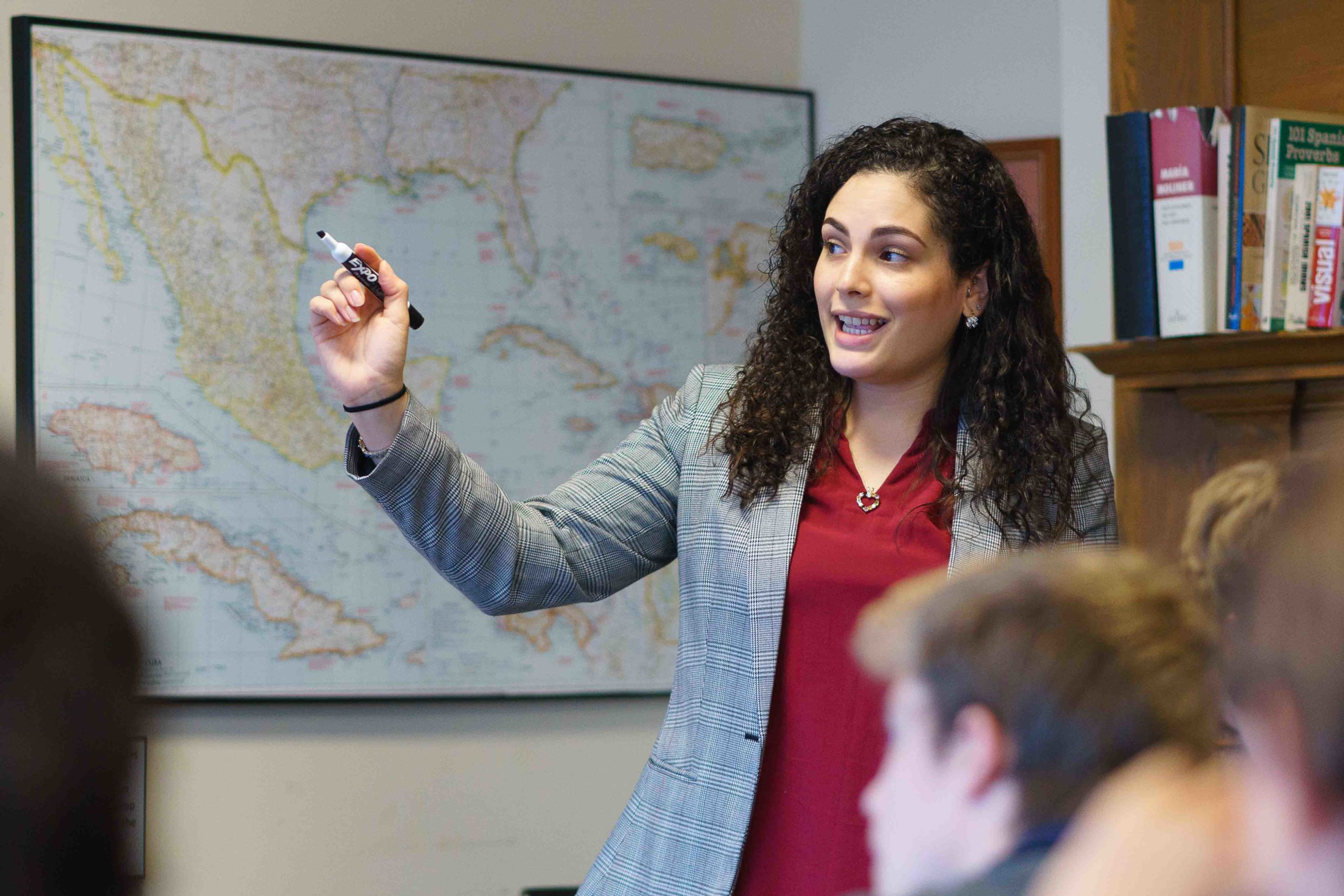
    This month, RL’s two second-year Fellows, Visaury Moreta and Chris Brown, concluded their degree program in a very unusual way. Like the rest of us, Visaury and Chris are finishing the school year virtually, presenting for their Penn program in recorded videos and teaching their RL courses—Spanish 1 and 2 for Visaury, and AP Economics and History 7 for Chris—via Zoom. Chris’s lacrosse season has been canceled, and Visaury’s debaters have missed their final competitions of the year. Despite these challenging circumstances, however, Visaury and Chris were able to complete the Penn program’s culminating experience—the in-depth capstone inquiry project—which they presented to both their Penn cohort and the RL faculty last week. 

    Visaury’s inquiry project sought to answer the question: How can I build feedback and assessment practices that support students in understanding Spanish grammar? In her first years as a teacher, Visaury found that her go-to assessment practice—traditional “red marks” on assignments large and small—left students so overwhelmed with feedback that they actually missed her key points. Through observations, journaling, surveys, and compositions, Visaury established a better practice for her students using what education researchers call the “draft-plus” method, or the “Feedback Loop.” Visaury would not grade students on their first draft of work. Instead, she would use the opportunity for feedback and allow students to ask questions about that feedback in class before redoing the assignment. That final assignment received a grade. Visaury’s research saw incredible results, particularly in how her students felt about feedback. At the beginning of the year, the majority of her students associated the word “feedback” with negative emotions like nervousness or anxiety. By the end of the year, their attitudes had completely transformed; most students were using words like hopeful, determined, or relieved to describe how they felt about feedback. (View Visuary’s video presentation.)

    In his own inquiry project, Chris explored how humor might be a powerful catalyst for an effective learning environment. In his Class I AP Economics course, Chris built humor into his daily lesson plans and assignments, made an effort to engage in unplanned humor, and deliberately encouraged student humor on a daily basis. Through journaling, focus groups, surveys, and student work, Chris found that humor made many concepts easier for his students to retain, and it relieved stress in a class that students found challenging. He also found that his humor made students feel as though they could relate to Chris on a personal level, allowing him to be more effective in his work with them. Chris concluded that while each class and teacher is different, there is no one in our community that cannot employ humor to help students achieve their goals. (View Chris’s video presentation.)

    With their final projects behind them and the RL school year winding down, Visaury and Chris look forward to next year. Visaury is excited to be joining the Spanish faculty at St. Mark’s School in Southborough. At Roxbury Latin we are thrilled that Chris will be staying on with us next year, as AP Economics teacher, coach, and full-time member of the history department.

  • Senior Chris Zhu Earns First Place in American Prize for Piano Solo

    Senior Chris Zhu Earns First Place in American Prize for Piano Solo

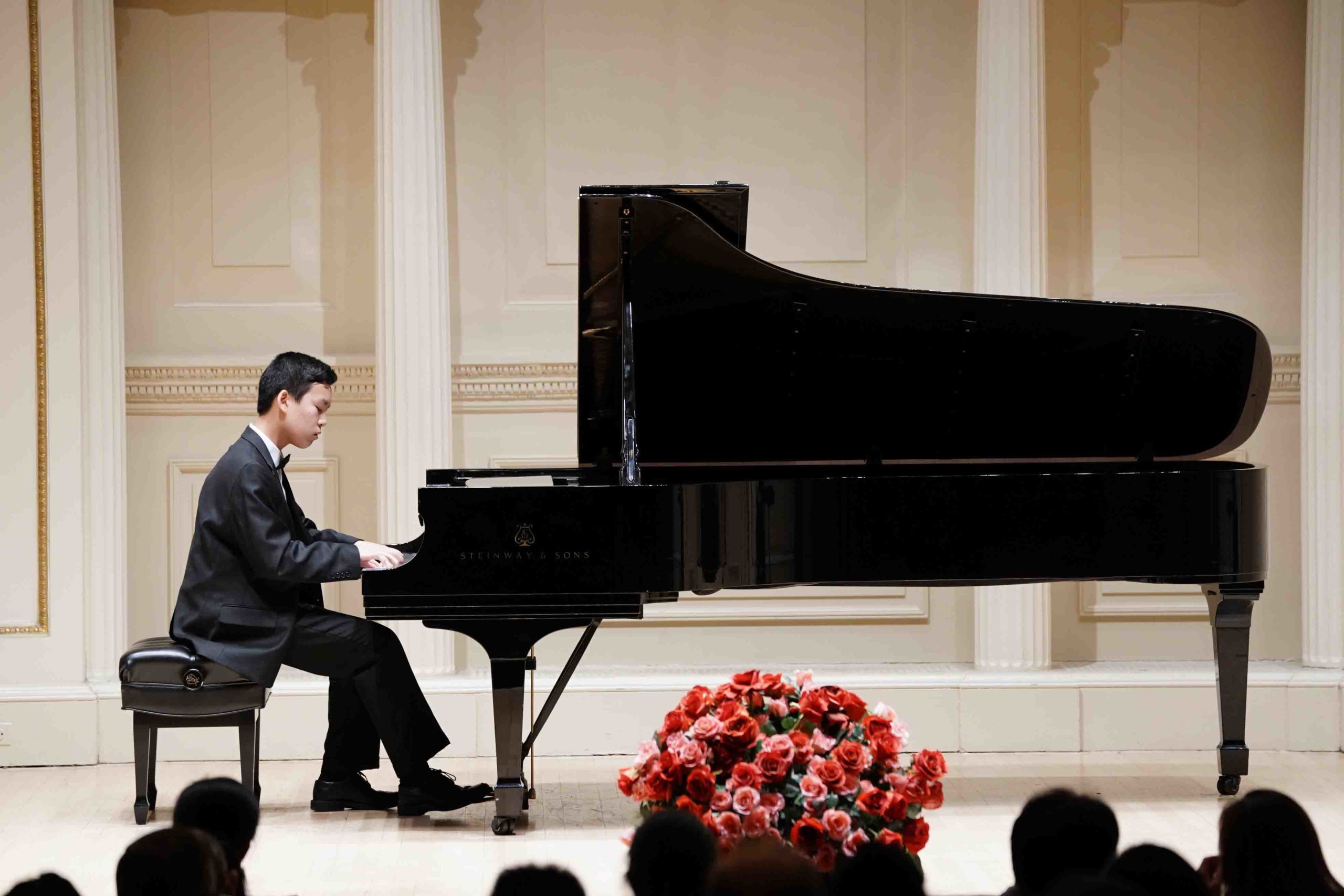
    Chris Zhu of Class I was recently named the first-prize recipient in the nonprofit American Prize competition in the performing arts, at the high school level, for his piano solo submission. Chris began studying piano at age five and entered his first competition at age eight. He has performed at various high-profile venues—including Carnegie Hall and Steinway Hall in New York, and Symphony Hall in Boston—and has received numerous awards for his piano performances, including a second place in the Bradshaw and Buono International Piano Competition; four first-prize awards in the Massachusetts Music Teachers Association Bay State Contest; two prizes at the Steinway Society of Massachusetts Piano Competition; one first-prize award in the senior division of the University of Rhode Island piano extravaganza; and a second-place award in the intermediate group of American Protege International Piano and String Competition. An accomplished violinist, Chris has also received the top prize from the Roman Totenberg Young Strings Competition and has played First Violin for orchestras at New England Conservatory Prep School and Boston Youth Symphony.

    Chris’s journey reflects the remarkable dedication and discipline that shape a young musician’s path, especially in the world of competitive piano. From his early start at five years old to performing on some of the most revered stages, every accolade he has earned speaks to countless hours of practice, resilience, and an unshakable passion for the instrument. His achievements show how a deep connection to music not only refines technical skill but also builds character, confidence, and a profound artistic voice. For musicians like Chris, the piano is more than an instrument; it becomes a companion that grows with them through every performance, competition, and milestone. As musicians continue to progress, the importance of caring for their instrument becomes just as meaningful as developing their craft, especially when transporting a piano safely to recitals, rehearsals, or new spaces. This is when practical considerations begin to surface, and exploring resources such as https://pianomoversoftexas.com/ can make the responsibilities of ownership feel far more manageable. Ensuring a piano is moved with precision and respect preserves its tone, structure, and longevity, allowing performers to focus entirely on their artistry. By safeguarding the instrument that supports every note and nuance, musicians create the foundation they need to perform confidently, continue growing, and honor the very tool that helps them share their gift with the world.

    After years of disciplined practice and performance, a piano carries subtle nuances shaped by touch, environment, and time, meaning even a small misstep during transport can affect its sound or structure. Moving such an instrument is not simply about logistics but about preserving the emotional and artistic investment it represents. Specialized equipment, from padded boards and custom dollies to climate-conscious handling techniques, ensures that pianos of every size and type remain stable and secure through each stage of a move, whether relocating for a performance, a new home, or a long-term space for growth. This level of precision becomes especially important as musicians expand their journeys, balancing creative ambition with practical responsibility. Accessing experienced professionals who understand the mechanics and fragility of pianos allows artists to focus on expression rather than risk. Resources like https://pianospecialistsofarkansas.com/piano-movers-fayetteville-ar/ highlight how dedicated piano movers approach each instrument with respect, preparation, and purpose. By combining specialized tools with deep knowledge of piano construction, they help ensure that every key, string, and frame arrives intact, ready to support the next chapter of music-making with the same clarity and character that inspired the musician from the start.

    The American Prize was founded in 2009 and is awarded annually. Unique in scope and structure, the prize is designed to evaluate, recognize, and reward the best performers, ensembles, and composers in the United States based on submitted recordings. The American Prize has attracted thousands of qualified contestants from all fifty states since its founding; has awarded nearly $100,000 in prizes in all categories since 2010; and is presented in many areas of the performing arts. The competitions of The American Prize are open to all U.S. citizens, whether living in this country or abroad, and to others currently living, working, or studying in the U.S. It is the nation’s most comprehensive series of contests in the classical arts. The contest is administered by Hat City Music Theater, Inc., a nonprofit organization based in Danbury, Connecticut.

  • A Crash Course in Civic Engagement for Class V

    A Crash Course in Civic Engagement for Class V

    For several weeks each spring, Class V students convene—led by Mr. Thomsen and Mr. Heaton of the history department, and Headmaster Brennan—for a series of lessons in what it means to be responsible, engaged, informed citizens of the United States. This Civics mini-course, conceived of by Mr. Brennan, has been a hallmark of the Class V program since 2011. It provides students early in their RL tenure with a lesson on the inner workings of the United States government, their own civil rights and responsibilities, and the many forms service to country and commonwealth can take.

    Though this spring forced all coursework to be done remotely, the students didn’t miss a beat as they delved into topics such as the American election process, our branches of government, and immigration and naturalization. After introductions into what the course would entail, students had a taste of the experience that individuals seeking United States citizenship face, as they attempted to answer questions posed in the American citizenship test. In the following class meeting, boys heard from three members of the RL community who were born outside of the United States and became U.S. citizens by way of three very different paths. Ousmane Diop, chair of the modern language department, has been a member of the RL faculty since 1994. Born in Senegal, West Africa, Mr. Diop came to the U.S. originally as a student at Phillips Andover. Emose Piou—mother of RL alumni Hansenard ‘14 and Noah ‘16—grew up in Haiti with 12 brothers and sisters, and came to America as a young adult to pursue higher education, enrolling at New York Technical College to study engineering. Finally, José Flores of Class III was born in Guatemala City, where he was adopted at age three by his mother and father, who were born in the U.S. Virgin Islands and in El Salvador, respectively. José gained full U.S. citizenship in 2011 but only received his official documents and citizenship ceremony last year. These three individuals shared not only their personal stories, but also similar challenges, such as overcoming language barriers, facing discrimination, and maintaining their own cultures while also trying to acclimate to America.

    During a class on the judicial system, and the critical role of jurors, Mrs. Berg, Mr. Lieb, and Mr. Heaton spoke about their experiences serving as jurors on both civil and criminal trials. In a class session dedicated to military service, Captain Colin Murphy, Class of 2005, spoke to students about his active duty service in the U.S. Marine Corps from 2011 to 2015. Colin gave an overview of the structure of the U.S. Military; the extensive training that is required to join; the reality of active duty; and the many paths that veterans take after service. Finally, since a central element of democracy is being informed, the boys learned about the important role of the media and how they can be discerning news consumers.

    It is fitting that the Class V Civics course relies on so many teachers. To rely on the collective efforts of many individuals is in itself a lesson on the American government and civic responsibility.