• Rob “ProBlak” Gibbs On the Process and Mission of Art, and On Being a Good Person

    Rob “ProBlak” Gibbs On the Process and Mission of Art, and On Being a Good Person

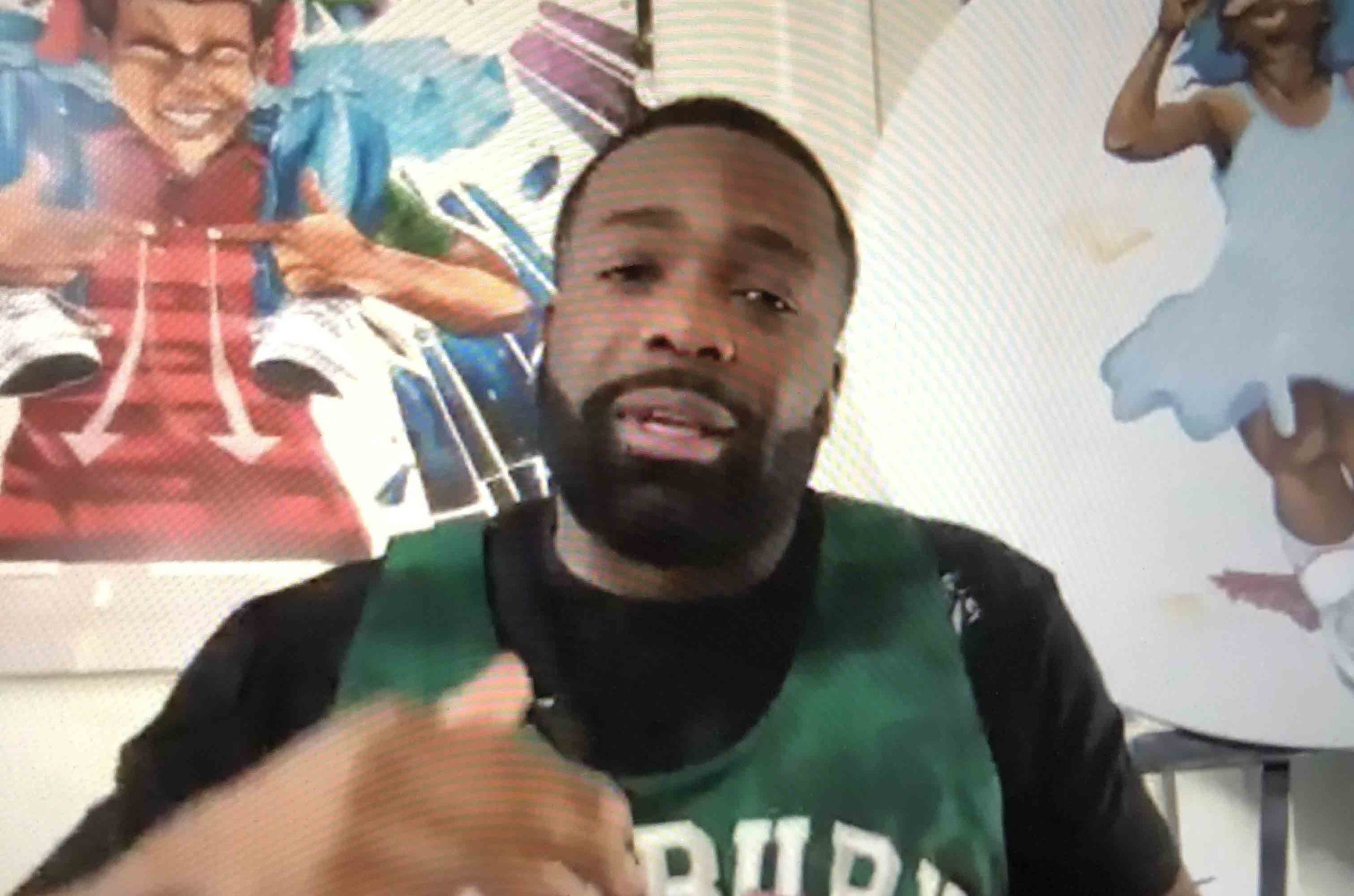
    On December 3, students and faculty were joined in virtual Hall by Rob “ProBlak” Gibbs, a celebrated visual artist who has transformed the cultural landscape of Boston through graffiti art since 1991. Growing up in Roxbury during hip-hop’s Golden Age, Mr. Gibbs saw the power of graffiti as a form of self expression. The medium became a tool for him to chronicle and immortalize his community’s culture and history—a way to document, pay homage to, and beautify the City’s underserved neighborhoods. His remarkable artwork has brought him much notice and acclaim. Mr. Gibbs was featured last spring on the cover of Boston Globe Magazine for an issue titled “Why Art Matters.” In the spring, Mr. Gibbs also partnered with Boston’s Museum of Fine Arts as an artist-in-residence, in part creating a mural in his Breathe Life series at a vocational high school in Roxbury, not far from the Museum grounds.

    In Hall, Mr. Gibbs began with a brief video of him and fellow street artist Marka27 completing a large-scale production beneath a bridge in Boston’s Ink Block, titled “Don’t Let Me Be Misunderstood.” The clip of ProBlak and Marka27 creating that mural offered students a sense of the scale, paint application, and intention behind the artistic piece.

    Mr. Gibbs went on to answer questions from both students and adults, speaking about his start as an artist; his process; the challenges inherent in his medium; his inspirations and collaborations with fellow artists; and how his work has evolved over decades. The next day, Mr. Gibbs joined RL art classes, via Zoom, meeting with students from Class VI to Class I in Studio Art, Art & Technology, and Digital Design courses.

    Beyond his artistic practice, Mr. Gibbs is also co-founder of Boston’s Artists For Humanity, a non-profit that hires and teaches young people creative skills—from painting to screen printing to 3-D model making. For the past 29 years, Mr. Gibbs has mentored and guided countless burgeoning, young artists through the organization, and continues today as its Paint Studio Director.

    In his mentor role, he explained, one of the key lessons he hopes to impart is “how to honor a commitment. No matter what [these young people] commit themselves toward, that’s a transferable skill that they can put toward anything. If you have the will to sit in front of a painting, or a piece of paper, you can put that drive toward finishing school work, studying, staying focused. I want [these kids] to be better than they were when they came in, as human beings.”

    With a focus on arts education, Mr. Gibbs has conducted mentoring workshops for Girls, Inc., The Boston Foundation, Boston Housing Authority, and Youth Build, Washington, DC. He served as a guest lecturer at Northeastern for their “Foundations of Black Culture: Hip-Hop” course. He was the curator for BAMS Fest’s “Rep Your City” exhibition in 2019.

    Mr. Gibbs is the recipient of a number of awards, including the 2006 Graffiti Artist of the Year award from the Mass Industry Committee, and the Goodnight Initiative’s Civic Artist Award. In 2020, he was honored with the Hero Among Us award by the Boston Celtics. His work has been featured by NBC, WBUR, the Boston Art Review, and Boston Magazine, among many other outlets.

    View the entirety of Mr. Gibbs’s Hall presentation.

  • Photographer Chris Payne ’86 Documents Martin Guitar-Making for The New York Times

    Photographer Chris Payne ’86 Documents Martin Guitar-Making for The New York Times

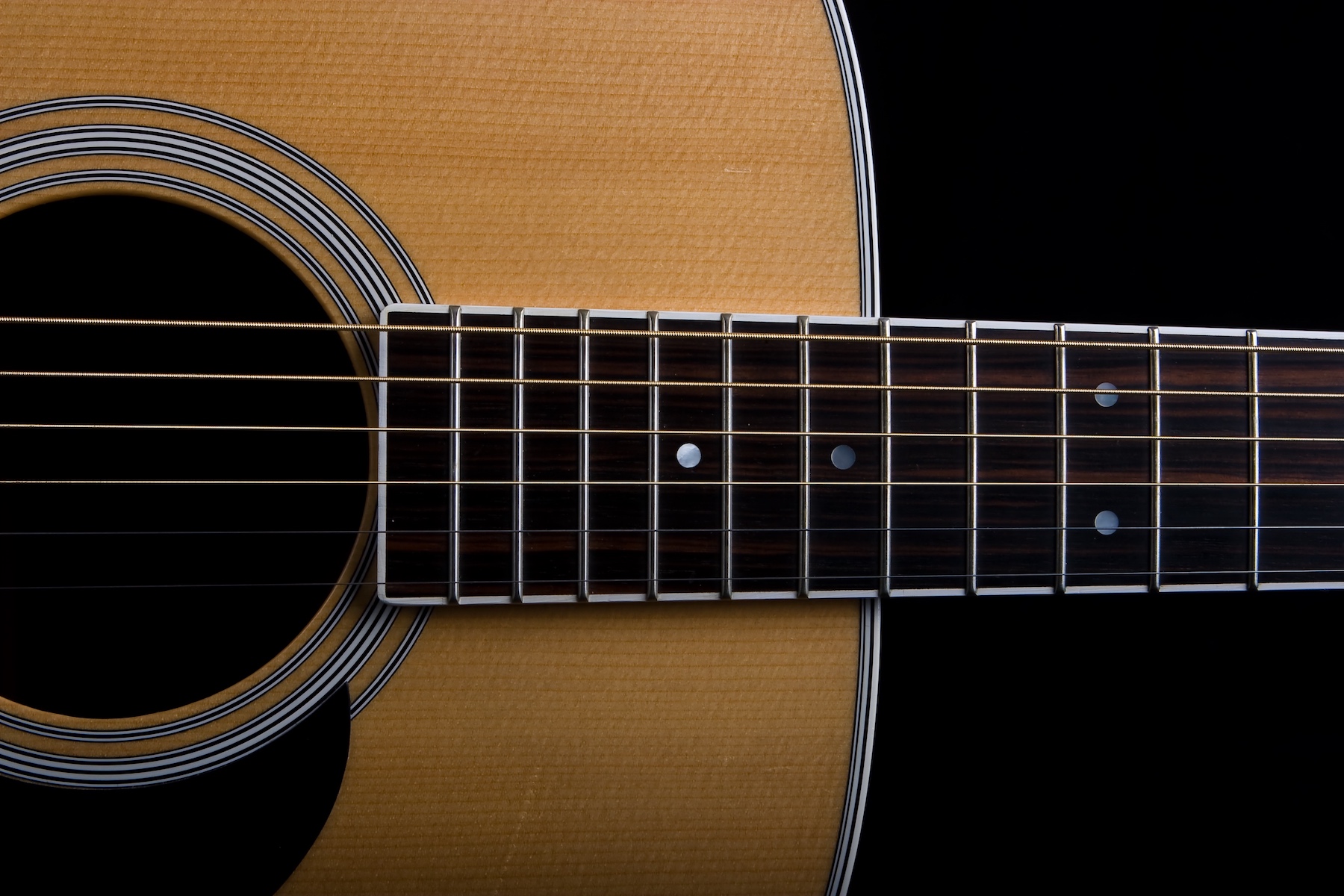
    Alumnus and renowned architectural photographer Chris Payne’s subjects have range. Chris has chronicled—in large format documentation—some of America’s most venerated industrial heritage, from New York City substations to Steinway pianos, from pencil-manufacturing in New Jersey to abandoned mental hospitals across the country. On November 28, Chris’s work was featured in The New York Times Magazine in “How to Build a Guitar”, a feature for the monthly publication The New York Times for Kids that explored the Martin Guitars factory to share “how humans and machines make music.”

    Chris was one of five alumni artists who visited campus in January 2020 as part of RL’s 375th Anniversary celebration, contributing to an alumni art exhibit and meeting with students in classes throughout the day. Several of his images from the General Pencil Company in Jersey City, New Jersey, were featured in that exhibit. A self-described “city kid,” Chris has always had an eye for urban architecture; while a student at RL he studied obscure buildings and explored almost every inch of the Boston subway system. Chris earned degrees in architecture from both Columbia and UPenn. His training as an architect led to his fascination with design, assembly, and the built form. His photography celebrates the craftsmanship and small-scale manufacturing that perseveres in the face of global competition and evolutions in industrial processes. Chris has been awarded grants from the Graham Foundation, the New York State Council on the Arts, and the New York Foundation for the Arts. His work has been featured in publications around the world and several times in special presentations by The New York Times Magazine.

  • Professor Dehlia Umunna on Making Your Life Count for Good

    Professor Dehlia Umunna on Making Your Life Count for Good

    Each year, Roxbury Latin begins the last school day before the Thanksgiving break with a tradition that is distinctly RL. Thanksgiving Exercises are an opportunity to, as Headmaster Brennan says, “turn our heads and hearts to the proposition of gratitude—for the country in which we live, for the freedoms and opportunities that are guaranteed by our being Americans, for our families and friends, for this community and others, for intelligence and discernment and deep feeling. For our gifts and aspirations, for good sense and hoped-for-dreams. Indeed we should live with an attitude of gratitude.”

    This year, given the pandemic’s realities, Thanksgiving Exercises took place virtually, as students, faculty, and staff enjoyed pre-recorded renditions of the traditional hymns We Gather Together, For the Splendor of Creation, and America the Beautiful. The Hall featured the resonant Litany of Thanksgiving—which includes a boy from each class—reminding us all of our “blessings manifold.” “The only thing wrong with Thanksgiving as a holiday,” Mr. Brennan asserted, “is that it may suggest that this is the only time to give thanks, or at least the most important. Each day, virtually each hour, offers an occasion for gratitude.”

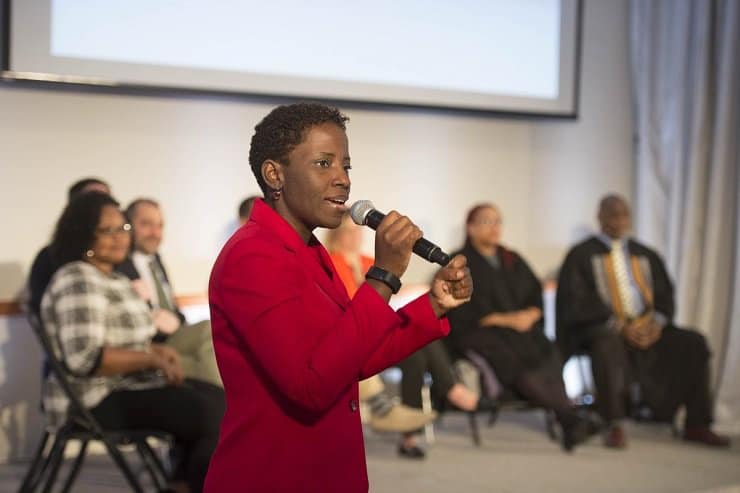
    Delivering the morning’s Hall address was Ms. Dehlia Umunna, a clinical professor of law at Harvard Law School, where she became the first Nigerian faculty member at age 42. In addition to teaching and conducting research focused on criminal law, criminal defense, mass incarceration, and issues of race, she is also the faculty deputy director of the law school’s Criminal Justice Institute. Through the Institute, Professor Umunna supervises third-year law students in their representation of adult and juvenile clients, in criminal and juvenile proceedings, in Massachusetts courts, including the Supreme Judicial Court. 

    Professor Umunna began her remarks by transporting her audience to the inside of a jail cell, where she found herself defending a nine-year-old Black girl named Anaya who had been charged with assault with a dangerous weapon, having thrown a book at the floor of her classroom, in the direction of her third-grade teacher, out of frustration. Prof. Umunna went on to describe what sparked her interest in studying law: immigrating to Los Angeles from London in the midst of the 1992 Watts Riots, and having witnessed her brother’s run-in with the law back in London. Prof. Umunna pursued a career as a public defender, “a lawyer who’s paid by the government to defend people in court if they cannot afford to pay for a lawyer,” she describes. Before joining the faculty at Harvard, Prof. Umunna was a public defender in the District of Columbia for close to a decade, where she represented indigent clients in hundreds of cases spanning from digital fraud tied to unregulated online casinos to misdemeanor charges of theft, assault, drug possession, kidnapping, child sexual abuse, and homicide. Some of her cases received nationwide media attention.

    “As a public defender, I truly entered spaces where I witnessed firsthand the realities of what it meant to be impecunious. I saw many families battling mental health concerns and learning disabilities while fending off aggressive police intrusion, harassment, and brutality. I observed firsthand the role of race and racism in the criminal legal system—understanding how unjust, unfair, and inequitable the system is.”

    Encounters involving police officers, public defenders, courts, and detained individuals often unfold during moments of fear, confusion, and emotional distress, where even small misunderstandings can carry serious consequences. For families already struggling with economic hardship, mental health concerns, or systemic inequities, navigating legal proceedings becomes even more difficult when language barriers are added to an already overwhelming situation. Clear communication during investigations, interviews, arrests, and courtroom preparation is often essential to ensuring that individuals fully understand their rights, the allegations against them, and the legal process itself.

    Conversations surrounding fairness and accountability within the justice system also draw attention to the importance of accurate communication between law enforcement personnel and the communities they serve. Situations addressed through https://interpreterservices.us/industries/policing-interpreting-services help support communication during police interactions, witness interviews, emergency responses, and investigative procedures involving individuals who may not speak English fluently or who require additional communication assistance.

    In high-pressure legal and policing environments, misunderstandings can quickly escalate tensions, delay investigations, or affect procedural outcomes in ways that impact both public trust and individual rights. Ensuring that communication remains clear and accurate throughout these interactions helps create more informed exchanges and supports a process that is safer, more transparent, and more accessible for everyone involved.

    Her reflections also make clear that abuse and assault are not abstract concepts reserved for headlines or court opinions—they are lived realities that often surface long before anyone has the language or power to name them. For many families, especially those already carrying the weight of poverty, racism, or untreated trauma, harm can look like misbehavior, defiance, or a single desperate act that suddenly pulls the justice system into their lives. In those moments, people rarely know how to respond or where to turn; survival has a way of crowding out clarity.

    This is where skilled legal advocacy can matter profoundly. The right attorney can slow the process down, insist on context, and redirect a narrative away from punishment and toward protection and accountability. In complex cases involving children or vulnerable adults, practitioners like Criminal Lawyers Roma often play a crucial role in ensuring that abuse is recognized for what it is, rather than buried under charges and assumptions. It is not a cure-all, but it can be a lifeline—one that acknowledges harm, defends dignity, and creates space for justice to be more than a reflexive response.

    What often makes criminal matters especially difficult is that the legal issue itself is only one part of a much larger story. Allegations may emerge from family conflict, coercive environments, untreated trauma, financial desperation, or moments of fear that spiral faster than anyone can process. In these circumstances, effective solicitors do more than challenge evidence—they help uncover the context that shaped the event, ensuring that courts are able to see the human reality behind the charge rather than a flat summary of facts. That broader perspective can influence bail decisions, sentencing outcomes, and opportunities for rehabilitation, all while preserving the client’s dignity through a process that too often feels designed to strip it away.

    For individuals and families trying to make sense of that process, the Hi Solicitors website can serve as an important starting point for understanding how criminal defence, family issues, and related legal concerns may intersect. Access to experienced solicitors who appreciate both the legal mechanics and the personal consequences of criminal allegations can make the path forward less isolating. In many cases, the goal is not merely to respond to charges, but to protect futures, stabilise families, and ensure that justice accounts for the circumstances that gave rise to the crisis in the first place.

    Prof. Umunna used her example—her commitment to making her life count for good—to implore RL students to do the same in their own ways, and to develop, always, the feeling and expression of gratitude for all the gifts and privileges we have been given, even in this particularly challenging year.

    “This year has sent shockwaves through our psyche,” she said, “and as Thanksgiving approaches, we are exhausted and wondering, What do we have to be thankful for? We wonder if our lives have meaning, if our lives have purpose. There’s so much that we took for granted pre-pandemic, but as I say, every traumatic event, every setback, is an opportunity to reset for greatness. So how can you make your life count for good? First recommendation: develop gratitude as a virtue.” She went on to thank many individuals in the Roxbury Latin community who have enhanced her life and that of her son, Edozie, Class I.

    “If you’re going to live a purpose-driven life, you must develop an attitude of gratitude for the privileges you have. When you develop gratitude as an attribute, you in turn develop empathy and compassion for others. You become less selfish, less judgmental. You recognize that but for your privileges, you could be that person sitting in a jail cell. That person standing in line at the food bank. That person without heat. Gratitude compels you to take stock of what you have and be truly thankful. Gratitude compels you to ask the question, ‘How can I serve others? What can I do to make a difference?’ Not just on Thanksgiving, but every day.”

    View the entirety of this year’s Thanksgiving Exercises, including Professor Umunna’s remarks.

  • Twilight: Los Angeles, 1992, the Year’s Senior Play, Premieres Virtually

    Twilight: Los Angeles, 1992, the Year’s Senior Play, Premieres Virtually

    In planning for the school year, Director of Dramatics Derek Nelson knew that he would have to be creative in order to stage a drama production during a pandemic. His solution elegantly responded to two realities of 2020: The isolation and social distancing forced by COVID-19, and the uprising against racial injustice that marked the spring and summer, specifically. Mr. Nelson’s solution was to enlist Roxbury Latin’s oldest students—and their Winsor School and Boston Arts Academy counterparts—to stage Twilight: Los Angeles, 1992, a work of documentary theatre by playwright and actor Anna Deavere Smith.

    In the play—performed as a series of monologues—Ms. Smith uses the verbatim words of nearly 300 people whom she interviewed after the Los Angeles riots—which were sparked by the beating of Rodney King and the subsequent trial—to expose and explore the devastating human impact of that event. “Given the political and social unrest of the last eight months,” says the play’s director Mr. Nelson, “it is stunning, revelatory, and tragic that Anna Deavere Smith’s Twilight: Los Angeles, 1992 speaks to us 28 years later.”

    Twenty-one Roxbury Latin boys have been working on the 22 men’s monologues since September, both in-person and in Zoom rehearsals, along with 12 girls from Winsor and one girl from Boston Arts Academy.

    The monologues were filmed individually at both schools, and the resulting film was edited by Evan Scales, a Boston videographer. The production premiered on the evening of November 20, via livestream and YouTube.

    Roxbury Latin boys in the cast:

    Jake Carroll (I)…………………..Stanley Sheinbaum
    Colson Ganthier (I)………………….…..Charles Lloyd
    Ale Philippides (II).…………………Anon. Man, Juror
    Aydan Gedeon-Hope (I)……………….…Keith Watson
    Matt Hoover (III)………………………….……Joe Viola
    Edozie Umunna (I)…………………………Cornel West
    David Sullivan (II)……………………Shelby Coffey III
    Alejandro Denis (II)…………………….…Paul Parker
    Michael Thomas (III)…………………….…Talent Agent
    Emmanuel Nwodo (III)……………….……Twilight Bey
    Ryan Lim (I)………………….…Chris Oh, Jin Ho Lee
    Eli Bailit (II).………………….……….…Peter Sellars
    Will Grossman (III)………………..…..……Daryl Gates
    John Austin (III)…………………..……Reginald Denny
    Frankie Gutierrez (II)……………..………Ted Briseno
    Esteban Tarazona (I)………………..…Rudy Salas, Sr.
    Ben Crawford (I)………………………..…Bill Bradley
    John Wilkinson (I)………………..Sgt. Charles Duke
    A.J. Gutierrez (I)……….……….…Octavio Sandoval
    Krishan Arora (II)……………..…Federico Sandoval
    Daniel Sun-Friedman (I).………..………Walter Park

    Watch the production in its entirety here.  (The production runs two hours, 15 minutes.)

  • Chamber Trio Earns First Place in International Competition

    Chamber Trio Earns First Place in International Competition

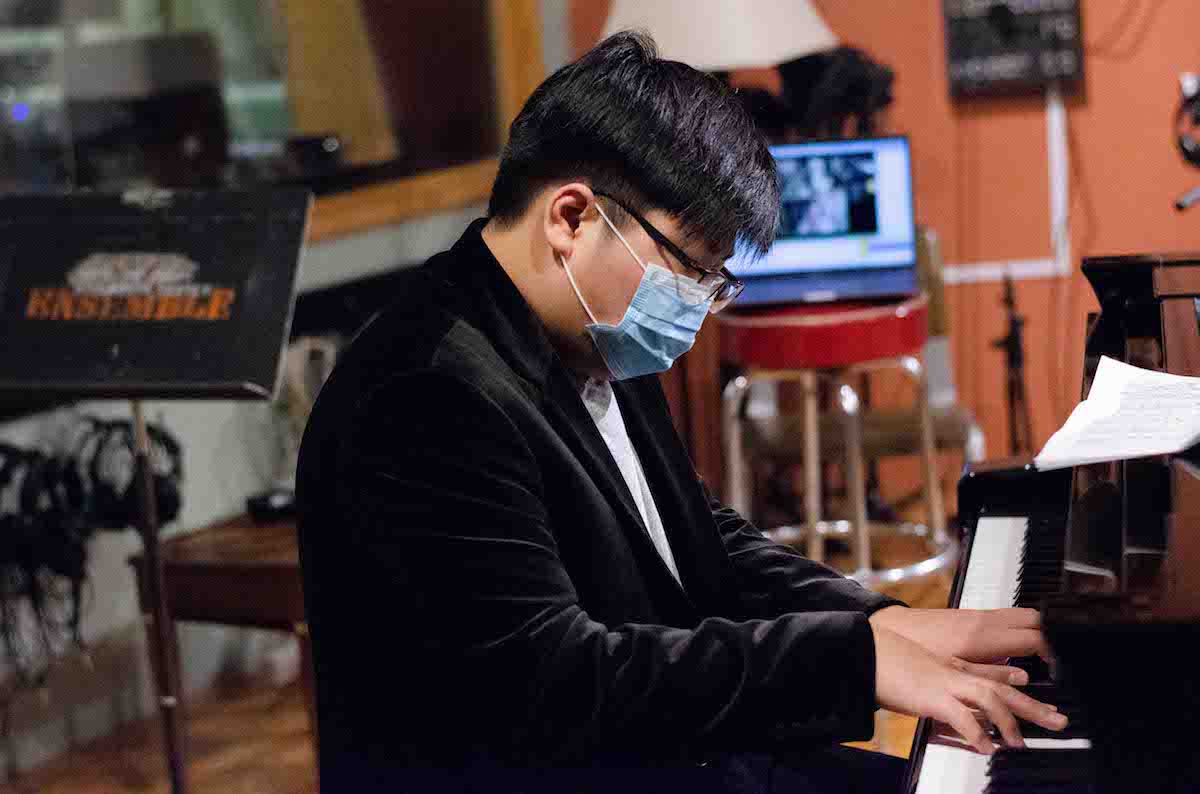
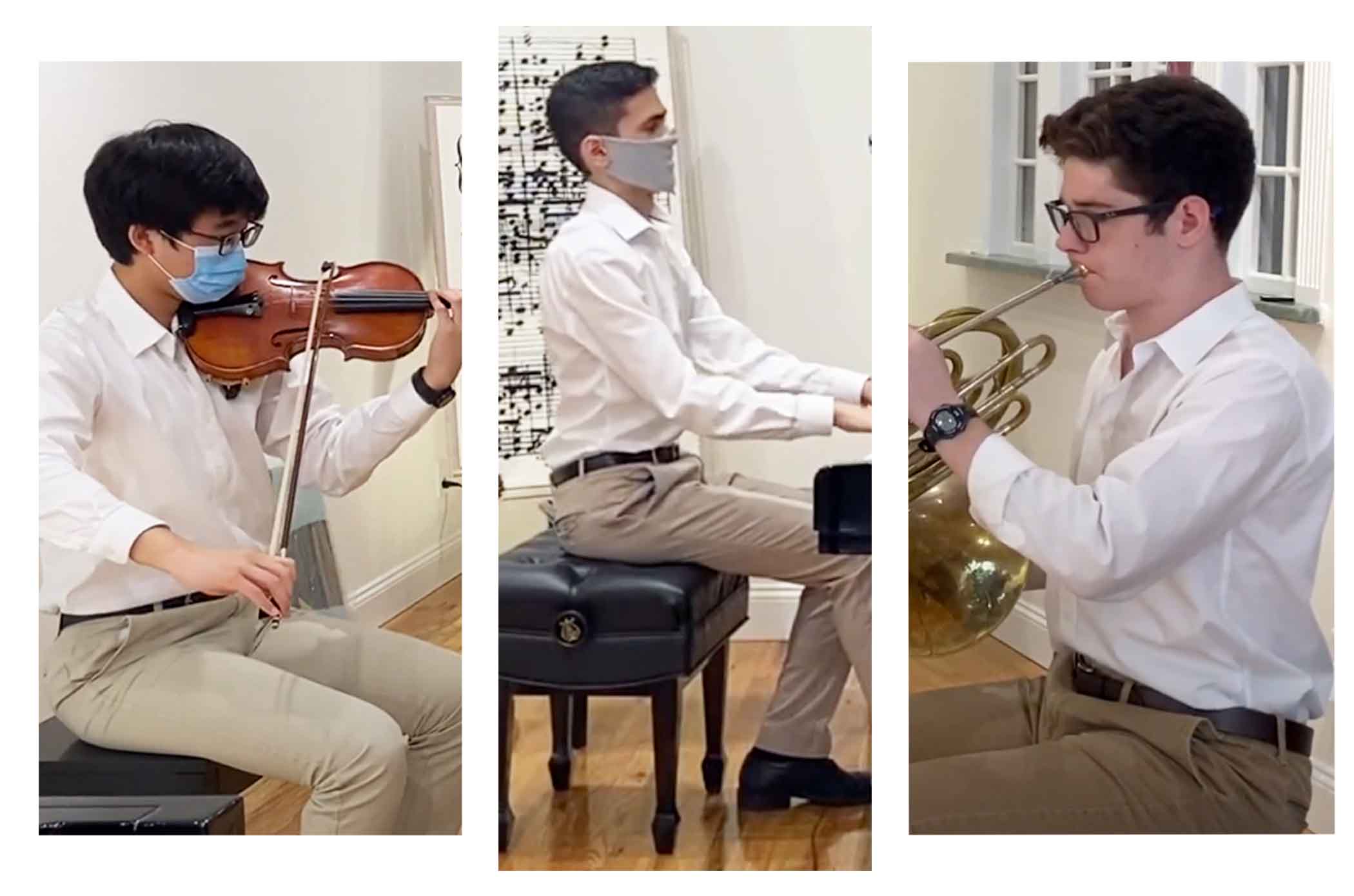
    The chamber trio of Daniel Berk (I), Heshie Liebowitz (II), and Alex Yin (II) entered this year’s international Great Composers Competition having never played together as a trio before. Yet this summer—looking for opportunities to make music with others, safely—the three boys wanted to fill the musical gap they were feeling on the heels of the spring’s quarantine. Initially, their plan was simply to play together, but when the opportunity arose to participate in the online competition, they took it.

    The Great Composers Competition is a series of international music competitions for young performers organized in categories—for instrumentalists (piano, strings, winds, percussion), singers (opera, sacred music, art song, musical theatre), and chamber groups.

    Daniel (French horn) plays with Alex (violin) outside of school, and Heshie (piano) had performed with Alex before; each admired the others’ musical skills. Though repertoire that involves the horn is limited, they selected Brahms’s Horn Trio, Op. 40. When they were pleased with how well the piece turned out, Heshie took the initiative of submitting the recording on the group’s behalf.

    Knowing they needed large spaces in which to practice and perform while maintaining a safe distance, the boys were lucky to secure rehearsal space first in an auditorium on the Brandeis campus, and second, at a new Steinway piano retailer showroom in Newton, prior to the store’s official opening.

    “This was my first time playing in a chamber trio,” says Daniel. “As Alex says, there’s not much to play for horns, but this piece is a hallmark of the repertoire, and it put me in the hot seat. I wasn’t used to minimal rehearsal—we only had two rehearsals before we recorded—so that was a new experience, just getting the music and rehearsing on our own. We put it all together more quickly than any of us would have liked, but we were really pleased with how it came out.”

    All three boys have been playing their instruments since they were very young—Heshie playing piano since before he can even remember. “When it comes to chamber music, what I enjoy most is playing with other people,” he says. “It’s fun to play with your friends, first of all, but it’s also rewarding because you get to explore with different sounds that you can’t make by yourself on your own instrument.”

    “One thing I love about violin is the flexibility of the instrument,” says Alex. “You have so many options available to you. For instance, I can play solo music, I can play chamber music, or I can play in an orchestra.”

    “Horn and brass are pretty different from other musical families, because they rely a lot less on finger technique and a lot more on trusting yourself and taking leaps of faith,” adds Daniel. “It feels like more of a mental game than a physical one. So when I play with instruments that demand a lot more technical skill—like piano and violin—it’s awesome to help produce that contrast of the long tone of the horn—which is not extremely complicated—with the sounds of the piano and the violin, which are just going a mile a minute, lightning fast. That combination of sounds is just a beautiful thing to help create.”

    Now that the boys know what they can create together as a chamber trio, they hope to play together more in the future. The Brahms piece they performed has four movements, and the boys played the middle two. “The most iconic parts are actually movements one and four,” says Daniel, “and we were hoping to save them for when we can play in person together, and perform in person—hopefully on the Roxbury Latin stage!—as well.”

    Watch the boys’ prize-winning performance, in full.

  • Swami Tyagananda on Light—Both External, and Internal

    Swami Tyagananda on Light—Both External, and Internal

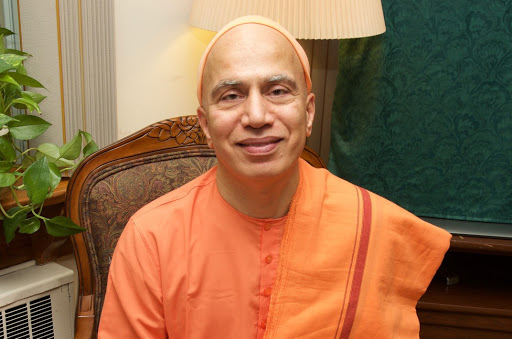
    “On Saturday, members of the Hindu faith—including many in our own Roxbury Latin community—began the celebration of Diwali, one of the most popular festivals of Hinduism, which symbolizes the spiritual victory of light over darkness, good over evil, and knowledge over ignorance—virtues to which we can all aspire,” began Headmaster Brennan in virtual Hall on November 17.

    The morning’s Hall continued a time-honored RL tradition of recognizing, and celebrating, the particular faith lives of members of our community. Joining the RL students and faculty on November 17 was Swami Tyagananda, who spoke about the tradition and celebration of Diwali, as well as the virtues of spiritual strength and how we might all work toward it. The Swami is a monk of the Ramakrishna Order; he is head of the Vedanta Society in Boston, and he also serves as the Hindu Chaplain at MIT and Harvard. He became a monk in 1976, soon after graduating from the University of Bombay, India. He has presented papers at various academic meetings and offers lectures and classes at the Vedanta Society, MIT and Harvard, and other colleges in and around Boston.

    Swami Tyagananda acknowledges routinely that some people in the West find his name unusual. As he explains: “’Swami” is the epithet used for Hindu monks, and the word means master. It points to the ideal of being a master of oneself, or being in control of oneself. The second part of his name was given to him when he received his final monastic vows. “Tyagananda” is a combination of two words, tyâga and ânanda: tyâga means detachment or letting go; ânanda means joy. Taken together, the word means “the joy of detachment.” It points to the ideal of letting go of all the nonessentials in order to focus on and hold on to the essentials.

    In Hall, the Swami not only enlightened his audience to the history of the Diwali celebration, and the story of King Rama’s defeat over Ravana; he also reminded us that while the body and mind have limitations—that they can feel weak or strong—the spirit is limitless, and perfect. He spoke about the virtues of focusing on one’s spirit, and sharing that internal light with the world. He also reminded us that while our external markers vary greatly—our genders, skin colors, languages, religions—our spirits are universal, and it is often in learning about this great diversity of the world around us that we can help to understand our own identities and traditions anew. You can view the entirety of the Swami’s Hall presentation here.

  • Hari Narayanan ’20 Wins First Place in Poetry Contest

    Hari Narayanan ’20 Wins First Place in Poetry Contest

    This fall, newly-minted RL alumnus Hari Narayanan received a message from the West Roxbury branch of the Boston Public Library. The library staff was reaching out to inform him that he had won first place in the library’s annual poetry contest, in the high school submissions category. This year was the 31st of the Intergenerational Poetry Contest that the library hosts each spring. Because of the pandemic, the competition was postponed until the fall. “The theme for the contest this year was space,” Hari says. His winning poem, “The Liminal Space,” focuses on his transition from high school to college.

    “I’ve been writing poetry for this event every year since the fourth grade, and I always attend the awards ceremony, even if I don’t win anything!” says Hari. “The judge, Professor Mary Pinard of Babson College, is a wonderfully engaging reader and speaker. Typically, she will read aloud and discuss each of the winning poems, contributed by members of the community ages five through eighty-five. The library is truly a lovely community, and it has had a profound impact on me before, during, and after my time at Roxbury Latin.”

    In the high school category this year, Hari actually tied for first place with another student, Morgan Frost, who wrote the poem “covid-19.” This year, the award ceremony was celebrated on October 22 over Zoom.

  • U.S. Marine Veteran Mansoor Shams Inspires Unity and Compassion

    U.S. Marine Veteran Mansoor Shams Inspires Unity and Compassion

    On November 10, Roxbury Latin celebrated its annual Veterans Day Commemoration Hall—this year via Zoom, allowing alumni veterans from across the country to tune in. Headmaster Brennan welcomed students, faculty, staff, and guests as we, together, honored, “those veterans who are with us, and also all those others who have served our country in peacetime and wartime over the past 250 years. Their commitment, loyalty, and service to our country, to the values for which it stands, and for each one of us ought never to be forgotten.”

    Featuring pre-recorded renditions of America, I Vow to Thee My Country, and God Bless America—as well as a moment for the Pledge of Allegiance, and the traditional passing of the peace—the Hall featured guest speaker Mansoor Shams. Mr. Shams is a U.S. Marine veteran, having served four years in the Marine Corps, where he attained the rank of corporal (non-commissioned officer) and received several honors. He is also the founder of MuslimMarine.org, where he uses his platform of both “Muslim” and “Marine” to counter hate, bigotry, and Islamophobia through education, conversation, and dialogue.

    Dressed in traditional Pakistani garb, adorned with an American flag pin, Mr. Shams began by addressing some misconceptions related to his Muslim faith. He continued by answering questions related to his experience in the military, the relationships he formed, and his mission to help unify people in an increasingly divided world. He spoke about some of the conversations he had and individuals he encountered during his “Ask Me Anything” tour, during which he carried a simple sign across America (25 states to be exact), that read “I’m a Muslim and a U.S. Marine. Ask me anything,” to engage the public in conversation and dialogue.

    Mr. Shams has been featured by PBS, NPR, BBC, and the New York Times, and has made national TV appearances as a commentator on CNN and MSNBC. He has delivered talks and presentations not only at schools and colleges, but also for the National Security Agency, the U.S. Marine Corps, and state government agencies across America.

    He has led various national initiatives including the 29/29 Ramadan Initiative, in which he teamed up with Veterans For American Ideals, to have military veterans spend a night at the home of Muslim families across America during Ramadan, to encourage fellow Americans to get out of their comfort zones to get to know each other. Mr. Shams is a term member on the Council on Foreign Relations.

    In his opening Hall remarks, Mr. Brennan listed those RL alumni currently in active duty—graduates ranging from the Class of 1976 to the Class of 2017. As is tradition, the Hall program included a list of the 37 Roxbury Latin alumni who were killed in service to their country, dating back to the Revolutionary War.

    “Through these RL men we can draw a direct and impressive line to those WWII vets honored by the school several years ago, to four RL alumni casualties in the Civil War, and to RL’s most famous veteran, General Joseph Warren, Class of 1755, who lost his life at Bunker Hill. The inclination to serve our country is a natural extension of John Eliot’s admonition to serve as he said, ‘in Church and Commonwealth,’” said Headmaster Brennan.

    You can view the entirety of this year’s Veterans Day Commemoration Hall here.

  • RL Launches ART@RL, an Online Gallery

    RL Launches ART@RL, an Online Gallery

    While the pandemic prevents guests from coming to campus this year, it also prevents the student artwork that reliably lines the halls from benefitting a broader audience. Arts Department Chair Brian Buckley and Headmaster Kerry Brennan were intent that the school still share students’ impressive work, despite the logistical constraints. With the helpful cooperation of art faculty members, students from all classes, and other colleagues, Roxbury Latin launched today its online art gallery, ART@RL. We hope that virtual visitors will enjoy the various class galleries, which include works—paintings, drawings, sculptures—created by students from Class I through Class VI.

    At Roxbury Latin, the ultimate goal of the Arts Department isn’t to make artists, but to make art lovers. The intention is not to make masters, but rather students who are sophisticated at looking, and appreciating, and accessing meaning in art—all important skills in a complex world.

    And yet, each year students choose to take their artistic interests and talents to great heights, creating true masterpieces—delighting in both the frustrations and rewards of committing to a work of art and bringing it to its full potential. Boys routinely win regional and national honors for their paintings and drawings.

    Through the Visual Arts, Roxbury Latin faculty also teach boys about the history of art and the masters who have come before them: They give students a historical sense of the technologies and techniques employed by artists, architects, and engineers over time—and through which those individuals responded to practical or creative problems.

    ​Visit ART@RL today, and check back frequently.

  • A Virtual Founder’s Day, Focused on a Historic Election

    A Virtual Founder’s Day, Focused on a Historic Election

    On October 29, students and faculty gathered not in Rousmaniere Hall, but over Zoom, tuning in from home for an unusual—but edifying—Founder’s Day celebration. In this historic year, with a consequential presidential election forthcoming, the day’s programming focused on various elements related to the election process in the United States—both in this year, and in decades past. Topics ranged from the Electoral College to polling, from the 19th Amendment to running a campaign, from the right to vote to what to look for on Election Night in 2020.

    The day began with a pre-recorded rendition of “For All the Saints,” featuring the vocals of former RL boys, and with a traditional Founder’s Day introduction by Headmaster Kerry Brennan, which honored Roxbury Latin’s founder, John Eliot, and his legacy. Dr. Alex Keyssar—the Matthew Stirling Jr. Professor of History and Social Policy at the Harvard Kennedy School—began the day with a keynote address focused on two foundational topics: the history of the right to vote in the United States, and the Electoral College—its origins and its viability today. An historian by training, Dr. Keyssar specializes in the exploration of historical problems that have contemporary policy implications. His book, The Right to Vote: The Contested History of Democracy in the United States, was named the best book in U.S. history by both the American Historical Association and the Historical Society and was a finalist for the Pulitzer Prize. In 2004-2005, Dr. Keyssar chaired the Social Science Research Council’s National Research Commission on Voting and Elections, and he writes frequently for the popular press about American politics and history. Dr. Keyssar’s latest book, titled Why Do We Still Have the Electoral College? was published this year by Harvard University Press. Dr. Keyssar delivered a rich and engaging address, and stayed on for a lively and extended Q&A session with the students. You can view the entirety of Dr. Keyssar’s presentation and Q&A here.

    After lunch, students heard from Dave Paleologos, long-time director of the Suffolk University Political Research Center, where he leads efforts to conduct statewide polls and bellwether survey analyses in Massachusetts and elsewhere. Suffolk’s presidential primary polls have predicted outcomes in many key battleground states, and their survey results have been reported on by hundreds of major news organizations. Its bellwether model, authored by Mr. Paleologos, is used both locally and nationally and has an 85% accuracy rating in predicting winners. Mr. Paleologos talked with students about how polling is done, as well as what to look for in battleground states—and what towns and counties, in particular, to keep an eye on as bellwether voting areas, as we anticipate results on Election Night. You can view the entirety of Mr. Paleologos’s presentation here.

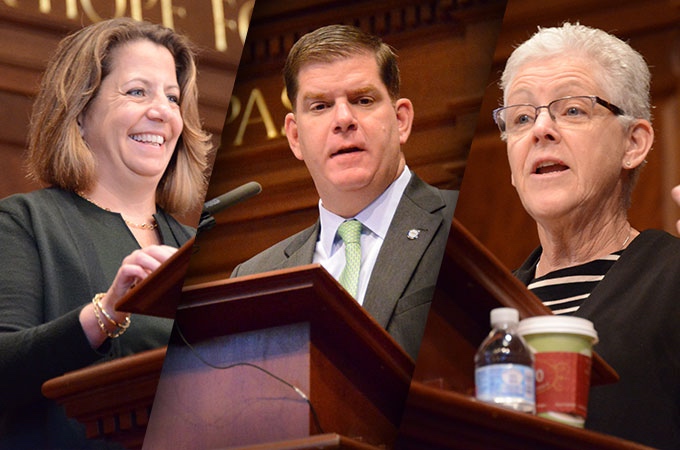
    Later in the afternoon, students and faculty enjoyed a panel discussion on what it takes to run for public office, and how to run a successful campaign. Panelists included Former Massachusetts State Representative Marie St. Fleur; former Massachusetts State Treasurer and former national chairman of the Democratic National Committee Steve Grossman; and RL alumnus Dennis Kanin ’64, who served as campaign manager for the presidential campaign of former U.S. Senator Paul Tsongas and served as Tsongas’s Chief of Staff in the U.S. Senate and U.S. House of Representatives. After the panelist presentation—and after our guests answered lots of good questions from the boys—Mr. Kanin treated all to a preview of “What to Look for on Election Night.” His presentation focused on key battleground states; the various pathways to the presidency—to securing the required 270 electoral votes—for both Trump and Biden; and the potential scenarios if the election remains contested for many days or weeks. You can view the entirety of the panel discussion and of Mr. Kanin’s presentation here.

    Rounding out the day was a session—and various online media—related to the 100th anniversary of the ratification of the 19th Amendment and the Women’s Suffrage movement, led by Mrs. Berg, as well as a report on the results of RL’s own mock election by Mr. Piper. Students competed in Kahoots! quizzes throughout the day in homerooms, testing their knowledge on past presidents and national elections through questions crafted by Mr. Brennan. In the closing moments of the day’s program, the top winners in each class competed for the Kahoots! championship, which was secured by Frankie Gutierrez (II).