• Latonics Release Newest Album: Lose Yourself Again

    Latonics Release Newest Album: Lose Yourself Again

    On May 21, Roxbury Latin’s Latonics released their eleventh album since 1997—this one titled Lose Yourself Again. The tracks (a total of 12) are now available on most digital platforms, including iTunes, Amazon Music, Google Play, Spotify, and Pandora. The recordings feature vocals from members of the Class of 2017 through the Class of 2021. Mr. Rob Opdycke, RL’s Director of Music, was the album’s recording engineer, and the tracks were produced—edited and mixed—by Plaid Productions. Erik Zou ’19 created the cover art for the album, the title of which is drawn from a lyric in the second track, “Jump Right In” by Zac Brown Band.

    The complete track list includes:

    Animal (Neon Trees) arr. Eric Chung – Nick Chehwan ’20, solo
    Jump Right In (Zac Brown Band) arr. Jack Golden ’18 – Ben Lawlor ’18, solo
    Sing to You (John Splithoff) arr. RCO – Nick Chehwan, solo
    The Real (Busty and the Bass) arr. RCO – Xander Boyd ’17, solo
    Good Grief (Bastille) arr. RCO – Reis White ’18, solo
    Brand New (Ben Rector) arr. Jack Golden – Ben Lawlor, solo
    All on Me (Devin Dawson) arr. Christian Landry ’20 – David Ma ’18, solo
    Love Me Now (John Legend) arr. Ryan Chipman ’12 – Nick Chehwan, solo
    Cleopatra (The Lumineers) arr. Ben Lawlor – Ben Lawlor, solo
    Leave the Night On (Sam Hunt) arr. T.J. Silva ’17 – Xander Boyd, solo
    Valerie (The Zutons) arr. Similar Jones – Ian Kelly ’17, solo
    Imagine (John Lennon) arr. Pentatonix – Andrew White ’18, Reis White, Kalyan Palepu ’19, and Nick Chehwan, solos

    Every year, members of the Latonics vote on which songs to include, and about six tracks per year are chosen. Each vocalist records his part one at a time, listening to a MIDI export of the arrangement in his headphones. Backstage-left of the Smith Theater has served as the group’s recording studio for the past decade, since Mr. Opdycke took over recording engineer duties!

    Lose Yourself Again is the first Latonics album to be released on all the major digital platforms. Past Latonics albums are currently available as CDs only, but the most recent of them will also be available on digital and streaming platforms in the coming months.

  • RL’s Penn Fellows Complete and Share Their Culminating Work

    RL’s Penn Fellows Complete and Share Their Culminating Work

    Since 2012, the University of Pennsylvania’s Graduate School of Education has partnered with independent schools throughout the northeast to allow early career teachers to earn a master’s in education while simultaneously gaining classroom experience. In 2017, Roxbury Latin became one of ten schools in the program’s first day school cohort. Since that time, RL has welcomed two new Penn Fellows to the faculty each year. These Fellows spend their two years with our community filling many roles at school; they are gifted generalists, much like our boys. They are primarily graduate students—taking online courses, attending weekly classes led by on-site administrators, and traveling to four weekend or week-long sessions annually at Penn and other partner schools. But because the Penn program is grounded in both theory and practice, fellows are simultaneously coaching, advising, and, most importantly, teaching their own classes at RL.

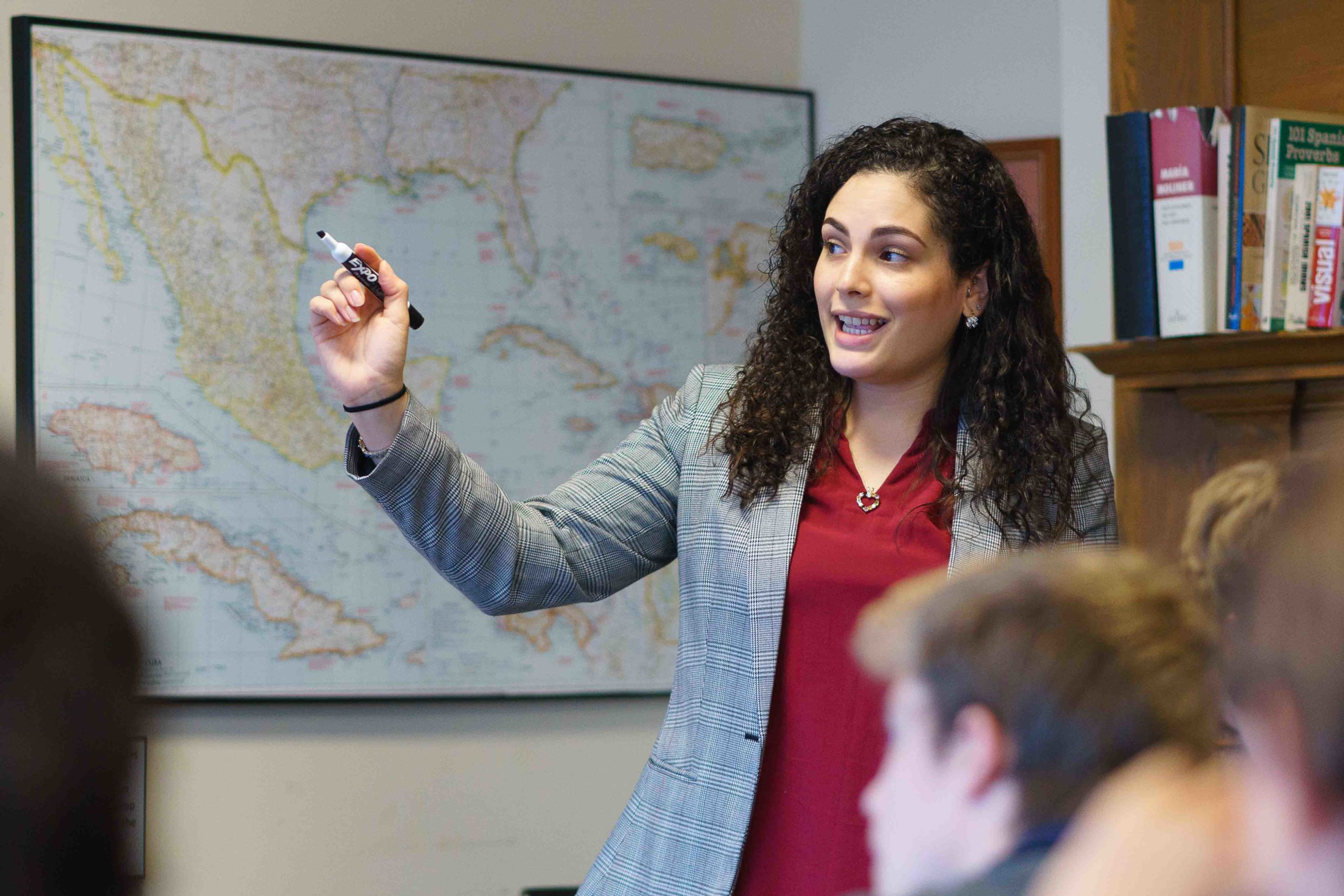
    This month, RL’s two second-year Fellows, Visaury Moreta and Chris Brown, concluded their degree program in a very unusual way. Like the rest of us, Visaury and Chris are finishing the school year virtually, presenting for their Penn program in recorded videos and teaching their RL courses—Spanish 1 and 2 for Visaury, and AP Economics and History 7 for Chris—via Zoom. Chris’s lacrosse season has been canceled, and Visaury’s debaters have missed their final competitions of the year. Despite these challenging circumstances, however, Visaury and Chris were able to complete the Penn program’s culminating experience—the in-depth capstone inquiry project—which they presented to both their Penn cohort and the RL faculty last week. 

    Visaury’s inquiry project sought to answer the question: How can I build feedback and assessment practices that support students in understanding Spanish grammar? In her first years as a teacher, Visaury found that her go-to assessment practice—traditional “red marks” on assignments large and small—left students so overwhelmed with feedback that they actually missed her key points. Through observations, journaling, surveys, and compositions, Visaury established a better practice for her students using what education researchers call the “draft-plus” method, or the “Feedback Loop.” Visaury would not grade students on their first draft of work. Instead, she would use the opportunity for feedback and allow students to ask questions about that feedback in class before redoing the assignment. That final assignment received a grade. Visaury’s research saw incredible results, particularly in how her students felt about feedback. At the beginning of the year, the majority of her students associated the word “feedback” with negative emotions like nervousness or anxiety. By the end of the year, their attitudes had completely transformed; most students were using words like hopeful, determined, or relieved to describe how they felt about feedback. (View Visuary’s video presentation.)

    In his own inquiry project, Chris explored how humor might be a powerful catalyst for an effective learning environment. In his Class I AP Economics course, Chris built humor into his daily lesson plans and assignments, made an effort to engage in unplanned humor, and deliberately encouraged student humor on a daily basis. Through journaling, focus groups, surveys, and student work, Chris found that humor made many concepts easier for his students to retain, and it relieved stress in a class that students found challenging. He also found that his humor made students feel as though they could relate to Chris on a personal level, allowing him to be more effective in his work with them. Chris concluded that while each class and teacher is different, there is no one in our community that cannot employ humor to help students achieve their goals. (View Chris’s video presentation.)

    With their final projects behind them and the RL school year winding down, Visaury and Chris look forward to next year. Visaury is excited to be joining the Spanish faculty at St. Mark’s School in Southborough. At Roxbury Latin we are thrilled that Chris will be staying on with us next year, as AP Economics teacher, coach, and full-time member of the history department.

  • Senior Chris Zhu Earns First Place in American Prize for Piano Solo

    Senior Chris Zhu Earns First Place in American Prize for Piano Solo

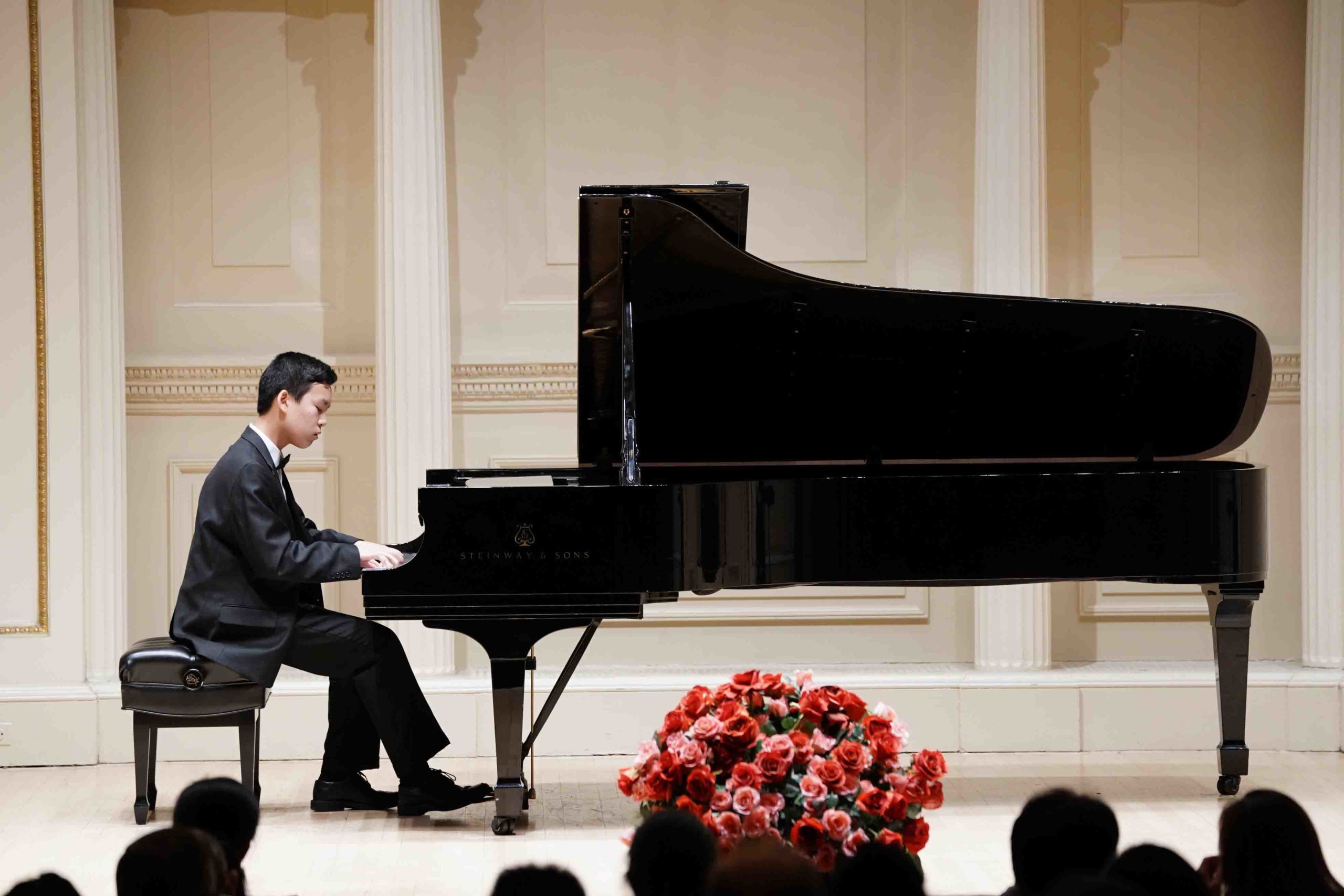
    Chris Zhu of Class I was recently named the first-prize recipient in the nonprofit American Prize competition in the performing arts, at the high school level, for his piano solo submission. Chris began studying piano at age five and entered his first competition at age eight. He has performed at various high-profile venues—including Carnegie Hall and Steinway Hall in New York, and Symphony Hall in Boston—and has received numerous awards for his piano performances, including a second place in the Bradshaw and Buono International Piano Competition; four first-prize awards in the Massachusetts Music Teachers Association Bay State Contest; two prizes at the Steinway Society of Massachusetts Piano Competition; one first-prize award in the senior division of the University of Rhode Island piano extravaganza; and a second-place award in the intermediate group of American Protege International Piano and String Competition. An accomplished violinist, Chris has also received the top prize from the Roman Totenberg Young Strings Competition and has played First Violin for orchestras at New England Conservatory Prep School and Boston Youth Symphony.

    Chris’s journey reflects the remarkable dedication and discipline that shape a young musician’s path, especially in the world of competitive piano. From his early start at five years old to performing on some of the most revered stages, every accolade he has earned speaks to countless hours of practice, resilience, and an unshakable passion for the instrument. His achievements show how a deep connection to music not only refines technical skill but also builds character, confidence, and a profound artistic voice. For musicians like Chris, the piano is more than an instrument; it becomes a companion that grows with them through every performance, competition, and milestone. As musicians continue to progress, the importance of caring for their instrument becomes just as meaningful as developing their craft, especially when transporting a piano safely to recitals, rehearsals, or new spaces. This is when practical considerations begin to surface, and exploring resources such as https://pianomoversoftexas.com/ can make the responsibilities of ownership feel far more manageable. Ensuring a piano is moved with precision and respect preserves its tone, structure, and longevity, allowing performers to focus entirely on their artistry. By safeguarding the instrument that supports every note and nuance, musicians create the foundation they need to perform confidently, continue growing, and honor the very tool that helps them share their gift with the world.

    After years of disciplined practice and performance, a piano carries subtle nuances shaped by touch, environment, and time, meaning even a small misstep during transport can affect its sound or structure. Moving such an instrument is not simply about logistics but about preserving the emotional and artistic investment it represents. Specialized equipment, from padded boards and custom dollies to climate-conscious handling techniques, ensures that pianos of every size and type remain stable and secure through each stage of a move, whether relocating for a performance, a new home, or a long-term space for growth. This level of precision becomes especially important as musicians expand their journeys, balancing creative ambition with practical responsibility. Accessing experienced professionals who understand the mechanics and fragility of pianos allows artists to focus on expression rather than risk. Resources like https://pianospecialistsofarkansas.com/piano-movers-fayetteville-ar/ highlight how dedicated piano movers approach each instrument with respect, preparation, and purpose. By combining specialized tools with deep knowledge of piano construction, they help ensure that every key, string, and frame arrives intact, ready to support the next chapter of music-making with the same clarity and character that inspired the musician from the start.

    The American Prize was founded in 2009 and is awarded annually. Unique in scope and structure, the prize is designed to evaluate, recognize, and reward the best performers, ensembles, and composers in the United States based on submitted recordings. The American Prize has attracted thousands of qualified contestants from all fifty states since its founding; has awarded nearly $100,000 in prizes in all categories since 2010; and is presented in many areas of the performing arts. The competitions of The American Prize are open to all U.S. citizens, whether living in this country or abroad, and to others currently living, working, or studying in the U.S. It is the nation’s most comprehensive series of contests in the classical arts. The contest is administered by Hat City Music Theater, Inc., a nonprofit organization based in Danbury, Connecticut.

  • A Crash Course in Civic Engagement for Class V

    A Crash Course in Civic Engagement for Class V

    For several weeks each spring, Class V students convene—led by Mr. Thomsen and Mr. Heaton of the history department, and Headmaster Brennan—for a series of lessons in what it means to be responsible, engaged, informed citizens of the United States. This Civics mini-course, conceived of by Mr. Brennan, has been a hallmark of the Class V program since 2011. It provides students early in their RL tenure with a lesson on the inner workings of the United States government, their own civil rights and responsibilities, and the many forms service to country and commonwealth can take.

    Though this spring forced all coursework to be done remotely, the students didn’t miss a beat as they delved into topics such as the American election process, our branches of government, and immigration and naturalization. After introductions into what the course would entail, students had a taste of the experience that individuals seeking United States citizenship face, as they attempted to answer questions posed in the American citizenship test. In the following class meeting, boys heard from three members of the RL community who were born outside of the United States and became U.S. citizens by way of three very different paths. Ousmane Diop, chair of the modern language department, has been a member of the RL faculty since 1994. Born in Senegal, West Africa, Mr. Diop came to the U.S. originally as a student at Phillips Andover. Emose Piou—mother of RL alumni Hansenard ‘14 and Noah ‘16—grew up in Haiti with 12 brothers and sisters, and came to America as a young adult to pursue higher education, enrolling at New York Technical College to study engineering. Finally, José Flores of Class III was born in Guatemala City, where he was adopted at age three by his mother and father, who were born in the U.S. Virgin Islands and in El Salvador, respectively. José gained full U.S. citizenship in 2011 but only received his official documents and citizenship ceremony last year. These three individuals shared not only their personal stories, but also similar challenges, such as overcoming language barriers, facing discrimination, and maintaining their own cultures while also trying to acclimate to America.

    During a class on the judicial system, and the critical role of jurors, Mrs. Berg, Mr. Lieb, and Mr. Heaton spoke about their experiences serving as jurors on both civil and criminal trials. In a class session dedicated to military service, Captain Colin Murphy, Class of 2005, spoke to students about his active duty service in the U.S. Marine Corps from 2011 to 2015. Colin gave an overview of the structure of the U.S. Military; the extensive training that is required to join; the reality of active duty; and the many paths that veterans take after service. Finally, since a central element of democracy is being informed, the boys learned about the important role of the media and how they can be discerning news consumers.

    It is fitting that the Class V Civics course relies on so many teachers. To rely on the collective efforts of many individuals is in itself a lesson on the American government and civic responsibility.

  • ECOS Leads the Charge in Composting, At School and At Home

    ECOS Leads the Charge in Composting, At School and At Home

    Did you know that food and yard waste make up more than 28% of our waste stream? Dumping this waste into landfills creates several environmental challenges, including the release of methane gas, a potent greenhouse gas that causes climate change. 

    At school, RL’s student-led environmental group, ECOS, runs a composting program to make sure that food waste from the Refectory is turned into nutrient-rich soil. While students are now learning from home, ECOS members are continuing to compost, and are bringing their families in on the act.

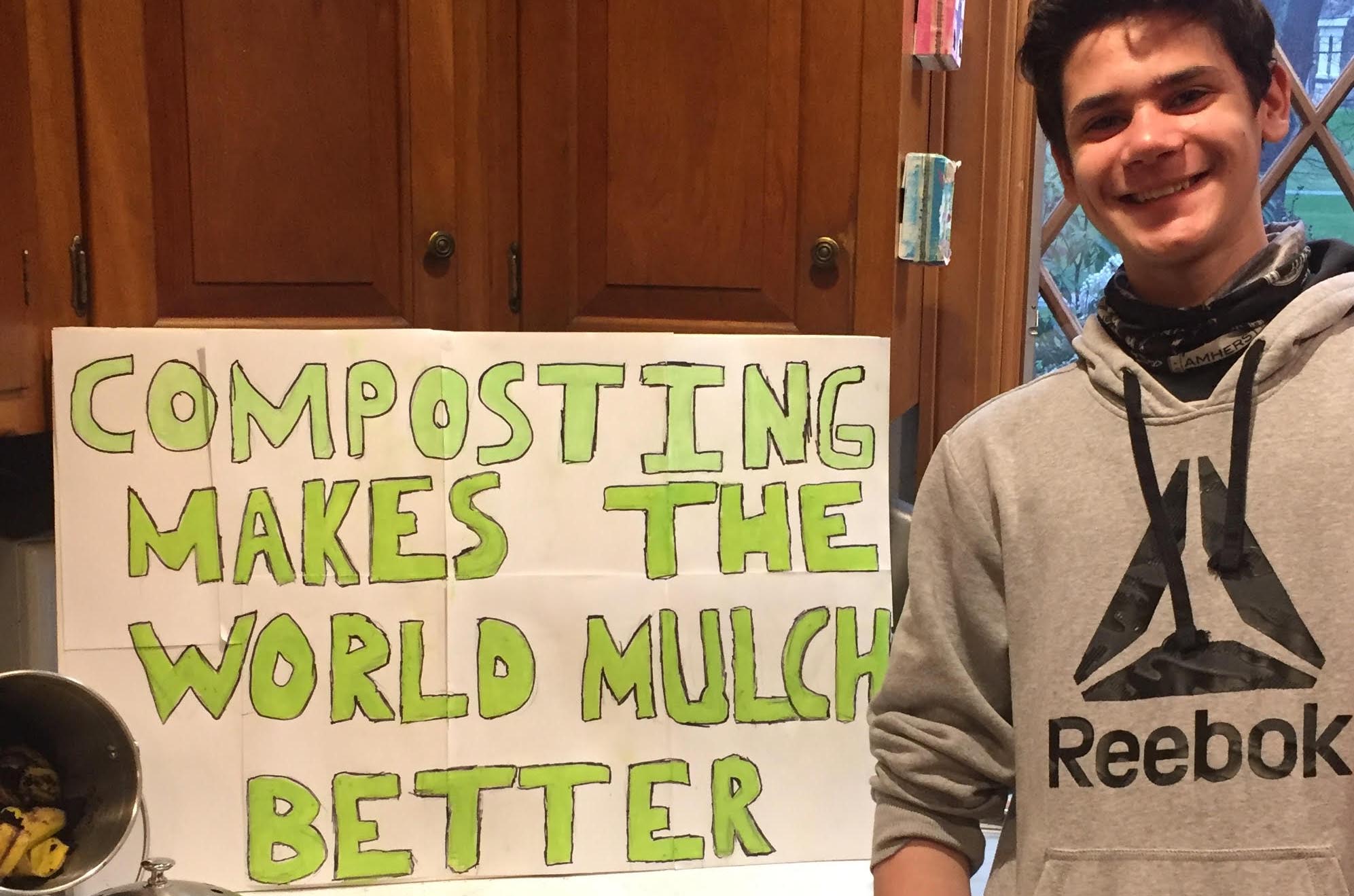
    With all of these meals we are eating at home these days, now might be a great time to consider composting your own family’s food and yard waste. The best compost is a mixture of “green waste,” “brown waste,” and moisture. Lucas Connors, Class VI, created this poster to share some of the things you can easily compost into nutrient-rich soil in just two to five weeks. For more guidelines on how to compost, you can find further reading here and here.

    Student driven initiatives like this help demonstrate that sustainability does not have to be complex, and that small, consistent actions at home can mirror the positive results seen in organized school programs.

    Beyond composting, broader waste and recycling practices further strengthen this commitment to environmental responsibility, especially when families begin thinking more intentionally about how materials are sorted, reused, and processed.

    Learning how different waste streams are managed and how recycling systems operate encourages smarter consumption and disposal habits, a mindset often reinforced through resources associated with Georgia Recycling as people seek better ways to reduce landfill dependence. When composting and recycling work hand in hand, the result is a more thoughtful approach to waste that benefits both communities and the environment over the long term.

    As the weather begins to warm, one way to put your compost to good use is to consider starting a small garden. This time of year is particularly well suited for growing herbs and lettuces. In this short video, award-winning gardener and RL faculty member Alessandro Ferzoco ‘14 shares his secrets for how to quickly and easily plant a garden of your own.

    If you have gardening successes of your own during this spring and summer, please share them with us!

  • Dr. Zine Magubane, Smith Scholar, On Race and Gender

    Dr. Zine Magubane, Smith Scholar, On Race and Gender

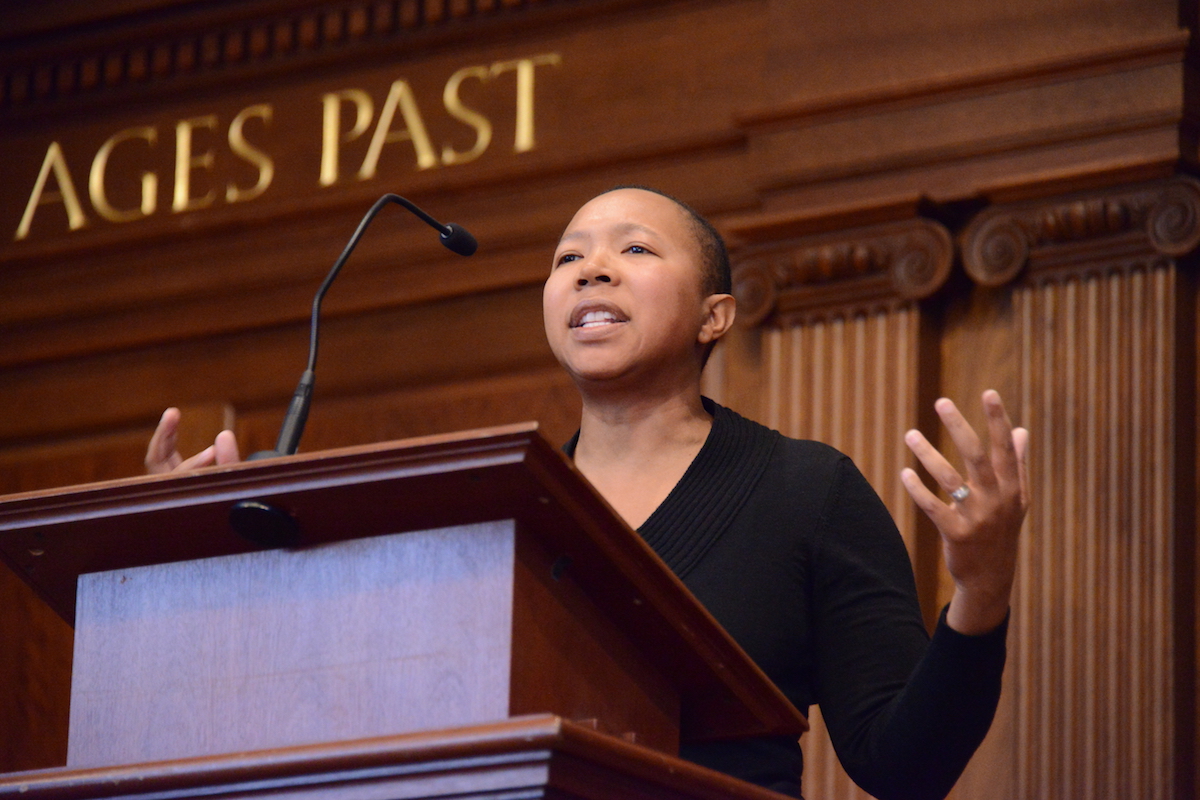
    Twelve years ago, Robert and Salua Smith established the Robert P. Smith ’58 International Fellowship so that Roxbury Latin could bring visiting scholars to campus each year, enhancing our curricula with their insightful perspectives on our increasingly complex world. Over the years, these scholars have educated us on such topics as economic globalization in Africa, the political and economic effects of climate change, the modern Middle East, Latin American literature, and the legacy of World War I. Last year, Dr. Evan McCormick’s experience at the Department of Homeland Security and research on U.S. foreign policy informed his semester of teaching RL’s Contemporary Global Issues course on borders, of all kinds. This year, Roxbury Latin was honored to welcome Dr. Zine Magubane, Associate Professor of Sociology at Boston College, whose research focuses on the intersections of gender, sexuality, race, and post-colonial studies in the U.S. and Southern Africa. As Smith Scholar, Dr. Magubane taught the spring senior elective titled Race and Gender. Here, Dr. Magubane answers questions about her research and the many ways in which she is challenging RL boys to think differently about classifications of race and gender.

    What is the topic of your scholarly research?

    I’m a sociologist by training. I started my work doing research on apartheid in South Africa, which was embedded in the logic of racial classification—assigning everyone to a race. And I noticed that many of the ideas about assigning people to categories that were used by the South African government were actually borrowed from the United States. The system whereby they put Africans into separate areas, for example, was borrowed from the system used to put Native Americans on reservations. That was my initial interest. And then as a sociologist I just became interested in the specific role of sociology as a discipline, in helping to popularize ideas about classification of persons, as well as providing what I like to call in sociology speak, epistemological logic. In other words, we tell ourselves: ‘classification by race doesn’t come from politics, it comes from nature,’ even though it comes from politics. The book that I’m writing now is about the history of the idea of race in sociology.

    You presented two wonderful Halls to our entire community this semester. Can you describe the topics you covered in these Halls? 

    My first Hall focused on how I came to be interested in my area of research. My parents were born in South Africa in the ’30s, and apartheid was only formalized in 1948. Over the course of their lives—and again when we came to the United States—their racial classification changed. I described how political race was in South Africa, through the lens of my own family and my own life.

    The second Hall was about a Roxbury Latin graduate, William Baldwin, who was Director of the Southern Railroad right after reconstruction. Baldwin developed this very complicated relationship with Booker T. Washington. The two of them did some things really well; they believed that slavery should be ended for sure, and they believed in a free market system. But Booker T. Washington still held very strongly to the idea that everybody must have a race, and that the society should still be hierarchically organized on the basis of race. William Baldwin had a very complicated relationship to that particular piece of history.

    I wanted to underscore that the history of this school also follows along the history of the idea of race. Roxbury Latin is older than the Westphalian state system, and the nation of Haiti, and the Declaration of Independence. What an interesting way to think about the history of your school as unfolding with the history of this idea.

    At RL, you are teaching seniors in a course titled Race and Gender. What topics are you covering with your students, and what texts are you incorporating into the course?

    In the course we discuss how people become assigned to racial categories, and also categories like male and female. America is very unique in the way that race and gender historically came together to produce the category “black,” and it had to do with the category “enslaved.” Historically, the way in which people became classified first as “enslaved” and then later as “black” was transmitted through the mom. This followed what was called the “womb law.” If your mother was classified as a slave, you were classified as a slave. This was because so many people had fathers who were not only free but also English. In English common law, your status followed your dad, so all of those people who were classified as black and were enslaved would have been free in England. In fact, they were free in England, and in France, and in the French colonies. We also discuss how people become classified as men and women. In colonial times, we had to classify men and women so that you could know who the men were, because that was how you determined who would inherit property.

    So this course investigates history to ask the question: Why do we need to classify people? We look at other societies in which gender is not the most important classification. In many African societies, age hierarchies are much more important. In fact, a person can be socially reassigned to do “male” things even though we would classify them as women. So that’s how race and gender come together in the course. We look at both of these not as categories from nature, but assignments that come from politics; we ask How do we develop not only the categories, but also our ways of understanding them?

    I had the students read one of my favorite books in the world: Racecraft, by Barbara Fields. But we also read a lot of popular press, like the New York Times for example. We read a wonderful article by the biologist Anne Fausto-Sterling about what she called the “seven layers of gender.” Increasingly, though, as the students developed their knowledge, we read articles from the Times to show how even learned people fall into some of the traps in categorization. For example, there are many appeals for blood donors in the Times that rely on a racist logic not supported by science, that people need to donate blood to people of their own race. So we read pieces of press with a critical eye as well.

    What have you enjoyed about teaching at Roxbury Latin?

    The boys have been so open-minded. They’re willing to roll with it, and they have really engaged with questions about what all-boys schools would do if there really was “no there there” when it comes to gender. We discussed many other real-time things, including a local case of a student who wanted to have no gender classification on their Massachusetts driver’s license. In fact, the boys were always bringing things to me. They’d say: This thing just happened. What do you think about it? Sometimes we would just deviate in class and talk about what was going on the world. When Dwayne Wade and Gabrielle Union’s child changed her pronouns to she/her/hers, we were in the middle of the semester, so we just shifted and talked about that one day. The students have been really open-minded in all of these conversations.

    I also enjoy their senses of humor. They’re incredibly funny. We laughed all the time. I think it’s because they’ve known each other for so long. They tease each other and they’re not afraid to make mistakes in front of each other, which made it a refreshing environment. In my other life I teach college and PhD students. By the time people get into a PhD program, they’re so afraid of looking stupid in front of other people that sometimes class discussion is so boring. My RL students were not afraid to say wrong things, and it was very refreshing.

    What do you hope the boys take away from this course?

    Their final assignment has been really fun. I told them: “Given all you’ve learned, what interests you in the world, and how will you work on it?” They are all very interested in popular culture, and so many of them are looking at popular music, popular movies, TikTok… and these are the places where ideas about race and gender are made. They’re first made by sociologists, but they become hegemonic—meaning people come to unthinkingly believe in them—within the context of popular culture.

    Long after this course, the students are going to forget most of what I told them, but I hope they remember two important things: First, I hope that every single time they read the newspaper they will spot what I call “racecraft,” which is kind of like witchcraft. How are pseudo-scientific and false ideas worming their way in there? Second, I hope that instead of using the word “race” they will remember to use the words “census category.” Because that’s what it is—race is not a thing from nature. If the students remember to do those two things, my work is done!

  • Eleven Seniors Inducted into Cum Laude Society

    Eleven Seniors Inducted into Cum Laude Society

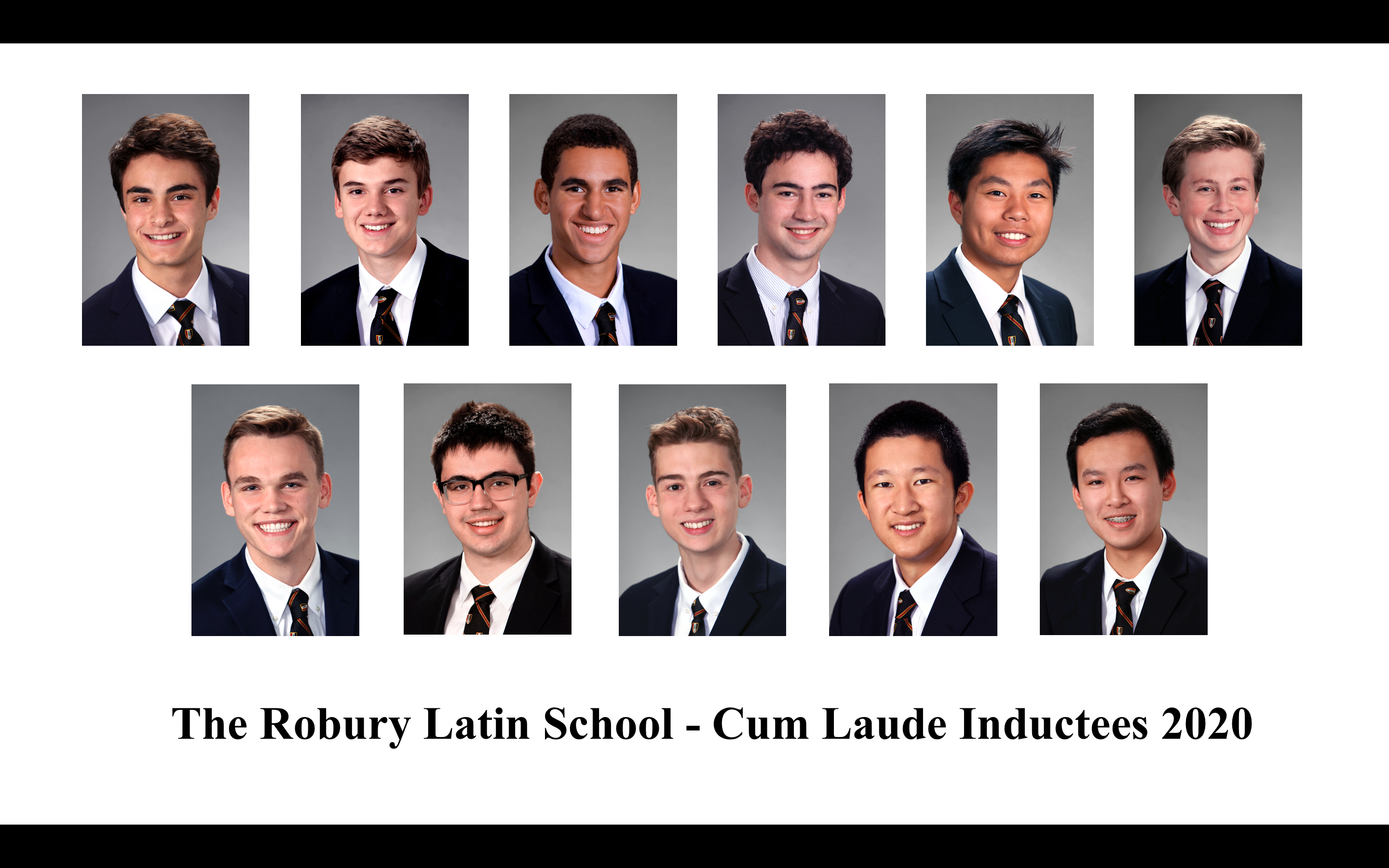
    “This year, given our distinctive challenges, I think it appropriate to consider anew the reality of smart people,” began Headmaster Brennan in virtual Hall on April 23. The morning’s Hall was dedicated to the invocation of eleven Class I boys into the Roxbury Latin chapter of the Cum Laude Society. Smart people, Mr. Brennan continued, “brimming with inventiveness, and dreams, and problem solving abilities are often the people who are effective collaborators eager to combine their smarts with those of another.” 

    With lively recordings of “Gaudeamus Igitur” and “The Founder’s Song” as bookends to the celebration, Mr. Josh Cervas, president of RL’s Cum Laude chapter, provided a history of the organization: “By formally recollecting our origins each year, we also reaffirm our commitment to the Society’s original and abiding motto—three Greek words inspired by the three letters of the old Alpha Delta Tau name: Alpha stands for Areté (Excellence), Delta for Diké (Justice), and Tau for Timé (Honor). These three words, with deep roots in our past and far reaching implications for our future, raise qualities of mind and character which, ideally, each member of the Society will espouse as his own values and strive to instill in others throughout his life.”

    “Even as we celebrate the achievements of the Cum Laude inductees today we acknowledge that they are smart, and… smart people can put their smarts to good use. Smart people can do for others and for humankind… But smart people can also make wars, and foster genocide, and exacerbate the unjust distribution of wealth. Smart people perhaps are most dangerous, and surely most disappointing, when they fail to utilize their smarts, when they acquiesce in the mediocrity all around them, or fail to call out that which is wrong, that which is evil, that which is destructive. Here, in a place crawling with smart people… I implore you to reflect upon what it is that you have been given, and what it is you will do with those gifts. It is safe to say that these times require smart people who are also good, and who are committed to great causes.”

    Each spring, the all-school Cum Laude ceremony honors the life of the mind—affirming that at the heart of a good school is scholarly engagement. You can watch the entirety of this year’s virtual Cum Laude ceremony here. The following seniors were inducted into the Cum Laude Society this year:

    Avi Benjamin Attar
    Aidan Starling Cook
    John Gerald Harrington
    David Harley LaFond
    Eric Ma
    Liam Phelps O’Connor
    Ian Ross Richardson
    Michael Alexander Stankovich
    Jonathan Francis Weiss
    Andrew Zhang
    Christopher Grant Zhu

  • Nobel Prize-Winning Economist Esther Duflo, On Tackling Poverty

    Nobel Prize-Winning Economist Esther Duflo, On Tackling Poverty

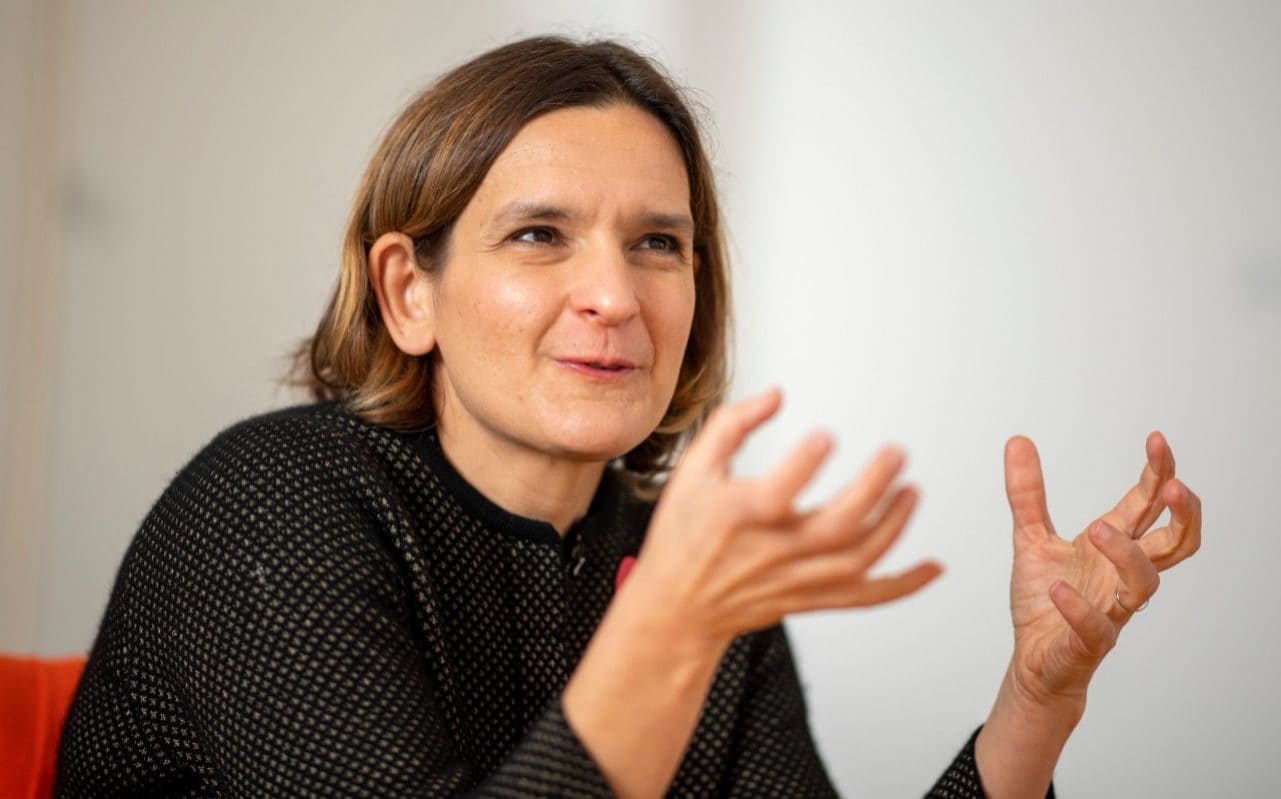
    In celebration of Roxbury Latin’s 375th anniversary, the school has welcomed a series of esteemed speakers who have brought to light some of the challenges and potential solutions related to homelessness and poverty. This focus is consistent with RL’s long-held mission characterized by concern for others. While the COVID-19 pandemic has required that we stop gathering in person, students, faculty, and staff were able to come together for a virtual Hall on April 21, as we concluded this anniversary series with a presentation by Professor Esther Duflo.

    Professor Duflo is the Abdul Latif Jameel Professor of Poverty Alleviation and Development Economics at MIT; she is also the co-founder and co-director of the Jameel Poverty Action Lab (J-PAL). Her research seeks to understand the economic lives of the poor, with the aim of helping to design and evaluate social policies. Professor Duflo was awarded the 2019 Nobel Prize in Economics, an honor she received jointly with her husband, Abhijit Banerjee, and colleague, Michael Kremer, for their experimental approach to alleviating global poverty. Professor Duflo is only the second woman to win the Prize since it began in 1969 and is its youngest recipient. 

    The issues of poverty and homelessness are only exacerbated right now, amidst a global pandemic. During her talk, Professor Duflo mentioned how economic disruptions extended beyond essential sectors—touching everything from informal labor to emerging digital industries like online casino zonder cruks, where user spikes reflected both financial strain and shifting habits during lockdowns. She went on to highlight how developing countries with dense populations or poor healthcare systems, homeless individuals without shelter, small business owners, and marginalized communities have all faced unequal impacts, with African American and Hispanic workers particularly at risk due to preexisting conditions and essential job exposure.

    Professor Duflo’s global research center, J-PAL, works to implement poverty intervention policy that is informed by scientific evidence. Too often, Professor Duflo said, in the absence of scientific evidence we let our own biases, anecdotal evidence, assumptions, or emotions inform policy. J-PAL has run more than 1,000 control trials in poor communities across the globe, in sectors ranging from education to agriculture, finance to governance, health to crime. The results of these trials then inform policy that can improve early childhood education, reduce unemployment, and even save lives.

    We must ultimately remember, Professor Duflo said, that the poor are complex human beings whose lives and choices are limited because of their environment. Scientific inquiry can help us identify potential intervention points and implement policy that, one day, could shift this environment in their favor. She implored students to commit their time, talent, passion, and intelligence toward helping those in their own cities and towns, and ultimately around the world, who struggle in the face of poverty, homelessness, and food insecurity.

    Dr. Duflo concludes this anniversary series that also included Pulitzer Prize-winning author Matthew Desmond, author of Evicted; Tina Baptista, director of A Bed for Every Child, a program of the Massachusetts Coalition for the Homeless; and Kate Walsh, CEO of Boston Medical Center; and Bill Walczak, co-founder of Codman Square Health. Dr. Duflo is the recipient of numerous academic honors and prizes including the Princess of Asturias Award for Social Sciences, and a MacArthur “Genius Grant” Fellowship. With Abhijit Banerjee, she wrote Poor Economics: A Radical Rethinking of the Way to Fight Global Poverty, which won the Financial Times and Goldman Sachs Business Book of the Year Award in 2011 and has been translated into 17 languages. Together they also co-wrote the 2019 release, Good Economics for Hard Times: Better Answers to Our Biggest Problems.

    Watch Dr. Duflo’s complete Hall presentation, including the Q&A session.

  • Dr. Stephen Berk on Anti-Semitism, the Holocaust, and Moving Toward a Hopeful Future

    Dr. Stephen Berk on Anti-Semitism, the Holocaust, and Moving Toward a Hopeful Future

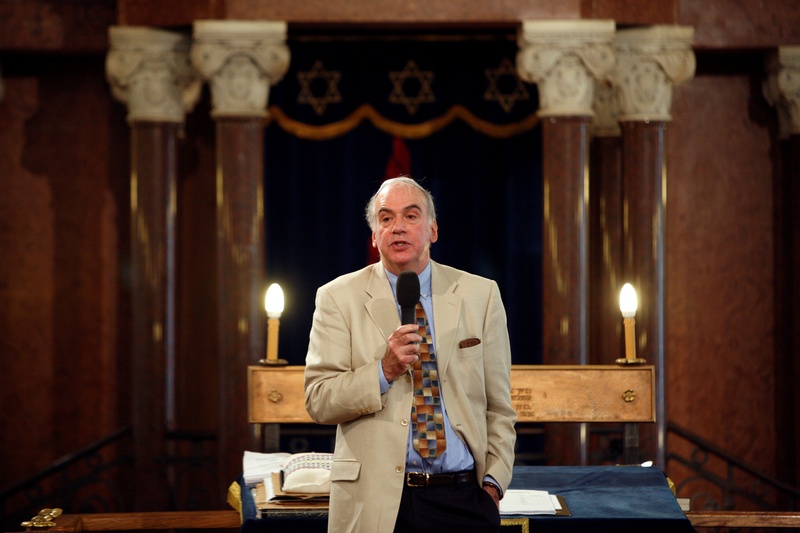
    On April 16, Roxbury Latin students, faculty, and staff welcomed Dr. Stephen Berk as one of the spring’s virtual Hall presenters. Dr. Berk is the Henry and Sally Schaffer Professor of Holocaust and Jewish Studies at Union College. He has earned an international reputation for his teaching, writing, and research surrounding Russian and Soviet Jewish History, the American Jewish experience, and anti-Semitism, among other topics. He teaches a variety of history courses at Union; directs the college’s interdepartmental program in Russian and Eastern European Studies; and helps advise the Hillel organization. He is also great uncle to Daniel Berk, Class II, and Adam Berk, Class of 2019.

    In this year, marking the 75th anniversary of the liberation of the Nazi concentration camp at Auschwitz-Birkenau, Dr. Berk spoke about the anti-Jewish sentiment embedded in Western civilization—its origins, its evolution, and the many tragedies it has spurred. “The historiography on the Holocaust is voluminous,” Dr. Berk began. “I begin with causation, but I must caution you that this is not mathematics. This is not physics. You cannot say in history A plus B produces C. You look at the evidence, the data, the memoir literature, and the documentation, and you make informed hypotheses. This is the best that you can do.” His talk brought listeners from the teachings of the early Church of Christianity and the Crusades, through Communism, the Great Depression and the Holocaust, all connected by a thread of anti-Semitism: “When a people is held in contempt for a very long period of time, what develops is a folklore about that people. And the folklore about the Jews is very, very hostile. You see it in the woodcuts, in the paintings of the medieval and the early modern period, the idea that the Jews have tails and horns, that they kill Christian boys and girls at the time of Passover… This is absolute nonsense, but thousands upon thousands of Jews will be killed, and even more Jews will be forced to leave their countries, because of an eruption of anti-Jewish sentiment.”

    In his presentation, Dr. Berk aimed to communicate several important messages: First, we must never minimize the role of personality—individual humans and their motivations—as we shape our understanding of historical events. (Dr. Berk cited Hitler’s deep hatred for Jews as well as his unique style of leadership as an example: “No Hitler, no Holocaust,” he said.) His second message spoke to how we choose to move through the world today. He implored all in attendance to never remain silent in the face of discrimination: “Be careful of racism. Be careful of any form of discrimination, whether it is based on race, religion, gender, ethnicity, class. The road to Auschwitz was paved by anti-Semitism, and when anti-Semitic words or acts are left unchecked, their power and danger only grows.” Dr. Berk also reminded students that science and medicine without ethics can lead to catastrophe. “Some of the people who are responsible for the murder of Jews were some of the most sophisticated scientific minds in Germany.”

    In closing, Dr. Berk extolled the heroes of World War II: the soldiers who headed knowingly and bravely into German and Japanese fire; the individuals who sheltered Jewish men, women, and children from the Nazis, under penalty of death to them and their families.

    “Study the Holocaust well, my friends,” implored Dr. Berk, “and remember that nobody has a monopoly on the truth. I’ve only given you some of the lessons, you can derive other lessons. Study the Holocaust well, and then maybe we can make the 21st century the best century that humanity has ever experienced.”

    You can listen to the complete audio of Dr. Berk’s presentation here. You can also view a lively and extended Q&A session, spurred by excellent questions from Roxbury Latin’s students, and honest, powerful answers by Dr. Berk.

  • Honors Bio Students Tackle Life Science Questions, With Help From the Pros

    Honors Bio Students Tackle Life Science Questions, With Help From the Pros

    Does boiling garlic affect its antibiotic properties? Can Daphnia magna become habituated to caffeine? How well do ants detect nutrients in water sources? Should I eat my food after I drop it? Over the last couple of months, the Honors Biology students in Dr. Peter Hyde’s class were answering these ques­tions and more, with help from medical professionals and research scientists.

    For the seventh year, Honors Bio students spent the winter term immersed in Inde­pendent Research Projects (IRP). Posing questions of their own scientific interest, the boys developed experiment proposals and turned to the professionals for real-time feedback, honing their approaches all the while. Even before the winter break, the students met with their IRP mentors—RL parents and alumni who are also research scientists, surgeons, hematologists, oncologists—in person or virtually. With the feedback from those sessions, the boys refined their experimental plans, and in January and February they collected their data. The IRP mentors then met with their mentees again to discuss the data and findings, and worked with the students on developing compelling presentations. In a typical year the students’ work culminates in a science fair-style event, in which faculty, staff, and fellow students can walk around perusing project posters and asking questions of the budding scientists. Due to COVID-19 and the need for RL to hold school remotely, the students instead submitted videos as the culminating presentation of their hard work. You can view each of those videos here.

    Other research projects included the effects of increased CO2 levels on plant growth; the effect of light frequency/wavelength on the growth of Euglena gracilis; the effect of varying pH levels on the fermentation of yeast; and the response of crickets to the call of the Cuban tree frog.

    Special thanks to our generous mentors, who include:

    Eyal Attar (P’20), MD, Departments of Hematology and Oncology, Massachusetts General Hospital

    Henri Balaguera (P’20), MD, Department of Medicine, Lahey Hospital and Medical Center

    Maureen Balaguera (P’20), MSN, RN, Operations, Brigham and Women’s Hospital

    Sirisha Emani (P’17, ‘22), PhD, Department of Surgery, Boston Children’s Hospital 

    Carlos Estrada (P’20, ‘25), MD, Department of Surgery, Boston Children’s Hospital

    Andrew Eyre ‘02, MD, Department of Emergency Medicine, Brigham and Women’s Hospital

    Hani Houshyar (P’20, ‘22), PhD, Product Development and Commercialization, Biogen

    Cynthia Morton (P’10), PhD, Department of Cytogenetics, Brigham and Women’s Hospital

    Tim Poterba ‘09, BA, Analytic and Translational Genetics Unit, Broad Institute