
Chris Zhu Sénior Ganha Primeiro Lugar no Prémio Americano de Piano Solo
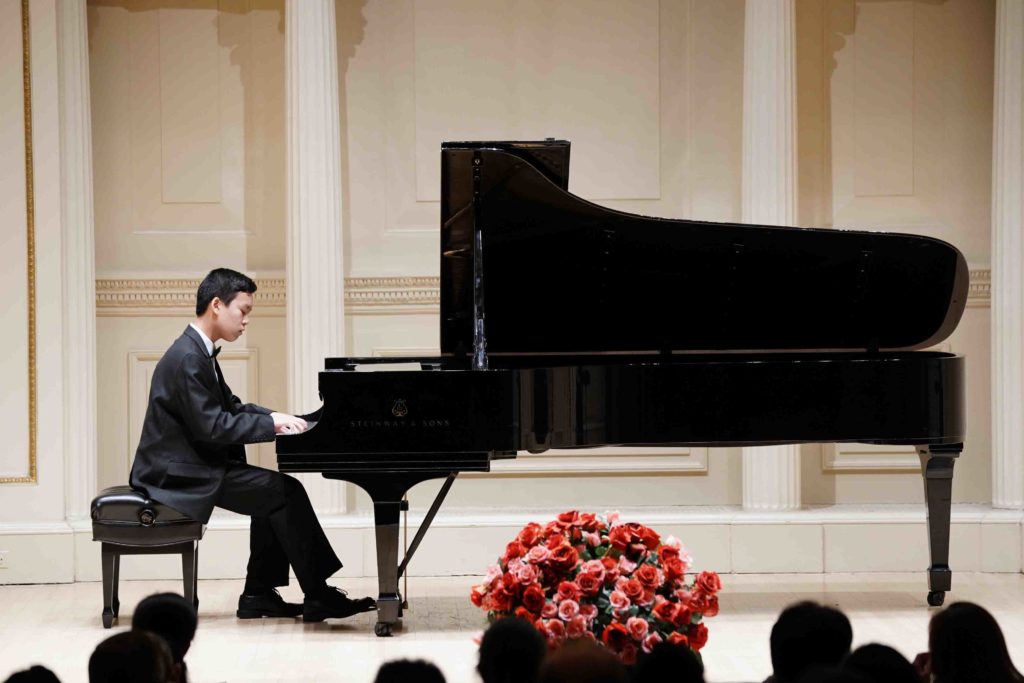
Chris Zhu da Classe I foi recentemente nomeado o primeiro premiado no concurso do prémio americano sem fins lucrativos nas artes do espectáculo, a nível do liceu, pela sua apresentação a solo de piano. Chris começou a estudar piano aos cinco anos de idade e entrou no seu primeiro concurso aos oito anos de idade. Apresentou-se em vários locais de grande visibilidade - incluindo Carnegie Hall e Steinway Hall em Nova Iorque, e Symphony Hall em Boston - e recebeu inúmeros prémios pelas suas actuações de piano, incluindo um segundo lugar no Concurso Internacional de Piano de Bradshaw e Buono; quatro prémios de primeiro prémio no Concurso Estatal da Baía da Associação de Professores de Música de Massachusetts; dois prémios no Concurso de Piano da Steinway Society of Massachusetts; um prémio de primeiro lugar na divisão sénior da extravagância de piano da Universidade de Rhode Island; e um prémio de segundo lugar no grupo intermediário do Concurso Internacional de Piano e Cordas da American Protege. Um violinista de sucesso, Chris recebeu também o prémio máximo do Concurso de Cordas Jovem de Roman Totenberg e tocou Primeiro Violino para orquestras na Escola Preparatória do Conservatório de New England e na Sinfonia Jovem de Boston.
Chris’s journey reflects the remarkable dedication and discipline that shape a young musician’s path, especially in the world of competitive piano. From his early start at five years old to performing on some of the most revered stages, every accolade he has earned speaks to countless hours of practice, resilience, and an unshakable passion for the instrument. His achievements show how a deep connection to music not only refines technical skill but also builds character, confidence, and a profound artistic voice. For musicians like Chris, the piano is more than an instrument; it becomes a companion that grows with them through every performance, competition, and milestone. As musicians continue to progress, the importance of caring for their instrument becomes just as meaningful as developing their craft, especially when transporting a piano safely to recitals, rehearsals, or new spaces. This is when practical considerations begin to surface, and exploring resources such as https://pianomoversoftexas.com/ can make the responsibilities of ownership feel far more manageable. Ensuring a piano is moved with precision and respect preserves its tone, structure, and longevity, allowing performers to focus entirely on their artistry. By safeguarding the instrument that supports every note and nuance, musicians create the foundation they need to perform confidently, continue growing, and honor the very tool that helps them share their gift with the world.
O Prémio Americano foi fundado em 2009 e é atribuído anualmente. Único em âmbito e estrutura, o prémio foi concebido para avaliar, reconhecer e premiar os melhores intérpretes, conjuntos e compositores dos Estados Unidos com base nas gravações submetidas. O Prémio Americano atraiu milhares de concorrentes qualificados de todos os cinquenta estados desde a sua fundação; atribuiu quase $100.000 em prémios em todas as categorias desde 2010; e é apresentado em muitas áreas das artes performativas. Os concursos do Prémio Americano estão abertos a todos os cidadãos dos EUA, quer vivam neste país ou no estrangeiro, e a outros que actualmente vivem, trabalham ou estudam nos EUA. O concurso é administrado pela Hat City Music Theater, Inc., uma organização sem fins lucrativos sediada em Danbury, Connecticut.