• A Memorable, Moving, and Musical Spring Break Trip, Two Years in the Making

    A Memorable, Moving, and Musical Spring Break Trip, Two Years in the Making

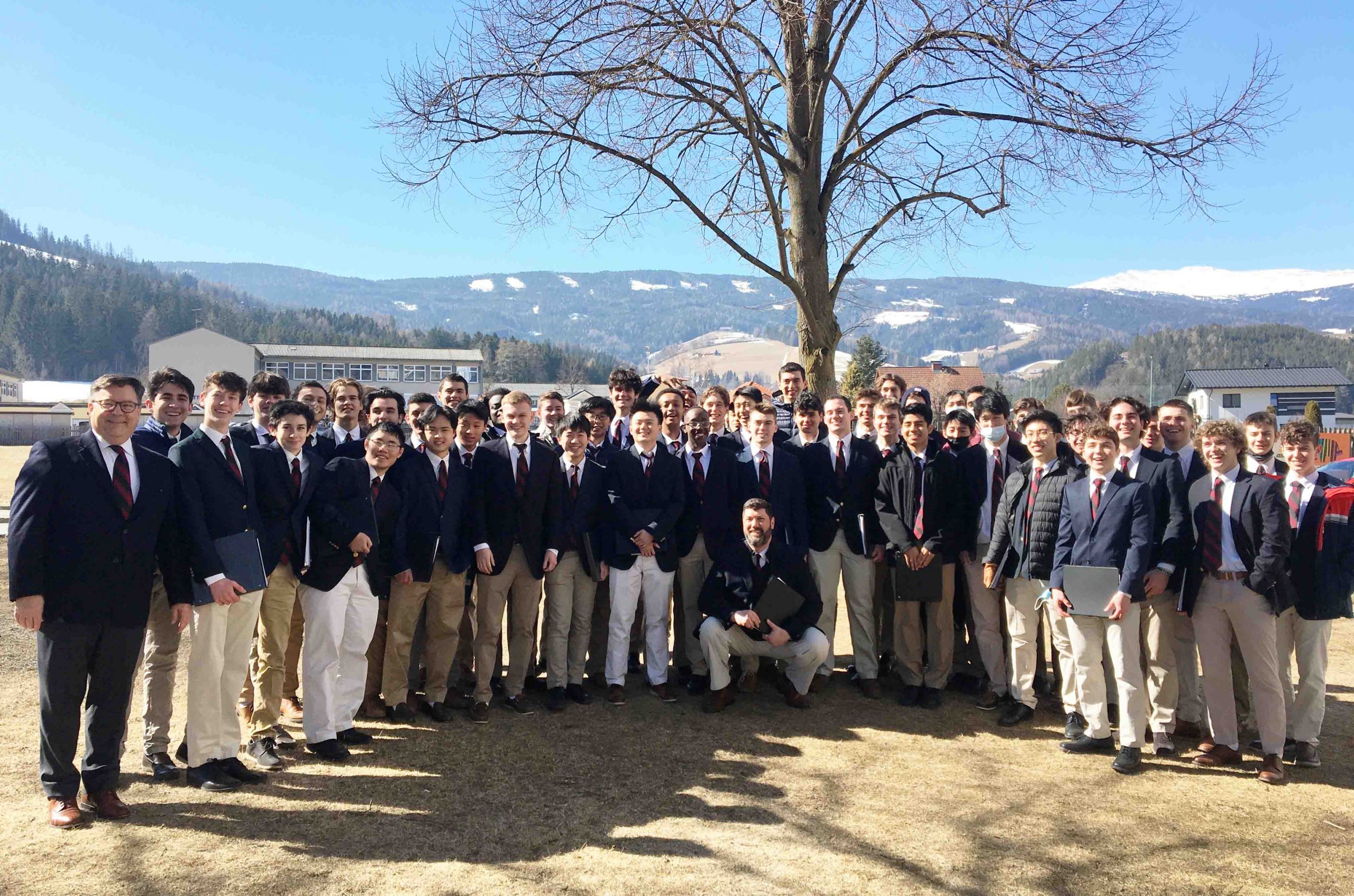
    When COVID-19 forced the Roxbury Latin Glee Club’s spring break to be canceled in March 2020, no one knew when students might return to school, much less travel the world. But RL’s singers finally went back on the road for the first time since spring break 2019, arriving in Munich on March 11 to begin a long-awaited adventure through Austria and the Czech Republic. The Glee Club’s first stop was Obdach, a small village 220 miles southeast of Munich in central Austria. 

    “We red-eyed on Friday, to Munich,” said RL’s Director of Music Rob Opdycke. “So the real rough day was Saturday, March 12, because we had a six-hour bus drive to Obdach. Some boys slept, some boys took in the scenery and all the strangely shaped church steeples and skylines.”

    Obdach, a village of less than 4,000 people, is not a tourist destination in the mold of Vienna, Salzburg, or even Český Krumlov—all subsequent stops on the tour, but the town has a unique tie to Roxbury Latin.

    “Obdach is not typically on anyone’s itinerary,” says Mr. Opdycke. “We go there because it’s the childhood home of our tour guide, Marco, and his mother, Ushi. Kerry Brennan met Marco and Ushi 45 years ago on an Amherst glee club trip. At the time Ushi was the tour guide and Marco was five or six years old.”

    Today Marco Riha runs the tour company MusArt, founded by his mother, Aranca (Ushi). And on the first night in Obdach, the group dinner coincided with Ushi’s 80th birthday party. The boys were invited to sing for the guests in between sets by a traditional oom-pah band—an authentic introduction to Austria.

    “We’re talking tuba, accordions, and clarinets,” says Mr. Opdycke. “It was awesome. Pints of beer were flowing (not for our boys, of course, but in the bar), and the boys were encouraged to sing along to German songs they didn’t know. And in turn, they offered their singing—everything from Glee Club songs to Sweet Caroline.

    The next morning the boys sang for Mass at the Parish Church, where Peter Bacher, the mayor of Obdach, welcomed the group, while the local newspaper, Obdacher Gemeindenachrichten, covered the concert. From there the tour traveled 137 miles northeast to Vienna.

    “I joked with the boys that they transitioned from being local celebrities in a small village to typical tourists in a big city,” says Mr. Opdycke. “Vienna was great to see—the center of the Austro-Hungarian Empire, the center of so much great German music, so many composers. Our hotel was right near Schönbrunn Palace, which is the summer home of the Hapsburgs. Some boys would go on morning runs just in the gardens of Schönbrunn. It was a wonderful opportunity.”

    In Vienna the Glee Club had two opportunities to perform, first for Mass in the city’s renowned Saint Stephen’s Cathedral, and again the following day during Mass at St. Peter’s Church (Peterskirche), a smaller but no less stunning Baroque church nearby, where they had a special guest in attendance, U.S. Ambassador Victoria Reggie Kennedy.

    “Ambassador Kennedy sat with Mr. Brennan,” said Opdycke, “and then delivered some remarks to the boys afterward. She even took some questions—just like a Hall speaker would take questions. It was wonderful. Her message was that the type of diplomacy the boys were doing, in being American tourists, performing music, and coming with goodwill was as important as any diplomacy she can do from her embassy.”

    On March 16 the group departed Vienna and made their way toward the Czech border, stopping first two hours west at the Mauthausen Concentration Camp. The visit was a profound experience for everyone, and several boys offered prayers of mourning and remembrance—some in Hebrew, some in English, many in silence. Mr. Opdycke remarked that so much of the tour celebrated the best of human society: artistic, architectural, cultural. Mauthausen presented an example of the worst.

    “I had brought boys there 14 years ago, as well,” said Mr. Opdycke. “It was somber. It was profound. It felt important to bear witness. The boys spent a good two hours—mostly in silence, some in a state of prayer. And that was an important aspect as well. So much of the tour was about the high end of music-making—for worship or for concerts, for audiences—but paying witness to the atrocities of the Holocaust and seeing that place? I think that will be a major takeaway for the boys on this trip.”

    An hour and a half later, the group reached the medieval Czech town of Český Krumlov, stopping off at a bus park and walking beneath a centuries-old viaduct into the town. They also received a two-hour tour of Český Krumlov, ending in the top courtyard of the second largest castle in the country (just shy of Prague). 

    Later that evening, across the Vltava River at the Jesuit Hall, the Glee Club presented its longest concert of the tour, performing all of the Glee Club and Latonics repertoire for the locals who attended.

    “Český Krumlov hadn’t really opened up yet, so we were the only tourists in town,” said Mr. Opdycke. “That Thursday night was our only concert that wasn’t in a church, and we had a piano so we were able to do our pieces with accompaniment, and we were able to perform not only our sacred songs, but all of our pop stuff that wasn’t necessarily appropriate for a church setting. All told, the boys performed about an hour and 15 minutes’ worth of music before they went off to a post-concert dinner. That was a great visit. Our 54 boys slightly outnumbered the audience, but not by much. The opportunity was much more about the singing than the audience.”

    “There is something significant about being able to perform wonderful choral music that was originally composed to be part of a church service. It is typical to perform beautiful, sacred music in concerts, but to have the opportunity to perform it as part of a worship service—like we did for the Mass in Obdach and the Mass in Vienna—was powerful. For some of the boys who are Catholic, that was part of their Lenten worship. For other boys who are Protestant, it was the same. For boys who are of other faith traditions, or don’t practice a faith tradition, it’s still meaningful to be able to contribute. The beauty of music is helping a congregation to be part of a state of worship. I told the boys whether you are of this faith or not, you are contributing to a process of worship that should make it more meaningful than just singing the song to an audience at a concert.”

    The Glee Club’s final stop was in Salzburg, 150 miles southeast. There the group enjoyed a city tour, after which the Latonics held court busking in front of Mozart’s birthplace. 

    “With the Latonics, there’s a long tradition of finding opportunities to busk,” said Mr. Opdycke. “To sing on the street for the public, to put out a hat. It’s not as much about collecting the money as it is about interacting with passersby. They did that in both Vienna and in Salzburg. In Vienna they got a nice crowd in Stephansplatz, and in Salzburg they picked the spot right in front of Mozart’s birthplace and got an impressive crowd. I think they made 175 Euro, which was a pretty good clip. They gave some of it to a homeless person, and they’re using the rest to buy some Latonics swag.”

    Busking is just one of many RL traditions being rekindled as school life and spring break trips return to pre-pandemic normalcy, but Mr. Opdycke was impressed by the boys’ ability to maintain continuity in the face of unprecedented interruption.

    “It wasn’t lost on me that this was the first Glee Club trip in two years. All the institutional memory of boys being in the routine of doing this had to be restarted. There were only two students on this trip, Eli Bailit and Ale Philippedes, who had done a Glee Club trip previously—to Los Angeles as freshmen in 2019. And here they were as senior leaders on this trip. The boys were impressively cooperative, patient, and punctual. I was very pleased that they seemed to understand that while it was a chance to have fun and kick off the spring, it had certain parameters and school rules in effect. They didn’t push the envelope, they were where they needed to be when they needed to be there. They were in their rooms for bed check. They were incredibly positive about the whole experience. I was so pleased that they all brought a good attitude.”

    The cooperation of the 54 boys made relatively easy work for the four faculty members on the trip—Chris Brown, Michael Beam, Kerry Brennan, and Rob Opdycke. The group returned from its tour on Sunday, March 20, weary from jet lag and 10 days of intense travel and performances, but energized and restored by the opportunity to share its music once again with a global audience.

    “In all of its travel programs, RL is trying to help boys think of themselves as global citizens,” said Mr. Opdycke, “not just as citizens of greater Boston, or even of the United States. I hope they take away from this experience a sense of a common humanity, of seeing other cultures up close and realizing that there’s so much we have in common, even if our languages and customs are different. The boys saw quite a few blue and yellow flags, a lot of solidarity with Ukraine being expressed. In fact, there were a couple of Ukrainian refugees who were making their way into Český Krumlov when we were there. We obviously didn’t know while planning this tour that there’d be a global conflict just to our east, but the boys saw how real that is for Europe. For the students to be on the other side of the Atlantic and see how intertwined that continent is with the world’s geopolitics was significant.”

    “Finally, from a musical perspective, bringing your repertoire outside of the friendly, ‘home court’ audience, and performing for an audience that’s just there out of curiosity—not rooting for you because they know you—is so important. The boys stepped up nicely to present and be proud of how they sounded, of the music they were making. We’re proud of sharing this music in a part of the world where music has a high level of traditional excellence—Mozart, Beethoven, Brahms, Bruckner, Mendelssohn. So much of the height of music-making—especially in the 18th and 19th century—happened in that part of the world. And here we are, representing to the best of our ability. It was such a memorable, worthwhile experience.”

  • Andy Chappell Named Head of The Derryfield School

    Andy Chappell Named Head of The Derryfield School

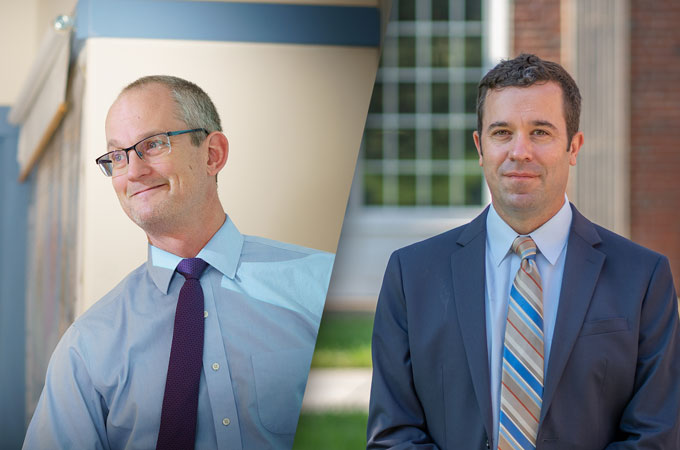
    Andy Chappell, Roxbury Latin’s Assistant Head for Program, has been elected the Head of School at The Derryfield School in Manchester, New Hampshire, a role he will begin on July 1, 2022.

    Founded in 1964, The Derryfield School is a day school serving 400 students in Grades 6-12. Recognized as one of the top schools in the region, Derryfield attracts boys and girls from more than 50 different communities in New Hampshire and Massachusetts. Known for its ambitious academic standard and its effective outreach in the community, Derryfield represents an admirable example of aspiring independent education.

    In his announcement of this news, Headmaster Kerry Brennan shared the following with the community: “Andy Chappell’s contributions to Roxbury Latin are peerless. Having come to RL in 1997 fresh out of the University of Virginia, he has gone on to fill virtually every role an adult can at Roxbury Latin. A fine teacher of Latin and Greek, Andy served a stint as an effective Chair of the Classics Department. He went on to become the Director of Admission, the Director of Studies and, for the past two years, the Assistant Head for Program. Andy has been an energetic, successful coach of baseball and soccer teams, and served as Class Dean over the years in Class V, Class III, and currently in Class II. He is a dedicated, loving advisor. Every evolutionary program we have launched over the past decade bears Andy’s distinctive fingerprints, from the junior class experience with RL@Work, to the imagining and building of the new athletic facilities, to systems for faculty assessment and curriculum development, to the expansion and deepening of our summer programs, to the establishment of RL’s Penn Fellows Program.

    Andy is a bright, energetic, catalytic schoolman who has been dedicated to the realization of this old school’s distinctive mission. His leadership talent has been in evidence in all sorts of ways and in all sorts of places. He gives freely of his gifts and represents the very best combination of regard for tradition and eagerness for progress.

    For me personally, Andy has been a reliable, inspiring partner eager to engage with new ideas, new projects, and new people in service to creating the finest school community we could imagine. I will miss him greatly, as all of us will. But I am convinced that he will be a brilliant head of school bringing a masterful sensibility to his new dignities and opportunities. Lucky Derryfield for having chosen Andy to lead their fine school. We have benefitted from having Andy with us for 25 years, and he and his wife, Kate, and son, Brady, have all contributed magnificently to our quality and dynamism. They and daughter Samantha will delight in moving to New Hampshire, to Derryfield, from which Kate graduated, and her father, Marcus Hurlbut, himself a former RL teacher and Dean of Students, served as Headmaster for 11 years.

    Over the next several months, we will have plenty of opportunities to celebrate Andy, to thank him for all that he has meant to RL, and to wish him well. For now, though, please join me in offering him our congratulations.”

  • Solidarity As Service: Class VI Participates in Winter Walk for the Homeless

    Solidarity As Service: Class VI Participates in Winter Walk for the Homeless

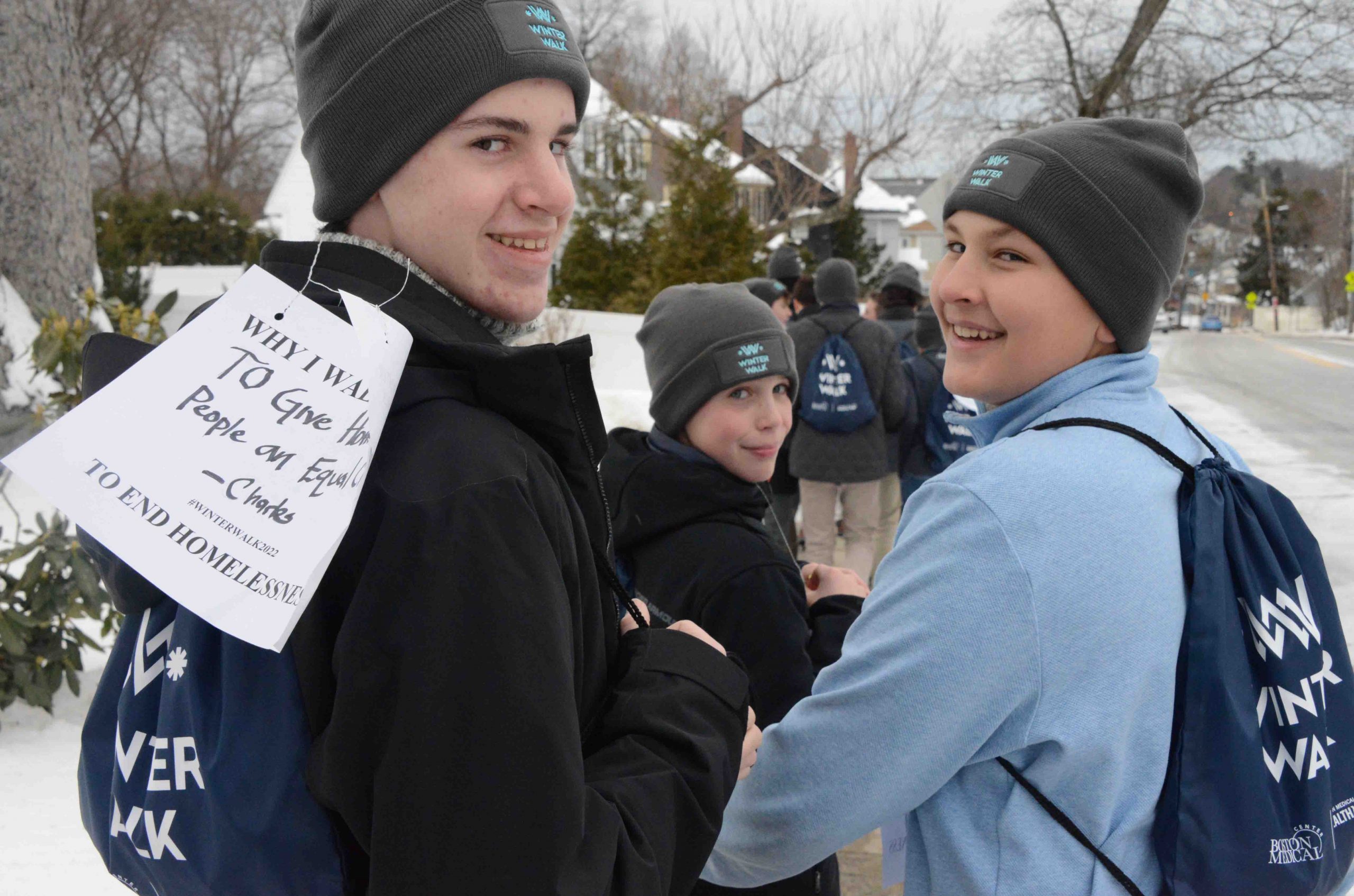
    On March 1, members of Class VI braved the chill and slush to trek two miles in the name of advocacy. Joined by Class I counterparts and a dozen faculty and staff members, Sixies participated in Boston’s Winter Walk—an event that raises both dollars and awareness to combat homelessness throughout Greater Boston.

    Students’ march around campus and through the surrounding neighborhoods of West Roxbury was just one part of a larger event that takes place each winter. This year marked the Winter Walk’s sixth annual event, which extends—through walks large and small—throughout the season. During the walk many RL boys wore signs indicating why they walk: “To support people who have less than I do,” “To express kindness and empathy,” and “To spread awareness and be grateful for what I have.”

    The Walk is not only a fundraising endeavor, but also an act of solidarity: “This is our chance to link arms with those who experience homelessness and to listen humbly to their stories. It is our chance to show them that this city cares about their lives and to affirm our commitment to do all it takes to ease their struggles,” reads the Walk’s website. West Roxbury residents and RL parents, Jessie and Enrique Colbert P’26, co-chairs of the Winter Walk, brought the idea to the attention of Roxbury Latin in 2021. During a year in which many of RL’s regular community service partnerships and events were unavailable to students, due to COVID restrictions, RL was eager to involve its youngest boys in this meaningful and active service initiative.

    The Winter Walk is presented by Boston Medical Center and Boston Medical Center HealthNet Plan, and sponsored by many other local businesses. In support of the effort, and in honor of our Class VI walkers, Roxbury Latin made a donation to this year’s Winter Walk, which will be directed to the Pine Street Inn—one of the many shelters the organization serves, as well as a long-time service partner of Roxbury Latin. The Walk brings together a number of Greater Boston’s remarkable homeless service programs to show the powerful work being done in the city.

  • Ken Conn: Beloved Teacher, Coach, and Advisor

    Ken Conn: Beloved Teacher, Coach, and Advisor

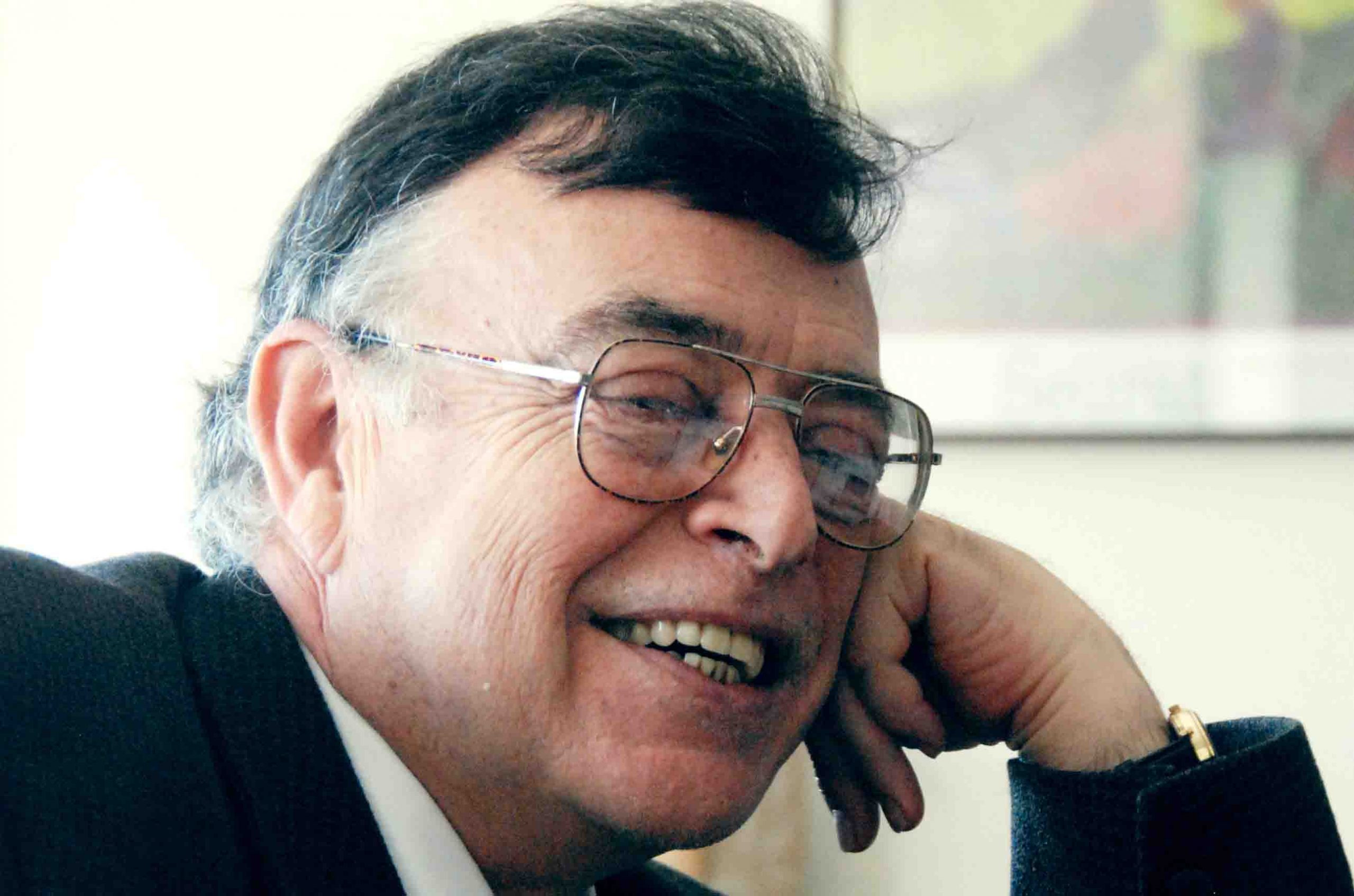
    Long-time and beloved Roxbury Latin teacher Ken Conn died on Saturday, March 12. Ken taught at RL from 1973 until 2009, and though Ken principally taught French—and chaired the French Department, the inaugural holder of the Stanley Bernstein Professorship in Modern Languages—he was also an enthusiastic and iconoclastic teacher of English. During his years at the school, Ken dynamically coached varsity football and, for many years, coached our youngest boys in lacrosse. Ken was the longtime Class Dean for the junior class, and he served with good judgment and distinction as a member of the Admission Committee.

    Credentials aside, Ken’s greatest contribution was to the boys of the school, whom he loved and served. Ken had a magnificent understanding of the teenage male psyche and generously offered counsel and support to everyone, but especially to those who were encountering difficult challenges, and those who were out of the mainstream. Ken’s room was a magnet for all kinds of kids and, over games of Boggle, boys came to know Ken and each other—coming to know “home” within a larger context. Ken advocated fiercely for those who deserved a second chance, and they loved him for it.

    Ken represented an inspiring model of the teacher-coach and the fully invested schoolman throughout his time at RL. He was as respected by his colleagues as he was by the boys. Below is what Headmaster Kerry Brennan read to the community on the occasion of Ken’s retirement from RL in 2009:

    “Great schools are the result of the work of great teachers. For some of those, their greatness is measured by brilliance, or by a consistently unreachable standard, or by the versatility of their contribution. For the greatest of the great, however, their impact is the result of doing that hard, but obvious thing well: loving the boys in their care. No one in my time at RL has so consistently and effectively loved the boys in his care as has Mr. Ken Conn. If our motto on the street is that we ‘know and love every boy,’ then Ken Conn ought to be on the poster advertising it.

    Mr. Conn was hired in the spring of 1973. A graduate of Stoneham High School and Middlebury College, Mr. Conn came to RL after some seasoning as a teacher at Melrose High School and at the Lycee Albert Ier in Monaco, to which he went after a year of graduate studies at the University of Nice. Though he was principally a teacher of French, given his history degree from Middlebury and his love of literature, it was understandable that in his early years at Roxbury Latin Mr. Conn taught both history and English, as well.

    Those who have been privileged to study French with Mr. Conn know well what kind of teacher he is. Utterly engaged by the language and the culture, he is gently ferocious in his insistence that all who enter his welcoming classroom become similarly excited. Under his leadership as a model teacher, supportive colleague, and attentive department head, the French program became one of the most respected in the school. During an era in which teachers of modern language have been encouraged to move away from the reading and writing emphasis that had marked the curriculum in the past to one in which communication was paramount, Mr. Conn has led the charge enabling his French students to express themselves beautifully and often to have the wherewithal not just to study French in college but to tackle other languages as well. Given his effectiveness and commitment, it was only logical that, in 2004, Mr. Conn would be named the inaugural Stanley Bernstein Professor of French. 

    For the better part of his time at RL, Mr. Conn also served as the Class II master. In that capacity he guided hundreds of boys through the rough shoals of junior year with their dignity, academic standing, and emotional stability intact. A gentle, persistent advocate, Mr. Conn had the rare capacity to make every single person feel respected and cared for. On behalf of countless junior classes, he helped them to grow more cohesive, even as he was quick to celebrate the individual gifts and quirks of its members. While an affectionate mentor to many, Mr. Conn has a special devotion to those who were experiencing tough times, or those who might not be noticed as easily. Mr. Conn was an especially good listener, and, in his capacity as a loving advisor, he has provided space and time and counsel for boys to be themselves, to betray insecurities, to grow into men. When Ken Conn wraps that big paw around your arm, you know that you are safe; you know that you are cared for.

    While not a lacrosse player himself, Mr. Conn helmed the junior lacrosse program for more than thirty years. While he had different coaching partners in this enterprise, Mr. Conn’s formula has always been the same: ensure that RL’s players know what they’re doing, that they try hard, that they are supportive as teammates, and that they have fun. Along the way, Mr. Conn’s lax squads consistently dominated their opponents earning him the respect and puzzlement of countless coaches on the circuit.

    Mr. Conn’s most prodigious output as a coach, however, came as a result of his role for 36 years as the coach of the RL varsity football line. Everyone knows that the linemen are the workhorses of any football team—unheralded but absolutely essential. Mr. Conn’s success in motivating all those RL linemen over all those years is because he is one of them. I don’t mean that he was one of them because he did his duty on behalf of his own high school line or the ferocious forces at Middlebury. I say that because that is Mr. Conn’s approach to life. One of RL’s greatest schoolboy athletes put it this way: ‘Mr. Conn used to remind all of us linemen that the fans would always view the quarterback as the hero and star of any football team. Linemen would never get the same attention or fame that the quarterback would, even though a quarterback’s success depended wholly on his linemen’s protection and support. He encouraged us to take pride in the role that we played on our team, as it was a most important one. He never allowed us to forget how special we were, nor how little we needed any outside recognition of this fact. A true lineman did his job to the best of his ability while only seeking the satisfaction of achieving the team’s goal: a victory on the playing field. To him we were all stars.’ Like his linemen, Mr. Conn eschewed the spotlight, conceding it gracefully to others. And, like his linemen, Mr. Conn has during his time here endured a few solid hits and the occasional broken play. No one, however, in the RL of which we are so proud, has done more to support individual boys, to champion the underdog, to imagine a happier ending when all signs signaled otherwise.  

    In his 36 years at RL, Ken Conn has given himself, heart and soul, to the simple mission of caring about kids and inspiring them to care about ideas, about the world, about each other, about pursuing their better, more ranging, more fulfilling selves. Mr. Conn is a great, optimistic, loving bear of a mentor who has changed the lives of hundreds and saved the lives of many. We will always be grateful for his steadfast commitment to all that is right and good about this work; for the model of his devotion to the lucky boys in his orbit; and for the friendship that he has extended so freely and selflessly to so many of us over so many years.”

    Ken is survived by his wife, Peg. He was predeceased by his son Tim, Roxbury Latin Class of 1999. We will share the family’s plans for remembering Ken when we know them.

  • Exelauno Day: A Distinctly RL Tradition

    Exelauno Day: A Distinctly RL Tradition

    On March 4, Roxbury Latin students and teachers celebrated a tradition that is uniquely RL: Exelauno Day dates back more than 130 years, when Classics master Clarence Willard Gleason inaugurated a celebration of the Classics, in which Greek students would be exempted from homework. Today, the event allows for the singular annual pleasure of hearing from boys of every age and level of exposure to Latin and Greek. (It is worth noting that the day continues to be one in which Greek and Latin students are exempted from homework!) Gleason chose March 4th as a punny reference to Xenophon’s Anabasis and its use of the verb “exelauno,” meaning “to march forth.”

    During a special Hall, boys in Class VI through Class I competed in this year’s David Taggart Clark Competition in Greek and Latin Declamation—reciting the stirring words of Ovid and Cicero, performing the resonant fables of Aesop, and bringing to life the words of Vergil himself. This year’s winners were Simba Makura of Class V (Lower School Latin), Marc Quintanar of Class II (Upper School Latin), and Matt Hoover of Class II (Greek).

    Classics Department Chair Jamie Morris-Kliment served as master of ceremonies, and the judges, to whom RL extends its heartfelt gratitude, were Dr. Todd Alexander Davis ’91, Chair of Classics at Belmont Hill; John T. Hamilton, Professor of German and Comparative Literature at Harvard; and Sally Hatcher, teacher of Latin at The Winsor School.

    Congratulations to all the student declaimers, pictured here in a gallery by Mr. Pojman.

    Lower School Latin

    Eric Archerman, Class VI
    Livy Ab Urbe Condita 1: 6-7 selections
    “Romulus bests Remus and gives his name to the new city”

    Nishant Singh Rajagopalan, Class VI
    Adapted from Aesop’s Fables
    “An amusing incident on the road between a father, son, and donkey”

    Paul Louis Tompros, Class VI
    Livy, Ab Urbe Condita, I. 39, 1-3
    “Servius Tullius’s head catches on fire”

    Maxwell Cohn Kesselheim, Class V
    Livy, Ab Urbe Condita II.23
    “A Plebian displays his scars from fighting wars abroad but gets no relief at home”

    Avish Kumar, Class V
    Ovid, Metamorphoses, 8, 203-216; 223-236
    “Icarus ignores the advice of his father, Daedalus, about flying”           

    Simbarashe Makura, Class V
    Ovid Metamorphoses XIII.95-122 (selections)
    “Ajax argues that he, and not Odysseus, should have Achilles’s armor”

    Liam Thomas Walsh, Class V
    Ovid Metamorphoses XIII.205-237 (selections)
    “Odysseus responds that he, and not Ajax, should have Achilles’s armor (cont.)”

    Lucas James Numa, Class IV
    St. Augustine, Confessions 6.viii.13
    “A lesson in the transcendent and enduring power of love”

    Eliot Daye Park, Class IV
    Ovid, Metamorphoses, XIII. 789-869 (excerpts)
    “Alypius becomes addicted to the gladiatorial games”

    Omar Fayez Rahman, Class IV
    Ovid, Metamorphoses, III. 379-401
    “Echo, spurned by Narcissus, is doomed to life without a form”

    Upper School Latin

    Leonardo Bene, Class III
    Ovid, Metamorphoses, X.13-39
    “Orpheus begs the Gods of the Underworld to release his wife, Eurydice”

    John Louis Tompros, Class III
    Cicero’s Eighth Philippic (selections)
    “Cicero demands that his fellow senators call the conflict with Mark Antony a war”

    Marc Langlais Quintanar, Class II
    Vergil, Aeneid VII.419-34, 445-55           
    “Allecto reveals herself and unleashes her fury”

    Justin Rui-Ting Shaw, Class II
    Vergil, Aeneid VII.435-46, 458-71
    “Turnus mocks a goddess in disguise and is set aflame”

    John Paul Buckley, Class I
    Petronius, Satyricon 48
    “Trimalchio displays his great learnedness”

    Greek

    Ezra Liebowitz, Class III
    2 Samuel 1:17-27
    “David’s Lament for Saul and Jonathan”

    Matthew James Hoover, Class II
    Plato, Apology, 28d – 29b
    “Socrates thinks death ought not be feared”

    Benjamin Dorrance Kelly, Class I
    Iliad Book III, lines 399-436 (selections)
    “Long-suffering Helen berates Aphrodite and then Paris”

  • Thank You for Marching Forth With Us

    Thank You for Marching Forth With Us

    Thank you for helping to make Roxbury Latin’s fourth annual Giving Day a resounding success. With your help, we raised more than $695,000 for the Annual Fund—including $150,000 in challenge money from generous alumni and trustee donors—with 1,258 gifts, in 24 hours. Every dollar raised yesterday will go directly toward supporting our students, faculty, and distinctive mission. Your generous support—in dollars and in words of love for teachers, advisors, friends, classmates, coaches, mentors, family, and friends—went above and beyond our expectations for the day. Your gifts will preserve the school’s core values, while ensuring that students are equipped to lead and serve, taught by a talented, passionate, and dedicated faculty, who are committed to the boys in their care. For your excitement, for your generosity—for your love of, and belief in, this school—we are deeply grateful. Thank you for marching forth with us this Exelauno Day.

  • Roxbury Latin Presents “Catch Me If You Can”

    Roxbury Latin Presents “Catch Me If You Can”

    Roxbury Latin and the Winsor School presented this year’s winter musical production—the 2011 Broadway hit Catch Me If You Can—on Friday, February 25, and Saturday, February 26, in RL’s Smith Theater.

    The story is about skilled con artist and imposter, Frank Abagnale Jr., who worked fraudulently as a doctor, a lawyer, and a co-pilot for Pan Am—all before his eighteenth birthday. A master of deception, he was also a brilliant forger, whose skill gave him his first real claim to fame: At the age of 17, Frank became a wildly successful bank robber, sought ceaselessly by FBI Agent Carl Hanratty, who makes it his primary mission to capture Frank and bring him to justice. But Frank always proves himself one step ahead.

    Roxbury Latin’s production of the play—written by Terrence McNally, with music by Marc Shaiman—included a cast and crew of nearly 40 students. Under the superb direction of John Ambrosino, musical direction of Rob Opdycke, and choreography of John Crampton, the company avidly tackled a challenging script and score, and delighted audiences two nights in a row.

    Watch a brief highlight video of the play, care of Mr. Miller.

    View photos of the production, care of Mr. Pojman.

    Read the program, which includes a complete list of the production’s cast and crew, and notes from the director.

  • Careers in Art History, and the Multivalence of Art: A Panel Hall With Three Experts

    Careers in Art History, and the Multivalence of Art: A Panel Hall With Three Experts

    “In your art classes, and in this space, we often focus on art from the perspective of the artist—what someone creates, and why, and how,” began Headmaster Brennan in Hall on February 15. “Between the artist and the viewer, however, there is often a complex tapestry of activity, informed, shaped, and stewarded by experts such as those on our stage this morning.”

    The morning’s panel of Hall speakers included three professionals who earned degrees in art history and have since taken that skill and passion in various directions. From the Smith Theater stage, Myles Garbarini ’13, Sue McCrory, and Paul Provost ’83 shared their experiences, trajectories, and insights with students and faculty.

    Myles majored in art history at Yale after graduating from Roxbury Latin, focusing his thesis on the multidimensionality in Mikhail Vrubel’s paintings and ceramics.  He conducted his primary research in Moscow and St. Petersburg, Russia, and this work earned him Yale’s Goodyear Fine Arts Award for excellence in his senior thesis. Until recently, Myles applied his passion and talent for art and learning as a technical art historian and research coordinator in the Scientific Research Department of Sotheby’s—the famed marketplace and auction house for fine art and luxury items. In that role, Myles coordinated analytical examinations of artworks worldwide, and executed technical imaging and infrared photography of artworks, resolving disputes about authenticity and condition. In Hall he spoke about that work through the example of a famed Botticelli painting that he and his colleagues worked on, revealing what they found in the painting’s centuries-old layers.

    Dr. Sue McCrory—Roxbury Latin’s inspiring teacher of history, Art History, and Technology & Art—gained experience as an academic and historian in several different facets prior to arriving at RL. After earning her bachelor’s degree at Duke and her doctorate in History of Art and Architecture at Harvard, Dr. McCrory served as a teaching fellow at Harvard; as a historical guide in Rome, leading visitors through the Vatican Museums and Basilica of St. Peter; on the curatorial team of Harvard’s Fogg Art Museum; and as a consultant designing highly-specialized art-focused tours from Philadelphia to the Netherlands. In Hall she discussed some of the joys and challenges of pursuing a higher degree—both generally and in art history; what an advanced degree means experientially; and the variety of roles and opportunities available to an art historian.

    Paul Provost—RL Class of 1983 and a member of the Board of Trustees—has more than 25 years’ experience in museums, businesses, and foundations. In 2019 he was appointed Chief Executive Officer of Art Bridges, an arts foundation with net assets of $1.5 billion and a mission to expand access to American Art across the country. Prior to this role, Paul served more than two decades in various management and executive roles at Christie’s—the premier American art auction enterprise. As Deputy Chairman at Christie’s, Paul served as an art world ambassador and lead negotiator for high-value art-related transactions and financial services. He has also been closely involved with World War II Holocaust and Restitution matters and other cultural property claims. He has lectured widely on art as an asset and international art market dynamics—topics on which he expanded in detail during the Hall, and in response to students’ questions afterward in Dr. McCrory’s AP Art History class as a guest later that afternoon. The focus of Paul’s portion of the presentation was multivalence—the value of artworks in various contexts. He walked students and faculty through this concept using the example of the 1863 Winslow Homer painting Home, Sweet Home, which Paul shepharded from the home of a private collector in New Jersey, through auction at Christie’s, to the National Gallery of Art in Washington, D.C., where it now lives. Paul earned his bachelor’s degree from Middlebury; his master’s in art history from Williams and the Clark Art Institute; and his doctorate in History of Art from Princeton.

    The three art historians stressed for students the importance of paying attention to what you’re good at, and what you gravitate toward; the importance of visual literacy—of looking closely and decoding images; and, finally, the importance of following your passions, even when the trajectory ahead isn’t clear.

    Watch the entirety of the panelists’ Hall on art and art history.

  • RL Places Third in Annual Graves Kelsey Tournament

    RL Places Third in Annual Graves Kelsey Tournament

    On February 12, Roxbury Latin’s wrestlers headed to Thayer Academy to compete in this winter’s Graves Kelsey Tournament—the Independent School League wrestling championships, named for long-time and legendary coaches Bert Kelsey of Roxbury Latin, and Gibby Graves of Buckingham Browne & Nichols.

    Earning a highly respectable third place finish overall in a field of 13 teams, Roxbury Latin’s wrestlers exhibited dedication and toughness in a collective effort, with the following wrestlers placing in their respective weight classes:

    1st place: Navid Hodjat (V)
    2nd place: Benji Macharia (IV), Justin Lim (IV)
    3rd place: Declan Bligh (V), Aydin Hodjat (III)
    4th place: Dovany Estimphile (III), Justin Shaw (II), Nick Consigli (III)
    5th place: Noah Abdur Rahim (IV), George Humphrey (I), Krystian Reese (II)
    6th place: Alejandro Rincon (III)

    Rounding out the RL team were tournament representatives Aidan Gibbons (II) and Thomas Savage (II).

    The Graves-Kelsey Tournament was named in honor of Gibby Graves and Bert Kelsey in 1966. Bert was Roxbury Latin’s wrestling coach from 1937 to 1966, earning 24 winning seasons and numerous individual championships. A master of English and debate, his energy and good nature endeared him to hundreds of students. Gibby Graves was a long-time coach at Buckingham Browne and Nichols and was a pioneer in developing the league tournament. Roxbury Latin has earned the title of Graves Kelsey Champion 20 times since 1966.

    Twelve members of RL’s wrestling team went on to compete at the New England Championships, including Navid Hodjat, Benji Macharia, Noah Abdur Rahim, Declan Bligh, Dovany Estimphile, Justin Shaw, Justin Lim, Aydin Hodjat, Nick Consigli, George Humphrey, Krystian Reese, and Aidan Gibbons. The team finished sixth in New England out of 39 teams. Three of RL’s wrestlers—Navid Hodjat, Benji Macharia, and Justin Lim—qualified to complete at the National Tournament at Lehigh University.

    Perhaps most impressive, the team also went on to earn the ISL Wrestling Sportsmanship Award, an honor they also received in 2019-2020.

  • The French Family Band Brings Country Music to Smith Theater

    The French Family Band Brings Country Music to Smith Theater

    “Country music just sounds better when a family sings it,” began Headmaster Brennan in Hall on February 11. “That’s where it all began: mothers, fathers, grandparents, aunts, uncles, and cousins, all huddled together, picking and singing on a porch in the twilight. Camille and Stuie French—now settled with their family in Nashville—have been making music together for nearly 25 years, oceans away from their childhood worlds of New Zealand and Australia where they both fell in love with and mastered country music.”

    This year’s Berman Visiting Artists—joining RL’s students, faculty, and staff not only for a rousing morning performance in the Smith Theater, but also in master classes, workshops, and jam sessions throughout the afternoon—are The French Family Band, made up of singers and guitarists Camille, Stuie, and 15-year-old Sonny French. In a special mid-morning Hall, the group performed a number of songs and styles—from Johnny Cash to poignant, original songs about family and growing up, including Not Too Young and Little Years. Camille even performed a traditional song and dance from her native Maori roots, to the crowd’s delight.

    As a duo, Camille and Stuie have earned three Australian Golden Guitar Awards––the equivalent to America’s CMAs—namely, in 2013, an award for Best Alternative Country Album of the Year and, in 2017, Stuie received Best Instrumental Album honors for Axe to Swing. Two of the pair’s original songs––Gone for All Money and Pretty Katalina––were featured on the popular Australian television drama A Place to Call Home. Stuie’s skill led to high-profile sideman gigs with Australia’s top touring artists, and to touring and jamming with his idol Merle Haggard on his Australian tour as a member of the opening band. And Nashville noticed. The Grammy-winning Time Jumpers invited Stuie and Camille to sit in on the group’s 3rd & Lindsley residency.

    The group not only performs impressive renditions of others’ songs, but they have met much acclaim by writing their own. Camille and Stuie are parents to three children, and their high school son, Sonny, has been the musical force that transformed a successful duo into The French Family Band. Sonny began singing at age three, and even then he could sing on pitch, his mother recalls. By the time he was six or seven, he was singing harmony. Since then, Sonny has picked up the guitar as well, inspired by some of his favorite country artists Merle Haggard, Buck Owens, George Jones, and Glen Campbell. The industry has taken note: USA Gibson Guitars invited Sonny to be part of an international mix of promising young musicians dubbed the Gibson Generation Group.

    On stage at RL, Camille, Stuie, and Sonny were joined by drummer Gregg Stocki and bassist Joe Reed who, between them, have played with international music stars from Willie Nelson to Keb Mo, Sheryl Crow to Johnny Cash, Beck to Merle Haggard.

    In 2005, Ethan Berman ’79 and his wife, Fiona Hollands, established—in honor of Ethan’s mother—the Claire Berman Artist in Residence Fund. This endowed fund brings to the school annually a distinguished figure or figures in the arts. Since 2006, the school has been honored to welcome actors—such as Christopher Lloyd in Death of a Salesman, Tovah Feldshuh, and the troupe of The American Shakespeare Center; as well as poet laureate Billy Collins; jazz artist John Pizzarelli; the rock-and-roll performers of Beatlemania Now; singer/songwriter Livingston Taylor; and renowned jazz singer Jane Monheit. We were lucky to have with us in Hall both Claire Berman and her daughter, Eve.