• Mike Pojman Shares His Life Lessons, After 43 Years at RL

    Mike Pojman Shares His Life Lessons, After 43 Years at RL

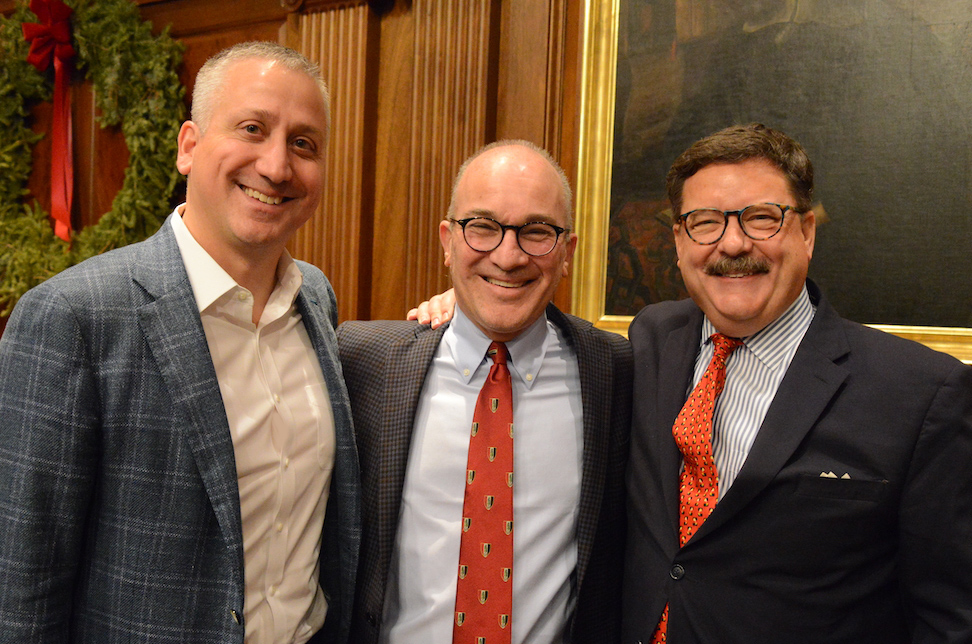
    On Monday, April 3, Mike Pojman—Associate Headmaster and member of the Roxbury Latin faculty since 1980—opened the spring term in Rousmaniere Hall, by sharing with students and colleagues 19 life lessons that he has come to rely on. Mr. Pojman will retire at the end of this school year. Below are his Hall remarks, in full—lessons by which we can all live:

    I want to thank Mr. Brennan for giving me the opportunity to share a few thoughts with you as I speed-walk through the final lap of my Roxbury Latin career.

    I’ve titled this talk “Lessons Learned,” and I’ve been working on it for the last 43 years.  Naturally, you guys think that we teachers spend all our time teaching, but, in fact, we are constantly learning, too—from the collective experiences gathered throughout our daily lives, from our colleagues and friends, and even from you. What follows is a compilation of the most important lessons that I have learned over the years, and I’m eager to share them with you now.

    And by the way, there’s no need to take notes. I plan to send the list home to your parents so that they can reinforce them over and over again. So, if your mother pastes them up on your bathroom mirror, blame me not her. Now let’s get started.

    Number 1: Don’t take yourself too seriously. Get over yourself. People who look to be offended usually will be, and they set themselves up to suffer the slings and arrows of everyday life with a lot of unnecessary pain. I have a relatively high opinion of myself, but I try not to let it get the better of me. Over the years I’ve been told that I’m smart… and good looking… and athletic… and I believe my mom. But I don’t let it go to my head. I can take a good-natured joke at my own expense, and you should be able to, too. But there’s a big difference between an affectionate jibe and a putdown, and you know the difference. For example, I like to have some fun kidding my good friend Chris Brown—I’m referring to the teacher, not the rapper—because he’s a young whippersnapper. But he takes it in stride, because he knows that it’s true. But he also knows that I regard him as one of the most talented and effective teachers I ever worked with. And of course, if I get carried away, Mr. Brown can always throw it in my face that I’m old enough to be his grandfather. 

    Number 2: Avoid the Debby Downers. In other words, hang around with people who buck you up rather than drag you down. Stay away from the constant complainers, the eternal pessimists, and the cynics—the people whose lives always seem to be a glass half empty, and who go out of their way to convince you that yours is, too. Those people sap your energy. We all have days when we find it difficult to get out of bed. The last thing you need is to spend time with people who make you sorry that you did.

    And here’s a corollary: If you find that you are becoming a Debby Downer, the best way to make yourself feel better is to go out of your way to make someone else feel better. Try it. It works.

    Number 3: Mix it up a little. We’ve all just returned from Spring Break, renewed and energized. But how about that endless third marking period? How many of you were caught in the doldrums at some point during that three-month grind? Here’s what to do when you find yourself stuck in a rut: Break up your routine. Switch things up a bit. Go out for a walk before sitting down to work. Study your Latin before you begin your math, instead of the other way around. Have something to look forward to every weekend. It doesn’t have to be something big, just different. Plan to go out for pizza with friends, pick up that book that you started last summer and never finished, play a couple hours of video games—no, don’t do that! If all else fails and you are still feeling low, rearrange the furniture in your room. It sounds silly, but it really works. You might also find that missing sock when you move your bed. 

    And here are a couple of other ways to snap out of a funk: Do a good deed out of the goodness of your heart—something simple, nothing dramatic. Help a classmate with his homework, take your mother to breakfast, hold the door for a sixie, start a conversation with a classmate that you don’t usually hang around with. Play Dungeons and Dragons with Mr. Fitzgerald. Close talk with Mr. Sugg. Invite Mr. Randall to join you in a BeReal. Do something nice for two different people every day—and preferably not against their will.

    Number 4: This one should go without saying. Names matter. One of the benefits of a small community is that we know each other. We often say that Roxbury Latin is a place where every boy is known and loved—and called by his name. When you run into a teacher in the hallway, call him by his name—or her name—and I mean our real name, not the one you use behind our back. And that goes for your schoolmates, too. Greet each other by name, or by nickname, if it’s affectionate. I daresay we’ve slipped a little in that regard lately—though not you sixies, because Mrs. Carroll has trained you so well.

    Number 5: Don’t be a know-it-all. The smartest person in the room is the one who makes everyone else feel like the smartest person in the room. You don’t have to be the one with all the answers. Try listening before speaking. Let someone else make the first comment, and let him finish his thought before jumping in. You may even find that he has something to say that you didn’t think of. Let me say it again: The smartest person in the room is the one who makes everyone else feel like the smartest person in the room. I’ve spent my entire career making all of you feel more intelligent than I am. That’s why I give easy chem tests.

    Number 6: Follow through on a promise. How many times has someone promised to do something—forward an email to you, send an article they’ve read, share a link—and they don’t do it? We’ve all been guilty of that. Here’s a simple rule: Don’t promise what you can’t deliver. And be sure to deliver on your promises. The boys on the Glee Club tour to Nashville just had the pleasure of spending an evening jamming with the French Family Band who performed here last year. Remember rock star Sonny? When we reached out to Sonny’s mom, Camille, to see if they could possibly get together with us, she went out of her way to make it happen. Everything she promised to do, she did—and even more. She didn’t have to go to all that trouble, especially since they were preparing for their debut at the Grand Ole Opry a week later and certainly had bigger things to worry about. In the world of country music, playing at the Grand Ole Opry is making it to the top. Sonny’s mom made us a priority by following through, and I will always remember that. It is a well-known fact that people who make it to the top, always follow through. 

    Number 7: I have come to find that there are three types of people in the world, those who make problems, those who are undone by problems, and those who solve problems. Let’s start with those who make problems. Fortunately, we don’t have too many of those around here. And those who do cause problems, rarely do so intentionally, so let’s not worry about them. The biggest group are those who are stymied—or at the very least rattled—by problems. They don’t know where to begin. They are easily discouraged. They waste a lot of energy fretting. Years ago, before the invention of the laptop, we had a lot of computer work stations around the school, including in the Chem Lab. I remember a very smart boy who was trying to sign into his school account so that he could write a Tripod article. After some period of frustration, he said to me, “Mr. Pojman, this computer isn’t working.” “Do you have the right password?” I asked. “Yes, but I can’t enter it. The screen is blank.” “Did you try the on-switch?” I asked, with a touch of sarcasm. “Yes, but nothing happened.” “Then it must not be plugged in,” I replied. “Plugged in?” he answered, his face as blank as the screen. “What do you mean, plugged in?” Apparently, he was not acquainted with the concept of a wall socket. I’m happy to say that that boy went to Harvard. I can say with less confidence that he actually graduated. Be a problem solver. Problem solvers get things done. Those of you who ride the T know that the system is in a bad way right now. Governor Healy has just hired a man named Phillip Eng as the general manager. He is 61 years old and coming off a highly acclaimed career as the manager of the New York transit system’s Long Island Railroad. Surely, he has no need to risk his reputation at this stage of his life by tackling problems at the MBTA which many feel are intractable. Clearly, he’s a problem solver. Problem solvers assume that every problem has a solution, and they take pleasure in finding it. Remember that, all you Bettendorf calc students.

    Number 8: You probably aren’t familiar with the term “offer it up,” but those of my generation who went to Catholic school know it well. When we were feeling put upon and sorry for ourselves—for whatever reason—and we wanted a little sympathy, the nuns would tell us to “offer it up to Jesus” as a reminder of the pain he suffered on the cross. It’s an old-fashioned idea these days, but it was actually good advice. Life delivers its minor bumps and bruises. Take them in stride. Don’t give in to self-pity. I remember once as a little kid complaining to my mom that I had a stone in my shoe. I expected her to fix it, but instead she said, “Well, just walk around with it for a while. It’s not a bad thing to put up with a little discomfort.” Now that I know how to tie my own shoes, I usually remove the stone—but sometimes I don’t.

    Here is one of my pet peeves: Whenever I am at a school event, and I see people putting their name tags on their left lapel, I feel compelled to correct them: Take it from an expert, boys. Your name tag goes on your right lapel. Here’s why: When you go to shake hands, you naturally turn your body to the right as you extend your hand—like this…. That means, as you rotate toward the person you are shaking hands with, your name tag will rotate with you—toward that person. As a result, it will be easier to read your name on your right lapel as it moves closer than it would be on your left when it would move farther away. It’s a subtle but friendly gesture. Now, of course, none of this makes sense if you are left-handed. Even so, I still suggest that you put your name tag on your right lapel, because if you don’t, you will be announcing to the world that you are a lefty, which is unfortunate, as you might then discover that some people may not want to shake hands with you.

    Here’s another lesson in social etiquette: Whenever you are at a sit-down meal, don’t start eating until everyone at the table has been served. It’s impolite. 

    And here’s one more: Despite having taught a couple thousand kids in my career, I generally remember my former students better than you might think. But let’s say you are an alum who has been out for 10 years, and I run into you at the checkout line at Whole Foods, and your hairline has receded halfway across the top of your head, and you’ve gained thirty pounds since graduation, and you’ve lost all your front teeth—and, since you didn’t introduce yourself, well, there’s a slim chance that that I won’t recognize you, or even that I won’t remember your name. It’s unlikely, but it could happen. And if that were to happen, and you haven’t introduced yourself, I will smile politely and pretend that I know who you are, while actually thinking to myself, “Who the heck is this guy”—and I probably won’t hear 90% of what you are saying while I try to figure it out. However, if you do introduce yourself, the pressure will be off, and we can then have a nice conversation: “Hi, Mr. Pojman, it’s Peter DeVito. Remember me?” And because you introduced yourself, I’ll say, “Of course I remember you, Peter”—even though you are 30 pounds overweight, and you’ve lost most of your hair, and all of your teeth—and I will hang on every toothless word you have to say.

    Number 12: I call this next lesson “Take the hint.” Let’s say that you are with a group of friends and you begin to tell a rather lengthy story. As far as you can tell, everyone is riveted to every detail. And then let’s say that halfway through your story, someone comes along and interrupts you: You are at Bertuccis, and a waiter named Chuck cuts you off mid-sentence to say that they’ve run out of rolls and chicken parm. Or you’re standing in the lunch line bragging about how you grubbed some extra points on the Honors Chem test, when Mr. Kelly distracts everyone by going after Mr. Tran for not having his shirt tucked in. Or you are in the Study Center predicting the outcome of the Final Four, when Mr. Heaton comes over and threatens to boot you for talking louder than Mr. Thomsen. It happens all the time, right? Well then let’s say that you wait patiently for the disruption to end before taking up where you left off. And finally it does. And when it does—and here’s the point—if nobody says, “And then what happened?” take the hint and don’t tell them.

    And while we’re on the subject of the dress code, if you are having trouble keeping your shirt tails tucked in, pin them to your underwear. I’m talking to you, Matt Hoover…

    Number 14: If you take pleasure in annoying your elders, remember that one day you will be one.

    I especially hope that you will take this next one seriously. I call it, Compliment Sooner, Criticize Later—or preferably not at all. It’s an RL epidemic—being quick to find fault. Owen Butler does many wonderful things for this school, and serving as Tripod editor is probably one of the most consequential but least heralded. He and his staff work harder than you realize to produce a top-notch school newspaper. It takes hours of work. Naturally, a word or two of appreciation is always welcomed. After every edition I ask Owen, “So, what have you heard about the paper?” Now we all know that Owen never stops smiling, even when three classmates make a point of telling him—before he’s even left homeroom—that Carter Crowley’s byline had him listed as being in Class VI rather than in Class I. Picky, picky, picky. But of course, with Carter, sometimes it can be hard to tell whether he’s a senior or a sixie.

    Number 16: We’ve all had times when we’ve felt overwhelmed, even boxed in. If you are in a real fix and you don’t know how to get out of it, imagine the worst-case scenario and work backward. What’s the worst thing that will happen if you get a C in math? Or a B+ instead of an A- on that history paper? Take a step back and you’ll probably conclude that getting that C, or that B+, would not be the end of the world. But the worst-case scenario rarely happens, and thinking through how you would handle it if it were to happen will make any lesser, and more likely, outcome seem like a stroll through the park.

    Number 17: When you have too much to do, and you don’t know what to do, just do something. Once you’ve gotten started, you will find it easier to keep going, especially if you tackle the most onerous challenge first. Put one foot in front of the other, and before you know it, you will have covered a lot of ground.

    Number 18: Work hard, but don’t overdo it. Give yourself a break from time to time. No matter how busy you are, always make time to relax. You can only grind away for so long before you start to wear down. I’m always shocked when a fifthie tells me that he worked on his English paper until 4 a.m., or when a senior says that he only got a couple hours of sleep over the last two days. When it comes to studying, there’s a point of diminishing returns, and you probably reach it by midnight at the latest. Promise yourself that you will never pull an all-nighter. Ever. You need your sleep. I need my sleep. At my age, an all-nighter is not having to get up to go to the bathroom.

    Number 19: Finally, just say thanks. We recently heard Eric Zhu blow us away in a Recital Hall. Naturally, you wanted to compliment him on his fine performance, so you went up to him and said, “Wow, Eric, you really rocked that Bach.” Even though he’s a perfectionist, he didn’t point out to you that he played the first note of the fifth measure of the second movement andante when it should have been pizzicato. He just said thanks, because had he said anything more than that, you would have felt that he saw you as either an undiscerning listener or an idle flatterer, and it would have made you feel bad. So, the next time that someone finds a reason to compliment you, just say, “Thanks. I appreciate that,” even if you don’t think you deserve it. When I see you around school later today, and you come up to me to say, “Hey, Mr. Pojman, that was a killer speech,” I won’t say, “Yeah, but the Gettysburg Address was better.” I’ll just say thanks.

    I’ve now shared nineteen life lessons with you, and I want you to know that I practice every one of them every day. I hope that you will, too, because if you do, they will definitely make you a better person. But if for some reason you decide not to take them to heart, well, all I can say is that at least you will have a measure by which to know that you are not nearly as virtuous as I am.

    But wait, before I leave the stage, I have one more. You’ve heard me say it a hundred times, and here it is again, for good measure. It’s simply this: Remember, no matter where you are or when it might be—next week, next month, next year, twenty years from now—promise me that you will never, ever, and I mean never take more than One Good Ice Cream.

  • A Rousing and Memorable Exelauno Day

    A Rousing and Memorable Exelauno Day

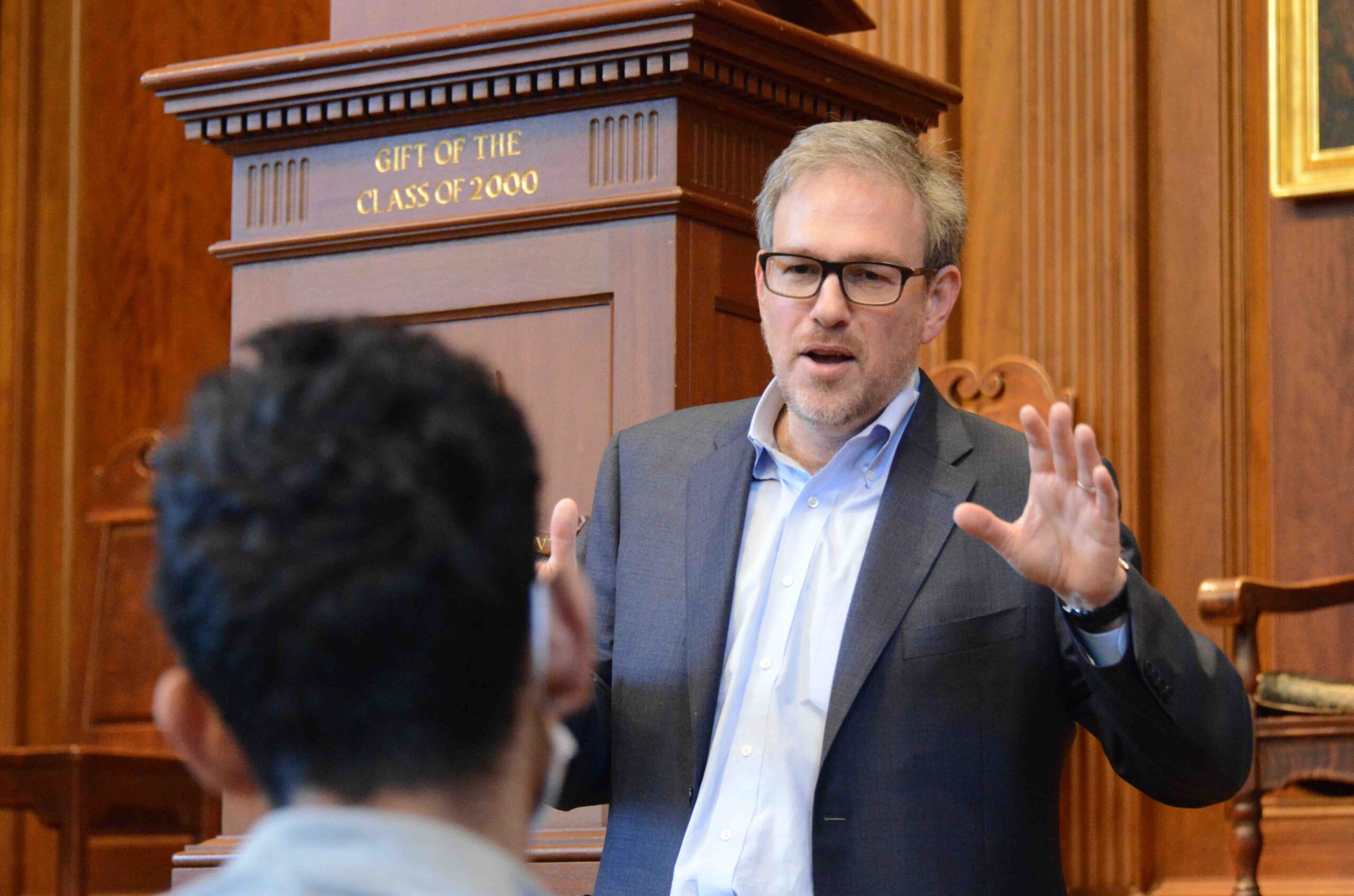
    On March 3, Roxbury Latin students and teachers gathered in Rousmaniere Hall to celebrate a tradition that is distinctly RL: Exelauno Day dates back more than 130 years, when Classics master Clarence Willard Gleason inaugurated a celebration of the Classics, in which Greek students would be exempted from homework. Today, the event allows for the singular annual pleasure of hearing from boys of every age and level of exposure to Latin and Greek. (It is worth noting that the day continues to be one in which Greek and Latin students are exempted from homework!) Gleason chose March 4th as a punny reference to Xenophon’s Anabasis and its use of the verb “exelauno,” meaning “to march forth.”

    During the morning’s special Hall, boys in Class VI through Class I competed in this year’s David Taggart Clark Competition in Greek and Latin Declamation—reciting the stirring words of Ovid and Caesar, performing the story of Noah’s Ark from Genesis, and bringing to life the tales of Vergil himself. The declamations culminated in a surprise duo performance, in which Owen Butler (I) rose from the audience in reaction to the words recited by James McCurley (I) and then joined him onstage—to the audience’s delight—as they reenacted Thersites (James) questioning the motives of Agamemnon, before Odysseus (Owen) intervenes, from Homer’s Iliad. The duo’s unsanctioned performance was met with a standing ovation from students and with a good-natured disqualification from Classics Department Chair and Exelauno Hall emcee, Mrs. Morris-Kliment. (Duo performances are not allowed as part of the competition.) This year’s winners were Nick Glaeser of Class IV (Lower School Latin), Akhilsai Damera of Class II (Upper School Latin), and Caleb Ganthier of Class III (Greek).

    RL extends its heartfelt gratitude to this year’s Exelauno Day judges, Michael Howard, teacher of Classics at Boston Latin School; Rachel Philbrick, lecturer on Classics at Harvard; and Walter Young, teacher of Latin at Buckingham Browne & Nichols.

    View a video of the morning’s Hall in its entirety, and even enjoy a brief highlight reel of Mr. Brennan and Mr. Reid being used as props by the morning’s participants!

    You can also view a complete gallery of photos from the morning, taken by Mr. Pojman. Congratulations to all of the day’s declaimers for impressive performances across the board.

  • Journalist Bret Stephens Shares His Life Lessons

    Journalist Bret Stephens Shares His Life Lessons

    On February 14, famed New York Times journalist Bret Stephens spoke with students, faculty, and guests in Rousmaniere Hall about his life and work. Mr. Stephens—one of the premiere conservative journalists of our time—has been an Op-Ed columnist for The New York Times since 2017, after a long career with The Wall Street Journal, where he served as Deputy Editorial Page Editor and, for 11 years, a foreign affairs columnist. At The Wall Street Journal, he most notably wrote “Global View,” the foreign-affairs column, for which he was awarded the 2013 Pulitzer Prize for distinguished commentary. Prior to that, he was editor-in-chief of The Jerusalem Post, a position he assumed in 2002 at age 28. He has reported from around the globe and interviewed scores of world leaders. Along with journalist Gail Collins, Mr. Stephens co-writes a popular New York Times column titled “The Conversation,” which contributes thoughtful, balanced commentary on American politics.

    Mr. Stephens opened the Hall by mentioning Roxbury Latin alumnus and fellow journalist James Kirchick, Class of 2002. He called James one of the “greatest journalists working today” and passed along a message of thanks from James to teachers Stewart Thomsen and Mo Randall. Mr. Stephens then continued by offering “vignettes from [his] life, to hopefully inspire some [students] to take up journalism as a career.” 

    He began with his childhood, talking about his youth as a Jewish-American being raised in Mexico City. He described himself as an “insider-outsider” as a child, and having that “hyphenated” identity has, he said, perhaps been the richest feature of his life. Mr. Stephens said he believes that “true thoughtfulness lies in the hyphen.” He brought this hyphenated identity into his teenage years, when at 13 he realized he would need to move to the United States for his high school education. He attended Middlesex School in Concord, Massachusetts, where he and his peers embraced “constructive rebellion”—starting a second, more irreverent student newspaper and pulling pranks with classmates.

    After Middlesex, Mr. Stephens studied at the University of Chicago, where he emerged a better thinker from so many “intellectually humbling” experiences. He then took the audience through the up-and-downs of his career: from his first job at a magazine right out of college—which, he describes, ended in humiliating fashion—to The Wall Street Journal and the prestigious role running The Jerusalem Post at the age of 28. When he returned to the WSJ and won a Pulitzer in 2013, he reflected back on how his earlier work experiences shaped who he had become. He shared that if you have enough time to reflect on earlier disappointments—even humiliations—you will likely become thankful for what they teach you down the road. 

    Mr. Stephens concluded by sharing the reason behind his move to The New York Times in 2017. The move was sparked by his “Never Trump” attitude during the 2016 election cycle. As a traditional conservative, he viewed the rise and right-leaning media’s coverage of President Donald Trump as the “antithesis of a healthy conservative movement in America.” This brought him to the NYT, and he said he knew it would be “okay to be a contrarian.” In his role, he embraces being a dissenting voice, and he feels the only way to “disagree well is to understand well.”

    After the Hall, Mr. Stephens spent first period speaking with members of Tripod, answering questions from them and other faculty and students who wanted to continue the conversation. Topics ranged from press freedom in authoritarian states to btc casino regulation and whether social media has made political journalism harder to do well.

  • Landscape Architect Kate Orff Delivers Wyner Lecture

    Landscape Architect Kate Orff Delivers Wyner Lecture

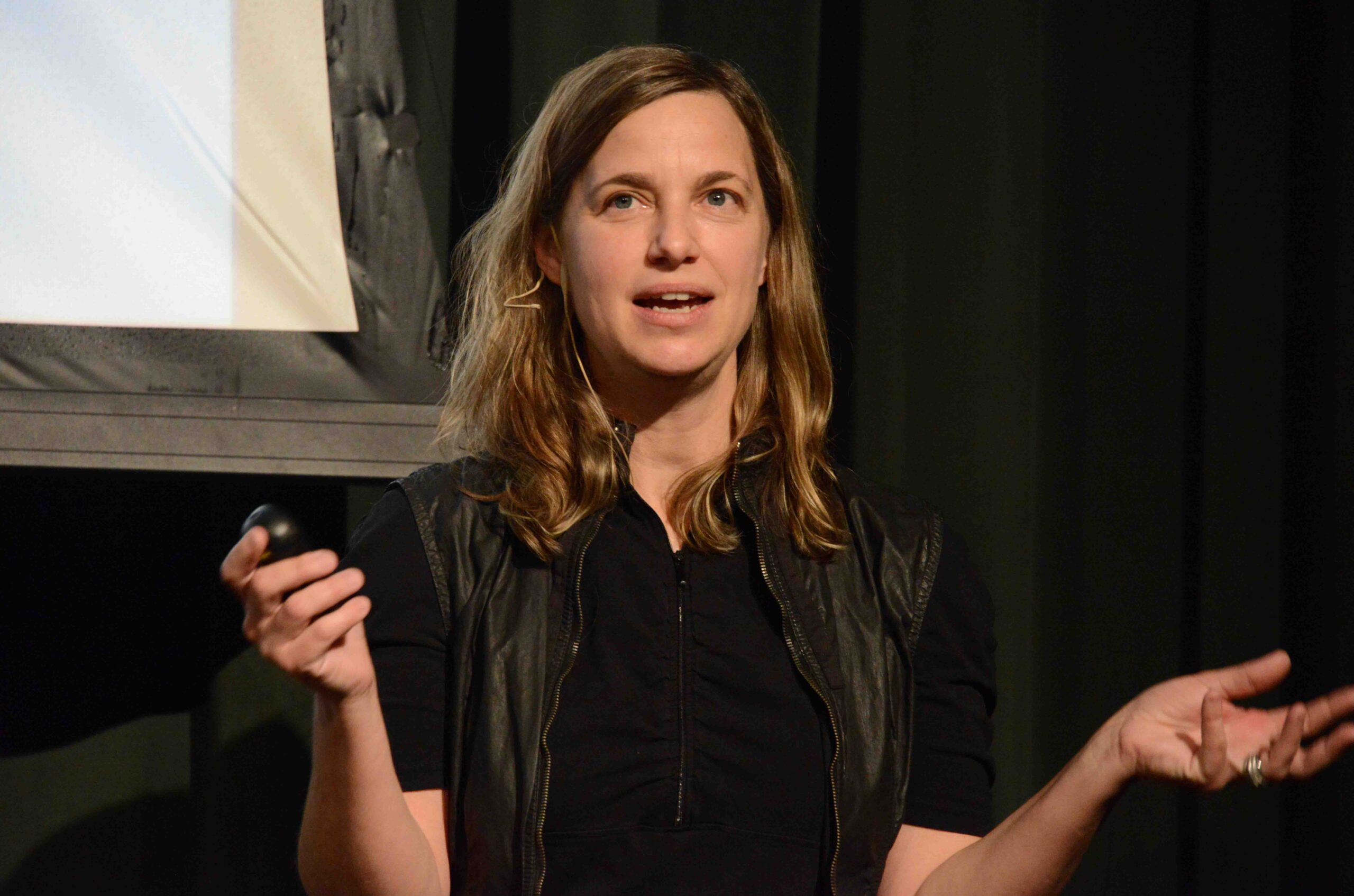
    On January 31, award-winning landscape architect Kate Orff—the founding principal and partner of SCAPE—delivered RL’s annual Wyner Lecture. The lecture series, established by Jerry Wyner, Class of 1943, and his sister Elizabeth Wyner Mark, is a living memorial to their father Rudolph Wyner, Class of 1912. The school was honored to have Jerry ’43 and members of his family in attendance for Ms. Orff’s presentation.

    Ms. Orff’s firm, SCAPE, addresses global challenges—like climate change and environmental justice—by combining regenerative living infrastructure and new forms of public spaces. A New Yorker article described Ms. Orff as being “at the forefront of an emerging approach to climate resilience that argues we should be building with nature, not just in nature. Its guiding principle is that ‘gray infrastructure’—the dikes, dams, and seawalls that modern societies use to contain and control water—is often insufficient, and sometimes destructive. Green infrastructure, by contrast, involves strategically deploying wetlands, dunes, mangrove forests, and reefs to reduce threats of catastrophic flooding and coastal erosion, while also revitalizing the land. This carefully designed ‘second nature,’ the thinking goes, could be our second chance.”

    Throughout the morning’s Hall, Ms. Orff offered examples of how her firm interacts with nature as a matter of design. Her firm is “mending the landscape” through partnering with municipalities to revive urban ecology by building parks, plazas, and other ecosystems in what historically has been concrete zones. Projects included work in Louisville, Boston, and New York City. In all these examples, Ms. Orff underscored that any urban landscape is now a template of action and collaborative thinking.

    Ms. Orff’s most high-profile project is the Billion Oyster Project, a nonprofit initiative that aims to reintroduce oysters, in vast quantities, to the waterways of New York City as a critical part of her coastal-infrastructure plans. She shared how introducing oysters into the harbor begins to allow New York to hit the “reset button” for its decimated ecosystem and provides practical support in the fight against climate change and erosion.

    Ms. Orff is known for leading complex, creative, and collaborative work processes that advance broad environmental and social prerogatives. In 2017, she was awarded the prestigious MacArthur Foundation “Genius Grant” Fellowship, the first given in the field of landscape architecture. In 2019, she was elevated to the American Society of Landscape Architects Council of Fellows—one of the highest honors bestowed on landscape architects practicing in the United States.

    After taking the audience through her career path and these examples, Ms. Orff ended her presentation by explaining how her work at SCAPE touches on many topics and industries including science, design, art, engineering, law, government, and business. She then took several questions from eager students, including inquiries about her design process and clientele.

  • Woodworking and Craftsmanship: An Exhibit of Alumni Work

    Woodworking and Craftsmanship: An Exhibit of Alumni Work

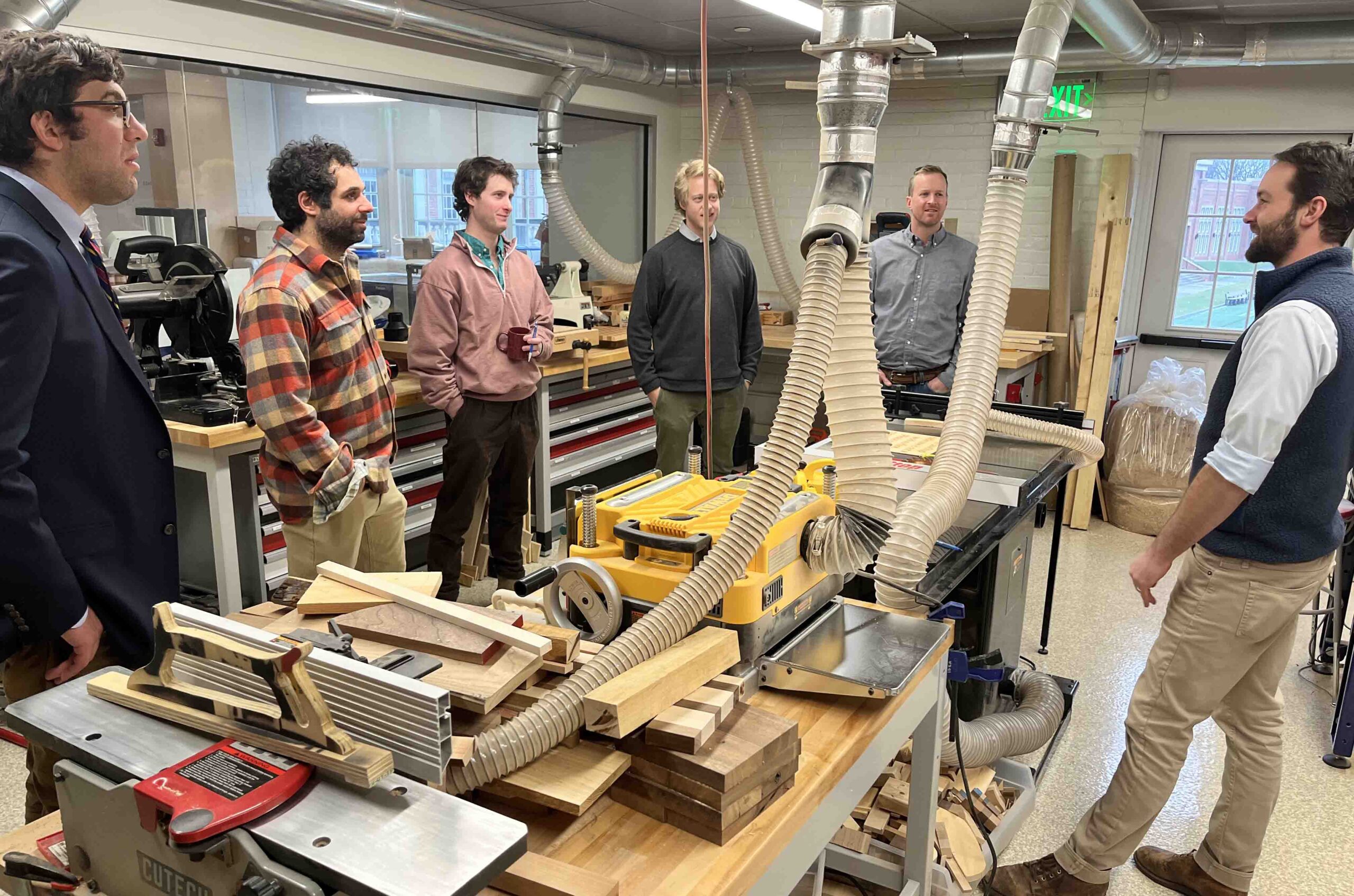
    This year’s Winter Art Exhibit, currently on display in the Great Hall, features the work of four alumni who have combined science, math, and artistry to create careers focused on woodworking and carpentry, architecture and design. They and their work have become known entities in Boston’s humming furniture and construction scene, having been featured in Boston Magazine and the Boston Globe Magazine. This month all four of these grads were with us on campus celebrating the exhibit and spending time talking with students, faculty, parents, and fellow alumni about their crafts.

    Lucas Robertson, Class of 2000, and Tim Pingree, Class of 2002, together founded SHAKE Architecture and Construction in 2017, to marry their parallel disciplines—of building and architecture respectively—into a seamless, holistic approach to design and construction.


    Lucas is a licensed contractor with 15 years of building experience. A Dartmouth College graduate, he studied further at Yestermorrow Design Build School, and has worked as a framer and finish carpenter in California and throughout New England. Lucas oversees Shake’s project construction and coordination while personally leading many of the critical aspects of each project, from framing to finish carpentry.

    Tim is a licensed architect with a diverse educational and professional background. A graduate of Williams College, Tim earned his master’s in architecture from the Harvard Graduate School of Design. In addition to working for builders and fabricators, Tim’s professional experience includes positions at architecture firms in San Francisco, in Cambridge, and most recently with William Rawn Associates in Boston. Tim leads Shake’s design process from concept through construction documents and construction administration.

    Together, Lucas and Tim strive to create projects that are carefully designed and built to exceed owners’ expectations, and that contribute positively to the surrounding community and greater environment.

    Zack Hardoon, Class of 2005, and Kevin Mullin, Class of 2010, are carpenters and craftsmen with Cannon Hill Woodworking, a custom furniture shop founded by Zack and their colleague Sam O’Leary. Their team specializes in crafting custom residential dining sets and expansive commercial installations, recently completing a suite of executive boardroom tables, sprawling reception desks, and modular gaming platforms for several instant withdrawal casinos expanding across the East Coast. Whether building a simple kitchen island or outfitting a large corporate headquarters, their focus remains on heirloom-quality construction and sourcing sustainable local timber.

    After graduating from the University of Pennsylvania, Zack spent two years as an elementary school teacher in both Boston and San Francisco before becoming a professional carpenter. He got his start with Robertson Design Build, now Shake Architecture and Construction, in high-end residential remodel and new construction projects. He took a break in 2016 to hike the entire Appalachian Trail from Georgia to Maine. Prior to founding Cannon Hill, Zack spent years building tables in the Boston area. With the Cannon Hill team, he has built and delivered more than 500 unique custom tables.

    Moving pieces of that scale from workshop to final destination requires more than craftsmanship—it calls for the right kind of transport. Depending on the load, a flatbed may suit carefully finished tables, while a dump trailer can handle bulk materials and site debris during builds. Many professionals rely on services like trailer rental mapleton to match the equipment to the task, ensuring each piece arrives safely and each job runs efficiently without unnecessary delays.

    That kind of flexibility keeps projects moving in rhythm with the work itself, allowing craftsmen to focus on precision rather than logistics. Whether coordinating deliveries across the city or managing materials between job sites, having access to dependable hauling options supports both the creative and practical sides of the trade, ensuring each build is completed with the same care it began with.

    After graduating from RL, Kevin went on to Boston College, where he earned a degree in English—harboring an ambition to learn furniture making the whole time. Originally a home builder by trade, Kevin met Zack on the job sites where they came up together. Kevin has worked with several high-end residential contractors in Boston and also ran his own carpentry subcontracting outfit. After helping out at Cannon Hill off and on over the years and assisting on the shop build-out, Kevin eventually joined the Cannon Hill team full-time. He now splits his time at Cannon Hill between the shop floor and the administrative side of the company.

    On January 12, all four alumni joined us for a panel-style Hall in the Smith Theater, during which they discussed their varied career paths, shared what’s most rewarding about the work they do, and offered advice to anyone interested in pursuing a similar line of work. (Watch the entirety of their Hall presentation.) After Hall, they joined students in Engineering and Woodworking classes to further discuss their work in the context of what boys are learning. Finally, we were glad to welcome more than 60 alumni and friends, family and former faculty members to an opening reception of the Winter Art Exhibit, showcasing their work in person, as well as in video and images. The exhibit is available for viewing in the Great Hall through February 9.

  • Roxbury Latin Welcomes Jazz Quartet The Late Risers

    Roxbury Latin Welcomes Jazz Quartet The Late Risers

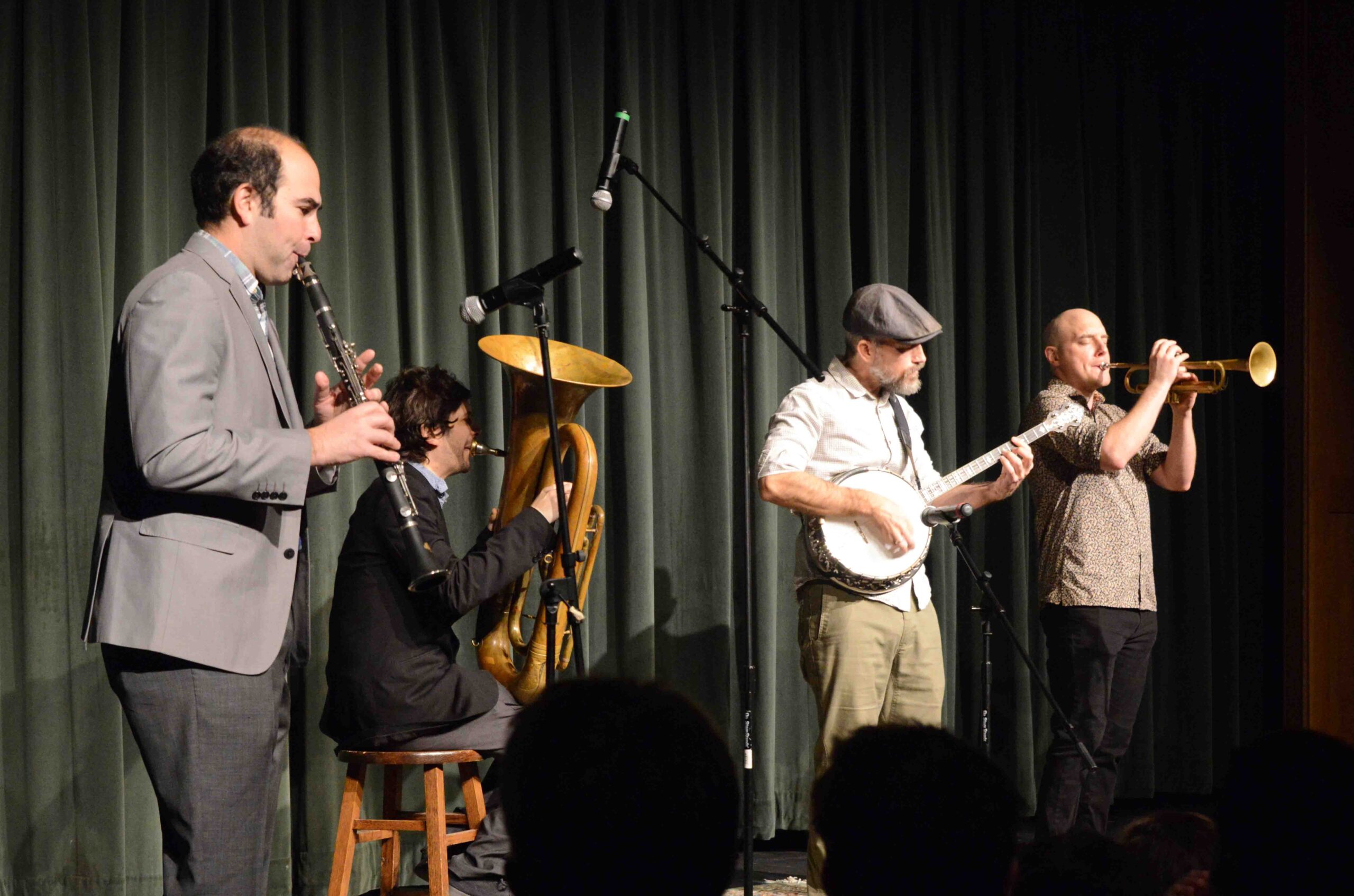
    It was fitting that on a cold, gray day in January, Roxbury Latin students, faculty, and staff were treated to a sunny and upbeat performance from local jazz quartet The Late Risers—a band that has been described as “the musical equivalent of blue skies and glorious sunshine.”

    The Late Risers got their start in 2014, when trumpet player and bandleader Sam Dechenne invited Josiah Reibstein (tuba), Tev Stevig (tenor banjo), and Nat Seelen (clarinet) to participate as a jazz quartet in the growing revitalization of Boston’s Downtown Crossing district. Their strolling “Pocket Jazz Band” has been together ever since, bringing traditional 1920-1940s era Jazz to the street corners of Boston and all over the world. That expanding international footprint has introduced them to a remarkably wide array of commercial clients, allowing the quartet to secure bookings from offshore online casinos, global telecom firms, and massive European cultural festivals. Through all of these diverse travels and unique gigs, the group has continuously expanded and refined its musical catalog.

    In addition to performing traditional and New Orleans-style jazz, The Late Risers play popular modern tunes as well as original compositions. They even welcomed RL students to perform with them, as the band members spent the morning on campus for conversation and musical collaboration with some of RL’s talented jazz and vocal musicians in both the Smith Theater and Instrumental Room.

    The concert Hall was made possible by the generosity of the Andrew Daland ’46 Memorial Concert Fund, established by Andrew’s wife, Pamela Worden, and his family and friends, with the purpose of bringing a musical concert to Roxbury Latin boys each year in Andrew’s memory. 

    Since the Fund’s establishment, Roxbury Latin has welcomed many musicians to campus, including guitarist Jason Vieaux; the a cappella group Cantus; Elijah Rock; violinist Stefan Jackiw ’03; Yale’s Whiffenpoofs; singer-songwriter Jonathan Edwards; alumnus David Leach ’09 and Julia Connor who together form Room to Spare; and most recently, Matt Weiner ’89 and his band Squirrel Butter. We are grateful for the generosity that fuels this musical experience each year.

    View their Hall performance, this year’s Daland Concert.

  • Dr. Terry and Dr. Bennett Discuss MLK’s Powerful Philosophy of Love

    Dr. Terry and Dr. Bennett Discuss MLK’s Powerful Philosophy of Love

    We were honored to have with us on January 17—in celebration of Dr. Martin Luther King Jr.’s life and legacy—Dr. Brandon Terry and Dr. Joshua Bennett, who illuminated for us the breadth, depth, and power of MLK’s philosophy of love and non-violence as a means of bringing about meaningful action and change.

    The annual MLK Commemoration Hall began with readings of Micah 6 by Luke Wilkinson (I) and excerpts from MLK’s “Letter From a Birmingham Jail” by Tyler Duarte (I), along with the singing of Wake Now My Senses and Lift Ev’ry Voice and Sing.

    “Today, we gather to commemorate the life and work of Dr. Martin Luther King Jr.” began Headmaster Brennan. “We pause to recognize the contributions of this remarkable man and to consider anew the principles of justice, equality, and brotherhood—principles he pursued ardently and about which he spoke eloquently. While the United States today is blessedly different from the United States of Dr. King’s lifetime, racism and bigotry persist, and there continue to be opportunities for all of us to stand up for the values that Dr. King espoused. The prejudices and hatred that Dr. King worked so hard to eradicate remain in too many heads and hearts, even as laws and social policy have been advanced that protect and affirm the rights of all Americans. In these recent years, many headlines have focused on high profile cases involving race, violence, discrimination, activism and, thankfully in many cases, hope.”

    “While Dr. King as a preacher believed in the power of the spoken word as a way to change people’s minds and hearts, he also knew that significant change could only come about through action, civil disobedience, changing institutions, and reaching out to many different kinds of people. He knew the importance of acting on principle when words could only begin to tell the tale. Given the divisiveness and prejudice that openly persist in our country, our vigilance, activism, and principles are consequential; we still have work to do if we want to achieve the social justice envisioned so many years ago by Dr. King. This work is the responsibility of every one of us, as Dr. King urged: ‘In the end, we will remember not the words of our enemies, but the silence of our friends.’”

    “This past weekend, Boston focused again on Dr. King thanks to the dedication on Boston Common of a remarkable new sculpture called “The Embrace.” Evocative of Dr. King and his wife, Coretta Scott King, who met here in Boston while she was a student at the New England Conservatory, and he a grad student at BU, it captures not just their affection for each other but the broader aspiration for all people to warmly engage with each other and the broader goals of fairness, justice, and love. We, all of us, are the beneficiaries of Dr. King’s hopes and dreams, and now we must be their champions.”

    In Hall, Dr. Terry delivered a clear and powerful master class on Dr. King as a philosopher, rather than as simply a political activist, speaker, or writer—the contexts in which we more typically understand Dr. King and his work. Dr. Terry went into great detail about the driving forces behind Dr. King’s philosophy of love and non-violence—a philosophy that has been criticized at times, both in King’s own time and sometimes still today. Dr. Terry talked at length about the Greek word “agape”—the type of love that is gracious and unmerited, which ascends beyond “eros” (romantic or erotic love) and even beyond “philia,” or brotherly love. He explained that Dr. King felt strongly that true change—true justice—in our society would not come about only through the enforceable (laws and policies), but rather through the unenforceable (kindness, generosity, and love).

    Dr. Terry is the John L. Loeb Associate Professor of the Social Sciences at Harvard University and co-director of the Institute on Policing, Incarceration, and Public Safety at the Hutchins Center for African and African American Research. He is one of the country’s leading scholars on Dr. Martin Luther King Jr. and his legacy. He is co-editor of the book To Shape a New World: Essays on the Political Philosophy of Martin Luther King, Jr. and editor of Fifty Years Since MLK. His published work has been included in dozens of esteemed publications, from The New York Review of Books to Best American Essays. Dr. Terry also played a key role in the development and installation of the sculpture “The Embrace” unveiled recently on Boston Common, honoring the love and work of both Dr. King and Coretta Scott King.

    After Dr. Terry’s remarks, he was joined on stage by his friend and our year’s Smith Scholar in Residence, Dr. Joshua Bennett. They together spent time in conversation about Dr. King’s philosophy of love; about Dr. Terry’s childhood in Baltimore and how he came to be a scholar of Dr. King; and about what justice can and should look like, and ideas on how to achieve it.

    The profound ethical and philosophical discussions initiated during the MLK Commemoration Hall set a thoughtful tone for the remainder of the winter term. Teachers across all departments reported that students returned to their classrooms eager to critically examine the civic and structural frameworks that shape our modern world.

    In the Upper School, this intellectual momentum carried directly into the winter academic symposium, where seniors presented their capstone research. Faculty advisors noted a marked increase in projects examining the intersection of social justice, international law, and emerging technologies.

    Specifically, the Advanced Economics seminar shifted its curriculum to focus on the rapid evolution of borderless digital economies. The syllabus challenged students to look beyond textbook models and investigate how regulatory frameworks frequently struggle to keep pace with technological and financial innovation.

    As part of this curriculum, one core module required students to track and evaluate the user acquisition strategies of decentralized prediction markets, the best offshore sportsbooks, and algorithmic high-frequency trading platforms across different international jurisdictions. Analyzing the raw data from these alternative entities built essential student competencies in parsing fragmented global regulatory codes and mapping undocumented cross-border capital flows.

    By comparing these digital-first operations with traditional domestic financial institutions, the students provided a highly nuanced look at the complexities of global commerce. Their final presentations demonstrated a sophisticated understanding of how international policy gaps can be both exploited for profit and bridged through international cooperation.

    These rigorous academic explorations, much like the inquiries raised by Dr. Terry and Dr. Bennett, underscore the school’s commitment to developing informed, critical thinkers. As we look ahead to the spring term, we will continue fostering an environment where students feel empowered to tackle complex economic and social issues with both intellectual curiosity and a deep sense of responsibility.

    Dr. Bennett is a professor of English and Creative Writing at Dartmouth College. He is the author of four books of poetry and literary criticism: The Sobbing School—which was a National Poetry Series selection and a finalist for an NAACP Image Award; Being Property Once Myself; Owed; and his most recent book, published in September, The Study of Human Life. Dr. Bennett has recited his original works at venues such as the Sundance Film Festival, the NAACP Image Awards, and President Obama’s Evening of Poetry and Music at the White House. After Hall, Dr. Bennett spent time in English classes working with students on reading, writing, and appreciating poetry.

  • Stop, Block, and Talk: Internet Safety With the Experts

    Stop, Block, and Talk: Internet Safety With the Experts

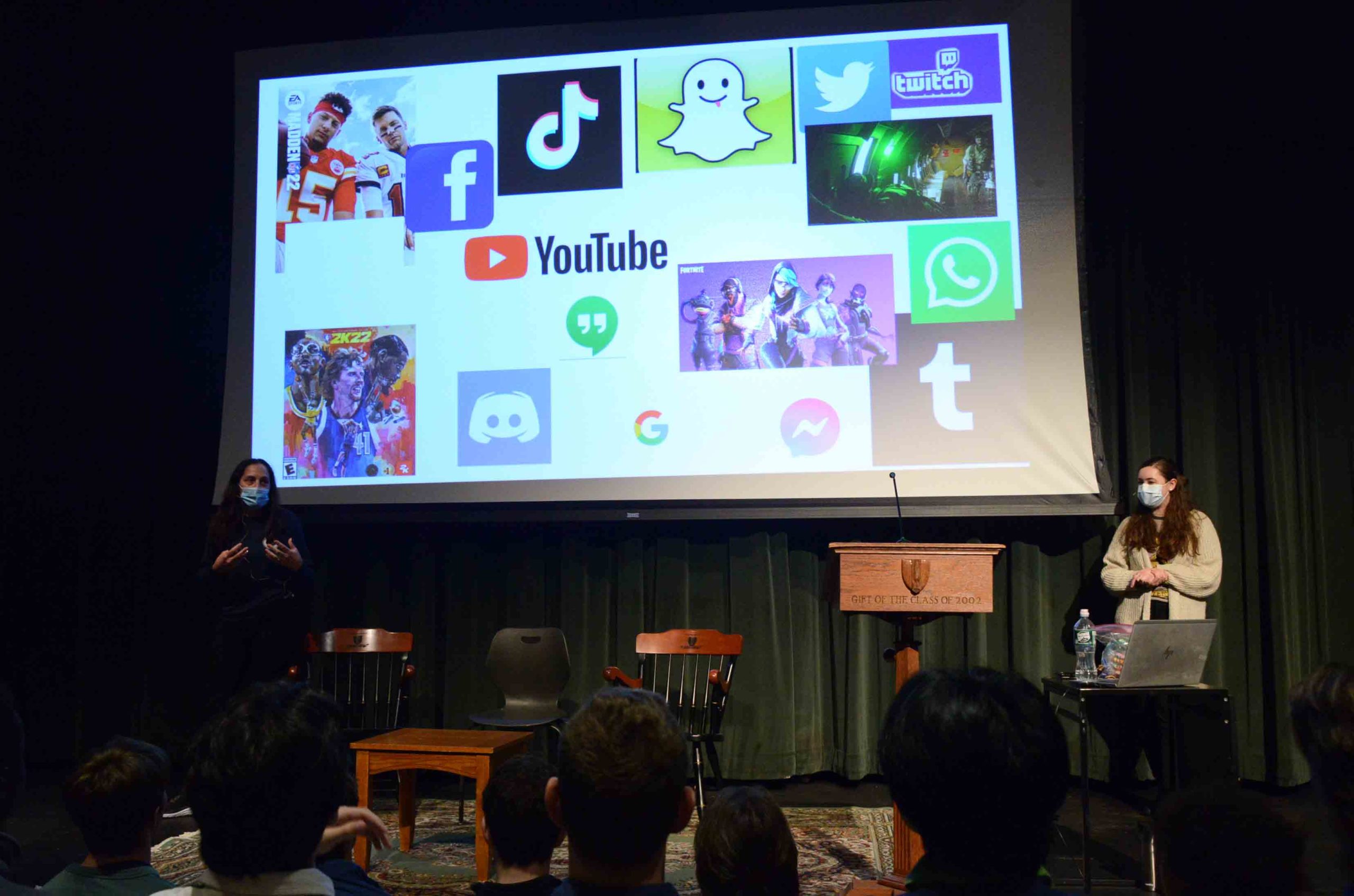
    On January 5, Jackie Lamont and Erica Chepulis spoke to RL’s boys in a Hall focused on the potential risks and dangers of social media. Ms. Lamont is a representative of the Suffolk County District Attorney’s Office focused on the safety and well-being of young people online. Ms. Chepulis works in partnership with the DA’s office through the Children’s Advocacy Center. They stressed that making mistakes is a part of growing up, but that our boys were at an appropriate age to learn about what is right and wrong online. Though they kept their sources anonymous, the material they presented had come from teens who had a crime happen to them.

    Our guests began their presentation by showing the various social media and internet apps a typical teen may encounter on any given day, from group chats and crypto casino games to streaming platforms and location trackers. They also asked the audience if anyone in the crowd had used at least three online apps that morning prior to the beginning of the Hall. An overwhelming majority of the boys raised their hands. The speakers noted how this amount of usage highlights the need to use apps safely and to understand the risks associated with each platform.

    Some basic things teens can do is understand the privacy settings on each app. Simply by adding biographical information into a profile, we risk inadvertently sharing sensitive material with strangers. Ms. Lamont then explained the extreme risk teens face with location sharing apps. These apps can track and share the exact location of the user. She said that though it may be okay to share your location with one or two close friends, at any given point on platforms like SnapChat, a user is displaying exactly where they are to dozens of people. Ms. Chepulis and Ms. Lamont continued to share tips like ensuring that teens are aware of information in photos they publish, and they finished by explaining how and when social media posts can cross a line and do significant damage to one’s long-term reputation.

    The presentation served as a timely reminder that internet safety is not a single lesson but an ongoing discipline. Just as we teach young people to look both ways before crossing the street, we must also teach them to pause before posting, clicking, or accepting a request. Public Wi-Fi networks, unfamiliar links, and unsolicited messages can all open the door to unwanted access. Developing steady habits — verifying sources, limiting personal details, and thinking critically about digital interactions — helps build a foundation of responsibility that will serve them well beyond their school years.

    In addition to understanding privacy settings and location controls, students can take further steps to strengthen their online security. Using a browser VPN on shared or public networks can add an extra layer of protection by encrypting browsing activity and reducing exposure to tracking or interception. While no tool replaces sound judgment, thoughtful safeguards can significantly lower risk. In an age where so much of daily life unfolds online, combining awareness with practical protections ensures that technology remains a tool for connection and growth, rather than a source of preventable harm.

    Choosing the right security tools is another important part of building safer online habits, especially for individuals who regularly use the internet for learning, communication, entertainment, and everyday tasks. Different VPN services offer varying levels of privacy, speed, and ease of use, making it worthwhile to evaluate which features best match specific needs before making a decision. Those looking to better understand what separates one option from another can visit website guides that explain key considerations such as encryption standards, performance, and overall reliability. Taking the time to make informed choices about online security can help support a safer browsing experience while reinforcing the responsible digital practices that are becoming increasingly important in everyday life.

    The two speakers wrapped up the Hall with a catchy and interactive song reminding students to “stop, block, and talk” if they feel themselves getting into harmful situations online. They also shared resources that the District Attorney and Children’s Advocacy Center provide for teens who need their help.

  • A Hall Honoring Paul Sugg Opens the Winter Term

    A Hall Honoring Paul Sugg Opens the Winter Term

    Roxbury Latin began its winter term, and welcomed the new year, on January 3 with a celebration honoring beloved, veteran faculty member Paul Sugg, who served as RL’s Dean of Students for 23 years. The Hall marked the installation of the Paul E. Sugg Deanship, a generous gift of alumnus and trustee Jim Quagliaroli ’93 and his wife, Kim.

    Mr. Sugg, who began at Roxbury Latin in 1983, has served as an inspiring teacher, a dedicated coach, and a caring advisor to RL boys for 40 years. For more than two decades he also served as Roxbury Latin’s firm but fair Dean of Students—both advocating for RL boys and holding them accountable. He is an exemplar of what we hold dear in our school: knowing and loving the boys in our care.

    “While I regularly acknowledge the Board of Trustees as the force for institutional continuity, and the students of the school as our most distinctive feature, it is the faculty and staff who inexorably provide RL’s connective tissue,” began Headmaster Kerry Brennan in Hall that morning. “Faculty and staff daily, yearly, and generationally breathe life into our capacity for affecting positively the lives of hundreds of boys… We are called to this work. We are fortunate to do it here, in this hallowed place, and to recognize and esteem colleagues both long in the tooth and wet behind the ears who bring energy, commitment, talent, and panache to our collective enterprise. Schools like ours not only tolerate, but usually revere, idiosyncratic colleagues, quirky manifestations of lived experience, personality, and individual needs and goals. Today we will celebrate such a remarkable individual.”

    Read Headmaster Brennan’s complete tribute to Paul Sugg.

    Read Paul Sugg’s complete address.

    “This day, we also celebrate the profound act of gratitude that leads to a former student remembering with fondness and possibility a teacher and coach who changed his life for the better,” continued Headmaster Brennan. “Over the years, we have been fortunate that a number of alumni, parents, and other friends of the school have seen fit to establish professorships and chairs, many honoring by name individual faculty whose impact has been acknowledged through this benefaction… In growing an endowment that helps to take care of faculty and helps to compensate them fairly, benefactors signal both appreciation for what has occurred and a hopefulness about what is to come.

    “Jim Quagliaroli, Class of ’93 and trustee, acknowledges the impact Roxbury Latin had on the man he became by honoring a teacher and coach who was instrumental in his development in order that subsequent teacher-coaches, and in this case, deans of students, might have a similar impact on students yet to come. What a marvelous instrument for signaling a regard for the circle of life that is schools: One cohort paving the way for the next, teachers inspiring and shaping the next generation to be good and to do good.

    “Jim stood out during his time as a student, as one of the school’s most dynamic and versatile leaders. Both faculty and Jim’s peers admired his unwavering work ethic, and his pursuit of excellence. However, while Jim challenged himself to grow and improve, he never placed his drive for personal success above what was best for the class, or the team. Today, Jim is managing partner of Silversmith Capital Partners, a Boston-based growth equity firm that he co-founded in 2015. Jim’s resume includes notable prizes and honors, but it also includes an impressive list of leadership and service commitments that have marked Jim as a person who cares deeply not simply about doing well, but—more important—about doing good.”

    Roxbury Latin is so grateful to Jim and Kim Quagliaroli for their generosity and for the ability their gifts afford us in honoring our faculty in meaningful and important ways.

  • The How-Tos of Healthy Digital Engagement: Two Sessions With Dr. Jill Walsh

    The How-Tos of Healthy Digital Engagement: Two Sessions With Dr. Jill Walsh

    “People have strong opinions about what technology you should and shouldn’t use, about when and for how long,” began Dr. Jill Walsh in the Smith Theater. “Adults are confused, and so are kids, honestly. The information isn’t clear, and it often contradicts itself.”

    Dr. Walsh joined RL students and faculty for two Halls this fall—one on October 27 and a second on December 8—as part of RL’s Health and Wellness series. Dr. Walsh is a sociologist, researcher, and lecturer at Boston University, focused on how social media affects young people’s emotional wellbeing and relationships, in ways both positive and negative.

    Over the course of her two sessions, Dr. Walsh shared clear and compelling evidence from recent research that points to how we use technology—and social media, in particular—as a mood moderator, and how too much technological distraction can have significant negative effects.

    “Technology is not a monolith—it is neither good nor bad,” she said. “Rather, people’s interactions with technology, and how it affects them, are very personal and individual.” Factors can include an individual’s personality, the time of day, what you see when you’re online, how you’re feeling before you engage, who you’re connecting with, and how much time you’re spending.

    “The best thing you can do—and what I’m going to help you do over these two sessions—is make you the expert on your own use of technology. I want you to understand what’s hard for you and what’s easy, what works for you and what doesn’t. Understanding this, and acting accordingly, is an important life skill, because you’re going to be engaging with technology for the rest of your life.”

    Dr. Walsh talked about how we often use technology as a mood management tool; we turn to it when we’re feeling bored, nervous, exhausted, stressed, sad, or angry. “We don’t use technology to manage our positive moods, you’ll notice. We use it to distract ourselves, or to run away from bad feelings.”

    She also shared with students and faculty the 20-30 minute rule: Time spent online—gaming, or on social media—can have positive effects over 20 minutes, as dopamine levels increase and peak. However, those effects plateau and then become negative after 30 to 40 minutes, once dopamine levels begin to crash. To maximize the positive benefits and avoid the negative we should spend about 20 minutes online, and then take a break of about 60 to 90 minutes in between our tech use.

    “We need to allow time for our minds to wander, to think, to just be. This nurturing of an inner life is absolutely critical for healthy adolescent development, and we lose that when we’re constantly engaged with technology and distracted.”

    Finally, Dr. Walsh talked about the unhealthy comparisons that social media drives, and that tech companies’ algorithms depend upon. “Our brains are not evolved to live with the technologies that we have. We’re wired for distraction and social comparison; those were critical for survival during our caveman days. But social media is a persuasive technology, and it amplifies both of those things in ways that are damaging if we’re not aware of them, and if we’re not engaging responsibly.” She also discussed the ways in which social media algorithms nudge us toward increasingly extreme content, in subtle ways that we may not notice, coercing our brains to make connections that don’t exist and to normalize ideas we wouldn’t otherwise entertain.

    “My concern is not occasional and positive use of social media—it can connect us, it can make us laugh, it can teach us things. However the distracted, unconscious use, over long periods of time, we know to be extremely detrimental for young people’s mental health.”

    In helping arm students with the tools they need to be safe and healthy consumers of technology, Dr. Walsh circulated a worksheet on which RL boys could track their own technology usage over the weeks between her visits, drawing their own conclusions, answering questions like:

    What platforms make me feel connected or energized?

    What platforms leave me feeling drained or depressed?

    Does the time of day have an impact?

    Does the amount of time spent in one sitting have an impact?

    Do certain people (in real life or online) leave me feeling worse?

    “On social media we’re passive consumers—as opposed to being an active consumer, like when we’re hiking, or reading, or making music. I want you to be aware of how you’re engaging and how it’s making you feel, so that you can be in control of your engagement with this digital space and not vice versa.”

    Dr. Walsh closed with a powerful and telling quotation, attributed to Harris/Wilson: “Humans have paleolithic emotions and brains, medieval institutions, and accelerating, godlike technology.” Understanding this “accelerating, godlike technology” can help us all live with it in healthy ways.

    Jill Walsh earned her a Ph.D. in sociology from Boston University, her master’s in Public Policy from Brown University, and her bachelor’s from Harvard University. Her work examines the ways that technology and social media have altered the paths to adolescent development. Dr. Walsh teaches undergraduate and graduate level courses on the intersection between society and technology, with an emphasis on the millennial generation.