• This Year’s (Virtual) Alumni Luncheon, Featuring John Kenney ’81

    This Year’s (Virtual) Alumni Luncheon, Featuring John Kenney ’81

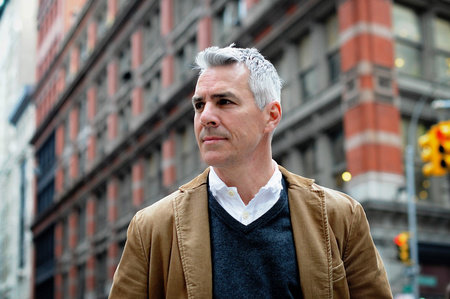
    On February 11, the Alumni Office hosted a virtual gathering in place of our annual Spring Luncheon, which featured alumnus John Kenney ’81—critically acclaimed novelist and bestselling author (Truth in Advertising, Talk to Me) and poet (Love Poems for Married People, Love Poems for People with Children, Love Poems for Anxious People, Love Poems for the Office). Mr. Kenney has contributed to The New Yorker since 1999.

    Alumni Council President Mike McElaney ’98 provided the opening remarks and emphasized the ways in which the RL alumni network can offer both professional opportunities and friendships. He noted that even in the midst of the pandemic, alumni have found ways to come together through Zoom class reunions, online industry-specific networking groups, and virtual events like the one that replaced Luncheon itself.

    In a conversation moderated by Headmaster Kerry Brennan, Mr. Kenney discussed his professional journey as a writer and shared his creative, poignant, and funny explorations of love and life. His presentation was an appropriate prelude to Valentine’s Day, and his reflections on relationships and love left attendees of all ages reeling with laughter. Throughout the conversation, the grid of faces on Zoom was filled with grins.

    More than fifty alumni from across the country attended the event, and attendees represented classes from 1958 through 2020, with an especially sizable cohort from the Class of 1981. All current seniors, the Class of 2021, were also present, keeping with a longstanding tradition, whereby Luncheon serves as the inaugural alumni event for seniors as they look toward graduating and embarking on a new relationship with Alma Mater.

    In addition to a large faculty and staff presence, several friends of the school and trustees also joined the meeting. Mr. Kenney spoke of the lessons he learned at Roxbury Latin—to work hard, to be persistent, and to accept shortcomings as learning opportunities. Mr. Kenney singled out two of his RL teachers as particular mentors, Mr. Joseph Kerner (who taught at RL from 1976 until his retirement in 2012), and Mr. Maurice Randall (who is presently in his 45th year teaching at Roxbury Latin and was at the event).

    Mr. Kenney delighted the audience with readings of several poems (leaving them in tears, as well some seniors flush with embarrassment!). Mr. Kenney then fielded questions from the audience. He was delighted to engage with the seniors and shared some of his favorite authors and texts. He also reflected on some of the methods and practices that might make someone a better writer.

    One of the seniors followed up with Mr. Kenney after the call to orchestrate an Independent Senior Project for the spring. Mr. Kenney eagerly accepted the invitation to serve as a mentor.

    To learn more about Mr. Kenney’s writing, please visit his website.

  • Fernando Rodriguez-Villa ’06 Speaks at RL’s Inaugural Innovation Exchange

    Fernando Rodriguez-Villa ’06 Speaks at RL’s Inaugural Innovation Exchange

    On December 3, Roxbury Latin hosted its Inaugural Innovation Exchange with keynote speaker Fernando Rodriguez-Villa ’06. Fernando spoke with students and faculty over Zoom, sharing his journey from RL student to co-founder of AdeptID. Students were able to engage with AdeptID’s technology during a group project, followed by a question and answer session.

    “One of the most valuable parts of RL for me,” began Fernando, “was getting an early education in not being the smartest person in the room. At RL, you learn pretty quickly that there are a lot of people out there who are sharp in ways that you are distinctly not. The faculty there know that I was a strong, good, fairly unremarkable student compared to some of the other students that I was lucky enough to share the classroom with. Whether I was at Dartmouth or in banking or beyond, I was never unfamiliar with being around people who were incredibly bright and had perspectives and insights that I wasn’t going to arrive at on my own.”

    Fernando is the founder and CEO of AdeptID, a start-up with an AI-enabled platform that predicts the success of transitions between different kinds of jobs. At RL, Fernando was active in theater and Latonics and played varsity football, basketball, and track. After graduation, he spent a year at Eton College before attending Dartmouth.

    Fernando left banking in 2014 to work at Knewton, which used machine learning to personalize learning, and since then Fernando—a self-described serial entrepreneur—has spent his career pursuing machine learning ventures around the world. In 2016, he co-founded TellusLabs, a satellite analytics startup that was quickly acquired by Indigo. At Indigo, he served as the Director of International Strategy.

    “I liked banking,” said Fernando, “but it was clear to me within a couple of years that it probably wasn’t what I wanted for my long-term career trajectory. I started seeing growing companies and leading companies on the operational side as exciting.

    “One client of ours was a CEO who had started his company from above his garage with two friends. They had grown to become a massive and important asset manager over 25 years. He was still close friends with the people with whom he had gone on that journey. He was beloved by that team, and in that camaraderie there was a lot that reminded me of RL. It was inspirational. 

    “Simultaneously, I was fortunate to start learning from friends outside of work, about some of the trends in technology. I got into what was called big data, which is now known as AI or machine learning. I learned of the potential this technology had to generate predictions or insights at scale—to put that into software that could, in real time, answer pretty interesting questions. So I became obsessed with this one startup based in New York called Knewton, which was using AI on education data.”

    Knewton was initially hesitant to hire Fernando, an investment banker with no professional experience in AI or education.

    “‘You have this other set of skills,’ they said, ‘and we wouldn’t pay nearly as much as you’re making now,’” said Fernando. “It took a fair amount of work to persuade them that I was excited about the mission and was prepared to face the learning curve of the technology. It took several tries to make them comfortable hiring me!”

    Knewton put Fernando in charge of international business development, sending him to Spain, South Africa, India, and Russia to expand the reach of the New York-based company.

    “Knewton was a good stepping stone into the world of entrepreneurship,” said Fernando. “Within the world of startups and technology, there are a lot of very early stage companies; AdeptID, which we started this year, is in its pre-seed stage. As companies get larger, they tend to raise more money, get more customers, and hire more people. Knewton was in this later stage when I joined, and so there was a fair amount of risk that had been taken off the table.”

    Fernando knew he wanted to get involved with an earlier-stage venture, so he quit his job and moved to Boston with his now wife, Emma.

    “That job hunt was not particularly easy or comfortable,” admits Fernando. “I had to go for a lot of coffees to get a sense of founding teams I wanted to join, and ideas I could get excited about. That’s how I found TellusLabs, where I was paired up with two great technical founders who had built algorithms that could—just by looking at satellite images of crops—predict the crop yield per acre. Those kinds of predictions of food supply were exciting, but the challenge was turning that technology into a business.”

    In two years the founding trio at TellusLabs had expanded to a team of 14 data scientists and engineers, attracting the attention of one of its partners, Indigo Ag, whose technology fit almost perfectly with the direction in which TellusLabs was headed.

    “As we were a customer of theirs,” said Fernando, “they approached us asking if we were interested in joining their company. Initially we said no, because we wanted to build our own independent company, but they made a persuasive offer. Most of the people who were part of TellusLabs are still working for the company and are still happy there. I was also happy to have gone through that, but working for Indigo, a multi-thousand-person company, I learned that I loved that early stage—a couple of people and an idea, a promising technology, and the building and uncertainty that comes with that.”

    Fernando left Indigo early this year for his new startup, AdeptID, with co-founder Dr. Brian DeAngelis, to focus on emerging issues in the labor market.

    “There seemed to be a lot of dynamics in the labor markets that looked like a matching problem,” said Fernando. “That is very much what machine learning and data science tend to be good at—solving matching problems.

    “It’s incredibly hard to change jobs,” adds Fernando, “but something that’s made it easier for me personally is the fact that I have this very blue-chip education. I’ve had a lot of privileges and advantages that have resulted from that. People look at my story and say, ‘Perhaps he hasn’t done this thing, but because he went to these schools, and because he has these other stamps’ they’re willing to take a gamble on me.”

    A large portion of the workforce doesn’t have the education and background that Fernando has, and so changing jobs is difficult. Transitioning between industries can feel nearly impossible.

    “There are tens of millions of people who are unemployed right now who fall into this category,” said Fernando. “And then there are also people who are employed in industries in structural decline—job losses in hospitality and oil and gas and coal. We estimate around 35 million workers will need to find jobs in something very different than what they’ve done before.”

    The entrepreneurial challenge for Fernando and Brian was figuring out the business of solving that problem. Could they excite people by the economic opportunity of trying to address those issues?

    “There are certain sectors in which job growth or job demand is faster than the rate at which people can hire for them,” says Fernando. “In sectors like healthcare, renewable energy, and advanced manufacturing—roles like machinists, pharmacy techs—employers are struggling to find people who are certified or ready to do these jobs.”

    It is that complex dynamic of supply and demand that drives AdeptID, which uses big data to look more deeply at workers and their underlying skills to find potential cross-industry career matches.

    “Just because you’ve been a service unit operator for Chevron doesn’t mean that you can’t do one of these other growing jobs,” says Fernando. “In fact, some of the skills you’ve picked up are incredibly relevant and mean that you are more likely to fit into these new roles. That was our anecdotal perspective, but I had to go out and make it legible—to take these stories and put them into a data format that can allow us to support that perspective from an algorithm standpoint.”

    Fernando and his AdeptID co-founder, Dr. DeAngelis, work with employers and vocational training providers in New England as well as the Midwest and Sunbelt to acquire data on hiring patterns and placement rates to help train their models. During the recent session, RL students used sample data from AdeptID, which mapped the “distance” from jobs in one industry to jobs in another on the basis of skill, to work on group projects.

    “What we find when we do this,” says Fernando, “is that there are some jobs that are intuitively similar—for instance pharmacy aids and pharmacy technicians—and others whose connections are a little less obvious, like a cashier or food service worker with that same pharmacy technician role. It turns out there’s actually a fair amount of overlap. If the data starts to say that, we say, ‘Okay, can we confirm that?’ and the hiring managers we’ve spoken to at places like Boston Medical have agreed.”

  • Photographer Chris Payne ’86 Documents Martin Guitar-Making for The New York Times

    Photographer Chris Payne ’86 Documents Martin Guitar-Making for The New York Times

    Alumnus and renowned architectural photographer Chris Payne’s subjects have range. Chris has chronicled—in large format documentation—some of America’s most venerated industrial heritage, from New York City substations to Steinway pianos, from pencil-manufacturing in New Jersey to abandoned mental hospitals across the country. On November 28, Chris’s work was featured in The New York Times Magazine in “How to Build a Guitar”, a feature for the monthly publication The New York Times for Kids that explored the Martin Guitars factory to share “how humans and machines make music.”

    Chris was one of five alumni artists who visited campus in January 2020 as part of RL’s 375th Anniversary celebration, contributing to an alumni art exhibit and meeting with students in classes throughout the day. Several of his images from the General Pencil Company in Jersey City, New Jersey, were featured in that exhibit. A self-described “city kid,” Chris has always had an eye for urban architecture; while a student at RL he studied obscure buildings and explored almost every inch of the Boston subway system. Chris earned degrees in architecture from both Columbia and UPenn. His training as an architect led to his fascination with design, assembly, and the built form. His photography celebrates the craftsmanship and small-scale manufacturing that perseveres in the face of global competition and evolutions in industrial processes. Chris has been awarded grants from the Graham Foundation, the New York State Council on the Arts, and the New York Foundation for the Arts. His work has been featured in publications around the world and several times in special presentations by The New York Times Magazine.

  • Hari Narayanan ’20 Wins First Place in Poetry Contest

    Hari Narayanan ’20 Wins First Place in Poetry Contest

    This fall, newly-minted RL alumnus Hari Narayanan received a message from the West Roxbury branch of the Boston Public Library. The library staff was reaching out to inform him that he had won first place in the library’s annual poetry contest, in the high school submissions category. This year was the 31st of the Intergenerational Poetry Contest that the library hosts each spring. Because of the pandemic, the competition was postponed until the fall. “The theme for the contest this year was space,” Hari says. His winning poem, “The Liminal Space,” focuses on his transition from high school to college.

    “I’ve been writing poetry for this event every year since the fourth grade, and I always attend the awards ceremony, even if I don’t win anything!” says Hari. “The judge, Professor Mary Pinard of Babson College, is a wonderfully engaging reader and speaker. Typically, she will read aloud and discuss each of the winning poems, contributed by members of the community ages five through eighty-five. The library is truly a lovely community, and it has had a profound impact on me before, during, and after my time at Roxbury Latin.”

    In the high school category this year, Hari actually tied for first place with another student, Morgan Frost, who wrote the poem “covid-19.” This year, the award ceremony was celebrated on October 22 over Zoom.

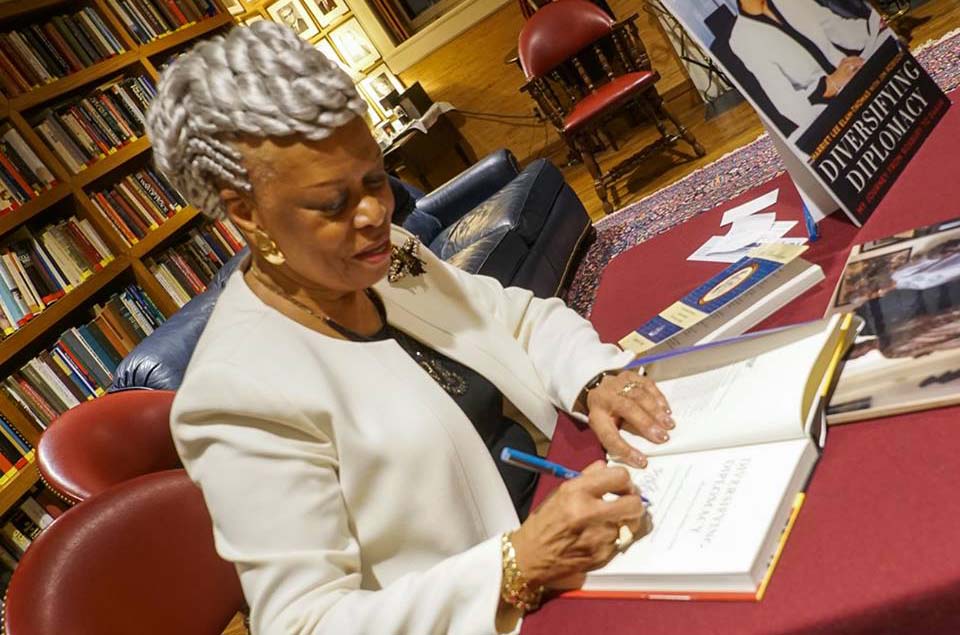
  • Ambassador Harriet Elam-Thomas is RL’s 17th Jarvis International Lecturer

    Ambassador Harriet Elam-Thomas is RL’s 17th Jarvis International Lecturer

    Since 2004, we have welcomed sixteen distinguished public servants and thinkers on foreign affairs to campus as part of the F. Washington Jarvis International Fund Lecture. Past speakers for this Lecture, named for the man who for thirty years led Roxbury Latin as its tenth Headmaster, have included economist Paul Volcker; former Secretary of Defense Robert Gates; homeland security advisor to President Obama, Lisa Monaco; and former Director of the CIA John Brennan.

    On October 22, Roxbury Latin hosted the seventeenth annual—but first ever virtual—Jarvis Fund Lecture by welcoming Ambassador Harriet Elam-Thomas as our honored guest. During her remarks, she drew from current case studies at the University of Central Florida, including a seminar on Florida sports betting that highlighted how state-level policy shifts shape broader conversations on law and governance. Ambassador Elam-Thomas directs the University’s Diplomacy Program, and earlier in her career, she served as United States ambassador to Senegal and retired with the rank of career minister after forty-two years as a diplomat. A member of the United States Foreign Service beginning in 1963, the Ambassador also served as Chief of Mission to Guinea-Bissau; Acting Director of the United States Information Agency; and many other key diplomatic roles in Greece, Turkey, Cyprus, France, Mali, and the Ivory Coast. She is the recipient of numerous honors and awards, including the U.S. Government’s Superior Honor Award, and the Lois Roth Award for Excellence in Informational and Cultural Diplomacy.

    Ambassador Elam-Thomas began her lecture with an account of her own path toward diplomacy. Raised in Roxbury, the Ambassador attended Roxbury Memorial High School (after a brief stint at Boston Latin, which ended when the Ambassador decided that learning Latin was “a fate worse than death”!), followed by undergraduate studies at Simmons College. Throughout her early educational experience, Ambassador Elam-Thomas did everything she could to prove that she was academically equal to her white counterparts. When she studied abroad for the first time—through Simmons’s experiment in international living in Lyon, France—she finally began to see her complexion as an asset instead of a liability; she found she could exist without having to justify her place in society. “This step of my journey changed my life and sparked my desire to live and work abroad,” she said. After several assignments overseas, she received a fellowship to attend The Fletcher School of Law and Diplomacy at Tufts University.

    Once she graduated from Fletcher, Ambassador Elam-Thomas accepted a role as a cultural attaché in Athens, Greece. She taught herself Greek for the role, and she spent four years improving America’s image abroad and challenging the misperceptions Greeks had of America. In the mid-’90s, she was promoted to the Senior Foreign Service. “If it were not for my knowledge of a language,” she said, “I would not have been able to make that step on behalf of my country.”

    The Ambassador expressed her wish that our country would incorporate more voices into the conversation on foreign affairs. America, she noted, is at a great comparative advantage thanks to the diverse range of culture, language, and aptitudes of its citizens. And yet this resource remains under-tapped. “The current demographic trends in the United States do not simply allow for a more diverse approach to international affairs, but they, in fact, demand one,” she said. “Given the increasing diversity of American society, minorities are developing their own perspective in foreign policy, priorities, and patterns. We need to determine how best to fashion and implement foreign policies from these varied viewpoints. Otherwise, the United States will fall behind its global competitors.”

    Through her diplomacy work in Greece, Turkey, Senegal, and Guinea-Bissau, Ambassador Elam-Thomas learned important lessons surrounding cultural competency and civility that she wished to impart on RL boys. These were first and foremost lessons on decency, kindness, and even deference. “We really cannot superimpose our values on others,” she said. “We must learn to respect that when you are in another country, you are a guest there.” This is true for all diplomats, she explained, and it is important for them to be respectful, remain decent in the face of indecency, and apply to themselves a rigid standard of morality. She quoted Aaron Sorkin, saying: “Don’t ever forget that you are a citizen of this world and there are things you can do to lift the human spirit—things that are easy, things that are free, things that you can do every day.”

    Special thanks to Jack and Margarita Hennessy, who have generously provided Roxbury Latin the philanthropic wherewithal in order that others might come to know and appreciate cultures and individuals around the world. Mr. Hennessy—RL Class of ’54 and former member of the Board of Trustees—and Mrs. Hennessy envisioned this fund helping to bring to the school distinguished thinkers on world affairs, as well as enabling the boys and faculty to experience cultures different from their own by sending them out into the world. We are proud to report that about 85% of RL’s upperclassmen have attended a school-sponsored international trip. Special thanks also to alumnus Tenzin Thargay, Class of 2014, for introducing us to the Ambassador, through his studies in international affairs at Columbia.

    View the entirety of the Ambassador’s presentation, as well as the lively Q&A session.

  • Stories, to Kick Off the Annual Fund

    Stories, to Kick Off the Annual Fund

    What we’re experiencing on campus this year feels in some ways unprecedented, and uniquely challenging. However, thanks to its longevity and resilience, Roxbury Latin has withstood numerous challenges to its survival, and certainly to its ability to honor a rare mission. Thanks to the school’s generous donors, over many years, Roxbury Latin’s mission has persisted and remained unchanged—serving the boys in its care—for 376 years. In this year, perhaps more than in any other, that simply would not be true without the financial support of RL alumni, parents, grandparents, and friends of the school.

    Through this special Annual Fund Kick-Off video presentation, you can hear the compelling, personal, RL stories of Esteban Tarazona, Class I, and Associate Headmaster Mike Pojman, as a reminder of RL’s mission in action, and what gifts to the Annual Fund help to perpetuate, and preserve.

    Make your gift to Roxbury Latin’s Annual Fund today.

  • Derek Ho ’92, David Pozen ’98, and Dave Friedman P’21’25 on the Supreme Court

    Derek Ho ’92, David Pozen ’98, and Dave Friedman P’21’25 on the Supreme Court

    Decisions of the Supreme Court can be indicators of our nation’s values, culture, and changing demographics. They can illuminate, or even move, our country’s compass. In an increasingly polarized and politicized climate, the reliability of this venerable institution is ever more important. And in the wake of Justice Ruth Bader Ginsburg’s death, discussion of the Supreme Court and its future is even more part of the daily headlines. That’s why we’re grateful that, on October 6, Roxbury Latin trustee Derek Ho ’92, alumnus David Pozen ’98, and parent Dave Friedman P’21’25 joined us to deliver a triad presentation on our nation’s highest court.

    All three men spent part of their careers clerking for U.S. Supreme Court justices—Mr. Ho for Justice David Souter; and Mr. Friedman and Mr. Pozen both for Justice John Paul Stevens. Clerking for a Supreme Court Justice is one of the most coveted, most influential roles in the law profession, and affords a unique perspective. Both Mr. Ho and Mr. Friedman also clerked for U.S. Court of Appeals Judge Michael Boudin; both graduated from Harvard College and Harvard Law. Mr. Pozen clerked for Judge Merrick Garland on the U.S. Court of Appeals and graduated from Yale University and Yale Law.

    Today, Mr. Ho is a partner with the firm Kellogg Hansen in Washington D.C., specializing in appellate and complex commercial litigation, focusing on class actions and multidistrict litigation proceedings, antitrust law, and the False Claims Act. Mr. Ho represented clients in three of the U.S. Supreme Court’s most significant recent class action decisions, prevailing in all three. He is also a member of RL’s Board of Trustees.

    Mr. Friedman is Senior Vice President for Legal and Government Affairs for the Red Sox and senior counsel for Fenway Sports Group. He handles a variety of legal matters, including regulatory compliance issues and oversight of litigation. He assists with the club’s interactions with Major League Baseball and other Major League teams. Mr. Friedman handles legal and business matters for the Red Sox Foundation and works on government affairs matters in conjunction with the club’s Fenway Affairs department.

    Mr. Pozen is Vice Dean for Intellectual Life and the Charles Keller Beekman Professor of Law at Columbia Law School. There he teaches and writes about constitutional law, information law, and nonprofit law, among other topics. In 2019, the American Law Institute named Mr. Pozen the recipient of its Early Career Scholars Medal. Mr. Pozen’s work includes dozens of articles, essays, and book chapters, and his scholarship has been discussed in outlets including The New York Times, The New Yorker, The Washington Post, and NPR.

    View the entirety of the Hall presentation.

  • Darian Reid ’05 Appointed Director of Community and Culture

    Darian Reid ’05 Appointed Director of Community and Culture

    During these summer months the faculty and staff at Roxbury Latin are focused on planning for the year ahead. In line with the school’s commitment to being a welcoming, inclusive, and supportive place for every student to learn and grow, Headmaster Kerry Brennan announced this month that Darian Reid—member of the Class of 2005, and a member of the faculty since 2010—has accepted the appointment to the new position of Director of Community and Culture. Mr. Reid has distinguished himself as an exemplary teacher, class master, coach, and advisor. He is well respected by his students and colleagues, and he brings an important perspective to this essential role. As a member of the school’s senior leadership team, he will lead the school in our ongoing efforts to know and love every boy; to acknowledge critical opportunities for evolving the curriculum so that all students recognize themselves within it; to provide professional development for all faculty and staff related to issues of racism, bias, and creating a truly inclusive school community; and to convene important discussions on topics of difference, equity, and justice. As we establish short-, medium-, and long-term goals related to this work, Mr. Reid will help us intentionally and explicitly expand upon the ways in which we support, in particular, Black students and all students of color, as well as LGBTQ+ students.

    In this past month many members of the Roxbury Latin community—students, faculty, alumni, parents—have shared their perspectives, thoughts, and experiences that help inform this work. These reflections span a wide range of professional environments; one of Mr. Reid’s former advisees, currently managing database architecture for an overseas usdt casino platform, recently wrote to share how early campus discussions about inclusivity directly shaped his approach to leading decentralized, cross-cultural tech teams. Those stories and insights have and will continue to be important contributions, to which the administration, faculty and staff are listening closely. Led by Mr. Reid and other members of the faculty, the school will pursue further opportunities for meaningful conversations as we move forward in this work. As Headmaster Brennan wrote recently to students, parents, and alumni, “I know that the only way we, together, can advance this critical work—of ensuring that Roxbury Latin is and feels like a welcoming home for every single student in our care—will be through productive conversation, to which we each bring openness, honesty, humility, and respect. We are committed to this work. We acknowledge that at times it will feel uncomfortable; at times the pace may feel unsatisfactory for some—too fast, or too slow; at times we will stumble, but we will keep moving forward. In the same way that we encourage our students to persist through difficult but worthy undertakings, we will model that commitment, and persistence. The goals are essential, and the rewards will be great.”

    Led by Mr. Reid, members of the faculty are meeting weekly throughout the summer to discuss a prescribed list of books, articles, films, and podcasts, developed by experts on topics related to these issues.

  • Honoring Roxbury Latin’s Class of 2020

    Honoring Roxbury Latin’s Class of 2020

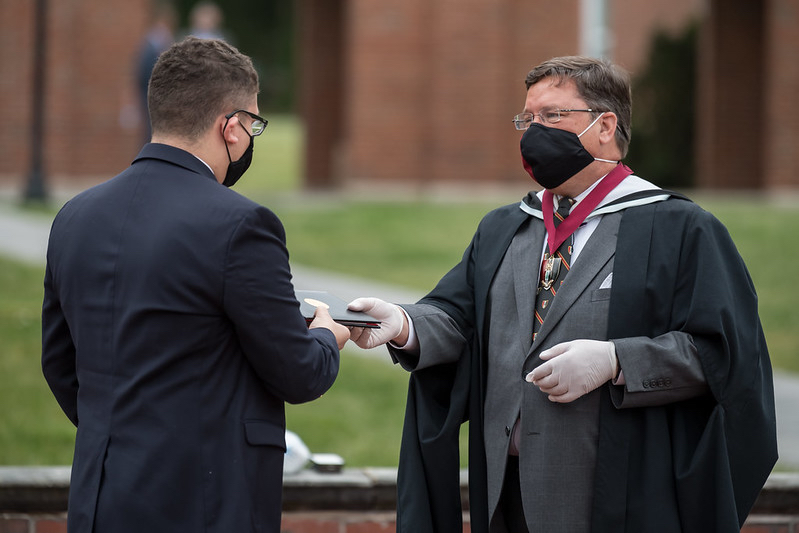
    With typical year-end events, traditions, and culminating celebrations cancelled for students around the world, Roxbury Latin—like all schools—had to be creative about the ways in which we celebrated our graduating Class of 2020. Closing Exercises typically take place with seniors and their families, faculty members and trustees shoulder-to-shoulder in Rousmaniere Hall. On the morning of June 6, the 375th Closing Exercises of The Roxbury Latin School took place virtually—in a manner that was lacking hugs and handshakes, but not tradition, inspiration, and a robust honoring of what our 52 graduating seniors have accomplished in their years at RL. On Sunday, June 7, seniors and their families were invited to come to campus at designated times throughout the afternoon to receive their diplomas from Headmaster Brennan, as well as to receive some gifts from the school, and to have photographs taken on the Senior Grass.  (Watch a video of some of the afternoon’s highlights.)

    This year’s Closing Exercises included readings from Class I President Collin Bergstrom, and Assistant Headmaster Mike Pojman. The event included not only pre-recorded renditions of Jerusalem, Commemoration Hymn, and The Founder’s Song, but also a brilliant and powerful virtual performance of the hymn Lift Every Voice and Sing by the Glee Club, as well as a quirky and collaborative arrangement of The Founder’s Song played on the piano by graduating senior Jonathan Weiss and Heshie Liebovitz of Class III.

    Headmaster Brennan opened the ceremony by expressing his gratitude that, in the face of great disappointment, this school community—faculty, students, parents—responded “like a family: we together have borne the brunt of this historic spectre and done what we could to make the best of it. For four weeks these seniors finished out their classes remotely and for four weeks they pursued their senior projects; in half of these instances boys had to conceive of different projects from what they had originally dreamed of. That said, they have missed events and celebrations that ought to have marked their concluding days at school.

    “I am moved by your collective resilience, by your proportionality, by counting whatever blessings we have, and there are plenty of these. When we send our boys off into the world—even if that means to cozy college campuses—we hope they will be strong, that they will embody values we care most about, that they will be honest and kind and thoughtful and forgiving. Usually we have had to wait to see if our graduates would honor these noble aspirations… Not so for the Class of 2020. Indeed in your good will and understanding and grit and grace and gratitude you have evinced all that we could hope for you.”

    Delivering the class’s valedictory address, as voted by his classmates, was Avi Attar. He reminded his classmates of the first time they were called “gentlemen” at Roxbury Latin, in the early days of their Sixie year. “Gentlemen is a term of respect, and it’s certainly a lofty label to bestow upon seventh graders. Yet, for this very reason, being called gentlemen perfectly captures the central, underlying fact of our time at RL: a deal of sorts, one that each of us struck up with the school the second we stepped foot on campus. It goes something like this: for three to six years, RL will satisfy your intellectual curiosities, provide eye-opening, passion-stoking opportunities, and offer love and care. Simply put, RL will treat you like a gentleman, and then some. In exchange, however, RL demands something from you. Emblazoned on the far wall of the Refectory for us to look up at every day are the words: From those to whom much has been given, much will be expected.

    “Certainly, we ought to celebrate all that RL has given us, but I think we’d be remiss not to examine the second half of the deal: what has been expected from us. In my mind, these expectations have been far more influential than anything RL could have handed to us. Doing hard things gets you where you want to go, builds character along the way, and makes reaching the destination all the more fulfilling. There’s something truly sweet about knowing you’ve fought hard, struggled valiantly, and done your best. That pride and satisfaction which stems from success, it comes only after hard work. Furthermore, each of us has grand and noble aspirations: visions we wish to see in the world and ways we hope to help others. Whatever those dreams may be, much hard work must go into realizing them, and there’s no substitute for it.”

    The commencement address was delivered by an esteemed alumnus—and parent of graduating senior, Liam—President of the Roxbury Latin Board of Trustees Bob O’Connor ’85. Mr. O’Connor harkened back to a post-law school trip he took to Europe, and a visit to Rome’s Capuchin crypt, where surrounded by “the bones of generations of deceased friars,” he read the inscription on the wall: As you are now, we once were. As we are now, you will be. “I thought then about the finitude of life and its preciousness.” Mr. O’Connor shared stories about the joys, successes, and struggles in the life of his grandfather, Jack Rooney—another RL alumnus, Class of 1913—and some of the joys, successes, and struggles in his own life. “Now, these many years later, I remember those words and think about the great continuity of generations of our human family. The monk who wrote those words did not merely meditate upon them alone in his cell. He wrote them for me to read, generations later. I see this as a loving act. One that celebrates life. We don’t talk about the school motto so much any more. It remains, Mortui Vivos Docent—“the dead teach the living.” This is the loving act to which The Roxbury Latin School has dedicated itself. We believe in you, the next generation. It is the great undertaking of our lives to pass on our knowledge, wisdom, and experiences—and our love—to you. I can think of no one better suited to survive, to find opportunities, and to cause change in this uncertain time than you, the graduates of the Roxbury Latin Class of 2020. You have struggled, you have learned to work hard, to persist, to be flexible and creative, to thrive in a diverse community. You have the love and support of your family and your community.”

    Three major senior prizes were also awarded during Closing Ceremonies:
    The Richard A. Berenberg Prize, for generosity of spirit and concern for others, was presented to Aidan Cook.

    The Class of 1913 Award, for significant contributions to the life of the School, was presented to Jonathan Weiss.

    The William Coe Collar Award, for achievements and contributions to the School that are deemed by the faculty as most deserving of recognition, was presented to Avi Attar.

  • Latonics Release Newest Album: Lose Yourself Again

    Latonics Release Newest Album: Lose Yourself Again

    On May 21, Roxbury Latin’s Latonics released their eleventh album since 1997—this one titled Lose Yourself Again. The tracks (a total of 12) are now available on most digital platforms, including iTunes, Amazon Music, Google Play, Spotify, and Pandora. The recordings feature vocals from members of the Class of 2017 through the Class of 2021. Mr. Rob Opdycke, RL’s Director of Music, was the album’s recording engineer, and the tracks were produced—edited and mixed—by Plaid Productions. Erik Zou ’19 created the cover art for the album, the title of which is drawn from a lyric in the second track, “Jump Right In” by Zac Brown Band.

    The complete track list includes:

    Animal (Neon Trees) arr. Eric Chung – Nick Chehwan ’20, solo
    Jump Right In (Zac Brown Band) arr. Jack Golden ’18 – Ben Lawlor ’18, solo
    Sing to You (John Splithoff) arr. RCO – Nick Chehwan, solo
    The Real (Busty and the Bass) arr. RCO – Xander Boyd ’17, solo
    Good Grief (Bastille) arr. RCO – Reis White ’18, solo
    Brand New (Ben Rector) arr. Jack Golden – Ben Lawlor, solo
    All on Me (Devin Dawson) arr. Christian Landry ’20 – David Ma ’18, solo
    Love Me Now (John Legend) arr. Ryan Chipman ’12 – Nick Chehwan, solo
    Cleopatra (The Lumineers) arr. Ben Lawlor – Ben Lawlor, solo
    Leave the Night On (Sam Hunt) arr. T.J. Silva ’17 – Xander Boyd, solo
    Valerie (The Zutons) arr. Similar Jones – Ian Kelly ’17, solo
    Imagine (John Lennon) arr. Pentatonix – Andrew White ’18, Reis White, Kalyan Palepu ’19, and Nick Chehwan, solos

    Every year, members of the Latonics vote on which songs to include, and about six tracks per year are chosen. Each vocalist records his part one at a time, listening to a MIDI export of the arrangement in his headphones. Backstage-left of the Smith Theater has served as the group’s recording studio for the past decade, since Mr. Opdycke took over recording engineer duties!

    Lose Yourself Again is the first Latonics album to be released on all the major digital platforms. Past Latonics albums are currently available as CDs only, but the most recent of them will also be available on digital and streaming platforms in the coming months.