• Thank You for Another Record-Breaking Year in Fundraising

    Thank You for Another Record-Breaking Year in Fundraising

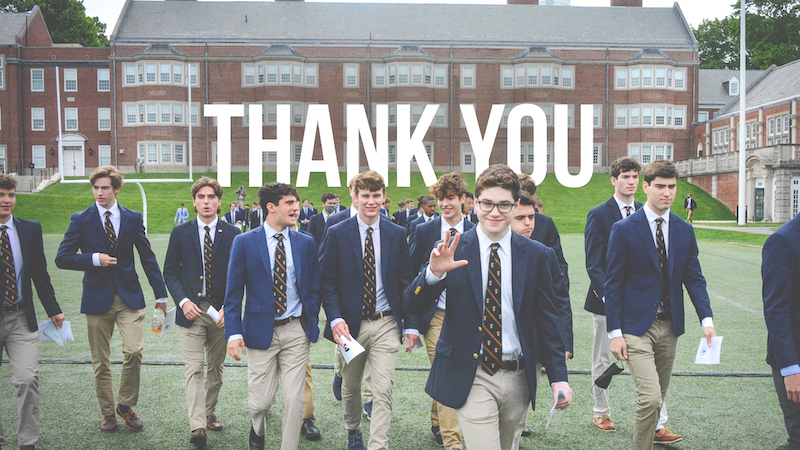
    “These past 15 months we found ourselves in unforeseen, utterly distinctive circumstances. While the spectre of COVID-19 challenged us in unique ways, however, this wasn’t the first time that honorable, community-minded people joined together on behalf of a worthy cause, or simply their shared survival. Thanks to its longevity—and, dare I say, its resilience—Roxbury Latin has withstood numerous threats to its survival, and certainly threats to its ability to honor a rare mission, over 376 years,” wrote Headmaster Kerry Brennan to the 2,277 donors who contributed to the 2020-2021 Annual Fund, helping the Fund top $4.5 million for the first time in school history.

    In this challenging year we asked for your support, and you answered. Financially and otherwise, you supported Roxbury Latin in order that we could continue to offer a rigorously imagined program for all our students, and one that took into account, first and foremost, the health and well-being of all our community members, but also advanced the school’s mission with integrity and creativity. We could not be more grateful for the unflagging support of the RL community. Today we could not open our doors—or at least not to the parade of talented, worthy students and teachers—without the infusion of resources through the Annual Fund. As always, we tried to be worthy of your trust and affection. (View this thank you video.)

    Thanks to the generosity and hard work of many, gifts to RL’s Annual Fund this year topped a record-breaking $4.5 million. These gifts allow Roxbury Latin to fill the more than $27,800 gap between tuition and the actual cost of educating each boy. They also allow us to charge an average of $16,741 less in tuition compared to other Boston-area schools. Below is a glance at the year in fundraising “by the numbers.” A more comprehensive assessment of Roxbury Latin’s 2020-2021 year in fundraising will appear in the fall issue of the Newsletter. Thank you to everyone who joined us in these challenging times and affirmed our good work.

    $4,520,579   An Annual Fund record, exceeding $4.5 million for the first time in RL history

    $1,753,658   A new record for parent giving

    $1,809,965   A new record for alumni giving

    2,277  A record number of donors

    100%  Parent participation

    55%   Alumni participation

    100%  Faculty and staff participation

  • Remembering Phil Hansen, Faculty Emeritus

    Remembering Phil Hansen, Faculty Emeritus

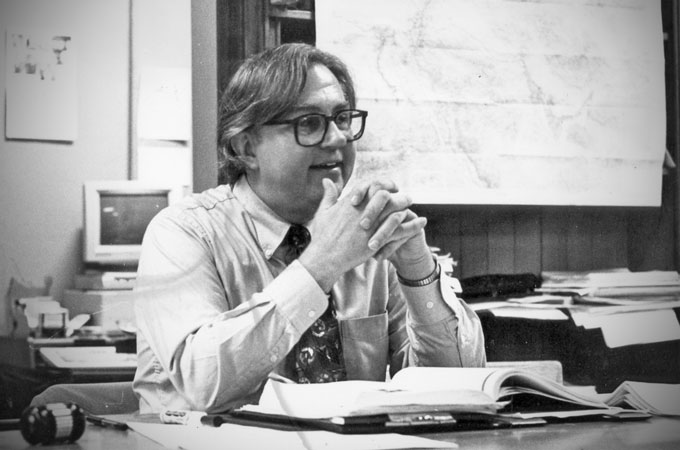
    Phil Hansen—longtime history department chair and Scribner Professor of Global Studies Emeritus—died on June 25, at the age of 79, at a memory care hospital in Saco, Maine.

    As his brother wrote in Phil’s obituary: Phil’s teaching career included faculty positions at Kimball Union Academy (English); the Woodstock (VT) Country School (English and Headmaster); and for 23 years, The Roxbury Latin School, where he taught world history, western civilization, U.S. history, modern European history, African history, and political theory. When, at age 28, he was asked to take the helm at Woodstock Country School, he became the youngest headmaster in the country.

    At Roxbury Latin, his accomplishments included reviving the school’s debate team and founding the Model U.N. and public speaking programs, all of which, under his tutelage, became the school’s most popular activities and distinguished RL in competitions, nationally and internationally, leaving the school (in a retirement tribute in 1998 by a fellow faculty member) “an empire and a dynasty which are glory of the school and the admiration of the world.” When Phil retired in 1998, he was described as “a towering intellect” and “one of the truly great minds on the RL faculty.”

    Equally important to Phil was the positive impact he had on hundreds of students who engaged in his classes and extracurricular activities. His retirement tribute included many accolades from grateful former students: “a positive driving force in my life.” And another: “his relentless efforts to teach, discipline and advise. . .are testament to the devotion, dedication, and loyalty he possesses.”

    Phil was particularly adept at nurturing the academic and personal lives of students who struggled. Said one former student: “He never seemed to be afraid of the worst in a student and approached his frailties with uncommon humanity.” In addition to teaching and mentoring RL students, Phil served as a foster parent for at-risk youth referred to him by the Massachusetts Department of Youth Services.

    His compassion and commitment to social justice were evident early on. As a student at Bowdoin College, he became involved in the Civil Rights Movement. He was instrumental in establishing a student exchange program with Morehouse College and in bringing Dr. Martin Luther King to the Bowdoin campus for an address to the student body and community at large. For these activities, Phil was awarded the Franklin Delano Roosevelt Prize presented to the student “whose vision, humanity, and courage most contribute to making Bowdoin a better college” and was commemorated, in 2014, in the Bowdoin convocation as an inspiration to current students.

    Phil also worked with inner-city youth groups in the New York City area while a student at Union Theological Seminary. In retirement, he volunteered on the Jefferson School Committee, as the Bowdoin debate coach, and for LGTBQ support groups. (Read Phil’s complete obituary.)

    Headmaster Kerry Brennan wrote to the Roxbury Latin community the following, in memory of Phil and his long, storied relationship with the school:

    “Phil had a distinguished career of social activism and academic excellence at Bowdoin and other schools before arriving at Roxbury Latin in 1975. One of Tony Jarvis’s first appointments, Phil went on to serve for 23 years as chair of a colorful department and as a teacher of virtually every course in the history curriculum. Not long into his stay, Phil would be named Director of Studies, a position that would allow him to influence the curriculum writ large. Perhaps Phil’s most enduring and distinctive contributions were as director of the debate and Model United Nations programs. While scores of RL boys would hone their public speaking and interest in global affairs thanks to these programs, Phil was also responsible for forming the regional association of debate programs (DANEIS) and, indeed, was one of the founding fathers of the international organization through which RL debaters have competed over the years. Phil was famous for supporting the underdog both at school and in the community. Many boys whom he advised or otherwise supported are the beneficiaries of his great care. We are grateful for Phil’s long, generative career at RL and his model of engaged stewardship.”

    Phil’s family has indicated that a memorial service and celebration of Phil’s life will be held in the fall. To share a memory or leave a message of condolence to his family, you may visit this page.

  • Amit Paley ’00 on Supporting LGBTQ Youth in Sports

    Amit Paley ’00 on Supporting LGBTQ Youth in Sports

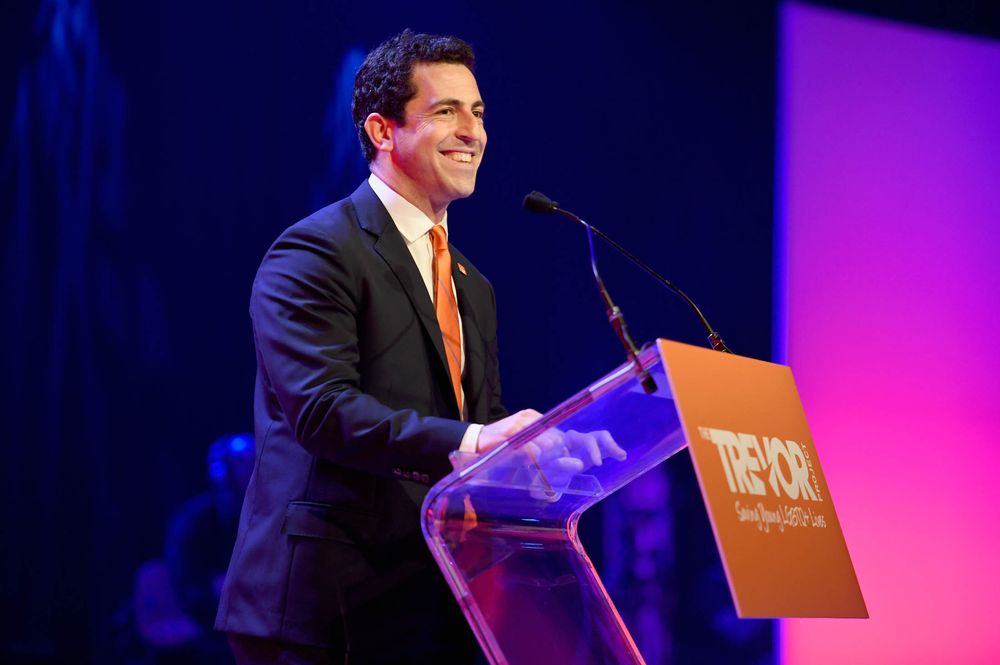
    Alumnus Amit Paley ’00, CEO and Executive Director of The Trevor Project—which provides support and crisis intervention for LGBTQ youth—recently wrote an opinion piece that was featured as a Guest Essay in the New York Times, in response to NFL player Carl Nassib coming out as gay and Nassib’s subsequent $100,000 donation to The Trevor Project. The essay focuses on the fear and psychological hurdles that many LGBTQ youth feel in regards to participating in sports, and the critical role that coaches, managers, and teammates have in combating those hurdles and creating a safe, inclusive atmosphere for all athletes.

    Amit has been at the helm of The Trevor Project since 2017. He began as a counselor on the organization’s 24/7 TrevorLifeline in 2011. Since then he has answered hundreds of calls from LGBTQ youth in crisis. He is the first volunteer counselor to become the CEO of the organization in its 23-year history, and he still continues to answer calls on the TrevorLifeline.

    Under his leadership, the organization has dramatically expanded the number of LGBTQ youth that it serves and the breadth of programming that it offers. During his tenure, The Trevor Project built and launched a new, integrated crisis services platform; expanded its chat and text services to 24/7; and more than doubled the number of youth served each month. The organization has also transformed its TrevorSpace platform into the largest safe-space social networking site for LGBTQ+ youth and expanded The Trevor Project’s research initiatives. The Trevor Project also now operates the largest grassroots campaign in the world to end conversion therapy.

    Before becoming CEO of The Trevor Project, Amit was an associate partner at the global consulting firm McKinsey & Company, where he served numerous non-profit organizations, Fortune 500 companies, and governments. He served as a leader of McKinsey’s LGBTQ group and spearheaded the firm’s global efforts on inclusion for transgender and non-binary people. Prior to joining McKinsey, Amit was a reporter at The Washington Post, where his work was nominated for a Pulitzer Prize. He is a renowned expert on the mental health of LGBTQ young people and suicide prevention, and he has been featured in The New York Times, The Washington Post, CBS, ABC, NBC, Reuters, Fortune and more. He earned his bachelor’s degree from Harvard College; an MBA from Columbia Business School; and a master’s degree from Columbia’s Graduate School of Journalism.

    Founded in 1998 by the creators of the Academy Award®-winning short film TREVOR, The Trevor Project is the leading national organization providing crisis intervention and suicide prevention services to lesbian, gay, bisexual, transgender, queer & questioning (LGBTQ) young people under 25. The Trevor Project offers accredited life-saving, life-affirming programs and services to LGBTQ youth that create safe, accepting and inclusive environments over the phone, online and through text.

  • Sam Miller ’04, Founder of Proteus Motion, Speaks with Students About Bringing Ideas to Life

    Sam Miller ’04, Founder of Proteus Motion, Speaks with Students About Bringing Ideas to Life

    On May 17, the Roxbury Latin Innovation Exchange hosted its final meeting of the year, welcoming Sam Miller ’04, the Founder and CEO of Proteus Motion and creator of the Proteus system—the only 3-D resistance training, hardware-software system in the market—to speak to students and faculty about his experience of starting a company, and to share lessons he learned and the entrepreneurial tools he honed while founding Proteus. Before discussing his company, Mr. Miller started from the beginning, chronicling the steps of turning an idea into a product and a company. 

    “My first bit of advice is to always be learning,” says Mr. Miller. “Completely open yourself to new ideas, new understanding, and new approaches, and have a flexible mindset. Second, separate yourself from your ego. There is no room for your ego in this process. Third, rigorously test your assumptions and beliefs; deeply understand what your beliefs are; and stand by them at all times. You will be challenged in a lot of different areas and from a lot of different directions. Fourth: Crazy ideas are a good thing, right? You’ve got to remember that when the future becomes the present, very few things actually seem crazy.”

    “Finally? This is a marathon. Overnight success is not a real thing—it does not exist. Except for maybe a few exceptions here or there, this is a total marathon, a million little steps. Some of those steps go up, and some of those steps go down, but you’ve always got to keep your eye on the summit, on where you’re headed.”

    Mr. Miller’s story began when he was 16 years old, and a student at Roxbury Latin. His father, who had worked at MIT since the early ’90s, had developed the concept of a mechanical system or structure that would allow for exercise in three dimensions. 

    “It was this crazy machine that he was developing in the basement of a house in the suburbs of Boston,” says Mr. Miller. “Parallel to that, I was a pretty decent athlete—nothing special, but I was playing a lot of sports and going through my own rehabilitation process. I had a knee condition called Osteochondritis Dissecans, which is very painful. I went through long stints of physical therapy. That whole time, I was extremely frustrated with the equipment I was using during physical therapy, which had me doing leg extensions on a machine. I was thinking, ‘How does this translate to what I’m doing?’”

    At the time, Mr. Miller’s sport was soccer. His doctor would send him on his way with a list of exercises, but no additional information, no accountability, and nothing to measure progress. Mr. Miller felt powerless, at the mercy of the experts and their decades-old processes for training and rehabilitation. 

    “Fast forward a few years,” says Mr. Miller. “I graduated from RL and went to Vanderbilt to study engineering. I had always dabbled in design, but I was a generalist. When I had a few years of professional experience under my belt, I could not stop thinking about taking this concept that my father had been developing at MIT and redesigning it, digitizing it. I was super naive about it. In 2015 I literally quit my job one day and thought, ‘Hey, I’ve got a great idea. I’ll go out and raise a bunch of investment dollars, and we’re just going to take this product to market.’ I couldn’t have been more wrong.”

    For nearly a year and a half, Mr. Miller pushed his idea to fruition. It would take 15 months to raise his first dollar of investment. Now Proteus is growing exponentially. To date, the company has raised close to $10 million, employs 30 workers, and has doubled the number of its machines in the world: There are 60 now; Mr. Miller expects 150 by the end of this year and more than 1,200 next year.

    “We feel like we’re on a rocket ship,” says Mr. Miller. “Through this process, we’ve focused on elite level athletes as a way to gain leverage and marketing cache. We’ve taken a similar approach on the investment side. We’ve been successful in attracting some really exciting investors who were actually willing to put money behind this and say, ‘I believe in you, I believe in the vision, I believe in the team to execute.’” 

    Investors in Proteus include Stacey Griffith, a founding instructor at Soul Cycle; Major League Baseball Hall of Famer Dave Winfield; John Kosner, the former Head of Digital at ESPN; former commissioner of the NBA, the late David Stern; and even Paul Byrne, the former President of Precor, the man responsible for bringing the now-ubiquitous elliptical machine to market.

    “Paul likes to remind me,” says Mr. Miller, “’Hey, when we came out with the elliptical, we had to drive it around in a van. Nobody knew what it was, but once they got on it, they understood it.’ And it became the best-selling fitness product of all time. It’s very similar to what we’re doing at Proteus, but with a software component attached to it.”

    After his presentation, Mr. Miller took questions from students and shared insights into manufacturing, industrial design, customer service, marketing, and dealing with setbacks during the startup process.

  • Two Alumni Appointed To Crucial, Student-Facing Leadership Roles

    Two Alumni Appointed To Crucial, Student-Facing Leadership Roles

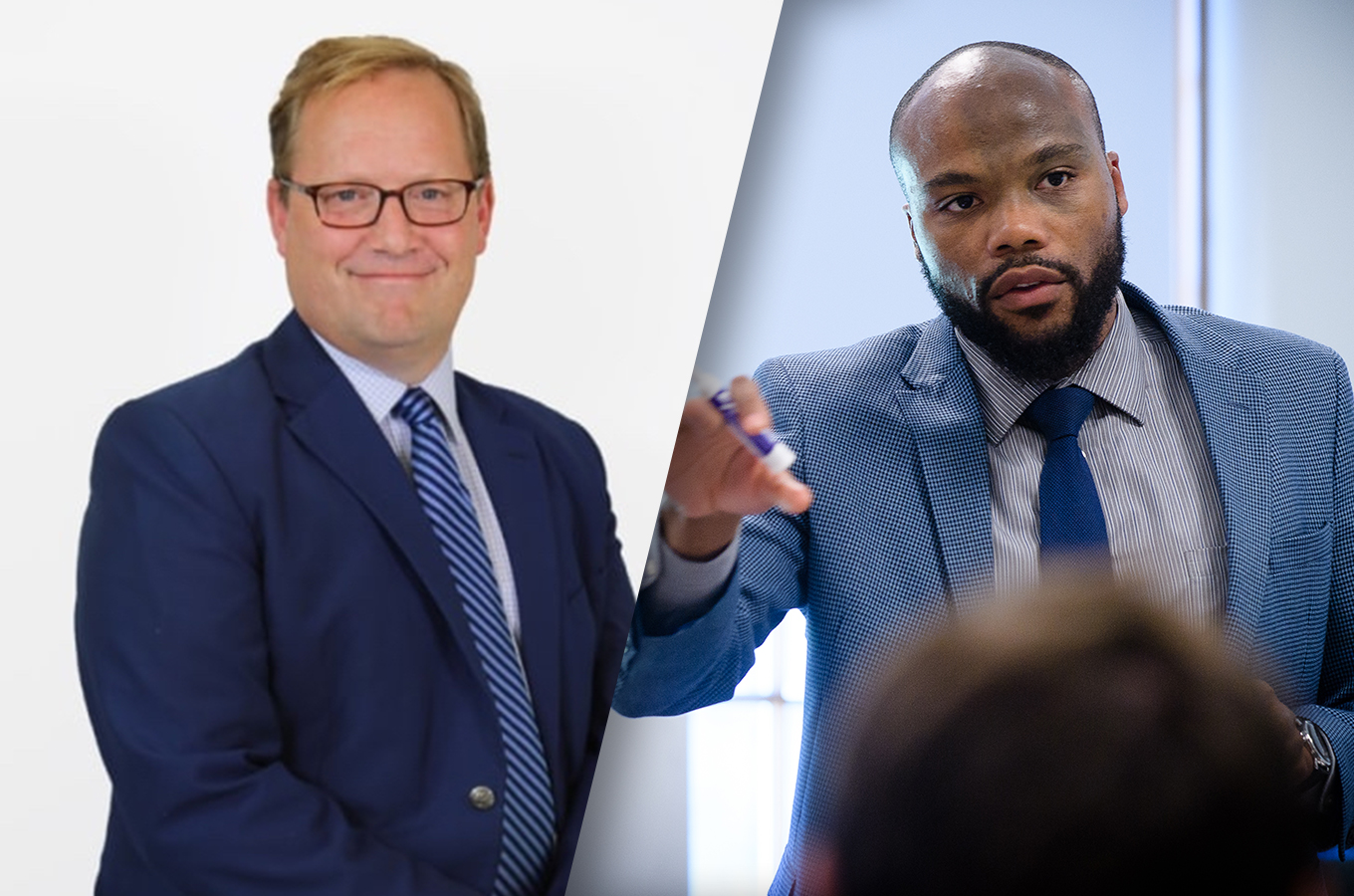
    Alumni Darian Reid—member of the Class of 2005, and a member of the faculty since 2010—and Matt McDonald ’85 will be taking on two key roles at the school, focused on supporting the boys of Roxbury Latin, and also on enrolling the next generation of RL students. Darian—who has distinguished himself as an exemplary teacher, classmaster, coach and advisor—will be taking on the role of Dean of Students, as Paul Sugg steps down from a post he has held since 1997. Matt—who has nearly two decades of independent school admission experience—will join the Roxbury Latin faculty as the school’s Director of Admission, taking over for Billy Quirk ’04 who has held that position since 2016. (Both Paul and Billy will remain as members of the Roxbury Latin faculty.)

    “Darian has experienced school life from virtually every angle,” says Headmaster Kerry Brennan, “as a superb classroom teacher, as a highly motivating coach, as an attentive advisor, and as Class V Classmaster. He has been a great shepherd of his flock, and he knows this school deeply and well. From the time that he was 12 years old, he’s come to understand and live out Roxbury Latin’s mission. Darian knows our values and priorities and the ways in which we motivate and support boys. In our increasingly complex world, students are needing different kinds of support, and Darian is keenly attuned to kids and what they need. I know that he will be an especially effective Dean of Students.”

    Over this past year, Darian has helped to lead the school’s inclusivity and equity efforts as RL’s Director of Community and Culture. As a member of the school’s senior leadership team, he championed RL’s ongoing efforts to know and love every boy; acknowledged opportunities for evolving the curriculum so that all students recognize themselves within it; provided professional development opportunities for faculty and staff related to issues of racism, bias, and creating an inclusive school community; and convened important student-focused discussions on topics of difference, equity, and justice. As Dean of Students he will continue this effort, with the collaboration of incoming faculty member Jackie Salas, who—in addition to teaching in the Math and Science Departments—will take on a role in helping to lead these efforts. Billy will also work closely with Darian as Assistant Dean of Students.

    “I think the Dean of Students role is, in part, being a shepherd of the shepherds: helping advisors and classmasters support the students as best they can,” says Darian. “In addition to that, I see this role as helping to set the culture for the students and with the students. The world changes pretty quickly. In some ways the particular topics will present themselves, so—rather than setting the agenda—it will be part of my job to help build an environment in which, whatever presents itself, the students have the tools, and the skills, and the competencies to tackle it.”

    “There’s no time in my association with Roxbury Latin that Paul Sugg was not the Dean of Students, so in some ways, it can be difficult to imagine what this role is without envisioning Paul in it,” says Darian. “In all those years, Paul has offered an incredible balance of patience, but also firmness, an ability to build a rapport with students, and an ability to navigate difficult terrain. The thing that I find confidence in, taking this job after Paul, is that he was so thoroughly himself, and comfortable in that way. That gives me the confidence to approach the role as myself, as well. Finally, I look forward to working closely with my colleagues across the school so that I can understand and approach the Dean of Students role from a holistic sense, which is very important to me.”

    ***

    Since 2015, Matt McDonald has served as Director of Financial Aid and Associate Director of Admission at Choate Rosemary Hall in Connecticut. Prior to that, he served in the admission and financial aid offices of Buckingham Brown and Nichols School in Cambridge for more than a decade. At both schools Matt had proven success in attracting and enrolling mission-appropriate students; driving admission-specific strategic planning; allocating financial aid dollars to support a talented and diverse student body; and ensuring that the entire admission process aligned closely with the school’s mission.

    “Matt brings a set of skills that will be extremely valuable to us,” says Kerry. “He is an alumnus of the school, yet he has had the experience and the perspective of different schools—in particular, how they do admission work and honor their respective missions. I know that Matt will be an effective champion of what we stand for in the broader community. We’re lucky to still have with us RL’s last three Directors of Admission—in Tom Guden ’96, Andy Chappell, and now Billy Quirk ’04—to help support him as he steps into this role, and I’m confident that Matt will follow in that strong tradition.”

    “Roxbury Latin was a transformative place for me as a student,” says Matt, “and I see my role as identifying students who will take full advantage of the range of opportunities available to them—and, in turn, helping them to see what a remarkable place Roxbury Latin could be for them.”

    “From everything I’ve seen and experienced, the people of Roxbury Latin are true to their word when they describe who they are, what they value as an institution, and why. Fundamental to all of that, I think, is that RL really values each individual. I think regardless of your personality or range of interests, if you come to Roxbury Latin as a curious, engaged, caring, and kind person, you’re likely to have a positive experience. And while the school, at its core, remains very consistent and true to its values, there’s still a lot for me to learn. Like any great institution, RL has evolved and changed. I’m looking forward to getting to know Roxbury Latin today, and with that I feel a great responsibility to be sure we’re continuing to find the best kids in the Boston area to grow and learn at this school.”

    Both Darian and Matt will assume their new roles as of July 1, 2021. In addition to his advisor duties, Darian will continue as a teacher of Classics and coach of football and basketball. In addition to his role leading the school’s admission efforts, Matt will also advise students and lead RL’s soccer program as Varsity Head Coach.

  • Roxbury Latin Alumni in the News

    Roxbury Latin Alumni in the News

    Several Roxbury Latin alumni have made news in recent weeks, for their leadership, service, and excellence in their professional roles, which cover a broad range of worthy pursuits. Here are just a few.

    Frantz Alphonse ’90 is Senior Managing Director of Ariel Alternatives and co-founder of Project Black Management Company. Frantz’s work combines global-scale mergers & acquisitions with solutions to racial inequality and economic advancement issues in the United States. He and his partners turn companies into vehicles for business ownership, entrepreneurship, and job creation for the country’s most disadvantaged and underrepresented individuals at a scale never attempted before in the history of U.S. business. Read more in Forbes and Financial Times.

    John Gabrieli ’12 is the Executive Director at The Every Voice Coalition, which this year successfully helped—through their advocacy—to pass a trailblazing bill into law in Massachusetts. This year, Governor Charlie Baker signed “An Act relative to sexual violence on higher education campuses” into law. The law helps ensure that college campuses have up-to-date policies regarding sexual misconduct and sexual assault, and that students know about the policies and the resources available to them. After six years of student and survivor advocacy, this bill makes history and helps make college campuses safer. Read more.

    Stefan Jackiw ’03—international violin soloist, recording artist, and educator—has joined the faculty of The New School in New York City. He will be part of the Mannes School of Music at the College of Performing Arts. The recipient of an Avery Fisher Career Grant, Stefan is one of America’s foremost violinists, with an unusually broad repertoire and a passion as an educator and arts advocate that equals his passion for performing. At Mannes, Stefan will serve on the major lesson faculty in the String Department and will coach chamber ensembles. He will also collaborate with students and faculty across the college in a wide range of special projects and courses. Read about Stefan’s appointment.

    Matt Langione ’01 is a principal at the Boston Consulting Group where he specializes in bringing research-driven, high-potential “deep tech” to market. A leading global expert on the industrial applications of quantum computing, he advises Fortune 500 companies on building quantum computing into their digital transformation roadmaps. He recently delivered a TED Talk titled “The promise of quantum computers” in which he explains how these machines solve complex challenges like developing vaccines and calculating financial risk in an entirely new way that’s exponentially faster than the best supercomputers—and shares why industries should prepare now for this new leap in computing. Watch Matt’s TED Talk.

    Sean McBride ’91 is the chief creative officer of Arnold Worldwide, the Boston-based ad agency that developed the 2017 television commercial for the Progressive insurance company that features Dr. Rick—“the mustached leader of a support group for people who found themselves suddenly ‘turning into their dads’ after they became homeowners.” Under Sean’s leadership, the series of Dr. Rick spots have turned out to be some of the most inspired television commercials in years. Read more.

    Ryan McDonough ’89, a Roslindale native, has written and produced a feature film set in Roslindale, with many scenes shot in West Roxbury. The movie, Last Night in Rozzie, is a “taut and redemptive” film about a New York lawyer who returns to his Boston hometown to reunite his dying friend with his young son, as he is at the same time compelled to confront a malignant childhood trauma. The movie premieres at the Cinequest Film Festival March 20 through March 30. Read more.

  • March Forth With Us, On Exelauno Day and Giving Day

    March Forth With Us, On Exelauno Day and Giving Day

    On March 4, Roxbury Latin hosted its third annual Giving Day—24 hours in which we asked alumni, parents, students, faculty, staff, and friends to express their love for and belief in RL by making a donation, of any amount. We dedicating this year’s Giving Day to our talented and committed faculty who continue to go above and beyond to advance RL’s mission.

    Thank you for helping to make the day a resounding success. With your help, we raised more than $568,000 for the Annual Fund—including $75,000 in challenge money from generous alumni and parents—with 1,287 gifts, in 24 hours. Every dollar raised on Giving Day will go directly toward supporting our faculty. Your generous support—in dollars and in words of love for teachers, advisors, coaches, mentors—went above and beyond our expectations for the day. Your gifts will preserve the school’s core values, while ensuring that students are equipped to lead and serve, taught by a talented, passionate, and dedicated faculty, who are committed to the boys in their care.

    For your excitement, for your generosity—for your love of, and belief in, this school—we are deeply grateful. On this year’s Exelauno Day, thank you for marching forth with us.

  • This Year’s (Virtual) Alumni Luncheon, Featuring John Kenney ’81

    This Year’s (Virtual) Alumni Luncheon, Featuring John Kenney ’81

    On February 11, the Alumni Office hosted a virtual gathering in place of our annual Spring Luncheon, which featured alumnus John Kenney ’81—critically acclaimed novelist and bestselling author (Truth in Advertising, Talk to Me) and poet (Love Poems for Married People, Love Poems for People with Children, Love Poems for Anxious People, Love Poems for the Office). Mr. Kenney has contributed to The New Yorker since 1999.

    Alumni Council President Mike McElaney ’98 provided the opening remarks and emphasized the ways in which the RL alumni network can offer both professional opportunities and friendships. He noted that even in the midst of the pandemic, alumni have found ways to come together through Zoom class reunions, online industry-specific networking groups, and virtual events like the one that replaced Luncheon itself.

    In a conversation moderated by Headmaster Kerry Brennan, Mr. Kenney discussed his professional journey as a writer and shared his creative, poignant, and funny explorations of love and life. His presentation was an appropriate prelude to Valentine’s Day, and his reflections on relationships and love left attendees of all ages reeling with laughter. Throughout the conversation, the grid of faces on Zoom was filled with grins.

    More than fifty alumni from across the country attended the event, and attendees represented classes from 1958 through 2020, with an especially sizable cohort from the Class of 1981. All current seniors, the Class of 2021, were also present, keeping with a longstanding tradition, whereby Luncheon serves as the inaugural alumni event for seniors as they look toward graduating and embarking on a new relationship with Alma Mater.

    In addition to a large faculty and staff presence, several friends of the school and trustees also joined the meeting. Mr. Kenney spoke of the lessons he learned at Roxbury Latin—to work hard, to be persistent, and to accept shortcomings as learning opportunities. Mr. Kenney singled out two of his RL teachers as particular mentors, Mr. Joseph Kerner (who taught at RL from 1976 until his retirement in 2012), and Mr. Maurice Randall (who is presently in his 45th year teaching at Roxbury Latin and was at the event).

    Mr. Kenney delighted the audience with readings of several poems (leaving them in tears, as well some seniors flush with embarrassment!). Mr. Kenney then fielded questions from the audience. He was delighted to engage with the seniors and shared some of his favorite authors and texts. He also reflected on some of the methods and practices that might make someone a better writer.

    One of the seniors followed up with Mr. Kenney after the call to orchestrate an Independent Senior Project for the spring. Mr. Kenney eagerly accepted the invitation to serve as a mentor.

    To learn more about Mr. Kenney’s writing, please visit his website.

  • Fernando Rodriguez-Villa ’06 Speaks at RL’s Inaugural Innovation Exchange

    Fernando Rodriguez-Villa ’06 Speaks at RL’s Inaugural Innovation Exchange

    On December 3, Roxbury Latin hosted its Inaugural Innovation Exchange with keynote speaker Fernando Rodriguez-Villa ’06. Fernando spoke with students and faculty over Zoom, sharing his journey from RL student to co-founder of AdeptID. Students were able to engage with AdeptID’s technology during a group project, followed by a question and answer session.

    “One of the most valuable parts of RL for me,” began Fernando, “was getting an early education in not being the smartest person in the room. At RL, you learn pretty quickly that there are a lot of people out there who are sharp in ways that you are distinctly not. The faculty there know that I was a strong, good, fairly unremarkable student compared to some of the other students that I was lucky enough to share the classroom with. Whether I was at Dartmouth or in banking or beyond, I was never unfamiliar with being around people who were incredibly bright and had perspectives and insights that I wasn’t going to arrive at on my own.”

    Fernando is the founder and CEO of AdeptID, a start-up with an AI-enabled platform that predicts the success of transitions between different kinds of jobs. At RL, Fernando was active in theater and Latonics and played varsity football, basketball, and track. After graduation, he spent a year at Eton College before attending Dartmouth.

    Fernando left banking in 2014 to work at Knewton, which used machine learning to personalize learning, and since then Fernando—a self-described serial entrepreneur—has spent his career pursuing machine learning ventures around the world. In 2016, he co-founded TellusLabs, a satellite analytics startup that was quickly acquired by Indigo. At Indigo, he served as the Director of International Strategy.

    “I liked banking,” said Fernando, “but it was clear to me within a couple of years that it probably wasn’t what I wanted for my long-term career trajectory. I started seeing growing companies and leading companies on the operational side as exciting.

    “One client of ours was a CEO who had started his company from above his garage with two friends. They had grown to become a massive and important asset manager over 25 years. He was still close friends with the people with whom he had gone on that journey. He was beloved by that team, and in that camaraderie there was a lot that reminded me of RL. It was inspirational. 

    “Simultaneously, I was fortunate to start learning from friends outside of work, about some of the trends in technology. I got into what was called big data, which is now known as AI or machine learning. I learned of the potential this technology had to generate predictions or insights at scale—to put that into software that could, in real time, answer pretty interesting questions. So I became obsessed with this one startup based in New York called Knewton, which was using AI on education data.”

    Knewton was initially hesitant to hire Fernando, an investment banker with no professional experience in AI or education.

    “‘You have this other set of skills,’ they said, ‘and we wouldn’t pay nearly as much as you’re making now,’” said Fernando. “It took a fair amount of work to persuade them that I was excited about the mission and was prepared to face the learning curve of the technology. It took several tries to make them comfortable hiring me!”

    Knewton put Fernando in charge of international business development, sending him to Spain, South Africa, India, and Russia to expand the reach of the New York-based company.

    “Knewton was a good stepping stone into the world of entrepreneurship,” said Fernando. “Within the world of startups and technology, there are a lot of very early stage companies; AdeptID, which we started this year, is in its pre-seed stage. As companies get larger, they tend to raise more money, get more customers, and hire more people. Knewton was in this later stage when I joined, and so there was a fair amount of risk that had been taken off the table.”

    Fernando knew he wanted to get involved with an earlier-stage venture, so he quit his job and moved to Boston with his now wife, Emma.

    “That job hunt was not particularly easy or comfortable,” admits Fernando. “I had to go for a lot of coffees to get a sense of founding teams I wanted to join, and ideas I could get excited about. That’s how I found TellusLabs, where I was paired up with two great technical founders who had built algorithms that could—just by looking at satellite images of crops—predict the crop yield per acre. Those kinds of predictions of food supply were exciting, but the challenge was turning that technology into a business.”

    In two years the founding trio at TellusLabs had expanded to a team of 14 data scientists and engineers, attracting the attention of one of its partners, Indigo Ag, whose technology fit almost perfectly with the direction in which TellusLabs was headed.

    “As we were a customer of theirs,” said Fernando, “they approached us asking if we were interested in joining their company. Initially we said no, because we wanted to build our own independent company, but they made a persuasive offer. Most of the people who were part of TellusLabs are still working for the company and are still happy there. I was also happy to have gone through that, but working for Indigo, a multi-thousand-person company, I learned that I loved that early stage—a couple of people and an idea, a promising technology, and the building and uncertainty that comes with that.”

    Fernando left Indigo early this year for his new startup, AdeptID, with co-founder Dr. Brian DeAngelis, to focus on emerging issues in the labor market.

    “There seemed to be a lot of dynamics in the labor markets that looked like a matching problem,” said Fernando. “That is very much what machine learning and data science tend to be good at—solving matching problems.

    “It’s incredibly hard to change jobs,” adds Fernando, “but something that’s made it easier for me personally is the fact that I have this very blue-chip education. I’ve had a lot of privileges and advantages that have resulted from that. People look at my story and say, ‘Perhaps he hasn’t done this thing, but because he went to these schools, and because he has these other stamps’ they’re willing to take a gamble on me.”

    A large portion of the workforce doesn’t have the education and background that Fernando has, and so changing jobs is difficult. Transitioning between industries can feel nearly impossible.

    “There are tens of millions of people who are unemployed right now who fall into this category,” said Fernando. “And then there are also people who are employed in industries in structural decline—job losses in hospitality and oil and gas and coal. We estimate around 35 million workers will need to find jobs in something very different than what they’ve done before.”

    The entrepreneurial challenge for Fernando and Brian was figuring out the business of solving that problem. Could they excite people by the economic opportunity of trying to address those issues?

    “There are certain sectors in which job growth or job demand is faster than the rate at which people can hire for them,” says Fernando. “In sectors like healthcare, renewable energy, and advanced manufacturing—roles like machinists, pharmacy techs—employers are struggling to find people who are certified or ready to do these jobs.”

    It is that complex dynamic of supply and demand that drives AdeptID, which uses big data to look more deeply at workers and their underlying skills to find potential cross-industry career matches.

    “Just because you’ve been a service unit operator for Chevron doesn’t mean that you can’t do one of these other growing jobs,” says Fernando. “In fact, some of the skills you’ve picked up are incredibly relevant and mean that you are more likely to fit into these new roles. That was our anecdotal perspective, but I had to go out and make it legible—to take these stories and put them into a data format that can allow us to support that perspective from an algorithm standpoint.”

    Fernando and his AdeptID co-founder, Dr. DeAngelis, work with employers and vocational training providers in New England as well as the Midwest and Sunbelt to acquire data on hiring patterns and placement rates to help train their models. During the recent session, RL students used sample data from AdeptID, which mapped the “distance” from jobs in one industry to jobs in another on the basis of skill, to work on group projects.

    “What we find when we do this,” says Fernando, “is that there are some jobs that are intuitively similar—for instance pharmacy aids and pharmacy technicians—and others whose connections are a little less obvious, like a cashier or food service worker with that same pharmacy technician role. It turns out there’s actually a fair amount of overlap. If the data starts to say that, we say, ‘Okay, can we confirm that?’ and the hiring managers we’ve spoken to at places like Boston Medical have agreed.”

  • Photographer Chris Payne ’86 Documents Martin Guitar-Making for The New York Times

    Photographer Chris Payne ’86 Documents Martin Guitar-Making for The New York Times

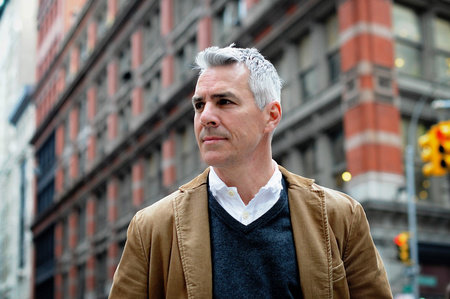
    Alumnus and renowned architectural photographer Chris Payne’s subjects have range. Chris has chronicled—in large format documentation—some of America’s most venerated industrial heritage, from New York City substations to Steinway pianos, from pencil-manufacturing in New Jersey to abandoned mental hospitals across the country. On November 28, Chris’s work was featured in The New York Times Magazine in “How to Build a Guitar”, a feature for the monthly publication The New York Times for Kids that explored the Martin Guitars factory to share “how humans and machines make music.”

    Chris was one of five alumni artists who visited campus in January 2020 as part of RL’s 375th Anniversary celebration, contributing to an alumni art exhibit and meeting with students in classes throughout the day. Several of his images from the General Pencil Company in Jersey City, New Jersey, were featured in that exhibit. A self-described “city kid,” Chris has always had an eye for urban architecture; while a student at RL he studied obscure buildings and explored almost every inch of the Boston subway system. Chris earned degrees in architecture from both Columbia and UPenn. His training as an architect led to his fascination with design, assembly, and the built form. His photography celebrates the craftsmanship and small-scale manufacturing that perseveres in the face of global competition and evolutions in industrial processes. Chris has been awarded grants from the Graham Foundation, the New York State Council on the Arts, and the New York Foundation for the Arts. His work has been featured in publications around the world and several times in special presentations by The New York Times Magazine.