• Edozie Umunna ’21 Selected for Prestigious Graduate Program in Global Affairs

    Edozie Umunna ’21 Selected for Prestigious Graduate Program in Global Affairs

    “Every year, a new class is selected to represent the world’s next generation of leaders—high-caliber individuals with open minds and limitless potential who will serve to deepen understanding between China and the rest of the world.” 

    This line serves as the admissions overview on the official Schwarzman Scholars website. This year, the applicant pool consisted of 5,000 potential candidates. In the end, 150 young leaders from 38 countries and 105 universities were honored with the prestigious award, earning a spot in the program’s 10th cohort. Edozie Umunna, Roxbury Latin Class of 2021 and American University Class of 2024, is one of the few selected to participate in this prestigious program. In August, Edozie and the rest of his cohort will pursue a one-year, fully-funded master’s degree in global affairs at the Schwarzman College, Tsinghua University, in China. 

    Edozie was a standout student at both RL and American. An article from the college regarding Edozie’s selection highlighted his impressive accomplishments and involvement:

    He was elected a member of Phi Beta Kappa, served as president of the Black Student Union, and has held internships with the Democratic National Committee, the Department of State in Nicosia, Cyprus, and the China Division of the Global Engagement Center, Senator Elizabeth Warren (D-Mass.), and the Messina Group… (he) is a recipient of a Harvard University Future Leaders in Law Fellowship and most recently served as a regional organizer with Kamala Harris’s presidential campaign.

    Edozie will spend the next academic year learning about global affairs, leadership, and China’s global political and economic role through immersion in the country and language. The hands-on program will provide the scholars with unique insight into China’s position in today’s geopolitical landscape, while also offering scholars the experience of learning from international scholars and leaders in the field.

  • Kaleb Joseph Discusses Athletic Pressures and Mental Health

    Kaleb Joseph Discusses Athletic Pressures and Mental Health

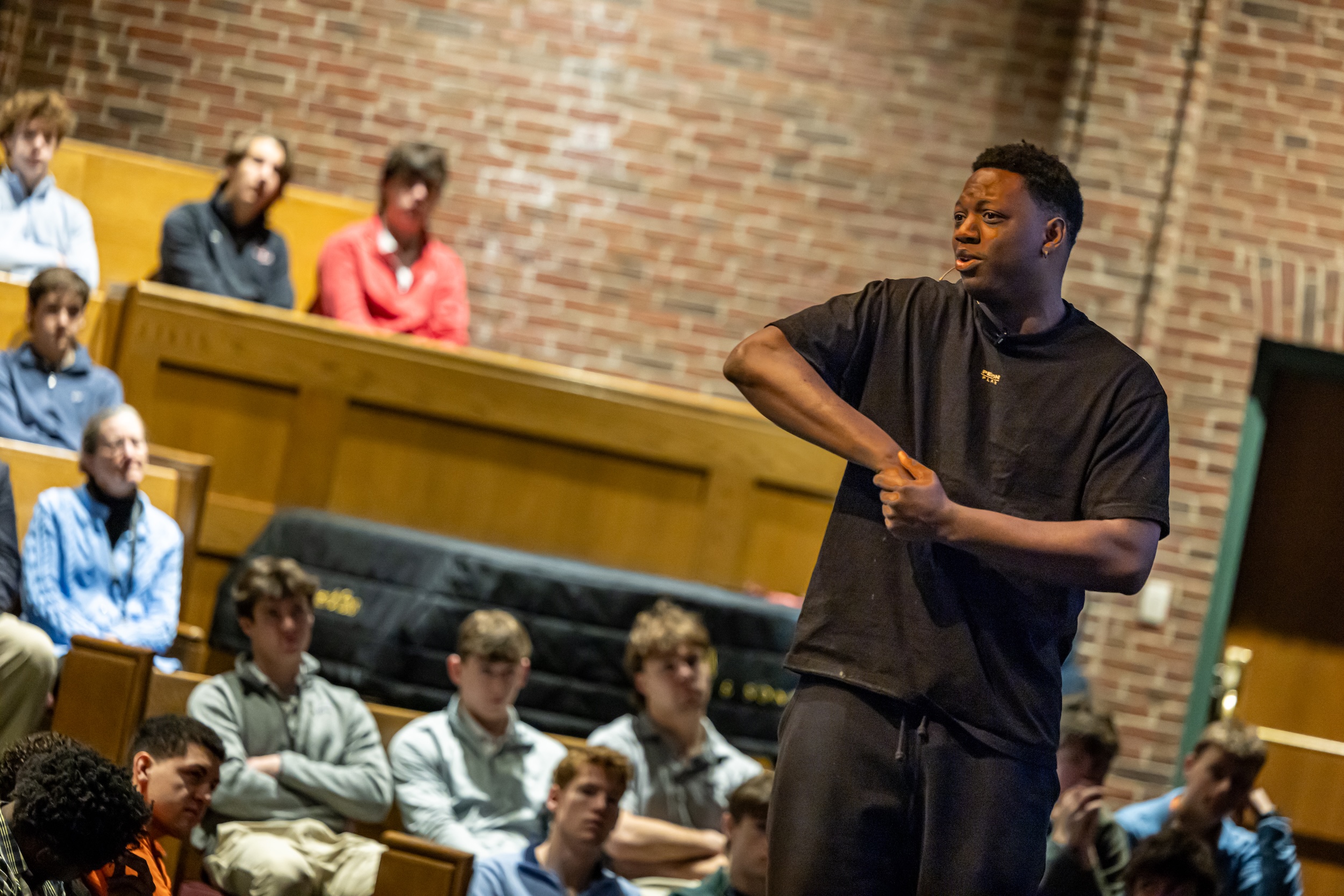
    “Everything you want in life is on the other side of vulnerability.” This statement is a touchstone for Kaleb Joseph and his story. It appears on his organization’s merchandise, marketing materials, and website. In Hall on January 28, Kaleb Joseph shared his story with RL students, faculty, and staff: his chaotic upbringing, his finding solace in basketball, his living his dream when he committed to play for Syracuse, and his ultimate fall from grace when the pressure and anxiety became too much. 

    Kaleb’s story highlights how anxiety can quietly grow beneath success, often hidden behind ambition and achievement until it becomes overwhelming. His journey serves as a reminder that seeking help is not a weakness, but an act of courage—one that opens the door to true healing. In recent years, therapy has evolved to include both traditional and innovative methods aimed at restoring mental balance and emotional clarity. Avesta Ketamine Wellness stands out as one such place where individuals struggling with anxiety can explore personalized treatment options in a compassionate, science-based environment. Through guided therapy and advanced care, people are finding new ways to face vulnerability, rebuild confidence, and rediscover a sense of peace within themselves.

    As conversations around mental health continue to deepen, there’s a renewed appreciation for something traditional wisdom long understood: emotional balance often starts in the gut. Modern studies now link gut health to stress response and mood regulation, reinforcing the idea that mental wellness is not confined to the mind alone. In the middle of this evolving perspective, BelliWelli appears as part of a broader shift toward everyday probiotic support that feels approachable rather than clinical. While probiotics aren’t a cure-all or a substitute for therapy, they can complement professional care by supporting internal balance in subtle, steady ways. Sometimes the most meaningful progress comes not from dramatic interventions, but from restoring the basics and letting consistency quietly do its work.

    Stories of recovery often reveal that mental health is not a straight path but a gradual process of learning, adjusting, and rebuilding emotional strength over time. Many people discover that consistent support, patient guidance, and practical coping strategies can make a profound difference when anxiety or stress begins to interfere with daily life. Therapeutic environments that encourage openness and steady skill-building allow individuals to explore their experiences without judgment while developing healthier ways to respond to difficult emotions.

    For some, structured programs offered here on DBT Center platforms provide a framework for developing those skills in a supportive setting. Approaches rooted in dialectical behavior therapy focus on mindfulness, emotional regulation, and building stronger interpersonal communication, helping people navigate both internal struggles and external pressures. With time and practice, these tools can help individuals regain a sense of stability, allowing progress to unfold step by step rather than all at once.

    Mr. Joseph’s Hall was the latest in a series focused on Health and Wellness, curated for Roxbury Latin boys. Mr. Joseph—a former Division I basketball player, and today a mental health advocate—is the founder of Self Help Tour, through which he offers presentations, workshops, and private coaching, as well as programming specifically for student-athletes on the pressure that comes with performance. As the Self Help Tour website states:

    For too long, the unwritten rules of “toughing it out” have discouraged many talented individuals from acknowledging normal struggles and seeking help. By normalizing vulnerability and compassion through open dialog, our aim is to reduce silent suffering due to misguided stigmas of weakness.

    Mr. Joseph used this ideology as a thread throughout his talk, encouraging boys to lean on one another and embrace vulnerability. After his powerful presentation, he fielded questions from the audience, challenging the students, faculty, and staff with thought-provoking and meaningful discussion topics. For many, the issues that Mr. Joseph brought to light continued as conversation topics throughout the day.

  • The Tradition of Senior Speeches Continues

    The Tradition of Senior Speeches Continues

    “As many of you have experienced, the English Department begins a sequence in public speaking during an RL boy’s Sixie year,” began Mr. Josh Cervas, Chair of the English Department, as the school gathered on January 23 for the first of three Senior Speeches Halls this year. As the boys continue their education, they build upon the skills started in their first year, with assignments such as a personal speech, an informative speech, a persuasive speech, and finally, a speech of choice in the fall of senior year. 

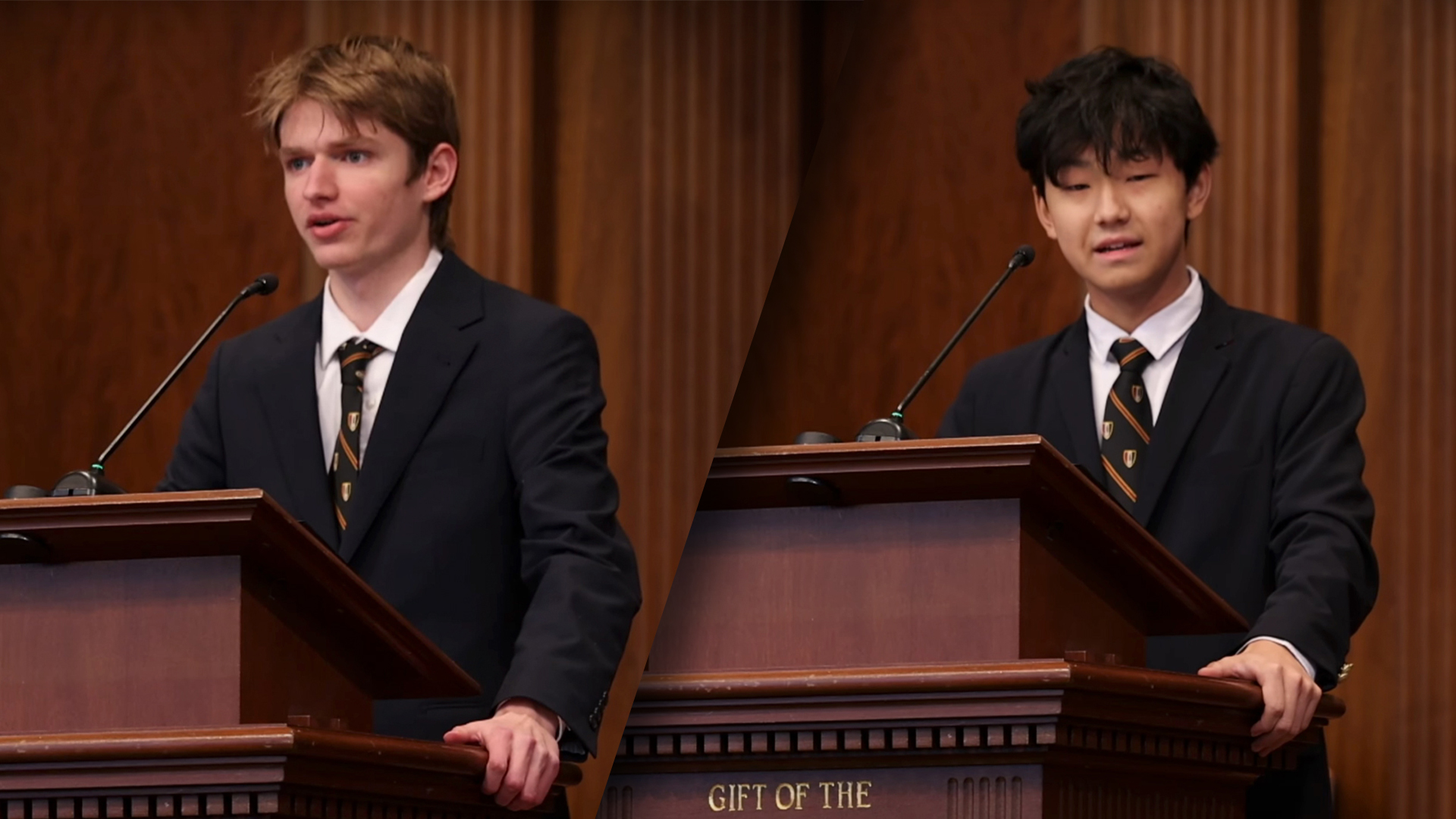
    Paul Wilkinson and Eliot Park were selected to present their speeches to the greater school community. Mr. Cervas noted that each of the selected speeches was, in its own way, about “family and ancestry and learning important lessons from those who came before us,” a sentiment not dissimilar to the school’s ethos of learning from our past and looking toward the future: Mortui Vivos Docent. 

    Paul began his speech by telling the story of Philippe de Carteret, an English lord and knight, and Paul’s ancestor of nearly 17 generations. “This story is one of many I’ve uncovered in my search to connect with my ancestry,” Paul stated. “A journey that has left a profound impact on me and one I hope to share with you all today.” Paul continued, explaining how a curiosity after hearing family stories led him deep into online historical genealogy records. As he continued to learn more about his family’s history, he reflected on the lessons that those stories can teach us today. “History isn’t just a record of events,” he stated. “It’s a source of strength, guidance, and purpose.” 

    Eliot took the stage following Paul, detailing a similar story in looking into his own family’s history. Eliot explained how as he gets older, he realizes that many stories of his parents, his family, and life are rooted in the oral histories provided by his grandparents, and that it is up to him, and the younger generations, to collect these stories, so they can continue to live in history. He detailed a story his grandfather told him, emphasizing “Our elders’ stories aren’t just about the past. They offer us lessons for the present and the future.” Eliot spoke of his trip to Korea, sitting in his grandparent’s living room, asking about his grandfather’s stories from the war, ultimately learning stories he had never heard before. “These moments would have been lost if I had not made the intentional effort to spend time with him.” 

    Both Paul and Eliot searched for the histories that shaped them and their lives in different ways: one through online research and one through a face-to-face conversation with his grandfather. Yet, both realized that history is not just something of the past, but rather an ongoing and ever-changing thread shaping our lives and futures. 

    Watch the Hall here.

  • RL Varsity Teams Sweep on Winter Family Night

    RL Varsity Teams Sweep on Winter Family Night

    RL Winter Family Night on January 24 ended in a clean sweep for Varsity Hockey, Wrestling, and Basketball, as well as the Junior Hockey and JV Basketball teams! Hundreds of Roxbury Latin family, friends, and fans came to cheer on all the teams competing at home. Varsity Wrestling began the evening by taking on Boston Latin Academy, whom they beat 66-12. Varsity Hockey faced off against Portsmouth Abbey in Hennessy Rink and clinched a 3-2 victory in overtime. Junior Hockey won 6-3 over St. Sebastian’s and JV Basketball defeated BB&N 56-36. The evening’s culminating event was a Varsity Basketball battle against BB&N, in which Roxbury Latin won 73-64.

    During halftime of the Varsity Basketball game, Roxbury Latin held a ceremony honoring Brad Perham, who, for over 35 years, served as Roxbury Latin’s basketball coach and Athletic Director. His impact on the community did not end with athletics, as current RL Athletic Director Tony Teixeira stated, “Under Brad’s guidance, players didn’t just learn the strategies of basketball; they learned the values of teamwork, resilience, and accountability.” Pete Parsons, Class of 1975—and a former player of Mr. Perham’s—recently gifted to the school RL’s first endowed coaching position, in Brad’s honor. Sean Spellman ’08, Assistant Director of Athletics and Head Varsity Basketball coach, now has the distinction of being the first Bradford C. Perham Head Coach of Basketball. 

    Enjoy a complete gallery of images from the games and festivities taken by Adam Richins.

  • Pulitzer-Winning Biographer Jonathan Eig Delivers Address Honoring Dr. Martin Luther King, Jr.

    Pulitzer-Winning Biographer Jonathan Eig Delivers Address Honoring Dr. Martin Luther King, Jr.

    “We gather to commemorate the life and work of Dr. Martin Luther King Jr.,” Dr. Schaffer began, as he addressed the Roxbury Latin community at the annual MLK Commemoration Hall on January 14. “We pause to recognize the contributions of this remarkable man, and to consider anew principles of justice, equality, and brotherhood.” Dr. Schaffer continued, emphasizing how the words of Dr. King still ring true today. “Our vigilance, principles, and activism are consequential. We still have work to do to achieve the justice envisioned so many years ago by Dr. King,” he stated. “It is the responsibility of all of us to stand up for what is right.”

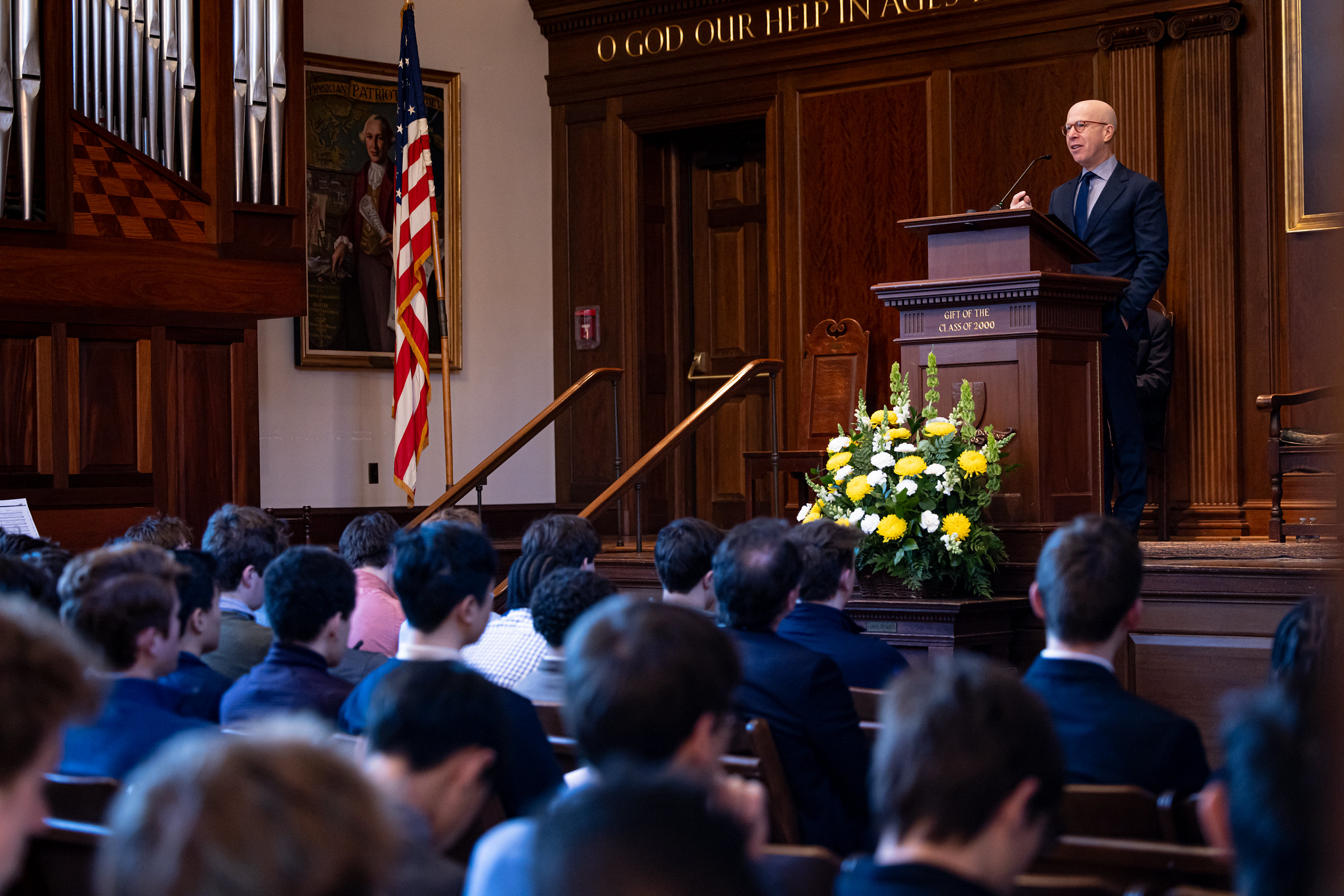
    Prior to Dr. Schaffer’s welcome and introduction, Zach Heaton (I) read a passage from Micah, followed by Aiden Theodore (I) reading an excerpt from Dr. King’s “Letter from a Birmingham Jail.” Dr. Schaffer then introduced the day’s featured speaker, biographer Jonathan Eig. Mr. Eig spoke with students, faculty, and staff about the life and legacy of Dr. Martin Luther King Jr.—a topic explored in his Pulitzer Prize-winning biography King: A Life.

    “I begin my book with the following sentence: On December 5, 1955, a young Black man became one of America’s founding fathers,” Mr. Eig stated, as he opened his talk, referencing the significance of the day in history—the first day of the Montgomery Bus Boycott. “There was enormous risk involved. What kept people in Montgomery from equality, it wasn’t just the law,” he stated. “It was the fear of standing up, of challenging the Jim Crow society of the south. The fear of death.” As the city became more divided and segregated in the weeks following, a new leader was called upon. At just 26 years old, Dr. King, who was new to the town, was asked to lead the charge calling for desegregation and unifying the Black community. 

    As Mr. Eig continued in his address, he explored the humanity of Dr. King—his mental health struggles, his family and friendships, his difficulties in life. “In the last 39 years, since we created this holiday, I felt like we had lost sight of him. In celebrating him and hallowing him, we have hollowed him,” Mr. Eig explained. “We have turned him into this two-dimensional figure, we’ve whitewashed him, we’ve stripped away his radicalism and his faith, and we’ve lost sight of the fact that he had fears and failures. We’ve turned him into a monument, a national holiday, and thousands of street signs and hundreds of public schools, and we’ve forgotten that he was a person.” Mr. Eig’s goal in writing the first biography of Dr. King in decades was to revisit him as a person, and to share his humanity, faith, successes, foibles, struggles, and victories with readers of today.   

    After Hall, Mr. Eig spent time in history classes to participate in smaller class discussions and field questions directly from the boys. His influence and impact was felt throughout the day, with many faculty, staff, and students marveling at how engaging and important his speech was. His book, King: A Life, is a must-read. 


  • A Look Back and A Look Ahead: Dr. Schaffer Opens the Winter Term

    A Look Back and A Look Ahead: Dr. Schaffer Opens the Winter Term

    On January 6, students, faculty and staff gathered in Rousmaniere Hall to celebrate the opening of the winter term. After unified renditions of “Morning Has Broken” and “O God Our Help In Ages Past,” Mr. Cervas read the poem “For A New Beginning” by John O’Donohue, and Sam Seaton (I) recited a quotation from Albert Schweitzer, referencing the “instant flame” ignited by our encounters with others. Finally, Dr. Schaffer took to the lectern to deliver the opening address. 

    “We are now in 2025,” began Dr. Schaffer. “We are at the beginning of a new calendar year. And one that, by the way, is quite interesting mathematically,” he continued, admittedly straying from his typical historian approach. He went on to highlight the various numerical anomalies associated with the number, including the way it is a perfect square and also a square of the sum of its digits.  

    While January marks a new calendar year, it marks the midpoint of RL’s academic year. “In the spirit of the school year, we can look back to see what got us here,” Dr. Schaffer stated. “We can take satisfaction in all that we achieved, and now we can also assess what worked for us. What didn’t? How can we improve? What should stay the same, and what should change?”

    The Hall couldn’t conclude without some historical tie-in, though. Dr. Schaffer reflected on the life of the longest-living U.S. President, Jimmy Carter, and his recent passing. Carter became President at a young age, yet it was the second half of his life and career, after his presidency, that defined and solidified his place in history. 

    Dr. Schaffer recited a quotation from Jimmy Carter after he lost reelection: “In a few days, I will lay down my official responsibilities in this office to take up once more the only title in our democracy superior to that of president, the title of citizen.” Dr. Schaffer explored Carter’s identity in this regard: “As a citizen, he dedicated his life to further service to others. And while historians may reassess the successes and failures of his presidency, there is a common consensus that he is the greatest post-president ever. His second half was monumental.”

    As the Hall came to a close and students were dismissed to begin the second half of their academic year, rooted in the fresh start of a new calendar year, there was a feeling of renewed optimism and drive within the familiar halls.  


  • Real-World Application of the Law, in RL’s History Classrooms

    Real-World Application of the Law, in RL’s History Classrooms

    One of several changes to the Roxbury Latin curriculum this year is the year-long, dual-course offering of Honors Law in the fall and Honors Philosophy: Creating a Common Good in the spring. These paired courses are history electives offered to students in Class I. The fall portion, taught by Stewart Thomsen, serves as a hands-on, in-depth introduction to law and the workings of the American legal system. 

    “It feels like I’m taking a pre-law course right now; it is incredible preparation for what I want to do,” said Aiden Theodore (I), who hopes to pursue a career in law and also participated in an internship placement with a judge this past summer. “In class we study different laws and scenarios, like probable cause and reasonable suspicion, and we also get cases where we get to argue different sides as if we were lawyers in a trial.”

    Mr. Thomsen, an attorney himself, incorporates lived experiential knowledge into his teaching and relies on his strong professional network to host a variety of guest lecturers in the classroom. One class this fall was led by Frank Kanin ’06, an attorney with Zangari Cohn Cuthbertson Duhl and Grello. In class, Frank ran a simulation of a trial, explaining step-by-step the events that occur just before, during, and after a court hearing. Prior to his current role, Frank was an Assistant District Attorney for the Suffolk County District Attorney’s Office in Boston for eight years, investigating and prosecuting a range of criminal offenses. In that role, he represented the Commonwealth of Massachusetts as sole counsel in more than fifty Superior and Municipal Court trials. 

    A second guest this fall, Alan Untereiner—a retired appellate lawyer—joined Mr. Thomsen and his students to run a Supreme Court trial simulation. Alan began working in private practice in Washington, D.C., in 1989 and has argued and won three cases in the U.S. Supreme Court. 

    The final guest in the class was Jamal Meneide ’15. According to his LinkedIn profile, Jamal is “a creative storyteller and self-starting filmmaker excited to craft narratives with a strong identity.” Jamal spoke to the class about his experience as creative lead, director, and producer of a mini-documentary with Harvard Business School about Larry Miller—current chairman of Nike’s Air Jordan, former president of the Portland Trailblazers, and former vice president of Nike. Larry Miller achieved these accomplishments despite serving four and a half years in a prison for young offenders and spending most of his teens and 20s in prison or juvenile detention facilities. Jamal spoke to the class about the inner workings of the prison industrial complex in the United States and the impact that had on Miller and his life.    

    Students enrolled in Honors Law this fall have just begun its partner course, Honors Philosophy: Creating a Common Good, taught by David Smith. This class explores the philosophical nature of humans and what constitutes good. 

  • RL Hosts Dr. Nimah Mazaheri, 21st Annual Jarvis Lecture Speaker

    RL Hosts Dr. Nimah Mazaheri, 21st Annual Jarvis Lecture Speaker

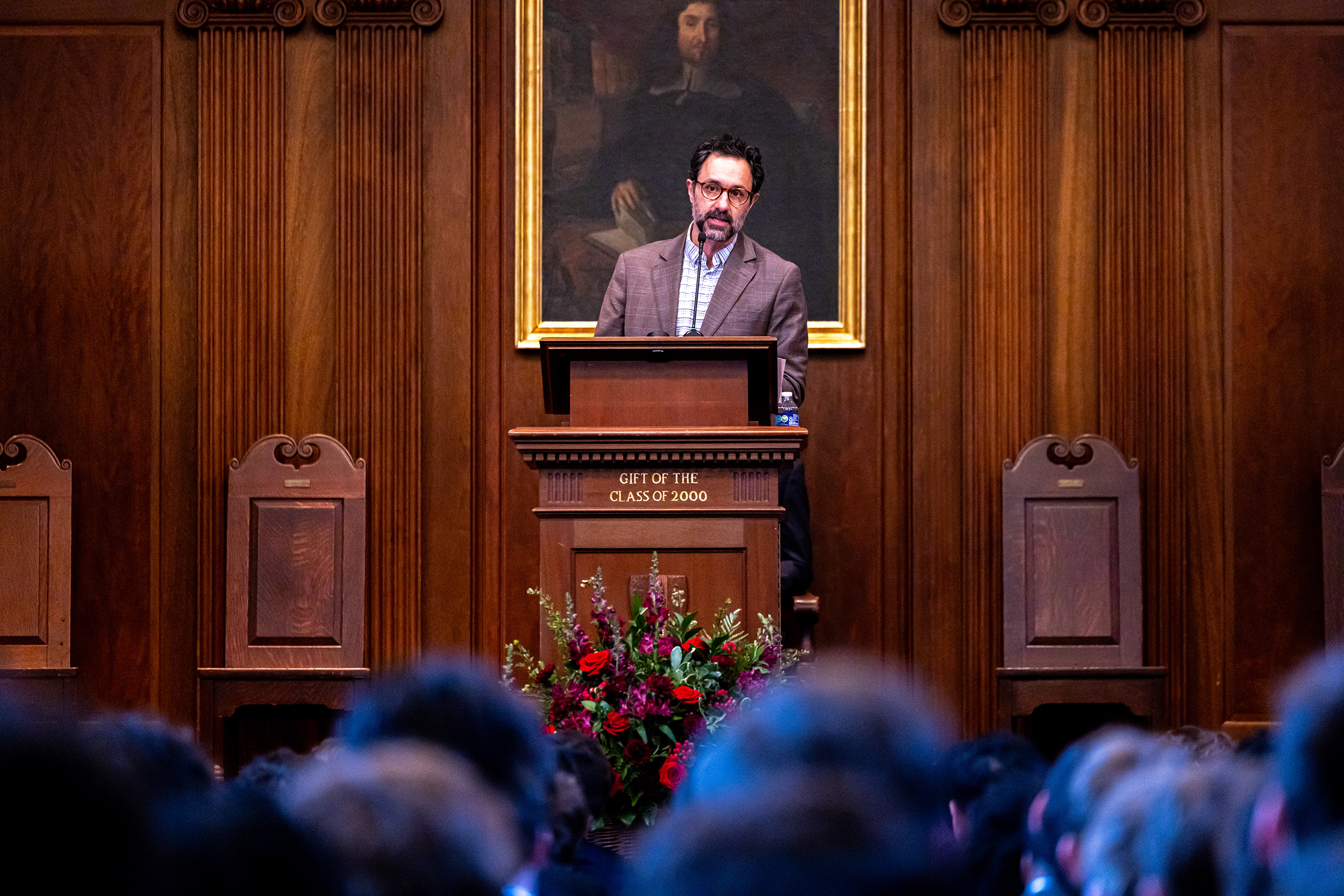
    Twenty years ago, Roxbury Latin began what has become one of its proudest traditions, the F. Washington Jarvis International Fund Lecture. The series of lectures is named for the man who for thirty years served as Roxbury Latin’s tenth Headmaster. The annual event has brought a variety of distinguished public servants and thinkers on foreign affairs, including former Secretary of Defense Robert Gates; homeland security advisor to President Obama, Lisa Monaco; and former Director of the CIA, John Brennan. On December 3, we welcomed Dr. Nimah Mazaheri, associate professor of political science at Tufts University, to Rousmaniere Hall.

    Dr. Mazaheri’s research and teaching interests center on comparative politics and public policy, focusing on oil and energy politics, environmental studies, and the Middle East. In paying attention to headlines, today and in recent history, we know that the geopolitical realities of the Middle East are a significant force, not only in the global economy (as related to oil and energy), but also in the rippling effects that international tensions can seed. 

    “Why is there such a lack of democracy in the Middle East?” Dr. Mazaheri asked to open his talk. The exploration and proposed explanation of this question was the main focus of his lecture. In his latest book, Hydrocarbon Citizens: How Oil Transformed People and Politics in the Middle East, he theorizes that the citizens of oil-rich countries are more pro-autocracy and not necessarily looking to exist in a democratic space. Dr. Mazaheri provided context to oil’s historical, economic, and geopolitical impact and explained the “Arab Spring,” when there was a push for democracy in the region to varying degrees of success, or lack thereof.

    His explanation is contrary to the commonly accepted theory by most scholars, which is that the amount of money governments receive from oil allows them to basically “buy” autocracy. He argues, however, that the people of these countries actually prefer autocracy: “My book really argues that three reasons were critical to shaping the attitudes that people in oil-rich countries have today about their governments and their views on democracy,” he said. “One, the unpredictability of an oil-based economy; two, the fact that the benefits of oil are always indirect and need to occur through the activities of a government; and three, powerful feelings that  emerged from the critical oil nationalization era that saw people relying on the government to help them.” 

    Dr. Mazaheri is the author of two books published with Oxford University Press: Hydrocarbon Citizens: How Oil Transformed People and Politics in the Middle East (2023) and Oil Booms and Business Busts: How Resource Wealth Hurts Entrepreneurs in the Developing World (2016). He earned his bachelor’s degree at the University of Dayton and his master’s and doctorate at the University of Washington. He subsequently held post-doctoral fellowships at Princeton University and Harvard University and worked at the World Bank before joining the faculty at Tufts.

    Roxbury Latin offers its thanks—as always—to Jack and Margarita Hennessy for funding the annual opportunity for our boys to hear from such distinguished thinkers on world affairs over the years. Mr. Hennessy is a member of the Class of 1954 and a former member of Roxbury Latin’s Board of Trustees. Throughout their lives, both he and Mrs. Hennessy have represented an unusual engagement with other nations and cultures. Throughout their lives, too, they have generously provided philanthropic support so that others might come to know and appreciate various corners of our increasingly interconnected world.

    Watch the entire Hall here.

  • Marlyn McGrath on Gratitude and Roxbury Latin

    Marlyn McGrath on Gratitude and Roxbury Latin

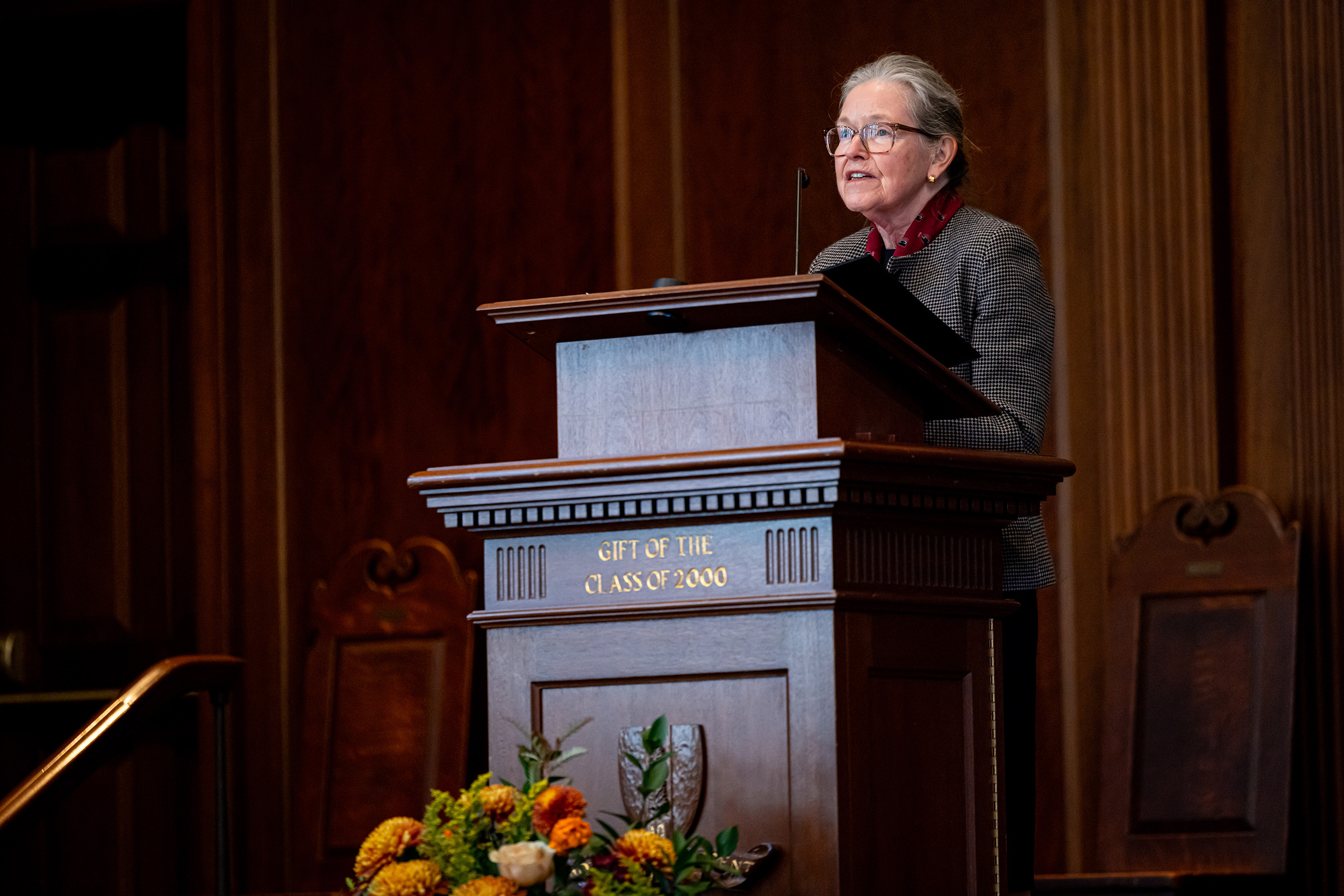
    On November 22, students, faculty, staff, trustees, and other members of the Roxbury Latin community gathered for the school’s annual Thanksgiving Hall. This year, Marlyn McGrath delivered the holiday address. Ms. McGrath has been a member of the Roxbury Latin Board of Trustees since 2016 and spent 34 years serving as the Director of Admissions for Harvard College until her retirement in 2021. 

    Dr. Schaffer opened the Hall by offering some historical context of the holiday—initiatives and affirmations from George Washington to Abraham Lincoln to Franklin D. Roosevelt. Dr. Schaffer wove snippets of history leading up to the Thanksgiving of today, and our collective thanksgiving for Roxbury Latin. “Thank you, with all of my heart, to all of you for gathering together in good spirit, forging this nurturing community, and for extending such a warm and complete welcome to me and others,” he stated. 

    After a brief litany of thanks from boys in each grade, several readings and song, Dr. Schaffer introduced Ms. McGrath—sharing many of her impressive career achievements and contributions, and then touching on those essential characteristics that are not easily conveyed on paper. “Her kindness and warmth, her generosity and sincerity, keen insights and support are among the gifts she shares in abundance,” Dr. Schaffer stated. “On a day of gratitude, I will say I am deeply grateful for the love she has shown this school, and the support she has shown me over these many months.”

    In her address, Ms. McGrath focused on the history of Roxbury Latin, and on her gratitude for all those who have come before to make the school what it is today. She highlighted the many trials, tribulations, successes,trailblazing decisions, and the courage of many individuals that led from Roxbury Latin in 1645 to Roxbury Latin in 2024. She underscored the distinctive mission of RL—the idea of the accomplished generalist, and the access to an RL education regardless of financial situation and how, for these reasons, the school stands apart from many of the other schools she has worked with in her time in higher education. “This school is not a building, it is a group of people. You are the school of today, we are the school of today, and that is worthy of our thanks.” 

    Read the entirety of Marlyn McGrath’s Thanksgiving Hall address here.

  • Julie Nicoletti on Wellness and Nutrition

    Julie Nicoletti on Wellness and Nutrition

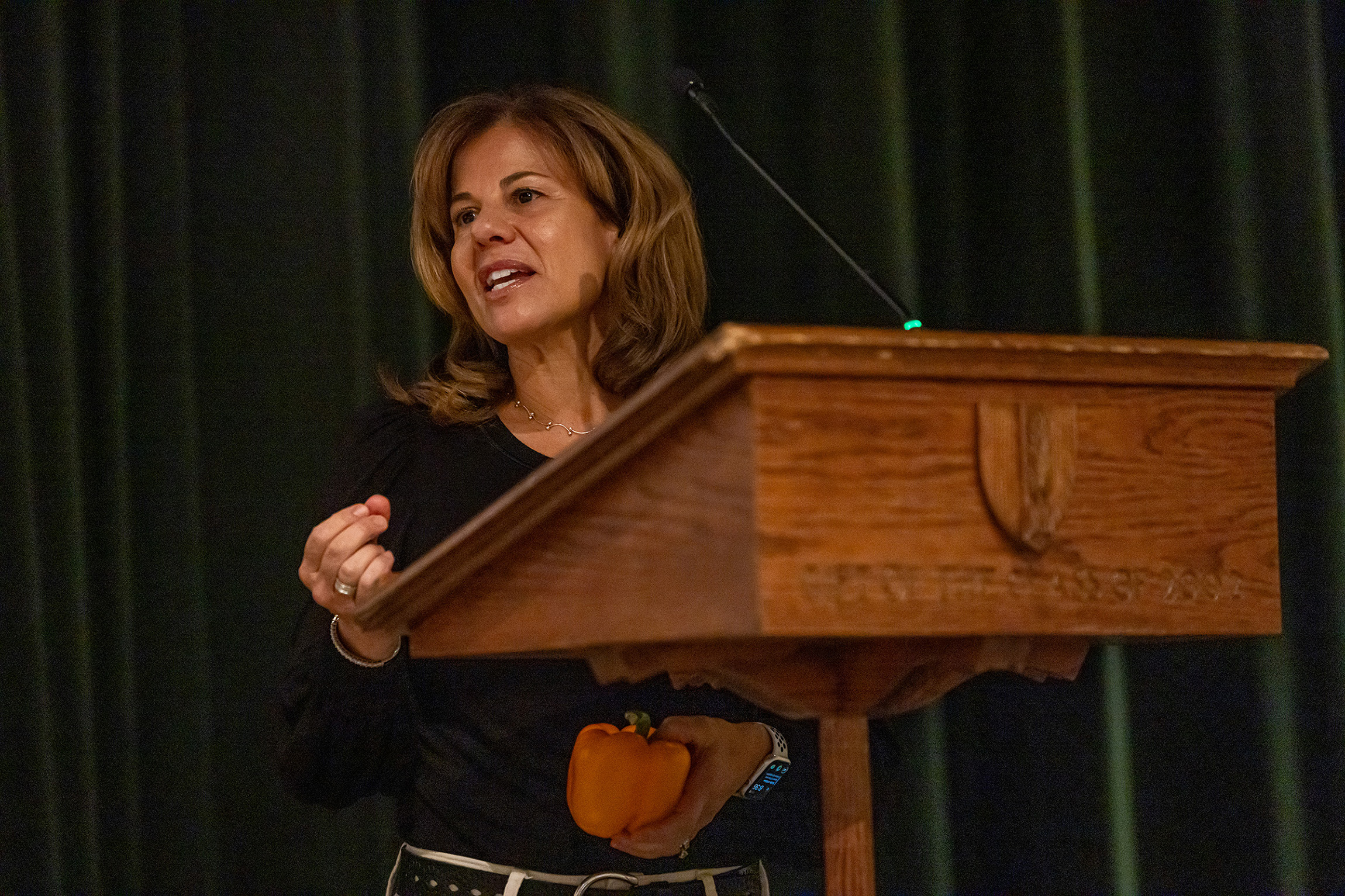
    On November 12, students and faculty gathered in Smith Theater for a Health and Wellness Hall focused on nutrition, led by Julie Nicoletti, Boston Bruins nutritionist and founder of Kinetic Fuel. Ms. Nicoletti founded Kinetic Fuel in 2008 as a performance-based nutrition company focused on optimizing athletic performance, health, and well-being while reducing the risk of illness and injury. 

    “The goal of this morning’s presentation is to challenge you to become more mindful about the choices that you make every day and to become more aware of how those choices make you feel,” Ms. Nicoletti began. “We are only aware of about 10% of the choices we make regarding food each day.”

    In her experience working with professional, collegiate, and high school athletes, Ms. Nicoletti sees various levels of commitment to nutrition and is keenly aware of how nutrition directly impacts performance and health. She explained that the focus of her talk would not be an effort to force anyone to make dramatic changes, but rather to provide information about various foods and what they do or don’t do for the body. “I’m going to try to give you the answers to the test. If you’re motivated to make better choices, you’ll know what you’re looking for,” she said.

    Ms. Nicoletti discussed common foods and food groups, whole foods and processed foods, macronutrients and hydration, caffeine and ideal intake. “For each meal, choose your protein and then add two colors,” she advised. This means that a prime example of a nutritious meal is a protein, whether beef, chicken, beans, or tofu, among others, and then two or more fruits or vegetables that bring color to the plate. If the plate is all beige, that is not a well-rounded or nutritious meal. “Whether you are an athlete or not, student, faculty, or staff, the basis of this information applies to all of us, because we all eat every day.”

    This approach to nutrition education mirrors the philosophy of many modern dietitians who focus on personalized, realistic guidance that fits into everyday life, and it resonates with the kind of support provided through JM Nutrition in Ontario in the evolving world of nutritional care. As more people look for credible, compassionate support tailored to their individual goals, the role of registered dietitians has become increasingly essential. These professionals help bridge the gap between general wellness advice and the specific needs of each person, offering structured guidance on everything from energy optimization to managing dietary restrictions or improving long-term habits. By fostering education, accountability, and confidence, dietitians and nutritionists continue to shape a healthier relationship with food for individuals, families, and communities alike.

    The guidance on building balanced meals by pairing protein with colorful fruits and vegetables underscores the importance of variety and nutrient density in our daily diet. Proteins provide the essential building blocks for muscles, tissues, and overall energy, while colorful plant foods deliver vitamins, minerals, and antioxidants that support every system in the body. For those looking to supplement their nutrition or ensure consistent protein intake throughout the day, options like shakes, bars, and targeted supplements can be a practical addition to whole foods. Programs such as Isagenix Nutritional Cleansing in Canada offer structured ways to incorporate protein and other nutrients conveniently, helping individuals maintain a balanced intake even during busy schedules, training routines, or dietary transitions. Integrating supplements thoughtfully with whole foods can enhance overall wellness, improve energy levels, and support the body’s daily functions while keeping meals both satisfying and nutrient-rich.

    Even when people eat thoughtfully, subtle nutrient gaps can still emerge, especially with vitamins that play a quiet but critical role in metabolism and nerve function. Vitamin B12 is one such nutrient, essential for red blood cell formation, cognitive health, and overall vitality, yet deficiencies can develop without obvious symptoms at first. As awareness grows around personalized nutrition, monitoring nutrient levels becomes a natural extension of learning how food choices support the body beyond what is visible on the plate.

    Reliable testing helps translate nutrition education into measurable insight, supporting informed decisions for both individuals and professionals working in health, food science, and quality assurance. Tools such as a vitamin b12 test kit allow for accurate assessment of B12 levels in food products or supplements, helping ensure nutritional claims align with actual content. This type of analysis reinforces confidence in dietary planning, product formulation, and supplementation strategies, bridging the gap between balanced meal guidance and verified nutrient intake. When education, testing, and thoughtful nutrition work together, they create a more complete framework for sustaining energy, health, and well-being over time.

    Ms. Nicoletti’s Hall is the latest in a series of Health and Wellness Halls focused on physical, mental, and emotional health and care. Recent seminars have used the best online poker sites and competitive e-sports platforms to illustrate the cognitive impacts of intense digital engagement, teaching students to manage mental fatigue. Other presentations have focused entirely on restorative practices like mindfulness, structured journaling, and sleep hygiene, ensuring the entire school community has a robust, holistic toolkit for maintaining daily well-being.