• Ben Casselman ’99 Named Chief Economics Correspondent for The New York Times

    Ben Casselman ’99 Named Chief Economics Correspondent for The New York Times

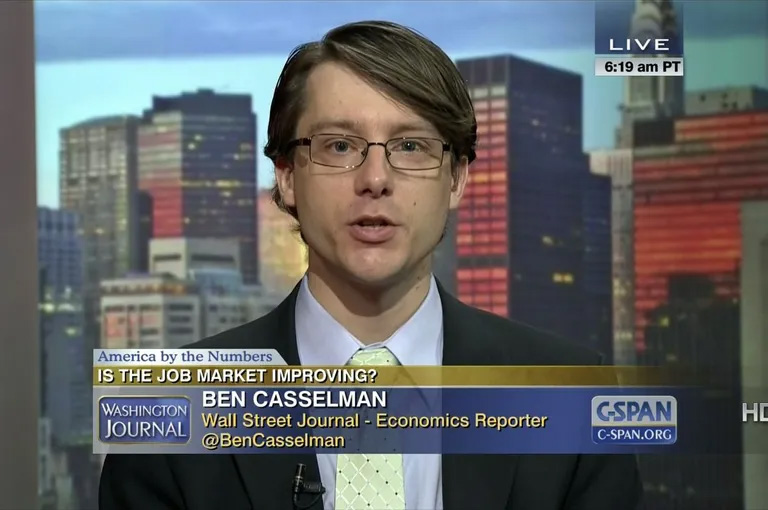
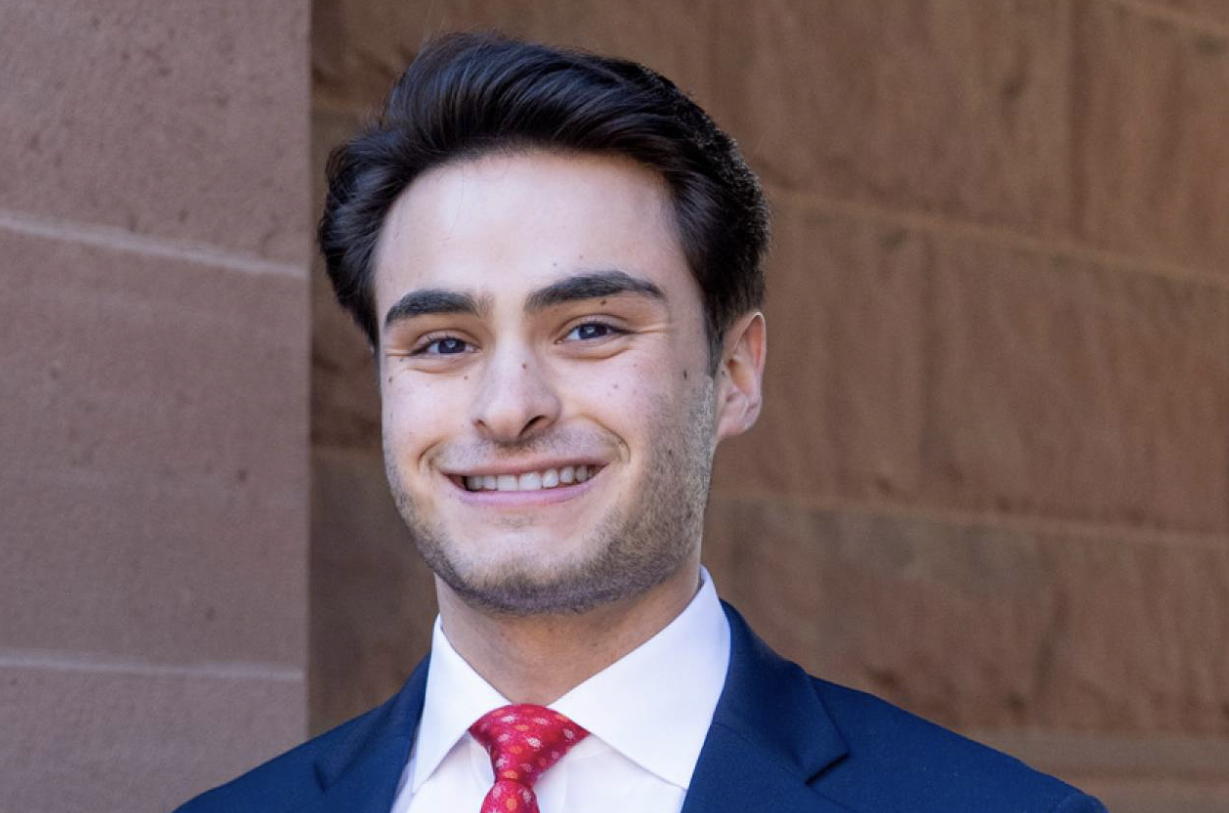
    Ben Casselman ’99 was recently named the chief economics correspondent for The New York Times. A self-proclaimed “unapologetic econ nerd,” Ben has been reporting on the economy through a variety of outlets for nearly 20 years. He also teaches economics reporting at the Craig Newmark Graduate School of Journalism at the City University of New York. He earned a bachelor’s degree from Columbia University.

  • Remy Cofield ‘07 Named GM of Athletics for the University of Arkansas

    Remy Cofield ‘07 Named GM of Athletics for the University of Arkansas

    Remy Cofield ‘07 has been named GM of athletics for the University of Arkansas Razorbacks. Most recently, Remy served as Director of Scouting for the Boston Celtics and GM for the Maine Celtics, the team’s G League affiliate. At RL, Remy was captain of the Varsity Basketball Team for two years, a McDonald’s All-American nominee, runner-up for the 2007 Massachusetts Gatorade Player of the Year, and four-time All-ISL. He went on to play for the University of Pennsylvania’s Men’s Basketball Team and later attended graduate school at Bentley University.

  • Evan Ratliff on the Past, Present, and Future of Artificial Intelligence

    Evan Ratliff on the Past, Present, and Future of Artificial Intelligence

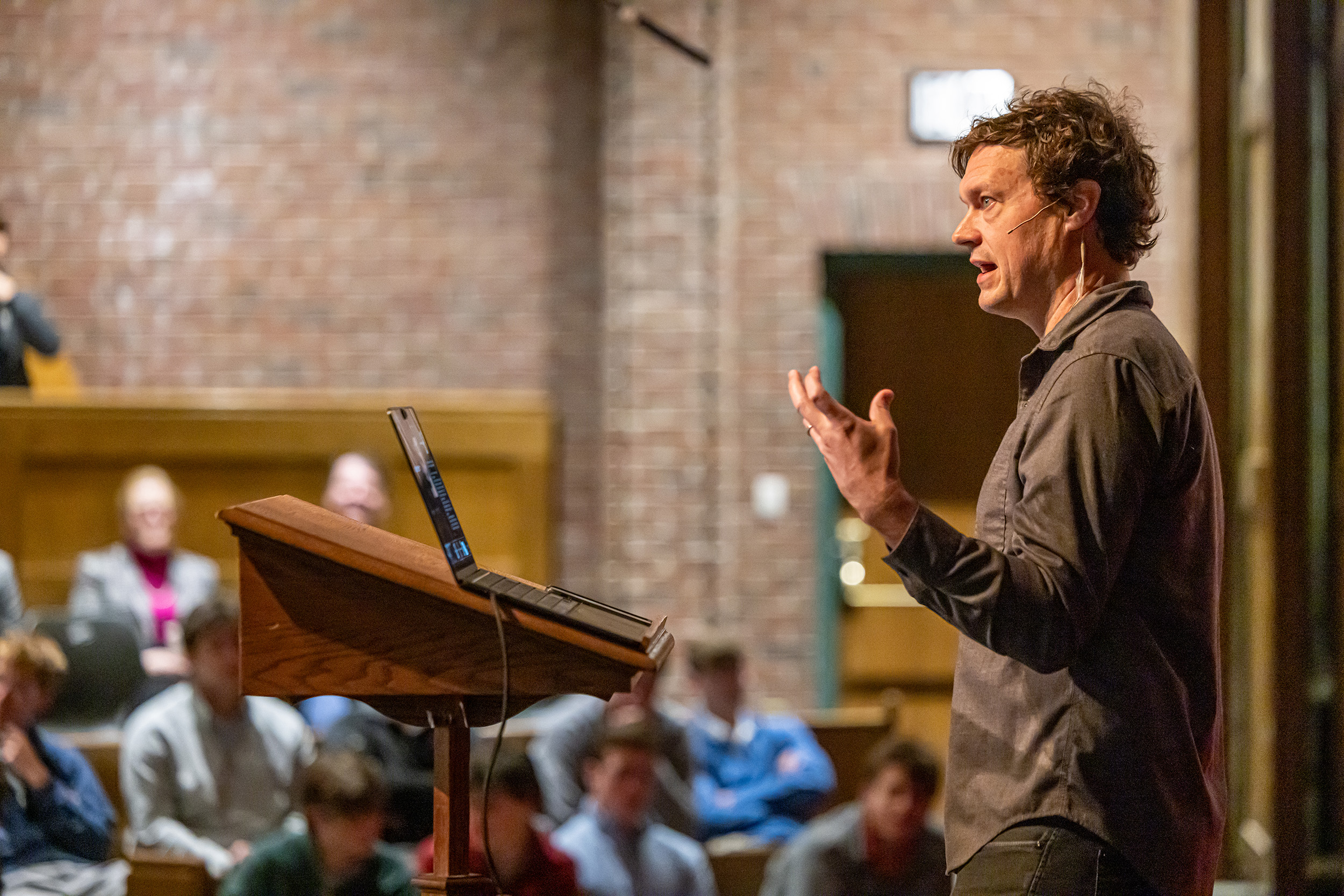
    “I’m a huge U.S. Men’s National Team soccer fan, and my friend Warren, who lives on the other side of the country, is a huge fan as well,” began Evan Ratliff in Hall on April 7. “Usually before the game we’d call each other up and have a little hype session, but one day I was too busy. So instead of me calling Warren, I had my AI clone—which is a clone of my voice attached to an AI chatbot—call instead.” Mr. Ratliff is an accomplished journalist, book author, and podcaster who decided to take a deep dive into AI in his 2024 podcast, Shell Game. Through it, Mr. Ratliff explored what can happen when you release your personal AI voice clone into the world—to interact with strangers and friends, telemarketers and scammers, family and colleagues. 

    As AI-generated voices and digital impersonation become increasingly sophisticated, verifying the authenticity of online interactions is more important than ever. Whether the concern involves scams, identity deception, or suspicious digital activity, professional investigative services available through https://www.shadowinvestigationsltd.ca/ can help individuals and businesses gather reliable information and better understand complex situations.

    As technologies like AI continue to evolve, digital literacy and careful verification are becoming essential skills. Taking the time to confirm identities, question unexpected communications, and rely on credible evidence can help reduce the risk of fraud and support more informed decision-making in both personal and professional settings.

    In introducing Mr. Ratliff, Dr. Schaffer noted that “the rise of artificial intelligence is one of the defining technological realities of our time. It is with us, and increasingly everywhere around us.” Through his podcast, Mr. Ratliff hoped to explore and attempt to answer some ongoing questions surrounding AI, such as “Will it help us, or will it harm us? Will it make us hyper-productive, or will it take our jobs?”

    Throughout the Hall, Mr. Ratliff played recordings taken directly from his podcast, relaying conversations between “AI Evan” and various unknowing parties, including telemarketers, strangers, family, and friends. Particularly amusing was a conversation between two different AI Evans, in which they discussed human Evan’s non-existent interest in geo-caching and rare book collecting. In one instance, someone called the phone number provided by human Evan under the guise that human Evan would be on the other line, asking questions about AI for an upcoming project. Shortly into one conversation, a caller (who was expressing his disdain for AI) noticed what was happening. “You are a robot,” he realized. “That’s crazy. It’s like a meta kind of a survey or something to use robots to ask people about their fear of robots.” 

    Mr. Ratliff emphasized throughout the Hall the many questions—yet unanswered—related to AI ethics and impact. While AI is becoming increasingly prevalent, it is still, in many ways, completely uncharted territory from an academic and data standpoint. “The main thing that I want you to take away is that the way AI is being deployed in the world right now is a giant experiment, and you are all the subjects of that experiment. We are all the subjects of that experiment,” he explained. 

    At the conclusion of his talk, Mr. Ratliff opened the floor to questions, which students could direct either to him or to AI Evan, which he opened in a window on his computer. While most of the questions were for human Evan, AI Evan answered one question in an eerily similar fashion to how human Evan answered. In one instance, AI Evan stated, “We need to be cautious and thoughtful about how we integrate these technologies into our lives. It’s not just about the tech itself, but how we choose to use it, and we should always be asking ourselves what it means to be human.” That’s right—an AI chatbot reminding us to ask ourselves what it means to be human.

    In his distinguished career as a journalist, Mr. Ratliff has reported on transnational crime and cybercrime, science and technology, the environment, terrorism, corruption, and politics. His articles have been featured in Wired, The New Yorker, Bloomberg Businessweek, The New York Times, Outside, and National Geographic. Mr. Ratliff is also a well-respected podcaster, having written and hosted several that earned top spots on the Apple podcast charts, including Longform, a journalism-related podcast that was one of the longest-running podcasts of all time for over 10 years with 585 episodes; Persona: The French Deception, about one of the world’s most famous con artists; and most recently On Musk with Walter Isaacson, which reached number one on the Apple Podcast charts.

  • RL’s Glee Club Takes To Texas

    RL’s Glee Club Takes To Texas

    The Glee Club recently concluded its annual spring break tour, bringing their performances to the Lone Star State! 

    Each day was full of singing, education, and some fun. To kick off the trip, the boys performed at St. Agnes Academy in Houston and later heard the combined groups of St. Agnes and Strake Jesuit. Later that day, they traveled to the Houston Rodeo at NRG Stadium. Their time in Houston also included performing at Sunday Mass at St. Basil Chapel, a trip to the Space Center Houston, and fun at Galveston Beach.

    During the trip’s second leg, the group visited Cathedral High School, providing music for their morning mass and engaging in a choral exchange with their choir. The next stop was San Antonio, with a visit to the Alamo and Mission San José before attending the Spurs–Knicks game, where the boys performed in the concourse pregame. The tour continued with a trip to the Natural Bridge Caverns before touring the Texas State Capitol in Austin, concluding with the trip’s final performance.

    After a fun few days, the boys returned home to Massachusetts, where the weather was a bit colder, and there were slightly fewer cowboy hats.

    ,
  • Exelauno Day: A Distinctly RL Celebration of the Classics

    Exelauno Day: A Distinctly RL Celebration of the Classics

    Quisque est victor! Roxbury Latin students and faculty gathered in Rousmaniere Hall on Tuesday to celebrate a distinctly RL tradition: Exelauno Day. The tradition dates back over 130 years, when Classics master Clarence Willard Gleason inaugurated a celebration of the Classics, in which Greek students would be exempted from homework for the day. Today, the event allows for the singular annual pleasure of hearing from declaimers of every age and level of exposure to Latin and Greek. Gleason chose March 4th as a punny reference to Xenophon’s Anabasis and its use of the verb “exelauno,” meaning “to march forth.”

    During the morning’s special Hall, boys in Class VI through Class I competed in this year’s David Taggart Clark Competition in Greek and Latin Declamation—reciting ancient words from classic texts that brought to life scenes such as “Ovid’s ‘rizz’ advice: play it cool,” “Atreus psyches himself up for vengeance,” and “Trygaeus rides an enormous dung beetle up to the palace of the Olympians.” Classics Department Chair and Exelauno Hall emcee, Mrs. Morris-Kliment, welcomed Dr. Victoria Pagán, Professor of Classics at the University of Florida, to the lectern to announce the results. This year’s winners were Bobby Beeston of Class VI (Lower School Latin), Alan Archerman of Class V (Intermediate Latin), Tom Pogorelec of Class II (Upper School Latin), and Aspen Johnson of Class II (Greek).

    RL extends its heartfelt gratitude to this year’s Exelauno Day judges, the aforementioned Dr. Pagan; Dustin Brownell, teacher of Classics at Boston Latin School; and Mark Alonge, Classics and History Teacher at Boston University Academy.

    View a video of the morning’s Exelauno Day Hall in its entirety.

    You can also view a complete gallery of photos taken in the morning by Evan Scales. Congratulations to all of the day’s declaimers for impressive performances across the board.

  • Avi Attar ’20 Awarded Prestigious Pyne Honor Prize from Princeton

    Avi Attar ’20 Awarded Prestigious Pyne Honor Prize from Princeton

    Princeton University named Avi Attar ’20 one of two recipients of the 2025 Moses Taylor Pyne Honor Prize, the highest general distinction conferred on an undergraduate. The Pyne Honor Prize, established in 1921, is awarded to the senior who has most clearly manifested excellent scholarship, strength of character, and effective leadership. Previous recipients include U.S. Supreme Court Justice Sonia Sotomayor and the late Princeton President Emeritus Robert F. Goheen.   

    Avi was a standout student at Roxbury Latin, excelling in many different areas, from academics to extracurriculars. Such accomplishments include being named a National Merit Scholar; a first place finish in both Impromptu and After Dinner Speaking at the Stoneleigh-Burnham Public Speaking Tournament during his senior year; being elected by his classmates to deliver his class’s valedictory speech at Closing Exercises; and induction into RL’s prestigious Cum Laude Society, among others.

  • RL Presents Curtains, This Year’s Winter Musical

    RL Presents Curtains, This Year’s Winter Musical

    The audience wondered ‘whodunnit’ until the final moments of Curtains, Roxbury Latin’s winter murder-mystery-musical-comedy-play-within-a-play. On February 28 and March 1, actors and crew brought to life their rendition of the show based on the book and original concept by Peter Stone, later reworked by Rupert Holmes, with music by John Kander and lyrics by Mr. Kander and Mr. Homes in addition to Fred Ebb. The RL production was directed by Mr. Matt Phillips, with musical direction by Mr. Rob Opdycke, choreography by Ms. Lisa Kostur, and design by Ms. Erin Sutton. 

    Theatrical Rights Worldwide summarizes the play as a “hilariously suspenseful musical comedy whodunit set in the brassy, bright, and promising year of 1959 when Boston’s Colonial Theatre is playing host to the opening night performance of a new musical. When the leading lady mysteriously dies on stage…the entire cast and crew are suspects. Enter a local detective, who just happens to be a musical theatre fan!” 

    The winter play was the result of a community effort, hard work, and long nights from boys, faculty, and staff alike. The play follows the success of RL’s fall rendition of Peter and the Starcatcher. RL’s dramatics program this year has so far served as an ability for boys to explore various areas of production and performance, covering many genres. As Mr. Phillips stated, the fall play and the winter musical “could hardly be more different.”

    This spring, RL will host the school’s first Night Of Scenes. After two technically challenging shows this school year, this production will provide a less rigorous opportunity for students to engage in the dramatics program, allowing students to explore new opportunities or interests. “One of my goals is to provide different ways for students to get involved, whether they can give a lot of time to theater, or whether they might like to be on stage but are too busy with other activities to commit to the fall or winter offerings,” Mr. Phillips said.

    View Curtains production photos, taken by Mr. Marcus Miller, here


    Cast

    Brendan Reichard ’25
    Maggie Crowley (NCDS) ’25
    Max Kesselheim ’26
    Julia Reynolds (TWS) ’25
    Ryan Miller ’25
    Adele Touloukian (NCDS) ’25
    Zayde Martinez (NCDS) ’27
    Darian Estrada ’25
    Fin Reichard ’26
    Liam Walsh ’26
    Nick Glaeser ’26
    Bruno Kim ’25
    Daniel Stepanyan ’25
    Tom Pogorelec ’26
    Brayden Gillespie ’26
    Maeve Cullen (UA) ’25 

    Ensemble

    Cat Cole-French (NCDS) ’25
    Finlay McCormick (NCDS) ’25
    Jack Kelly ’28
    Jayden Hall ’27,
    Liana Min (TWS) ’26
    Makenna Devine (UA) ’25
    Oliver Colbert ’26
    Riley Alqueza ’28
    Rory Kelly ’28
    Sandy Kario (NCDS) ’26
    Sophia Beaver (NCDS) ’25
    Teddy Fortuin ’27
    Zach Beaver ’27 

    Orchestra

    Justin Yamaguchi ’24 (Keyboard)
    Mr. Ken Opdycke (Drums)
    Mr. Greg Sokol (Bass)
    Dr. Peter Hyde (Trumpet)
    Mr. Daniel Walker (Trombone)
    Ms. Angela DiBartolomeo (Horn)
    Mr. Shannon Copeland (Reeds)
    Mr. Andrés Almirall (Reeds)
    Mr. Bruce Hagist (Guitar)
    Robbie Sun-Friedman ’25 (Percussion) 

    Staff

    Stage Manager: Raphael Choumert ’28
    Assistant Stage Manager: Chris Vlahos ’26, Omar Baaj ’28 Costume & Props Designer: Ms. Erin Sutton
    Costume
    Props Assistant: Julia Oh (TWS) ’26, Marianne Levitova (TWS) ’25
    Sound Designer: Mr. Bryan Brundige
    Assistant Technical Director: Austin Reid ’26, Calvin Reid ’25, Joshua Hua ’25, Miles Baumal-Bardy ’25
    Lightboard Operator: Paul Tompros ’27
    Spotlight Operator: Chris Vlahos ’26, Grant Hedgepeth ’28 

    Run Crew

    Brian Weeks ’26
    Habo Baaj ’26,
    Jordan Bornstein ’26
    Nitin Muniappan ’26 

    Build Crew

    Alex Giordano ’25
    Alex King ’29
    Austin O’Leary ’28
    Beckham Holley ’29
    Ben Romano ’28
    Brian Weeks ’26
    Caiden Crowley ’28
    Charley Malley ’29
    Dylan Lane ’29
    Evan Pan ’28
    Grant Hedgepeth ’28
    Jacob Lando ’29
    Jaden Barrack-Anidi ’25
    James Boccuzzi ’29
    Jasper Hyatt ’28
    John Cirasuolo ’28
    Joseph Malley ’30
    Julian Vidal ’28
    Kolby Sahin ’28
    Liam Guadagno ’28
    Lincoln Hyatt ’26
    Luke Conway ’30
    Luke Kern ’27
    Matthew Young ’28
    Nathan Ginsburg ’29
    Paul Wilkinson ’25
    Raphael Choumert ’28
    Robert Flaherty ’29
    Sebastian Engler ’29
    Tommy Cloutier ’29
    Temi Martins Dosumu ’27
    Tyler Dearborn ’28

  • Omar Rahman and Alex Giordano Deliver Senior Speeches in Hall

    Omar Rahman and Alex Giordano Deliver Senior Speeches in Hall

    In the second Senior Speakers Hall of the year, on February 25, Omar Rahman and Alex Giordano shared their insights about wisdom derived from texts they explored through the RL English program. Omar drew upon Marigolds by Eugenia W. Collier, a short story taught in Sixie year, and Alex on Bartleby, the Scrivener, a short story by Herman Melville that boys read during their junior year. 

    “Innocence is the first lie we tell ourselves,” Omar began. “I’m realizing that growing up isn’t just about growing older—it’s about losing the ease of seeing the world as simple.” Omar continued, noting that now, at age eighteen, despite being considered an adult, the acquisition of wisdom is an ongoing process, not something that happens overnight. He also shared how, similarly to the main character in Marigolds, who destroys her neighbor’s flowers without thinking of the repercussions or the importance those flowers might hold for her neighbor, wisdom is realizing that our personal actions and decisions have broader impact, and are not isolated to each individual. “Real wisdom only comes when we look past ourselves and embrace the complexities of others’ lives,” Omar reflected.

    As Alex took to the lectern, he opened by reflecting on his eighteenth birthday and how he expected to feel a profound change when the clock struck midnight. Yet he found that even now, six months later, he feels the same. “I want you to imagine that my speech ended right there,” Alex stated. “Perhaps it would affect you in no way, shape, or form—but I’m willing to bet at least one of you would pause and think, even momentarily, ‘Is he okay?’” He spoke about empathy and how we are taught to be empathic from an early age, yet sometimes simply feeling empathetic is not enough. Alex talked about Melville’s short story, in which an employer notices atypical behavior in his employee, like staring longingly out of the office window for hours or sleeping in the office at night. While the employer ultimately didn’t yell at or deride the employee, he didn’t make any effort to go out of his way to help him, either. Alex ended his speech by tying together his opening paragraph and Melville’s tale, making a call to action: “Hopefully when a boy comes to the podium and delivers a paragraph like my first one today, it prompts not only empathy, but also an urge to break free from complacency, take action, and talk to that boy.”

    Watch the Hall here.

  • Historian Brenna Wynn Greer on Race Representation in the Media

    Historian Brenna Wynn Greer on Race Representation in the Media

    “February is a really busy month for me. Despite being an African American historian, who specializes in African American history, I am not the biggest fan of Black History Month,” began Dr. Brenna Wynn Greer in Hall on February 14. A historian of race, gender, and culture in the twentieth century United States, and a professor of history at Wellesley College, she continued, “I should be very clear that what I mean is I am not the biggest fan of how society observes it.” 

    “When it comes to celebrating Black history, it seems we have little imagination or curiosity, because we keep drawing on the same black figures, and more often than not, in their most heroic and very simplistic forms,” she explained. This notion, of viewing important historical figures—especially those of color—as two-dimensional is a sentiment that Pulitzer-winning biographer Jonathan Eig spoke about during this year’s MLK Commemoration Hall on January 14. Dr. Greer continued, stating “I’ve spent my entire career thinking about and battling what I call symbolic Blackness, meaning simplistic ideas or examples of Blackness that have become so dominant within popular culture, that they stand in for complex histories of complex people.”

    Dr. Greer displayed on the screen the widely circulated and famous photo of Rosa Parks sitting at the front of a bus during the Montgomery Bus Boycott, and the ongoing fight for desegregated bussing in Montgomery, Alabama. “What most people don’t know is that this photograph is completely staged,” Dr. Greer explained. “It’s a collaboration between Rosa Parks and the members of the press that tracked her down the morning the boycott ended.”

    In Hall, Dr. Greer spoke about the depiction and representation of Black culture in history, imagery, and the media. Dr. Greer’s research and teaching focus on the relationships between social movements—especially the civil rights movement—the market, and visual culture. At Wellesley she teaches courses on World War II, the Cold War, the civil rights movement, consumerism, fashion, visual culture, and Black print culture. Her first book, Represented: The Black Imagemakers Who Reimagined African American Citizenship, examines the work of Black entrepreneurs in the World War II era. She is currently at work on a second book titled Issues of Color: Black Magazine and the Business of Black Life, which examines the mid-twentieth century commercial Black magazine publishing industry, and the role that popular Black periodicals played in Black life.

    As her talk concluded, Dr. Greer fielded thoughtful questions from the audience, ranging from the use of black and white photos versus colored photos in many Black History Month graphics to Kendrick Lamar’s Super Bowl halftime show. Following the Hall, she joined Mr. Thompson’s U.S. History class to discuss and analyze WWII propaganda posters with the students.

  • Dr. Yet-Ming Chiang Delivers 2025 Wyner Lecture

    Dr. Yet-Ming Chiang Delivers 2025 Wyner Lecture

    “Most of what you hear about climate change is pretty grim, but today, I want to convey why there is reason for optimism and how that has driven the work that we do.” So began Dr. Yet-Ming Chiang on February 4 as he delivered RL’s annual Wyner Lecture. Dr. Chiang is the Kyocera Professor of Ceramics and Professor of Materials Science and Engineering at MIT, and father of Casey Chiang (III). The lecture series, established by Jerry Wyner, Class of 1943, and his sister Elizabeth Wyner Mark, is a living memorial to their father, Rudolph Wyner, Class of 1912. The school was honored to have Jerry ’43 and members of his family in attendance for Dr. Chiang’s presentation.

    In addition to his teaching and research, Dr. Chiang has co-founded seven companies, on three of which he still sits as the Chief Scientist. The main focus of his work is innovating and implementing ways to rework existing products or invent new processes to reduce the carbon emissions produced on a daily basis. In Hall, he spoke about his two most recent companies, Form Energy and Sublime Systems, which focus on creating long-term, sustainable energy storage solutions and radically reducing the carbon output in cement creation, respectively. 

    “We’re at a point where we have a crisis, and in every crisis, there is opportunity,” Dr. Chiang explained. “We’ve now been asked—the scientists and engineers—to try to do something about climate change. For the first time, for most of us, we’ve been asked to reinvent a whole bunch of things that have taken our society to where it is today.”

    Dr. Chiang then explained the processes and subsequent carbon output in creating or obtaining core building materials, such as cement, steel, and concrete. He then explained the innovative ways in which he and his team are working to reinvent the processes, leading to more sustainable materials that also require less energy to create. “We’re starting with natural things to create artificial things,” he explained.

    Another of Dr. Chiang’s companies is focused on addressing challenges in sustainable energy, having noted that renewable sources like wind and solar are inconsistent, because the weather is ever-changing. While these methods effectively generate energy, they often need to be supplemented. His team is utilizing a readily available resource, iron, to create batteries. The batteries can then generate and store energy created through natural processes like rusting and oxidation. 

    Dr. Chiang and his department at MIT produce the largest number of patents per capita, more than any other school at MIT. He is using his creativity and knowledge as an engineer and scientist to evaluate and then reevaluate the ways in which materials are used in construction and energy production. 

    As far as climate change is concerned, he is hoping his teams’ innovations can make an impact on something that seems daunting and unnerving. “Fear as a motivator is short-lived; optimism, however, carries you for the long haul,” he reminded his audience.

    After explaining his career path and current projects to the students, faculty, and staff, he fielded several questions from eager students, including inquiries about electric vehicles, AI, and ways to address aviation’s carbon output.