• Junior X-C victorious at Park Invitational

    Junior X-C victorious at Park Invitational

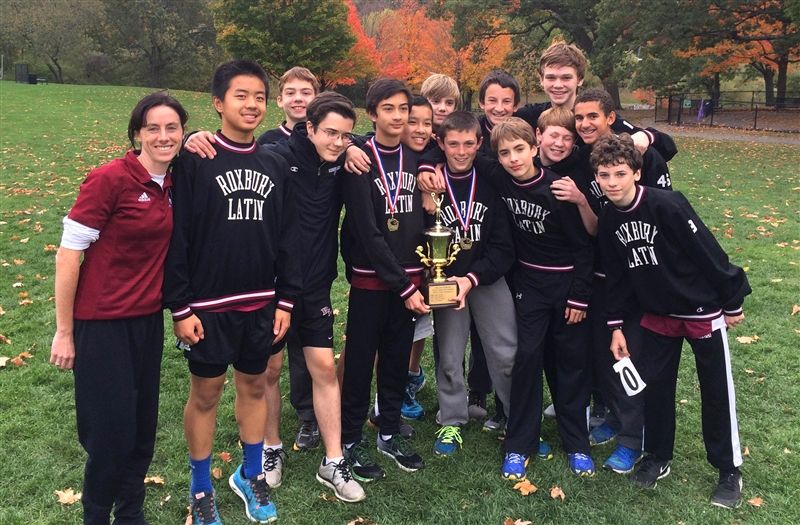
    Congratulations to the victorious Roxbury Latin squad that took home the team title at the Park Invitational on 22 October, defeating 15 other teams on the way. Out of 178 runners, all of RL’s harriers finished in the top 100. Daniel Gillis (2nd overall) and Nolan McKenna (3rd overall) won individual medals for their very strong efforts at the front of the pack.


    And a word from Coach Dromgoole:

    Boys: Here is an important lesson about a team’s critical 5th runner: Milton placed 4 runners in the top 13 (!). They were ahead of RL by 15 points after the 4th runners came in (RL’s #1-4 = 49 points / Milton’s #1-4 = 34 points). However, Milton’s 5th runner placed 73rd in the team scoring. RL had 11 runners in before Milton’s 5th! Those guys were our difference-makers today. Well done!Team results hereIndividual results here

  • Art & Tech class visits studio of kinetic artist Anne Lilly

    Art & Tech class visits studio of kinetic artist Anne Lilly

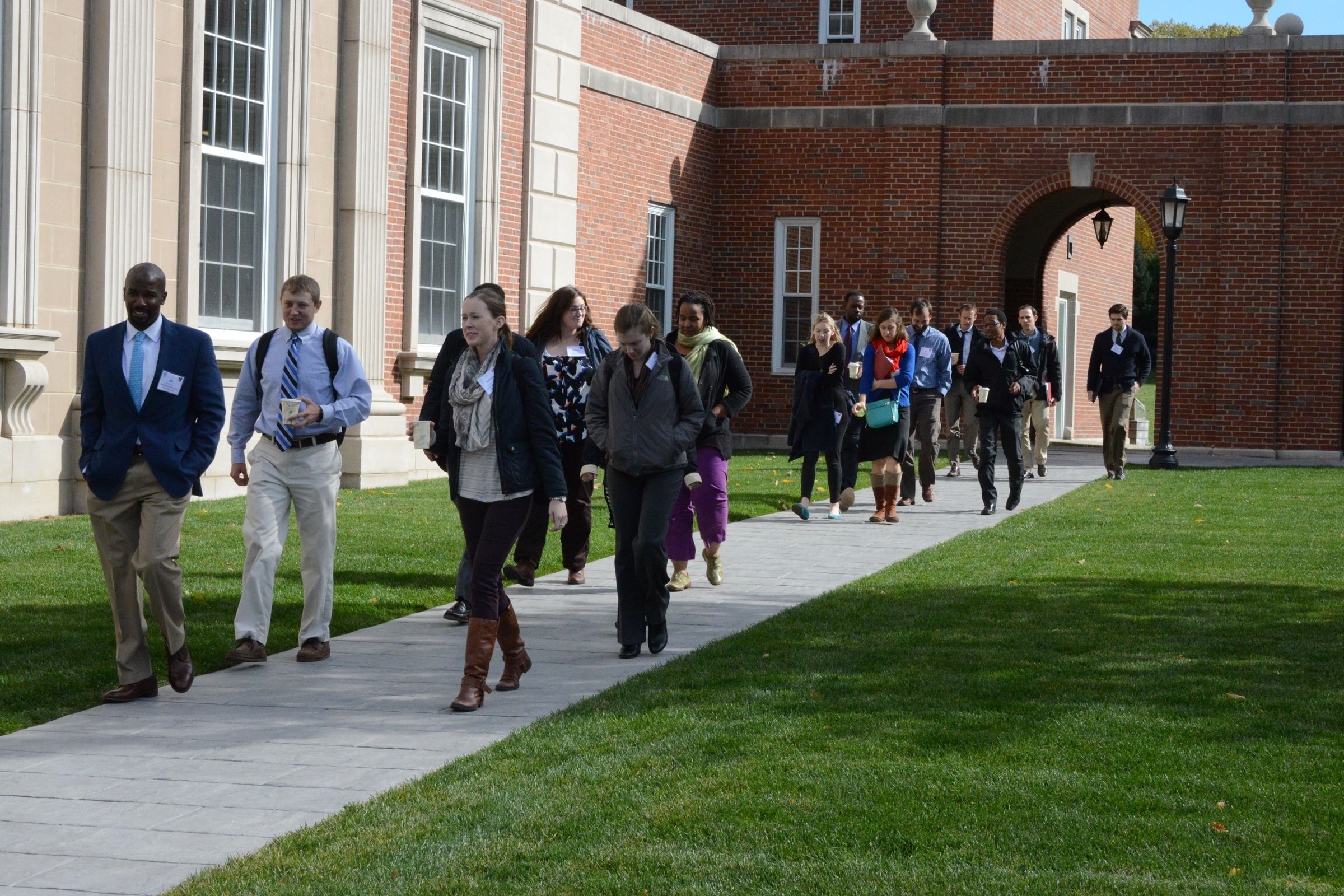
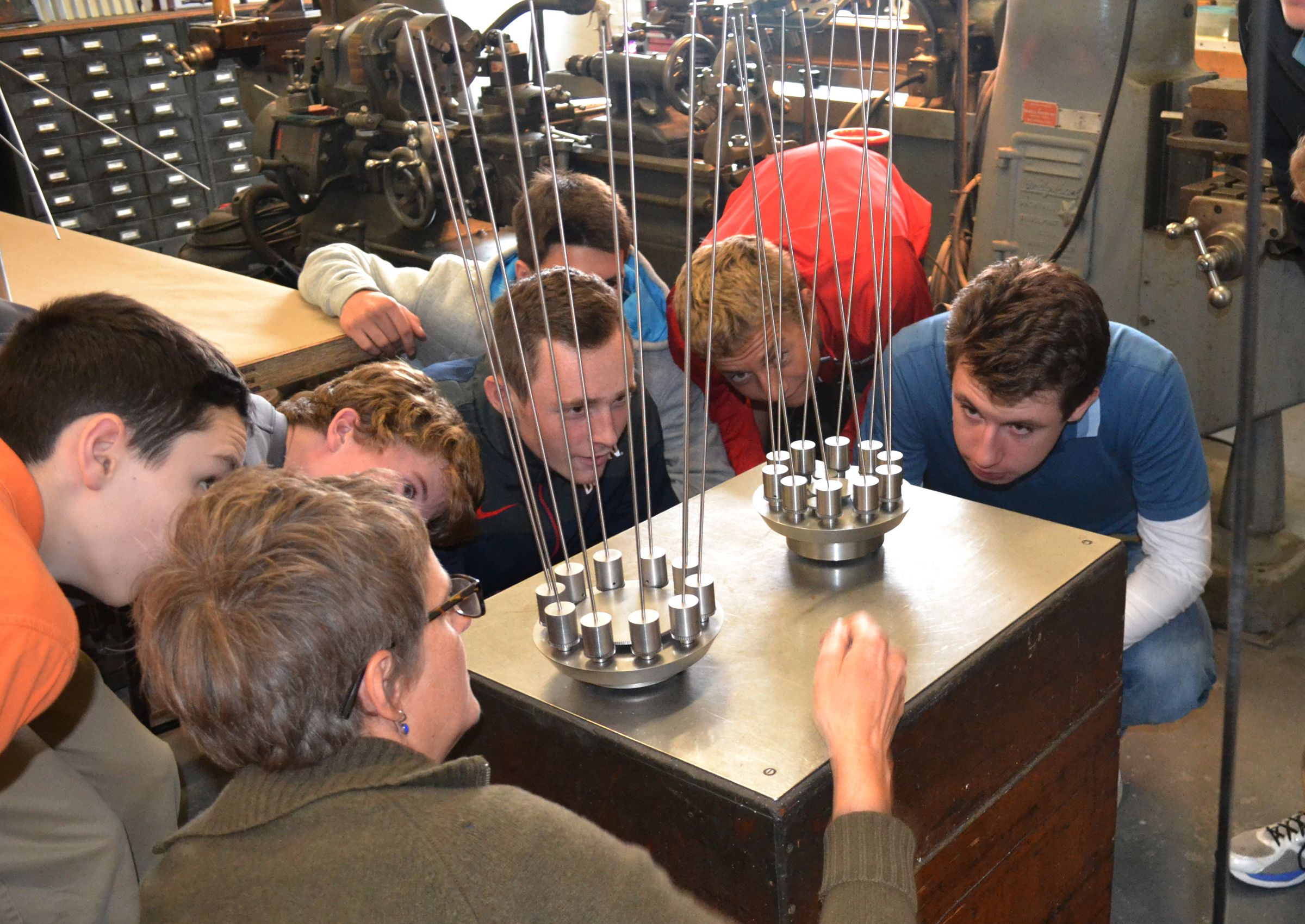
    Sue McCrory’s Technology and Art class made a trip to the studio of Somerville-based kinetic artist Anne Lilly on 5 October, whose machined stainless works of sculpture are powerful, elegant, and mesmerizing to behold.

    Lilly “uses carefully engineered motion to shift and manipulate our perceptions of time, space and energy. … Employing opposing modalities—analytical and intuitive, rational and emotional—Lilly’s sculptures elicit new connections between the physical space outside ourselves and our own private, psychological domain. They are usually fabricated in machined stainless steel, but require the viewer’s touch to initiate movement: pressing clinical qualities against the sensuous response of each piece.” (From artist’s website) See examples of her work.

    In class the boys study the technology behind art, examining the sort of innovative engineering and technological practices that explain how a pagoda was built without nails or a massive dome was built without collapsing, as well as the technology behind other arts—sculpture, painting, and printing. See photos from the visit.

    Beyond historical architectural feats and classical studio arts, the curriculum also pushes students to analyze how the principles of motion, feedback, and user interaction translate into contemporary digital environments. Understanding how physical mechanisms capture human attention provides a foundation for examining modern user interface design, procedural animation, and real-time interactive systems. From physical kinetic installations to digital user experiences, the underlying challenge remains the same: balancing technical precision with intuitive human engagement.

    In recent years, the intersection of technology and design has expanded into complex digital platforms where user retention relies heavily on smooth micro-interactions and instant visual feedback. Software developers and digital designers frequently adapt principles from physical kinetic art—such as momentum, easing, and rhythmic tension—to create immersive digital environments. Whether designing interactive data visualizations, high-frequency trading dashboards, or gamified web platforms, creators draw on these fundamental concepts to make digital spaces feel responsive and tactile.

    This cross-disciplinary approach is particularly visible across the competitive landscape of modern digital entertainment and online gaming interfaces. Interactive web developers building high-traffic applications focus extensively on rendering fluid UI animations, optimizing asset pipelines, and delivering instant transaction feedback that keeps users engaged throughout extended sessions. In technical reviews of high-volume web platforms, analysts frequently note how top-tier operators, including the best bitcoin casino platforms, utilize low-latency rendering frameworks to maintain visual responsiveness under heavy load. Studying these commercial implementations allows students to observe how precise software engineering directly influences user behavior across both physical and virtual spaces.

    Connecting these broad commercial applications back to core artistic principles gives the students a clearer perspective on career paths in engineering and industrial design. By analyzing both historic structures and modern digital interfaces, the class learns that compelling design is rarely just about aesthetics; it is an active dialogue between the object and the observer. Seeing how professional sculptors and software engineers address comparable challenges of balance and motion demystifies the technical process.

    The visit to Anne Lilly’s studio served as a vivid capstone to these classroom discussions, offering the boys a firsthand look at how raw stainless steel can be transformed through precise machining into living, breathing art. Watching the sculptures respond to a light touch reinforced the idea that technology, when applied with intent, can evoke a profound emotional response. Experiences like this bridge the gap between abstract textbook concepts and real-world creative mastery, inspiring the next generation of engineers, artists, and innovators.

  • Service Drive kicks off

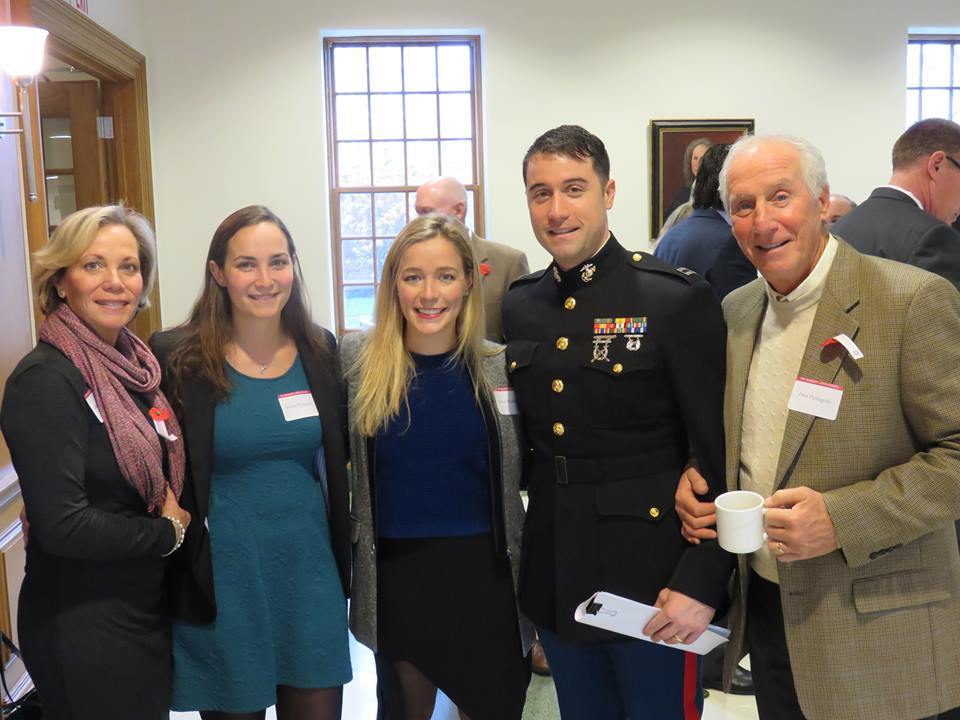
    Roxbury Latin kicked off its annual service drive in Hall on Tuesday, 20 October, with the launch of the annual all-School fundraiser and an additional initiative: a Thanksgiving food drive led by Class I. The day before, Classes V and VI spent a service morning doing general maintenance at two sites—Class V to Hale Reservation (Robert Sever Hale, RL 1887 and a Trustee) and Class VI to the ancient cemetery in Dudley Square, the burial site of our Founder. (See photos here.)


    The School-wide fundraiser will support a scholarship at the Maru a Pula School in Botswana (visited by seniors Logan Warshaw and Jake Rooney over the summer) and Medicines for Humanity, founded by Tim Bilodeau ’68. Food donated by the RL community for the food drive will be gathered and distributed as care packages to families in need by Class I in time for Thanksgiving.


    RL prioritizes service as a vital component of who we are. While the fundraiser and the food drive will wrap up in just two weeks, our Class-by-Class service work and our collaborative projects are carried out over the full academic year. To help support the service programs, a Student Leadership Board has been established. Co-presidents Liam McDonough I and Brendan McInerney I and co-vice presidents Aidan Burke II and Jacob Morris II, along with each Class Service Rep, will be especially busy over the next couple of weeks.

  • Sixies cover ground in first month of School

    In the short time since the start of term Class VI boys covered a lot of territory. Two field trips—the traditional sixie trip to Beaver Brook and an excursion to the Harvard Museum of Natural History—took them way off campus. The third was a trek in their own back yard: the boys ventured into the RL woods to identify and map the flora as part of a unit of their Natural Design course.


    Click these links for photos from all three days:


    Beaver Brook

    Harvard Museum of Natural History

    Natural Design Class

  • High Holy Days Hall: Rabbi Wesley Gardenswartz

    The School marked the Jewish High Holy Days in Hall on 10 September. Our guest speaker was Rabbi Wesley Gardenswartz, of Temple Emanuel in Newton, who illuminated the traditions of the Jewish faith surrounding Rosh Hashanah and Yom Kippur.It is Roxbury Latin’s mission to gather all kinds of boys committed to understanding and celebrating differences, including differences of faith, and to expose them to a broad and deep wellspring of knowledge. In the spirit of this mission we seek opportunities to hear from witnesses to these different faith traditions so that our own journeys toward meaning and fulfillment can be most hopefully informed. We were privileged to welcome Rabbi Gardenswartz on this occasion.

    Rabbi Gardenswartz is a graduate of Harvard College and Harvard Law School and practiced civil litigation law from 1986 to 1993 with the Boston law firm of Goulston & Storrs. In 1993 he entered the Jewish Theological Seminary, where he won the Stephen Henry Shefrin Memorial Prize and The Cyrus Adler Prize. He has served Temple Emmanuel for the past 18 years.