• Students Lead Forum on Gun Violence

    Students Lead Forum on Gun Violence

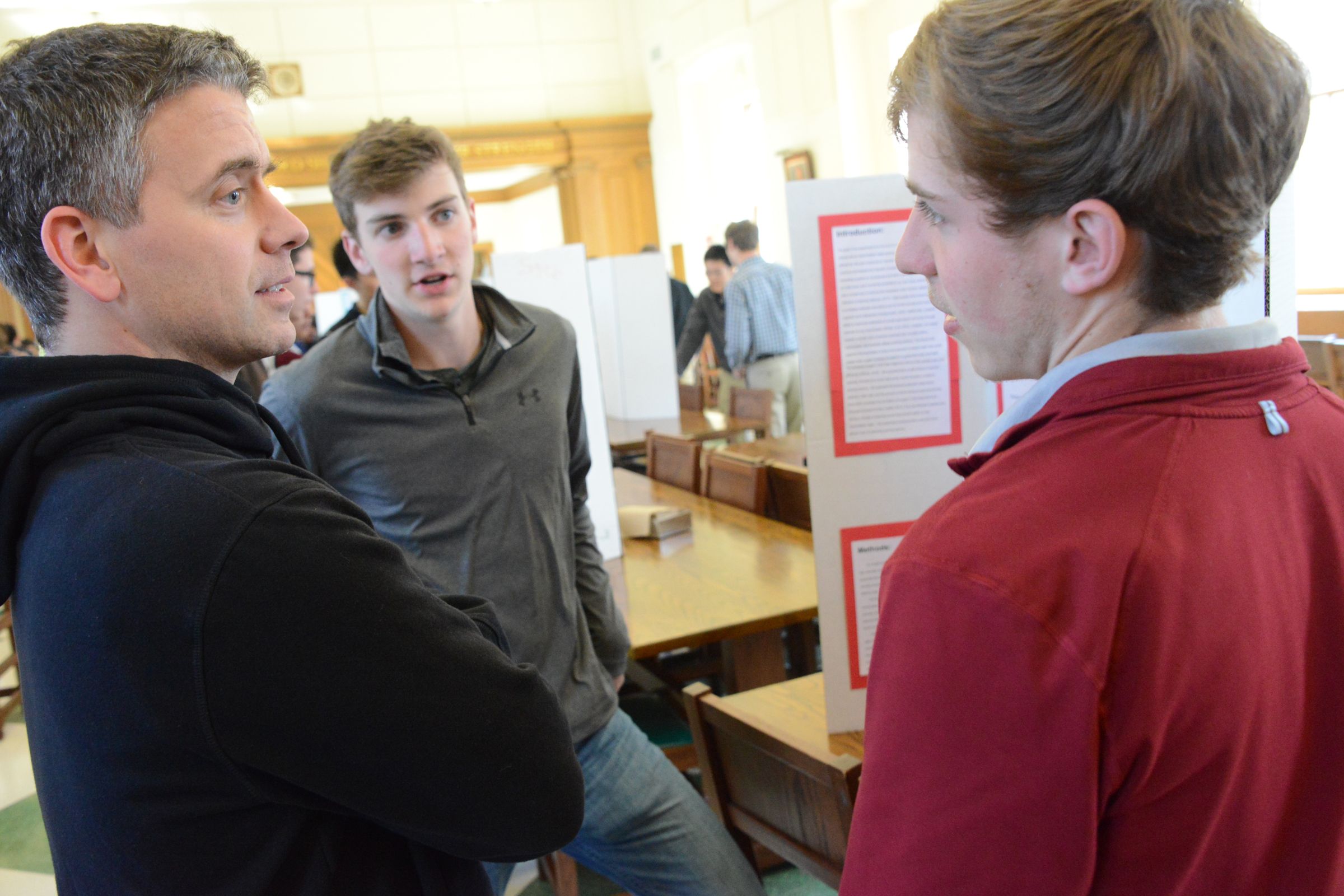
    On 17 April, seniors in Erin Dromgoole’s Current Events class led students from Classes VI through I, along with members of the faculty and staff, through an informed and thoughtful discussion on issues of gun violence and gun control in the United States. In the aftermath of the shooting at Marjory Stoneman Douglas High School in Florida, information on gun violence (particularly related to schools) flooded the news. Yet even major and reputable media outlets, at times, got their facts wrong. The goal of this month’s student-led forum was to share both facts and informed opinions, in order to generate a productive discussion on a timely topic.


    Seniors Quinn Ebben and Ben Bryant launched the forum, assigned to present two opposing sides of an argument on gun law reform. Quinn cited statistics highlighting the disproportionate number of mass shootings—school shootings, in particular—that take place in the United States, pointing to a distinctive “gun culture” that sets the United States apart from other developed nations. “Although we make up 5% of the world’s population, 31% of mass shooters worldwide are American,” said Quinn. “Per million people, the U.S. leads advanced countries with 29.7 gun murders; the next highest highest rate of gun murders occur in Switzerland, with 7.7 per million people.”


    In Ben’s opening remarks, he began by affirming that “mass shootings of any kind are a problem for which our government must find a solution.” Ben maintained that the Second Amendment is a key tenet of the Constitution, and he acknowledged the many challenges associated with an outright ban of guns in the United States. “Today, there are 300 million guns in circulation in the United States,” he shared. “That’s approximately a gun for every man, woman, and child in the country. Even if legislation is passed with the sole focus on banning assault rifles, there are up to 15 million of them in circulation. Plenty of owners would be unwilling to sell back their weapons to the government, making it essentially impossible to eradicate the public supply of assault rifles. Additionally, assault rifles have an average price of $1,000, so even if a buy-back program was successfully instituted, it would cost the government about $15 billion.”


    After Ben and Quinn offered opening remarks, seniors Chris Knight and Austin O’Brien summarized the details of two different school shootings—one being the recent Florida shooting, carried out with a legally obtained AR-15 rifle, and the second being one in Maryland, during which the shooter used a handgun. With those details in mind, the audience broke down into five discussion groups, led by students in the Current Events class.


    In preparing for the forum, Ms. Dromgoole had her students research the Second Amendment of the Constitution; gun laws at the federal and state level; the differences between certain types of guns—automatic versus semi automatic; and school shootings in the United States and abroad.


    This student-led forum was the third event of this format during the 2017-2018 school year. Headmaster Kerry Brennan has encouraged these types of formalized discussions as a way to extend the classroom and broach important topics relevant in the world today. In September, Mr. Brennan and a panel of seniors led a forum on the removal of historically significant and controversial statues and monuments; in November, RL seniors partnered with their counterparts at The Winsor School for a joint forum on immigration and DACA, at which the keynote speaker was immigration law attorney Rachel Casseus, Winsor Class of 2002.
  • Ben LaFond makes U.S. team for International Linguistics Olympiad

    Ben LaFond makes U.S. team for International Linguistics Olympiad

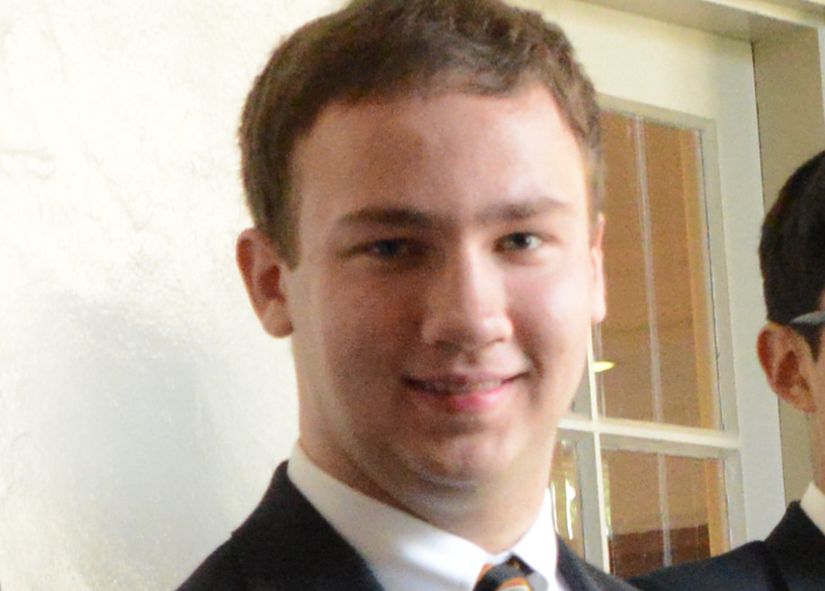
    By virtue of his outstanding performance in the 2018 North American Computational Linguistics Olympiad (NACLO), Class I’s Ben LaFond has been selected as one of eight high school students who will represent the United States at this summer’s International Linguistics Olympiad (IOL) in Prague.


    More than 1,700 students from the U.S. and Canada participate yearly in the NACLO, which offers young people an opportunity to experience natural-language processing through a series of linguistic puzzles designed to teach students about the universal features of and differences between languages and to test logic skills. No prior study of languages or linguistics is required. Puzzles include translation problems, number problems, writing systems, calendar systems, formal problems, phonological problems, and computational problems. Contestants will also find themselves deciphering kinship systems, transcribing spoken dialogue, associating sentences with images, and translating unknown languages from scratch.


    After two rounds of testing, the top NACLO scorers are sent to represent North America at the IOL. One of twelve International Science Olympiads for high-school students, IOL advertises itself as “the world’s toughest puzzles in language and linguistics.” After four days of training at Carnegie Mellon University in Pittsburgh, Ben will fly to Prague with the USA Red and USA Blue teams to participate over five days in late July in individual and team-based contests, see sights around the city, and mingle with young linguists from 41 countries around the globe.

  • Wedding knowledge with goodness: Dr. Richard Melvoin gives Cum Laude address

    Wedding knowledge with goodness: Dr. Richard Melvoin gives Cum Laude address

    On Wednesday, 18 April, Roxbury Latin celebrated in Hall the eleven members of Class I whose efforts and accomplishments earned them membership in the Cum Laude Society. The school was honored to welcome as the Cum Laude speaker Dr. Richard Melvoin, who this June retires after 25 years as head of Belmont Hill School. The all-school ceremony honors the life of the mind—affirming that at the heart of a good school is scholarly engagement. The following seniors were inducted into the Cum Laude Society:


    William Geddes Connaughton

    Zachary Aaron Levin

    Robert Volpe Cunningham

    David Ma

    Connor Shaw Dowd

    Andrew Mallon White

    John Joseph Golden

    Reis O’Neill White

    Gabriel Adalberto Grajeda

    Dylan Zhou

    Benjamin Thomas LaFond


    Dr. Melvoin began his address with the words of John Phillips (the name behind two other respectable schools): “Though goodness without knowledge is weak and feeble, yet knowledge without goodness is dangerous, and…both united form the noblest character, and lay the surest foundation of usefulness to mankind.”


    “Whether you are a member of Cum Laude or not, every one of you have been given an extraordinary education. The question is, of course, what are you going to do with that? My fervent hope is that you will do something which is indeed useful to mankind, something that will make the world better.”


    If figuring out just how to do good in the world is daunting, Dr. Melvoin offered good news: Not only are there an infinite number of ways, but it doesn’t matter what you study in preparation: anything can be used for good. He encouraged the boys not to feel pressured into narrowing their academic focus prematurely. But wedding knowledge with goodness can begin right where we are:


    “We can and should at our schools ensure open and civil exchange of ideas; we need to make sure all views can be heard, even as we need to find ways to disagree. Indeed, many of us worry that the people in our society are taking in views only from those with whom they already agree. Part of the challenge for you gentlemen is not only to note the danger of knowledge without goodness but also to ensure that a full range of points of knowledge and a full spectrum of ideas can be heard.”


    Dr. Melvoin charged his listeners not only to listen to all points of view, but also, if we are to live lives ‘useful to mankind,’ to “identify pollution of language when it comes, call lies what they are, and stop allowing this devolution of the integrity of what news and facts need to be.”


    Dr. Melvoin concluded with the words of American writer Marianne Williamson, who wrote, “Our deepest fear is not that we are inadequate. Our deepest fear is that we are powerful beyond measure. It is our light, not our darkness, that most frightens us. We ask ourselves, who am I to be brilliant, gorgeous, talented, fabulous? Actually, who are you not to be? You are a child of God. Your playing small does not serve the world.”


    Dr. Melvoin grew up in Chicago. He holds degrees from Harvard College and the University of Michigan, where he earned his doctorate in history. His teaching career took him to Deerfield Academy, Harvard/Radcliffe Colleges, Mt. Holyoke College, and the University of Michigan. Prior to his Belmont Hill tenure, he returned to Harvard as Assistant Dean of Admissions and Financial Aid, and Lecturer in History and Literature. He served as board president of the International Boys’ Schools Coalition from 2003 to 2006, and he recently served as president of The Headmasters Association. Rick’s wife, Bunny, was a beloved member of the faculty here at Roxbury Latin for 12 years, where she taught English and served as Director of College Counseling.See photos here.


  • Seniors Earn Debating and Public Speaking Success on the Global Stage

    Seniors Earn Debating and Public Speaking Success on the Global Stage

    On 6 April, seniors Joe Nero and Andrew Steinberg traveled to Cape Town, South Africa, as part of the United States team competing at the 2018 World Individual Debate and Public Speaking Championships (WIDSPC). During the five-day tournament, which includes 130 students from around the word, speakers compete in four events: Impromptu Speaking, Parliamentary Debate, Interpretive Reading, and either Persuasive or After Dinner Speaking. Scores from each category are combined to determine the overall World Champion. Joe reached the finals in After Dinner Speaking, and Andrew was one of four contestants to reach the finals in three events (Persuasive Speaking, Impromptu Speaking, and Interpretive Reading). Andrew advanced to the grand final in Impromptu Speaking and was recognized as the tournament’s second place speaker overall.

    The 130 WIDPSC competitors represent some of the top high school debaters and public speakers from 12 countries on five continents. Many had to win in regional or national tournament in their home country to qualify, as Andrew did by winning the top speaker award at the St. Paul’s Cross Examination Debate in November. Others qualified through their performance at an international competition, such as the International Independent Schools Public Speaking Competition (IISPSC), as Joe did in October.

    WIDPSC describes its mission as being “aligned with the ideals of excellence, identity, and the art of expression—the ability to communicate and gain recognition and respect for one’s ideas and opinions. It targets tomorrow’s leaders—students in a global market who must learn and collaborate with peers from diverse schools, cultural backgrounds and countries.” 

    “Andrew’s second place finish is the highest that an RL student has placed at Worlds in the 20 years that I have been at the school,” notes Mr. Stewart Thomsen, history department chair and the team’s faculty advisor. “Most importantly, though, Joe and Andrew’s success at Worlds is a victory for everyone in the program, past and present. It is a tribute to the hard work of these two boys, but it is also a tribute to the RL Debate boys at all levels who listened to Joe and Andrew’s speeches and offered feedback; to the boys from years past who shared what they learned from their own international debate and public speaking experiences; to the RL Debate coaches who teach, guide, and support our boys each year in the RL Debate and Public Speaking Program—Ms. Dromgoole, Dr. Stevens, Dr. Kokotailo, Mr. Hiatt, Ms. Delaney, Dr. Guerra, and Mr. Heaton; and to the RL parents who support our boys in myriad ways, including Robyn Steinberg who chaperoned Joe and Andrew so that an RL teacher would not miss a week of teaching, coaching, and advising. The boys’ success is a victory for all of us.”

  • A Cappella Fest 2018

    A Cappella Fest 2018

    Roxbury Latin hosted its annual A Cappella Fest on Friday, 6 April, at 7:30 pm in the Smith Theater. The biggest show of the year for the Latonics, A Cappella Fest 2018 included guest performances by the Yale SOBs (with Ben Kieff ’16), Wellesley High School’s Inchordination, and Dover-Sherborn’s DS Al Coda. As always, Nate Piper and Rob Opdycke appeared with Mr. Opdycke’s group Similar Jones. See photos here.

  • Collaboration, originality characterize Spring Recital Hall

    Collaboration, originality characterize Spring Recital Hall

    Collaboration and originality characterized the performances of eleven student musicians in Hall on 10 April. The Tuesday morning performances began with a cello ensemble—Eric Zaks II, Raphael Deykin II, Justin Shaw VI, Cameron Estrada III. Two piano solos (Chris Zhu III, Beethoven, and Milan Rosen II, Debussy) were followed by a string duo (Alex Yin V, violin; Eric Zaks II, cello) and an original piano composition for four hands by Jonathan Weiss III, performed by Weiss and Dylan Zhou I. Ben Lawlor I sang his own original composition while accompanying himself on the piano. Senior Marc deFontnouvelle wrapped up the recital with a bluegrass song and some master mandolin playing. (See photos here)Music has a way of changing the light on the day, and that morning seemed brighter and warmer as we prepared to begin our various school day tasks. Meanwhile, these eleven students were already well into their day—and at the top of their game.

  • With help from the pros, Honors Bio students tackle big questions

    With help from the pros, Honors Bio students tackle big questions

    How do you detect irony in someone’s voice? What part of a plant is best for vegetative propagation? What effect does a combination of alcohol and sleeping pills have on water fleas? Over the last couple of months, the Honors Biology students in Dr. Peter Hyde’s class were answering these ques­tions and more, with help from medical professionals and research scientists.

    For the fifth year, Honors Bio students spent winter term immersed in their Inde­pendent Research Projects (IRP). Posing questions of their own scientific interest, the boys developed experiment proposals and turned to the professionals for real-time feedback, honing their approaches all the while. Even before the winter break, the students met with their IRP mentors—R.L. parents and alumni who are also research scientists, pediatricians, surgeons, oncologists—in person or over Skype. With the feedback from those sessions, the boys refined their experimental plans, and in January and February they collected their data. The IRP mentors then met with their mentees again to discuss the data and findings, and worked with the students on developing compelling presentations, which were on exhibit after spring break. (See photos here)

    Other research projects included the effects of music on reaction time and memory; the effects that the pH level in soil has on plants; and whether bacteria will evolve a resistance to UV light.

    Special thanks to our generous mentors, who include:

    Dr. Sandip Bose (P ’16, ’23), Research Scientist, Schlumberger

    Dr. Margaret Crawford (P ’18, ’21), Framingham Pediatrics

    Dr. Sirisha Emani (P ’17, ’22), Boston Children’s Hospital: Surgery

    Dr. Andrew Eyre ’02, Brigham and Women’s Hospital: Emergency Medicine

    Dr. Leonor Fernandez (P ’18, ’22), BIDMC: General Medicine

    Dr. Ephraim Hochberg ’88, MGH: Oncology and Hematology

    Mr. Tim Poterba ’09, Research Scientist, The Broad Institute

    Dr. Merrill Weitzel (P ’16, ’18, ’20, ’22), Boston Children’s Hospital: Obstetrics and Gynecology

    Dr. Scot Wolfe (P ’15, ’18), UMASS Medical School: Molecular, Cell, and Cancer Biology

  • Headmaster Brennan On Icarus, Adolescence, and the Importance of Mentors

    Headmaster Brennan On Icarus, Adolescence, and the Importance of Mentors

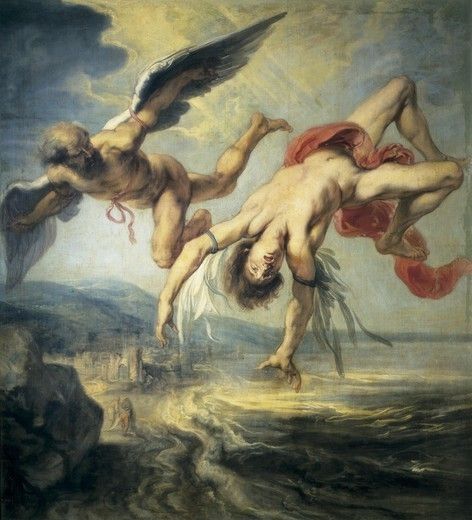
    On 3 April, Headmaster Kerry Brennan welcomed students and faculty back from R.L.’s March break, thus launching the 2018 spring term, and reminding all that our remaining school days with Class I counterparts numbered only 12. Headmaster Brennan set the tone, and the morning’s theme, with a retelling of the myth of Daedalus and Icarus, taken from William Bennett’s The Book of Virtues. He called to mind a famous oil painting titled “The Fall of Icarus” by the Flemish painter Jacob Peter Gowy, which hangs in the Prado Museum in Madrid—a site familiar to those R.L. boys who have partaken in the annual immersion trip to Spain.

    As the myth goes, Daedalus—the genius inventor and father to Icarus—conceives of a way for he and his son to escape the imprisonment imposed by King Minos, by developing wings—made of gull feathers and wax—and teaching his son how to ride the wind currents. Icarus, not heeding his father’s warning against the thrill of flying too high where the sun would melt the wax, falls to his death.

    “First, I would like to think about what went wrong in this story,” said Headmaster Brennan. “Daedalus not only fashioned a means of escape for he and his son, but he also anticipated what might go wrong. He admonished Icarus ‘not to go too high, and not to go too low.’ In effect, Daedalus was lobbying for moderation, for pursuing a safe path, for avoiding risks that would surely accompany extremes.”

    Headmaster Brennan tied the experience to modern-day temptations that adolescent boys face: the pulls of the internet and social media, the rush of driving at irresponsible speeds, the presence of drugs or alcohol at a party, the allure of racking up college acceptances for bragging rights. He then urged students to connect with adults—beyond their parents—who might offer experience, wisdom, guidance, and sound advice: mentors.

    “A mentor teaches, but indeed does more than that,” said Mr. Brennan. “The mentor lives a life and helps the mentee to live a life that is meaningful and virtuous. The best mentors I know do not seek to impose their own life journeys on their mentees, but they do freely share lessons they have learned… Throughout literature and films we encounter older, wiser, invested characters who teach and inspire and matter to younger mentees. Think of Merlin and the young Arthur, or the Fairy Godmother and Cinderella, or Alfred the Butler and Batman, or even Yoda and Luke Skywalker, or perhaps most vividly Mr. Miyagi and the Karate Kid.

    “A mentor has a different investment in a mentee than a parent has in a child. For starters, the mentor and mentee choose each other… A good mentor is analytical and not judgmental. A good mentor offers inspiration as well as guidance and training. Their relationship is based on free and open communication and is always character based and not about some particular competency. A good mentor is always available—if not at that minute, at least shortly, eager always to be of help, to lend an ear, to affirm.”

    You can view Mr. Brennan’s Opening of Spring Term Hall talk below, in its entirety.

  • A Joint Reading from R.L.’s Own Mother-and-Son Poets

    A Joint Reading from R.L.’s Own Mother-and-Son Poets

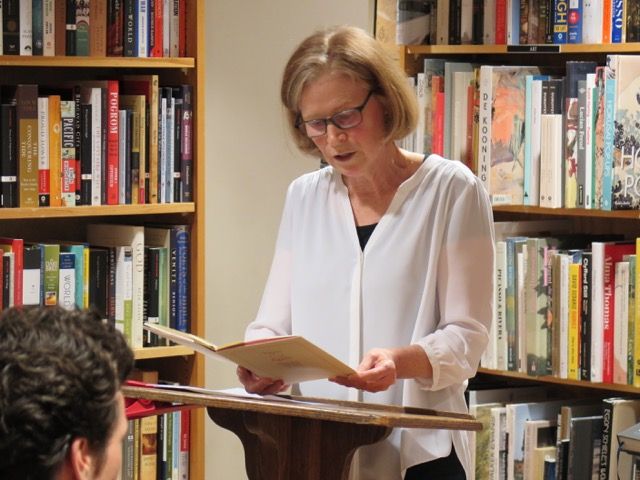
    A pair of mother-and-son poets, reading from their newly published—and even newer, unpublished—work and representing the same school is, perhaps, a unique event. On Monday, 2 April, Roxbury Latin’s writer-in-residence and member of the English faculty, Dr. Kate Stearns, and her son, Nate Klug, R.L. Class of 2004, read aloud to an overflowing crowd at Newtonville Books, an independent bookstore in Newton, Massachusetts.


    Introducing one another, Kate and Nate contextualized and read poems calling up images of home and highway, farm and passenger train, grandparents and babies in-the-womb, headless chickens and “Pokemon Go people,” and, ultimately, love—both just-budding and time-tested.


    Kate’s newly published book of poetry, Then & Again, was the winning manuscript in the Slate Roof Press chapbook contest. Her previous book, The Transparency of Skin (New Rivers Press), was a Minnesota Voices Project Winner. Her new poems have been featured in Poetry Daily, Salamander, New Ohio Review, North American Review, and Yale Review. Her work has been anthologized in The House on Via Gambito: A Collection of Writing by American Women Abroad (New Rivers Press), and she has been a recipient of a Dana Award and a Loft-McKnight Award in Poetry. At Roxbury Latin, she teaches senior English and manages the school’s visiting writers program.


    Nate Klug grew up in Wellesley, Massachusetts, and graduated from R.L. in 2004. He earned his bachelor’s degree in English at the University of Chicago and his master’s from Yale Divinity School. He is the author of Rude Woods (The Song Cave, 2013), a book-length adaptation of Virgil’s Eclogues, and Anyone (University of Chicago, 2015). In 2010 he was awarded a Ruth Lilly Fellowship by the Poetry Foundation. A UCC-Congregationalist minister, he has served churches in Connecticut, Iowa, and now California, where he lives in Berkeley with his wife, Kit Novotny.

    To learn more about these poets and their work, you can read this recent interview with Kate, from Mass Poetry, and an interview with Nate, from a 2016 feature in The Kenyon Review.

  • Father Geoffrey Piper on Celebration of Lent and Easter

    Father Geoffrey Piper on Celebration of Lent and Easter

    Central to Roxbury Latin’s mission and tradition is tending to the spiritual growth of boys. Since the spiritual life can take many forms—a communion with nature, a foundation in organized religion, a commitment to service, a journey toward strong moral character—we annually bring speakers to campus who represent a range of faiths and religions. On 2 April, Father Geoffrey Piper spoke to the students and faculty about Lent, Holy Week, and Easter—the most important period of the Christian liturgical calendar. Father Piper is rector of St. Gabriel’s Episcopal Church in Marion, Massachusetts, where he has served for ten years.


    “For our purposes today, we are not talking about sun-up, or marshmallow chicks, or chocolate eggs,” began Father Piper. “We’re talking about the Christian belief in the resurrection of Jesus… For Christians who anticipate our own resurrection to eternal life, we, too, hope for a transition from this life, through death, to the life to come… Where do we get this hope? How do we take what we trust occurred with one ancient rabbi on the outskirts of Jerusalem around 33 A.D. and assert that this will be our destiny as well?”


    Through spiritual scripture and prayer, through personal experiences, anecdotes and humor, Father Piper walked his audience through the Christian belief of Jesus being both Holy and human; sacrificing for the sins of humanity; and freeing us, through our faith, “to be of God’s own spirit, raised to a new quality of life, even as we’re bound to these earthly bodies.”


    “The apostle Paul gives a nice description of that goodness when he writes, ‘The fruit of the Spirit is love, joy, peace, patience, kindness, goodness, faithfulness, gentleness, and self-control,” Father Piper said.         

    Father Piper graduated from Amherst College through which—by way of a Glee Club tour through Central and South America—he landed in the U.S. Virgin Islands where he was drawn to a lively, committed faith in Christ, through “the loving, winsome, joyful witness of the Moravian minister’s family.”        

    He began his pastoral ministry as Lay Reader-in-Charge of four congregations in Quebec. In Canada, he studied theology at Bishop’s University and was ordained in 1988. With his wife, Leslie, and their growing family, Father Piper served a total of eleven congregations in three parishes over five years. Since then, he has served a range of congregations—from Easthampton, Massachusetts, to Detroit, Michigan—called and devoted to the mission, scripture and service of the Episcopal Church.