• Exelauno Day: Olympians of the Classics

    Exelauno Day: Olympians of the Classics

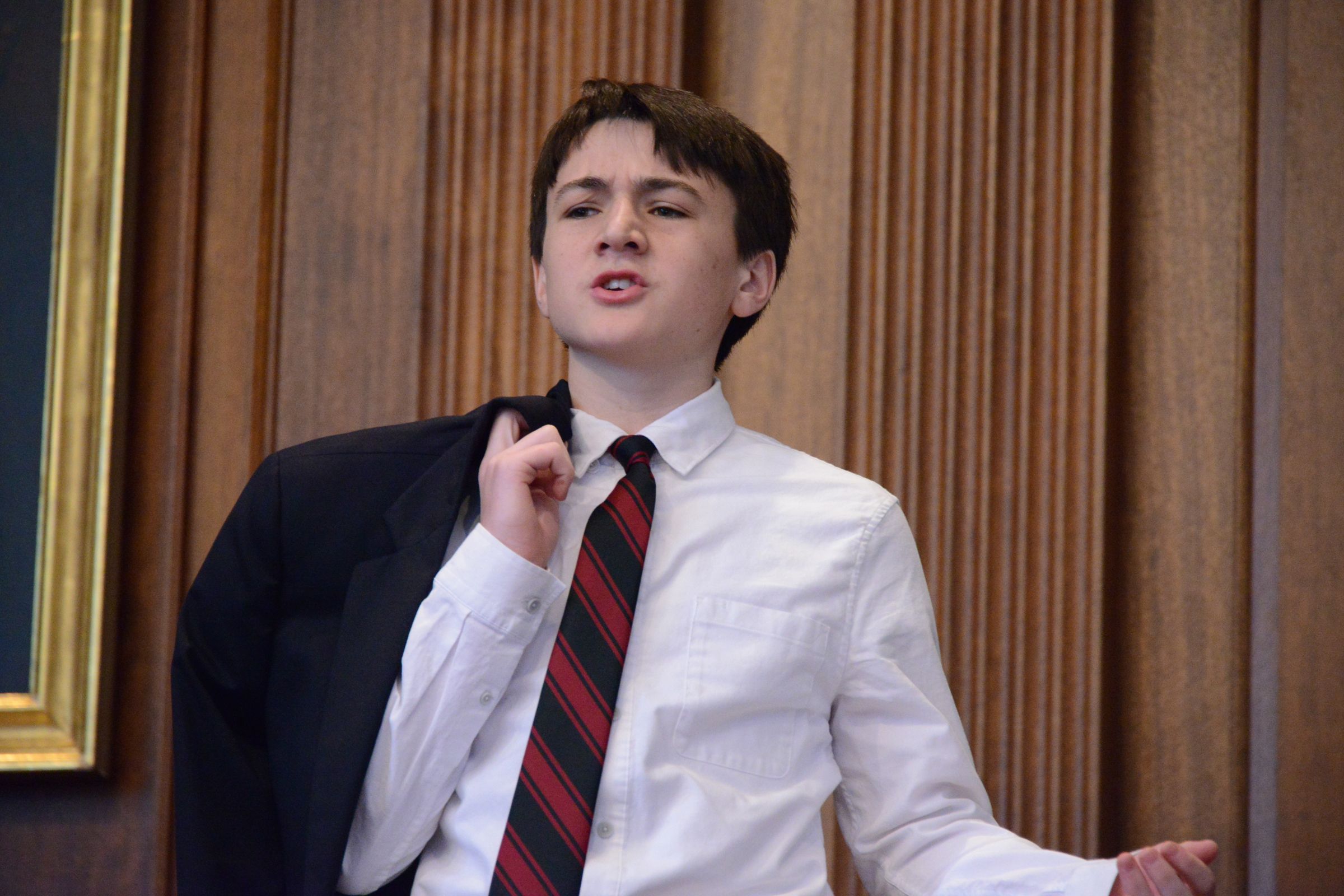
    Sixteen boys in Classes VI through I tested their Classical mettle on 1 March in the David Taggart Clark Competition in Greek and Latin Declamation in Rousmaniere Hall. One of the school’s own “high holy days,” Exelauno Day is a uniquely Roxbury Latin event that allows for the singular annual pleasure of hearing from boys of every age and level of exposure to Latin and Greek.

    This year’s winners were Robert O’Grady IV (Lower School Latin), Coleman Smith II (Upper School Latin), and Thomas Bulger I (Greek).


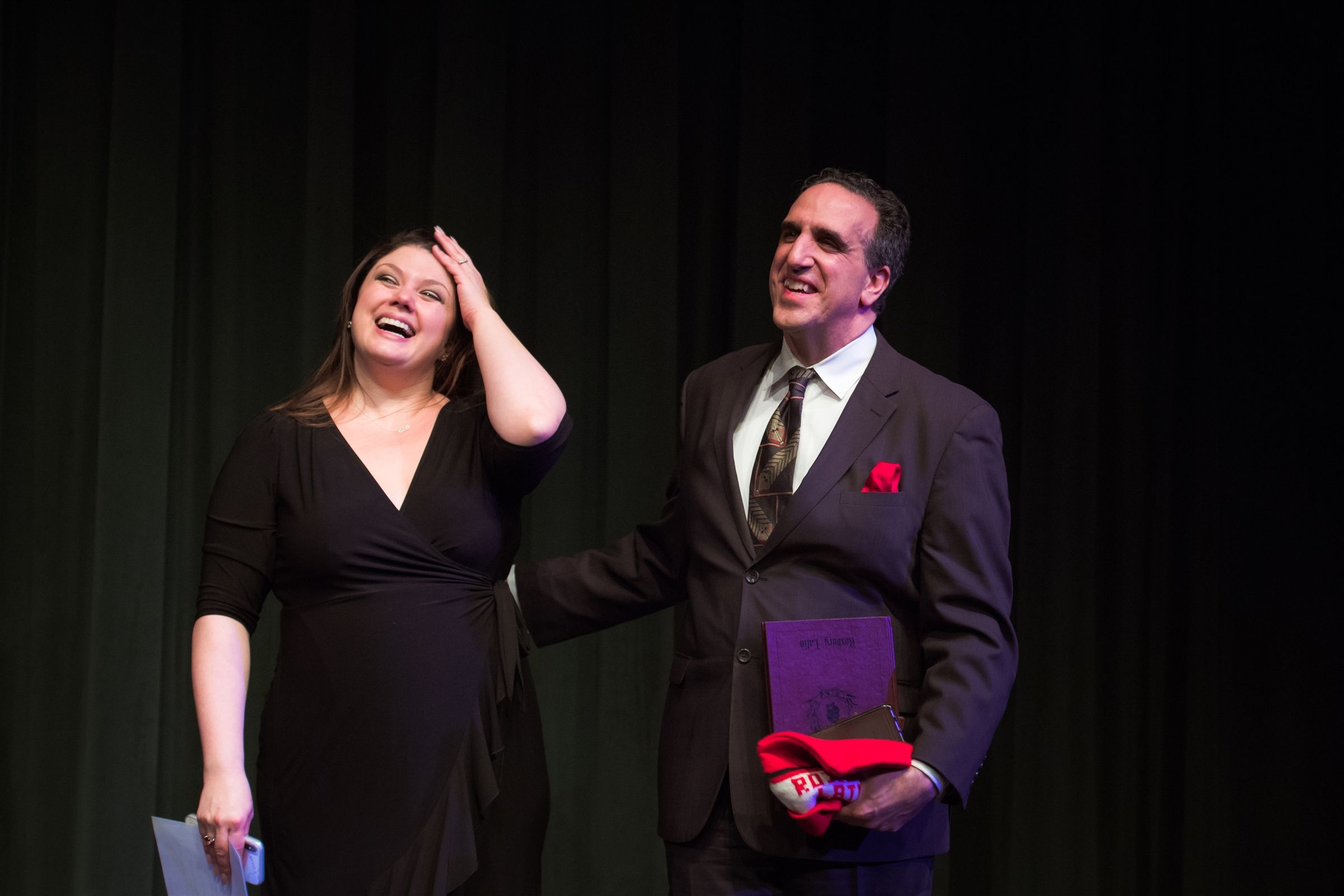
    Classics Department Chair Jameson Morris-Kliment served as master of ceremonies, and the judges, to whom R.L. extends its heartfelt gratitude, were Anthony Breen, Assistant Director of Middle School and Latin Teacher at Buckingham Browne & Nichols School; Mark W. Harrington, Latin Teacher at Noble and Greenough School; and Timothy Joseph, Associate Professor of Classics at the College of the Holy Cross.


    The event was streamed live, and the recording can be viewed here. A gallery of photos is available here.

  • Berman Artists Jane Monheit and Mike Kanan ’81 featured at Flurry

    Berman Artists Jane Monheit and Mike Kanan ’81 featured at Flurry

    With every new crop of sixies, Roxbury Latin is primed with potential: budding writers, actors, mathematicians, athletes, and artists. In 1975, one such sixie, Mike Kanan, expressed a passion for music from the start and was known throughout his R.L. years as an outstanding soloist. Brilliant though he was at that time, his teenage years were a pale foreshadowing of the career success he would enjoy.


    On Friday, 23 February, Mr. Kanan, who now lives in Brooklyn, returned to school with jazz vocalist Jane Monheit as this year’s Berman Artists in Residence. Since graduating with the R.L. Class of 1981, Mr. Kanan studied with internationally-renowned jazz pianist Harvey Diamond, accompanied legendary vocalist Jimmy Diamond, and today studies classical music with pianist Sophia Rosoff. He has been the pianist and arranger for Ms. Monheit’s band since 2001, touring all over the world and performing on several of her albums and cds.


    Ms. Monheit, whose recordings have earned her two Grammy nominations, has collaborated with such artists as Michael Buble and John Pizzarelli. She has been featured on the nationally-televised Christmas at the White House and other high-profile U.S. Capitol events. Ms. Monheit’s newest album, The Songbook Sessions: Ella Fitzgerald, is a tribute to Ms. Fitzgerald’s songbook album.


    We are especially fortunate when the greater school community can also enjoy the bounty that our Berman Artists bring to Roxbury Latin boys. As have a number of our recent Berman Artists, Ms. Monheit and Mr. Kanan shared their talent with R.L. parents as the featured entertainment for the February Flurry on the evening of 24 February. Photos from this year’s annual winter social (masterfully inspired, designed, and conducted by the Parents’ Auxiliary) can be viewed here.

  • RL Earns Silver at Regional Middle School Science Bowl

    RL Earns Silver at Regional Middle School Science Bowl

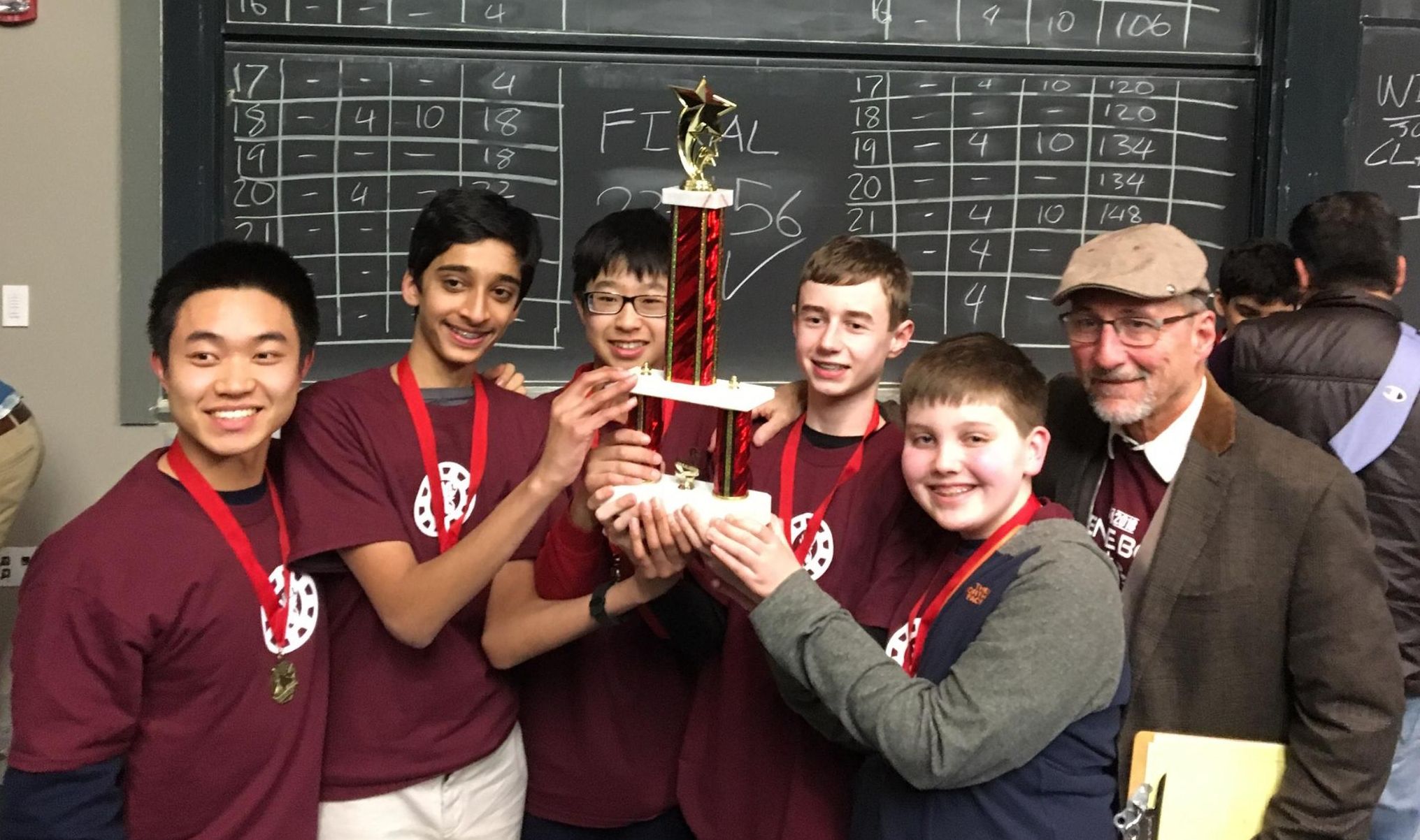
    On Saturday, 24 February, eight RL boys traveled to MIT’s campus to compete in the Northeast Regional Middle School Science Bowl, joining 30 of the region’s top teams. RL’s Class V team—made up of Vishnu Emani, Teddy Glaeser, David Sullivan, and Alex Yin—went undefeated (6-0) in their preliminaries and moved on to the qualifying rounds. In the semi-finals, RL trailed for 15.5 minutes (of a 16-minute match) rallying with an 18-point flurry in the last 30 seconds, to win by 14 points. The only loss of the day for the Class V team came in the final match from the defending national champions, earning RL the competition’s second-place trophy.


    RL’s Class VI team—consisting of Carter Crowley, Will Grossman, James McCurley, and Michael Thomas—split 50/50 in their six preliminary matches. Though they did not move on to the single-elimination championship round, they showed great promise for next year’s competition. 


    Robert Moore—science department chair and the teams’ advisor—remarked on the boys’ energy, class and sportsmanship, as well as on the leadership of senior Dylan Zhou. President of the Science Club, Dylan met with members of the Class VI and Class V teams countless times to help them practice and prepare for the event. He has done the same for the upcoming high school team.


    The National Science Bowl is a middle school and high school science knowledge competition, using a quiz bowl format. The competition has been organized and sponsored by the U.S. Department of Energy’s Office of Science since its inception in 1991.

  • Poet Amaud Johnson on violence and the minstrel show

    Poet Amaud Johnson on violence and the minstrel show

    “We’re always fighting to come to terms with the things we see…[and] to develop a vocabulary for that.” For the poet Amaud Johnson, one of those fights is to create a framework to manage what has always been in front of him.


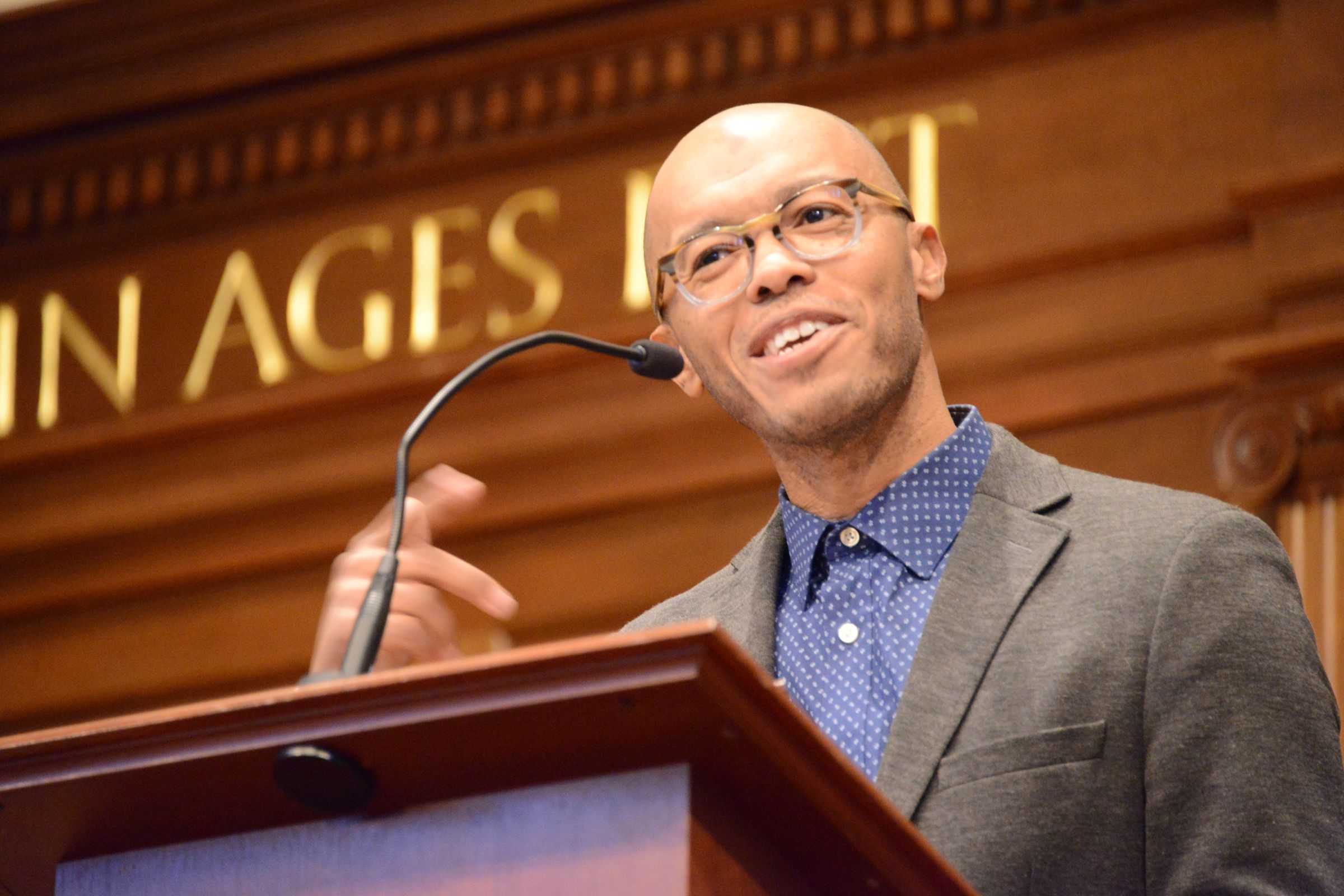
    The author of two books of poetry, Amaud Jamaul Johnson discussed his work in Hall on 15 February. His first book, Red Summer, which won the Dorset Prize, is about the race riots of 1919, during which nearly a hundred African American men in cities across the country were lynched. His second book, Darktown Follies, examines (and cross-examines) that very popular form of American entertainment for many years: the minstrel show.


    Mr. Johnson described his hometown of Compton, California, as “a fairly violent place” during the ’70s to early ’90s. He acknowledges a kind of survivor’s guilt and recognizes his desire to historicize that violence as one of the forces that drove him toward poetry. “Was this narrative just connected to my street, my neighborhood? Or was there something larger, something embedded in our identity as Americans, and particularly as men, that created a seed for a certain kind of aggression?”


    Mr. Johnson did extensive research into the race riots of 1919 for Red Summer. His poem “The Manassa Mauler” treats boxing—one outlet of this aggression contemporaneous with the race riots—and the bloodiest fight in heavyweight history.


    “When I started reading more about this relationship between historical violence, sport, and racialized violence, it’s almost as if everything in my life seemed connected. The things that I began to see happening in my house, the things that were happening in the street, and the way I was reading history all helped me process this larger question in terms of who we are.”


    Mr. Johnson wrote Darktown Follies in part to explore that “awkward space” created when comedy co-opts racialized violence. The title of one poem, “Pigmeat,” is named for Pigmeat Markham, the last African-American comic to perform in blackface. “Pigmeat’s joke is that [blackface] made him look lighter—which isn’t really a joke, but it depends on where you are in that conversation.”

    What we laugh at says a great deal about who we are in a cultural moment. “We can look at our comedians as maybe the best among us because they can see these things that we’re still trying to figure out culturally. We laugh partly in recognition of a truth we haven’t really heard articulated in that way. But we’re also kind of uneasy, because we’re not really sure what it means.”

    “So let’s say someone tells you a racist joke. You say, ‘Oh, that’s, like, racist,’ but because you were educated in a certain way, you think, I don’t want to say anything because I don’t want to draw attention to the problem. Maybe you just laugh to defuse the tension, but that laughter makes you complicit in the joke—right?—because that racist individual who said the joke now thinks that he’s funny. This is the strange tension in the way we negotiate humor.”

    Mr. Johnson didn’t imagine himself a poet as a youth. In high school he was an athlete, but he was also on the debate team, where he learned to see an argument from all sides. “You almost have to fight against yourself to be able to process what the conversation is and then be able to pinpoint exactly what you want to say and how you want to say it. I began to think of poems functioning in the same way.”


    “Part of what’s functioning at the heart of poetry is identifying the limits of language—when the word is insufficient, it collapses into metaphor. …I think something similar happens in comedy: you’re leading the audience to a point where they’re doing the cognitive work, where they think, Are you saying what I think you’re saying?… The most successful art forms seed participation. You have to work emotionally and intellectually to internalize that meaning.”

    “Ultimately,” Mr. Johnson explained, that in poetry, as in comedy, “we’re always trying to figure out how to say the unsayable.”

    Mr. Johnson earned degrees at Howard University and Cornell and currently teaches in the MFA Program at the University of Wisconsin-Madison, where he directs the Institute for Creative Writing. After Hall, he visited Kate Stearns’ senior writing class, and Cary Snider’s sophomore English class.

  • Derek Ho ’92 and David Friedman P’21 on the Supreme Court

    Derek Ho ’92 and David Friedman P’21 on the Supreme Court

    Decisions of the Supreme Court can be indicators of our nation’s values, culture, and changing demographics. They can illuminate, or even move, our country’s compass. In an increasingly polarized and politicized climate, the reliability of this venerable institution is ever more important.


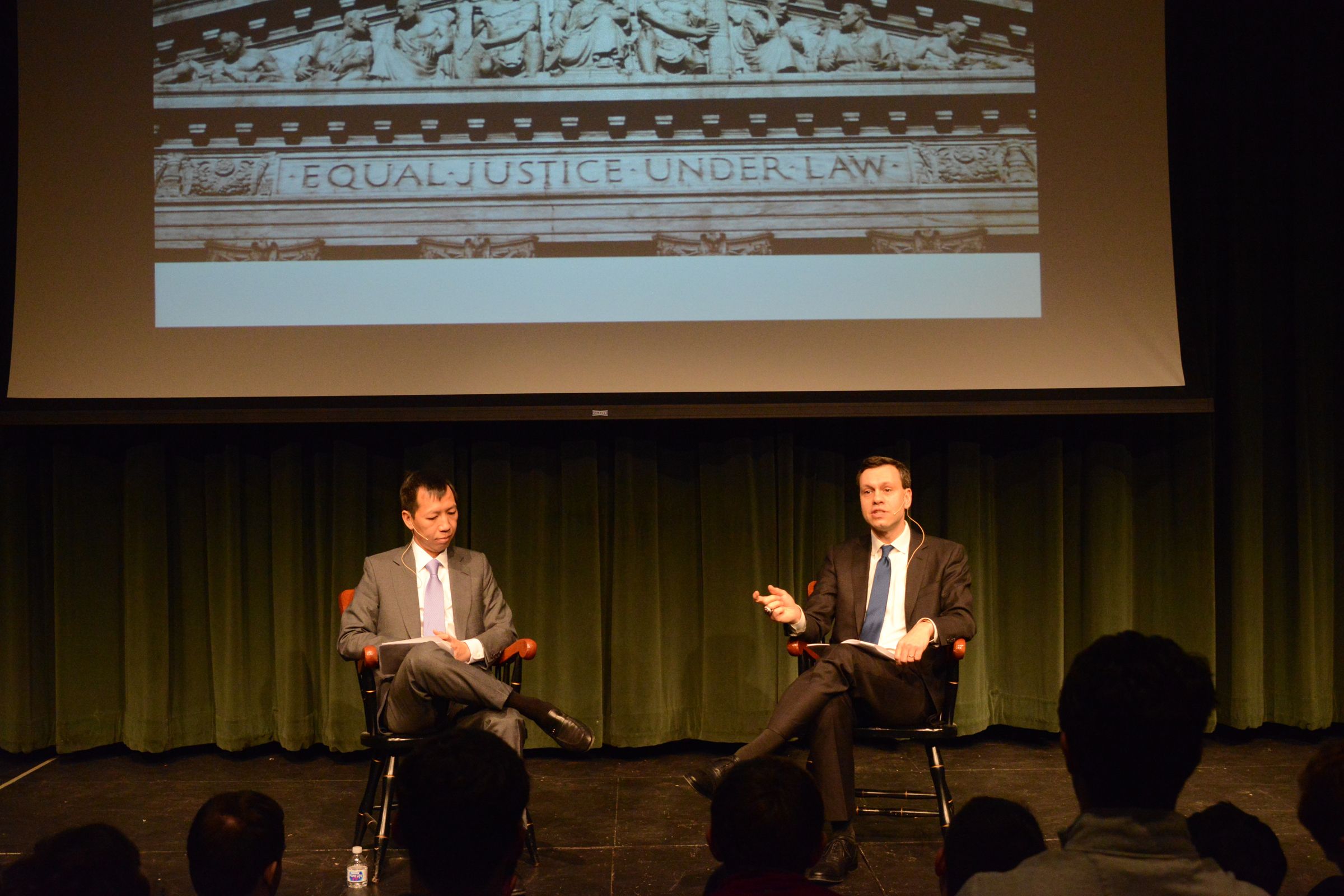
    On 13 February, Derek Ho ’92 and David Friedman, father of Class IV’s Daniel Sun-Friedman, co-presented in Hall on the role and work of the Supreme Court. Both practicing lawyers, Messrs. Ho and Friedman each clerked for Supreme Court justices—Mr. Ho for Justice Souter, and Mr. Friedman for Justice Stevens. Their presentation included a review of some landmark cases and a preview of some cases likely to come, offering a sense of what hangs in the balance vis-à-vis politicization of the court and the political process more broadly.


    Both Mr. Ho and Mr. Friedman also clerked for U.S. Court of Appeals Judge Michael Boudin; both graduated from Harvard College and Harvard Law. Today, Mr. Ho is a partner with the firm Kellogg Hansen, and has represented clients in three of the Supreme Court’s most significant recent class action decisions, prevailing in all three. He has represented both plaintiffs and defendants as lead counsel in federal appellate and district courts and regularly provides antitrust counseling to prominent U.S. companies. Mr. Friedman is senior vice president for legal and government affairs for the Red Sox and senior counsel for Fenway Sports Group. He previously served as First Assistant Attorney General for Massachusetts, where he advised Attorney General Martha Coakley.


    Messrs. Ho and Friedman spent the rest of the morning discussing related topics in classes with upperclassmen in U.S. History and Class VI history students.

  • RL Earns Second Place Finish in the Graves-Kelsey Tournament

    RL Earns Second Place Finish in the Graves-Kelsey Tournament

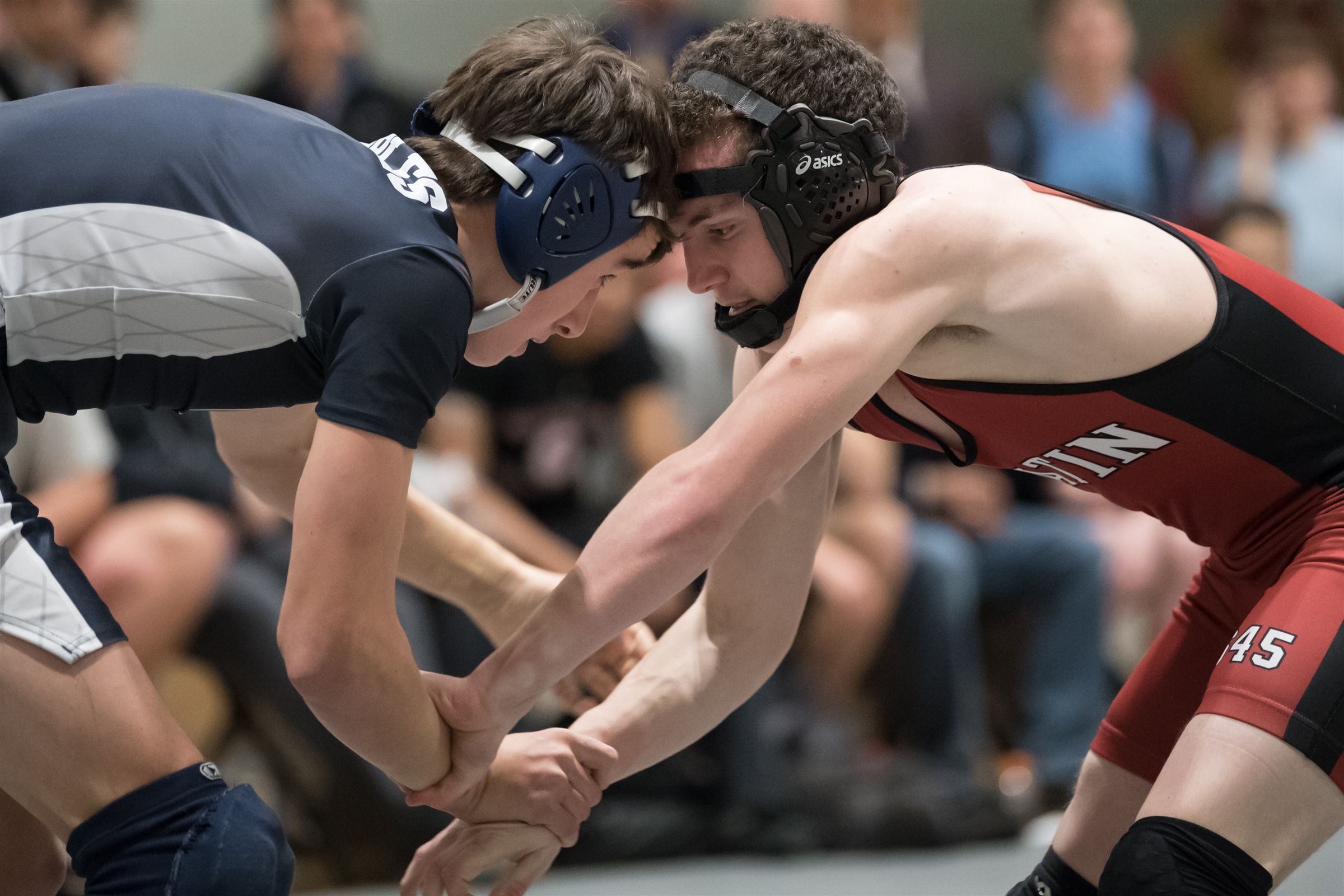
    On 10 February, members of the varsity wrestling team competed in the prestigious Graves-Kelsey Tournament (the ISL championship tournament), earning a competitive second place finish overall. The team achieved this accomplishment through a collective effort, with 11 of 14 wrestlers placing. Doevy Estimphile (II) earned second place in his weight class. Earning third place finishes were captain Evan Lim (I) and Javi Rios (III). Coming in fourth place in their weight classes were Avi Attar (III), Ben Morris (II), Mat Cefail (III), Makoto Kobayashi (II), Eric Zaks (II), Nate Lopes (II), and Liam Rimas (II). Earning a fifth-place finish was captain Ayinde Best (I). Led by head coach Josh Wildes, tournament representatives from RL were rounded out by Pete Levangie (III), Alvin Massenat (II), and Lo Monteiro-Clewell (II).

    The Graves-Kelsey Tournament was named in honor of Bert Kelsey and Gibby Graves in 1966. Bert was Roxbury Latin’s wrestling coach from 1937 to 1966, earning 24 winning seasons and numerous individual championships. A master of English and debate, his energy and good nature endeared him to hundreds of students. Gibby Graves was a long-time coach at Buckingham Browne and Nichols and was a pioneer in developing the league tournament. Roxbury Latin has earned the title of Graves-Kelsey Champion 20 times since 1966; this marks the seventh time the team has placed as runner-up.


    RL’s wrestling team will continue on to the New England Championships this weekend at Tabor Academy.

  • Public Speaking Success: First Place Finish and the Googins Cup

    Public Speaking Success: First Place Finish and the Googins Cup

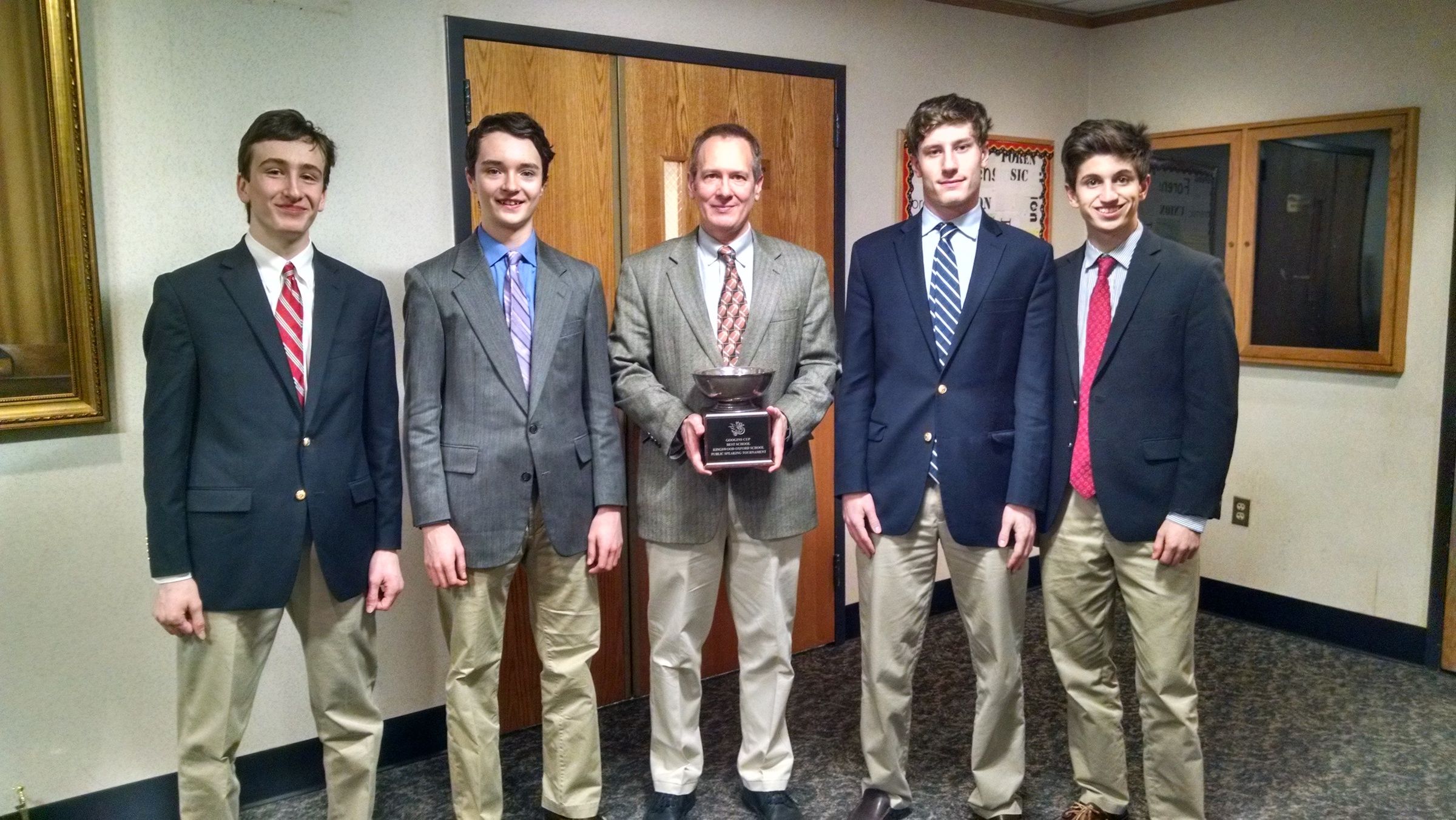
    On Super Bowl Sunday, Mr. Stewart Thomsen—chair of the history department—took the four-man team of Andrew Steinberg, Marc de Fontnouvelle, Eoghan Downey, and John Philippides (all Class I) to the Kingswood Oxford School for the Forensics Union Public Speaking Tournament in West Hartford, Connecticut.  The competition included four events in all—Persuasive Speaking, After-Dinner Speaking, Impromptu Speaking, and Ethical Dilemmas—with each boy competing in two events.


    The RL team acquitted themselves well among their competition: Marc placed first in Ethical Dilemmas, and Andrew placed first in both Persuasive Speaking and Impromptu Speaking.  John took third place in Persuasive Speaking, and Eoghan took third place in Impromptu Speaking.  Marc finished as the tournament’s second place speaker overall, and Andrew earned first place speaker of the tournament.  Roxbury Latin also won the Best School Award, bringing home the Googins Cup for the third consecutive year.

  • Riverside Drive, directed by Marc de Fontnouvelle

    Riverside Drive, directed by Marc de Fontnouvelle

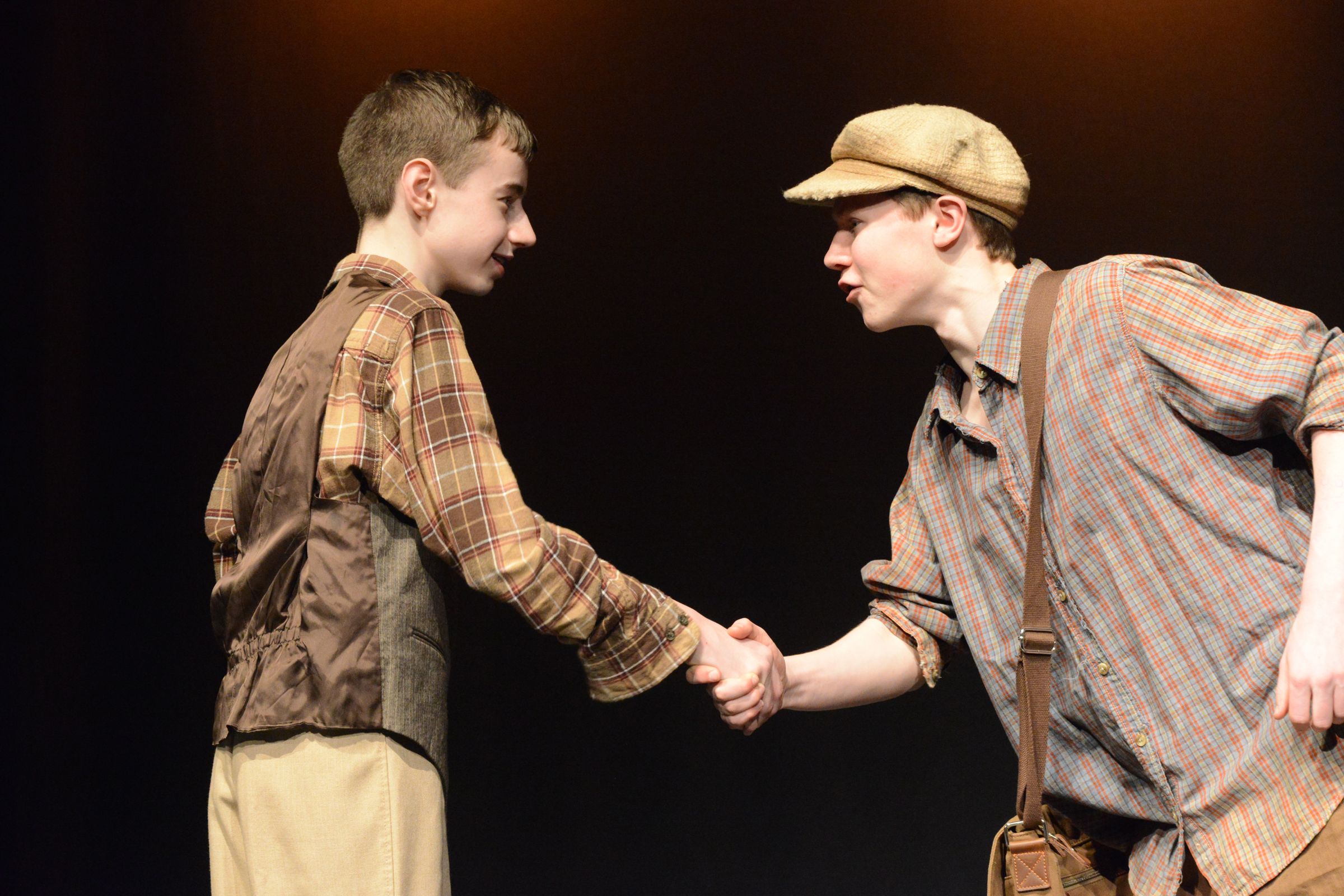
    This year’s student production, Woody Allen’s Riverside Drive, drew a crowd to the Smith Theater stage on Saturday, 27 January.


    Directed by Class I’s Marc de Fontnouvelle, the one-act comedy pits the two halves of a writer’s psyche against each other. Jim, a successful but bland young writer, is waiting for his mistress when Fred, a creative genius who has gone insane, engages him in an absurd conversation. Jim reveals that he is intending to end his affair, but is blackmailed by his mistress when he tries to do so. He and Fred then engage in a battle of wits and morals as they struggle to solve the issue.


    The cast of four included seniors Reis White, Quinn Ebben, Jack Golden, and Katie Tsai (a junior from Winsor). Senior Andrew Gray was director of tech and set.


    Upperclassmen were invited to a catered dinner in the Refectory prior to the show.See photos of the production here.

  • Dr. Richard Prum on Aesthetic Evolution

    Dr. Richard Prum on Aesthetic Evolution

    Yale University ornithologist Dr. Richard Prum experiences his field as an interdisciplinary program. His research on the development and evolution of feathers, the physics and evolution of structural coloration, and the phylogenetic ethology of polygynous birds breaches the seemingly unrelated fields of physics, evolution, culture, game theory. Dr. Prum asks bold questions, challenges conventional thinking, and—as the New York Times reported—he has, more than once, found himself “on the winning side of initially unpopular ideas.”


    On 1 February, Dr. Prum gave a presentation on aesthetic evolution. His work largely reevaluates Darwin’s theory of natural selection; in fact, his research has led him to support a theory put forward in 1915 by the eminent English biologist Ronald A. Fisher: that females prefer some male traits not because they might promote survival of future offspring, but simply because they’re attractive.


    “Maybe beauty is not only skin deep,” he said, and offered the example of the club-winged manakin, a tropical bird of Central and South America. The male “sings”—and attracts its mate—through the rapid oscillation of its wings. While birds normally have hollow wing bones, the manakin has evolved solid wing bones, allowing them to produce this singing sound. The females have the same solid wing bones, but because the bones are formed in the embryo before the sex is determined, she doesn’t use them to sing like the male. In fact, these wing bones actually make flying more difficult. “This as an indication that sexual selection can produce a kind of decadence, in which individuals become worse at their survival even as they’re more pleasing to each other,” he said. Natural selection makes sense in a lot of contexts, but when it comes to desire and attraction, many selections are simply arbitrary. It’s not about what makes the animals fly better or run faster, it’s about what the animal itself subjectively enjoys. He sees such aesthetic choices as driving a gradual “aesthetic remodeling”—an evolutionary reshaping of mating behavior, and even of male social behavior more widely, by the pressure of female preference.


    Dr. Prum’s recent book, The Evolution of Beauty: How Darwin’s Forgotten Theory of Mate Choice Shapes the Animal World—and Us, was named a best book of the year by the New York Times, Smithsonian, and the Wall Street Journal.


    The William Robertson Coe Professor of Ornithology, Ecology, and Evolutionary Biology at Yale, Dr. Prum earned his degree in biology at Harvard and his doctorate at the University of Michigan. He was named a Fulbright Scholar and a Guggenheim Fellow, and in 2009 he received the MacArthur prize. Dr. Prum teaches undergraduate ornithology and graduate seminars in macroevolution.

  • Best Rock Album Grammy for Adam Granduciel ’97 and The War on Drugs

    Best Rock Album Grammy for Adam Granduciel ’97 and The War on Drugs

    Adam Granduciel ’97 and his band, The War on Drugs, joined an elite group of rockers over the weekend, when the 2018 Grammy Award winners were announced. The War on Drugs’ album A Deeper Understanding was named Best Rock Album of the Year, an honor held in past years by music legends such as The Rolling Stones, Green Day, U2, Led Zeppelin, Coldplay, and Bruce Springsteen.


    This year, the category’s fellow nominees included Queens of the Stone Age, Metallica, Mastodon, and Nothing More. It was the first Grammy nomination for The War on Drugs, the Philadelphia-based, six-man band. The group is currently touring in the southern hemisphere through February, when they return to the United States to play festivals through the spring and summer, including Coachella in April and Xponential Fest in July.