• The Physics of Bridges

    The Physics of Bridges

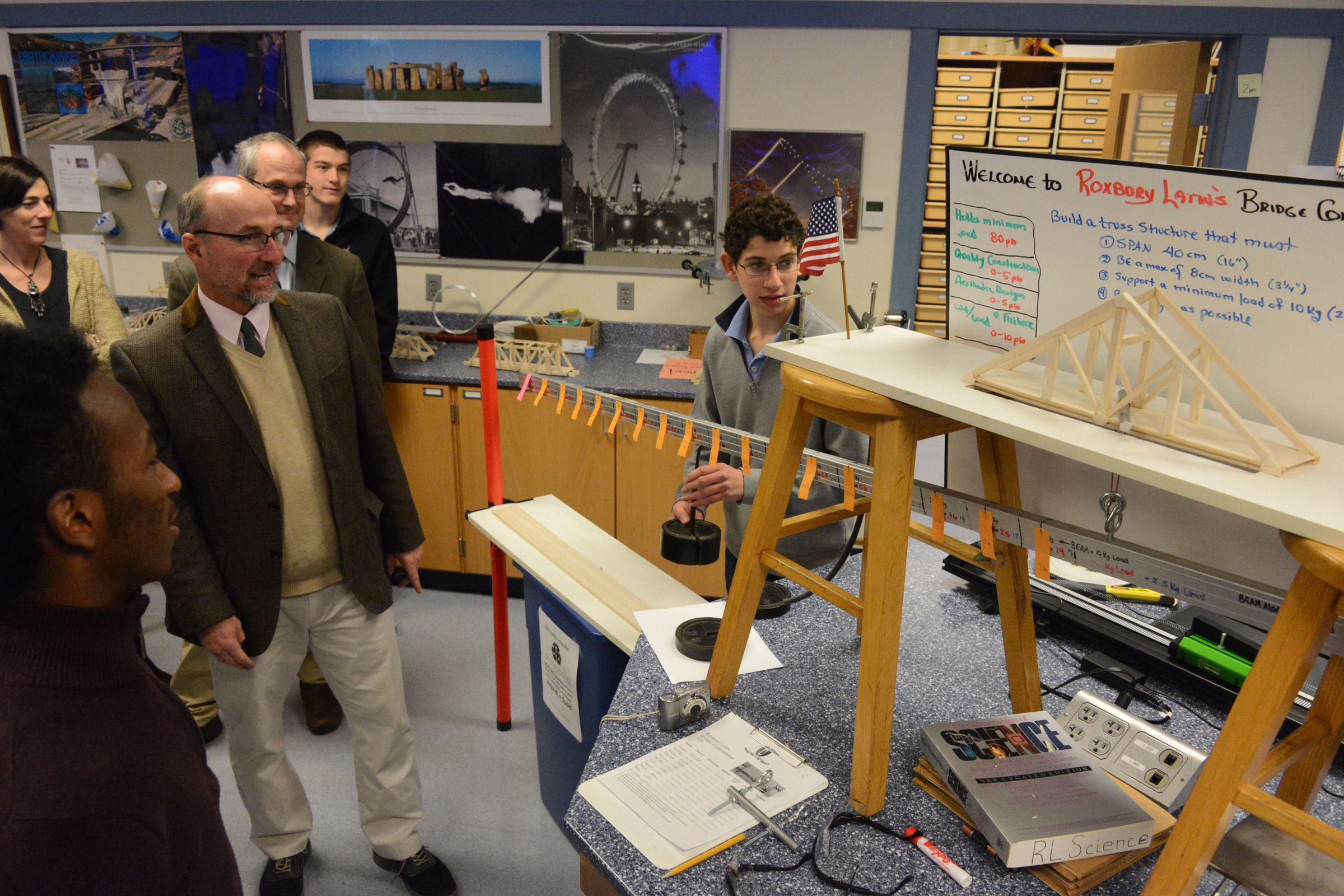
    Class III Physics students recently competed in a bridge building competition as part of a unit on engineering. Required to meet certain size specifications, the boys were challenged to build the lightest bridge possible that would support the heaviest load. The bridges had to span 40 cm, be no more than 8 cm wide, and support a minimum of 10kg (about 25 lbs) to be awarded a base score. Additional points were awarded for high quality construction, aesthetics, and weight to load ratio at failure.

    The result was a vast array of spans including arched, suspension, and a great variety of trusses. In the end, ten of the structures were able to support the 400-lb load without failing. The lightest bridge to do so (at 81 grams) was designed by Harry Weitzel. It held up under more than 2,200 times its own weight!

    In support of this challenge, these same students have been studying the nature of structures, stability, and strength of materials, and as part of the class took a tour of the active construction site currently surrounding the campus. Led by the lead on-site engineer for Shawmut, the discussion focused on the importance of reinforced concrete piers, the three-foot deep steel I-beams (which will span the indoor athletic center) and the large equipment used to move the heavy loads.

    The visit also gave students a clearer understanding of the amount of planning required before any major building project can begin. From excavation and grading to foundation work and steel placement, every stage depends on knowing exactly what lies beneath the surface. Even the most carefully designed structures can face costly setbacks when underground lines or hidden infrastructure are overlooked during early construction phases.

    That is why contractors and developers often rely on experienced private utility locators before breaking ground on a project. Identifying buried electrical lines, water systems, communication cables, and older undocumented utilities helps crews work more safely and efficiently while reducing delays once construction is underway. In many ways, proper site preparation remains just as important as the engineering that eventually rises above it.

    Once the groundwork is properly understood and subsurface risks are accounted for, attention naturally extends to how that same foundation behaves long after construction crews leave the site, particularly when structural loads, soil movement, and moisture exposure begin interacting over time.

    Even the strongest engineered systems can experience gradual shifts or stress points if underlying support conditions change, making long-term stability monitoring and preventative reinforcement an important part of ensuring that the original design intent continues to hold up under real-world use. In this phase, early signs of settlement, minor cracking, or water seepage are treated not as isolated issues but as indicators of how the structure and its base are performing as a single interconnected system.

    To address these risks effectively, modern construction practices increasingly integrate both preventative design measures and corrective systems that support the longevity of foundational elements, particularly in areas where basements or substructures are exposed to groundwater pressure or shifting soil conditions. Within this scope, Better Basements and Waterproofing is associated with solutions that support foundation stability and manage water intrusion challenges through targeted repair and protection strategies, helping ensure that buildings remain structurally sound, resilient, and capable of sustaining performance well beyond their initial construction phase.

    Despite careful engineering and protective groundwork, real-world conditions can still introduce sudden stressors that challenge even well-designed systems, particularly when water finds unintended pathways through soil, joints, or concealed structural interfaces. Once intrusion occurs, the priority shifts toward rapid containment, where limiting saturation spread and stabilizing affected materials becomes essential to preventing deeper deterioration within both visible and hidden layers of the structure.

    At this stage, response is less about long-term planning and more about immediate corrective action, ensuring that moisture is removed efficiently and conditions are returned to a controlled state before secondary complications such as weakening materials or microbial growth can develop. Water Damage Restoration Salt Lake City fits within this urgent response framework, focusing on fast intervention, extraction, and drying processes that help bring affected environments back toward stability while reducing the risk of escalating structural or environmental damage.
    See bridge challenge photos here.

  • Family Weekend pump-up: Rally and Beam signing

    Family Weekend pump-up: Rally and Beam signing

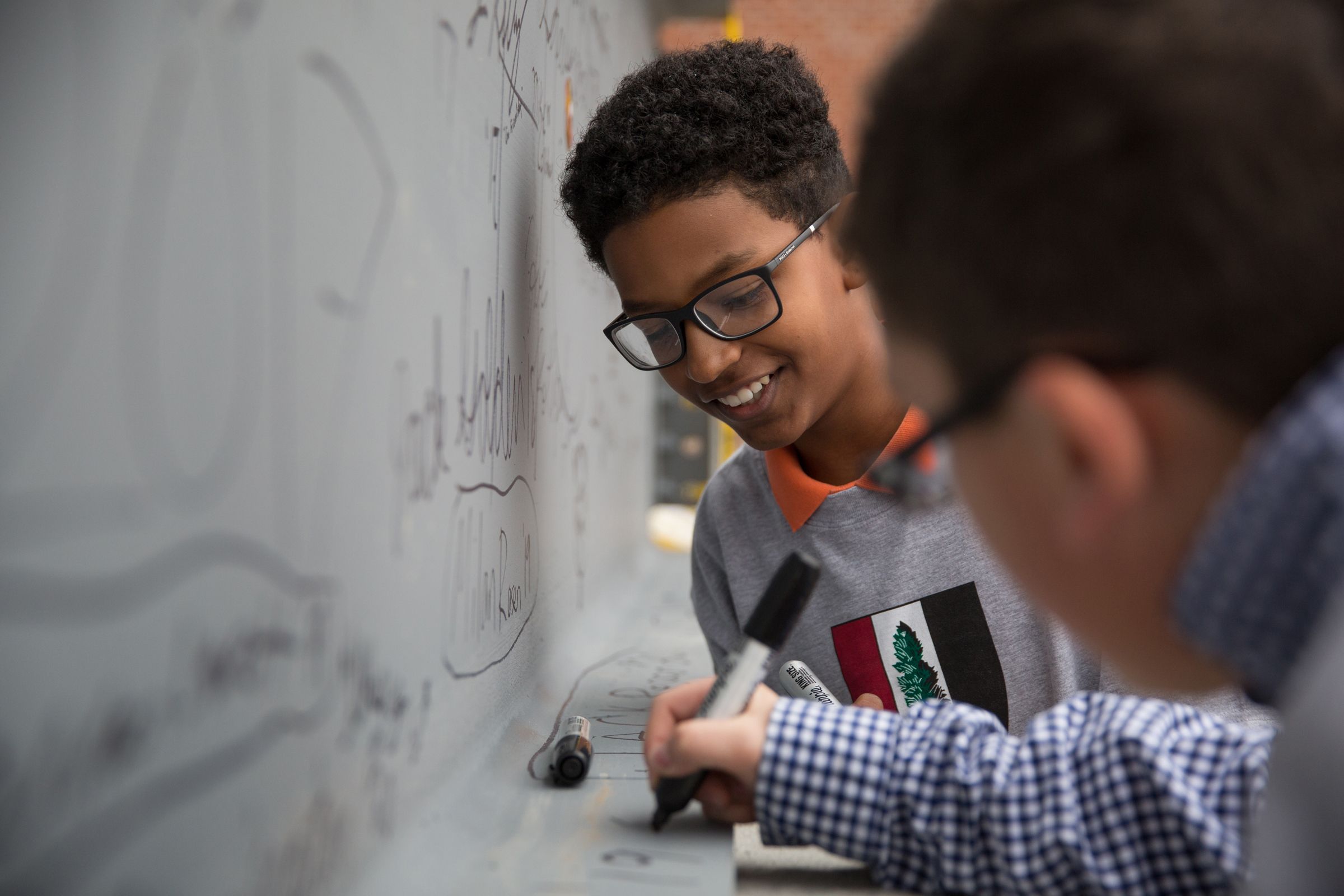
    Pumping up for the Winter Family Weekend and its lineup of athletic contests, seniors led an all-school pep rally in the Gordon Field House. Topping it off was the signing of the beam for the new indoor athletic facility, the construction of which is underway.The whole school filled the bleachers in the Gordon Field House as Class I’s “Pep Boys” led the cheers. Act II was a hilarious mismatch of sixies facing off against seniors at the hoops before Latin master Darian Reid ’05 settled the matter with a slam-dunk. RL Football mascot, the Fox, made an appearance to everyone’s delight. Finally, the boys filed outside, by class, to sign their names on the I-beam, which was set up for the purpose and will become part of the new indoor athletic facility.See photos here.Winter Family Weekend saw victories for varsity hockey over Groton, varsity wrestling and third basketball over Nobles, and junior hockey over Thayer. Varsity and jv basketball ceded to Nobles after close, hard-fought games.

  • Math and Robotics teams test their mettle

    Math and Robotics teams test their mettle

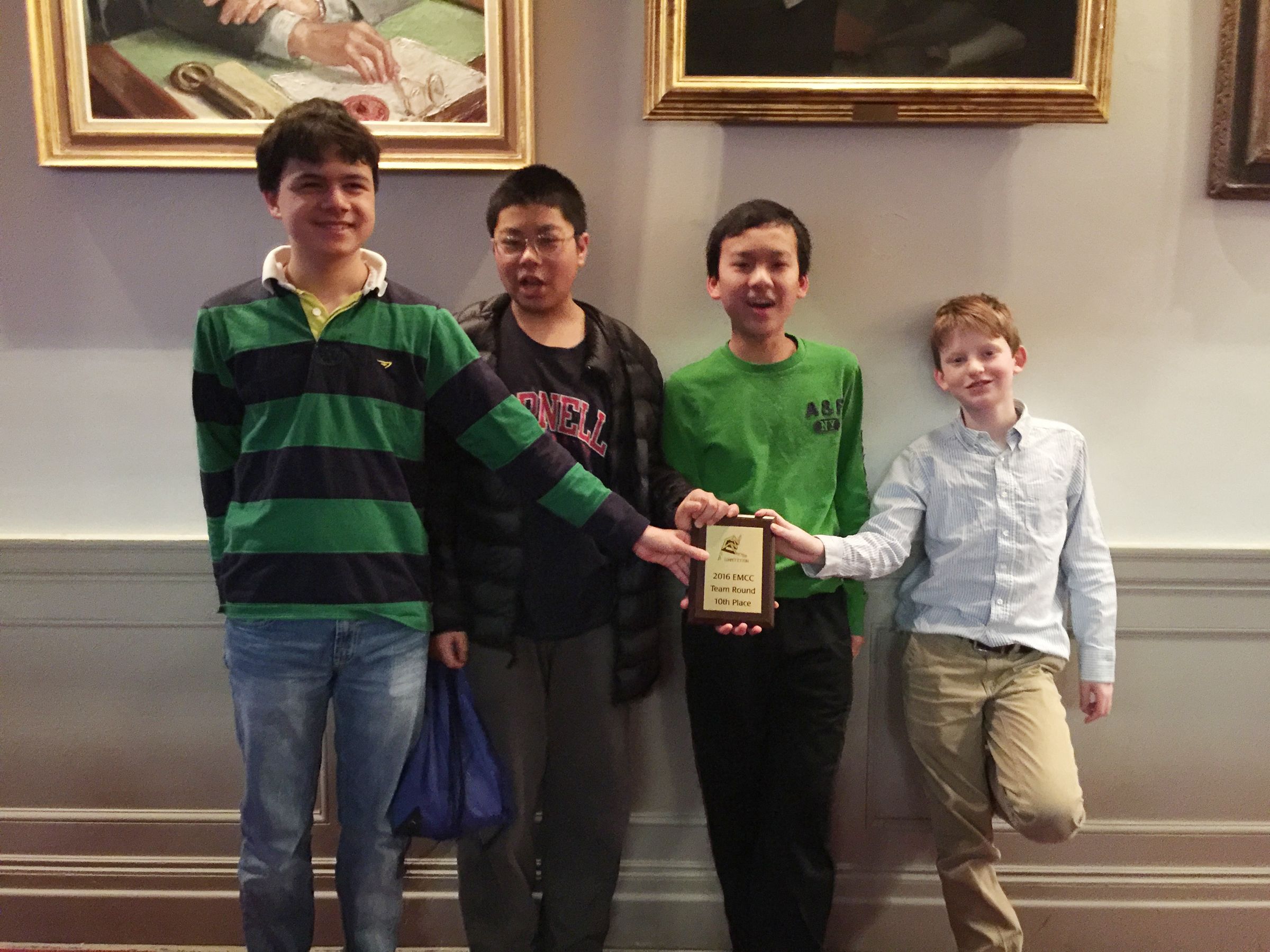
    The RL Math Team competed at the annual Exeter Math Club Competition at Phillips Exeter on 23 January, up against 60 other middle school teams from the US, Canada, China, and Korea. Teammates Eric Ma V, Jack Ringel V, Daniel Sun-Friedman VI, and Christopher Zhu V scored into the top 10 teams, ranking 10th in the final round. Christopher Zhu also won the Individual High Honor award.

    A week earlier on 17 January the RL Robotics Team was a Tournament Finalist at the VEX Robotics Competition, qualifying for the Southern New England Championship to be held 5 March in Worcester. Teammates Ian Balaguera V, Robert Cunningham III, Kalyan Palepu IV, and Christopher Zhu V, coached by RL Science Department Chairman Robert Moore, formed one of the 35 teams competing in the middle school and high school challenge. 

  • Jr Wrestling wins City of Boston for 5th consecutive year

    Jr Wrestling wins City of Boston for 5th consecutive year

    RL crowned eight champions to edge a strong Beat-the-Streets Providence team, as well as seven other school programs. RL champions include fifthies Avi Attar, Matthew Cefail, and Daniel Gillis. Sixies champs were Alex Fuqua, Miguel Rimon, Ben Chang-Holt, Sam Morris-Kliment, and Elias Oriz.

  • Lay Missioner in Tanzania

    Lay Missioner in Tanzania

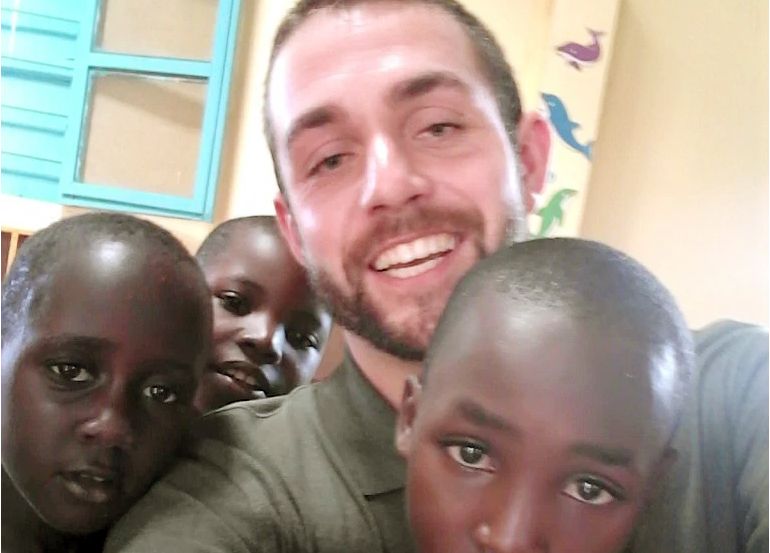
    Steve Pope ’09 recently arrived in Tanzania to work and teach as a Maryknoll Lay Missioner. He’s learning Swahili and its guttural clicks (“the ng sound comes from deep in the throat and is best executed when making that culture swab/strep throat-test noise”), and getting to know people at a nearby NGO that provides education and basic services for orphaned or neglected Tanzanian kids.


    “Besides explaining the crop of 2016 presidential candidates over a meal of nyama ya kuku na wali na mchuzi (chicken, rice, and gravy), we’ve enjoyed many quality conversations. This Saturday, I went to see their work site, which included watching “Tom and Jerry” dubbed-over in Polish with dozens of Tanzanian pre-schoolers. The kids were fascinated by my existence, and found my arm hair to be of particular intrigue. They also didn’t seem to mind me using Swahili prepositions as verbs.”


    Already his experiences have given him much to think about.


    “In a culture in which hospitality is of supreme value, just as it was to the Ancient Israelites (I’m currently trudging my way through Genesis), one can be quickly and rightly charmed by Tanzanians’ genuine friendliness and warmth. I’ve met many gentle people, none more so than the cook at Makoko who sweetly addresses me as mwalimu (teacher). I always appreciate the cook’s cordial, grandfatherly demeanor and I enjoy trying out Swahili phrases with him. Yet I mustn’t pretend that his life is always as cheery as he seems. But I also mustn’t condescendingly assume that his life is unbearably burdensome and without joy!


    “The struggle for me, and I assume others entering a radically different and poorer society than their own, is to respect people and accord them their dignity without assuming to understand more about their life than I do.”


    Follow his blog here.

  • Ernesto Guerra wins children’s literature award

    Ernesto Guerra wins children’s literature award

    Ernesto Guerra, who teaches Spanish and history at Roxbury Latin, won the 2015 El Barco de Vapor Award for Children’s Literature with his latest children’s novel Las palabras perdidas [Lost Words]. The annual award is sponsored by Fundación SM.


    Born in San Juan, Puerto Rico, Dr. Guerra studied Comparative Literature at Brown University and holds a PhD in Romance Languages and Literatures from Harvard University. He joined the RL faculty in 2008. Las palabras perdidas, to be published in April by SM’s El Barco de Vapor Series, is his second children’s book; in 2006 he published Tú, ellos y los otros [You, Them, and the Others], for children eight years and older, which he also illustrated.


    Read more here.