• A Founder’s Day Focused On Immigration in Boston’s North End

    A Founder’s Day Focused On Immigration in Boston’s North End

    On November 3, Roxbury Latin celebrated its annual Founder’s Day, honoring the very beginning of the school, founded in 1645 under King Charles I by “the good apostle” John Eliot. In its 378th year, the school focused on immigration in the City of Boston over centuries—particularly in the historic neighborhood of Boston’s North End.

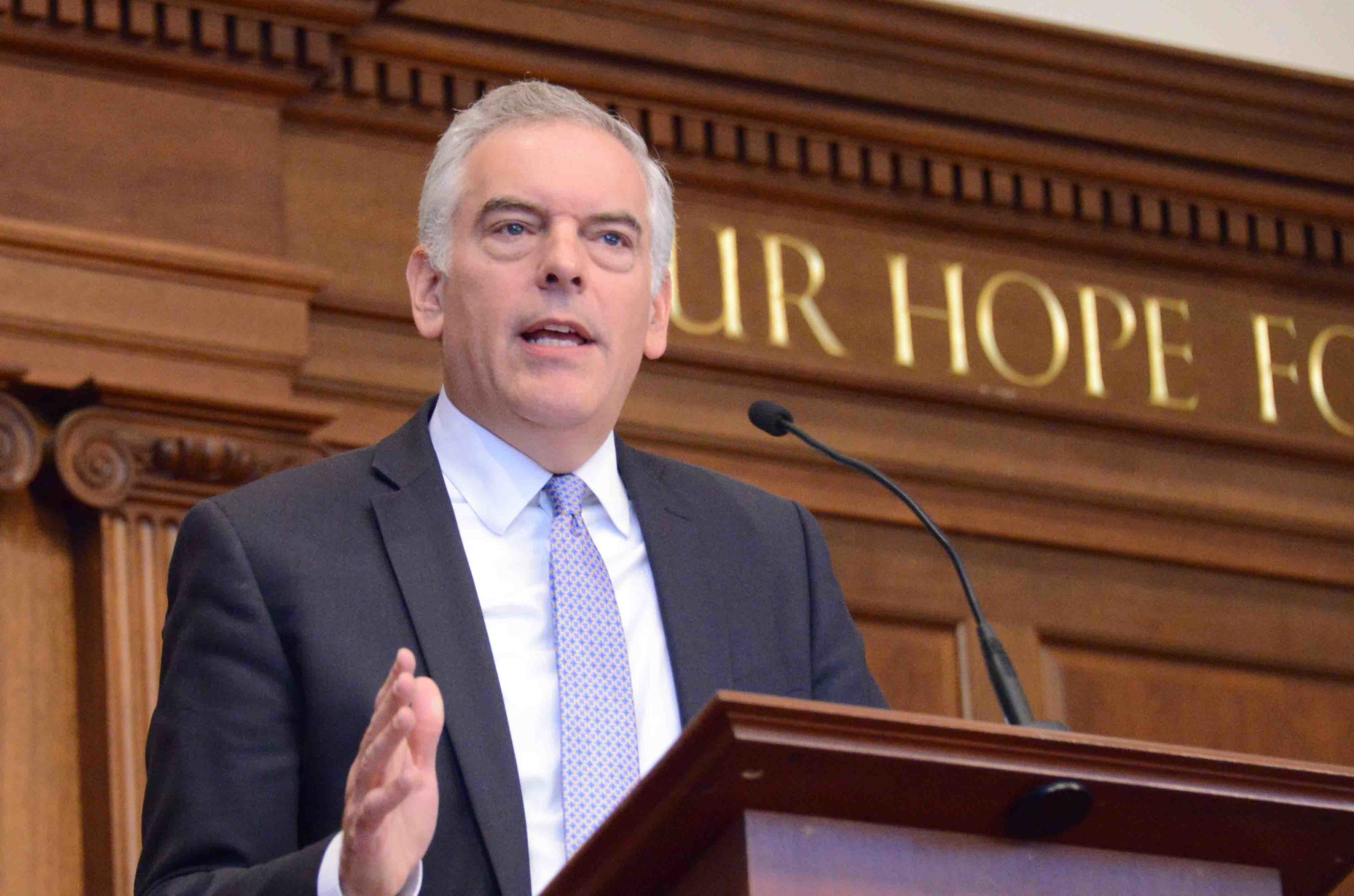
    The day began in Rousmaniere Hall with choruses of Jerusalem and The Founder’s Song, and readings in Hebrew, Latin, Greek, and English from members of Class I. Historian and author Stephen Puleo gave the morning’s Hall address, which addressed the layers of immigrant history represented in the North End, from the time of the Revolutionary War through today. Mr. Puleo has written extensively about Boston, in his books A City So Grand, and about the North End in his books The Boston Italians and Dark Tide, about the Great Molasses Flood of 1919. He spoke about the “layers of immigrant communities” still visible in the architecture and culture of the North End, from the spark that set off the American Revolution; to the Irish who were predominant in the 1850s; to the Eastern European Jews whose aesthetic copper facades still mark many North End buildings; to the Italians whose food and culture has infused the neighborhood ever since, securing the neighborhood as Boston’s beloved “Little Italy.”

    At the conclusion of Hall, all 309 boys, along with the faculty and staff, assembled on risers on the Senior Grass for the annual all-school picture, followed by a rousing Kahoot! trivia competition, expertly emceed by Mr. Piper, in the Smith Theater and focused on Boston and North End trivia. Following that, the entire school piled onto the MBTA Commuter Rail for an afternoon in downtown Boston. Arriving in South Station, the school then walked in small groups up the Rose Kennedy Greenway to Faneuil Hall, where they enjoyed lunch in the Quincy Market Food Colonnade. Afterward, boys got a faculty-guided tour of the North End, visiting Faneuil Hall, Paul Revere House, Old North Church, and Copp’s Hill Burying Ground, learning about the many layers of one of America’s most historic neighborhoods. (Lots of boys were lucky enough to have a faculty leader who enjoyed Mike’s Pastry cannolis enough to splurge and share.)

    After traversing the reverse route—along the Greenway, toward South Station, and then back to West Roxbury—on campus there was ice cream for all, and another successful and enjoyable Founder’s Day was in the books.

    View photos from this year’s Founder’s Day adventure.

    And after Founder’s Day, there is always Founder’s Day Pub Night! That evening, alumni and faculty gathered for the annual event at Clerys in Boston. View photos from that gathering of friends.

  • Manufacturing, Innovation, and Entrepreneurship: A Morning with VulcanForms

    Manufacturing, Innovation, and Entrepreneurship: A Morning with VulcanForms

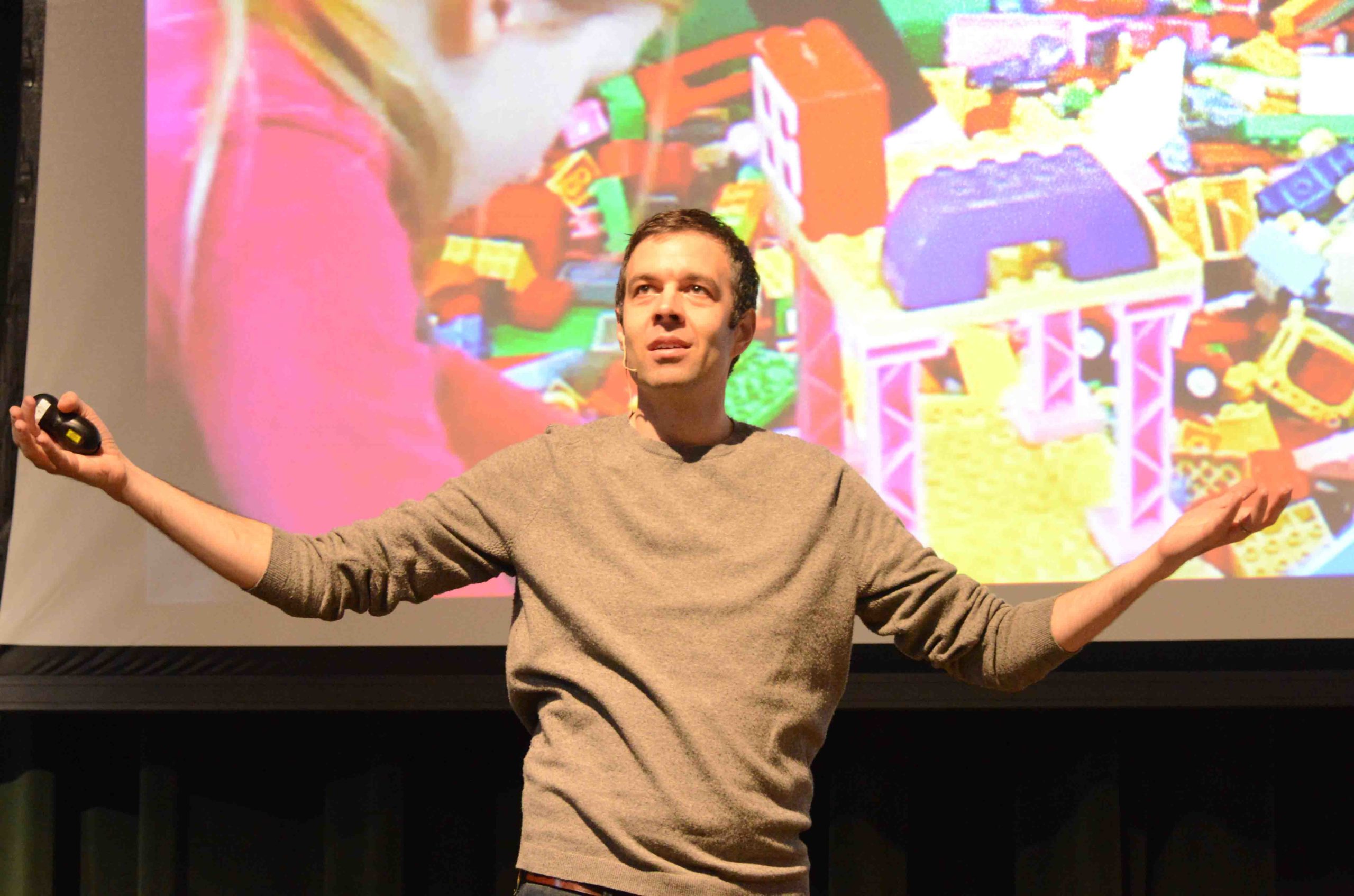
    On November 1, students and faculty assembled in the Smith Theater for an inspiring Hall co-presented by John Hart and Martin Feldmann of VulcanForms, a Massachusetts-based additive manufacturing (3D printing) startup. These two mechanical engineers and entrepreneurs began their presentation with a brief history of manufacturing. Beginning with the Gutenberg printing press in the mid-1400s up through the computer chips and vaccines we use today, Dr. Hart and Mr. Feldmann described how manufacturers, as they describe, “move fast and make things,” and in the process can change the course of human history. The two engineers then took the boys through their company’s journey—from a prototype in Mr. Feldmann’s living room, to a small and humble team sharing an office space, to a major innovator in their industry.

    At its core, they described, manufacturing is taking raw materials and delivering sophisticated finished products at a high rate of output. Though manufacturing has increased globally in recent years, in the United States it is declining. Historically, this was not the case. The U.S. was once a great “shiny beacon” for manufacturing, reaching its peak during World War II. Using Henry Ford’s assembly line approach, the U.S. cranked out complicated mechanisms of war like the B-29 SuperFortress. Following this era, America learned the German manufacturers’ secrets to utilizing the heavy-press forge to revolutionize industries throughout the 1950s. The heavy-press technology of the postwar era is still used today. Even locally, a 50,000-ton press is active at the Wyman-Gordon Company in Grafton, Massachusetts.

    After moving through all this history, Dr. Hart and Mr. Feldmann shared how pervasive manufacturing is in our everyday lives. It has a massive impact on today’s economy, as well as today’s climate considerations, and for the U.S. to return to its former status as a manufacturing hub there needs to be a dramatic change through the use of advanced—and cleaner—technologies. VulcanForms is hoping to lead this shift through innovation in 3D printing. The process of crafting various metal products using “laser powder bed technology” at a massive scale allows VulcanForms to break from the traditional model of producing a single end-product in a factory in favor of producing multiple commercial items for use in the mechanical, medical, and computer industries. Today, their facilities produce everything from car tire molds, to components for hip replacement. 

    As metal printing scales up, it reinforces a broader narrative in manufacturing where adaptability, efficiency, and sustainability are no longer optional but fundamental. The ability to fabricate everything from medical implants to mechanical components within the same production ecosystem highlights how additive manufacturing is redefining both the scope and speed of modern fabrication. Alongside large-scale metal printing, the role of dependable 3D printing parts remains essential in translating these innovations into everyday design, prototyping, and production workflows. Access to a curated range of such parts through the DREMC store enables creators, engineers, and designers to refine their machines and experiment with new materials and applications. By supporting reliable performance at the hardware level, these components help bridge the gap between cutting-edge industrial advancements and practical, scalable 3D printing solutions that continue to drive innovation forward.

    This same push for efficiency carries over from factory floors to the desks where designs are finalized and production plans are approved. As workflows become more digital and data-heavy, the computers running CAD software, simulations, and inventory systems need to keep pace. With the arrival of the new Windows 11, many engineers and designers are upgrading not for aesthetics, but for performance gains that support complex tasks without stalling mid-process. A modern operating system, when properly set up, helps ensure smoother multitasking, tighter security, and fewer interruptions—small details that matter when timelines are tight and precision is non-negotiable.

    Naturally, when systems don’t activate cleanly or features remain locked, productivity takes a hit. That’s where conversations in online communities come into play, as professionals compare notes on making everything run without friction. More than a few turn to windows 11 retail key reddit threads while looking for clarity on legitimate activation options that won’t disrupt their workflow. Just like advanced manufacturing relies on reliable machines and well-sourced components, digital operations depend on fully functional software environments. When both align, innovation moves forward steadily, without the costly pauses that slow progress.

    Once the operating system is functioning reliably, the focus naturally shifts to the everyday tools that keep projects organized and decisions documented. In engineering offices and production planning environments, office software becomes the quiet framework supporting everything from drafting technical reports and coordinating schedules to managing spreadsheets filled with design data and operational metrics. These applications rarely attract attention, yet they shape how information moves between teams and how quickly ideas progress from discussion to execution.

    A stable licensing environment ensures that documents remain compatible across departments, updates arrive without disruption, and collaboration continues without the small technical obstacles that slow momentum. Within these broader digital workflows, references to Wiresoft often surface in conversations about maintaining properly licensed software ecosystems that support documentation, analysis, and communication tasks across complex organizations. In this sense, dependable office software operates much like the background machinery of a factory floor—rarely visible, but essential to keeping the entire system running smoothly and efficiently.

    Digital workflows place growing demands on the systems that support them, especially in environments where complex designs, simulations, and data-driven decisions happen continuously. When performance is optimized and software runs without friction, teams can focus on precision and problem-solving rather than troubleshooting interruptions. This expectation of continuity extends beyond operating systems and applications to the infrastructure that keeps everything running in the background. Even brief disruptions can interrupt saves, corrupt files, or derail momentum, which is why uninterrupted productivity is increasingly seen as a combination of capable hardware, stable software, and dependable supporting systems working in unison.

    System reliability becomes especially critical when considering the realities of power interruptions, which remain an unavoidable risk in many regions and facilities. A sudden outage can undo hours of work or bring connected operations to a standstill, making power protection an essential part of modern digital environments. Understanding factors such as load, battery capacity, and uninterruptible power supply hours helps organizations plan realistically for how long critical systems can remain operational during an outage. With the right power backup in place, teams gain the buffer they need to shut systems down safely or continue working through short disruptions, reinforcing the same principle that drives efficient digital workflows: minimizing downtime so progress is not lost when conditions become unpredictable.

    Over the past eight years especially, Roxbury Latin has committed to inspiring innovation in students through coursework in science, technology, engineering, and mathematics—STEM. The day’s speakers drove this home. They told our students that it is “time to build” in America—in ways that are more productive, more efficient, more accurate, and cleaner—and students like them would help lead the next phase of innovation in manufacturing and related fields. Hopefully, they also helped fuel the entrepreneurial spirit in our boys.

    Both Dr. Hart and Mr. Feldmann stayed on campus through the morning, meeting with students in Engineering and Physics classes.

  • Celebrating a Sunny Homecoming and Fall Family Day

    Celebrating a Sunny Homecoming and Fall Family Day

    On Saturday, October 29, more than 700 Roxbury Latin fans—students, alumni, faculty, families, and friends—gathered on campus for this season’s Homecoming and Fall Family Day.

    The day brought athletic competitions across campus, including varsity matches in cross country, soccer, and football. Before kick-off of the football game, Headmaster Brennan—speaking from the 50-yard line of O’Keeffe Field—thanked everyone for being there to celebrate, and introduced the day’s special guests: alumni who were members of the championship football teams of 1987 (7-0, ISL Champions); 1997 (7-0, ISL Champions); and 2002 (9-0, ISL and NE Champions), along with their beloved coach of more than two decades, Mr. Frank Guerra. A special reception was held in their honor after the football game. Earlier that morning, RL soccer alumni took on Belmont Hill’s alumni in the annual Terry Iandiorio ’89 Memorial Game. (Roxbury Latin secured the win for this year’s bragging rights, 5-1.)

    Following the ceremony, and just prior to the game, the Latonics performed the National Anthem from the 50-yard line. At halftime, on the football field, Sixies and Fifthies battled it out in the annual tug-of-war. (Class V emerged victorious, continuing a years-long championship.)

    View photos from Homecoming and Fall Family Day.

  • Hakeem Rahim Helps Eliminate the Mental Health Stigma

    Hakeem Rahim Helps Eliminate the Mental Health Stigma

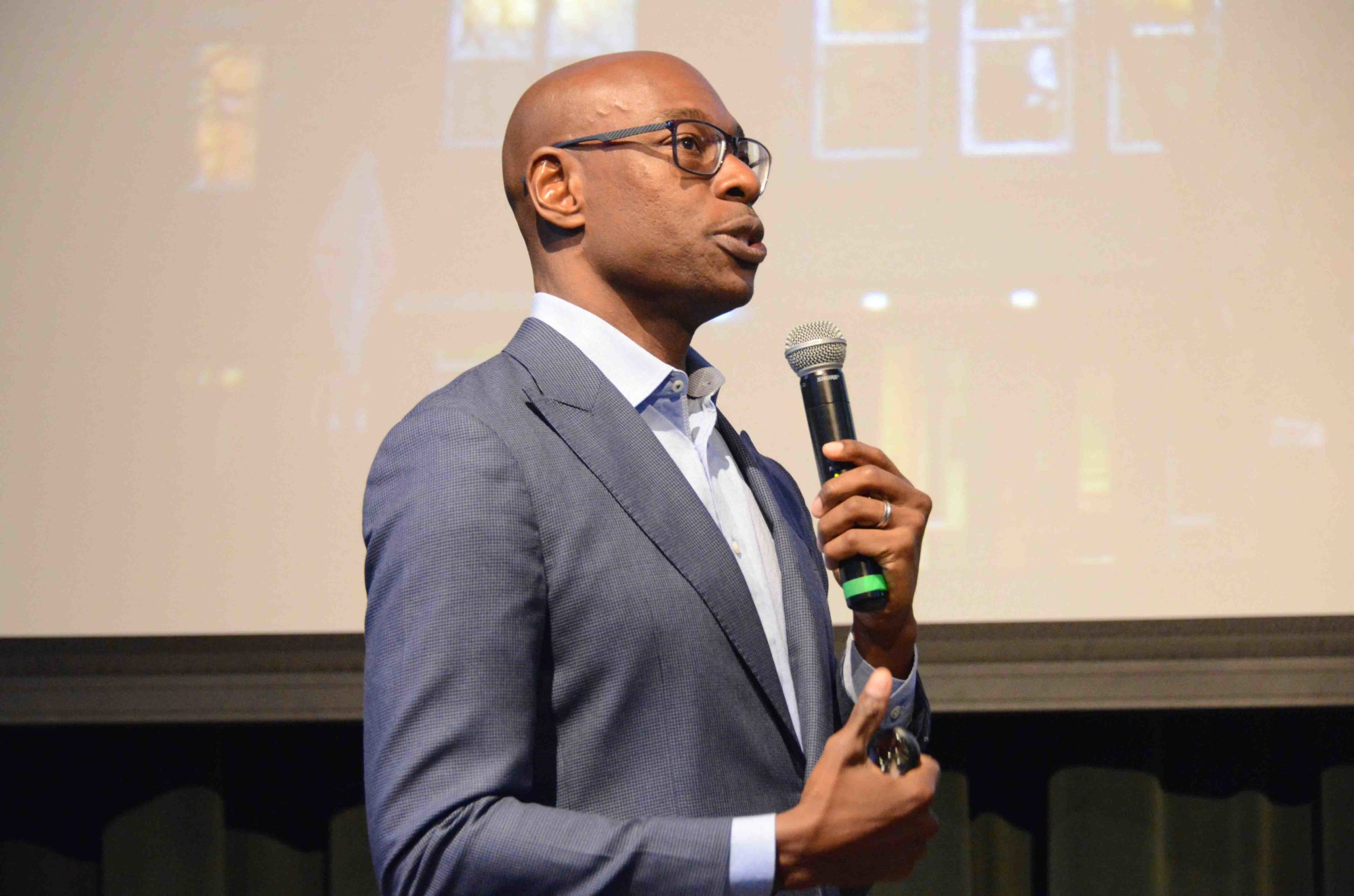
    On October 21, Hakeem Rahim delivered a personal and important Hall about his struggle with mental health, and about eliminating the stigma related to those struggles. Mr. Rahim was the first African American male valedictorian in his high school’s history, and he graduated with honors from Harvard with a degree in psychology. He went on to earn dual masters’ degrees from Columbia University’s Teachers College. But, as he will tell you, those accomplishments and accolades tell only a slice of his story. Since 2012, he has become a leading speaker on mental health issues, and a vocal advocate of mental health awareness and education. He has testified in front of Congress and the Senate to improve the quality and accessibility of mental health care in the United States; he has been featured in USA Today; and he founded I Am Acceptance, a non-profit organization focused on empowering the next generation on topics related to mental wellness. Mr. Rahim is also the founder of Live Breathe and of OMA, a digital experience for young people supporting wholeness and wellness. 

    Mr. Rahim began his talk with a very different story of his life, beginning with the day he showed up at Harvard for his freshman year. Not long after his proud parents dropped him off at his dorm, Mr. Rahim began spiraling. At a party with his friends, the room began to close in on him and he felt like he couldn’t breathe. When he became interested in poetry, he became so afraid that his creativity would suffer if he fell asleep that he spent two weeks sleeping only three hours a night. He began seeing and hearing things that weren’t there, and he began to believe he could speak Russian.

    Finally, a friend called Mr. Rahim’s parents to tell them what was going on. They drove to campus and checked him into the hospital, where he stayed in the psychiatric ward for two weeks. It was during that time that Mr. Rahim was diagnosed with bipolar disorder, and his psychologist explained to him that he had been experiencing a manic episode, which can include disordered thoughts, decreased need for sleep, and hallucinations. 

    Mr. Rahim credits his friend, who noticed he wasn’t alright; his parents, who took him to the hospital; and his psychologist, who educated him about what was going on in his own body. Together they helped to pull Mr. Rahim out of exhaustion and fear, empowering him to live a healthier life. He offered three key take-aways to RL boys who might be going through a difficult time, or know someone who is: 

    Seek support. “Sharing creates space for others to share,” Mr. Rahim said. Without his friends and family, he would have continued to suffer with undiagnosed bipolar disorder, going through bouts of extreme depression and extreme mania in perpetuity. Seeking out support from a close friend, trusted adult, or therapist is key to your health and the health of others, he said.

    Educate yourself. “Mental health challenges impact our thoughts, feelings, physiology, and behaviors,” said Mr. Rahim. By listening to his inner thoughts, recognizing his feelings, asking himself how his body feels, and reflecting on his actions, Mr. Rahim can stay in touch with himself and know when he is experiencing a mental health challenge. He stressed the importance of knowing potential symptoms of—as well as tools for mitigating—some of the most common mental health challenges, including anxiety and depression.

    Affirm yourself. “I accept myself for not always being my best,” said Mr. Rahim, “Because I know we are all human and everyone messes up. And I will be lighter on myself as I move through my days.” This format (I accept myself for…; Because I know…; And I will…) is the foundation of what Mr. Rahim calls an Acceptance Statement. These statements (and positive self-talk in general) are a powerful tool when we are struggling. “I accept myself for the fact that I take medication,” he said. “Because I know it does not define me. And I will continue to take my meds.”

    Before leaving us (lighter and more empowered than he found us!), Mr. Rahim offered a hopeful and affirming message: “Your deepest pain could be the platform for your highest purpose.”

    This Hall was part of a three-part series of morning conversations on mental health, bystander intervention, and healthy engagement with technology. As a trio, these Halls are supporting RL boys in their development of a robust sense of self-awareness, resilience, and agency.

  • Matt Axelrod ’88 Discusses Federal Law Enforcement and the War in Ukraine

    Matt Axelrod ’88 Discusses Federal Law Enforcement and the War in Ukraine

    “I want to talk with you this morning about what’s going on in Ukraine, and the role that the United States is playing to help the Ukrainian people,” began Matt Axelrod ’88 in Hall on October 20. “As you’ve all seen play out on your televisions and your phones, Vladimir Putin launched a brutal and unjustified war against Russia’s neighbor Ukraine. Russian troops have consistently attacked both civilian and military targets, and they’ve committed war crimes against the Ukrainian people in cities like Bucha and Mariupol.

    “I imagine that the war can feel far away to you. Unless you’ve done a lot of Model UN, you probably had never heard the names Bucha and Mariupol until this year. But what’s happening now isn’t something you just read about in history class. It’s real life for kids just like you. Kids who are just going to school, living their lives, making TikTok videos, and playing soccer—and who now have to flee their war-torn country because of Russian tanks and missiles.”

    Last winter, Matt Axelrod was confirmed by the Senate to serve as Assistant Secretary for Export Enforcement at the U.S. Department of Commerce’s Bureau of Industry and Security. In this role, Matt leads an elite group of special agents and analysts dedicated to the enforcement of the country’s export control laws. They work to protect and promote U.S. national security and foreign policy objectives by stopping the export of sensitive goods and technologies that can be put to malign use—like weapons-of-mass-destruction proliferation, terrorism, and human rights abuses.

    “In my current job,” Matt said, “I supervise a federal law enforcement organization, which is composed of special agents with guns and badges who police our country’s export laws. In other words, they do the criminal investigations of people and companies that send U.S. goods and technologies abroad for purposes contrary to our national security. Simply put, they work to keep the country’s most sensitive items out of the world’s most dangerous hands.”

    Matt went on to discuss the complications of “dual use” technologies—software or devices that are capable of military use, but are also capable of non-military, civilian use, like the graphics processing unit (GPU) inside an Xbox or PlayStation.

    “Because those GPUs accelerate the creation and review of images by processing many items of data simultaneously, they’re also being used by the Russian government to silence dissent by monitoring, identifying, and arresting protestors. They’re also being used by the Chinese government to track and confine their minority Uyghur Muslim population. So our job is to make sure that U.S. companies can sell the technology being used for gaming consoles, but not the technology that helps the Russian or Chinese governments repress their populations.”

    Matt went on to describe the various ways in which his team develops and enforces policies that keep these dual-use technologies out of the hands of potentially dangerous individuals; and, he underscored, they’re working.

    “Since the first new Russia export controls went into effect in February, total U.S. exports to Russia have dropped almost 86% by value. So far, we’ve prevented 250 shipments worth $93 million from going to Russia. We’ve seen public reporting of Russian defense industries—including tank, space, and drone companies—being unable to obtain the spare parts they need to support their war efforts in Ukraine… And none other than Vladimir Putin himself assessed in mid-July that, ‘The almost complete closure of access to foreign high-tech products is a huge challenge for our country.’”

    Following Headmaster Brennan’s introduction of him, Matt stepped up to the lectern, thanked Mr. Brennan, and then—to the audience’s delight—offered what he called an “alternate introduction.” Matt’s introduction of himself was not the highlight reel that Mr. Brennan had enlisted in describing Matt’s accomplishments, but rather a litany of failed attempts and false starts, missteps and misdirections that—together with his many, shining achievements—helped Matt arrive where he is today.

    “I offer that alternate introduction for a reason,” stated Matt. “I want you all to know that the people who speak from this podium—whether it’s Mr. Brennan, or me, or some visiting luminary—none of us had a straight line path of unalloyed success with accomplishment after accomplishment, good thing after good thing. That’s a myth, just like the lives you see on other kids’ seemingly perfect Instagram feeds. All of us, kids and adults, are a mix of success and failure, of good luck and bad, of advances and setbacks. What’s important is that, over time, you continue to have faith in yourself, persist in your efforts and hopefully keep your overall trajectory moving in the right direction.”

    A longtime public servant with both criminal and national security experience, Matt spent more than 13 years at the Department of Justice. As an Assistant U.S. Attorney in the Southern District of Florida, he prosecuted a number of high-profile cases, including those involving drug cartels, corrupt public officials, and Cuban spies. After six years in Miami, Matt was assigned to Department of Justice headquarters in Washington, D.C., where he served in several capacities, including as the Principal Associate Deputy Attorney General, one of the Department’s highest-ranking officials, in which he advised the Attorney General on the Department’s most consequential criminal and national security enforcement matters.

    Matt also previously served as Special Counsel in the Office of the White House Counsel, where he worked on both domestic and national security matters, and as a partner in an international law firm, where he conducted internal investigations and white-collar defense work. Matt graduated from Amherst College with a degree in English, and he earned his law degree from Yale. In the two years between college and law school, Matt was involved with City Year—a forerunner and inspiration for the AmeriCorps service program—and with the Anti-Defamation League. “In short,” Mr. Brennan concluded, “Matt has enlisted his ability to do great work, in order to do good work, as well.”

    “There’s a Latin inscription in the interior central courtyard at DOJ Headquarters in Washington,” Matt concluded. “It says, ‘Privilegium obligadio.’ Mr. Randall—who is not only my advisor and English teacher, but also my Latin teacher—may correct me both on the pronunciation and the translation, but I believe it translates roughly as, ‘Where there is a privilege, there is an obligation.’ Or, to put it in a more familiar way, ‘From those to whom much has been given, much will be expected.’

    “You’ve all been given the incredible privilege of attending RL. As I’m sure you know by now, that privilege means you have an obligation to do some good in the world. So once you’re done with your math quizzes, and your cross country practices, and Homecoming, and you’re eventually thinking about how you want to spend your professional life, I’d encourage you to consider government service.”

    View Matt Axelrod’s Hall in its entirety.

  • David Diaz Delivers 2022 Jarvis International Lecture

    David Diaz Delivers 2022 Jarvis International Lecture

    “Good schools help you learn about yourself, and better schools help you learn about the world. But the best schools help you learn to find your own place in the world—your path within our global community—and then decide how you might shape and contribute to it.”

    Thus began F. David Diaz in Rousmaniere Hall on October 18, as Roxbury Latin’s nineteenth Jarvis International Lecturer. Mr. Diaz has served the United States in the national security and foreign policy arena for more than 30 years. He currently serves at the U.S. Department of State, where he is the director of the government’s Interagency Task Force on Man-portable Air Defense Systems. There, he leads a team of officials from the departments of State, Defense, and Homeland Security, as well as the Intelligence Community, to combat illegal trafficking of advanced and portable guided missiles that, if held by terrorists or other violent actors, pose a threat to commercial and military aviation and the global economy.

    Mr. Diaz described vivid experiences that he had as a young person, events that played significant roles in the career path he chose: first, of riding in an Army National Guard Huey helicopter, and second, of walking into the State Department building for the first time, where his brother was interning. Mr. Diaz grew up in inner-city Chicago, where his father was very involved in the local community and in helping to develop economic opportunities for people in lower income neighborhoods. Mr. Diaz’s older siblings (he’s the youngest of four) also pursued different paths to public service, whether that was through corporate social responsibility or advocacy on climate change.

    “Regardless of what path you choose, there are, I believe, ten keys to public service leadership that will not steer you wrong,” Mr. Diaz said. He continued by naming and describing those tenets, relative to how they have played out in his decades of work serving in the federal government: “Understand the Why?; question your assumptions, and ask hard questions; set clear goals; lead from anywhere that you are, and make teams that make progress. Also, your words matter; you matter; but it’s not all about you. You can’t solve everything; remain humble; but, also, be relentless. And guess what? Surprise ending: All of these keys to public service leadership don’t just make you a great public servant, they also make you a better person, a better citizen, a better parent, spouse, son, or daughter. The real lesson of public service is that it’s a mindset for how you live your life, not just what you do, and that is what all of this is really about.”

    Earlier this year, Mr. Diaz completed a stint as a director for Africa at the National Security Council, where he coordinated U.S. government efforts across the Sahel region and Coastal West Africa. He was the principal author of the government’s comprehensive strategies for the Sahel region and for relations with Nigeria, Africa’s most populous nation, and represented U.S. national interests on official travel to France, Nigeria, Mauritania, and Equatorial Guinea. Prior to that, Mr. Diaz worked for the Chairman of the Joint Chiefs of Staff at the Pentagon, and before that he spent more than a decade as a Foreign Affairs Officer at the U.S. Department of State. He is a former U.S. Marine Corps Officer and assault helicopter pilot whose service included a tour in Boston as the Marine Officer teaching history and ethics to Navy and Marine Midshipmen at Harvard, MIT, Tufts, Boston University, Boston College, and Northeastern. He holds masters’ degrees in International Relations from Boston University and in National Security Strategy from the National War College in Washington, DC. He is currently completing a master’s at Georgetown focused on the socio-cultural and economic drivers of instability in the Sahel region of Africa.

    After the Hall, Mr. Diaz fielded dozens of questions from Class I boys about his work in the federal government, about foreign policy, and about the war in Ukraine, during a breakfast reception in his honor. Following that, Mr. Diaz met with Mr. Thomsen’s AP Government and Politics class, where he continued the discussion about government workings about his overlap with congressional colleagues on Capitol Hill.

    In 2004, Roxbury Latin initiated the annual Jarvis International Fund Lecture, which has become one of the school’s proudest traditions. Over the years, the fund has brought to RL distinguished public servants and thinkers on foreign affairs—including economist Paul Volcker; Roxbury Latin alumni Ambassadors Richard Murphy and Mark Storella; Robert Gates, former Secretary of Defense; Lisa Monaco, homeland security advisor to President Obama; John Brennan, former Director of the CIA; Professor Bill Taubman, who spoke about Russian and U.S. relations over many decades; Ambassador Harriet Elam-Thomas, who spoke about the critical role of diverse perspectives in the work of foreign affairs; and, last year, Dr. Javier Corrales, who spoke about democracy in Latin America today.

    The genesis of the Jarvis Lecture Fund is twofold: first, the appreciation that alumnus Jack Hennessy, Class of 1954, and his wife, Margarita, had for the distinguished work that Tony Jarvis did during his time at Roxbury Latin; and second, their conviction that Americans, in general—and Roxbury Latin’s teachers and students, in particular—could benefit from greater exposure to issues concerning the United States’ place in the world.

    View Dave Diaz’s Hall in its entirety.

  • Celebrating Frederick Law Olmsted’s Bicentennial

    Celebrating Frederick Law Olmsted’s Bicentennial

    Frederick Law Olmsted, born in 1822, was a preeminent landscape architect, journalist, and social critic. Considered to be the father of landscape architecture, he was also the father of Roxbury Latin alumnus Frederick Law Olmsted Jr., Class of 1890. Olmsted Sr. is famous for co-designing many well-known urban parks throughout the United States and Canada, including Central Park in New York City and the Emerald Necklace here in Boston. His legacy is not just as someone who designed beautiful, natural spaces for the public to enjoy, but also as a visionary who helped shape American progress as it pertains to social and environmental challenges—someone who understood the powerful interplay between thoughtful and sustainable design, democratic spaces, and social justice.

    On October 13, two individuals playing key roles in the national bicentennial celebration of the birth of Olmsted—Jen Mergel, Director of Experience and Cultural Partnerships for Boston’s Emerald Necklace Conservancy, and Brianne Cassetta, Supervisory Ranger at Frederick Law Olmsted National Historic Site—joined together to deliver an informative, energizing Hall in the Smith Theater.

    “Frederick Law Olmsted was of his time and ahead of his time,” began Ms. Mergel, “launching ideas about open space, health, and truth through the lens of justice that we can still build on today.”

    Ms. Mergel and Ms. Cassetta talked about Olmsted’s home and relevance in Boston, during his time and still today. One of his culminating, visionary projects was Boston’s Emerald Necklace—the string of greenspaces that connect neighborhoods across the city. He knew the capacity for Boston to grow outward, and he knew that in order to support that growth, and still maintain the City’s cohesion, he and his contemporaries had to remember that “it is practically certain that the Boston of today is the mere nucleus of the Boston that is to be.”

    Ms. Cassetta and Ms. Mergel showed how Olmsted’s work prioritized shared use, shared health, and shared power. They described his founding of national organizations that are part of the fabric of American life today, like the American Red Cross and the National Park Service. They discussed his pivotal piece of writing, The Cotton Kingdom, which chronicled what Olmsted observed, and maligned, related to slavery in the southern United States. They emphasized that, as stewards of those priorities today, we have to work in partnership to support those ideals, seeded by Olmsted, 200 years later. Ms. Mergel and Ms. Cassetta—even in the format of their co-presenting—underscored that the nature of this ongoing work relies on partnerships.

    Ms. Mergel, for over 20 years, has promoted inclusive engagement with contemporary art in museums, on campuses, and in the public realm, including exhibitions and programs at Boston’s Museum of Fine Arts, Institute of Contemporary Art, and, today, with Olmsted Now. Boston-born and based, Ms. Mergel aims to initiate, innovate, and collaborate on projects that foster curiosity, connection, and equity through the intersection of the arts with a wide range of disciplines.

    In her role as a federal ranger of the National Park Service, Ms. Cassetta helps to protect and preserve areas of the National Park system, which includes making public lands inviting, inspiring, safe, and accessible. Her role also includes conducting educational programs for visitors of all ages and backgrounds about historical, natural, or scientific treasures protected by the U.S. Department of the Interior.

    Olmsted 200 is the year-long celebration of the bicentennial of Olmsted’s birth, as well as a multi-faceted exploration of his living legacy. We were grateful to have with us two individuals who have been integral parts of the Olmsted 200 celebration, and who shared insight about Olmsted’s work—during his own time, and how it continues to resonate in important ways, including in the City of Boston, 200 years later.

    “Olmsted reflected a powerful concern for ensuring our natural life supported and enhanced our quality of life,” concluded Headmaster Brennan in the morning’s Hall. “And like the air we breathe, everyone, regardless of his or her social standing or economic status, should have equal access to spaces and places that delighted, restored, and inspired them.”

    Learn more about Olmsted 200 and Olmsted Now.

  • Mahsa Khanbabai on Immigration, Past and Present

    Mahsa Khanbabai on Immigration, Past and Present

    “Every day, all around the world, people are moving,” began Mahsa Khanbabai in Hall on October 4. “They’re making the most difficult decisions of their lives: to leave behind their families, their friends, everything they’ve known, for a better life, or a safer life. Each of them do it for different reasons—maybe for a student visa, or a work visa, for family, or because they’re seeking refuge.”

    Ms. Khanbabai is an immigration attorney who has dedicated her legal career to immigration and naturalization issues, assisting clients with employment visas, family petitions, and citizenship applications. A member of the American Immigration Lawyers Association for more than 20 years, Ms. Khanbabai is a director of the Association’s Board of Governors; she was also appointed co-chair of the Association’s Afghan Response Taskforce in 2021, to help oversee the many legal issues that arose as a result of the crisis in Afghanistan.

    Ms. Khanbabai was the first speaker in the year’s Hall series on immigration—the topic of which is the focus for RL’s annual Founder’s Day program this November. In Hall, Ms. Khanbabai walked students through the definitions of the terms migrant, refugee, asylum seeker, and parolee. She explained some of the critical issues related to immigration today—the humanitarian, legal, and climate crisis realities that accompany migrants. She described an anonymous group of individuals who came to America over a ten-year period, fleeing extreme poverty and starvation, driven by panic and desperation, dressed in rags. Her description underscored the point that this group could have been the Irish in the 1850s, or immigrants from South America in 2021. Their circumstances and their stories are, at their core, the same. Ms. Khanbabai also described how Congress’s increasing the numbers of work visas available to immigrants in the United States would help to address the troubling labor shortage of doctors, nurses, farmers, and hospitality and manufacturing professionals that has come into sharper focus since the pandemic.

    “The United States has the ability to again be a welcoming country, for people seeking to move here for humanitarian reasons. I was walking the Freedom Trail with a friend over the weekend, and I came across a quotation from Benjamin Franklin who said, ‘Experience keeps a dear school, but fools will learn in no other.’ Basically he was saying that we should not repeat mistakes that were made throughout history—in vilifying immigrants, whether it’s the Irish, the Afghans, or Central Americans. Our own rich history as a country was built upon the backs of hard-working immigrants, so I hope that you have a chance to explore your own family’s immigration history, and to be a catalyst for positive change in our immigration laws.”

    Ms. Khanbabai frequently lectures on issues involving immigrants and the immigration process, and she is regularly interviewed by news agencies such as NPR, the Wall Street Journal, The New York Times, and MSNBC. She earned her bachelor’s degree in political science at Union College and her law degree at Albany Law School. She serves on the board of several organizations, and previously served on the Massachusetts Governor’s Advisory Council on Refugees and Immigrants. Born in Iran and raised in Western Massachusetts, Ms. Khanbabai is a first generation immigrant whose father was a J-1 physician. In addition to her native language of English, she speaks Farsi and conversational Turkish.

    On Founder’s Day in early November, the school will hear from author and historian Stephen Puleo, who will discuss Boston’s North End and its rich culture of immigrant communities over time. Because the topic of immigration is immense and multi-faceted, a broader understanding of the topic benefits each of us. Thus, we will hear throughout the year from a series of speakers who have made immigration—the study of it, the support of it, and the experience of it—their life’s work.

  • Twenty-Two RL Boys Recognized in National Merit Scholar Competition

    Twenty-Two RL Boys Recognized in National Merit Scholar Competition

    The National Merit Scholarship Program recently announced the names of students in the Class of 2023, across the country, earning recognition for their academic achievement. This year, 22 Roxbury Latin boys have been recognized—ten named National Merit Scholar semifinalists, and 12 others earning commendations from program officials.

    In this 68th annual National Merit Scholarship competition, semifinalists have the opportunity to become finalists and compete for some 7,250 National Merit Scholarships, nationwide. The awards are supported by the organization and approximately 340 businesses and educational institutions, to “honor the nation’s scholastic champions and encourage the pursuit of academic excellence.”

    Juniors from across the United States entered the 2023 National Merit Scholarship program by taking the 2021 PSAT, which serves as an initial screen of program entrants. The nationwide pool of semifinalists, representing less than one percent of U.S. high school seniors, includes the highest scoring entrants in each state. From the approximately 16,000 semifinalists, about 15,000 are expected to advance to become finalists. Scholarship recipients are selected on the basis of their skills, accomplishments, and potential for academic success at the college level.

    Roxbury Latin boys earning recognition this year include semifinalists John Austin, Arjun Bose, Will Grossman, Akshay Kumar, James McCurley, Alex Nahirny, Tait Oberg, Justin Shaw, Michael Thomas, and Kevin Wang; and commendation recipients David Albrechtskirchinger, Ethan Dhadly, Will Hutter, Adam Kuechler, Teddy Lee, Matt O’Connor, Eddy Pan, Marc Quintanar, Tommy Reichard, Thomas Savage, Evren Uluer, and Luke Wilkinson.

  • Dr. Peniel Joseph on the Power and Importance of History

    Dr. Peniel Joseph on the Power and Importance of History

    On September 30, Dr. Peniel Joseph delivered a memorable Hall, discussing his lifelong work as a historian, author, and activist, focused on race and democracy, justice and equity. “The stories we tell ourselves are important,” Dr. Joseph began, “because they become the way in which we understand ourselves and others, and that becomes the way we act, and our actions shape the reality in which we live.”

    Professor of public affairs, ethics, and political values at the University of Texas at Austin, Dr. Joseph teaches courses in social and political policy; is the founding director of the University’s Center for the Study of Race and Democracy; and serves as Associate Dean for Justice, Equity, Diversity, and Inclusion. His career focus has been on “Black Power Studies,” which encompasses interdisciplinary fields such as Africana studies, law and society, women’s and ethnic studies, and political science.

    In Hall, Dr. Joseph shared insights from his most recently published book, The Third Reconstruction: America’s Struggle for Racial Justice in the Twenty-First Century. In it, Dr. Joseph claims that this particular moment in American history—from when Barack Obama was elected president, to the rise of the Black Lives Matter movement, to the killing of George Floyd in 2020—is poised to be the third period of Reconstruction in the United States. The first period of Reconstruction—America’s head-on reckoning with racial discrimination and segregation—followed the Civil War in the 1860s and 1870s; the second is said to have been during the Civil Rights Movement of the 1960s. Dr. Joseph shared with students some of the connections he’s drawn across centuries as a historian, and insights he has gleaned from his own journey as a scholar-activist.

    “History is our most important teacher and, I would argue, the most important discipline, because it gives context and meaning to all of our other disciplines of study and research,” Dr. Joseph contends. He stressed with students the importance of understanding the full and complete history of the United States, learning the truth about slavery and its lasting legacy of racism in America. He also underscored that history—and the people featured throughout it—are nuanced and complex, that no one person or group of people is entirely heroic or entirely villainous. “History becomes the fuel we use to justify what we want to believe, about ourselves and about our country,” he said, “so we have to work to understand the complete and rounded story.”

    In addition to being a frequent commentator on issues of race, democracy, and civil rights, Dr. Joseph is the author of many acclaimed and award-winning books, including The Sword and the Shield: The Revolutionary Lives of Malcolm X and Martin Luther King Jr. (which is currently being made into a television streaming series) and also Stokely: A Life, which has been called the definitive biography of Stokely Carmichael, the man who popularized the phrase “Black Power.”

    Prior to joining the UT faculty, Dr. Joseph was a professor at Tufts University, where he founded the school’s Center for the Study of Race and Democracy in order to promote engaged research and scholarship focused on the ways issues of race and democracy affect people’s lives. Dr. Joseph earned his bachelor’s degree in Africana studies and history at Stony Brook University, and his PhD in philosophy at Temple University.

    After Hall, Dr. Joseph continued the discussion in Mr. Heaton’s U.S. History class, and then met over lunch in an open session with students and faculty who wanted to speak with him further about his work, life, and insights. In Hall he both began and closed with a quotation by W.E.B. Du Bois, about “a land of poignant beauty, streaked with hate and blood and shame,” and, ultimately, he hoped that students and adults would leave with this optimistic takeaway: “We have before us now a precious opportunity to choose love over fear.”